
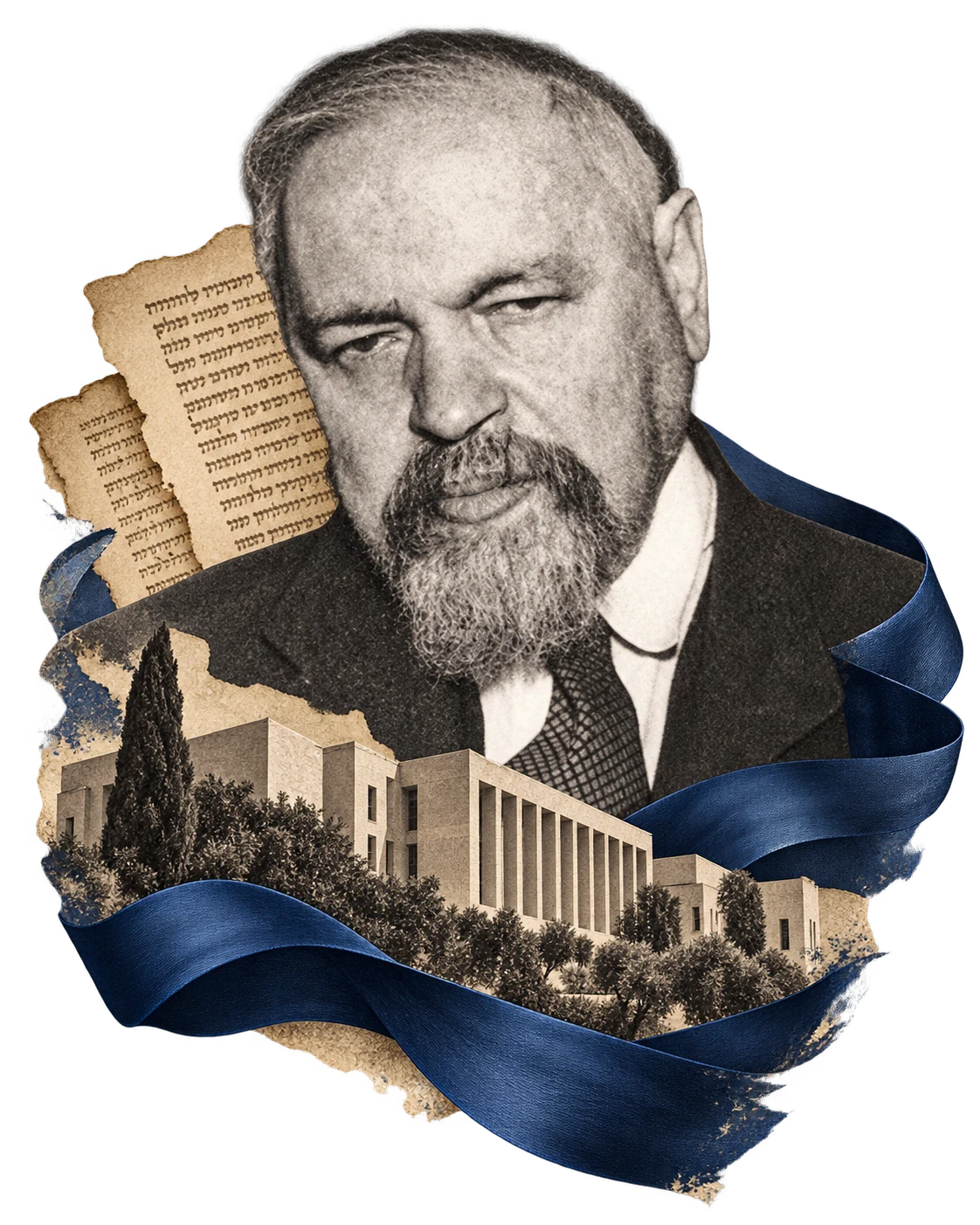
Two communities, one university, elementary schools, and streets in various cities are named after him. So who was Rabbi Bar-Ilan...?
From Study to Public Mission
Throughout history, Volozhin (today a town in Belarus, not far from the border with Lithuania) was a small town known mainly for the Etz Chaim yeshiva, better known as the Volozhin Yeshiva. It was the first yeshiva in the world to operate independently of the local community, and it also served as a model for Lithuanian yeshivas. In 1880, the year Rabbi Meir Berlin was born, his father, Rabbi Naftali Zvi Yehuda Berlin (the Netziv), headed the yeshiva. Meir was very proud of his father. He learned Torah from him, heard from him about the wonders of the Land of Israel, and absorbed from him a love for the land. A year after his bar mitzvah, his father died, and deep mourning descended upon the family and the town. After the period of mourning, Meir Berlin continued his studies, first with the Gaon Rabbi Eliezer Gordon, and then with his relative Rabbi Chaim of Brisk (Rabbi Soloveitchik), under whom his halakhic approach took shape. He continued his studies with his grandfather, Rabbi Yechiel Michel Halevi Epstein, author of Aruch HaShulchan. From his father he inherited integrity and simplicity, from Rabbi Chaim Soloveitchik his capacity for deep analysis, and from Aruch HaShulchan his methodical approach and thoroughness. All of this prepared him for his public work.
In April 1903, Herzl received from the British a plan to settle Jews in Kenya - a plan mistakenly called the "Uganda Plan." The plan was debated at that year's Sixth Zionist Congress. It was also discussed at the Seventh Congress in 1905. Meir Berlin, attending the Congress for the first time, voted against it, since as far as he was concerned there was only one place where a Jewish state could be established: the Land of Israel.
Although the Zionist movement was born as a secular movement, it also reflected the messianically tinged longings of religious Judaism. Quite a few Jews, among them Judah Alkalai and Zvi Hirsch Kalischer, tried to give this yearning a national character, and were therefore known as "heralds of Zionism." But the leaders of Europe's Jewish religious establishment viewed the Zionist movement as a dangerous phenomenon. In 1902, with the founding of the Mizrachi party, the first attempt was made to bring together the traditional Jewish understanding of nationalism and the secular-nationalist outlook. The party's leaders were Rabbis Yitzhak Yaakov Reines, Yitzhak Nissenbaum, Moshe Avigdor Amiel, Yehuda Leib Fishman, and Abraham Isaac Kook. Rabbi Meir Berlin later joined them. Mizrachi defined itself as occupying the space between two poles - secular Zionism on the one hand and the anti-Zionist Agudath Israel on the other.
Rabbi Meir Berlin married Beila, née Rabinowitz, at the age of 22. A few years later, the couple moved to Berlin, where the rabbi founded the newspaper HaIvri, which provided a platform for disseminating religious-national ideas and served the Mizrachi movement. In 1912, he was appointed secretary of the World Mizrachi organization. Three years later, the Berlins moved to the United States, where the rabbi served as president of the Mizrachi organization until 1926. After much deliberation, they immigrated to the Land of Israel.
Upon his arrival, Rabbi Berlin was appointed head of the world center of the Mizrachi movement. He was also an alternate member of the Provisional State Council, which later became the government of Israel, and edited the newspaper HaTzofeh. In the Land of Israel, he met Moshe Bar-Ilan (Birnbaum), one of the senior members of the Haganah. Following his example, Rabbi Berlin changed his surname and became Meir Bar-Ilan.
The Talmudic Encyclopedia and His Legacy
During the last seven years of his life (1942-1949), Rabbi Bar-Ilan took part in rescuing survivors of the camps and in the struggle to establish the state. But his final battle - the battle against indifference to his vision of Torah - was waged from his home on Ussishkin Street in Jerusalem. Some called this period of his life "the renewed Volozhin period," when he returned to the study of Torah. His motto was "The people of Israel, to the Land of Israel, according to the Torah of Israel," a motto that reflected the different periods of his life: the first was the period when he devoted himself to the Jewish people - the years of the Second World War; the next was the period when he devoted himself to the Land of Israel; and now it was time to devote himself to the Torah of Israel.
In 1942, Rabbi Meir Bar-Ilan understood the magnitude of the catastrophe that Hitler's "Final Solution" would bring, and resolved to preserve the spiritual culture of the Jewish people. This is how he began the enormous project of compiling the Talmudic Encyclopedia.
The encyclopedia's innovation lay in its comprehensive approach: it did not present only the established halakhic ruling, but also expanded on all the opinions, disputes, and interpretations leading up to the final ruling. This provided a complete picture and a deep understanding of the established halakhah.
Rabbi Bar-Ilan knew that this enormous undertaking required an editor with vast knowledge, and so he chose Rabbi Shlomo Yosef Zevin. Rabbi Zevin was daunted by the scale of the project and doubted that the task could be accomplished. Rabbi Bar-Ilan wrote to him that only he could do it: "If others hesitate and do not believe, I believe in others' abilities - and especially in yours." Rabbi Zevin replied: "I regard this undertaking as great, sacred, necessary, and very much possible, if Your Honor gives me his full assistance, because without him nothing will be done." Rabbi Zevin was thus seeking to tie Rabbi Bar-Ilan to him in bringing the encyclopedia project to fruition. But Rabbi Bar-Ilan made his position clear: "This undertaking - that is, the Talmudic Encyclopedia, which has consumed me - I intend, God willing, to devote a large part of my life to... What does it mean for a person to dedicate his life and strength, not for the sake of a reward or honor, but for the sake of the undertaking itself?"
To make the encyclopedia suitable both for those well versed in Torah and halakhah and for laypeople, many entries were expanded. The first volume appeared in 1947 and met with tremendous success and recognition of its importance. Rabbi Bar-Ilan lived to see only the first volume, and in 1949, as the second volume was being prepared, he returned his soul to his Creator. The encyclopedia's 44th volume was published in 2020.
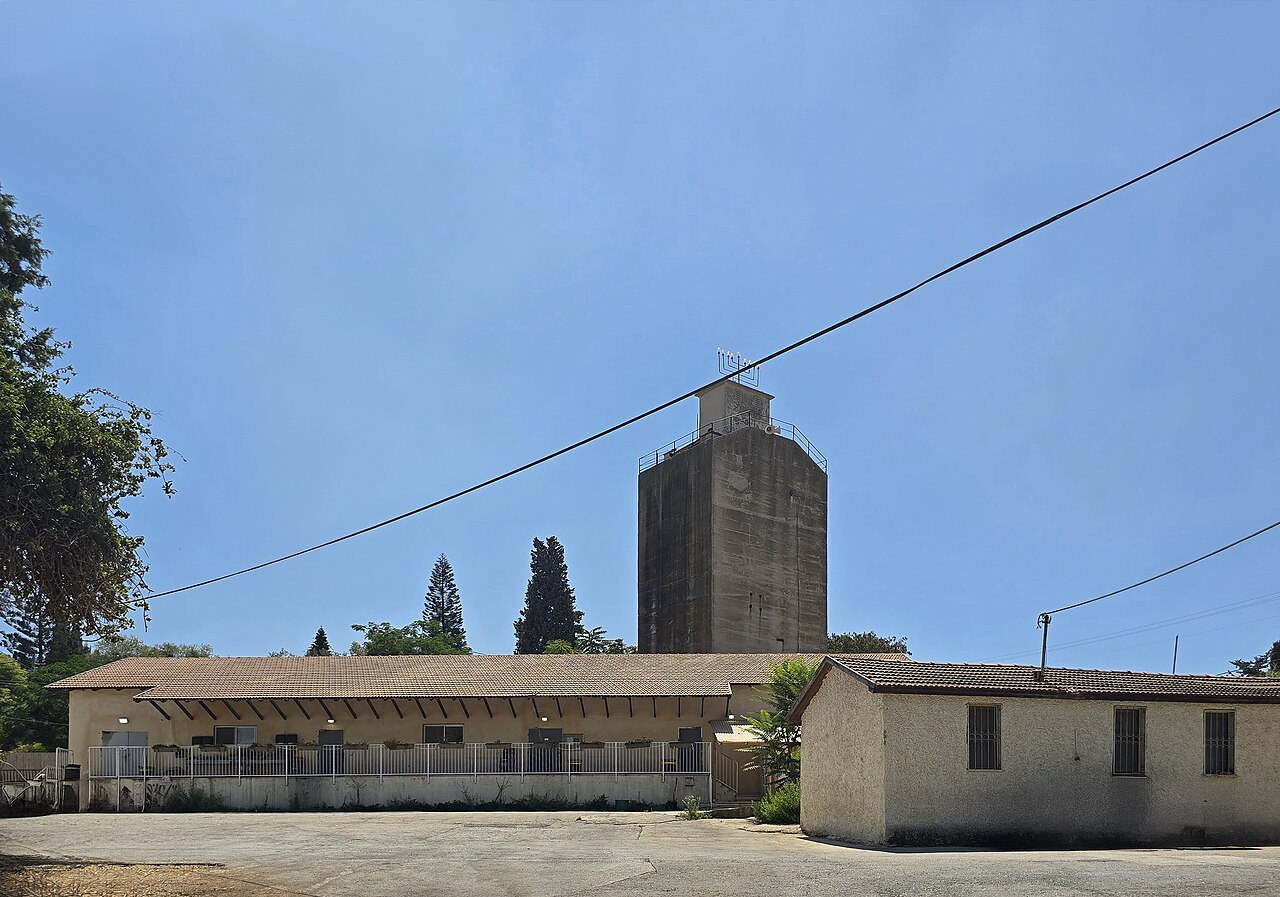
Bar-Ilan University, Beit Meir, a community in the Jerusalem Hills, and Sde Ilan, a community in the Lower Galilee, are named after Rabbi Bar-Ilan. Schools and streets in various cities have also been named after him.
Rabbi Meir Bar-Ilan and his wife Beila had two daughters and a son: Yehudit, who married Professor Saul Lieberman; Shulamit, who married Professor Abraham Halkin; and their son, Dr. Tuvia Bar-Ilan, who was among the leaders of the Science Corps during the War of Independence.
תגובות
עדיין אין תגובות.