
While the term "Zionism," adopted by Herzl and first coined by Nathan Birnbaum in 1890, refers to a national idea from which religious elements were absent, it is ironic that two of the three "forerunners of Zionism" were rabbis.
Rabbi Zvi Hirsch Kalischer
The Revolution and the Jewish Response
At dawn on July 14, 1789, King Louis XVI of France already knew that the economic crisis gripping France had brought his reign to an end. That same day, the French crowds set out and stormed the Bastille, one of the symbols of the monarchy. This act would later be remembered as the beginning of the French Revolution, which led to recognition of the need for equal human rights. Napoleon was the first, two years later, to grant Jews equal rights (emancipation), including permission to work in prestigious professions such as medicine, law, journalism, and others that had until then been closed to them. The granting of equal rights and the opening up of society often led people to abandon religion and even assimilate.
Quite a few leaders of Jewish communities saw these new rights as a threat to Judaism. The most famous among them was Rabbi Moshe Sofer Schreiber, known as the Hatam Sofer (Chatam Sofer). He coined the phrase "The new is forbidden by the Torah" and worked to prevent the opening of Jewish schools where secular subjects were taught. The Hatam Sofer's second wife was Sarah-Saril, daughter of Rabbi Akiva Eiger. From a young age, Rabbi Akiva Eiger showed a phenomenal memory and remarkable comprehension. At six, he began tackling complex Talmudic dilemmas, and as an adult he became a towering spiritual figure and a genius; his methods of study are still used in various yeshivas today. Like the Hatam Sofer, he too saw equal rights for Jews as a threat to Judaism. Rabbi Zvi Hirsch Kalischer was among Rabbi Eiger's students.
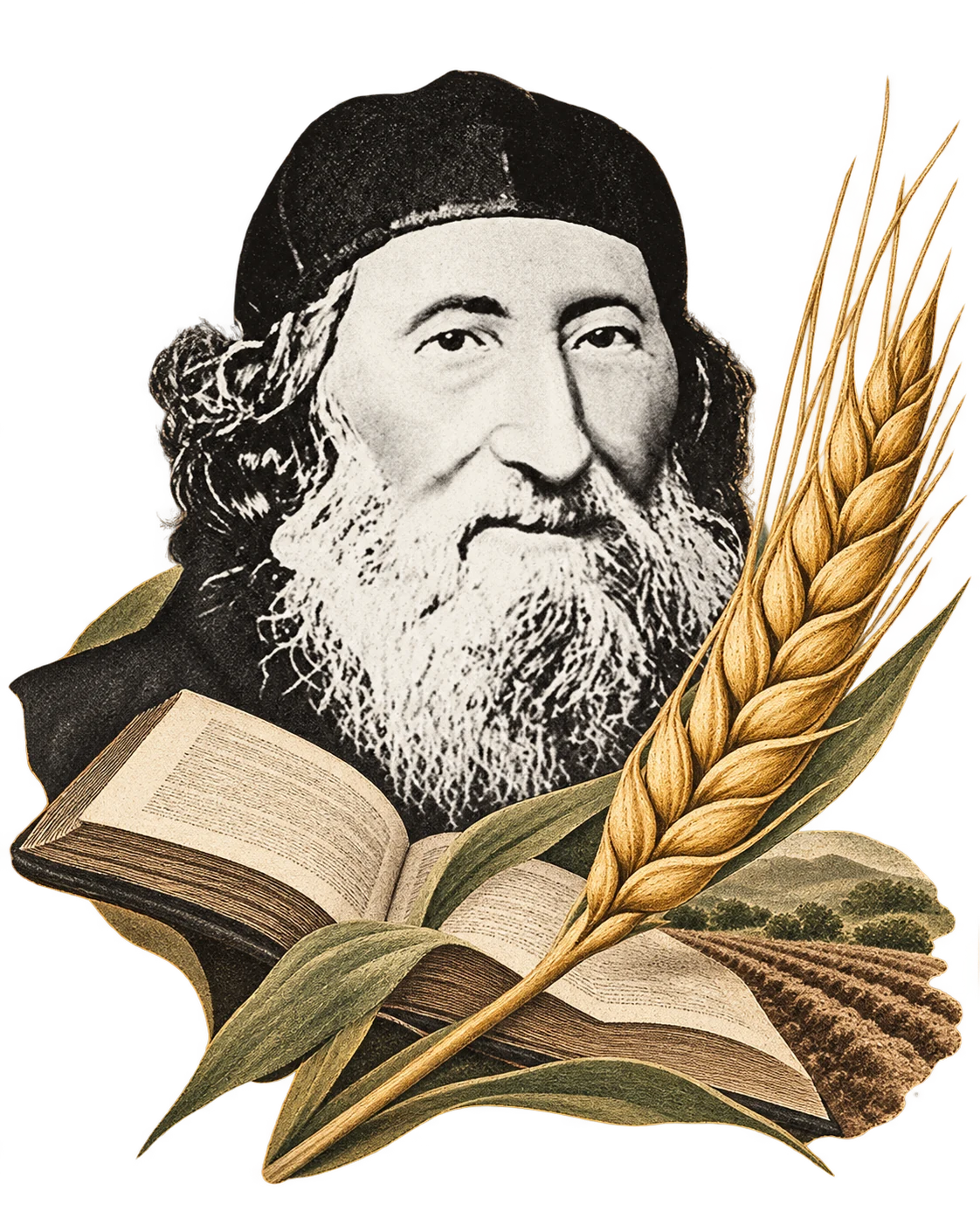
Rabbi Zvi Hirsch Kalischer was born in Poland in 1795, about three years after Jews were granted equal rights in France, to Rabbi Shlomo Kalischer and his wife Rachel. He moved to Poznan to study with the gaon Rabbi Akiva Eiger Zvi, and was among the first Jews to study secular subjects alongside religious ones, despite his teacher's opposition. He was drawn to the study of philosophy and read the works of Descartes, Spinoza, Moses Mendelssohn, and Kant. Kalischer lived on the boundary between the closed, traditional ghetto culture of the ultra-Orthodox world in which he had grown up and the Western European Judaism that integrated into its surroundings and embraced secular studies, liberalism, and innovation. Throughout his life, he tried to bring the two together.
At 24, he married Gitel Cohen of Nishawa County, and four years later the couple moved to Torun, Copernicus's birthplace, on the banks of the Vistula in Poland. Gitel, a very strong woman, took on the burden of supporting the family and opened a small business, allowing her husband to devote all his time to his ideas and to trying to realize his vision. At 29, Rabbi Zvi Kalischer was appointed rabbi of Torun, a position he held for more than fifty years without pay.
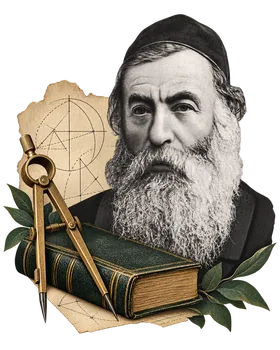
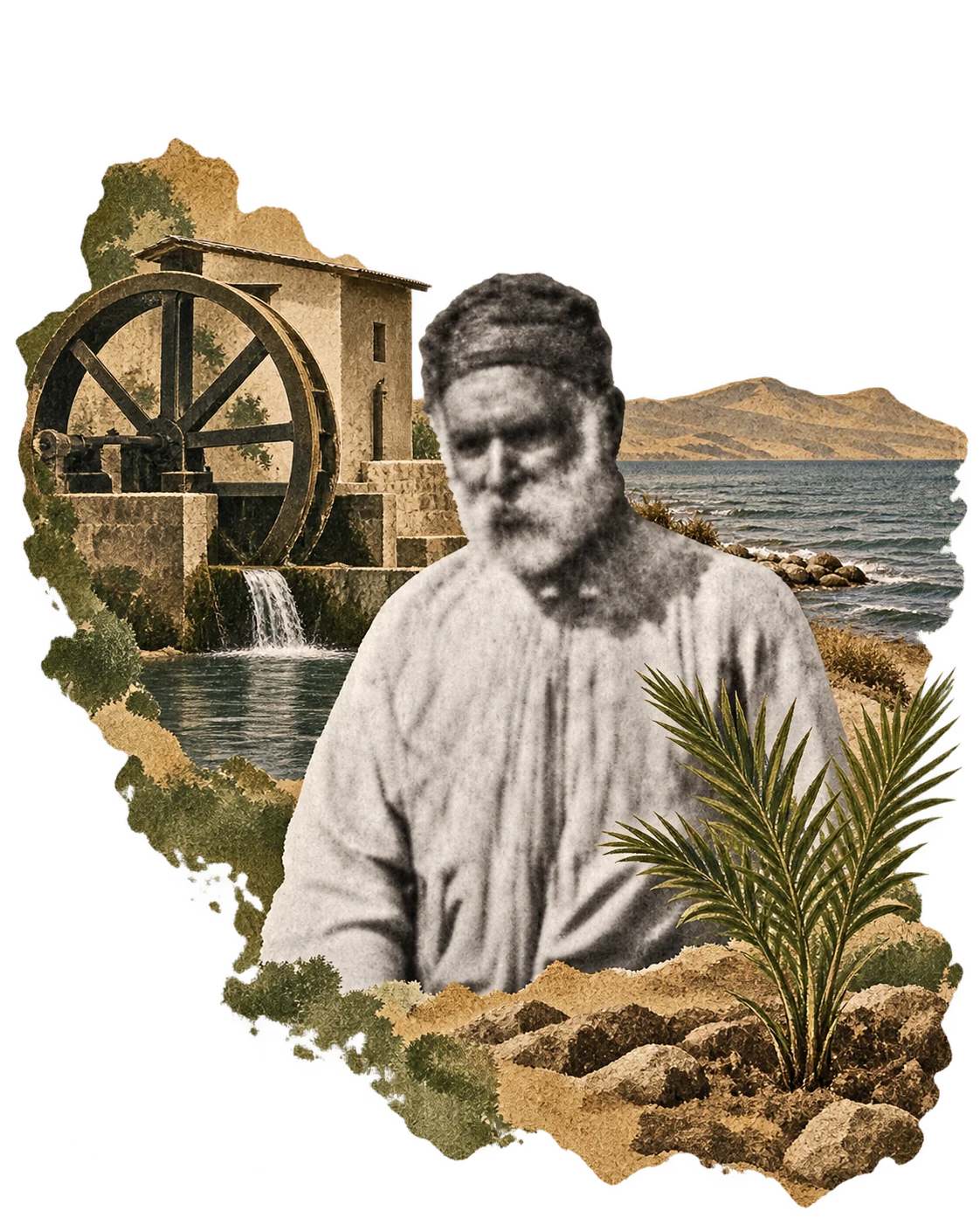
Unlike Rabbi Akiva Eiger and those around him, who believed that the end of days should not be forced and redemption hastened through settlement of the land, Rabbi Kalischer could be considered one of the great revolutionaries. He was one of the three "forerunners of Zionism," along with Rabbi Yehuda Hai Alkalai and Moses Hess - two rabbis and one socialist. In his book Rome and Jerusalem, Moses Hess mentioned Rabbi Zvi Kalischer with admiration, so there is no doubt that the three knew of one another's work.
Rabbi Zvi Kalischer was the first to raise the national-political question of the Jewish people in response to the national awakenings of Europe's peoples. At the opening of his book, he wrote: "Why do the people of Italy and other countries lay down their lives for the land of their ancestors, while we stand far from a land that, it seems, all the inhabitants of the world call 'holy'?"
Rabbi Kalischer, who advocated immigration to the Land of Israel and its settlement, devised a detailed plan. He proposed making a living from agriculture by establishing agricultural schools and guards to protect fields and orchards from the Arabs. About eight years before the founding of Mikveh Israel, the first agricultural school, he wrote in his book Drishat Zion: "A school for the study of the knowledge of the land, to educate the young children of Israel and teach them field and vineyard work, along with other related studies, Torah, and reverence for God. And that school shall be in the Land of Israel..."
For him, this was not merely a yearning or a dream, but a viable plan. All this was about 30 years before the term "Zionism" was coined; in effect, he anticipated Herzl and foresaw the founding of the Hashomer organization.
Rabbi Kalischer understood that one could not rely on miracles, and that the land had to be purchased in order to bring the Jews there. He was the first among the rabbis to argue that "the redemption of Israel will come little by little..." and that natural steps were needed to bring it closer.
From Idea to Action
At 41 (in 1836), Rabbi Kalischer wrote to Mayer Amschel Rothschild, the eldest son of the founder of the famous banking dynasty, who was living in Frankfurt, asking him to buy the Land of Israel from Muhammad Ali. Kalischer explained that this was a golden opportunity, since the local ruler would be glad to receive money for this remote and uninteresting piece of land. In the letter, he set out his vision: "When the leaders of the people of Israel gather from every corner of the world, and make it a settled land, populous with the children of Israel... and when many of Israel's exiles are in the Holy Land and in Jerusalem, and offer their sacrifices as a pleasing fragrance to the Lord and restore the ruined altar, then it will be pleasing to the Master of all to let the light of His face shine upon His people." One of Rabbi Kalischer's dreams was to renew the tradition of sacrifices on the Temple Mount.
In October 1844, Rabbi Kalischer also wrote on the subject to Sir Moses Montefiore, then chairman of the Board of Deputies of British Jews. At the time, Montefiore owned an orchard in Jaffa, and Kalischer offered to serve as its supervisor. Montefiore politely declined. Despite Montefiore's and Rothschild's refusal to grant his requests, Kalischer continued to regard them as "the benefactors and leaders of Israel," whose money and connections could help him advance his vision.
Montefiore's success in obtaining permission from the sultan in 1855 to purchase land in the Land of Israel for the first time gave Kalischer hope. Five years later, he approached Albert Cohen, director of the charitable institutions of the Paris branch of the Rothschild family, asking for help in realizing his plan. At the time, Albert Cohen visited the country, donated to a hospital, a soup kitchen, and a school, and also left money to complete construction of the Hurva Synagogue. In his letter to Cohen, Kalischer explained the role of the wealthy: "And it is clear to me that the dawn has already begun to break, as the Lord gives us leaders of Israel, men of great stature, such as the Rothschild family and their like. And you, Sir Cohen, have a role to play: their names are known from one end of the world to the other, and their words are heard in royal courts, and in every country in Europe there are prominent people of Israel, held in high esteem by mighty kings, the gracious rulers of our time." Their wealth carried the responsibility of bringing the Jewish people back to their land.
When the Society for the Settlement of the Land of Israel was founded by Haim Luria in 1860, Rabbi Kalischer became one of its leaders. The society published his book Drishat Zion, which brought together his ideas. When the book appeared, Rabbi Kalischer approached the rabbi of Frankfurt and asked him to bring Wilhelm Rothschild, a member of his community, into the society. The following year, Rabbi Kalischer and his son Rabbi Yehuda Leib headed the committee in Torun that raised funds to build shelters in the Old City for Jerusalem's poor.
Despite the difficulties, Rabbi Zvi Hirsch Kalischer lived to see some of his vision come to fruition. It began with the founding of the Alliance Israélite Universelle in Paris in 1860, which recognized the need to establish agricultural schools in the Land of Israel, just as he had dreamed. Kalischer wrote to them: "To the noble sons of Israel I send this letter: to you, the society of men of kindness, generous people who seek the good and love the upright, distinguished men and nobles of the Alliance Israélite Universelle in the glorious city of Paris, may God protect it... When the leaders of the people gather together, the tribes of Israel as one, a gathering of the righteous, fitting for them and fitting for the world, the whole earth is filled with the fruit of their kindness... They will appoint guards upon the walls of the earth... Prepare and make ready a vehicle for the Society for the Settlement of the Land of Israel, for planting vineyards: olive trees for oil and for the seed of the land's produce and its finest fruits... Surely it is within your power to acquire and purchase many fields and vineyards, with the permission of the sultan, who will lend a willing ear out of respect for the ministers among you. Then the land will yield its produce and holy fruit for a holy seed..."
In 1868, Kalischer met with Napoleon III and presented him with a proposal to settle Jerusalem. At the same time, he corresponded with Rabbi Yitzchak Yaakov Reines, founder of the Mizrachi movement, and encouraged him in his Zionist path.
Rabbi Kalischer also enlisted his son Wolf (Ze'ev) in his vision, and in 1868 sent him to the Land of Israel to assess the fertility of the soil and, above all, to find out whether the country's residents, who lived on funds from the Halukka (charitable donations), would agree to give up that money in favor of settlement and work in agriculture. Wolf drew up a plan for such a settlement near Jerusalem, with bylaws that resemble the format of the kibbutz familiar to us today.
Kalischer disputed the views of his teacher Akiva Eiger and of the Hatam Sofer, in the debate over the idea of restoring the sacrificial rites. He also clashed with members of the Old Yishuv, who believed that his ideas endangered the Halukka funds on which they relied and that he advocated work, and, more than that, hard agricultural labor.
The Dream of Jerusalem
Rabbi Zvi Hirsch Kalischer's dream was to settle in Jerusalem and establish a yeshiva there. In 1872, he wrote to the editors of the newspaper HaLevanon: "For about thirty years I have been engaged in the settlement of the Holy Land, and it has been like a vow in my heart to go up myself to the holy mountain and dwell in its courts. And now my spirit roils and trembles within me: if not now, when shall I fulfill my vow to the Lord?... And to apply myself to acquiring and purchasing the inheritance of Jacob near Jericho, Safed, and Tiberias, which the sultan wishes to sell cheaply. For the land there is good, and there is no fear of wild men."
Sadly, his dream did not come true. At 77, ill and exhausted, his doctors forbade him to make the journey to Jerusalem. Two years later, he returned his soul to his Creator and was buried in Torun.
In 1974, a hundred years after his death, the Torun municipality destroyed the Jewish cemetery and Rabbi Kalischer's gravestone. The religious kibbutz Tirat Zvi in the Beit She'an Valley and many streets in Israeli cities are named after him.

תגובות
עדיין אין תגובות.