
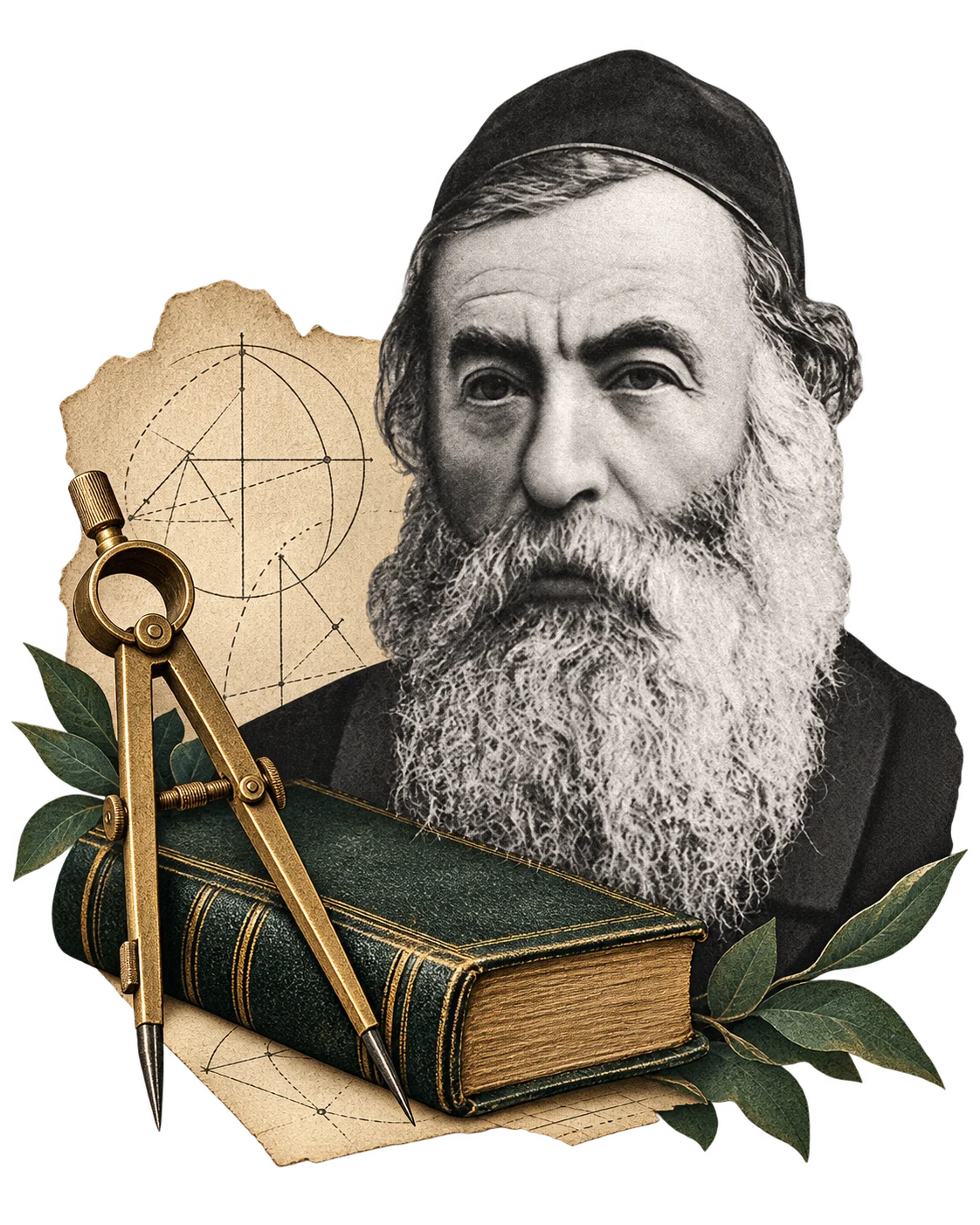
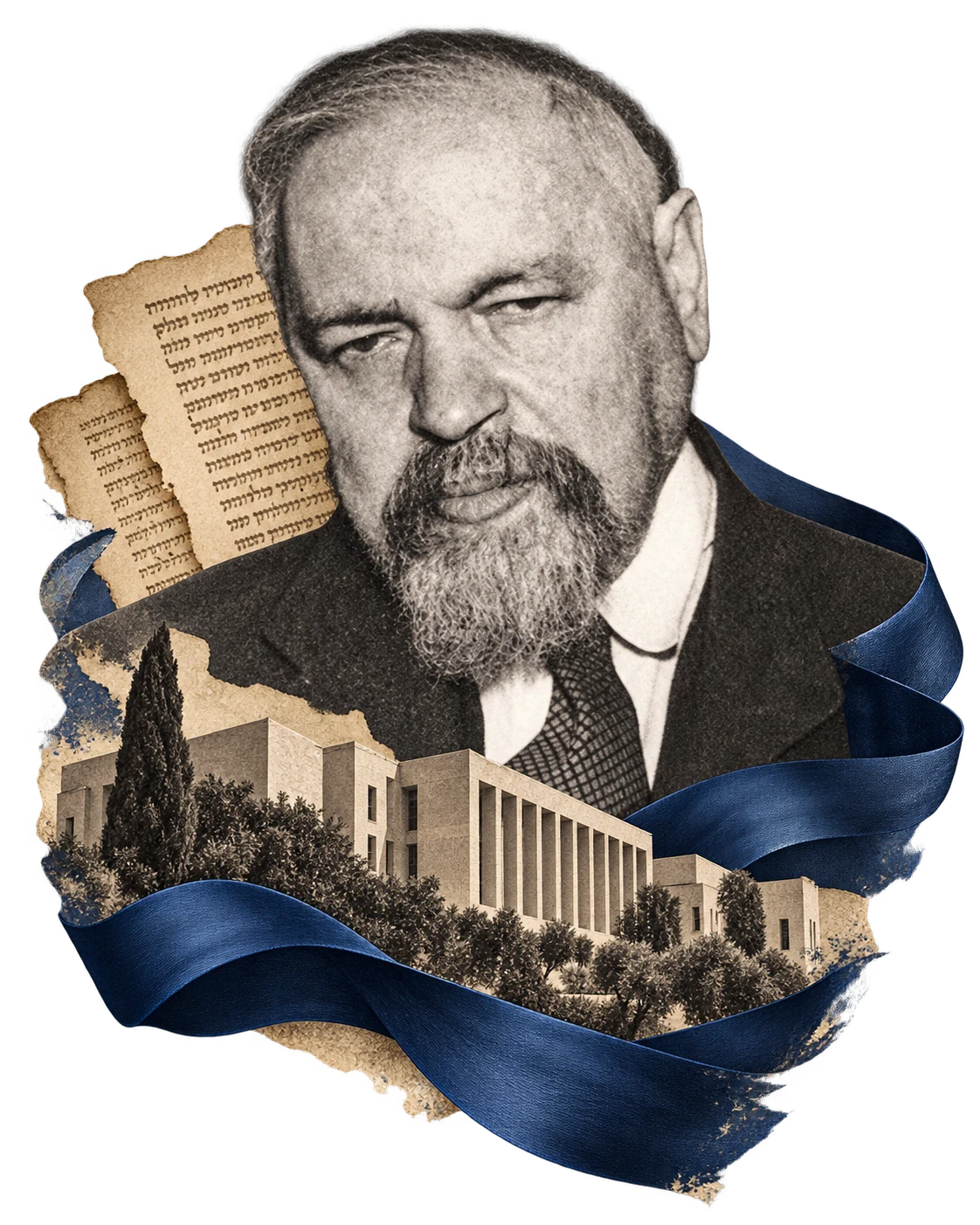
A revolutionary on one hand and a conservative on the other. A visionary who turned his ideas into reality, he led the Mizrahi movement and helped found the yeshiva high schools that combined sacred and secular studies.
Between Uganda and Shabbat
In the summer of 1903, the Sixth Zionist Congress convened in Basel, later known as the Uganda Congress. A major drama unfolded when Herzl proposed establishing a temporary refuge for Jews in Africa (it should be noted that he meant Kenya, but it was mistakenly attributed to Uganda). The proposal came after the Kishinev pogroms, which took place during Passover that year, and after Herzl formed the impression that the Russians were behind a series of pogroms in Zhitomir and Gomel. The proposal was accepted by the Congress, but participants split into two camps: supporters and opponents. It passed with the support of the Mizrahi faction, headed by Rabbi Reines. Although he was very close to Herzl and supported him, he also believed that the existence of Jewish autonomy would strengthen religious feeling, regardless of where it was established. In his view, there had to be Jews for Judaism to endure, and so they had to be saved: "We agreed to the African proposal because we paid heed to the needs of the people we cherish more than the land." In the end, the proposal was not carried out, as the delegation that traveled to Africa returned with a negative report. Among those opposed to the proposal was the Zionists of Zion group, whose members were mostly Jews from Russia and whose leaders included Menachem Ussishkin and Chaim Weizmann.
At the Tenth Congress, held in 1911, the question of Sabbath observance was on the agenda. In protest against the desecration of the Sabbath on the Jewish National Fund's agricultural farms, some members of Mizrahi resigned. Rabbi Reines fought against this trend, since Zionism ranked first among his priorities.
Family Roots and the Disaster
Rabbi Reines's father, Rabbi Shlomo Naftali, came to the Land of Israel with the disciples of the Vilna Gaon (Rabbi Elijah, known as the Gaon of Vilna) in 1808, led by Rabbi Israel of Shklov. Their wish was to come to the Holy Land "to cherish its soil." They were a messianic group whose goal was to bring about redemption. Some settled in Jerusalem, while others, including Rabbi Naftali, settled in Safed, where the rabbi established a printing press. In 1837, while on a fundraising mission in Lithuania, his children were killed in the earthquake that struck Safed. When he heard of the tragedy, he wanted to return immediately, but his friends persuaded him to remain in Lithuania. A year after the disaster, Rabbi Naftali realized he had to rebuild his life. He married again, and in 1840, three years after losing his children, his son Isaac Jacob was born.
The accounts of the earthquake disaster wounded Rabbi Naftali deeply. "When, during the Musaf prayer on Yom Kippur, he reached the passage 'And for the people of Sharon, he would say: May it be Your will that their houses not become their graves...' he would burst into tears" [from Dr. Yosef Shapira's book, 'Thought, Halakha and Zionism'].
In his book 'A Sack of Tears,' Rabbi Reines described his family tree, which went back through Rashi to King David. The family name he was proud of came from Reina, his grandmother's mother. Reina was the daughter of Rabbi Shlomo Zalman, head of the rabbinical court in Mir and author of 'Shulchan Shlomo.'
Study, Education and 'Torah and Science'
In his youth, Jews enjoyed equal rights (emancipation) and were permitted to enter the professions, such as medicine and law. When he was 15, Rabbi Reines began studying physics and mathematics alongside his religious studies. This new world made a profound impression on him, and years later he wrote: "A new light then appeared before me on my path of study." He learned to think scientifically, and as a young man he went to the Volozhin yeshiva, where he excelled and was known as "the prodigy from Karlin."
The spirit of equal rights and openness to secular studies spread into Jewish towns across Europe, and quite a few Torah scholars were swept up in it and left their communities - the danger of assimilation was in the air. The Hatam Sofer tried to address the problem with the motto "You shall bring out the old because of the new."
Rabbi Reines, too, encountered this problem, but he was among the few who chose an original and groundbreaking path. He combined religious studies, general education, and Zionist activity. This approach brought him into conflict with some of the leading Torah scholars of his generation, and in 1882 he founded the Torah and Science yeshiva in the town of Sventsyany (north of Vilna).
Despite equal rights, the liberals' failure to intervene in the pogroms known as the "Storms in the Negev" (1881-1882) did not go unnoticed by educated young Jews. At the time, Rabbi Reines was close to members of Hovevei Zion, and Herzl's appearance accorded with his outlook, though he still regarded him with suspicion. While the ultra-Orthodox saw the pioneers as "transgressors," not as people who observed the commandments, and therefore believed they should not cooperate with them or with Zionism, Rabbi Reines saw Zionism as "the beginning of redemption."
At the Fifth Zionist Congress in 1901, the establishment of a young Zionist party called the Democratic Faction was decided upon. Its members included Ahad Ha'am, Chaim Weizmann, Martin Buber, and Joseph Klausner. Russian Zionists, who were the majority at the Congress, succeeded in passing a proposal requiring "education in a national spirit." Rabbi Reines and his religious colleagues feared an attempt to interfere with traditional education, and in response founded the Mizrahi movement in 1902. It was the first time a religious faction appeared within a secular Jewish political organization.
The first clash between the two groups came about two months after Mizrahi was founded, and centered on education. Although Rabbi Reines had a majority, he decided to seek a compromise. Under his proposal, two education committees were appointed: one for national-religious education and the other for progressive education.
The connection between Rabbi Reines and Herzl, and between the religious and the Zionist, was part of the contradictions inherent in Rabbi Reines. By combining sacred and secular, he was ahead of his time and made quite a few enemies. The rabbi published eleven books, but these works represent only the tip of the iceberg of his writings. In his book 'Derekh BaYam,' he laid out a new method for studying the Talmud, based on the laws of mathematical logic. In 1902 he published 'A New Light upon Zion,' and in a letter to Herzl wrote: "I have the honor of presenting you with my book 'A New Light upon Zion,' which I have dedicated to your great and exalted name. In publishing this book, whose words address the Zionist movement, I felt it my duty to offer it as a tribute to the creator of this movement, who gives all his life and soul to it."
Two years before his death, Rabbi Reines wrote about his bond with the Land of Israel, which led him to support the Zionist idea: "From my earliest days, I have been bound by unbreakable bonds of love to our Holy Land, and already in the 1840s... I corresponded with the great rabbis... about settling the land, and they also sent me a fundraising authorization [an official document empowering its holder to collect funds]. When the Hovevei Zion movement began, I did everything in my power for its benefit, and when the Zionist idea began to spread around the world, my heart's joy knew no bounds. In particular, I rejoiced because I believed that, in any case, this movement would bring great blessing to the settlement."
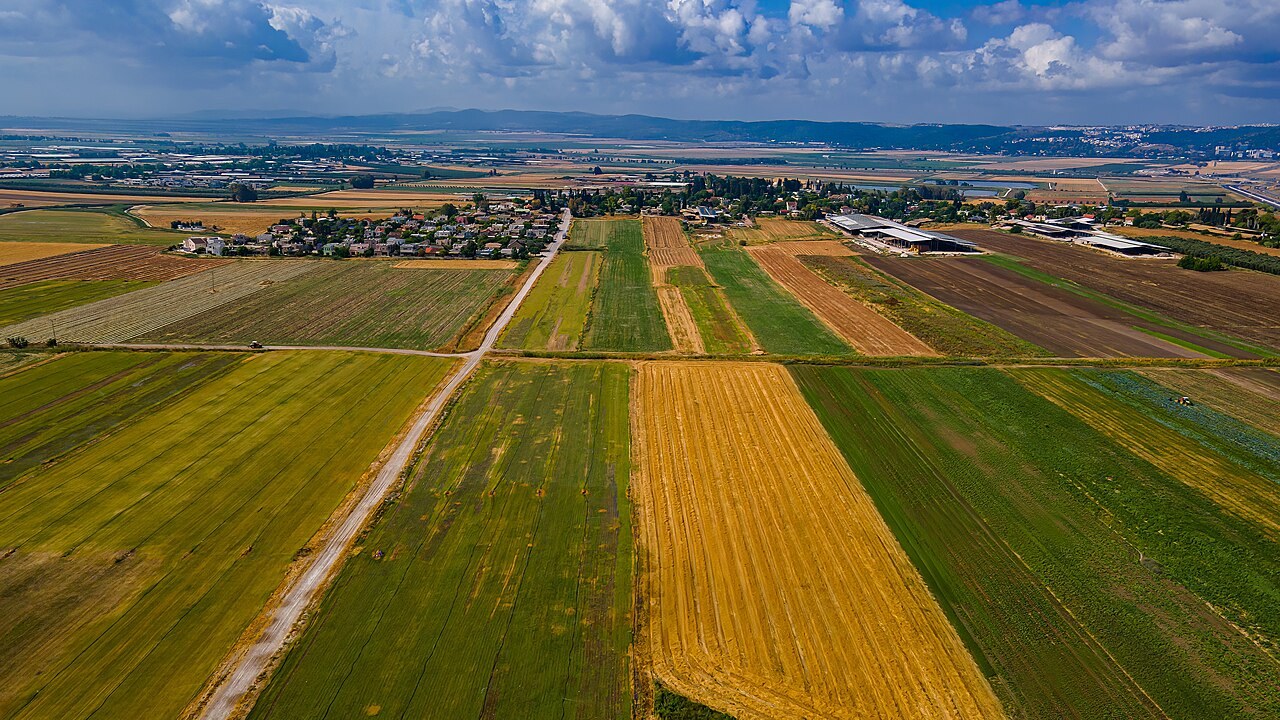
Rabbi Isaac Jacob Reines died in 1915 without ever reaching the land he had dreamed of. He was buried in the Jewish cemetery in Lithuania, but the exact location of his grave is unknown today, as the cemetery was destroyed in 1941. The settlement of Neve Yaakov, destroyed in the War of Independence, the moshav of Sde Yaakov, the Neve Yaakov neighborhood in Jerusalem, and many streets in Israeli cities were named after Rabbi Reines.
תגובות
עדיין אין תגובות.