
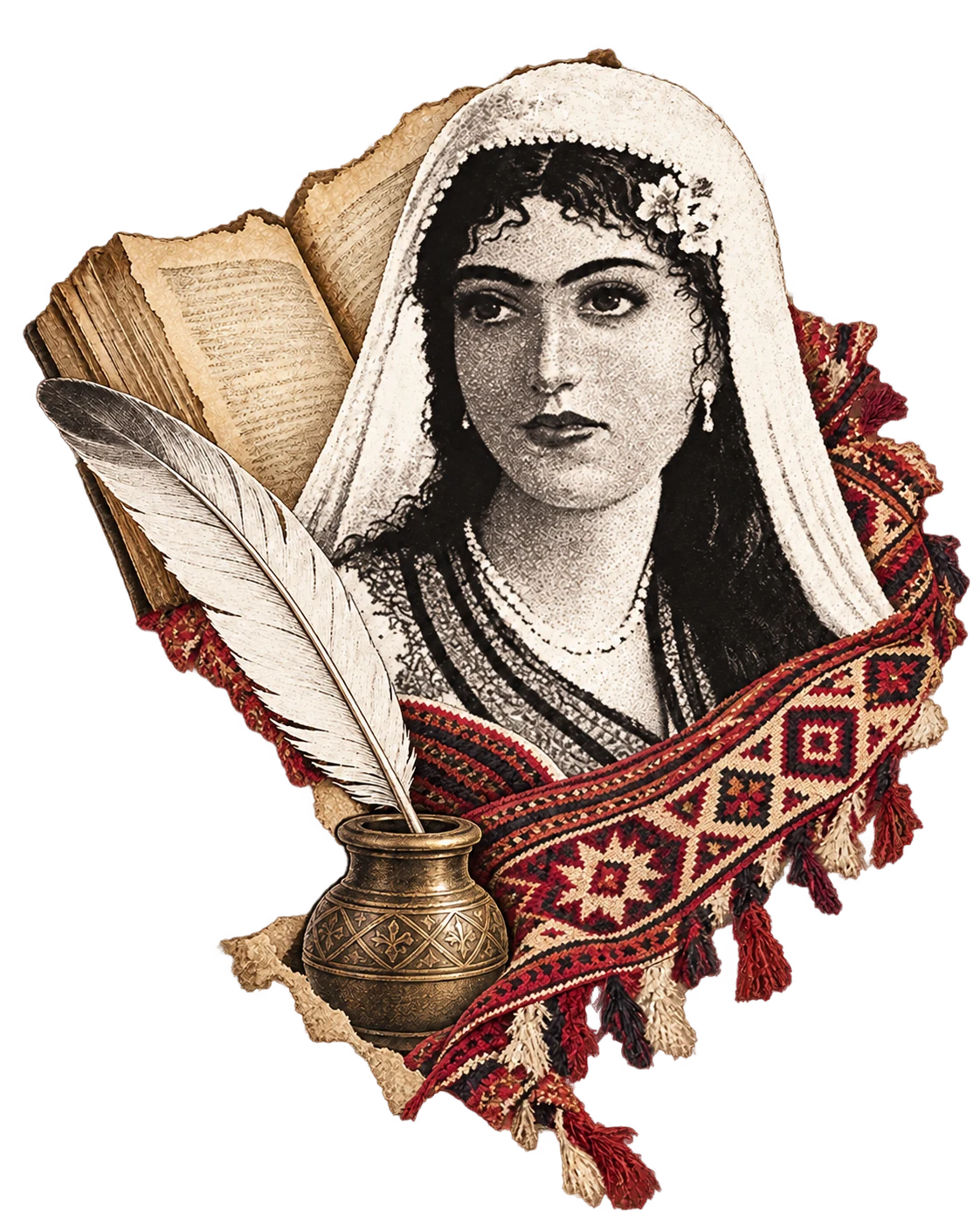
The fascinating story of the "Tanna'it" - a halakhic decisor, liturgical poet, and kabbalist who headed a yeshiva and maintained a "court."
Women Breaking into Men's Professions
Throughout history, certain professions were closed to women. It was only after the death of the famous physician Dr. James Barry in London in 1865 that the truth about him emerged: Dr. Barry was a woman! As far as is known, she was the first woman to practice medicine. The first woman to receive a medical degree without having to conceal her identity was Dr. Blackwell, who graduated from medical school in New York in 1847. This was so unusual that she was nicknamed "the lioness." In Muslim countries, the situation was worse. The first woman physician was Dr. Helena Kagan, who was born in Tashkent, Uzbekistan, and completed her medical studies in 1910. She later immigrated to the Land of Israel and became one of the first women physicians there.
The question "Can a woman be a rabbi?" first challenged the religious world in Berlin in 1935. The issue arose as part of a thesis submitted by Regina Jonas, who was subsequently ordained by Rabbi Leo Baeck as the world's first woman rabbi. But make no mistake: Regina Jonas was not the first. Asenath Barzani came before her. As early as the 16th century, in her native Kurdistan, Asenath was a halakhic decisor, head of a yeshiva, and the head of a "court," earning her the title "the Tanna'it."
"From my earliest days, I never went outside my home. Here I was a daughter of the King of Israel. Who are the kings? The rabbis! I grew up among the sages, and my late father cherished me. He taught me no household or other tasks, only the work of Heaven, to fulfill what is written: 'You shall meditate on it day and night.' Sadly, he had no sons, only daughters. He also made my late husband swear not to put me to work, and my husband did as he had been instructed." In just a few lines, Asenath describes her life from her birth in Kurdistan in 1590 to the time she wrote the letter. She says she was born into a dynasty of scholars, and that her father, who had no sons, devoted himself to teaching her religious studies, at a time when most women in the region could not read or write at all. When she married, her father made her husband swear that he would not make her do the women's work customary at the time. Instead of doing such tasks, she taught Torah.
Kurdish Jews believe they are descendants of the Ten Tribes exiled by the Assyrian kings. In 1167, Benjamin of Tudela set out on his travels, and already then he reported that Kurdistan had some one hundred Jewish communities, with more than 25,000 Jews, each community headed by a rabbi. The most famous was Rabbi Nethanel Adoni Barzani, rabbi of the Jewish community of Mosul, known as "the Holy One" and founder of the Barzani dynasty. His son, Rabbi Shmuel Adoni Barzani, founded many yeshivas throughout Kurdistan and, like his father, was considered a prodigy and a great halakhic decisor. Rabbi Shmuel had only daughters, but he devoted all his energies to his daughter Asenath. She was an exceptionally astute student, well versed in the Talmud and able to grasp deeper meanings and apply them to other issues. This talent earned her the title "the Tanna'it," a title reserved for the sages of the Mishnah alone.
Asenath married her cousin Jacob Mizrahi, who had been her father's student and was destined to succeed him as head of the yeshiva. As noted, the marriage was conditional on Asenath continuing her Torah studies and not being burdened with household chores - an unusual and radical arrangement at the time. Some sages even opposed religious study for girls, as Rabbi Eliezer said: "Whoever teaches his daughter Torah is as if he teaches her frivolity" (Tractate Sotah, chapter 3, Mishnah 4). The reason given was: "Because most women are not sufficiently focused to study."
Head of the Yeshiva in Mosul
After marrying, Asenath continued studying Torah and also taught the yeshiva's students, while her husband, Rabbi Jacob Mizrahi, managed the yeshiva. "At first, my late husband was occupied with his studies and had no time to teach the students. I taught them in his place and helped him. Now, sadly, he has gone to his rest... I have remained to teach Torah, admonish others, and expound on ritual immersion, Shabbat, the laws of niddah, prayer, and the like." This is how Asenath described her work. When tragedy struck their home and Rabbi Jacob Mizrahi died, it seemed only natural that Asenath would succeed him and lead the yeshiva in Mosul, which her grandfather had founded. Her life changed at this point: she became head of the yeshiva and the spiritual leader of all the Jews of Kurdistan. During this period she wrote a commentary on the Book of Proverbs. The commentary did not survive the passage of time, but two letters and several liturgical poems by Asenath have been partially preserved.
Asenath earned unquestioned recognition. "My revered teacher, the rabbanit," wrote the sage Rabbi Pinchas Hariri to her. "We are always ready to serve you and faithfully attend to your needs." Her reputation spread beyond Kurdistan. The Jews of Baghdad, Iraq, appealed to her to send them a rabbi trained at her yeshiva, and she sent them her son Shmuel. In time, Shmuel became renowned as a great Torah scholar, like his mother. From then on, members of the Barzani family served as rabbis in Baghdad for about 150 years, until 1743.
One of Asenath's responsibilities as head of the yeshiva was raising funds for the institution, which suffered severe financial hardship for much of the time. This hardship also brought her personal financial troubles, and her home and possessions were seized. She could not travel to the different communities to raise money, since in those days a woman traveling on the roads was in danger. She sent letters to the various communities, pleading: "I have nothing to sell, nor an adult son or messenger to go around the communities, and it is not a woman's way to travel from community to community, as it is said: 'All the glory of the king's daughter is within.'" Her writing talent is evident in a letter in which she thanks in rhyme a generous man who opened his purse and donated generously.
Legends, Legacy and Commemoration
Like her father, she was credited with performing miracles. After giving birth to a son and a daughter, she prayed that she would not become pregnant again, so that she could devote herself to Torah study, and indeed she never did. Another legend concerned her beauty: "Asenath was beautiful in appearance and comely to behold. One day, Asenath went up to the roof to spread out her laundry, and a non-Jewish man saw her and became enamored of her. At midnight, the man crept up to the roof, with sinful thoughts about the rabbanit in his heart. She immediately called out the names of holy beings, and the man remained suspended against the walls of the roof, unable to move. In the morning, the matter became known." A large crowd gathered to watch this wondrous sight. All their efforts to move the man came to nothing. Word reached the wali, the city's pasha, who asked Asenath to release the man. But she refused, saying to him: "Had this non-Jew come to me intending to steal something from my home, I would have kept silent. But he came intending to violate my honor, so he will remain suspended where he is." The governor swore to her that if she released the sinner, he would punish him as he deserved and hang him in public. At that moment, Asenath released the man. They hanged him from a tree, and all the townspeople saw it and marveled.
Another miracle attributed to her is the synagogue miracle. It is said that she asked members of her community to celebrate the new moon outside the synagogue. As they celebrated, cries rang out and the synagogue began to catch fire, but fortunately none of those celebrating was in danger. When Asenath saw the fire, she whispered a secret name she had learned from her father, and angels descended from Heaven and beat out the flames with their wings. When the flames died down, it became clear that the synagogue and the Torah scrolls had suffered no damage. From then on, the synagogue was named after Asenath Barzani.
To this day, both Kurdish Jews and Kurdish Christians use Aramaic, a language similar to that of the Gemara. Some of the Jews immigrated to the Land of Israel in small groups. Many studied at the Porat Yosef Yeshiva in Jerusalem and trained for the rabbinate, among them Hakham Yitzhak Barashi and Rabbi Yitzhak Amadi. When the State of Israel was established, almost the entire Jewish community of Kurdistan immigrated to Israel. The community's best-known festival, the Sahrane, is celebrated during the intermediate days of Passover, like the Mimouna festival of Moroccan Jews. Many notable people came from the Kurdish Jewish community, including Moshe Barzani, one of the Olei Hagardom, who was captured by the British and took his own life at the age of 20 in his cell before he could be hanged; former Defense Minister Itzik Mordechai; Yosef Shiloach; and Knesset member Mossi Raz.
The date of Asenath Barzani's death is unknown, but it is believed to have been in 1670. Many Kurdish Jews used to make pilgrimages to her grave in Amedi, and it was also customary in the Kurdish community to write her name on amulets. Asenath Barzani is still honored today in the cities of Rishon LeZion and Beersheba, where streets have been named after her.
תגובות
עדיין אין תגובות.