
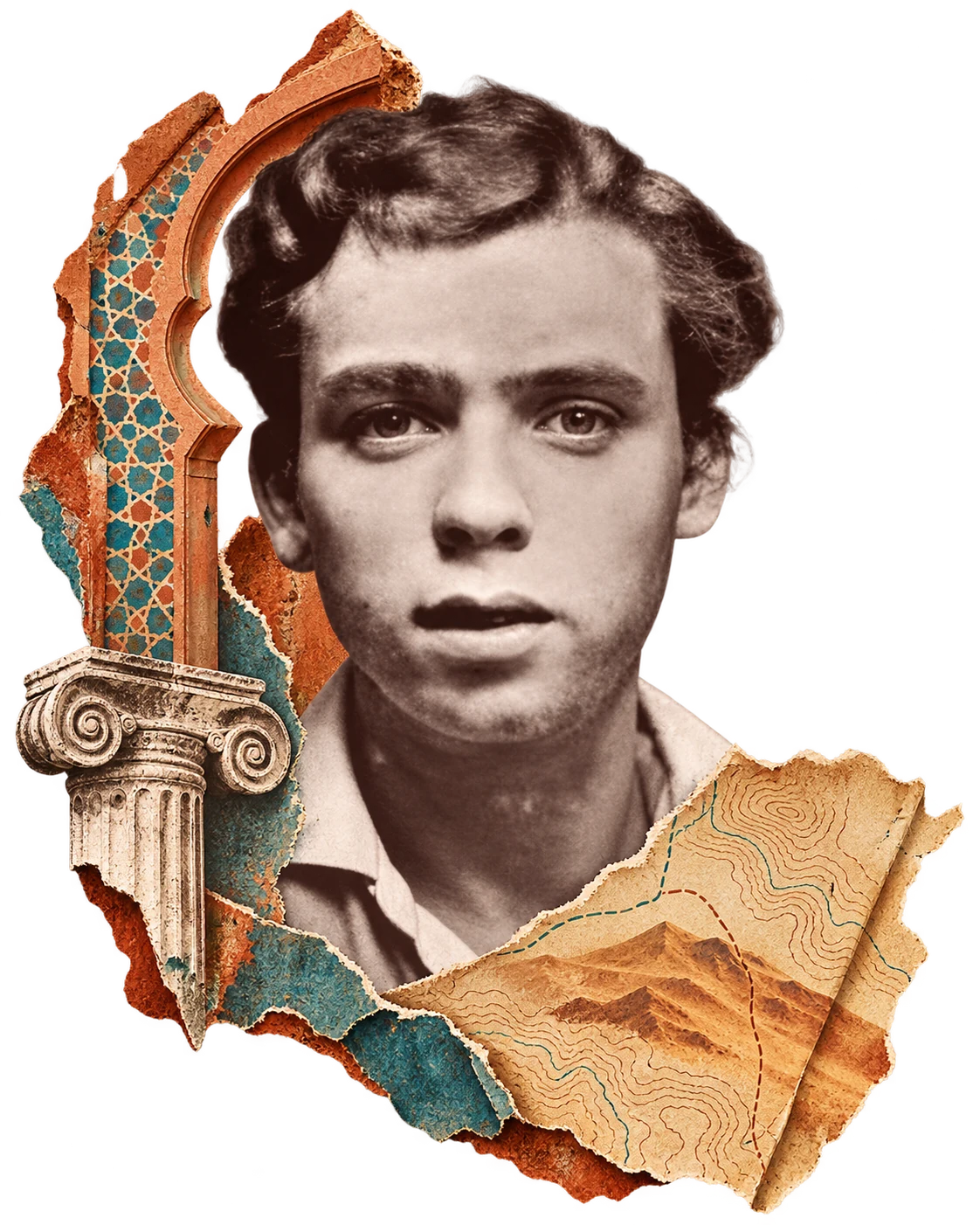
A new immigrant, a recruit, and a hero whose life weaves together ancient Greece, Oujda in Morocco, and the battles of the Negev.
Leonidas and Thermopylae
Leonidas, King of Sparta, knew that he would meet his death in a battle in the summer of 480 BCE. The invasion of Greece by the Persian king led Leonidas, who claimed descent from the legendary hero Hercules, to consult the prophetesses. Among other things, they told him: "It will fall to the people of Lacedaemon to mourn the death of their king, descendant of great Hercules" - a prophecy that confirmed his feelings.
In the scorching month of August, Leonidas set out with his army for the pass of Thermopylae, the only route from northern to southern Greece. With a force of 7,000 Spartan warriors, most of them from Laconia, he had to stop the advance of the Persian army, which numbered some 250,000 fighters, until reinforcements from the Greek fleet could arrive.
For seven days, Leonidas and his soldiers managed to hold back the Persian army, until a Greek traitor led the Persians along a path that bypassed the pass of Thermopylae. Leonidas realized that the decisive moment was near and sent his army back, but he himself stayed behind with 300 soldiers to continue fighting the Persian army.
A Persian messenger came to Leonidas and demanded that he and his soldiers lay down their arms, but Leonidas replied tersely: "Come and take them." Leonidas and his soldiers fought to the death in a bloody battle. The battle became an example of courage - the few against the many. After Thermopylae, the Persians continued to Athens, but they could not cope with the winter weather and were forced to retreat from Greece. The Battle of Thermopylae changed the course of European history. Had the Persians won, Western civilization today could not have enjoyed the fruits of the Greek Golden Age, and Europe today might have been more like Iran.
At the end of the battle, a monument was erected to commemorate the Greek heroes who had stopped the Persians with their bodies. The words engraved on it read: "O stranger, tell the Lacedaemonians that here we lie, obedient to their laws." The battle has been commemorated in many stories and several films, the most recent of which is director Zack Snyder's film 300.
The Aliyah from Morocco
For many Jews in the Diaspora, the declaration of independence on May 14, 1948, was a sign that the time had come to immigrate to the Land of Israel. The same was true for the Jews of Morocco.
The mining city of Oujda was a transit point from Morocco to Algeria and from there to the Land of Israel. The city's Muslim residents identified with the Arabs' struggle against the young State of Israel, and saw the Jews' departure from Morocco as an act of betrayal and disloyalty. The newspaper Al Alam began inciting against Jews, and Morocco's Sultan Mohammed V delivered a strongly anti-Israel speech, even warning Moroccan Jews "to refrain from any step that might be seen as solidarity with Zionist aggression, which could harm their rights or their Moroccan citizenship."
A few hours after the declaration of independence, in coordination with Jordan and Syria, the Egyptian army invaded the Land of Israel. The army advanced in two forces: the eastern force moved through Beersheba toward Jerusalem and reached the area of Ramat Rachel and Beit Shemesh (the "Joint Position"). The western force advanced through Gaza toward Tel Aviv and stopped at Isdud (Ashdod - the Ad Halom Bridge). After halting, the Egyptian army deployed along two routes: one heading north from Majdal (now part of Ashkelon) to Ashdod, and the other east from Majdal to Faluja (Faluja Junction, near Kiryat Gat), cutting off the Negev. Operation Yoav in the War of Independence was intended to reopen the connection and link the Negev to the center of the country. In response, a two-pronged effort was planned: the Givati Brigade would capture the junction outposts (today's Givati Junction between Ashkelon and Kiryat Gat), while the Negev Brigade would capture the Hulikat positions.
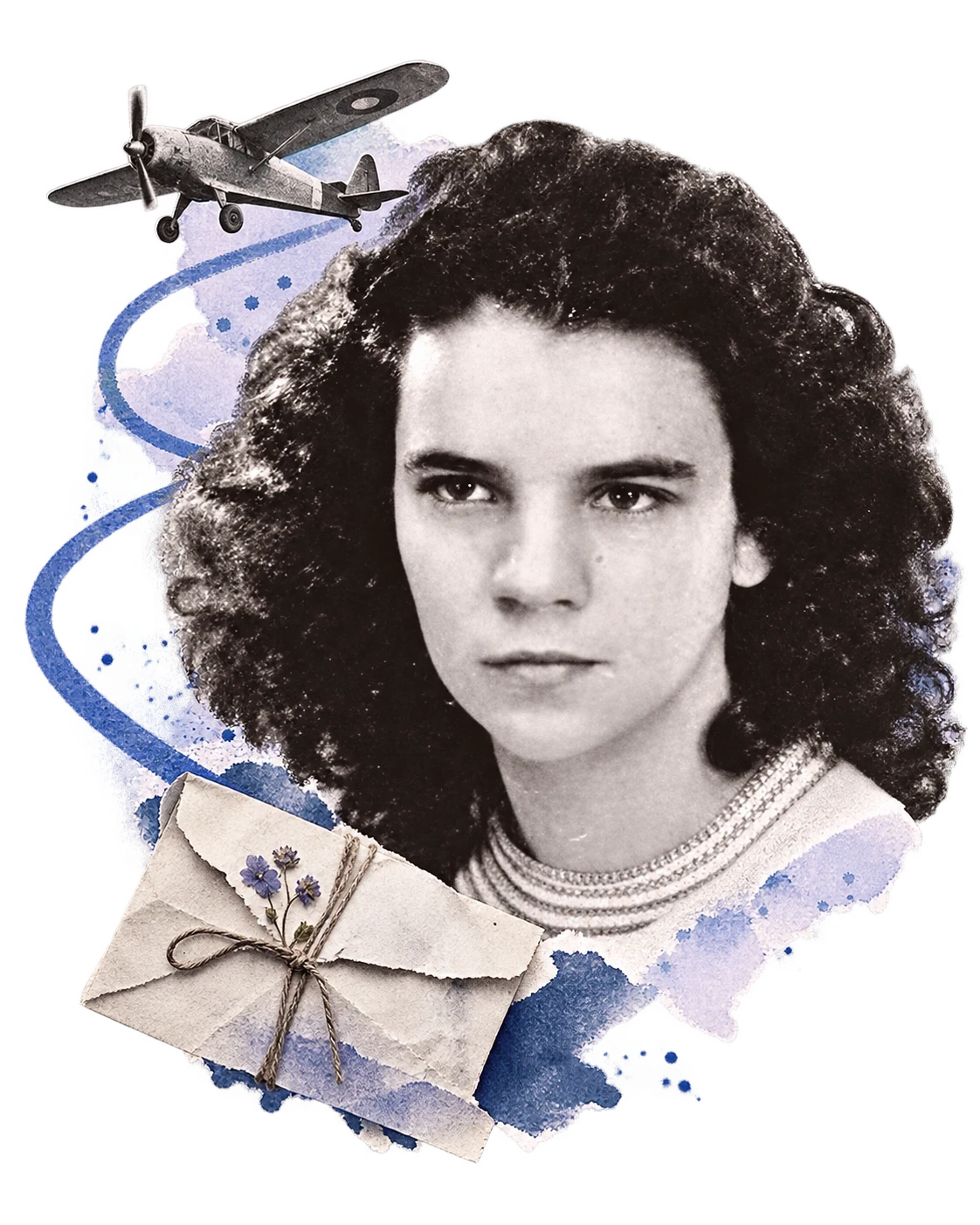
Yaakov Ohayon was born in 1928 in the mining city of Oujda, Morocco. Like all the children in the Jewish community, he attended the Jewish school Alliance, where lessons were taught in French. The school's guiding spirit was that "Jews should be taught a trade so they can be independent." Yaakov studied hairdressing and, at the age of 15, began working in a barbershop in the Jewish Market. Alongside his work as a barber, he served as a French-to-Arabic interpreter for the American army. The declaration of the establishment of the state and the passage through his city of Jews on their way to the Land of Israel kindled in him a fervent desire to immigrate. Yaakov and his brother Charles arrived in the country and enlisted in the IDF. They both served in the same company of the Givati Brigade and went south together to liberate the Negev during the battles of Operation Yoav.
At that time, Morocco was a French protectorate. It was easy for Jews to adopt French language and culture, and even to support French rule. This influence was clearly apparent in the Jewish schools of the Alliance Israélite Universelle, or by their familiar name, Alliance. Muslims, by contrast, supported the struggle against the French, which was another source of tension between them and the Jews.
Operation Yoav and Hulikat
Three rounds of fighting took place at the Hulikat positions. The first two were fought by the Negev Brigade, and the third by the Givati Brigade. The first attempt by the Palmach's Negev Brigade to capture the Hulikat outposts took place in July 1948 but failed. The second attempt also took place in July, and it too failed because the target was misidentified. When morning came and the forces realized their mistake, they were forced to retreat after suffering heavy losses. After the second attempt, there was a lull lasting about three months.
After the lull, the junction outposts and Kawkaba were captured, leaving only the Hulikat outposts as the final obstacle to reconnecting the Negev and cutting off the Egyptian army. Givati's 52nd Battalion received an order from Yigal Allon, the front commander, that the Hulikat positions had to be captured at any cost!
In the third attack on the Hulikat positions, a Givati force assaulting Position 123.2 was stopped by Egyptian fire. The situation was difficult, and another force was rushed to the area. Yaakov Ohayon and two friends who had come with him from Oujda advanced and destroyed the machine-gun position that was holding up the attack. During the fighting, Yaakov Ohayon was wounded in the knee and began to bleed. His brother Charles saw him from a distance but could not go to his aid. Yaakov began to lose blood, and Charles watched him die. Abba Kovner, the brigade's education officer, described the battle: "The battle was savage beyond compare. A bayonet battle. A throat-to-throat battle - many of our fighters suffered bite wounds! Positions changed hands. The battle raged for seven hours straight. Our infantry did not shrink from any sacrifice. It captured one position after another, repelled enemy counterattacks, demolished their fortifications, until every living enemy became a fugitive, and the fugitive, as he ran, became a corpse!"
On the morning of June 7, 1948, in the city of Oujda, Muslims began cursing and threatening the Jews. Toward noon, a mob armed with axes and knives began gathering in Oujda's Jewish Market and murdered five Jews. The following day, the riots spread, and a rumor circulated that a Jew had murdered a Muslim. Shops were looted, Jewish homes were broken into, and for two days the uncontrollable mob massacred 42 Jews, including women and children. These riots shook Moroccan Jewry, and the following year 18,000 of them immigrated to Israel.
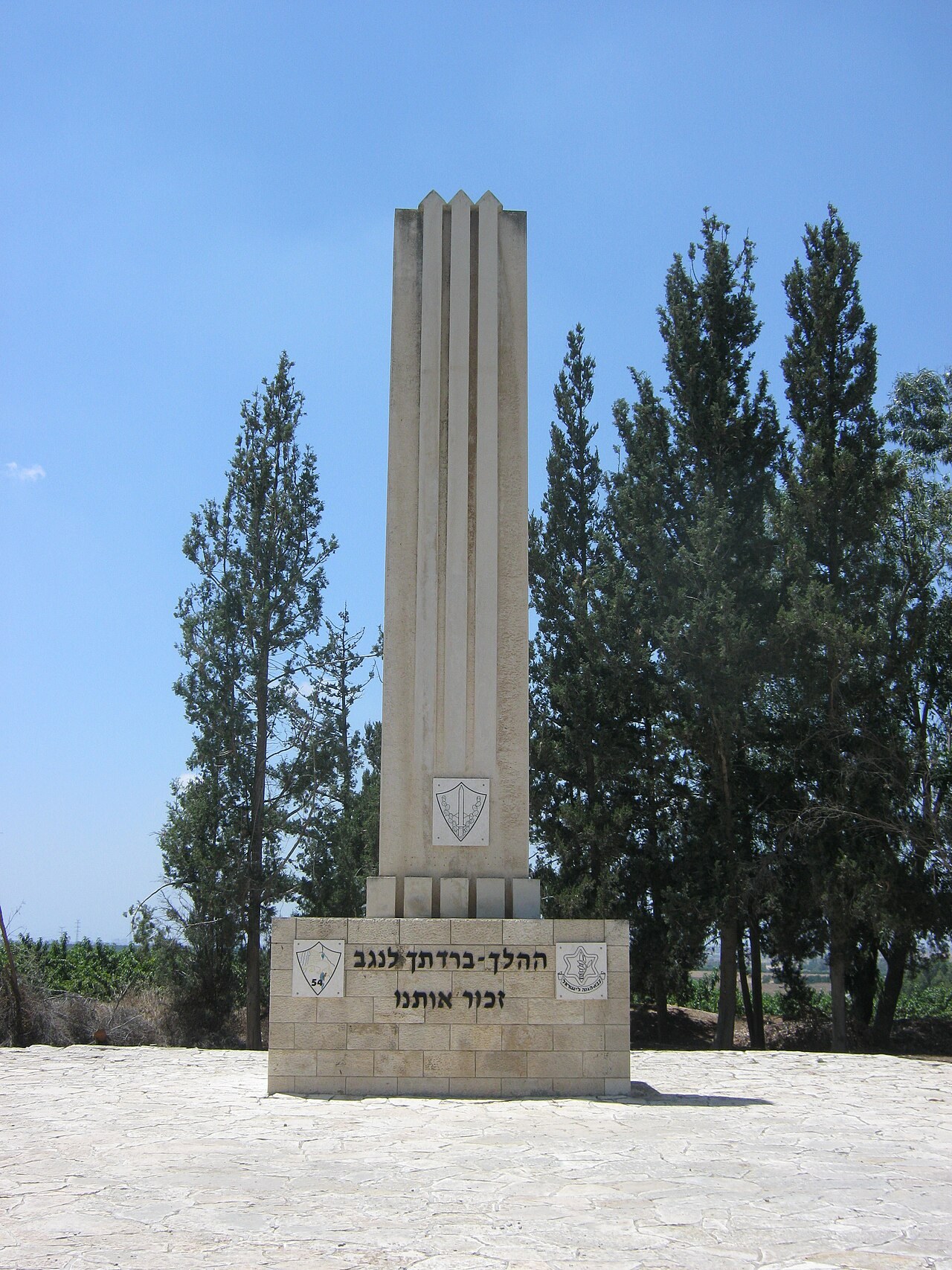
During the night of October 19, 1948, Givati's 52nd and 54th Battalions attacked the Hulikat positions. The fighting was fierce and bitter, with many wounded and dead. The last outpost was captured by a company commanded by Shlomo (Chich) Lahat, who would later become mayor of Tel Aviv. By morning, it was clear that all the outposts had been captured and the Negev liberated. Twenty-eight fighters fell in the battle.
With the capture of the Hulikat positions, the Faluja Pocket was formed, trapping the Egyptian force. One of its commanders was Gamal Abdel Nasser, who would later become president of Egypt.
After the battles, it was decided to erect a monument in memory of the fallen. Abba Kovner saw a resemblance between the Battle of Hulikat and the Battle of Thermopylae: the few against the many, and a willingness to sacrifice until the goal was achieved. When a monument was erected in Hulikat in memory of the fallen of Givati's 54th Battalion, Kovner proposed engraving the words: "Traveler, as you descend to the Negev, remember us" - a line similar to the inscription at Thermopylae: "O stranger, tell the Lacedaemonians that here we lie, obedient to their laws." It was an appeal to passersby to remember those who gave their lives to defend what they held dear and changed the course of history.
Yaakov was killed at the age of 20. During the shiva for his brother, Charles received the news that their three brothers, who had been planning to immigrate to Israel, had also perished in the riots in Oujda's Jewish Market.
תגובות
עדיין אין תגובות.