
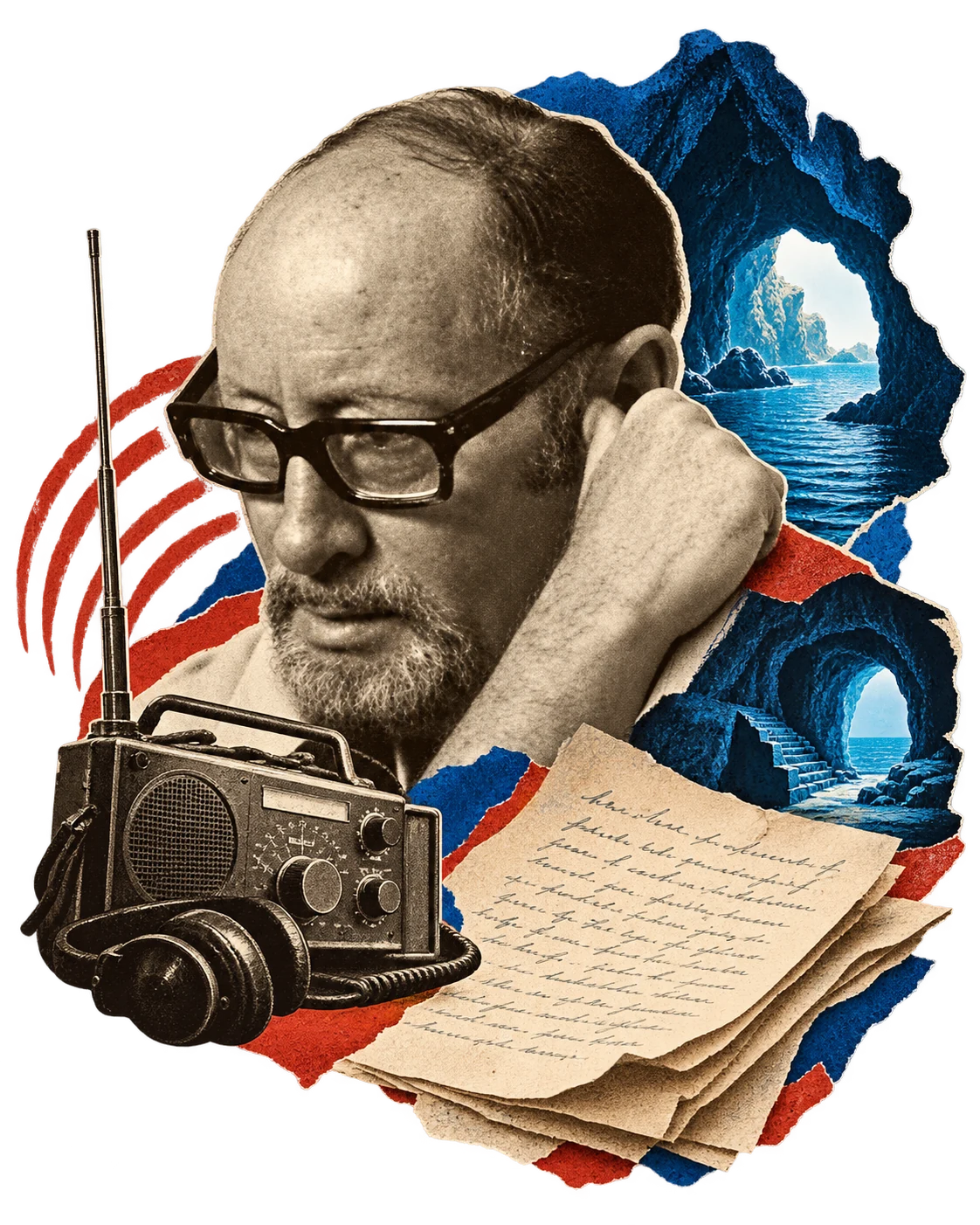
The British have Ian Fleming, who wrote the James Bond series about the agent in the service of Her Majesty. We have an agent who wrote espionage and thriller books for an entire generation of children, and some say he even had an affair with Marilyn Monroe.
Hasamba and Fame
Yaron Zehavi, the commander; Tamar, his deputy; bespectacled Yerahmiel, the botany expert; Menashe the Yemenite, the photography expert; Uzi the skinny one; Ehud the fat one; Shulamit the medic; Rafael Kaduri, the scientist and radio operator; and Danny the sleepyhead - all members of Hasamba (the Absolutely Secret Society). Their headquarters was inside an Electric Cave deep underground, equipped with an advanced communications system the group had invented. With its help, they tracked down young criminals the police had been unable to catch. The first book about Hasamba was published in 1950, and Mossinson wrote a total of 44 books in the series.
It all began with Yigal Mossinson's promise to his son Ido that, instead of buying him Tarzan books, he would write him a story. Ido fell in the Yom Kippur War, fighting on the Golan Heights, and Yigal found comfort in the thought that, as he put it, "When I look at Ido's picture, I will never see him grow old." Ten-year-old Guy Pines wrote to him at the time: "Dear Yigal Mossinson, We're already counting the days one by one and eagerly awaiting your next book. Signed, Guy Pines, 102 Bnei Dan Street, Bavli neighborhood, Tel Aviv." Letters like that made Yigal very happy. He loved children.
Shortly after Adolf Eichmann was captured, people felt that Nazi criminals could indeed be caught and brought to justice. Mossad agent Zvi Eldobi approached Yigal and told him about an initiative to capture Nazi criminal Léon Degrelle, leader of Belgium's Nazi Party during World War II, who was living in Seville, Spain, interrogate him, and take him to France or Belgium to stand trial. They believed Degrelle might lead them to the whereabouts of Nazi leader Martin Bormann, Hitler's deputy. Israelis and Americans took part in the operation, arriving in Seville in the summer of 1961. Yigal's role was to report on the operation after it was over, but he did not know it was a private initiative and was certain he was working for the Mossad. One evening, Mossinson went to a local bar and, after a few glasses of wine, started chatting with a Spanish drunk. The group was caught, questioned, and imprisoned. During questioning, Yigal was asked if he knew anyone local. "Yes, of course - the barber from Seville," he replied. Ben-Gurion, who was fond of Mossinson, used his connections to speak with General Franco, who ruled Spain at the time, and within 48 hours Yigal was released from detention. Degrelle remained free in Spain and lived there until his death in April 1994, one month before Mossinson died.
Family Roots
The Mossinson family saga begins with Zalman Sommer, who fell in love with the rabbi's daughter and was expelled from the yeshiva. Zalman began wandering across Russia until he reached Ukraine, where he met Devorah, the daughter of a wealthy family. At first he only taught her Hebrew, but after they fell in love, they married in haste against her parents' wishes. Their first son, Israel, was born in 1905, and five years later their son Moshe was born. By then Zalman had run into trouble with the law in Russia, so he fled to Israel with his family and changed his name to Asher Mossinson.
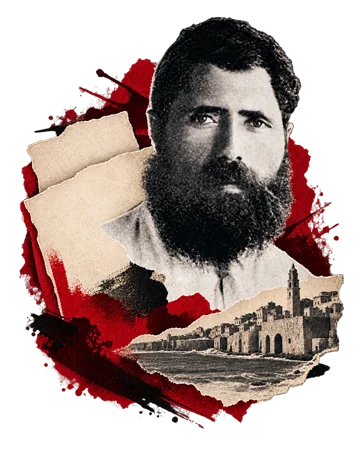
Members of the Second Aliyah who worked on the estates of First Aliyah farmers dreamed of establishing a workers' moshav where they would be their own masters. In 1908, they made that dream a reality and founded Ein Ganim, the first workers' moshav (today a street in Petah Tikva). They envisioned working the land independently, rather than for others, and having Hebrew as the spoken language of the settlement. The place soon became the ideological center of the leaders of the labor movement. Among its residents were Shmuel Dayan (Moshe Dayan's father), Haim Brenner, Ben-Gurion, and others.
Asher and his family arrived in Ein Ganim, where Asher worked as a dairy farmer and a teacher. Devorah befriended A. D. Gordon and Haim Brenner and helped draft the regulations for a health fund. Not long afterward, she died of a fever, and Asher sank into a deep depression. A year and a half later, Asher was offered the hand of a beautiful, talented daughter of a wealthy family, also named Devorah (from then on, she was called Devorah B.). She immediately drove Israel and Moshe out of the house, and in 1917 she gave birth to Yigal. Soon after the birth, Devorah B. fell into a depression and traveled with Yigal to Vienna, to Sigmund Freud's clinic. In Vienna she went to balls in magnificent gowns and even befriended a violin teacher. Her depression seemed to vanish... until her parents informed her that they were cutting off her money and she would have to return to Israel.
Asher, who loved her very much, was delighted to receive Devorah B.'s telegram saying she was returning to Israel. But then came word of a terrible disaster: the ship had burned and all its passengers had perished. Asher could not bear it and jumped from the roof of the committee building. His suicide attempt failed; he only broke his legs. While he lay in hospital, he learned that, by a miracle, Devorah and their young son Yigal had survived and were on their way home. Asher waited for them on crutches at the door. When the carriage arrived, his son Yigal stepped down, followed by his beautiful wife Devorah, and then... the violin teacher... The teacher moved to Tel Aviv, while Devorah sent her son Yigal to Kibbutz Beit Alfa and divided her time between Ein Ganim and Tel Aviv.
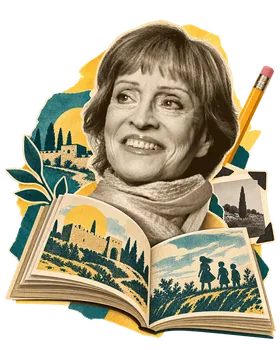
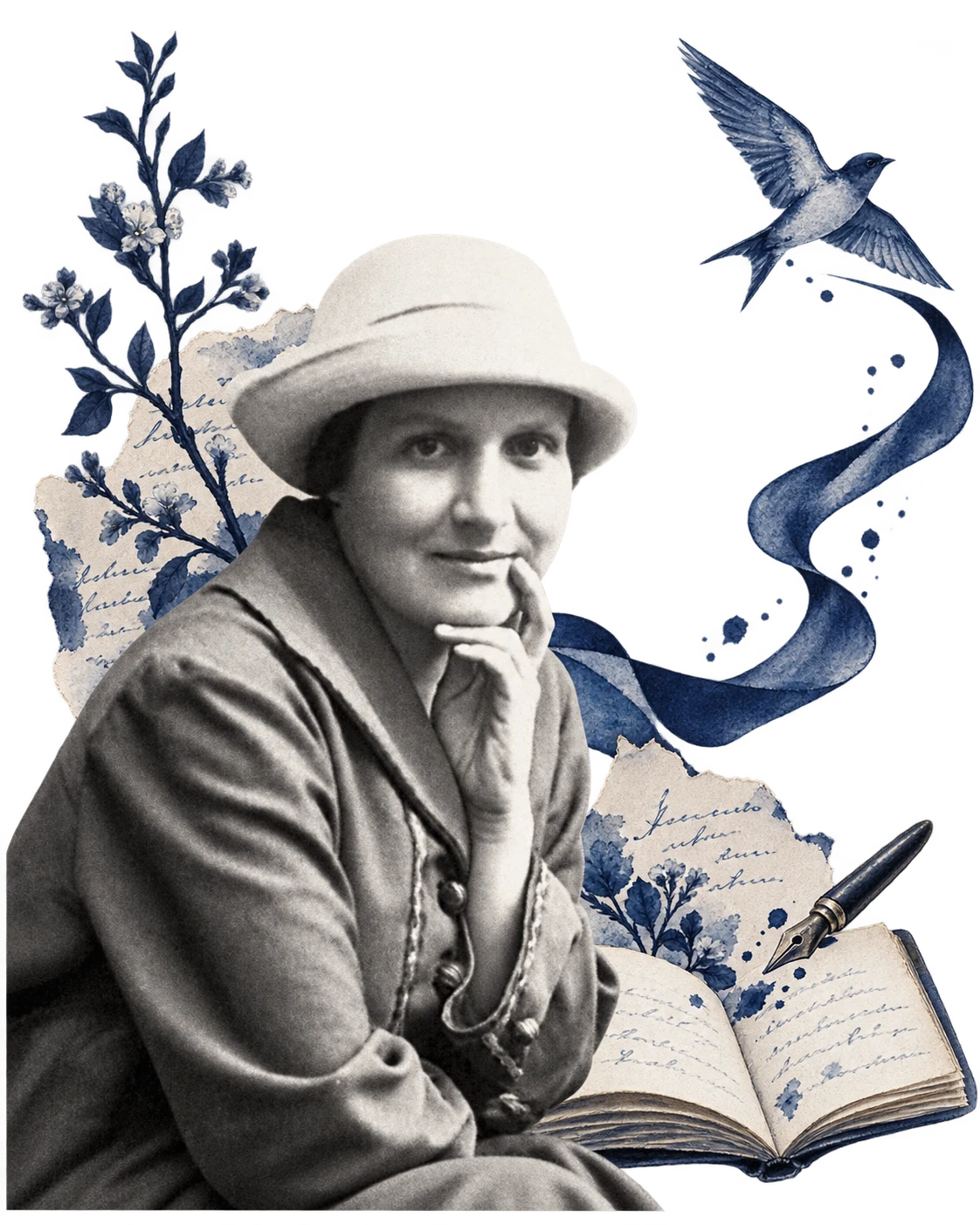
Asher, who dreamed of becoming a writer, passed his passion for writing on to the generations that followed. His sons Moshe and Yigal both wrote. Amos Mossinson (Israel's eldest son) was a playwright. The author Devorah Omer is Moshe's eldest daughter and was named after her grandmother; her sister is the poet and advertising executive Vered Mossinson.
Yigal Mossinson was married four times, and, as a friend of his put it, "Every woman he marries, he also divorces." Yigal had a reputation as the kind of man every mother in Israel would say to herself, "God forbid - just don't let him catch my wonderful daughter. Me, fine, but my daughter? God forbid." Ruth Schwartz of Nahalal (later Dayan) said of him: "The only man who courted me in the distant past and had a chance of competing with Moshe was Yigal Mossinson. He still owes me a book from that time."
The Work and the Legacy
Yigal grew up in Beit Alfa and wrote his first story at the age of nine. In 1938, at age 20, he followed his brother Moshe and joined Kibbutz Na'an, where he worked, among other things, quarrying rocks. One day he was injured and went to Tel Aviv for treatment. On the way, he stopped by the writer he admired, Avraham Shlonsky, and left him the manuscript of his first story, "A Night of Sharav." Avraham Shlonsky was enthusiastic, and that same week the story was published in the literary section of the newspaper Al Hamishmar. In 1943, Yigal served as a notr (auxiliary policeman) in the Palmach and was even held in the British detention camp at Latrun. During the War of Independence, he served as cultural officer of the Givati Brigade.
When he began publishing parts of his second novel, "Derekh Gever," which portrayed kibbutz life in a way considered scandalous at the time, members of the kibbutz demanded that he shelve the story. Yigal refused, and in 1950, after 12 years on the kibbutz, he moved to Beit She'arim and worked in agriculture there. Later he moved to Tel Aviv and rented a room in an apartment, where he began writing the Hasamba series. He named the series' hero Yaron after the son of his landlord, with whom he had become friends - and yes, the hero was named after Yaron London. Amos Ben-Gurion (David Ben-Gurion's son) recommended him to Yehezkel Sahar, the police commissioner at the time, who appointed Mossinson as spokesman for the Israel Police. His work with the police exposed him to an entire world that provided the backdrop for his plays "Kazablan" and "Eldorado." These plays explored ethnic and class divides at a time when such subjects were still taboo. When he left the police, he became spokesman for the Habima Theatre, where his play "In the Negev Plains" was staged and became a huge success.
In 1957, Yigal Mossinson summoned the courage to establish the Sadan Theatre, but it failed and ran up heavy debts. Yigal moved to the United States to earn money and pay them off. He worked as a literature instructor at the University of Pennsylvania and, above all, as a construction worker. It was also there that he became linked by rumor to an affair with Marilyn Monroe. The quiet around him allowed him to write the work he considered his best, "Judah Iscariot." After eight long years, he returned to Israel, later saying, "There is nothing more terrible and cruel than longing for home." He went on to turn Hasamba into one of the longest-running book series the world has ever known.
His passion for creating also burned in the field of science. He longed to invent things and even patented some of them. He also received funding for his idea of harnessing ocean waves to generate electricity. His other ideas included efficient parking, a sidewalk-cleaning device, and a desalination device.
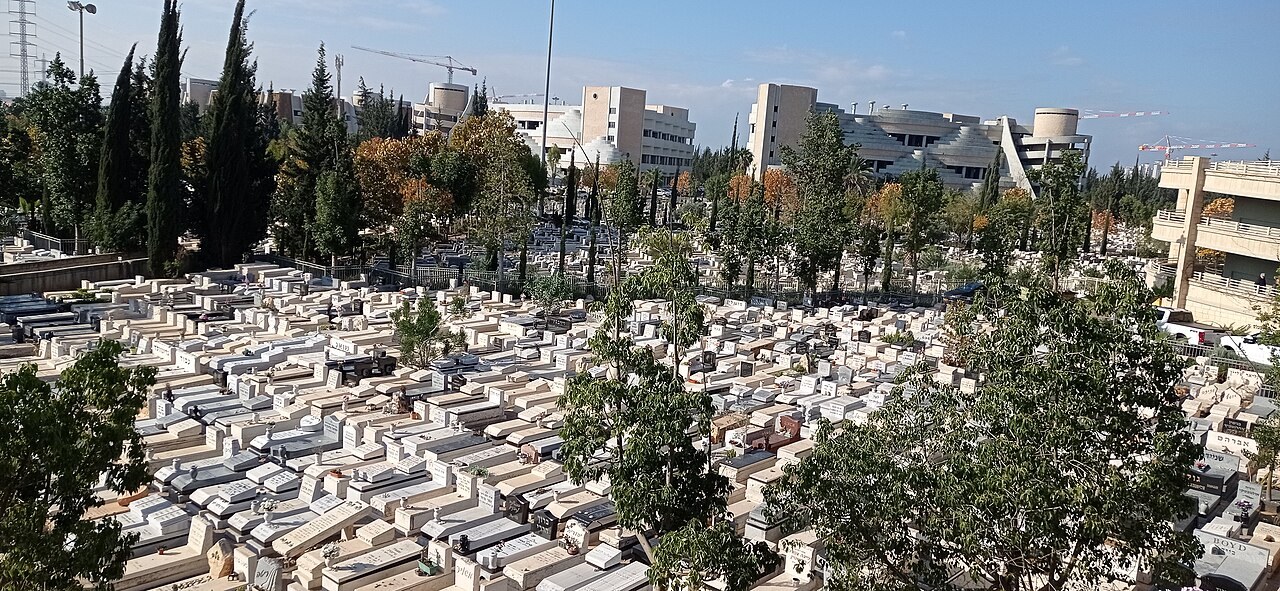
Yigal Mossinson died of cardiac arrest at the age of 77 and was buried in Yarkon Cemetery. A plaque was installed at the home where he lived, at 61 Sokolov Street in Tel Aviv, telling passersby that the writer Yigal Mossinson had lived there. A square in Haifa, a garden in Herzliya, and streets in Tel Aviv, Or Akiva, Rishon LeZion, Netanya, Petah Tikva, and elsewhere are named after him. Years after his death, his plays were staged across the country, and the Hasamba series continues to fire young people's imaginations; some of it has also been adapted into a television series.
תגובות
עדיין אין תגובות.