
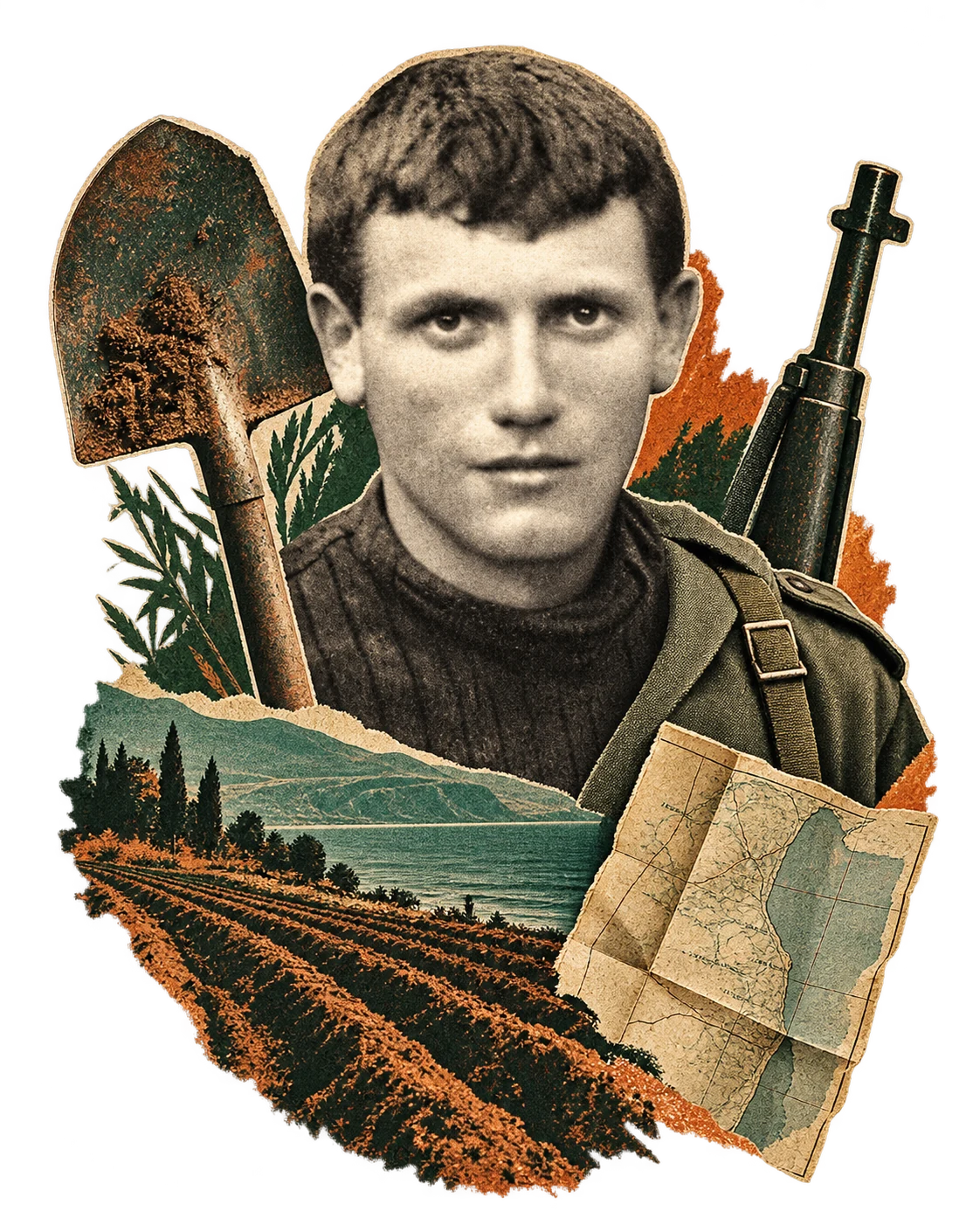
The nonreligious righteous man and the mule's grave. Aharon was a member of the Second Aliyah, one of the founders of the Kinneret Group, and among the first to enlist in the Hebrew Legion. To his dying day, he fervently believed that the state should be founded on agriculture and modesty.
The Nonreligious Righteous Man and the Mule's Grave
The nonreligious righteous man and the mule's grave. Aharon was a member of the Second Aliyah, one of the founders of the Kinneret Group, and among the first to enlist in the Hebrew Legion. To his dying day, he fervently believed that the state should be founded on agriculture and modesty.
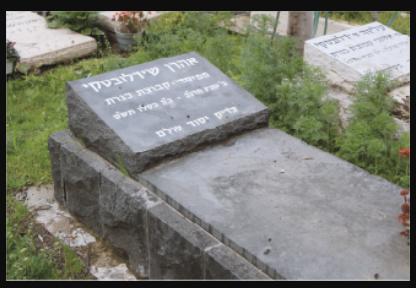
Today, the word "righteous" describes a kind person who helps others, but in Judaism the term refers to someone who fears God, lives a pious life, and observes the commandments meticulously. Aharon Shidlovsky was not a God-fearing man, yet on his grave in Kinneret the words "A righteous man, foundation of the world" were inscribed.
Aharon Shidlovsky was a member of the Second Aliyah, and until his death in the late 1970s he would say: "When a person has more than two suits of clothes, one for work and one for after work, all the Zionist endeavor is worth nothing. You only need two suits. We came here to live simply and modestly, and all this pursuit of more than that is destroying everything for us."
From Childhood in Poland to Kinneret
Aharon was born in 1892 in Skryczyn, a small town in Poland, to a religious family. At the age of 13, when it was time to stand before his family and community and take on the obligations of the commandments, he chose instead to head in the opposite direction and began to move away from religion.
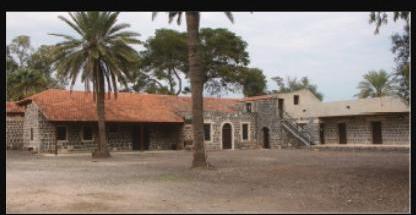
When he was 16, the family moved to Lodz, where his father became a partner in a textile factory. During the three years he lived in Lodz, Shidlovsky studied languages and European literature, especially the works of Tolstoy, and there he was also introduced to the pioneering youth movements. Aharon was drawn to their pioneering spirit and activism, and in 1912, at the age of 20, he arrived in the Land of Israel. Like all the young people, he joined the workers in Hadera, and together with them went up to the Galilee. He was among the first eight members at the Kinneret courtyard, where he joined Ben-Zion Israeli and Noah Naftolsky's "Together Group." Together they founded Kfar Uria, returned to Kinneret, and established the Kinneret Group.
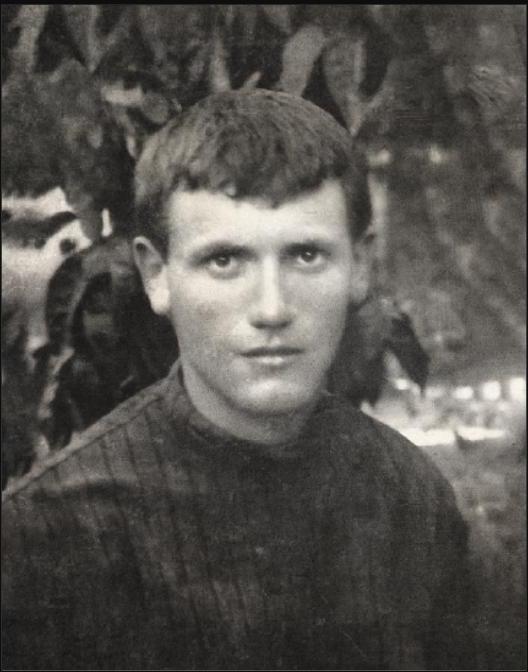
In 1918, at the end of World War I, Shidlovsky was among the first to enlist in the "Hebrew Legion." Two years later, he was discharged and returned to Kinneret. Four years after that, he married Aliza, daughter of Yaakov Tsitliaunik, who also left a glorious mark through her life and deeds on the history of Kinneret and the entire labor movement.
Aharon was a pacifist by conviction, but during the 1921 riots he served as Kinneret's commander and as a member of the Jordan Valley Haganah command.
In September 1929, Yosef Hecht, head of the national Haganah, tasked Yehuda Carmi of Haifa and Aharon Shidlovsky of the Kinneret Group with arranging the purchase of weapons in Europe. The two left the country for Antwerp, known as "Europe's arms depot." In Antwerp, Shidlovsky met the Zionist leader Jean (Jonah) Fischer, who received him with marked coolness. Illegal organizations, arms smuggling, and the like were not to the liking of Jews in Western Europe, to put it mildly. Fischer said he would not give even a single penny. He opposed the whole enterprise because he believed the Jews could not hold out without the British government, and that they should turn to it if necessary.
After Fischer refused to help him, Aharon approached two Zionist Jews in Antwerp, Moshe Levin and Chaim Friedman, who came to his aid and provided the necessary funds. With the money they were given, Shidlovsky and Carmi bought the weapons in Antwerp, but the hard part was shipping them to the country and getting them through the ports.
The first attempt was made by shipping "seedlings." The pistols ("Mausers") were buried in soil inside barrels, carefully packed and protected from moisture, with attractive seedlings planted on top. But when the seedlings arrived in Jaffa, the Haganah emissary feared that the barrels in which they had been planted might break apart while being unloaded from the ship to shore, so the shipment was sent back to Antwerp. Shidlovsky and Carmi arranged for double-walled iron crates to be made, and used them to ship the weapons.
In March 1930, when the first three iron crates arrived in Haifa addressed to the engineer Wilbushewitch, the Palestine Police were already waiting for them. The walls were dismantled, revealing 148 Mauser pistols without stocks, one complete Mauser (to serve as a model for the carpenters who would make the stocks in the country), about 60,000 rifle and pistol bullets, and more than 2,500 magazines. According to rumor, the anonymous informant received 300 Palestine pounds from the Palestine Police.
On the Way to Defense and Agriculture
Between 1945 and 1947, Shidlovsky moved south to Beit HaArava, where the soil was salty and "unfriendly" to farmers. Aharon flushed the soil, turning it from cursed ground into fertile irrigated land, while guiding the new settlers at Beit HaArava.
He worked in field crops and the vegetable garden, and was considered one of the most prominent figures in the history of the Kinneret Group. The group's website says of him: "Modesty, simplicity, and contentment with little were Aharon's way of life. He preached these values and lived by them." Shidlovsky was known for his uncompromising views on the character of the group. He opposed its expansion and the growth of its economy through outside means such as loans and grants, and he also opposed the rapid improvement in the group's standard of living. Unwaveringly loyal to his convictions, he often found himself at odds with everyone.
He and the mule "Buba" were a well-known pair. They both worked hard and never took it easy. After the mule, with whom Shidlovsky had worked for 15 grueling years, grew tired, the members of Kinneret decided to retire her. The secretary, Stein, said the members, and Aharon Shidlovsky in particular, loved her so much that they decided she deserved to grow old in comfort. She would wander among the members and eat from their hands.
In Kinneret, they tell how, on the day she died, Shidlovsky took a mattock and a hoe and spent the entire day digging a pit in the field. When he had finished, several members came over, and together with him rolled Buba into the pit.
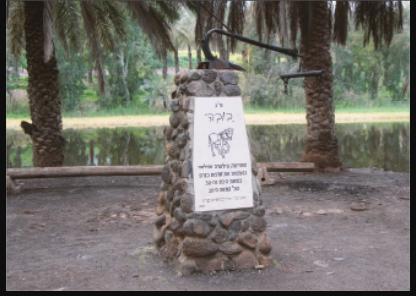
"The first pensioner in the kibbutz movement" - that is what the kibbutz members called her grave. In the 1980s, member Aharonik Israeli decided to document Kinneret's history and preserve its historic sites. Among other things, a gravestone was erected for Buba, bearing her legendary plow. It reads: "Here lies Buba, who faithfully plowed, cultivated, and furrowed the soil of Kinneret in the 1920s and 1930s. May her memory be woven into the history of Kinneret."
In 1948, when Ben-Gurion established the state, Aharon Shidlovsky disapproved of the way it was done. He argued with Ben-Gurion until his dying day. At Kinneret's 50th anniversary, Ben-Gurion invited him onto the stage, but he refused and shouted to him from the front rows: "You founded a bad state. Everything here is bad." In his view, everything should be founded on agriculture and modesty.
Aharon Shidlovsky's brother was the well-known industrialist Yosef Shidlovsky, who broke the French boycott of Israel and established the Beit Shemesh factory for aircraft engines, "Beit Shemesh Engines." There was a major conflict between the two brothers. Aharon the farmer told his brother, "You exploit people, you fleece them," and Yosef the industrialist replied, "I give them a livelihood and support progress." When Yosef came to visit Kinneret by helicopter and landed on the soccer field, it was a major attraction. When people came to Aharon and told him, "Your brother has arrived with important people, prime ministers and so on," he would answer, "Tell Yosef he has two options for seeing me: he can wait until I finish my workday, or he can pick up a mattock and join me in the field, and then we can talk..."
Aharon and Aliza Shidlovsky had two daughters: the painter Rika Shalev and the physician Dr. Hadassah Dean. Rika married the literary critic Mordechai Shalev, and they had two children: the writer Zeruya Shalev, who is married to the writer Eyal Megged, and the mathematician and writer Aner Shalev, who is married to Dr. Dana Shalev of the Hebrew University's Department of Classical Studies in Jerusalem (daughter of the writer and biblical scholar Ariella Dim-Goldberg).
In 1980, Aharon died at the age of 87. The words "A righteous man, foundation of the world" were engraved on his grave.
After his death, Moti Zeira wrote the book "Stubbornness and Stars." Episodes from his life appear in the book "Mother," written by his grandson, Aner Shalev.

תגובות
עדיין אין תגובות.