
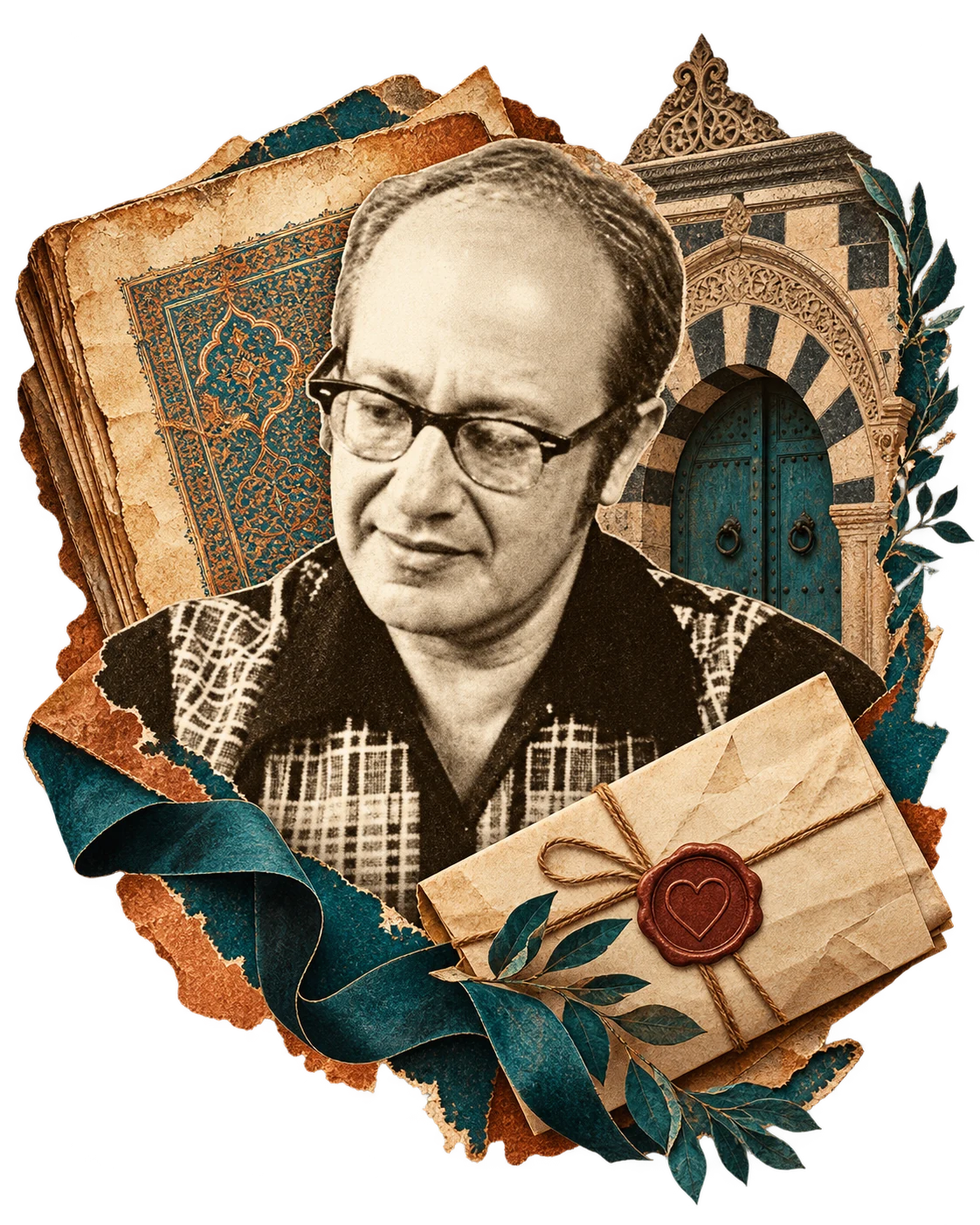
This story revolves around three strands: first, the national treasure; second, a moving and touching love story; and finally, the story of a gifted writer who connects the other two.
The Journey of the Aleppo Codex
The biblical text we read today in the Bible is very close to the original, as ancient manuscripts such as the Dead Sea Scrolls attest. They too are in Hebrew. If we look closely, we can immediately see a number of differences. For example, there is no division into chapters or verses; that was established later. Instead, the text is divided into open and closed sections. The Bible studied today around the world follows the text known as the Masoretic Text. This Bible was written in Tiberias by a group of Jewish sages who wanted to create a single text that would serve as the basis for copying. This group was active from the eighth through the tenth centuries. They added signs and notes to clarify how the Bible, as it had been handed down to them in tradition, should be read. Hence the name "Masoretic Text." Those who produced it were called the Masoretes. They resolved disagreements and created the biblical text on which all later copies of the Bible were based. This is the version considered to be the original and most accurate text of the Bible. Only a small number of manuscripts from that period are involved. The Masoretes developed the vowel signs and cantillation marks. Most of them are unknown. The best-known Masorete was Aaron ben Moses ben Asher, who lived in the tenth century and produced the most accurate manuscript of the Bible. He added its vowels with his own hand, marked its cantillation, and recorded the notes known as the Masorah Parva and the Masorah Magna. Soon after it was created, this manuscript was called the "Crown" (in Arabic: taj), a title of praise. In time, it would be known as the "Aleppo Codex." The Crown was produced through a collaboration between a "scribe," who wrote the letters and words, and a "vocalizer" or "Masorete," who added the vowel signs, cantillation marks, and Masoretic notes, proofread the manuscript, and removed the scribe's errors. The scribe of the Crown was Solomon ben Buya'a. It is said that he was so gifted he could hold four inkwells in his hands and write God's ineffable name in a single stroke of the pen. The vocalizer was that same Aaron ben Moses ben Asher, considered the last and most authoritative of the Masoretes.
The Crown was written so that scribes and vocalizers could use it to proofread their own manuscripts. Since it was intended as a kind of guide, it was written as a bound book rather than a scroll, so that it could be turned through without the effort of unrolling the parchment. In the margins, ben Asher wrote thousands of tiny notes. After it was completed, the Crown remained in the possession of Aaron ben Asher and his heirs for about a hundred years. At the beginning of the eleventh century, the Crown was purchased by one of the wealthy Karaite Jews, Israel ben Simha of Basra, who gave it to the Karaite community in Jerusalem. The Crown was kept in the Karaite synagogue in Jerusalem and brought out for all the Jewish communities on the three pilgrimage festivals: Passover, Shavuot, and Sukkot. The rest of the time it was kept under seal, and only rabbis were allowed to consult it under special arrangements.
In 1099, the Crusaders conquered Jerusalem and carried out a horrific massacre of its inhabitants. They destroyed the synagogues and burned most of the Torah scrolls. Many members of the Jewish community were killed, and many others were taken captive. The Crusaders knew the value of the Crown. They sought out a wealthy and powerful community willing to pay for it, and so they made their way to Egypt, to the city of Fustat (now part of Cairo, where the Cairo Geniza was discovered). When news of their arrival reached the city, people raised money "to redeem the Torah scrolls and redeem the men of God held captive by the wicked kingdom." First the Torah scrolls were to be redeemed, and then the men of God. There are plenty of men, but there is only one Crown.
This Crown came into the hands of Maimonides, the greatest of the halakhic authorities. At the time, he was working on his most important work, the Mishneh Torah, also known as the Yad ha-Hazaka. Written around 1175, this work was composed in Hebrew, unlike his other writings, which were written in Arabic. It is an orderly summary of all Jewish law and custom. One chapter deals with the laws governing the writing of a Torah scroll, and when he wrote it, he consulted the Crown manuscript. As he himself testifies (Mishneh Torah, Laws of Tefillin, Mezuzah and Torah Scrolls 8:4): "And since I saw great errors in all the books I had seen on these matters ... in order to correct all the books and proofread them against it, the book on which we relied in these matters was the book known in Egypt, which contains the twenty-four books. It had been in Jerusalem for many years, and books were proofread against it; everyone relied on it because ben Asher had proofread it and studied it carefully for many years, correcting it many times, as it had been copied. And I relied on it for the Torah scroll I wrote according to its laws." In this manuscript he saw the oldest, most complete, and most reliable version of the Bible that he had read.
Two hundred years later, David bar Joshua, the great-great-great-grandson of Maimonides, migrated to Aleppo with the Crown. There he encountered an ancient Jewish community that had existed in the city since Roman times. In Jewish sources, the city is called "Aram Zobah." It was there that the Crown was first given the name it bears to this day: the "Aleppo Codex." The Crown was wrapped in cloth, placed in an iron chest, which was placed inside another iron chest, and secured in a safe in the wall of the "Synagogue of Joab ben Zeruiah." The Crown became a combination of the Mona Lisa and the Holy Grail, an artistic masterpiece and a sacred religious object. It was at once a priceless jewel and an invaluable talisman. In the eyes of the community, the Crown was holier than the Torah scroll in the synagogue’s Torah ark. The Jews of the community believed that the day the Crown left the city's boundaries, the community would be destroyed. This tradition was based on warnings written on the book's opening page: "Holy to the Lord, it shall never be sold or redeemed, for all eternity. Blessed is its keeper, cursed is its thief, and cursed is anyone who pawns it!" Hakham Yitzhak Shchayber, a member of the community, described the strict precautions taken to guard the Crown: "The members of the community feared that the Crown might be stolen, so they set aside a large iron chest for it, with two keys. The keys were not entrusted together to one communal official, but only to two wealthy and respected men, so that the chest could be opened only in the presence of both of them, under the supervision of the community council." Besides the Aleppo Codex, there were three other codices, one of them known as the "Little Crown." It appears to have been written in Italy in 1341 by an Ashkenazi scribe, and consists mainly of the Five Books of Moses, the Song of Songs with Rashi's commentary, the Five Scrolls, the haftarot, and the Masoretic treatise.
The Crown survived many pogroms. In 1400, the Mongol Timur Lang conquered the city. He massacred Jews and destroyed the synagogue, but the Crown survived. The Jewish community recovered. After the expulsion from Spain, some of the exiles arrived in the city and the community grew. The Crown also survived the terrible earthquake of 1822, which destroyed most of the city. Many legends grew up around the Crown. One tells how, on one occasion, it was taken out and a plague broke out immediately afterward. It was brought out only to air it and on the High Holy Days, then immediately returned to its chests and the cave.
From Aleppo to Ma'ayan Baruch
It is easy to write about Amnon, since at the age of 78 he gathered his memories into a book. Amnon Shamosh was born in 1929 in the Syrian city of Aleppo. On his father's side, he came from a family of Musta'arabim, the name given to Jews born in the region who spoke Arabic and were influenced by Arab culture. On his mother's side, he belonged to the Francos, Jews descended from the exiles from Spain who arrived in Aleppo in the eighteenth century and lived there alongside the Musta'arabim community. When he was nine, his father died. Amnon was born into an educated family. His brother Yitzhak, 17 years his senior, was a candidate for the Syrian parliament as a representative of the Jews in 1936. That same year, during the 1936 Arab revolt, a lecturer in Arabic literature at the Hebrew University of Jerusalem was murdered. In response, the university approached Yitzhak and asked him to move to Jerusalem and take up a position there as a specialist in Arabic literature. After some hesitation, Yitzhak Shamosh accepted the offer, left Aleppo, and immigrated to the Land of Israel. There he taught Arabic literature at the Hebrew University of Jerusalem. Had he stayed in Syria, he would have been elected to the Syrian parliament. His father's death and his brother's move to the Land of Israel prompted his mother to decide to immigrate as well. As he recalled: "On the certificate he received from the university, my mother and I were able to travel in deluxe style aboard a ship from the port of Beirut to the port of Tel Aviv, which was pretending to be a port. It wasn't really a port yet." Their brother Tuvia, also a writer and translator, was already waiting for them there. They first made their home in Tel Aviv. Arriving in the country moved him deeply. He described the moment as "entering through the gates of paradise (...) I once called it redemption. I was enchanted by the city and everything in it even during my brief visit before immigrating, for my brother Tuvia's wedding. He was the first Zionist in the family." His mother could have chosen to emigrate to Mexico, where two of her sons were, or to Israel, where Yitzhak was. The family chose the Land of Israel. In Israel, Amnon was captivated by the Hebrew language: "I conquered Hebrew by storm, in a fierce emotional tempest, almost erotic. It was love at first utterance (...) When 'taksi' gave way to 'monit,' the Hebrew word for taxi, I was there; when 'intsident' gave way to 'takrit,' the Hebrew word for incident, I was there (...) I could already read from the prayer book and the Pentateuch. On those foundations I built my command of the evolving language." As the son of a respected, established, and educated family, moving to a new city, a new language, and the small apartments he described as "the move from the enormous apartments back there, in Bilad al-Sham, to the cramped apartments here" was no small challenge. The move was also from the large city of Aleppo to a small, primitive city in those days. As he put it: "I knew that the Arabic word jamal meant beauty, but in the city of a million people and streetcars I came from, I hadn't seen a single camel." In his first year, he became aware of ethnic divisions: "The year I realized, sadly, that there were Ashkenazim and Sephardim, and that the Ashkenazim were the overwhelming majority and, in their own eyes, better than everyone else. This was about a dozen years before the mass immigration, before the immigrants from the Maghreb - the Maghrebi ‘salt’ - flooded the country and threatened the ‘salt of the earth’. They also added spice to Ashkenazi society." He was captivated by the pioneers and Zionists and wanted to join them. He studied at Herzliya Gymnasium and joined a youth movement. He lived between several worlds, as he described: "At home we spoke three languages and proudly belonged to three cultures: Hebrew, Arabic, and French. Zion, Andalusia, and Paris flowed into one another and became entangled." He criticized "the first Hebrew city, Western in its consciousness, its vision, and its food," which looked down "not only on neighboring Jaffa, but on everything and everyone who came from the East."
At 17, Amnon joined the Palmach as part of the United Movement's training group at Kfar Giladi. In 1947, he and the other members of the group founded Kibbutz Ma'ayan Baruch. He was one of two members trained as shepherds: "At Kfar Giladi, we prepared to establish a flock in the new kibbutz that would be founded. One of the two was Sefi Ahali, who fell in the battle for Nabi Yusha in the 1948 War of Independence, and I was the other. We bought a flock of sheep cheaply from the Shiites when the opportunity arose, and there was no one to look after it. I was torn. On the one hand, I had formal permission from the training group to study at university and, at the same time, to lead the entire Jerusalem branch of the movement, its largest branch. I happily did both, combining them with nights at the positions in Notre Dame and going out to fight to capture Musrara and so on. I was a Palmach fighter, a movement instructor, the movement's training coordinator, and a student." Once the flock was bought, it was clear that he would be responsible for it. He decided to stop studying and return to the kibbutz. Looking back, he said, it was one of the best decisions of his life: "I think I made a wonderful decision. God forbid I hadn't made it. First of all, I wouldn't have met Hannah. That was the most important turning point in my life." Hannah was the love of his life, whom he married. We will return to their love story later.
At the kibbutz, he discovered that "there are Arabs in Israel! And lots of them. Even today, when you live in the Galilee Panhandle, you tend to forget that. The talk about a people without a land coming to a land without a people infuriated me."
The Mission to Save the Crown
Christian biblical scholars, too, regarded the Crown as an accurate and reliable biblical text. Many of them asked to photograph it, but the members of the community refused and would not allow it. One example was the Christian scholar Paul Kahle: "Rudolf Kittel and I hoped that we could replace the Leningrad manuscript, which we had used as the basis for Biblia Hebraica during our work, with the exemplary codex of ben Asher himself, kept in the Sephardi synagogue in Aleppo. This proved impossible, since the owners of the codex [in Aleppo] did not want to hear of a photographic copy. Moreover, personal appeals were unsuccessful." Yet one Christian did manage to do so. He was a priest named Joseph Segal, who worked in Syria as a missionary. At the beginning of the twentieth century, he photographed several pages of the Crown in exchange for photographs of the community’s sages. Another person who was allowed to see the Crown was Yitzhak Ben-Zvi, during a visit to Aleppo in 1935.
As the Arab national movement grew stronger in Syria and relations between Arab nationalism and Zionism grew more strained, another factor came into play: during World War II, Syria was ruled by the Vichy French government, which collaborated with the Nazis. During this period, the Arab national movement in Syria gained strength, and its relations with the Zionist movement became hostile. At the same time, the Hebrew University of Jerusalem established the Bible Project, whose aim was to publish an accurate and complete edition of the Bible. The project's scholars, headed by Judah Magnes, the university president, sought an authoritative manuscript on which to base the most accurate text possible, and chose the ancient and reliable Aleppo Codex. They approached Yitzhak Ben-Zvi and asked him to try to save the Aleppo Codex from the new threat.
In 1943, a young Jew of Aleppine origin named Yitzhak Shamosh was summoned to the offices of the Hebrew University of Jerusalem. Excited by the invitation, he arrived at a room where two senior leaders of the Zionist movement were waiting: the university president, Mr. Judah Magnes, and a member of the Jewish Agency's executive, Mr. Yitzhak Ben-Zvi. It was a secret meeting, and they had an important assignment for Yitzhak Shamosh, one that put his life at risk. He was to cross the dangerous border into Lebanon, board a train under an assumed identity, and travel to his hometown of Aleppo. There he was to persuade the leaders of the Jewish community to take the Aleppo Codex out of the city and bring it to Jerusalem. As a native of Aleppo, Yitzhak knew the Crown and understood the enormity of the task. Years later, his brother, the writer Amnon Shamosh, described his emotional turmoil and days of hesitation. After several days, in the heat of July, Yitzhak crossed the border into Lebanon. From there he took a train to Aleppo and presented the community council with the request. After several internal discussions, the decision was clear and firm: "The Crown will not be moved." Not everyone agreed with the decision. Groups of educated young people in Aleppo, Yitzhak Shamosh's former peers and friends, were furious, since they understood that the Crown was not safe in Syria. The group proposed a way around the elders: "Tell us the number of your train car and compartment, and take a large empty suitcase instead of your personal one. We'll bring you the Crown, whose place is in holy, safe Jerusalem." Yitzhak disliked the idea. "I will not take it out by theft," he replied firmly. When he returned to Israel, he met with Yitzhak Ben-Zvi and Magnes and told them what had happened on his mission. He would never forget Yitzhak Ben-Zvi's response: "It's a pity we sent an honest man," said the man who would later become Israel's second president.
After Yitzhak Shamosh returned without the Crown, Yitzhak Ben-Zvi wrote to Rahamim Nahmad, head of the Aleppo Jewish community, urging him to consider accepting the proposal from Yitzhak Shamosh, a member of the community, to transfer the Crown to Jerusalem: "To safeguard it with the greatest care and with the honor it deserves in the nation's treasury, at the National Library on Mount Scopus." After his first mission, Yitzhak Shamosh returned to the Aleppo community in September 1943. This time he was accompanied by Ari Even-Zahav, secretary of the Hebrew University, and they made a different request: not to remove the Crown, but to study and photograph it on the spot. Shamosh and Even-Zahav held lengthy negotiations, and in the end the community leaders agreed to allow Professor Cassuto to come to Aleppo and study the Crown under their supervision. But they absolutely refused to allow anyone to photograph it.
Professor Cassuto was a historian, rabbi, and biblical scholar. Born and raised in Italy, he served as the rabbi of Florence. In 1925, he resigned from the rabbinate and began his academic career as a professor of Hebrew at the University of Florence. In 1939, he immigrated to Israel and was appointed professor of Bible at the Hebrew University of Jerusalem. In his biblical scholarship, among other works, he published commentaries on Genesis and Exodus and also served as editor of the Encyclopedia Biblica. In December 1943, Professor Cassuto left Jerusalem for Aleppo. The leaders of the Aram Zobah community welcomed him warmly, but suspiciously checked that he had no camera. They assigned guards to stay with Professor Cassuto during the hours he spent reading the Crown. Professor Cassuto was allowed to study the Crown for only a few days during his visit to Aleppo. He kept a diary in which he described his impressions of the Crown: "The Crown is inside a wooden box covered in red leather... The book has deteriorated due to damp, especially at the lower corner... On the additional pages at the beginning and end are drawings in gold and colors... The Masorah is recorded in the usual way: the Masorah Parva in the side margins and between the columns. The Masorah Magna in the upper and lower margins... The manuscript has not been very well preserved... At least several pages have been damaged by damp, and on at least several pages the ink has almost completely disappeared in many places... The binding is completely ruined; some dirty pages have come loose." Professor Cassuto managed to document many details about the Crown and even copy its colophon. He was the last scholar to see the Crown intact before the synagogue fire.
Professor Cassuto did not reach an unequivocal conclusion that this was indeed the Crown on which Maimonides had relied, and so the Hebrew University abandoned its efforts. It was later established that the Crown was in fact the manuscript Maimonides had relied on, but by then it was too late...
The Fire in Aleppo and the Vanished Crown
Two days after the declaration of the State of Israel on November 29, 1947, riots broke out in the city. The British consul in Aleppo, who witnessed the events himself, reported to the embassy in Damascus that "groups of rioters attacked Jewish institutions, homes, and shops. The police and army did nothing, and several policemen even took part in the looting. The disturbances continued all day, and only the following day did the governor send forces to restore order and protect Jewish property." The chief rabbi of the Aleppo community, Hakham Moshe Tawil, who lived opposite the ancient synagogue, recounted: "At noon, many non-Jews gathered by the synagogue and shouted: 'Palestine is our land and the Jews are our dogs.' In the afternoon, the mob attacked the synagogue and destroyed it, with the army helping them. Half an hour later, everything was burning. They took out forty Torah scrolls and burned them outside with kerosene and oil." For three days, terrified Jews in Aleppo shut themselves inside their homes. Searches among the charred ruins of the ancient synagogue revealed that the Aleppo Codex had disappeared. It was assumed to have burned along with the other Torah scrolls. News reached Israel that the Crown had been damaged and lost. Biblical scholars and rabbis observed a week of mourning.
The writer Amnon Shamosh would later recall how his brother Yitzhak came home with a newspaper in his hand and read the report aloud to his wife, clutching his head in both hands and weeping: "What have I done? The Crown has burned and is gone, and where does that leave me? I did something unforgivable." The oldest and most important book had burned and been lost.
The Shepherds' Group of Ma'ayan Baruch
A few months after the riots, Professor Cassuto wrote in Haaretz on January 2, 1948: "If the reports published in the press are true, the famous Bible that was the pride of the Jewish community in Aleppo, the Bible that, according to tradition, Maimonides himself used, was consumed by fire in the riots that broke out against the Jews of Aleppo a few weeks ago. The Aleppo Codex, as it was commonly called, is lost and gone." Like the gears of a clock, where one turns another and eventually sets the hands in motion, Amnon Shamosh's work as a shepherd began turning several gears, the surprising results of which he would discover later. Among the group of shepherds he gathered around him were Nehemia Levtzion, Ezra Sadan, Nurit Govrin, and Menashe Kadishman. It was an exceptionally talented group, and for some of them the period spent shepherding had a lasting impact on their lives. Nehemia Levtzion became a historian and scholar of Africa and Islam, and served as dean of the Faculty of Humanities at the Hebrew University of Jerusalem and head of the Ben-Zvi Institute. In that role, he would have a significant influence on the story of the Crown, as we will see.
Ezra Sadan later served as director general of the Ministry of Finance, director general of the Ministry of Agriculture, and deputy governor of the World Bank. He was professor emeritus in the Hebrew University's Faculty of Agriculture and chaired its Department of Agricultural Economics. In 1959, he won the Brali Prize for his research on sheep farming, research that began in the sheepfold at Ma'ayan Baruch. Nurit Govrin later became a scholar, writer, teacher, lecturer, and professor emerita in the Department of Literature at Tel Aviv University. Menashe Kadishman became an Israeli painter and sculptor and the recipient of the Israel Prize for sculpture. At first he painted the sheep; eventually they became a central motif in his paintings, set against the landscapes of Israel. As Amnon wrote in his poem "A Visit to an Exhibition": "Menashe's sheep are the same sheep as mine... They bleated to me from the walls, and the gaze in their eyes was alive and warm."
There is no doubt that working in such a group was rewarding. Amnon describes the work in moving terms: "There is nothing more beautiful in the sheepfold than lambing season. Returning home in the evening with the ewes to the sheepfold, where hundreds of lambs and ewe lambs waited in the yard, was a delightful pastoral symphony." He writes of the idealistic group: "The true shepherds (the precise term for sheep farmers) were romantic, idealistic boys and girls, dreamers. Biblical passages played in their memories. We held out thanks to our small, close-knit fellowship, which fortified itself as a distinct part of the larger collective... All of us saw ourselves as direct successors to the shepherds in our Bible lessons: Moses, David son of Jesse, the Shulammite in the Song of Songs and her beloved who grazes among the lilies, Rachel tending Laban's flocks, and the prophet Amos, who was a shepherd from Tekoa, and all the other good people. We saw ourselves as their true successors."
The Secret Journey to Jerusalem
A few months after the reports that the Aleppo Codex had burned, refugees from the riots in Aleppo arrived in Israel and said that, contrary to the reports, the Crown had not been lost or burned. The community leaders had deliberately spread the rumor so that the Arabs would not look for the Crown or damage it. On the one hand, people breathed a sigh of relief; on the other, they immediately began considering how to bring the Crown to Israel as soon as possible. The news also eased Yitzhak Shamosh's troubled mind. At the same time, a hypothetical question began to nag at him: If I had smuggled it out with the help of the young members of the community, and the riots had broken out four years later, wouldn't everyone in the community have thought and claimed that Yitzhak Shamosh had taken the Crown and destroyed the community with his own hands? More than ten years after it disappeared, the Crown surfaced in Jerusalem in 1958 and was placed on Yitzhak Ben-Zvi's desk. Ben-Zvi described that moment as "the happiest of my life."
Amnon Shamosh said that there are nine different versions of who saved the Crown and where it was hidden. What is highly likely is that at some point the rabbis of Aleppo became convinced that the Crown belonged in Israel. The problem was that escaping Syria in those days was very difficult, and those who fled did so with nothing but the clothes on their backs. There was no way to smuggle out a large book.
A new figure enters the story: Mordechai ben Ezra Faham, a Jewish cheese merchant from Aleppo with Iranian citizenship, who had been deported from Syria after being caught smuggling Jews from Syria to Israel. He was tortured by the secret police and deported to Turkey. Mordechai ben Ezra Faham applied to the Syrian authorities for permission to return to Aleppo just to sell his equipment, collect debts, and leave Syria. To everyone's surprise, the Syrians approved his request. This was exactly the opportunity the community leaders had been waiting for. They realized that his legal departure gave them a chance that would not come again. If he was allowed to take property with him, perhaps he could smuggle out the Crown too. They met with him secretly and handed it over. Everyone knew that the risk was enormous: if he were caught, he, his family, and the other members of the community could face severe punishment, and the Crown would be lost forever. The Faham family left Aleppo for Istanbul, on their way to Israel, with the Crown hidden among their belongings inside an old washing machine. Selina Faham, Mordechai's wife, described what happened: "The Crown was in a cloth sack. I found a square piece of white cloth. I put the Crown inside it, tied it up, put it in the washing machine, and put a sack of seeds, onions, and clothes on top." And so, in 1958, more than ten years after it had disappeared, and after a secret journey lasting about six months, the Crown arrived in Jerusalem. When it arrived, it was handed to Shlomo Zalman Shragai, the former mayor of Jerusalem. After spending one night in Shragai's home, the Crown was transferred to Yitzhak Ben-Zvi, then president of the state.
When the rabbis of Aleppo learned that the Crown had come into the possession of the State of Israel, they sued the state for stealing the manuscript. The trial was held behind closed doors, in complete secrecy and away from the public eye. Among other things, the plaintiffs argued: "We believe that a Torah crown is dedicated to and belongs to the Aleppine community, and nothing should be changed." Asked why they had given it to the state's representative, they replied: "We gave an object to a man who abused his position." Rabbi Shlomo Zafrani testified that he had given the Crown to Mr. Faham so he could deliver it to Rabbi Yitzhak Dayan, and had not told him to give it to anyone else, nor had he given him permission to do so. "We do not want compromises - let justice pierce the mountain." A judgment published in 2016 describes what had happened earlier: "The then-president of the state, Mr. Yitzhak Ben-Zvi, to whom the crowns had been entrusted, together with the honorary president of the Aleppine community in Israel, Mr. Meir Laniado, established the Aleppo Codex endowment in 1962 before the Jerusalem Regional Rabbinical Court. Its purpose was to preserve the crowns for study and research while safeguarding their sanctity and religious value. The endowment deed also stipulated that any income generated by the crowns through granting rights to copy, photograph, research, and publish them would benefit the Aleppine community in the Land of Israel, its rabbis, institutions, and poor, for 'maintenance, housing, and any financial assistance' deemed necessary by a majority of the trustees and approved by the court. The deed stipulated that the board of trustees would include the then-president of the state, Mr. Yitzhak Ben-Zvi, and thereafter whoever headed the Ben-Zvi Institute, who would chair the board; and the then-Rishon LeZion, the eminent Rabbi Yitzhak Nissim, and thereafter whoever held that position."
At the same time as the trial, Ben-Zvi and representatives of the Aleppine community in Israel agreed to keep the matter secret from the general public, so as not to endanger the members of the community in Aleppo, and to place the Crown for the time being in a locked cabinet at the Ben-Zvi Institute. Only on October 20, 1960, at the closing session of the Land of Israel Studies Conference, did Ben-Zvi announce that most of the Crown was in Israel, in a safe place. To avoid revealing how it had been brought there, he said it had been purchased from a Swedish antiques dealer. The Crown remained locked in a basic office cabinet for thirty years. All that time it was wrapped in cloth, and the manuscript deteriorated. The damage occurred in the institute's storage rooms, since photographs of the Crown from over the years show its condition. Yitzhak Shamosh, who felt deeply attached to the ancient manuscript, tried to change the situation, but found no one willing to listen. Although he tried his luck in high places, nothing helped. He died in the prime of life, at the age of 55.
The person who righted the wrong and brought the importance of the Crown to public attention was his brother, Amnon Shamosh. Amnon wrote two works connected to the Crown: one, The Crown: The Story of the Aleppo Codex, and the other, the novel Michel Ezra Safra and His Sons. In October 2016, he thought it worthwhile to publish an article in Haaretz about the difference between the two works, and also revealed to readers another fascinating story indirectly connected to the Crown. He opened the article this way: "It is not easy for readers to distinguish between a work of fiction and academic research written by the same author. That is what led me to write this piece," and went on: "I will try to clarify the essential difference between my novel and my research on the Crown. I wrote the fictional novel Michel Ezra Safra and His Sons with my head full of memories and knowledge about the community of Aram Zobah, including the Crown, its greatest source of pride. I knew it and cherished it even as a young boy. The sacred Crown, the burning of the ancient synagogue, the riots, and the disintegration of the community could not help but play a part in the life of the family I wrote about in the fictional novel Michel Ezra Safra and His Sons." The novel became a seven-part television series. It was written in the 1970s.
Hannah, the Mission and the Writing
When Amnon returned to the kibbutz to manage the sheepfold, he met the beautiful Hannah Sokel. Hannah, born in Vienna, had to flee her city after the Nazi occupation. She came from a wealthy family. Her father, Saul Sokel, was a social democratic lawyer and an activist in the World Jewish Congress. He left Vienna for London and gave one clear instruction: "Pack up and get ready to leave." He waited for the family in London, where he rented two rooms in a small house. Her mother, Ernestina, was a dentist who had completed her psychiatry studies and became the center of Hannah's world. The family moved from London to New York, and from there Hannah boarded a ship and came to Israel and Ma'ayan Baruch, while her parents stayed in New York. "Our love kindled slowly," Amnon later described the beginning. They eventually married and went on an emissary mission. Amnon handed the sheepfold over to Menashe Kadishman to manage. He and his new wife, both French speakers, went on behalf of MAPI to France and Africa to help bring the North African Jewish community to Israel. "We trained masses of young people to immigrate to Israel and try living on kibbutzim. I tried to bring them to the kibbutz, which I knew was the front door into Israeli society." This training included setting up youth movements for African residents to foster a spirit of leadership and socialism. It was there that he learned about the practice of female circumcision. He was horrified and worked hard to abolish the practice, no less than to establish a socialist regime.
When he returned from the mission, he was asked to report for a life-threatening assignment on behalf of the state. "...Two Mossad agents came to me in the middle of the night and told me they had investigated and found that I was the right man to undertake a long-term espionage mission in Syria. I was to reach the authorities and decision-makers and disrupt decisions directed against Israel. They said they had made a thorough assessment and knew that my Arabic was local Syrian Arabic and that my abilities were suited to the upper ranks of the Ba'ath Party. They asked for my wife's consent and the kibbutz's consent. To my great surprise, my wife told me you couldn't say no to an offer like that, that our Zionism required us to agree. The kibbutz secretariat, by contrast, was hesitant and said only a decision by a general assembly could authorize my mission... The Mossad agents told me they knew what a general assembly was and that the gossip coming out of it would ruin me and my mission. They would not consider a discussion at an assembly. My wife Hannah and I breathed a sigh of relief, as did the members of the kibbutz secretariat, who were torn between their national duty and the fate of a family that had helped found the kibbutz." In the end, Eli Cohen took on the mission. He was captured and hanged, may God avenge his blood.
Amnon Shamosh devoted himself to writing only at the age of forty. "All those years I knew I would be able to create in a real way only when I made time to write. I put off writing so I could remain a kibbutz member. If in 1955 I had said I wanted time to write, it would have been the first step toward being kicked out of the kibbutz. They would have looked at me as a parasite... All the writers of my generation, the Palmach generation, left the kibbutz to make time for writing: Aharon Megged, Moshe Shamir, Amir Gilboa... At forty, I went to study Hebrew and English language and literature at the university in Jerusalem, and that was my breakthrough into writing." Of his writing talent, he said: "I conquered Hebrew by storm, in a fierce emotional tempest, almost erotic. It was love at first sight." Years later, using almost the same words, Shimon Peres wrote about him: "Your relationship with the Hebrew language is a courtship, a love, and a response. You court her and she gives herself to you with charm and eagerness, conquered by your pen."
While still working on the kibbutz, he published his first book, a children's book, Icebergs and Bells. His first book for adults, My Sister, a Bride, was published in 1974, caused a sensation, and became a bestseller, selling a hundred thousand copies, an astounding number in those days. Four years later, Michel Ezra Safra and His Sons was published, and it too became a bestseller and a television series. "Looking back, I realize now that I could not have written Michel if I hadn't been born and raised in the East, and I could not have written it that way if I hadn't left it." He won quite a few awards: "Two prize committees, unaware of each other, decided in the same week to give me an award: the Agnon Jerusalem Prize committee and the Prime Minister's Prize for Creative Work committee. Receiving the creative work prize was conditional on my taking an entire year away to write and do nothing else. I asked at the kibbutz, and they said: Of course. Accept the prize and write. And so I was given a whole year just to write. It was a dream I hadn't dared to talk about, let alone ask the kibbutz for. A year to write! During that uninterrupted year of writing, I was enormously productive. And the two books were also bringing in good money, so at the kibbutz they said: You should definitely sit down and write; it brings in more than your salary at the Ministry of Education. I became a full-time writer, and that's when my serious creative work began."
After Michel Ezra Safra and His Sons and The Crown, Amnon expected to receive the Israel Prize, although he knew he would not get it because of the criticism he had published in Yedioth Ahronoth in 2012 under the title "The Prize for Half of Israel." He wrote: "And then comes Independence Day. One of its highlights is the Israel Prize ceremony. Ten winners. All ten are Ashkenazi. Not a single Sephardi or Mizrahi worthy of the prize could be found. A prize for half of Israel... The heart aches. The light fades. If only it were my heart alone. I know it is the hearts of half the people in this country. Its builders and sons."
The Writer and the Banker: The Safra Name
A short time after the book Michel Ezra and His Sons was published, Amnon revealed the following story: "The character of Michel is entirely fictional. He was created as the archetype of an educated, wealthy, witty, and respected Mizrahi Jew. Looking back, perhaps he was the antithesis of the popular Salah Shabati, whom I loved, a character who highlights poverty and primitiveness."
"Choosing the family name 'Safra' was spontaneous and seemed obvious. I didn't imagine it would also be problematic." He went on to describe what happened: "Although I had portrayed a fairly wealthy and respected family, it was many times smaller than the real Safra family, which stood at the top of the pyramid, not only in Aleppo. Edmond Safra, the eldest brother, a fellow Aleppine and my contemporary, was considered the richest Jew in the world. Once, after the book came out, this Edmond was outraged and summoned me to his office in Geneva, trying to get me to change my protagonist's name and remove the name Safra from my book." That is how the story began between Amnon the kibbutznik and the Safra family, a family of tycoon bankers, and its most prominent member, Edmond.
"I arrived at his magnificent office, which made a show of its modesty, dressed in my best kibbutz clothes, excited to meet the head of the global Aleppine pyramid, a man known for his ability to get anything he wanted. After a few polite, friendly introductory remarks, Edmond got straight to the point: 'I don't like you using my family name without permission and without good reason, to put it mildly. We have to change that.' I began calmly and explained to him that fiction all over the world uses authentic family names from the settings in which stories take place." I tried to calm Edmond down. "He became impatient and said firmly: 'I want you to change the family name in your books, and I don't want the name Safra to appear in your work ever again. I know that thousands of copies of the novel are being printed right now. I'm prepared to buy and destroy everything that's been printed and pay for a new edition of your work with whatever other family name you like. And that's not just because of the evil eye!' He took out a checkbook and slapped it on the table. I understood that this was a declaration of war. I said to him: 'Cher Monsieur Safra, I know that's a checkbook, but believe me, I've never held one in my life. I'm a kibbutznik, however strange that may sound to you. I don't write in order to sell and make money.'"
"Bravo to you," he replied in an Aleppine expression, half French and half Arabic, half praise and half mockery. I didn't like his forced smile. I realized I had to change tactics. I said quietly: 'Can you imagine the commotion and suspicion a step like that on my part could stir up in Israel and in the Aleppine community?! People will start suspecting conspiracies. What would make a writer, for the first time in literary history, destroy an edition of tens of thousands of copies?' Out of his characteristic politeness, Edmond steered the conversation in another direction, making it clear to me that my last argument had persuaded him. He wondered what someone like me was doing wasting his life on a kibbutz. When we shook hands goodbye, he smiled and asked whether one day he might be able to buy a kibbutz: 'I hear the kibbutzim are flourishing and their sons are running away,' he said, to my surprise." That is more or less how I remember the meeting in Geneva. I went in trembling and came out encouraged. The threat of "what will people say" tipped the balance." Of course, like every story connected to the Crown, this one cannot end without some mystery. Some people linked it to the Crown and Edmond's demand that Amnon change the name in his book, but Amnon was careful to deny it: "Edmond Safra, may he rest in peace, died an unusual death, shut away and too well protected in his penthouse in Monaco in 1999. With all his sophisticated security measures, he was unable to escape and save himself from the fire that engulfed his rooms. Anyone who links his tragic end to blameworthy acts he committed in his life does a terrible injustice to an honest and generous man."
The Mystery of the Missing Pages
Amnon Shamosh played an important part in bringing the story of the Crown to public attention, as he wrote: "After Ben-Zvi's death, the Crown, if it did not disappear altogether, went down to the institute's basement. In the greatest irony, the general public learned of its existence and importance only through the fictional television series, full of stories invented by a writer who had never seen or studied the Crown." He meant the series Michel Ezra Safra and His Sons. The second time he helped bring the book to public attention is described in the following story: "In the 1980s, my childhood friend Professor Nehemia Levtzion was head of the institute. He had been one of the legendary group of shepherds at Ma'ayan Baruch, which I led. I went to him too and said: 'I expect action from you. I won't let you off the hook.' I meant that he should bring the Crown to the attention of the general public." He went on to write: "A few weeks passed, and he called me in. To my surprise, he threw the words right back at me: 'I expect action from you. I won't let you off the hook. I couldn't find a scholar to do the job and bring the Crown's importance to public attention, what it contains and what is missing from it. My predecessors looked for such a person too and couldn't find one. In this case, I personally would rather have a writer conduct the research and investigation, because what he produces will reach thousands and tens of thousands, not just a handful of scientists. You're the man!' he concluded." He went on to describe the terms: "He knew how deeply I cared about the Crown and promised me, both orally and in writing: a. complete academic freedom; b. an outstanding research assistant in the field; c. a monthly salary paid to the kibbutz for a year; d. a parallel English edition. Terms b and c stood the test of time. And so did the friendship. All for the best..." "I spent about four years writing the book The Crown: The Story of the Aleppo Codex."
Just when it seems the story has come to an end, a new, mysterious affair involving murder and a great deal of money unfolds. Here is the story: a short time after the Crown arrived in Israel, it became clear that it had reached the president incomplete, to put it mildly. A thorough examination revealed, to everyone's astonishment, that about a third of its pages were missing. The Crown that arrived had 294 parchment pages out of the 487 in the complete Codex. Most astonishingly, the missing section included the Five Books of Moses, except for the final chapters of Deuteronomy. The last pages of the Crown were missing too, including part of the Song of Songs, Ecclesiastes, Lamentations, and Esther, as well as the books of Daniel, Ezra, and Nehemiah. Several pages were also missing from the other books of Prophets and Writings. In addition, the Masoretic notes and treatises that had been at the beginning and end of the Crown were missing, as were inscriptions providing information about its writing, dedication, and redemption from enemies. For years, right up to the present day, many people have tried to find out where the other pages are. Were they burned, stolen, or perhaps sold? These questions prompted several researchers to try to determine exactly when the pages disappeared. Leading those researchers was Rafi Siton (originally Sathon), formerly a senior intelligence and espionage officer with experience in the IDF, the Shin Bet, and the Mossad. In the past, Rafi had been involved in locating and purchasing the Dead Sea Scrolls immediately after the Six-Day War. He was joined by Ezra Katzin; both were proud Aleppo natives. They claimed that the Crown had probably been plundered by representatives of the Yad Ben-Zvi Institute, and pointed to the institute's longtime director, Mr. Meir Benayahu, as responsible for the pages' disappearance. Around these researchers gathered a group of people known as the "Crown Underground," who made the pursuit of the Aleppo Codex their life's work. They included the writers Matti Friedman and Yifat Erlich, who became obsessed with the greatest mystery surrounding a Jewish manuscript. Together with filmmaker Avi Dabach, the great-grandson of the Crown's guardian in Aleppo, they turned over every stone in their search for the most important biblical manuscript ever to disappear. Avi Dabach was also responsible for a film called The Lost Crown, documenting attempts to locate the missing sections. What deepens the mystery are testimonies and findings that have emerged over the course of the investigation. One of the most important is the testimony of Meir Musaiof, a famous antiquities dealer. One day, two young yeshiva students came to his hotel room with a suitcase and showed him about a hundred pages from the Crown. Meir Musaiof had no doubt that they were original pages from the Crown. The sum the young men demanded was more than the dealer could afford. Two weeks later, the dealer who had offered Musaiof the pages from the Crown was found lying dead in a Jerusalem hotel room, and the suitcase had disappeared.
Amnon Shamosh had a different theory: "My working assumption was that one person took the Pentateuch, almost in its entirety, while the few pages and gatherings missing from the other books of the Crown fell into the hands of several people and were kept as talismans or mementos, or as payment from Heaven for the risk of hiding the Crown from the authorities"... What strengthens his argument is the fact that there have been two successes over the years: a complete page from the Book of Chronicles was found with a family of Aleppine descent in New York, and the page was reunited with the Crown. Another clue came to light: a torn fragment of a page from the Book of Exodus was kept in the United States in the wallet of a man of Aleppine descent, and served him as a kind of talisman.
In 1986, the circle was complete. The "Crown," returned to Jerusalem, now rests where it belongs, in the impressive building of the Shrine of the Book at the Israel Museum. In 2016, UNESCO recognized the Crown as a world cultural heritage treasure. There is also a website where you can view the Crown.
A Life of Writing and Love
Amnon published some twenty-five books across a wide range of genres: short stories, novels, children's books, and poetry. His books deal with subjects such as immigration, Jewish life in Muslim countries before the founding of the state, the Jews of Aleppo, and Spain’s forcibly converted Jews. Several of his books have been translated into English, Spanish, and Arabic. In his old age, his eyesight deteriorated severely, leaving him almost blind. Despite this, he continued to write literary works with the help of a secretary to whom he dictated. His financial situation was also poor, and Amnon was not ashamed to say so: "I'm a retiree without a pension, because the kibbutz didn't set aside money for pensions. Literary journals don't pay, and I need money, but my labor isn't respected." His words sparked a public outcry, prompting many to call on the Ministry of Culture to look after older artists.
We learn about the great love between Amnon and Hannah after Hannah's death, when Amnon was already nearly blind, in two exceptional books: Good Morning, Alz Heimer and Letters to Hannah, both dedicated to his beloved Hannah. The first focuses on his life with his wife during the years she had Alzheimer's. Written as a diary, it reveals that the secret to a partner's ability to cope is "a love that asks for nothing in return, more mature, more complete, aware that the road is full of obstacles." Every morning, he tells her about her happy memories, giving her a moment of pleasure, much like the film The Notebook, which tells the love story of Noah and Allie, with Noah reading to the elderly Allie in the hospital as she lives with dementia.
The second is a collection of letters, most of which he wrote to her after her death. He published the letters from time to time in Maariv and gathered them into a book. She was his only addressee, and these are beautiful letters of love and longing that break your heart, but also heal it. Two months after her death, he wrote to her:
May 16, 2016
"A week from today, on May 23, we will mark our 66th wedding anniversary without you, but with you present. The birthday of our family, which was and will remain more important than any individual birthday. The first time without you. We met at Ma'ayan Baruch in September 1947, in a new kibbutz, at a time when a country was being born. That same unseen hand that brought the nine-year-old boy from Aleppo to Tel Aviv and the Galilee swept you from Vienna to a boarding school in England, and then aboard a convoy of ships under bombardment to New York. From there, by ship, to Palestine, Eretz Israel, and the Upper Galilee, where we met at the entrance to the kibbutz dining hall. I told you then that it was only by chance that I was at the kibbutz and not at the Hebrew University in Jerusalem at the time... By chance, the kibbutz bought a flock of sheep from Lebanon, and the kibbutz assembly decided to call me back home to establish the sheep-farming branch and postpone my studies for a while. If I hadn't agreed to interrupt my studies and my work as an instructor and return to the kibbutz, we would never have met. Do you remember how many times we told each other about the wonder of fate that brought us together? I ask you if you remember,"
The Syrian Shepherd and the Young Woman from New York
Despite the romantic account of their first meeting, things did not go entirely smoothly between them. From the very beginning, Hannah and Amnon knew they wanted to be together, but the person who wasn't so keen on their union was Hannah's mother. It's hard to blame her, given how he describes it with humor: "The biggest turning point in my life came in the spring of 1950. A lovely young woman from New York arrived at the two-year-old kibbutz where I was tending sheep. A pioneer, an active member and instructor in the Habonim movement, and a graduate of NYU. Her parents had stayed in New York. Our love kindled into a low but steady flame. It began in the dining hall, peaked on the threshing floor, and ended in the family room. After a few months, we decided to get married. Hannah wrote her mother a short letter telling her of her plan to marry me. The word that stood out to her worried mother, far away, was that I was Syrian. In a second letter, meant to fill in the gaps and reassure her worried parents, Hannah added the word shepherd. Her mother, a psychiatrist, sent an urgent telegram to her husband, a member of the Zionist Congress and an emissary of the Jewish Congress who was lecturing in Jewish communities across South and Central America. It contained one short sentence: 'Our daughter has gone mad. She wants to marry a Syrian shepherd.' The truth is, I would have been alarmed, too, by an unknown Syrian shepherd with a strange last name, a few years younger than my dear daughter... We got married without waiting for anyone's approval, and a long time passed before her worried parents met the Syrian shepherd. The first meeting with her worried mother took place at a training farm in France, where we had been sent as a French-speaking couple to prepare young North Africans, from Egypt to Morocco, for life on a kibbutz. The first training farm we arrived at was La Glinière, next to the remote town of La Bastidette in southern Provence. The village life in France astonished us with its primitiveness, backwardness, and sleepy pace, so different from the modern, lively kibbutz in Israel. Hannah's mother hurried to the training farm to see what kind of life the Syrian shepherd was taking her daughter into. And indeed, she saw an old farm where water was drawn from a well in the yard using a pair of buckets, one going up and the other down, and where animals and residents lived in close quarters. She couldn't believe her eyes when she saw us showering beside a primus stove with a tin full of water on it, pouring water over our heads from empty, washed-out tin cans. We ate in the modest dining room, of course with the trainees, using tin plates and tin cups, in conditions like those of a kibbutz in its first month of existence. The worried mother called a taxi and went to the neighboring village, returning with a small pan for a single egg, which fit neatly on the primitive heating stove, along with a spatula and a few other basic household items she had managed to find in a shop in the remote village. We did our best to entertain our guest, who had surprised us with her flying visit. Amid the jokes and laughter that helped us get through the awkward situation, another gem slipped from the worried mother's lips, directed at her daughter: 'You cradle robber.' It wasn't clear who she was angrier with, the seductive shepherd or her naive daughter. But we hadn't yet reached the main point. With great trepidation, we told her Hannah was pregnant. All her education and medical training vanished, and she announced firmly: 'My daughter will not give birth in a place like this!' It wasn't long before, after a brief conversation in Hebrew between us, we decided the woman from New York was right. We agreed that, as the birth approached, Hannah would go to New York to have our first daughter. And so she did."
This story, despite its comedic tone, certainly brings out the ethnic tensions. Amnon was keenly aware of the tension between Ashkenazi and Mizrahi Jews in the Land of Israel, and that tension featured prominently in his work.
He goes on to write: "About six months before the birth, Hannah boarded a plane in Paris bound for New York. The airlines wouldn't allow a woman to fly after that point in her pregnancy. We stood in the gardens of Versailles on the eve of her flight and wrote possible names for a boy and a girl on a piece of paper resting on the railing. Our first choice for a girl was Galia, and that is still her name today. Our first possible choice for a boy was Hagai, the name of the friend with whom I went through the War of Independence in besieged Jerusalem. Twenty years later, Galia chose her fiancé in Ma'ayan Baruch, and his name was Hagai. We still have the piece of paper with both lists."
Letters from Across the Sea
In New York, Hannah was pregnant, and the distance, longing, and desire stirred her emotions. We get a glimpse of her letters to him:
New York, July 3, 1951
"...My silly darling, I love you terribly, and I'm so happy we have a baby in my belly. My belly misses your hands - my whole body misses the wonderful touch of my Amnon. I wear my red prenatal shirt almost every day - and every time I regret that you can't take advantage of its lack of sleeves to reach all kinds of wonderful places. Do you remember them?"
Their daughter Galia is born. Hannah becomes a mother, while Amnon is away, and she is overwhelmed with longing. She writes to him:
"My Amnon, my beloved Amnon,
Amnon, Amnon, I can't go on without you. I'm going crazy with longing. I want you here beside me already. With me and Galia. I dream about you so much (and not about other boys, you rascal), and every time I look at Galia (and there aren't many moments in the day when I'm not looking at Galia), I think of her father, our wonderful Amnon, who is so far away and can't see her, can't see how she grows from day to day. And I regret it, regret it terribly, that I left him and went so far away - then I remember that I promised not to regret it, but it's terribly hard to keep that promise."
And he answers with a moving letter, overwhelmed with longing:
Sardelis, Monday, June 18, 1951
Hannah, Hannah, Hannah, Hannah,
Since this morning I've been holding back the tears, and now I can't anymore - they've burst out. I don't know what's happening to me. I have a terrible pain in my chest. I can't swallow my food. Something inside me is stretched tight and about to burst at any moment. I need you, Hannah. I can't be without you.
I love you so much. It's simply maddening. I'll never forgive myself for not making the most of the time when we were together and I could love you, be by your side, and draw love and love and love from you. I had no time for you, and I hurt you by doing that."
In another letter, when it seems he isn't replying at a pace she considers reasonable, she scolds him:
"Amnon, I'm worried. Why haven't you written for so long? I find it hard to believe you didn't write because you hadn't received a letter from me. If there's no letter tomorrow, I think I'll send you a telegram. Good night, you terrible, negative man. Write to your Hannah and Galia, who miss you day and night, and if you must dream about women, at least make sure they're dressed.
Yours, Hannah".
Letters to Hannah, After Her Passing
Hannah died on March 15, 2016. Amnon's soul, bound to that of his beloved, continued to tell her stories about their shared past and his life after she was gone. In one of the first letters he wrote to her after her death, he says: "There is the will and mental capacity to live and create, and for now that creativity is channeled into letters to you; on the other hand, there is the knowledge and understanding that the body is exhausted and in pain."
"I enter the bedroom on tiptoe so as not to wake you, heaven forbid, and only then does the reality come to the surface: you're not in bed. I get into bed quietly, looking to make sure your left hand isn't reaching out toward me. I speak to you briefly, but in the same words that connected us, and wait patiently for you to come to me in my dreams. You come, and the dreams come, and the sleeping pill does its work. It erases everything."
The letters are full of life, passion, and physical intimacy in old age. Even though Hannah is gone and he is blind, the love is still alive, and death cannot defeat it.
In May 2016, he writes:
"My Hannah,
This morning, as on every morning for the past two months, I lay in bed, both awake and not quite awake, and was moved to hear you call my name. A certain kind of 'Amnon' that always came from your lips in a soft, one-of-a-kind tone. It happens every day. I wake at around six in the morning and spend time with you in bed until eight, when it's time to bathe and have breakfast. The conversations are one-sided, as you've trained me to expect over the past dozen years. The last ones in your physical presence. Your illness, which took experiences from your memory and words from your mouth, turned me into an inexhaustible talker... then and now. My dimmed memory skips the last month, when your cheeks were sunken, and remembers and sees them full and soft, soaking up and returning love with appetite. From your fingers and lips. Even from your nose, much to the chagrin of Alz Heimer, who is desperately jealous of you."
Good Morning, Old-Timer
As Hannah's illness developed, Shamosh himself was gradually losing his sight, almost to the point of total blindness. Hannah's role was to read him the newspaper. Every morning, they received Haaretz, and on weekends Hannah would take the culture and literature supplement and the books section and read him article after article. An hour later, she would forget she'd read them to him and start reading them again, and Amnon enjoyed hearing her read them again and again. Amnon felt an urgent need to document the good things they had shared and what lay ahead, despite his own health limitations. When Hannah behaved strangely, irrationally, or aggressively, he directed his anger and frustration toward an imaginary character he'd created: a man whose first name was Alz and whose last name was Heimer. At the beginning of Good Morning, Alz Heimer, Amnon writes:
"To Hannah, the love of my life
For seven whole years, pleasant and filled with anxiety and hope, I would open my eyes every morning and say aloud to my wife beside me: Good morning, Hannah! And add silently, to myself (actually, to him): Good morning, Alz Heimer! I treated him as a man whose first name was Alz and whose last name was Heimer, and who posed a powerful threat to Hannah's mind and to the long, perfect partnership between us. I told him I intended to confront him with all the strength of my body and soul and stop him within the narrow territory he had managed to take over: short-term memory. His takeover of that territory was gradual, but total. Beyond that, I told him silently, I won't let you encroach on the most important thing - the cognitive part of Hannah's brain. A mind I'd known for more than 60 years. A mind that had enriched me and brought me great happiness. A sharp mind full of wisdom, intelligence, education, and a sense of humor. A mind I regarded as territory that belonged to me, with no entry permitted to any outside force. Not even you, Mr. Alz Heimer!"
Even as the illness progressed and its end drew near, he wrote: "I am beginning to write these lines at the end of the Tishrei holidays of 5772. Today it's clear to me that we are moving into a new era. Alz Heimer will force us to understand that he has invaded every part of the brain, and that we must adapt ourselves to him, not the other way around. His behavior has become aggressive, domineering, and disheartening. That's why I feel the need to write today and tomorrow about those wonderful seven years, when we fell in love all over again, in the shadow of her limitations and my own limitations - the loss of my sight - which joined hers halfway through those seven years. We fell in love all over again, knowing and understanding that we were in the final third of our lives. That we had been granted long lives and would pay for it. That we would have to accept the price, with no choice. We accepted our limitations and wrapped them in humor and love. We made each other whole. Every morning she read the newspaper to me fluently and intelligently, and I answered patiently and humorously the tedious questions she repeated dozens, if not hundreds, of times. Because she had forgotten, of course, that she'd asked the same question three minutes ago, an hour ago, two hours ago, and every day for the whole month, or the whole year."
The Love and the Longing That Remained
Amnon was troubled by what would happen after he was gone. He didn't want to believe that their great love would go with him, and so he wrote:
Monday, June 20, 2016
"My Hannah, spring is coming to an end outside, under attack from the exhausting Israeli summer. During the day I'm immersed in writing and reading, with the help of those people you knew so well. Every day at 11:00 p.m. I listen to the news and go to bed. With you. It begins with memories that move between sadness and hallucinations. I fall asleep with you, your head flickering in the darkness behind my closed eyes. Even beyond the hallucinations, the two of us are lying just a few hundred meters apart. Walking distance. You are resting in peace. I am restless. I'm trying to get my soul and body used to the new situation. It's not easy. I doubt it's possible for days on end. For nights on end. Everything stretches out. The nighttime hours, the hours of loneliness, the hours of reflection. I enjoy the hours of writing, which so far have strengthened the bond between us. I feel I'm on the verge of solving the eternal human mystery: what happens in the next world. Have you already understood what future awaits our dead souls? And believe me, the first thing I want to uncover, the thing I can't wait to find out, is whether there's a chance of meeting you and beginning a new chapter in our life together. No Leviathan, no wild ox, no virgins, no white-winged angels. Just you and me. Me and you. In life! That is, in death."
As a kibbutz member nearing the end of his life, Amnon knew he had no assets to leave his heirs. As a writer, he was expected to leave them an intellectual legacy. Those who knew him well were not surprised that he left them "a whole lot of things to put right," as he explained in a 2007 interview with the Kibbutz Movement website: "The great satisfaction Hannah, my wife, and I found in our life here came from our struggle to improve things, and I wouldn't want my grandchildren to be deprived of that satisfaction. If we had managed to put the world right, what would be left for the grandchildren? I'm glad I'm leaving them a whole lot of things to put right. Along with the pain and joy, I'm also leaving them the challenge of putting things right. In one of my poems I wrote: 'Some bequeath thirst to their children. Some bequeath the house.' I bequeath the thirst, so they'll work to quench it. I bequeath a life of constant, everyday struggle for a better life, the way I lived mine."
Amnon Shamosh died six years after Hannah, in April 2022, at the age of 93. He was surrounded by a loving and devoted family when he died.
תגובות
עדיין אין תגובות.