
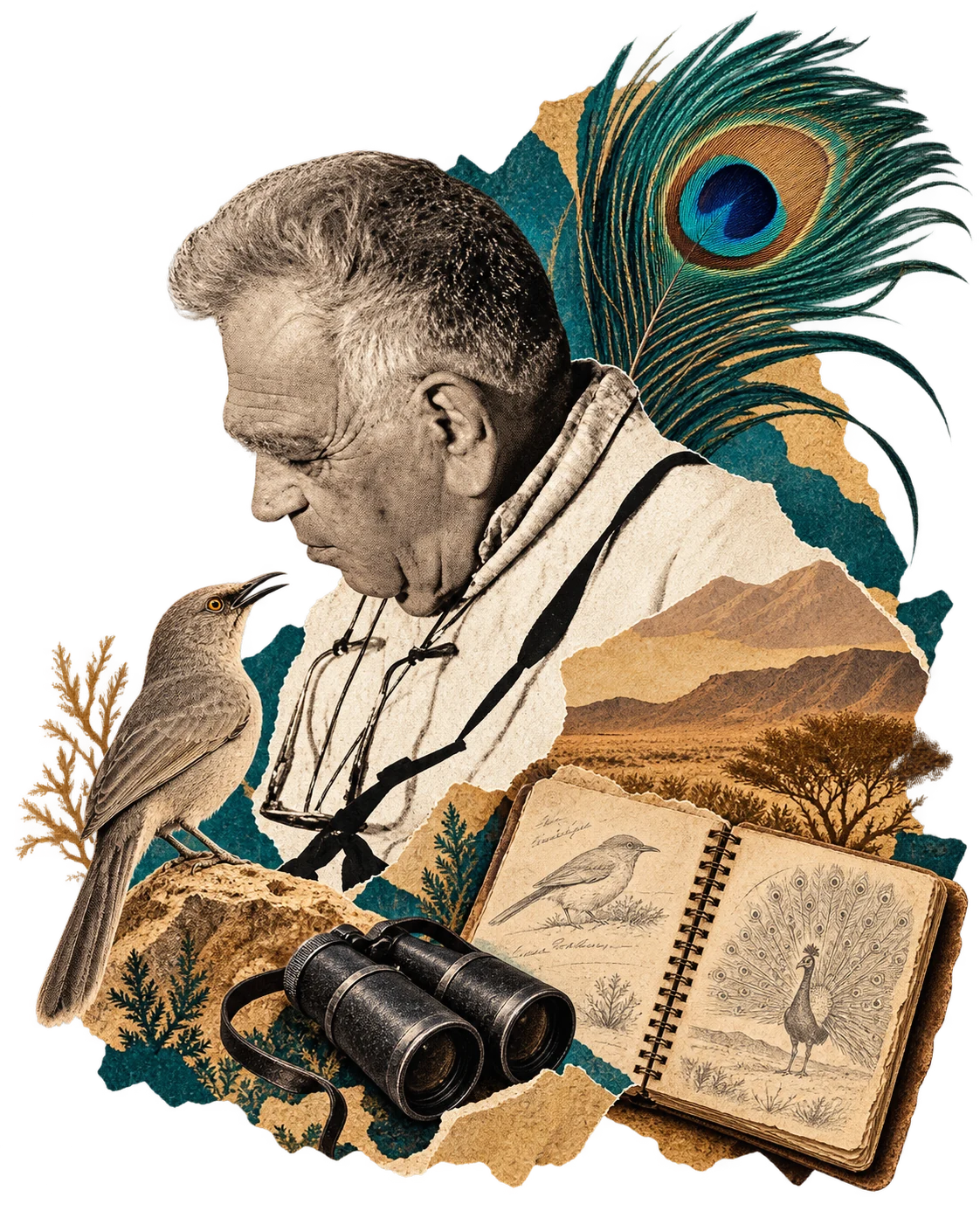
As a boy and teenager drawn to wildlife, he was always an object of admiration and envy, and earned an excellent reputation among evolutionary researchers. His original ideas offer a different, and controversial, interpretation of the origins and significance of animal behavior.
Professor Amotz Zahavi A peacock's magnificent tail, which makes it conspicuous to all and weighs it down when it flees, and the heavy horns of the ibex, which burden their bearer - both are examples of traits that endanger an animal and diminish its chances of survival. These phenomena prompted many questions among animal behavior researchers over the generations. One of the first to try to explain them was Charles Darwin. He argued that although a peacock's tail or an ibex's horns reduce a male's chances of survival, they give him a decisive advantage in sexual selection. According to Darwin, the reproductive advantage of attracting females simply outweighs the disadvantage of reduced individual survival.
The Handicap Principle
Later, in 1930, evolutionary biologist and geneticist Ronald Fisher offered another explanation under the heading "Runaway Selection." Fisher argued that it all began with a trait that originally indicated genetic quality, but over time became an evolutionary "fashion" that had to be followed. According to this logic, a female who chooses a "beautiful" male will ensure that she has "beautiful" sons, who will also be chosen by females in the next generation, thereby ensuring that her genes continue to spread.
These two explanations held sway for about 45 years, until 1975, when Professor Amotz Zahavi published a groundbreaking paper proposing a completely different solution: the Handicap Principle, considered one of the most brilliant and influential ideas in modern biology. The simplest way to understand it is as "nature's test of reliability."
In the animal kingdom, every individual has an interest in appearing stronger, healthier, and more impressive than it really is, whether to attract females or deter predators. If all it took to appear strong was to "say" so or make a simple gesture, everyone would cheat and no one would believe anyone. Zahavi argued that for a signal to be reliable, it must be a "handicap" - something that burdens the animal and puts it at risk. The logic is this: only an animal that is truly strong can afford to carry such a burden and still survive.
Let's return to the peacock's tail. It is heavy and cumbersome, takes a great deal of energy to grow, and makes it harder to escape from predators. When a peacock displays its magnificent tail, it is really telling the female: "Look how strong I am, despite this heavy load on my back. No fox has managed to catch me. That proves I have excellent genes."
And what about us humans? Think of a Ferrari. In practical terms, it is inefficient: it costs a great deal to maintain, insurance is sky-high, and there is no infrastructure for driving it fast. But that's exactly the point: only someone with money to spare - financial security - can afford to spend it on a car like this. The Ferrari is the handicap that proves a person really is rich, because someone pretending to be rich will not be able to keep up with its costs for long. According to Zahavi, in nature, and in life, reliability comes from the price you pay. If something costs you nothing, it probably doesn't say much about you.
This principle explained other phenomena too, beyond the peacock's tail and the ibex's horns, which communicate between males and females. One example is the behavior of gazelles when faced with a predator. When one member of the herd spots a predator, some of the animals begin to leap with their legs straight, seeming to launch themselves powerfully off the ground. The explanation was that these leaps were meant to warn the herd of the predator. Professor Zahavi offered a different interpretation, derived from his Handicap Principle. In his view, the leaps were intended to send the predator a blunt message along these lines: I see you, and I'm not afraid of you. My high leaps show you how alert I am and how well I can jump. You'd be better off choosing another victim, one weaker and more feeble than me.
The scientific community rejected the Handicap Principle until researcher Alan Grafen published a paper in 1989 titled "Biological Signals as Handicaps," in which he demonstrated that the Handicap Principle is an evolutionarily stable strategy. Today, most researchers accept the principle and try to use it to explain some phenomena in animal communication.
The Boy Who Watched Birds
"I can't remember a time without birds. My mother used to say I watched them before I learned to walk or talk. I was born on August 14, 1928, in Petah Tikva... My grandfather was among the town's first settlers. When I was a child, open fields and orchards stretched between the houses, and I used to go out early in the morning to watch the birds before going to school. I didn't know anyone else who was interested in birds or knew any species other than the most common ones, and there were no illustrated field guides available for me to study, identify, and distinguish between species. I loved watching birds, finding their nests, learning their calls, and giving them names of my own." This is how Amotz begins his autobiography, then goes on to write about the person who would influence his future: "In 1940, when I turned 12, I met Dr. Heinrich Mendelssohn. He ran a small zoo at the Biological-Pedagogical Institute in Tel Aviv. At the institute, I had the opportunity to learn the birds' correct names and identify them using the collection of stuffed specimens there. More than that, I was fortunate to meet someone who was interested in my observations. I accompanied Mendelssohn in the field and heard many of his lectures." He later recalled: "In 1947, Mendelssohn persuaded me to study biology, rather than agriculture, at the Hebrew University of Jerusalem. He argued that one could be a farmer without an academic degree, but that it would be difficult to be a biologist with a degree in agriculture. He also argued that, since there were hardly any young bird researchers in the country, I could contribute more as a bird researcher than as one farmer among many."
Among other things, Amotz Zahavi offered us a fascinating explanation for a phenomenon well known in nature, but one that evokes instinctive aversion in us Israelis: the phenomenon of the "sucker." A striking example is the cuckoo, a bird that lays its eggs in the nests of other birds. The host bird raises the cuckoo chick as if it were its own, while the young intruder, as soon as it hatches, throws the host's eggs out of the nest and destroys its offspring.
For many years, researchers tended to assume that the host bird was simply "stupid," and lacked the intelligence to distinguish its own chicks from the cuckoo chick, which is sometimes three times their size. From this superficial perspective, the foster bird, such as a wagtail, appears to be nature's ultimate sucker: it devotes all its energy and resources to raising a chick that is not its own, while its genetic lineage is wiped out.
But this is precisely where Amotz Zahavi's brilliant explanation comes in. Unlike the famous saying, "Suckers never die, they just get replaced," here the foster parents pay an unbearable price in their own lives and in the future of their next generation. This raises a pointed evolutionary question: How could natural selection, over millions of years, have failed to equip the foster parent with a simple recognition mechanism that would put an end to this cruel exploitation?
The Cuckoo and the Host
"The classic solution to the cuckoo problem," Professor Zahavi replies, "is based on the assumption that the cuckoo succeeds in deceiving the foster parent. The thing is, I don't believe that cheating and deception in nature are a general solution. Especially not in light of the high cost paid by the deceived foster parent."
Zahavi argues that if the damage affects 30% of the population, that is enormous selective pressure. If the solution were simply to "stop being a sucker" and recognize the deception, evolution would have taken care of it long ago.
"Let's take a population of wagtails, for example. All I ask of a mutation like this is that it allow a wagtail to distinguish its own chicks from those of the cuckoo. That's all. A most elementary requirement... And yet, when it comes to the cuckoo, which is three times its size and makes cuckoo calls like a cuckoo clock, the wagtail loses its ability to recognize it. How can that be? Is it really so stupid, and the cuckoo so clever? No. That doesn't seem right to me... I argue that cheating in nature is a marginal phenomenon... It is more important to explain why it pays to be honest, in other words, reliable."
To explain why the foster parent carries on as it does, Zahavi proposes a strategic model showing that anyone who tries not to be a sucker may end up paying an even higher price.
Suppose that clever foster parents recognize the cuckoo egg and throw it out, while stupid foster parents - the suckers - let the cuckoo stay. If the cuckoo uses a revenge tactic, returning to check what became of the egg it left in the nest, the picture changes: the "clever" one who threw out the egg gets to enjoy its pride, but the furious cuckoo returns and devours everything in its nest. The result: no offspring. The sucker who raised the cuckoo chick may have lost its own offspring in that nest, but the cuckoo does no further harm to it. In addition, in a desperate attempt not to be a sucker and to develop a recognition mechanism, the foster parent may make a mistake and accidentally throw out its own eggs - a false alarm. Natural selection therefore favors those who seem stupid, because in this system, fighting deception costs more than the deception itself.
"In fact," Professor Zahavi emphasizes, "the cuckoo operates according to the mafia principle. It eliminates anyone who dares to stand up to it and refuses to accept its protection." According to Zahavi, the foster parent is not a sucker in the usual sense, but a victim of a protection racket. It pays tribute to a predator because it has no alternative. "Anyone who can leave neighborhoods controlled by the mafia removes themselves from its protection." Only those who can flee to an area without cuckoos stop paying the price.
From the Desert to Hatzeva
Professor Zahavi's love of the desert took root when he joined Professor Ben-Tor's expedition as an assistant. Ben-Tor was conducting a geological survey of the Negev. As Zahavi wrote in his book: "In the years 1954-1949, we spent hundreds of days in the field. I did miss many lectures and laboratory experiences, but I learned a great deal about the desert and geology, about the region's plants and animals... During this period, I fell in love with the open desert."
In 1950, after the decision to drain Lake Hula, Professor Zahavi joined a team of researchers observing birds. Two years later, he accompanied the committee considering the establishment of a nature reserve there. As he wrote: "So I stood up and described to them the nest of the white-tailed eagle that I had found in the area that year, the impressive size of the nest, and the beautiful, large bird of prey that flew out every morning to catch fish in the lake. I stressed that the reserve needed at least 4,000 dunams of marsh and lake; otherwise, this impressive bird would disappear from the country." He went on to recount: "I ran into the committee's chair on the street. 'Come here, young man,' he called to me. 'Because of you, we've decided to set aside 4,000 dunams for the reserve.' Suddenly I understood that I could influence decisions about which nature reserves would be established and how large they would be, and that I could save part of the region and its birds." That same year, together with his friend Azaria Alon, he founded the Society for the Protection of Nature in Israel.
The Hula marshes were the setting not only for the establishment of the first nature reserve and the recognition of nature's importance, but also for his meeting with Avishag Kedman, a botany student (daughter of Leo Kedman, an expert on coins from the Land of Israel and one of the founders of Kibbutz Hefzibah in the Jezreel Valley, who lived with his wife Gertrude and Shulamit - a trio that deserves a post of its own). Avishag and Amotz fell in love, and she became his full partner on the journey: she accompanied him in the field, raising their daughters inside an old Susita car on trips around the country, and, above all, she was his scientific partner, helping him, as he recalled: "My wife, Avishag Zahavi, helped me develop and express the ideas more clearly in our book and in many articles, and played an important part in shaping and refining them."
In addition to his work founding the Society for the Protection of Nature in Israel, Professor Zahavi helped pass the Nature Protection Law and was among those who pushed for the establishment of two separate bodies: one for national parks and the other for nature conservation. He himself served for about 30 years on the board of the National Parks Authority. In 1980, the Israel Prize was awarded to the Society for the Protection of Nature in Israel and its first three secretaries - Azaria Alon, Yoav Sagi, and Amotz Zahavi - for the Society's and its leaders' contribution to the State of Israel.
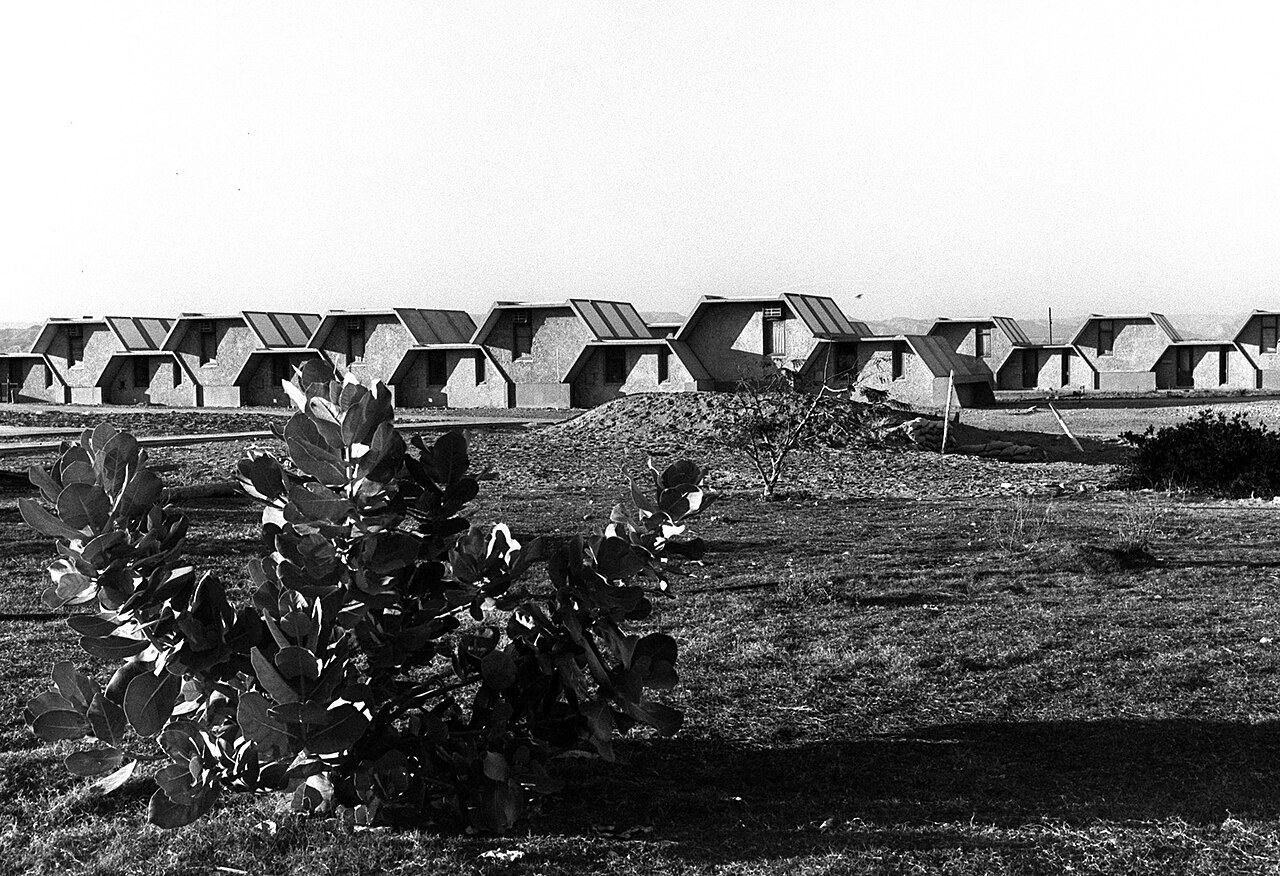
Professor Zahavi's greatest living laboratory was the Hazeva Field School in the Arava. After the Society for the Protection of Nature in Israel lost its central role, its field schools became ordinary hostels. When the Society wanted to get rid of the Hazeva Field School, Zahavi mortgaged his home to fund the effort to save the place and moved down to the Arava to run it himself. "When I set out to establish the Society for the Protection of Nature in Israel, I believed I was doing it for the Land of Israel and its nature," Zahavi explained. "Only after I studied the Arabian babblers did I understand that it had also brought me honor in life. That's not a cynical way of looking at life."
Professor Zahavi studied the Arabian babblers, small gray birds, and discovered that they did not help one another solely out of pure kindness or family ties. Rather, they competed for the right to help in order to gain "social prestige." He saw high-ranking babblers attack lower-ranking ones who were merely trying to protect the group, so they could take the credit for themselves.
Professor Amotz Zahavi summed up his life as a journey of persistence and faith in his own path, even when his colleagues abroad rejected his ideas for decades. Until his final day, he remained a field researcher, setting out at dawn with Avishag to watch the Arabian babblers. "We know each babbler personally, by name... We mourn when they leave this world." His work left a legacy of uncompromising love of nature and Israeli scientific pride that became an enduring treasure for the whole world. Professor Amotz Zahavi died in May 2017 at the age of 89 and was laid to rest in the Hazeva cemetery. His wife, Avishag, died in 2021 and was buried beside him. To this day, every babbler is a reminder to me of the person I admired, Amotz Zahavi.



תגובות
עדיין אין תגובות.