
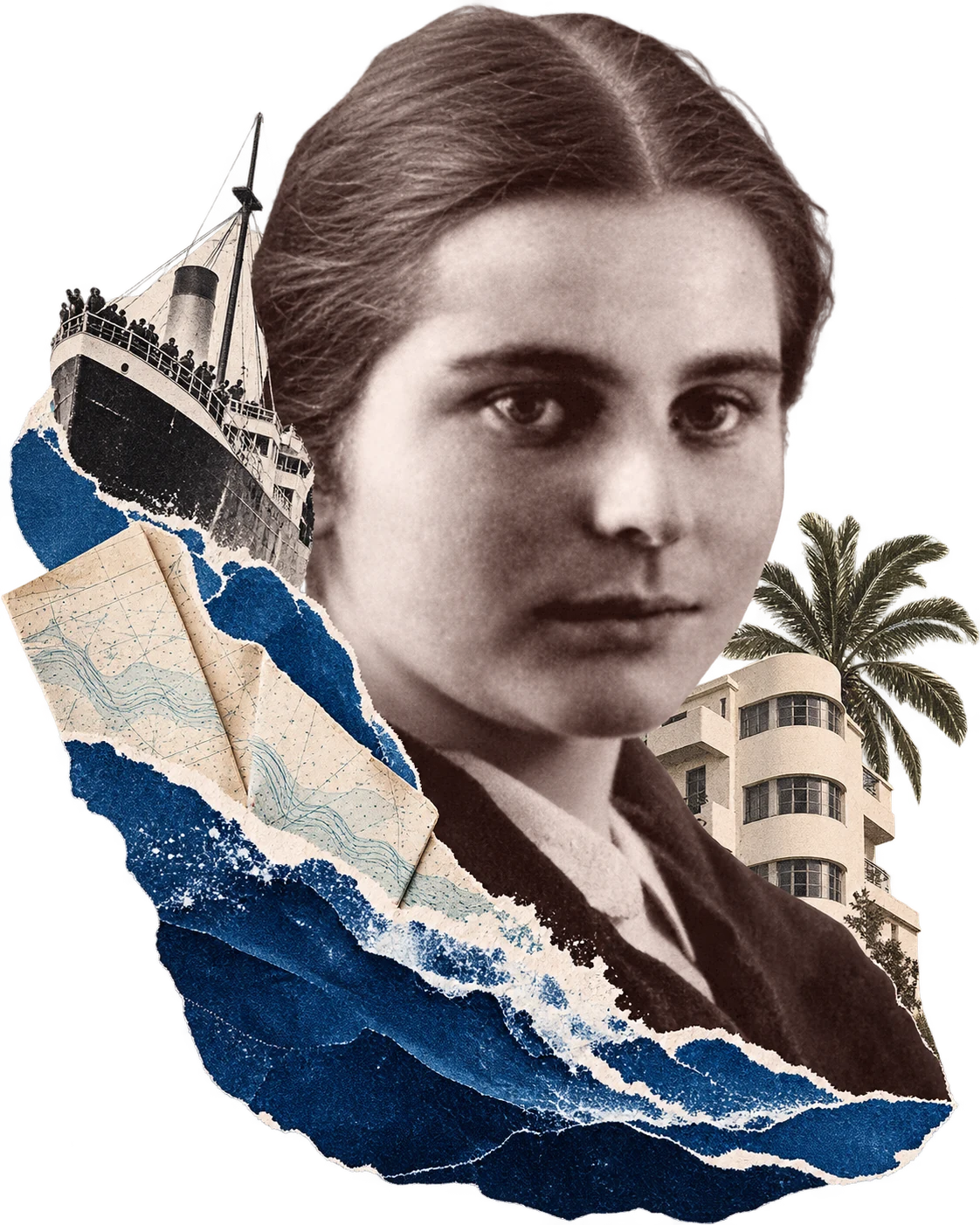
In one major operation unknown to many, there was one great heroine who was also unknown.
At the beginning of 1946, the struggle to bring Jews to the Land of Israel was at its height. The leadership of the Jewish community decided to act on several fronts to bring to the country the remnants of the Jews who had survived the Holocaust camps. The plan addressed every stage: from gathering the Jews in camps near ports and purchasing and refitting ships for this purpose, to bringing them ashore in the Land of Israel and dispersing them among communities throughout the country, as well as taking action against the British administration in the Land of Israel, which restricted immigration.
On February 19, 1946, the Palmach blew up the radar station at Stella Maris, the very radar the British used to detect the immigrant ships. Three days later, four Palmach units set out to attack four British police stations in an operation that would later be called the "Night of the Police Stations" or "Operation Beans." Two days after that, on February 25, Irgun and Lehi forces attacked three airfields as part of "Operation Night of the Planes."
By the end of 1945, this string of successful operations, together with political pressure, had led British Foreign Secretary Ernest Bevin to establish a committee to examine the question of immigration to the Land of Israel from an economic perspective, as well as the aspirations of European Jews to immigrate there. The committee began its work in Washington in January 1946, and its members set out for Europe to visit the displaced persons camps where Jews were waiting to immigrate to the Land of Israel. From there, the committee members continued to Cairo to examine the Arab position on the matter, and arrived in the Land of Israel in early March.
Barbara Fuld in Berlin
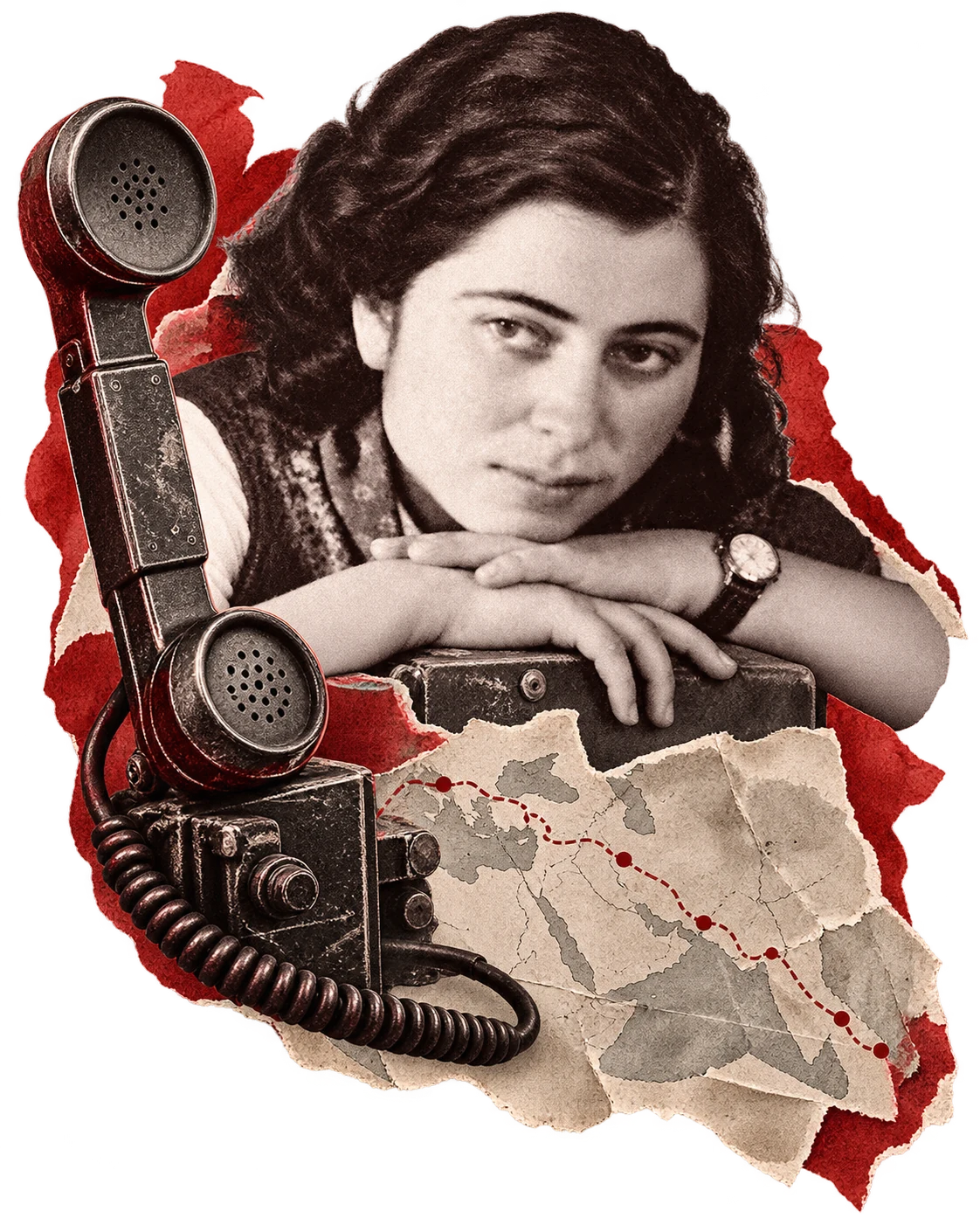
Barbara Fuld was born in Berlin at the end of 1926 and named after Saint Barbara, the patron saint of artillerymen, the corps in which her father, Luther, served as an officer. Barbara, who was beautiful and the second daughter in a wealthy, assimilated family, excelled in her studies and at sports. When the Nazis came to power in 1933, the family decided to send her sister Hannelore to the United States. Toward the end of 1938, the Nazis carried out a pogrom against Jews across Germany and Austria, which became known as Kristallnacht. The pogrom broke her father's heart. Torn between his Jewish identity and his role as a German officer, he took his own life.
In 1941, 16-year-old Barbara and her mother immigrated to the Land of Israel and settled in Tel Aviv. There, Barbara changed her name to Bracha and, like the rest of her classmates, served as a messenger for the Haganah. After finishing her studies in the summer of 1944, Bracha joined the Palmach's Eighth Company, stationed at Kibbutz Kiryat Anavim. At the kibbutz, she fell in love with Gideon (Johnny) Palai, the oldest son born on the kibbutz. Around that time, during training near Beit HaArava, Gideon was arrested along with a group of his Palmach comrades. When he was imprisoned at the Russian Compound, Bracha made a point of visiting him and sending him letters.
When the Anglo-American Committee arrived, it was decided to cease fire, and all the organizations were forced to suspend their activities, including the breakaway Irgun and Lehi. Against the backdrop of this order, the operation known as "Night of Wingate" stood out - the largest operation before the battles of the 1948 War of Independence. Each of the preceding operations had involved no more than about 300 people. Some 7,000 people were recruited for "Night of Wingate," and all the arms depots were opened and the weapons caches emptied. It was the first operation in which a clear order was given to shoot at the British with the intention of killing. It was clear that the operation could end in a bloodbath.
Bracha Fuld was one of the few women to take the squad commanders' course at Juara, which she completed with distinction. Her friend Carmela Kasse described her: "Bracha was different from all of us. It seemed as if she had come from another world, and that, as it later turned out, was true. She was beautiful, with something aristocratic about her, dark blue eyes the color of steel, black hair, delicate features, and, at the same time, an air of almost profound seriousness."
It would be a mistake to define "Night of Wingate" as an operation to bring an immigrant ship to Israel. Its primary purpose was to send a clear and unequivocal message to the Anglo-American Committee then in the country: the public as a whole was determined to mobilize to open the country's gates, and people were even prepared to lay down their lives for the cause. From the planning stage, it was clear that the operation would make a powerful impression and that this night would go down in history. "Night of Wingate" took place during the Jewish Resistance Movement, founded in October 1945 as an umbrella organization for all the underground groups: the Haganah, Irgun, and Lehi. What they had in common was their opposition to the institutions of British rule in the country.
Preparations for the Wingate Night
On the night of April 13, 1946, the ship "Orde Wingate" - named after Charles Orde Wingate on the second anniversary of his death - left Italy and made its way through rough seas toward the shores of Israel, carrying 248 illegal immigrants. For about 12 days, the ship sailed not far from the country's coast. It could have docked at Nitzanim and disembarked the immigrants, but that was not the plan.
The plan was to liberate Tel Aviv for six hours, during which the city would be under full Jewish control. During those hours, the ship would dock in Tel Aviv, the immigrants who disembarked would blend into the population, and control would then be handed back to the British. The landing site was set south of the Port of Tel Aviv, at what is now Hilton Beach.
Three security rings were set up around the beach. The ring closest to the shore was the responsibility of the Palmach's First Battalion and the Palyam, under the command of Nachum Sarig. The 300 Palmach fighters were divided into teams of 5-10 soldiers, spaced 20 meters apart. They were all armed, and their task was to isolate the beach and receive the ship. The middle ring, under the responsibility of the Haganah's field forces and commanded by Yaakov (Frolov) Peri, later a major general in the IDF, was to block access to the beach until the operation was over. The outer ring was the responsibility of the Palmach, under the command of Pini Weinstein, and was meant to prevent British forces from reaching the area from the Sarona camp and Jaffa. In addition, Gadna forces served as messengers, broke streetlamps, and transported explosives.
Those responsible for "Night of Wingate" were: operation commander Yitzhak Sadeh, acting chief of staff of the Haganah, and his two deputies, Palmach commander Yigal Allon and Tel Aviv district commander Nachum Ziv-Av. The operation was planned by Yehoshua Gloverman, one of the Haganah's senior figures, and the operations officer was Yigal Yadin.
When preparations for the operation began, Bracha Fuld and her friend Carmela Kasse were not included among the participants. Fuld wrote to her friend Ada: "Are they excluding me because I'm a girl? I know I can bear everything just like the boys, so why did they recruit me if there is no need for girls? If I'm not needed, I'll go home and continue my studies, because I have no particular inclination for war. I enlisted only because the times demanded it, and if I'm superfluous, I'll just go." Bracha and Carmela went to Dani Mass and insisted on taking part in the operation. At first, Dani tried to dissuade them, but when he realized there was no chance the two would back down, he said he needed Yigal Allon's approval. Bracha and Carmela waited for permission. When Yigal Allon arrived in the evening, they put their request to him, and he approved their participation.
The H-hour was initially set for 8:00 p.m. on March 24, 1946. By then, everyone had taken up their positions, and the tension in the air was immense. Gadna teams went along Bograshov Street and began smashing streetlamps to plunge the area into darkness. Later, H-hour was postponed to 9:30 p.m., and the city was put on full alert. Four listening posts were in operation, the signals had been agreed upon, and about 200 SHAI (Intelligence Service) agents were deployed that night.
The British began to suspect that something was happening, and at around 9:00 p.m. they spotted the "Orde Wingate" at sea and began pursuing it. The ship's radio was thrown into the sea, cutting off communications. The ship was intercepted, and British forces boarded it. The immigrants, who had already seen the lights of Tel Aviv, were exhausted and dispirited. By around 11:00 p.m., the operation's fighters realized that the British had taken control of the ship, and the order was given: "Abort and withdraw."
The Battle on Marmorek Street
But the battle was already raging on Marmorek Street. Bracha Fuld had been put in command of a unit tasked with blocking a vulnerable point on the front line. Her unit was stationed in the last house on Marmorek Street, at the corner of Yehuda Halevi Street, opposite the British Sarona police station. The members of the unit under her command were Meir Hefetz, Yigal Frucht, Oved Rabinovitch (Rahav), and the Gadna member Ahiezer Goldin, who was 17 at the time of the operation.
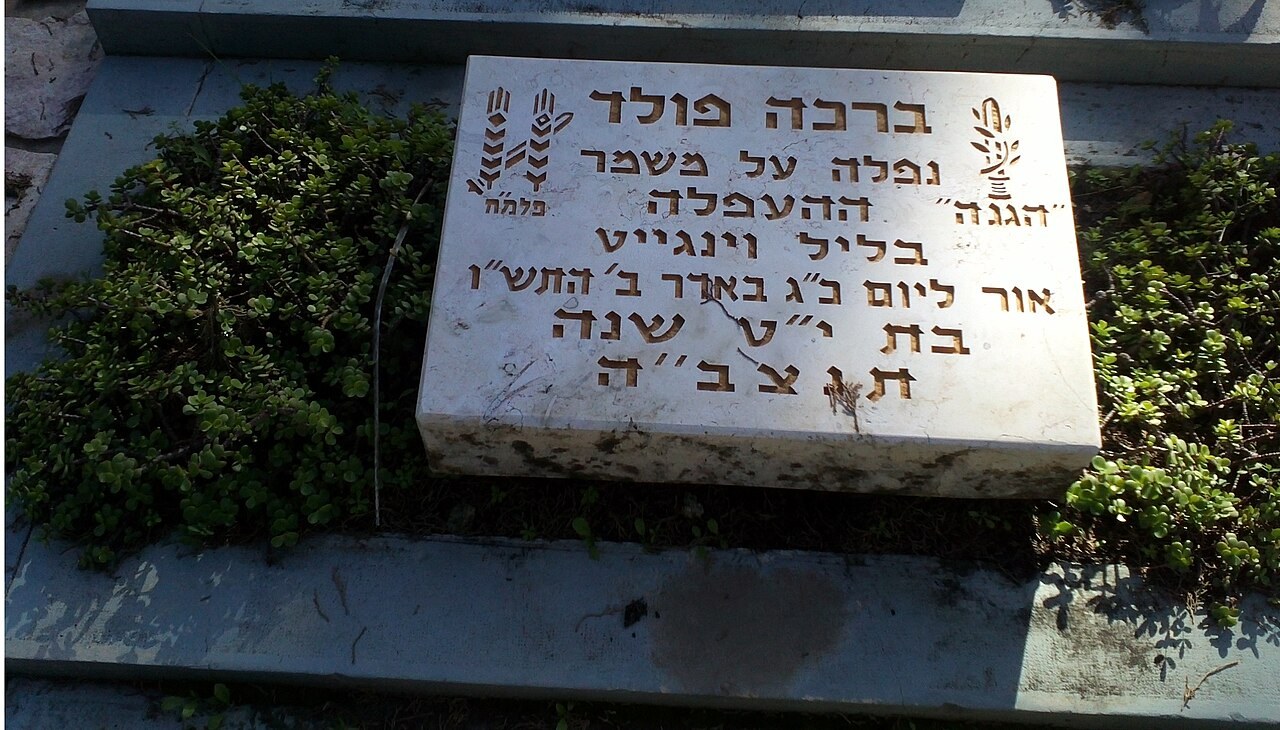
A British armored car, commanded by Sergeant Flower, was patrolling the area. At first it continued on its way, but when it sensed suspicious movement near the intersection, it switched off its lights, turned around, and quietly came back to investigate. The armored car approached the unit and suddenly switched on its lights. The sergeant ordered the unit members to raise their hands. When Meir Hefetz drew his Parabellum pistol, the sergeant drew his own, and they fired at each other - fortunately, both guns jammed. The armored car pulled back and called for help. Within minutes, more British forces arrived, and an exchange of fire began. Bracha picked up the Sten gun and aimed at the armored car's turret, intending to kill the sergeant. He aimed his weapon at her, fired, and hit her from a distance of a meter and a half. Bracha was mortally wounded. She managed to tell her comrades, "Better to die than sit in Bethlehem prison." Instead of taking her to a hospital, they took Bracha Fuld to the Jaffa police station for questioning, where she died of her wounds. Bracha was 19 when she died.
The other members of her unit were taken into custody and questioned. Out of the 7,000 fighters, the British captured and detained 37 that night. Nevertheless, "Night of Wingate" helped the Jewish Resistance Movement's public relations. It demonstrated the movement's organizational capacity, its ability to mobilize, and the public's willingness to take up the task. Tel Aviv became the center of protest against the "White Paper," which restricted immigration.
At dawn, the immigrants boarded the ship again, and as it was towed to Haifa, they sang Hatikvah. From there, they were sent to Atlit detention camp. At midday, Bracha Fuld's funeral was held, turning into a huge demonstration against British rule. Bracha Fuld's death became a symbol of the struggle for free immigration.
After the funeral, Bracha's mother joined Bracha's sister Hannelore in America. In August 1946, following Black Saturday and the bombing of the King David Hotel, the Jewish Resistance Movement ended its joint activities.
Six months after Bracha Fuld's death, the British intercepted an immigrant ship named after her. Natan Alterman then published the poem "Bracha Fuld" in his column "The Seventh Column" in the newspaper Davar, drawing a parallel between the fighter and the ship:
"She lay at anchor in the bay on black waters, / caught in a trap set by the ships hunting her. / She stood illuminated by searchlights, / as then, on Night of Wingate, facing the shooters / who fired at the balcony of the house. / Alone, as then, when she fell before them, / blinded by light and blood, / she did not rest. Her weary journey was not yet over. / She fell on the shore / and returned from the sea... / Stubborn, silent, and pressing on..."
With the establishment of the state and the declaration of independence, the immigrants aboard the "Orde Wingate" were released. Gideon (Johnny) Palai, Bracha's beloved, was killed two years after her in the Battle of Castel during the 1948 War of Independence.
Eleven years later, in 1957, Natan Alterman devoted an entire cycle of poems in "The Seventh Column" to Bracha Fuld and "Night of Wingate," making her a symbol of the Hebrew girl fighting for the rebirth of her people.

תגובות
עדיין אין תגובות.