
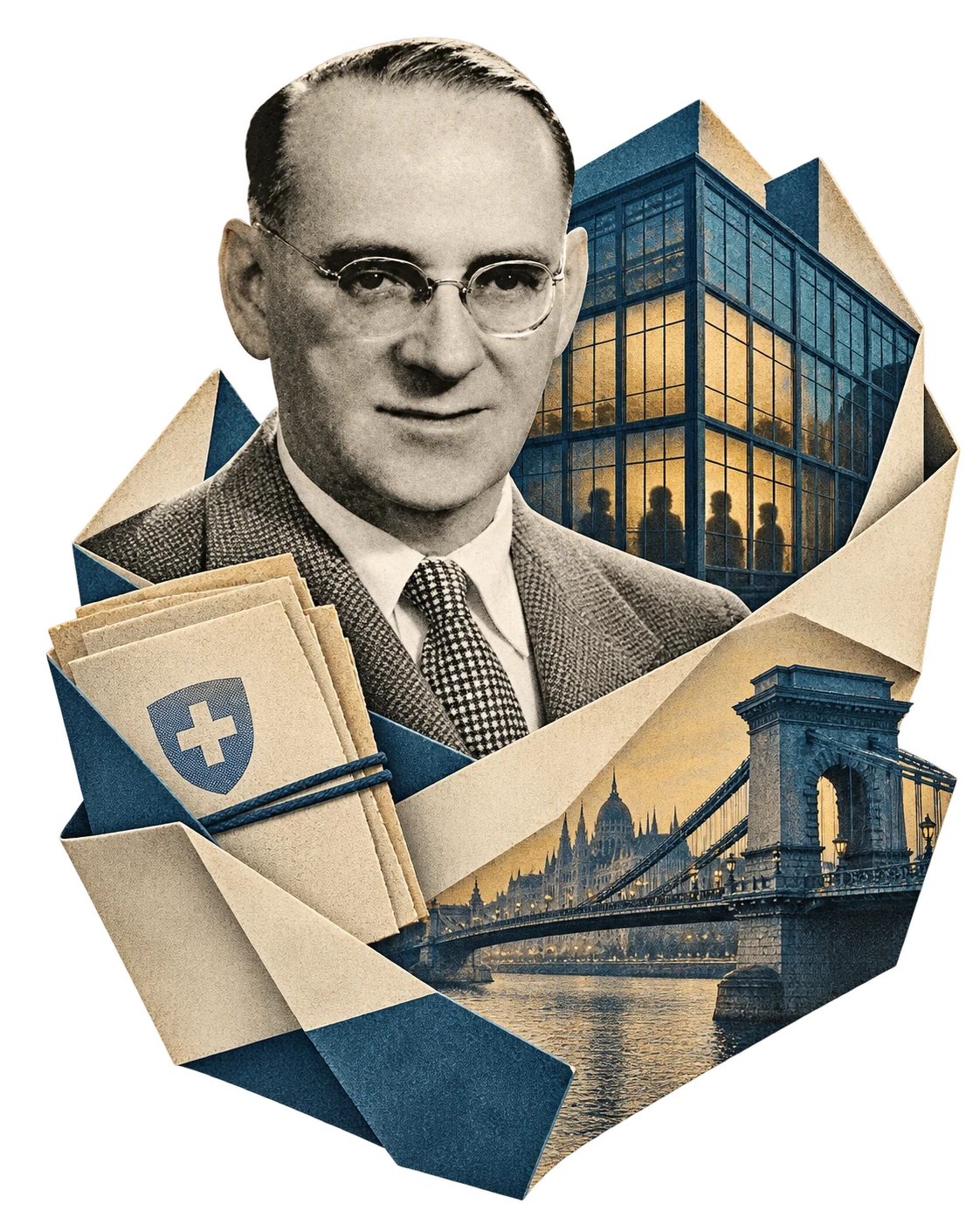
He was an unassuming, precise, and meticulous Swiss civil servant. A series of historical events led him to save Germans from the British in Mandatory Palestine and Jews from the Nazis in Hungary.
From Switzerland to the Land of Israel
Despite his drab appearance, Carl Lutz was an educated, broad-minded man, above all endowed with sensitivity and a love for people, whoever they were. He loved Israel and the Jews, and at that time he was ideally suited to serve in a diplomatic role. He understood his position in its humanitarian sense: building connections and understanding between peoples, and especially supporting the weak, the oppressed, and the persecuted.
Carl Lutz was born in 1895 in Switzerland, the eighth of ten children. At 18, he traveled to the United States, where he lived in Illinois for five years and studied at a college in Missouri. In 1920, he moved to Washington and began working at the Swiss embassy. Four years later, he graduated from George Washington University, where he studied history and law. For two years, he held various positions at Swiss consulates in Philadelphia and St. Louis.
In the United States, Lutz made many Jewish friends. He studied the Bible and loved the stories connected to the Land of Israel. When he returned to Switzerland, he could not have been happier to learn that he had been given a diplomatic post in the Land of Israel - vice consul in Jaffa, responsible for representing German interests in Tel Aviv. In 1935, he married his beloved Trudi, and they came to the country together. Carl Lutz said that when he left for Palestine, his mother told him, "Be a guardian of my house, Israel." In his diary, he wrote: "After our wedding on January 21, 1935, we left Bern for the Holy Land. Eight days later, we were carried over the blue waves of the Mediterranean on the Trieste-Jaffa route, and set foot on the soil of the Land of Israel... The first impression the country and its inhabitants made on us was indelible. It was a new and fascinating world for us. This was the land of the Bible, which would now be our second home for the next six years." At first they lived in a hotel, and about a month later they moved into their apartment in Jaffa. "It was a very spacious apartment, with four rooms and a large balcony from which we could gaze at our leisure on the picturesque life of the East... We were very eager to get to know the country, especially Jerusalem and the other places mentioned in the Bible. We visited Jerusalem, Bethlehem, the Mount of Olives, Jericho, the Dead Sea, Nazareth, the Sea of Galilee, Tiberias, and Haifa," he wrote, recalling that period with great excitement. He documented everything with his camera; those photographs would later form the basis of an exhibition showing the Land of Israel as it was in those days.
The Disturbances and the Rescue of Jews
A year after arriving in the country, Carl Lutz was exposed for the first time to cruelty against Jews. He wrote: "In May 1936, bloody disturbances broke out right in front of our home. The unrest spread throughout the country and continued until the outbreak of the Second World War. For three weeks, we lived like prisoners behind closed shutters and witnessed brutal murders of Jews. Because of the situation, it became necessary to move the consulate offices, as well as our home, closer to Tel Aviv."
In Tel Aviv, Lutz grew close to the Templer community in the Land of Israel, Protestant Christians who had immigrated to the country as early as 1868. They believed they could bring redemption and the Messiah only by moving to the Land of Israel and working there. The Templers established several colonies, the best known of which were in Haifa, Sarona, Bethlehem of Galilee, and Wilhelma (near Bnei Atarot).
When the Second World War broke out, the British Mandate authorities in the Land of Israel regarded the Templers as enemy aliens. They were interned in camps in the colonies of Sarona, Waldheim, Wilhelma, and Bethlehem of Galilee, and from there they were deported to Australia. Carl Lutz intervened on their behalf. He wrote: "Our role in an Arab country, with a large Jewish population hostile to the Germans and under British rule, was difficult and fraught with great tension... alongside handling Swiss affairs, which required oversight of and responsibility for three German consulates and some 3,000 German citizens who had been interned. My wife Trudi returned immediately from her vacation in Switzerland and took responsibility for overseeing the three camps."
The British also regarded Jews who had immigrated from Germany as enemy aliens and demanded that they too be deported. Once again, Carl Lutz intervened on their behalf and saved some 2,000 Jews. In this way, Carl Lutz found himself saving both Jews and Germans in the Land of Israel from the British authorities. The Germans did not forget his considerable assistance, and he received especially warm treatment from them.
The Mission in Budapest
From 1942 until the end of 1944, Lutz served as head of the Special Department at the Swiss consulate in Budapest. It represented the interests of 15 countries that had severed diplomatic relations with Hungary because of its pro-Nazi policies, including the United States, Britain, and Belgium.
At the beginning of the war, the situation of Hungarian Jews was better than that of Jews living in German-occupied territories in Europe. In March 1944, the Germans invaded Hungary. Under Adolf Eichmann's direct supervision, Jews were marked with yellow stars, their property was confiscated, and they were moved into ghettos.
The Zionist leadership understood the scale of the impending catastrophe facing Hungarian Jewry, and efforts to save them proceeded along two different paths. One was led by Dr. Israel Kastner (grandfather of Knesset member Merav Michaeli, chair of the Labor Party), who headed the Budapest Aid and Rescue Committee on behalf of the leadership of the Jewish community in the Land of Israel and collaborated with the Germans to save Jews. The other path was led by Moshe Krausz, head of the Jewish Agency and the Palestine Office in Budapest, who rejected the idea of cooperating with the Germans because he did not believe their intentions were sincere.
After the Germans entered Hungary, the Palestine Office was closed, and Moshe Krausz moved into the Swiss legation building, where he formed a warm and close relationship with Carl Lutz. Even before the German invasion, Lutz had obtained 5,000 certificates (immigration permits) for the Land of Israel, arguing that it was a British-protected territory that he represented. The authorization, which was supposed to be personal, was interpreted by him as applying to families, and in this way he saved more than 60,000 Jews from certain death. Two months after the invasion, the deportations of some 450,000 Hungarian Jews to Auschwitz began, and within three weeks no Jews remained outside Budapest.
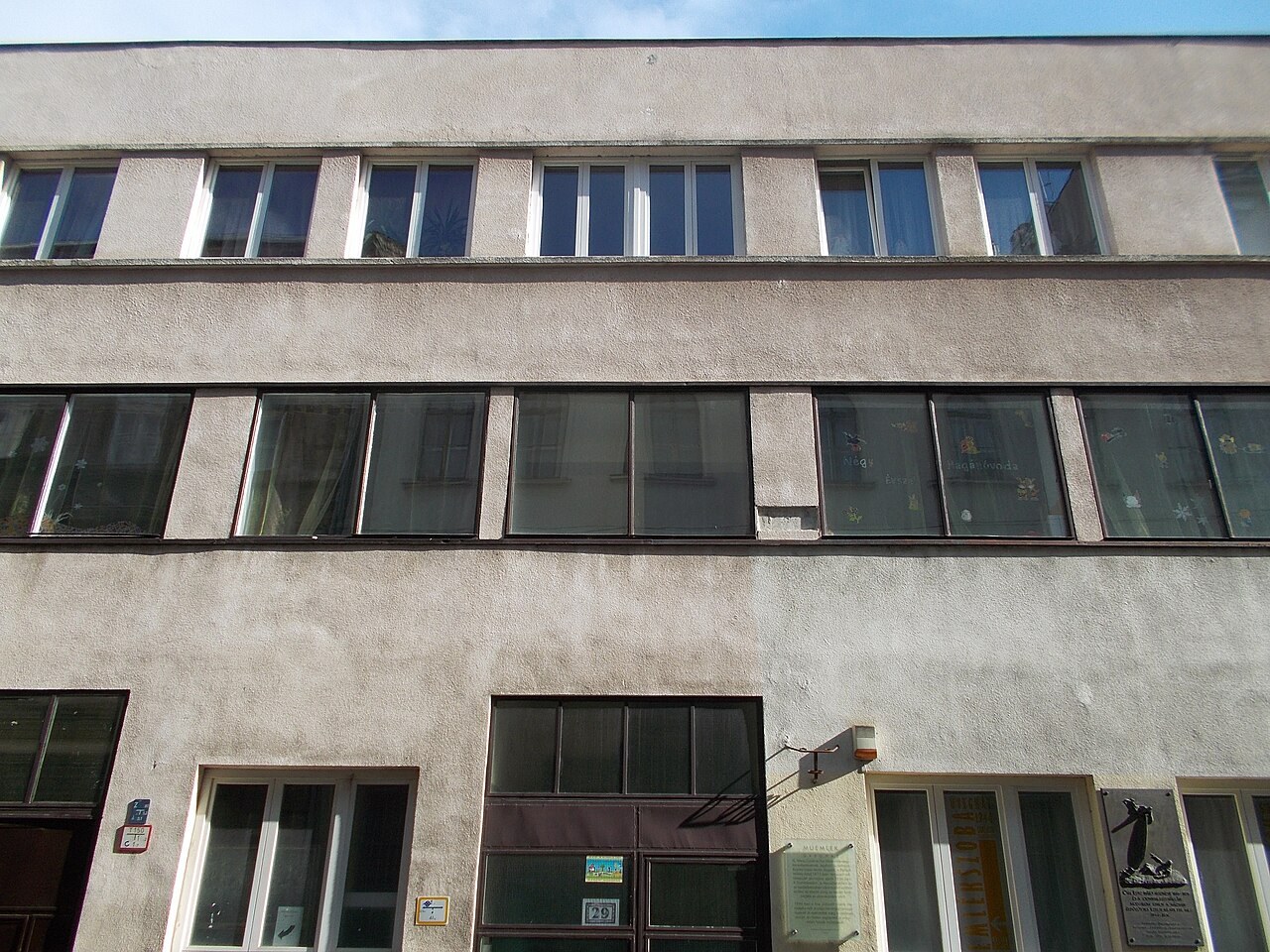
One of Hungary's wealthiest Jewish families was the Weiss family, which, among other things, owned a glass factory known as the "Glass House." In July 1944, about three months after the German invasion of Hungary, Carl Lutz moved the Swiss consulate's foreign interests office and immigration department to the Glass House. Lutz declared the building Swiss property, turning it into a diplomatically protected safe haven for thousands of Jews, who lived there in very harsh conditions. The building also housed an operation that forged thousands of protective documents on paper stolen from SS offices. When Eichmann and SS men demanded that the Jews be concentrated in the ghetto so they could be sent to the extermination camps, Carl Lutz acquired 70 more apartment buildings, most of them in the ghetto, and declared them Swiss-protected territory; they were treated as extraterritorial. Lutz moved thousands of Jews into these buildings with "protective documents" and also provided them with food and clothing.
In October 1944, the Nazis appointed the antisemitic fascist Ferenc Szálasi, head of the Arrow Cross Party, as prime minister of Hungary. This was the green light the pro-Nazi Arrow Cross gangs had been waiting for to begin rampaging through the streets of Budapest. Thousands of Jews were murdered in the streets and thrown into the Danube, which ran red with blood. Tens of thousands were sent on death marches and to forced labor.
Until Liberation and Recognition
At this dark moment, the Swedish diplomat Raoul Wallenberg and the Swiss diplomat Carl Lutz worked to slow the machinery of death. Both used the same approach: issuing documents that would allow Jews to flee the horrors in Hungary or be protected there as foreign residents.
When Arrow Cross men began murdering Jews, Carl Lutz appealed to the Hungarian government to provide him with a number of houses in Budapest where he could gather the Jews under his protection. In return, he promised to work to expedite the Swiss government's recognition of the Hungarian government led by Szálasi, something that was very important to the Hungarians. They cleared 25 houses for him and provided 100 Hungarian gendarmes to guard them. The protected houses were marked with Swiss signs and flags, and they too became a kind of Swiss territory in Budapest.
In November 1944, the Germans began sending Jews from the Budapest ghettos on foot toward Austria, where they were handed over to Eichmann's aide, Dieter Wisliceny. Each day, some 2,000 Jews set out on a week-long march of more than 200 kilometers through cold and rain, without food or suitable equipment. Between 30,000 and 40,000 Jews took part in these marches. Many collapsed along the way, and those who fell behind were shot. The others were murdered in cold blood by their escorts.
About two weeks after the marches began, a Hungarian police officer named Dr. Nándor Batizfalvy set out and spent two days following the marchers. When he returned, he wrote a report, noting, among other things, that 25,000 Jews had been deported by then. He described their terrible condition and the cruelty of their escorts. He also managed to bring back to Hungary several deportees who had protective documents. Upon his return, a meeting was held in Raoul Wallenberg's office, attended by Carl Lutz and other diplomats. The following day, a delegation of neutral representatives, including Raoul Wallenberg and Carl Lutz, set out with food, medicine, and clothing for the deportees. The Swiss delegation freed some 700 Jews with the help of Swiss passports. Diplomats' cars followed the death marches to rescue people with genuine and forged documents.
By mid-November, pressure at the Glass House had increased, and Carl Lutz rented two more adjacent buildings and housed another 4,000 Jews there. The nightmare ended on January 18, 1945, when the Soviet army entered Hungary. By then, some 564,000 of the approximately 725,000 Jews who had lived in Hungary had been murdered.
By the end of the war, Lutz had saved the lives of more than 62,000 Jews. Carl Lutz was widely acclaimed around the world for his work, which put his life at risk. In his own country, however, the foreign service regarded him as someone who had exceeded his authority. Although he was not dismissed from his position, he was not promoted either.
Carl Lutz visited Israel and was greatly honored. Streets in Haifa and Jerusalem were named after him, and a lookout in the Swiss Forest near Tiberias bears his name. In 1964, he was among the first to receive the title Righteous Among the Nations, and in 2003 the Israel Coins and Medals Corporation issued an official medal in his memory. In 2014, Swiss filmmaker Daniel von Aarburg made the film "Carl Lutz - The Forgotten Hero."
Carl Lutz died in 1975 at the age of 80. In 1977, his wife Trudi, who had stood by his side throughout, also received the title Righteous Among the Nations.
תגובות
עדיין אין תגובות.