
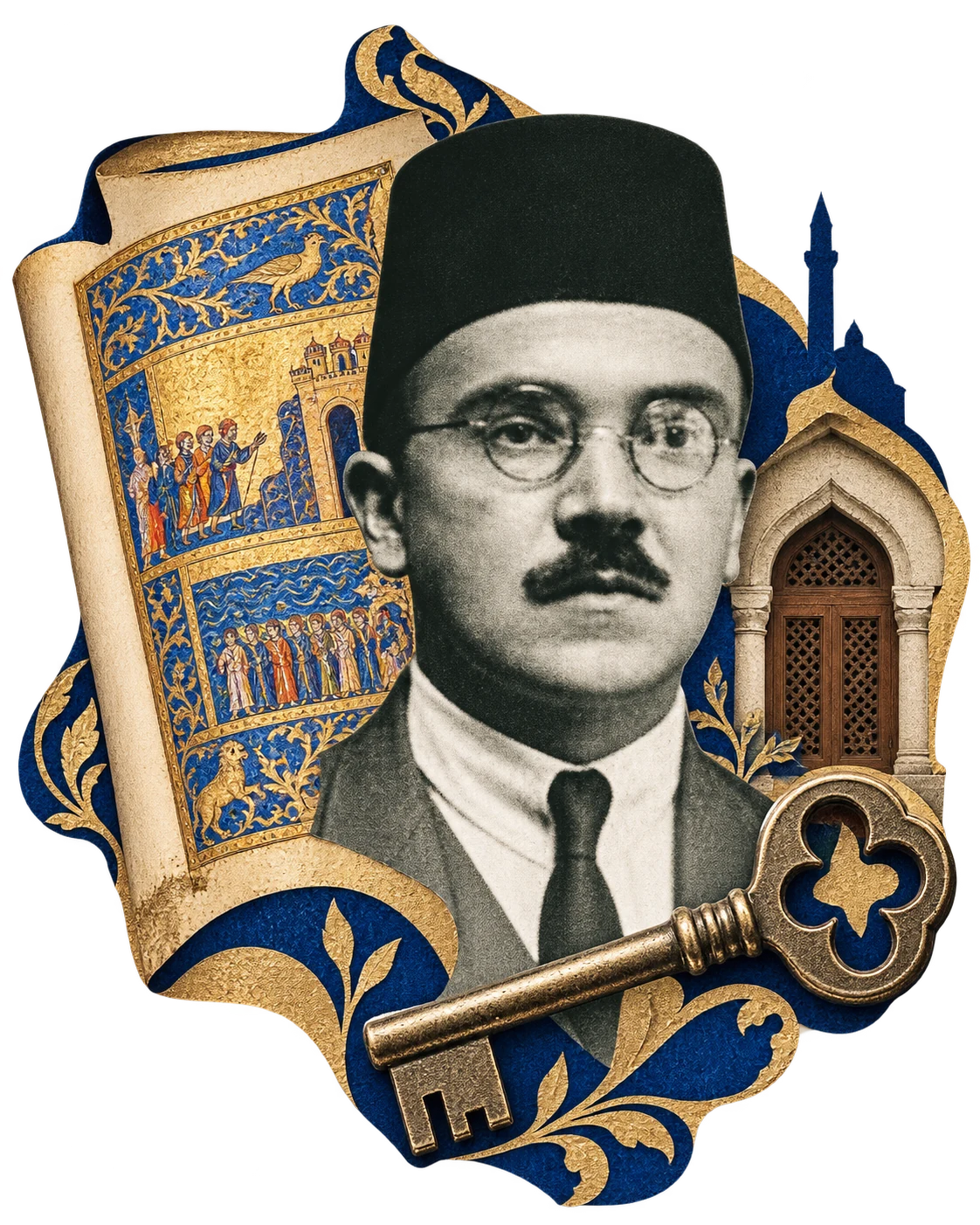
Two stories in one: the rescue of one of the most important Passover Haggadahs and the rescue of a Jewish girl. Two rescues, and recognition as Righteous Among the Nations.
The Journey of the Sarajevo Haggadah
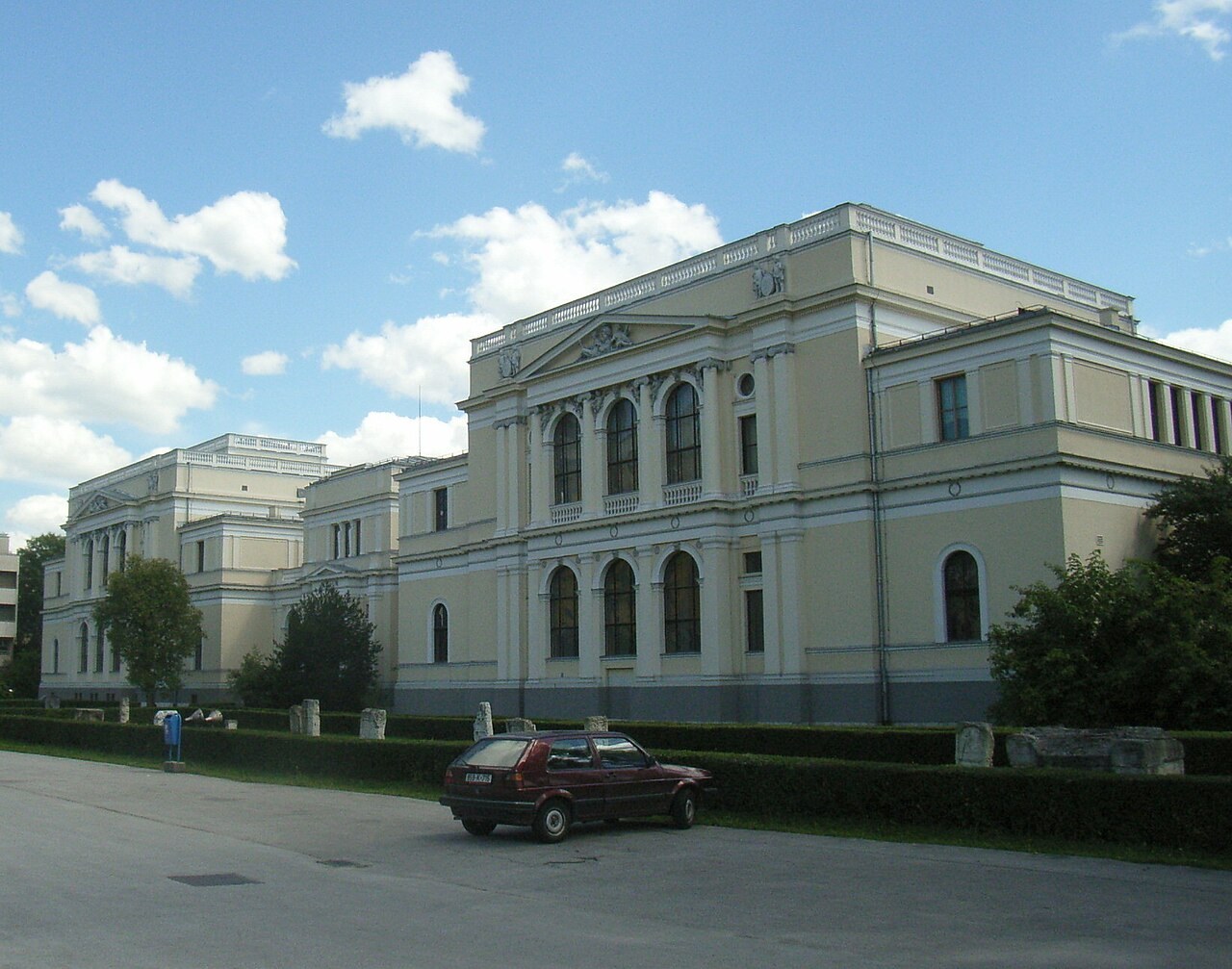
In April 1941, when Johann Hans Fortner, commander of the Nazi army's 718th Division, a brutal officer who led the mass murder of Jews and Roma, knocked on the door of the National Museum, he knew exactly what he was looking for. Fortner, who had been a student in Sarajevo, knew of the Passover Haggadah and its immense value. Jozo Petrović, the museum director, opened the door and, at gunpoint, was ordered to hand the Sarajevo Haggadah over to Fortner. He had come on Hitler's orders. Hitler intended to establish a "Museum of the Extinct Race" in Prague, and the Haggadah was meant to be a prominent exhibit. Petrović lied and told the German officer that he had already given the Haggadah to another officer. Johann believed him and left. Fearing his lie would be discovered, Jozo Petrović hurried to hand it over to the museum library's director, a Muslim named Dervish Korkut, who entrusted it to a Muslim cleric outside Sarajevo. The cleric hid it among copies of the Quran. In doing so, Dervish saved a Bosnian national treasure, an act that made him a national hero.
Despite its name, the Sarajevo Haggadah was produced in Barcelona in 1350. Miraculously, it survived many hardships, battles, and attempted thefts, and against all odds it has endured to this day. The symbol of the city of Barcelona, which appears in one of the illustrations, indicates where it was created, and the wine stains on the Haggadah's pages show that it was not merely a work of art, but was actually used for Passover readings. For Jews, the Haggadah is a greeting from our ancestors, who celebrated Passover centuries ago just as we do and read from a Haggadah just as we do. Today, the Sarajevo Haggadah ranks alongside other surviving famous works and is considered a world cultural treasure.
The real treasure of the Sarajevo Haggadah is its illustrations. We know them because copies appear in many modern Haggadahs. The first part of the Haggadah, 34 pages, is decorated with illustrations of biblical stories from the creation of the world onward, such as Jacob and his sons going down to Egypt and the Exodus from Egypt. The final illustrations in this section are connected to Passover itself, including the distribution of charoset before the Seder and worshippers leaving the synagogue. The second part contains the text of the Haggadah itself, accompanied by various illustrations related to the text, and the third and final part is a collection of Passover hymns and prayers. The illustrations are stunning, in shades of gold, blue, light blue, and deep green, and combine Christian and Muslim elements. All this represented the multiculturalism of the Golden Age of Spanish Jewry, before the expulsion decree of 1492.
The Haggadah's first miracle was surviving the Spanish expulsion of 1492. Had it been left behind, it would have fallen into the hands of the Inquisition and disappeared. It traveled from Spain to Italy, and, as a bill of sale written in Hebrew on one of its blank pages attests, it was sold in 1510. The signature of an Italian church censor named Giovanni Restorini, dated 1609, shows that it was still in Italy that year, probably in Venice. The date it left the country is not entirely clear. If the censor had found anti-Christian content in the Haggadah, it would have been burned, but miraculously it survived him too. From Venice, the Haggadah made its way to Sarajevo, probably with the community of Spanish exiles who arrived via Thessaloniki. Its owner, a Sephardic Jew named Yosef Cohen, tried to sell it to the Jewish community's institutions, but they could not afford its high price. In 1894, it was sold to the National Museum in Sarajevo, where it became the most important exhibit.
The Haggadah Under Siege and in the Museum
For a moment, it seemed that the Haggadah's hardships had come to an end at the museum, but that was not the case. As noted, in 1941 the Haggadah was given to Dervish Korkut, the museum library's director, who entrusted it to a Muslim cleric outside Sarajevo. The cleric hid it among copies of the Quran.
In 1992, during the Bosnian War, thieves broke into the museum. They did not consider the Haggadah valuable, and so it was found lying on the floor the next day. The museum director, Enver Imamović, hid it in the vault of the Central Bank of Bosnia, far from the front line, where it survived the war and the four-year siege of Sarajevo. In April 1995, rumors began circulating that the Haggadah had been sold to finance the war. To dispel the rumors, the prime minister of Bosnia displayed the Haggadah on Passover night. It was restored using funds provided by the United Nations and placed on display in a secure room in the National Museum.
Although 50% of the population is Muslim, Bosnians regard the Sarajevo Haggadah as a national treasure and guard it carefully. The room where the Haggadah is displayed was funded by James Wolfensohn, a wealthy Jew who served as president of the World Bank. He printed 613 exact copies of the Haggadah, corresponding to the 613 commandments. Each copy sold for thousands of dollars, with the proceeds going toward the room's maintenance and security. In 1991, its value was estimated at $7 million. The story of the Sarajevo Haggadah became a thriller, translated into Hebrew, titled People of the Book, written by Pulitzer Prize winner Geraldine Brooks.
The Rescue of Mira Papo
Dervish Korkut saved not only the Sarajevo Haggadah, but also the Jewish girl Mira Papo. The invasion of Yugoslavia began on April 6, 1941, and the country was conquered within 12 days, not only because of the Axis powers' military superiority but also because of internal ethnic conflicts that predated the invasion. The Orthodox Serbs were at odds with the Catholic Croats, and both despised the Muslim Bosnians. This long-standing tension manifested itself in mutinies within units of the Yugoslav army, and was one of the significant factors in the army's rapid collapse and Nazi Germany's swift conquest of the country, with the help of Italy and Hungary.
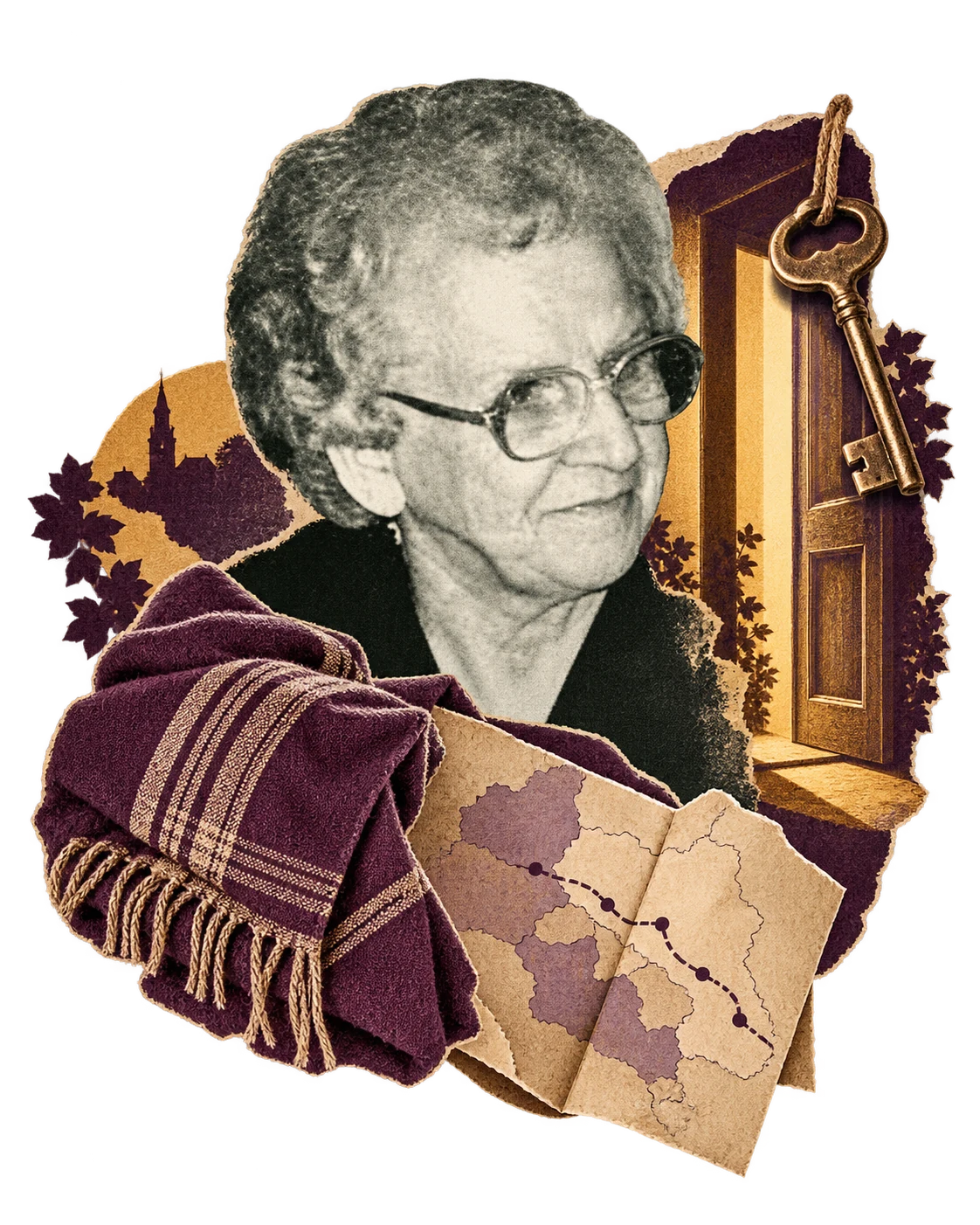
When the Nazis occupied Yugoslavia, Mira Papo was a member of Hashomer Hatzair in Sarajevo. As soon as the city was occupied, the Nazis began carrying out their plan to exterminate the Jews, joined in this task by local fascists, members of the Croatian Ustaše Party, who were Catholic. Hitler's ally, Ante Pavelić, head of the Croatian puppet government, declared: "The new Croatian state must be cleansed of Jews and Serbs. We will leave not one stone upon another of what once belonged to them." After her parents were murdered, Mira fled to the forests and joined Tito's partisans. Tito would later become Yugoslavia's leader; his father was Croatian and his mother Slovenian. About a year later, the partisans told Mira to return to Sarajevo because they could not protect her amid the fierce fighting. She returned to Sarajevo and sought refuge at the National Museum, where she met the same Muslim, Dervish Korkut. In testimony she gave to Yad Vashem, she described their meeting: "He ordered a cake for me. After so much suffering, I ate a cake I had no longer believed I would ever eat in my life. And he said to me, 'I want to tell you something. If you agree, I'm willing to save you. I'll take you home with me. I'll dress you, and you'll be one of us. I'm willing to have you stay with me until the end of the war. I'll protect you.' I had to pose as a Muslim and work as his housekeeper. What an honest man. I had to give my consent. Of course I agreed - I embraced the offer wholeheartedly."
Korkut took her to his home, and he and his wife, Servet, dressed her in the traditional clothes of a Muslim girl and gave her the name Amira. They told the neighbors that they had hired her to care for their baby. They knew their actions put them at risk, because a senior German officer lived on the floor above them.
Mira lived with Dervish and Servet for about five months and cared for their son, Munib. By the end of the war, 85% of Sarajevo's Jews had been murdered, most of them at the Jasenovac extermination camp. Mira's aunt managed to arrange forged documents and a train ticket for her, and she returned to the partisans, where she served as a nurse in a combat unit until the end of the war.
Dervish Korkut and His Legacy
Dervish Korkut was born in Sarajevo in 1888 to a prominent, educated, and liberal family. He studied theology in Istanbul and Semitic languages at the Sorbonne in Paris. He was an impressive man: tall, mustachioed, dressed in an elegant European suit and wearing a fez. He spoke ten languages, was a fascinating conversationalist, and was courageous. As the library's curator, he was responsible for more than 200,000 books. Dervish Korkut was a friend of the Jews. At the very beginning of the war, he published an article titled "Antisemitism Is Foreign to the Muslims of Bosnia-Herzegovina." His brother also turned his hand to writing and translated the Quran from Arabic into Serbo-Croatian. Korkut put himself at risk under Nazi rule when he refused to join the Young Muslims organization, the Muslim wing of the SS. He also refused other positions in the collaborationist government apparatus. He did not spare Tito's communist regime criticism either, and was arrested. He was put on trial on the baseless charge of collaborating with the fascist regime during the war. Servet, Dervish's wife, approached Mira Papo, who had since married, and asked her to tell the truth in court - that Dervish had saved her! Mira agreed, but her husband, fearing the trial was rigged from the outset and that the communists might take revenge on Mira too, forbade her to testify, and Dervish Korkut was sentenced to death. For years, Mira lived with a deep sense of guilt. After immigrating to Israel, she came across an announcement in a Yugoslav newspaper marking the anniversary of the death of national hero Dervish Korkut. She learned that Dervish had escaped the death sentence but had spent six years in prison. In 1994, Mira Papo gave her testimony to Yad Vashem, but she died at the end of that year and did not live to see Dervish and Servet Korkut recognized as Righteous Among the Nations.
Munib, the son of Dervish and Servet, became a wealthy businessman in Paris. He was surprised to receive a letter in the mail informing him that his father had been recognized as Righteous Among the Nations. He passed the document on to his sister Lamia, who lived in Pristina, Kosovo. In 1999, Lamia and her family fled Pristina, which had been heavily bombed by the Serbs during the civil war in Yugoslavia. After a long journey, they reached a Bosnian refugee camp on the border between Macedonia and Bulgaria. Lamia showed the document to the Israeli representatives at the refugee camp. She did not understand what it said, beyond the fact that it had something to do with Israel, and therefore did not understand why the Israeli representatives were so moved after reading the letter.
In May 1999, about a hundred Bosnian refugees arrived in Israel, among them Lamia Korkut, Dervish's daughter, and her family. Benjamin Netanyahu welcomed them at the airport, along with Davor Beković, the son of the late Mira Papo, whom Lamia's father had saved.
Lamia and her family moved to live near Davor and his family. They became close friends and remained so even after Lamia and her family returned to Sarajevo and retained the Israeli citizenship they had received.
On December 14, 1994, Yad Vashem recognized Dervish Korkut, by then already regarded as a national hero in Bosnia, and his wife, Servet Korkut, as Righteous Among the Nations. Dervish Korkut died in Bosnia in 1969, at the age of 81.
After the war, the German officer Johann Hans Fortner, commander of the army's 718th Division, was extradited to Tito's Yugoslavia and executed by hanging.
תגובות
עדיין אין תגובות.