
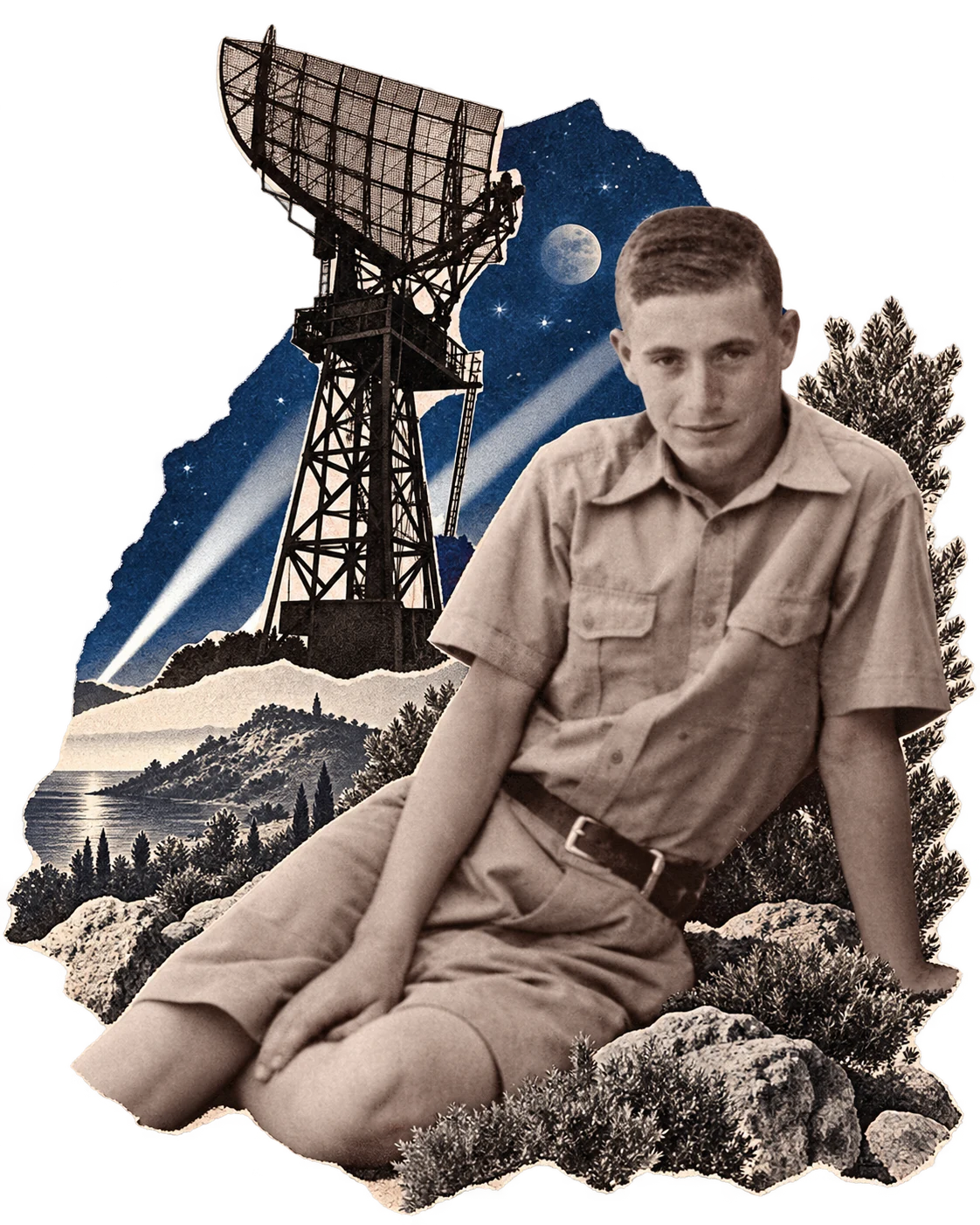
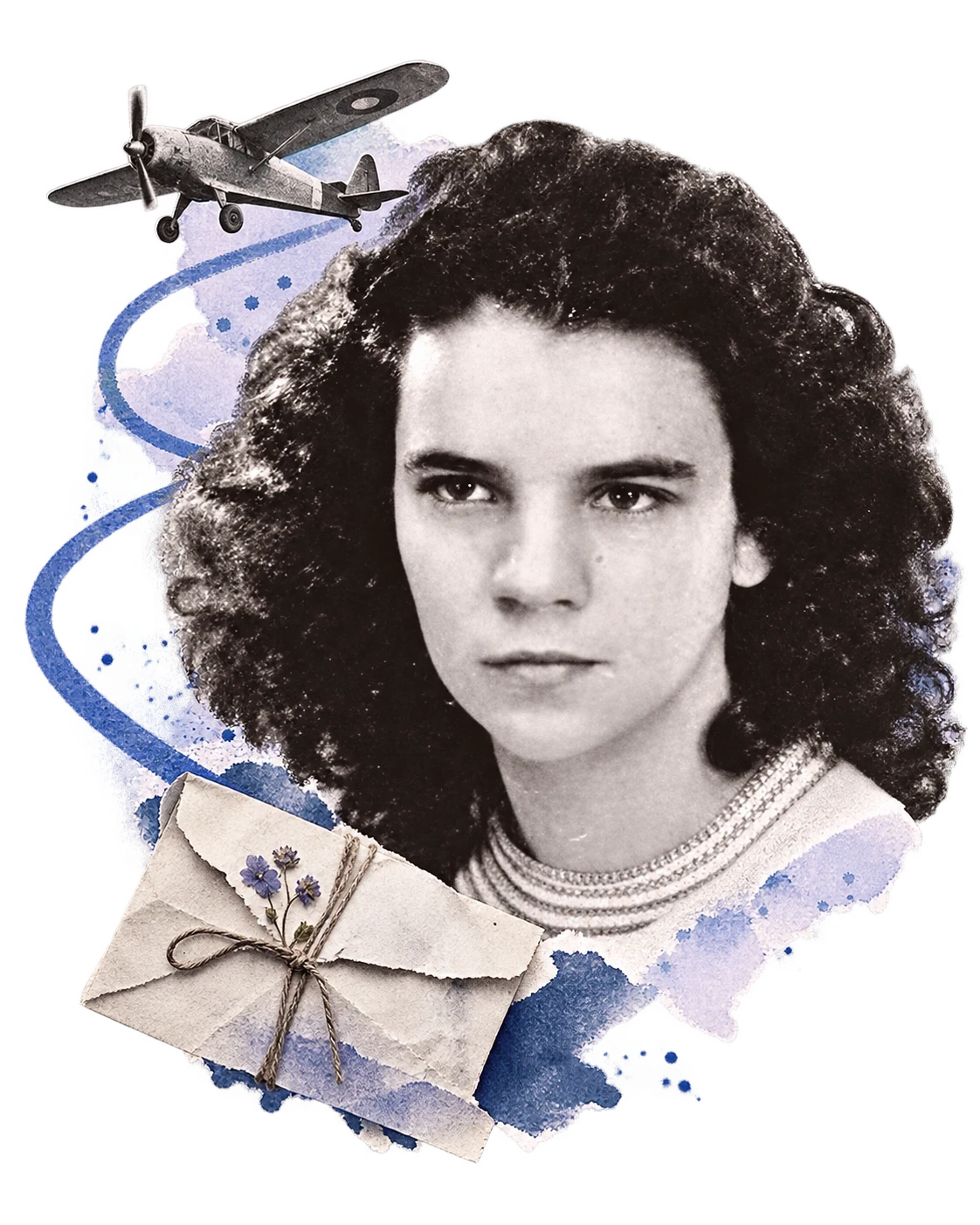
When noises came from the fence, the dogs began barking furiously. Suddenly, the searchlights came on and the British ran toward them. The radar exploded, and the wound remained open...
Family Roots in Mazkeret Batya
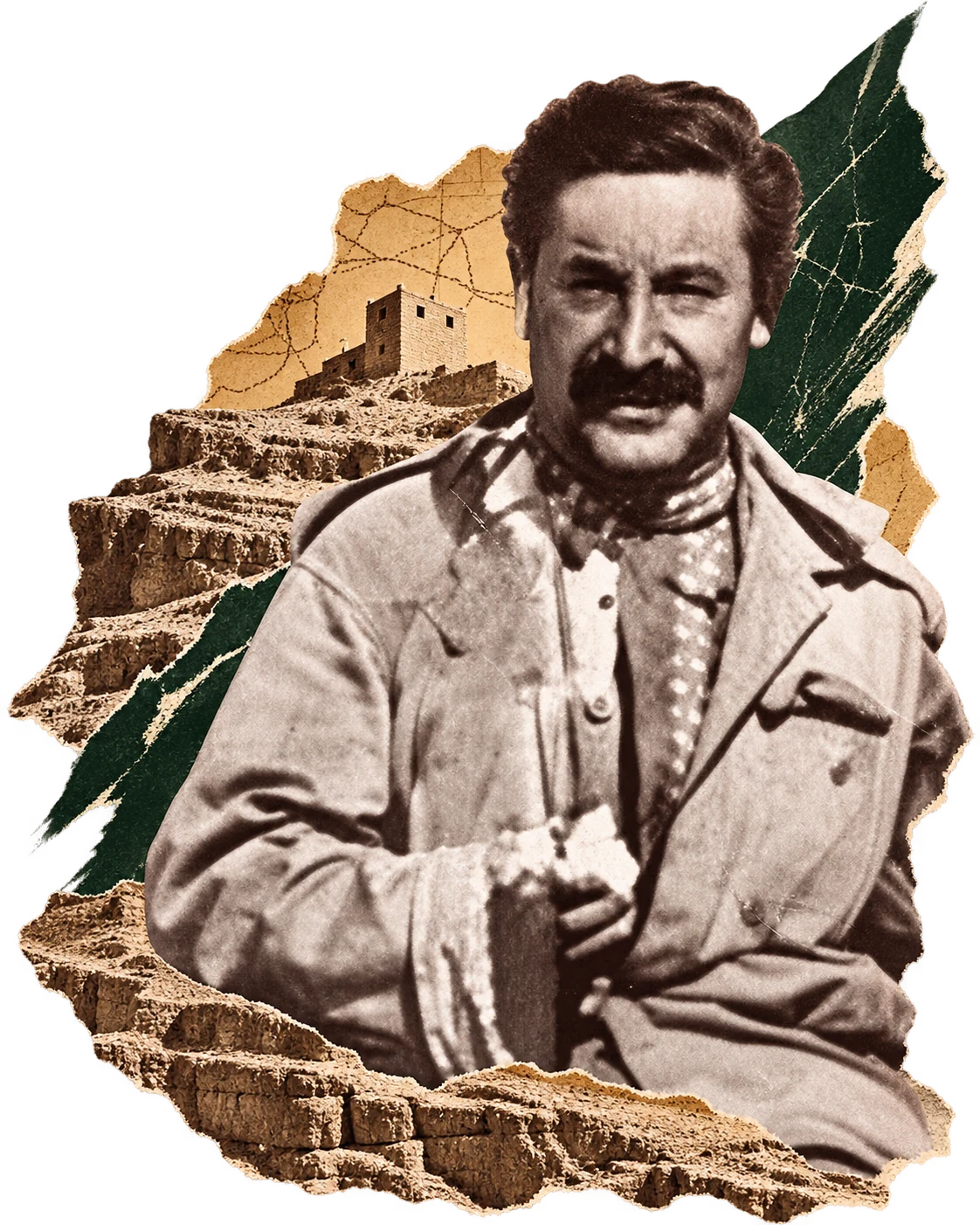
The meeting between Rabbi Mohilever and Baron Edmond de Rothschild during Sukkot in 1882 was decisive. The Baron wanted to know that he was not wasting his time on a group of Jewish dreamers who, when faced with the harsh reality of life in the Land of Israel, would not have the strength to establish a flourishing settlement. He therefore made his support conditional on their training at the Mikveh Israel agricultural school. Rabbi Mohilever, who dreamed of establishing a successful settlement, did not rely solely on training at the agricultural school; he also sought people who already had an agricultural background. He chose 11 men from a small farming village called Pavlova (today in Ukraine, not far from the border with Poland). These men had worked in agriculture since their youth. Each family sent one representative, except the Arkin family, which sent two - Zvi and Yaakov. The group underwent eight months of training, and in November 1883 built a magnificent settlement on the lands of Aqir. At first, the settlement was called Ekron, but since it was the first settlement established by Baron Edmond James de Rothschild, its name was changed at his request to Mazkeret Batya, after his mother.
Zvi Arkin's son was born in 1890 in the house Zvi had built. His grandson Zalman was also born there. Zalman married his cousin Miriam, who immigrated to the Land of Israel in 1925 from the city of Rozhany. Zalman and Miriam continued to cultivate the farm established by Zvi, the grandfather, and their children were born there too: their eldest son, Eliezer Moshe, was born in 1929, followed by Yisrael Chaim (later the Director of the Budgets Division at the Ministry of Finance and CEO of Agresco), Amihud, and Ahiezer. Zalman and his sons were farmers, working as they had in biblical times - threshing with a threshing sledge, plowing with a camel, and growing tomatoes and cucumbers for their own use in summer, and beets, onions, cauliflower, and cabbage in winter.
A Childhood Between Study and Farm
Eliezer divided his childhood between school and helping with the household farm. "I can testify that during the six years I taught him, I learned more from him than I taught him... Everything he did was marked by perfection and dedication; his soul was bound up in his work," recalled Yosef Okun, one of his elementary school teachers.
In 1934, after completing elementary school, Eliezer began studying at the Mikveh Israel agricultural school, where his father, grandfather, and great-grandfather had studied. There, too, he stood out among the students. "Eliezer was born in a furrow," said Eliyahu Krauze, principal of the Mikveh Israel agricultural school.
After graduating from Mikveh Israel, Eliezer enlisted in the Palmach and joined the mobilized training group, the Yiftah training group at Kibbutz Gvat. As he packed his knapsack, he promised his mother: "I will return to Ekron, and together with my friends we will build a shared farm and separate family lives." He was not only a farmer born to a farming family, but also a lover of books. He collected books for the library and even served as its librarian. This is what he wrote in their newsletter, Aluma: "We have decided to establish a library. Another addition to our cultural assets. Our studies are behind us, and we are entering working life. Now self-education has great importance - and the library is a flame of cultural light." Shortly after enlisting, Eliezer was selected to attend a squad commanders' course.
Exodus and the Hebrew Revolt
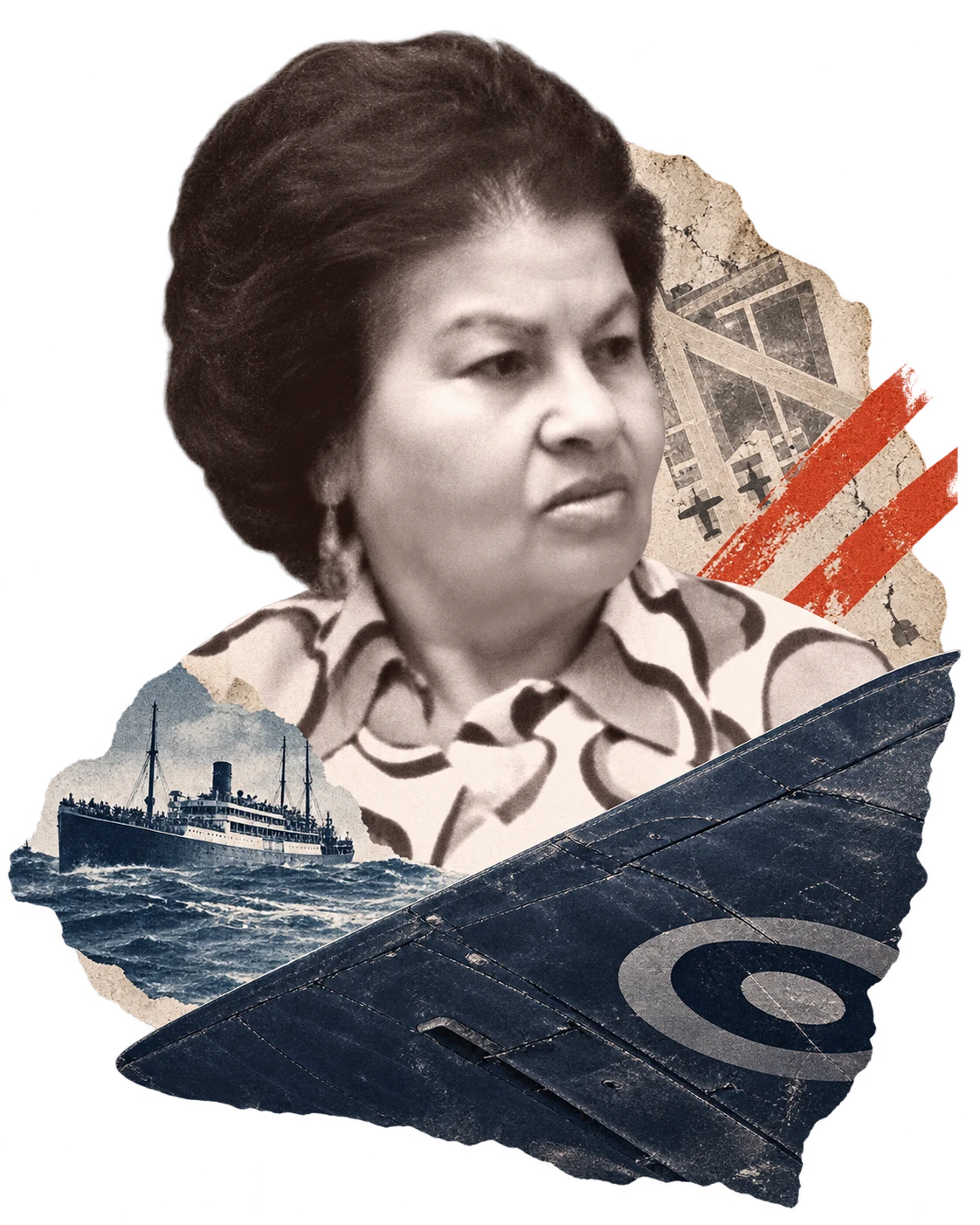
The ship, originally named President Warfield, was built as a pleasure vessel intended to carry about 1,000 people on the rivers between Maryland and Virginia. But historical events meant that, at the end of World War II, after serving the British as a hospital ship, it was about to be decommissioned and sold for scrap. Just then, fate destined it to enter the history books as one of the most famous ships. Jews who had survived the extermination camps were gathered in displaced persons camps. The Mossad Le'Aliyah Bet brought together about 4,500 Jews from these camps and transferred them to Marseille, France. On July 11, 1947, in the early morning, the displaced persons met the crew and escorts from the Land of Israel and boarded the ship, bound for the Land of Israel to establish a state where they could live in safety. The British had all the information about the identities of the passengers, escorts, and crew, and even knew the ship's destination. From the moment it left the port of Marseille, the ship was accompanied by a British bomber and British patrol ships.
After a week at sea, 20 miles from the coast of Israel and not far from the port of Gaza, British destroyers rammed the ship, and 50 soldiers boarded it. A fierce struggle broke out, during which two Holocaust survivors and an overseas volunteer who was in fact a British officer were killed (British fighting British) - William (Bill) Bernstein, who served as an officer aboard the ship. The destroyers and the ship continued on to Haifa, where the passengers were forcibly removed and transferred to three deportation ships bound for Germany. Photographs of the deportation ships, with Holocaust survivors crowded behind barbed wire, caused a huge stir in Israel and around the world. The story of the ship Exodus, or by its Hebrew name, Yetziat Europa 5707, became the main topic of conversation for a long time. Many books were written about the deportation ship, and films were made too (the most famous was Exodus, produced in 1960 and starring actor Paul Newman).
By the end of 1945, it had become clear that the British were continuing their White Paper policy, restricting immigration to the Land of Israel, the purchase of land, and settlement of the country, while the remnants of European Jewry were in displaced persons camps. This led the leadership to conclude that cooperation with the British was impossible and that they must fight back. Thus the Hebrew Resistance Movement was formed, bringing together all the underground organizations of the time: the Haganah, the Irgun, and Lehi. Following the Exodus affair, the Haganah headquarters decided to launch an operation against the British. The chosen target was the radar stations on Mount Carmel, which were used, among other things, to detect immigrant ships. The Palmach's First Battalion was chosen for the mission and had only two days to prepare.
The Carmel Operation and Remembrance
The radar station at Stella Maris was guarded closely by soldiers of the 6th Airborne Division, the "Anemones." There had already been two attempts to strike the radar station, and on July 1, 1947, a third attempt took place. After the first two attempts, the British expected another attack and were already at their posts on alert. The Palmach plan was to attack two radar stations simultaneously: one on western Mount Carmel (opposite Tchernichovsky Street) and the other on eastern Mount Carmel. The fighters assembled at Kibbutz Sha'ar HaAmakim, and from there each fighter separately made his way to the Reali School in Ahuza. The force consisted of twelve fighters, including Eliezer Arkin from Mazkeret Batya. The force commanders were Rafi Ginsburg (nicknamed "the Rooster") and Rafi Hentman (later known as Rafi Eitan, a senior Mossad official and one of the men who captured Adolf Eichmann in Argentina). During the morning, intelligence was gathered indicating that tin cans were hanging on the fence, designed to make noise whenever it was touched, and that guard dogs were stationed along it. It is said that during a reconnaissance mission in preparation for blowing up the radar, Rafi Eitan crawled through a sewer tunnel, and from then on he was nicknamed "Rafi the Stinker."
The force under Rafi Ginsburg's command climbed up from the south side of the wadi in a long, silent crawl and positioned itself between the two buildings where the British officers lived. There, the force split up. Eliezer Arkin's squad, under Rafi Ginsburg's command, broke in to blow up the western radar, while a force under Rafi Eitan headed to blow up the eastern radar. When Rafi Ginsburg cut the fence, the dogs began barking, the entire area was suddenly lit up, and the guards opened heavy fire. At that moment, a private car happened to pass by, and British officers got out and opened fire on the squad. Eliezer Arkin was hit by this gunfire. Rafi Ginsburg ordered them to blow it up and get away as quickly as possible, and the retreat began.
Rafi Eitan described the break-in at the eastern radar station: "The silent approach took a long time, about an hour and a half. After ten minutes, the two explosive charges, each weighing 20 kilos, were already beneath the radar carriage. Then, suddenly, a shot rang out from one of the sentries. I gave the order to fire... Yinon Ezroni, commander of the demolition squad [later the IDF's Chief Ordnance Officer], announced that he was lighting the fuses. There were about 50 seconds until the explosion. We retreated under fire to cover, and then came the enormous explosion, which I can still hear to this day. We cleared the area and took a roll call... We went down quickly, walked a few hundred meters along the road to cover our tracks, and continued to Kibbutz Yagur. We arrived at five in the morning. Only then did we hear what had happened on western Mount Carmel. Grieving over what had happened to Bodankin [in the original], we returned to our base at Sha'ar HaAmakim."
Eliezer Arkin's fellow students in the squad commanders' course tried to carry him. Eliezer did not want to delay them or put them in danger. His friend Itamar Golani recalled: "He was suffering terribly from his wounds, but didn't utter a sound; he only pressed his lips together. When we tried to get him out of the place where he had been wounded, he said: 'I feel that these are my final moments, so don't delay because of me. Keep retreating. Give my regards to everyone. Tell my mother not to grieve too much and to be proud of me.'" The British found him and took him to the hospital, where he was interrogated. But, according to a nurse's testimony, he did not utter a word, and the next day he died of his wounds.
On July 22, 1947, Eliezer Arkin was laid to rest in Mazkeret Batya. "Eliezerke, my beloved son! Nothing is more cruel than the bitter reality, than that cruel, bitter day when you were taken from us, silenced and gone. At midday my sun set, and even now I cannot understand how a mother can go on living after losing her dearest son. We are condemned to live in our home without you, to sit at the table with your place empty - and the house and all who dwell in it are in mourning; every corner is orphaned. A consuming longing gnaws at my soul," his mother eulogized him.
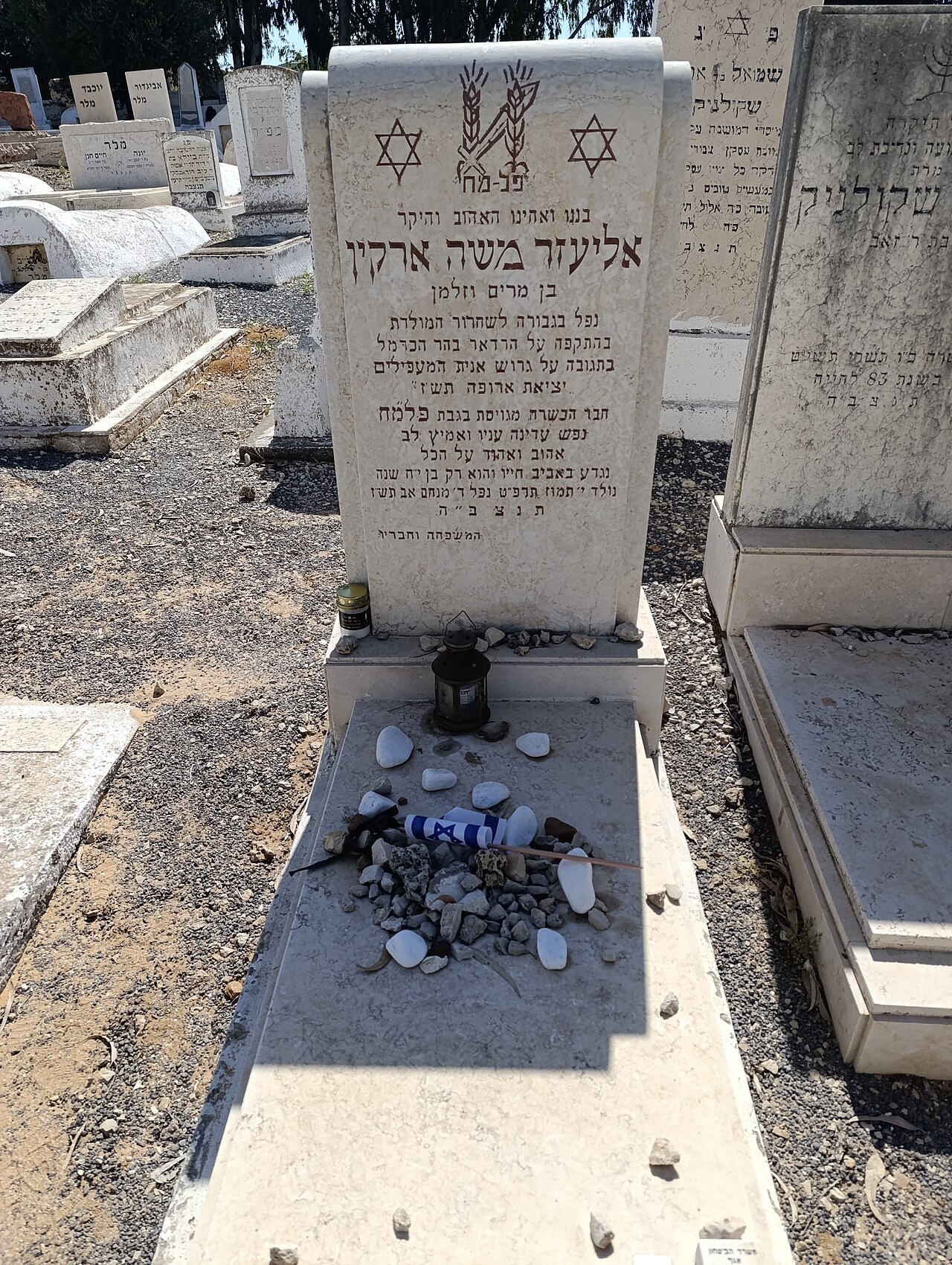
And his father eulogized him: "Eliezer, my firstborn, the vision of my life, you knew, and I knew too, where you were going. May it be God's will that you be the last sacrifice for our afflicted and ravaged people. May the clods of earth over you rest gently, facing the land you worked joyfully day after day..."
A year later, Chaim Hefer wrote his famous song "Chizbat," which begins with these words:
The fire cracks twigs in the silence The coffee darkens in the finjan A story we'll tell, a story we'll hear New and, of course, old as well.
We'll remember that crawl to the radar We'll remember how one never came back...
The operation's commander, Major Rafi Ginsburg, "the Rooster," was killed during the War of Independence in an operation to open the road to the Negev, and was buried at Kibbutz Beit Keshet.
Today, at 17 Tchernichovsky Street in Haifa, near the site of the operation, a plaque commemorates Eliezer Arkin. His parents established a gemach fund in his memory, as well as the library at Kibbutz Yiftah, where his fellow training-group members live, and the soldiers' club at "Eged 168" - the camp where the British radar station was located. In Mazkeret Batya, the place where he dreamed of building his home, a street bears his name.
תגובות
עדיין אין תגובות.