
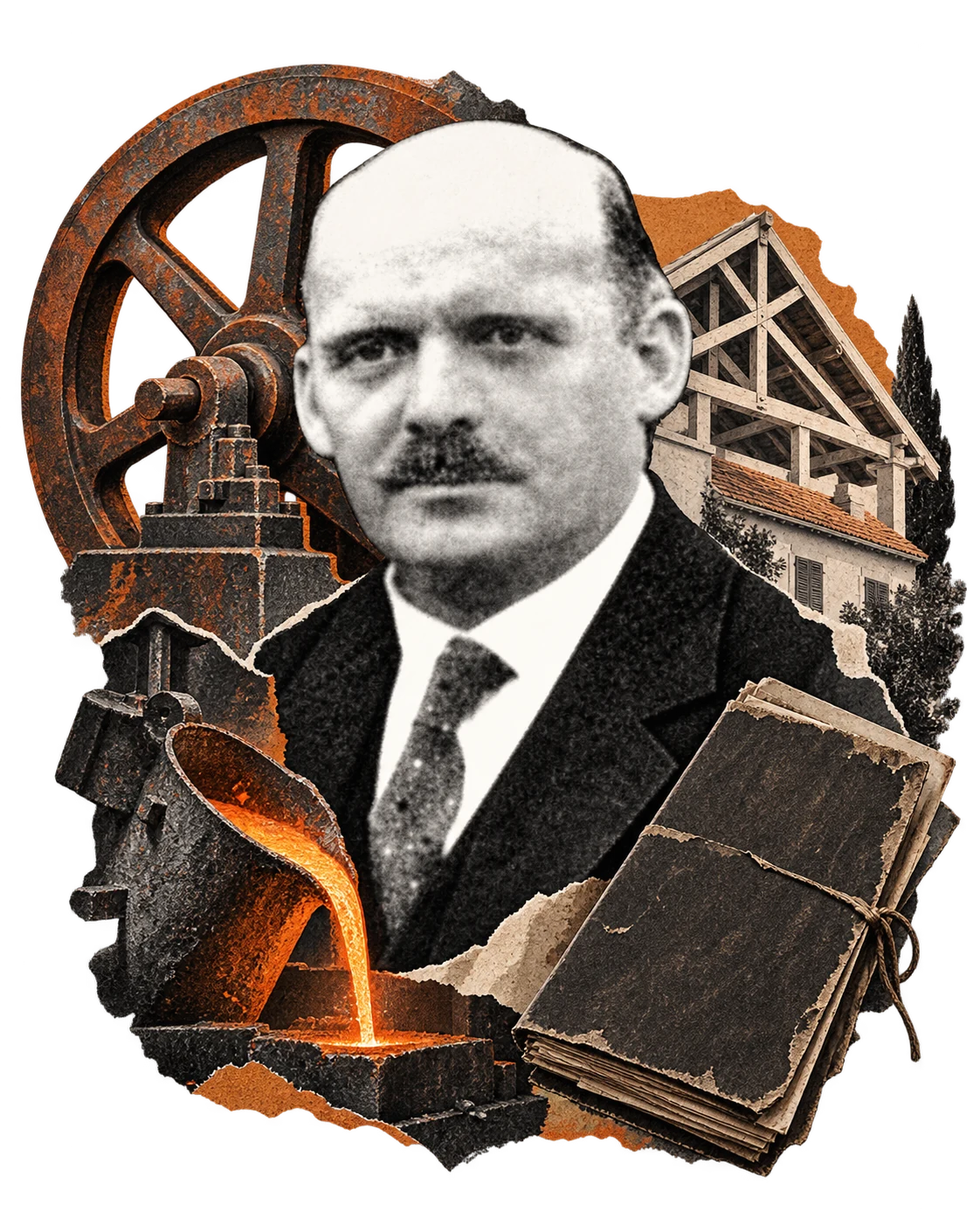
The Templers were a religious movement that took shape in Germany. They came to the land with the aim of preparing it for the coming of Jesus the Messiah, and some even became Nazis. Gotthilf Wagner was one of the movement's leaders.
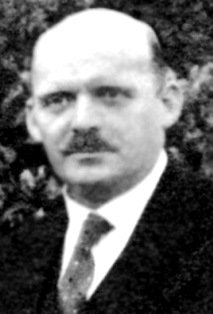
The morning of Friday, March 22, 1946, was like dozens of Fridays before it. The routine was followed scrupulously. The neighborhood gates opened, and an elegant car drove out. Everyone knew who was inside: at the wheel was a native-born local, decorated with medals, and beside him sat his bodyguard, a Jewish auxiliary policeman.
A little behind them, a car carrying seven clerks set out. Both cars traveled along the same familiar route. As they neared Tel Aviv, they were greeted by the scent of the Tel-Litvinsky orchard, and the houses of the Hatikva neighborhood came into view. As the elegant car slowed near the intersection of Levinsky and Lavanda streets, a taxi sped up from behind, pulled alongside the right-hand side of the luxury car, and forced it to swerve into an empty sandy lot. The stunned driver stopped the car. Two assassins emerged from the edge of the lot. One thrust his hand into the car and fired a dud round at the distinguished passenger. The second assassin leapt forward and finished the job. A single bullet pierced the distinguished passenger's head.
The distinguished passenger, Gotthilf Wagner, said these last words: "So it has come to this".
Family Roots and the Templer Community
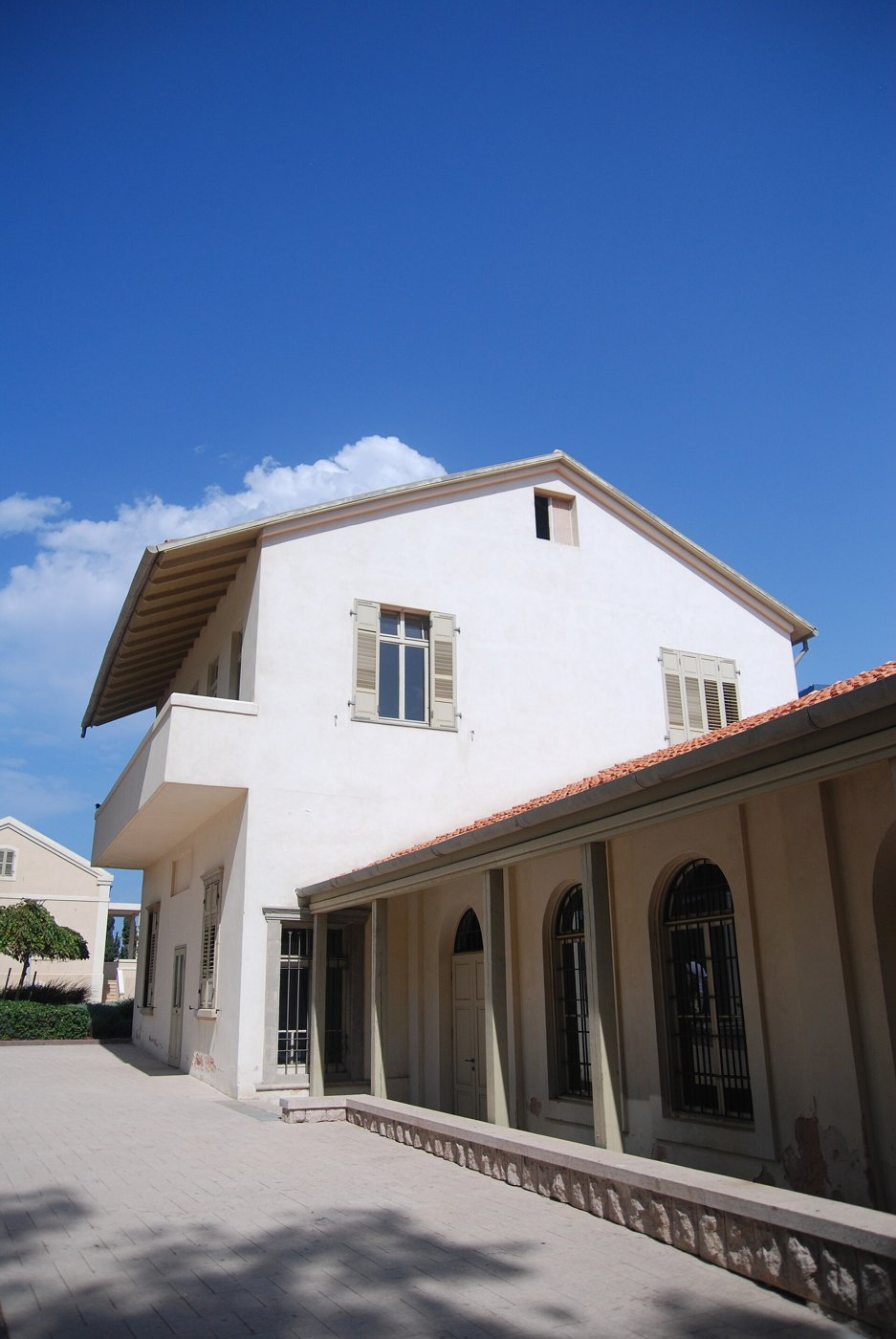
The brothers Wilhelm, Georg, and Adolf Wagner were prominent members of the Templer community in Jaffa. They were pioneers of the modern metal industry in the land of Israel and imported diesel engines to the country. In 1900, near the Neve Tzedek neighborhood, they established a steel foundry known as the Wagner Brothers. The factory was part of the Walhalla neighborhood. Among other things, the family's foundry served as an ammunition factory for the Turkish army during World War I (in 1916, the Allied forces sent a ship to bombard the factory from the sea - which gives us an idea of its great importance).
Gotthilf Wagner was Wilhelm's son. He was born in Jaffa in 1887, and during World War I he was drafted into the German army and sent to the French front as an officer with the rank of lieutenant. He was awarded two Iron Cross medals for his service. In 1920, he returned to the country to take charge of the family's thriving business, and later was appointed head of the Templer community in Sarona.
In 1854, in the city of Ludwigsburg in southwestern Germany, theologian Christoph Hoffmann founded the "Society for the Gathering of God's People in Jerusalem" - the Templer movement. The movement sought to establish a Christian spiritual temple in the Holy Land and prepare it to receive the Jews, believing that the Jewish people's return to their land would bring redemption to Christian believers and to the whole world.
In 1858, a Templer delegation set out to explore the land and consider the possibility of putting its plan into practice. The first attempt at settlement was in the Jezreel Valley, but it failed. The next attempt came in August 1868. The movement's founder, Christoph Hoffmann, arrived in the land with about 450 members of the movement, and a year later they had already settled in Haifa. The success of the Haifa settlement, the visit of German Emperor Wilhelm II to the land, and the Germans' growing closeness to the Turks who ruled here were among the main factors behind the continuing waves of Templer immigration to the land and the establishment of Templer neighborhoods in Jaffa and Jerusalem. In all, the Templers established four rural colonies: the Sarona neighborhood near Jaffa, Wilhelma (today Bnei Atarot), Bethlehem of Galilee, and the Waldheim neighborhood, where the community of Aloney Abba is now located. They also established several farms, hotels, flour mills, and more.
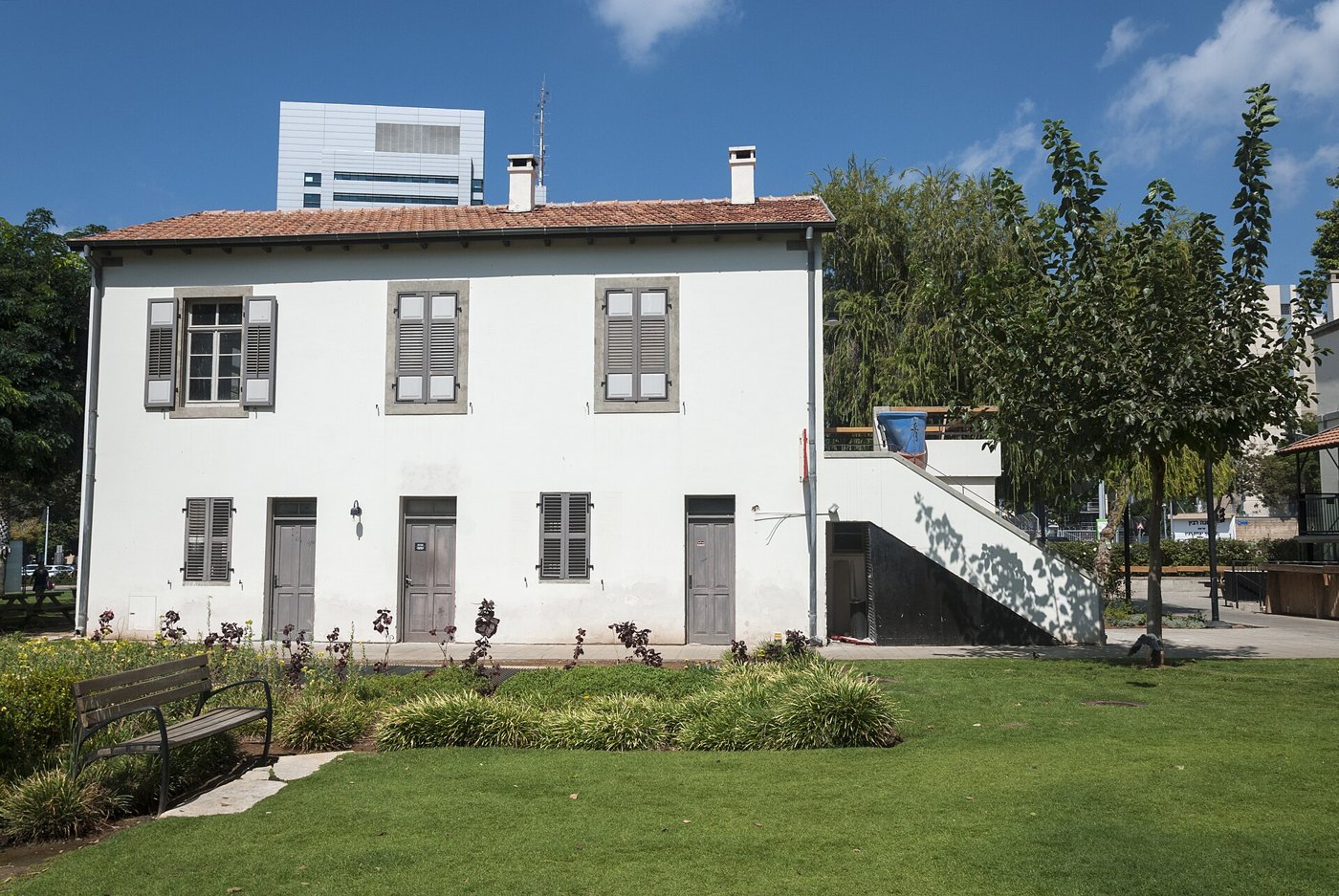
The neighborhoods stood out for their beauty and cleanliness compared with the nearby Jewish neighborhoods. Ze'ev Smilansky described the Walhalla neighborhood near Jaffa, comparing it with Jaffa's Jewish neighborhoods: "As we pass through the German neighborhood near Jaffa, and that small German neighborhood built opposite Neve Tzedek, we delight in seeing beautiful houses, built with good taste. The houses are adorned with courtyards full of trees and flower gardens that bloom for most of the year. By contrast, when we come to the Mishkenot Yaakov neighborhood in Jaffa, we are dismayed. We are ashamed to find a sort of ghetto in a new guise... How poor are your tents, Jacob, and how fine are the dwellings of the Germans."
The Templers brought to the land the classroom method we know today, with a teacher and a blackboard. Until then, students had sat in a circle around the teacher. They enriched the tourism industry by bringing pilgrims and guiding them around the land, as is done today, and developed modern citrus growing in the country. Their relations with members of the First Aliyah were good, and they helped the Baron's officials with the settlement enterprise in the land. One of them, a resident of the Haifa neighborhood, was even honored with opening the synagogue in Zichron Yaakov.
The Templers in the Shadow of Nazism
The second generation, born in the land, spoke Arabic and Hebrew and grew accustomed to the heat, local customs, and culture. They began to drift away from the founders' principles. During and after World War I, young Templers joined the German army. When the British military administration was established in Palestine, the community found itself classified as enemy nationals, and in 1918, 850 Templers were deported to Egypt. At the end of the war, the exiles were allowed to return to the country and found their colonies ruined and looted, but within a few years the colonies had recovered and flourished again.
In the 1930s, Nazi propaganda seeped into the Templer colonies, particularly among the second and third generations, and branches of the Nazi Party were even established in the country. The Templers turned from a Zionist movement into Nazi antisemites. Flags bearing swastikas flew in Haifa, Jaffa, and Jerusalem, and in 1934 it was decided that people should greet one another with the Nazi salute. Some young Templers in Palestine returned to Germany and joined the German army as soldiers, out of a sense of duty to the heritage of the German nation-state. Some even joined the Jewish section of the SS.
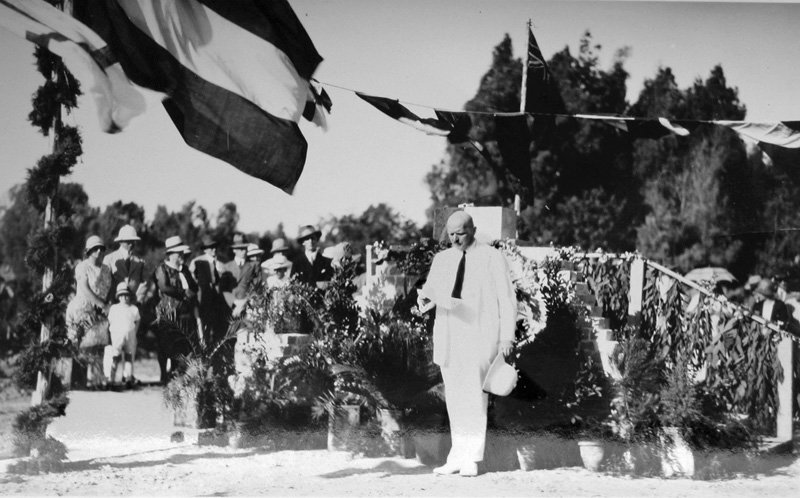
In Israel, the British authorities treated the Templers as enemies. The Sarona neighborhood was surrounded by barbed wire, and the British turned it into an internment camp. Later, the residents of the colony were deported to Australia, except for a small group who were to preserve and look after the agricultural property and livestock of the Sarona and Wilhelma colonies.
Gotthilf Wagner joined the Nazi Party and was one of its esteemed members. In 1934, Carolina and Gotthilf Wagner celebrated their silver wedding anniversary, and for the occasion they received a personal congratulatory telegram from the Führer, Adolf Hitler. The telegram was framed and displayed in the couple's home. At one of the Nazi celebrations, Wagner hoisted the swastika over the roof of his factory, right here in Jaffa, in the land of Israel!
With the end of the war, rumors began to circulate that the exiles would return to their neighborhoods. These rumors, along with testimony about the brutal extermination of the Jewish people by the Germans during the war, led Yitzhak Sadeh, one of the leaders of the Haganah, to give the order to eliminate Gotthilf Wagner. The assassination brought German settlement in the land of Israel to an end and made it unmistakably clear to the British in Palestine and in London that we would not tolerate Nazi Germans on the soil of Israel.
תגובות
עדיין אין תגובות.