
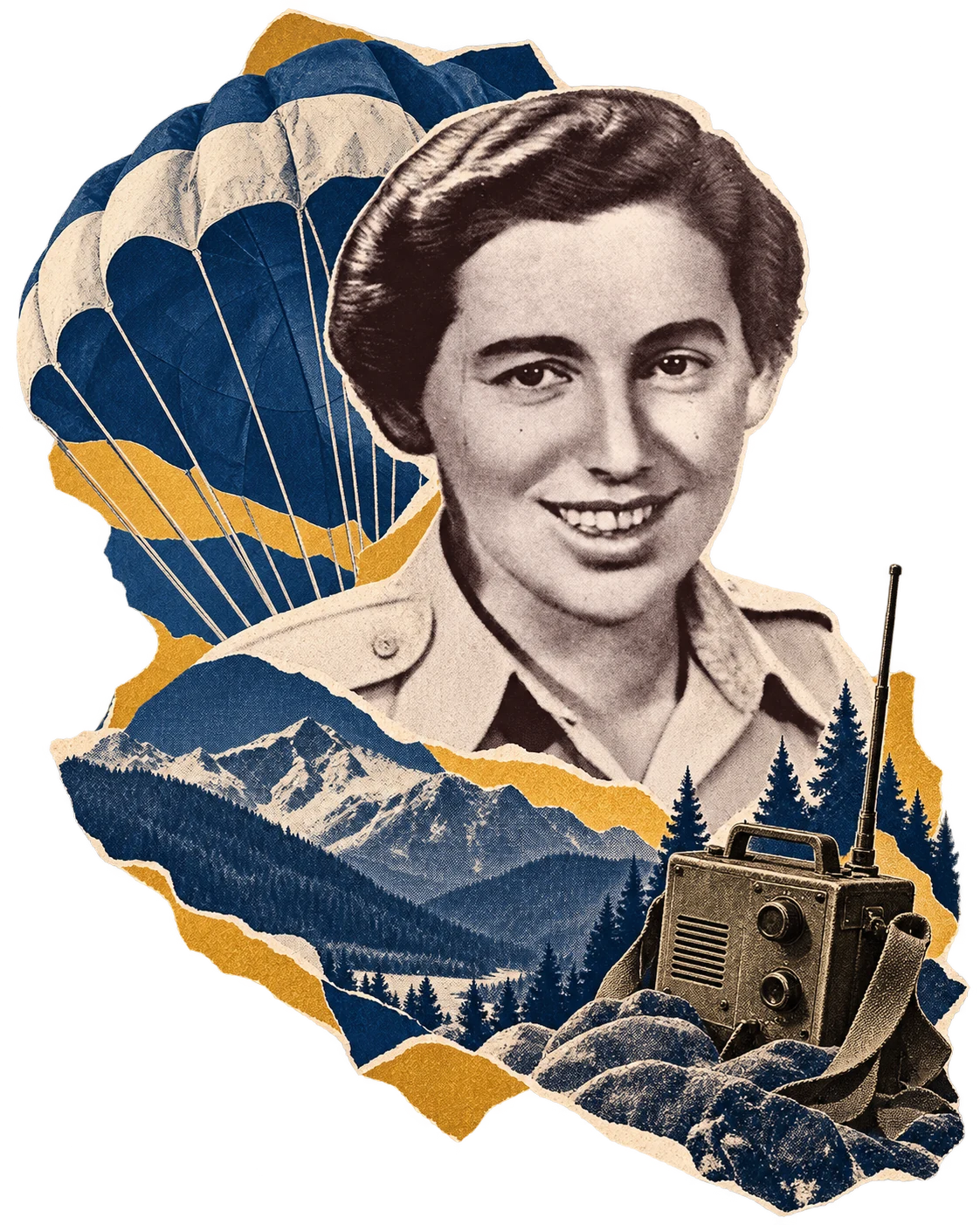
A daring, pioneering, and courageous woman, she was part of a group of parachutists who, during World War II, assisted the British in their war against the Nazis and rescued Jews.
The Last Letter
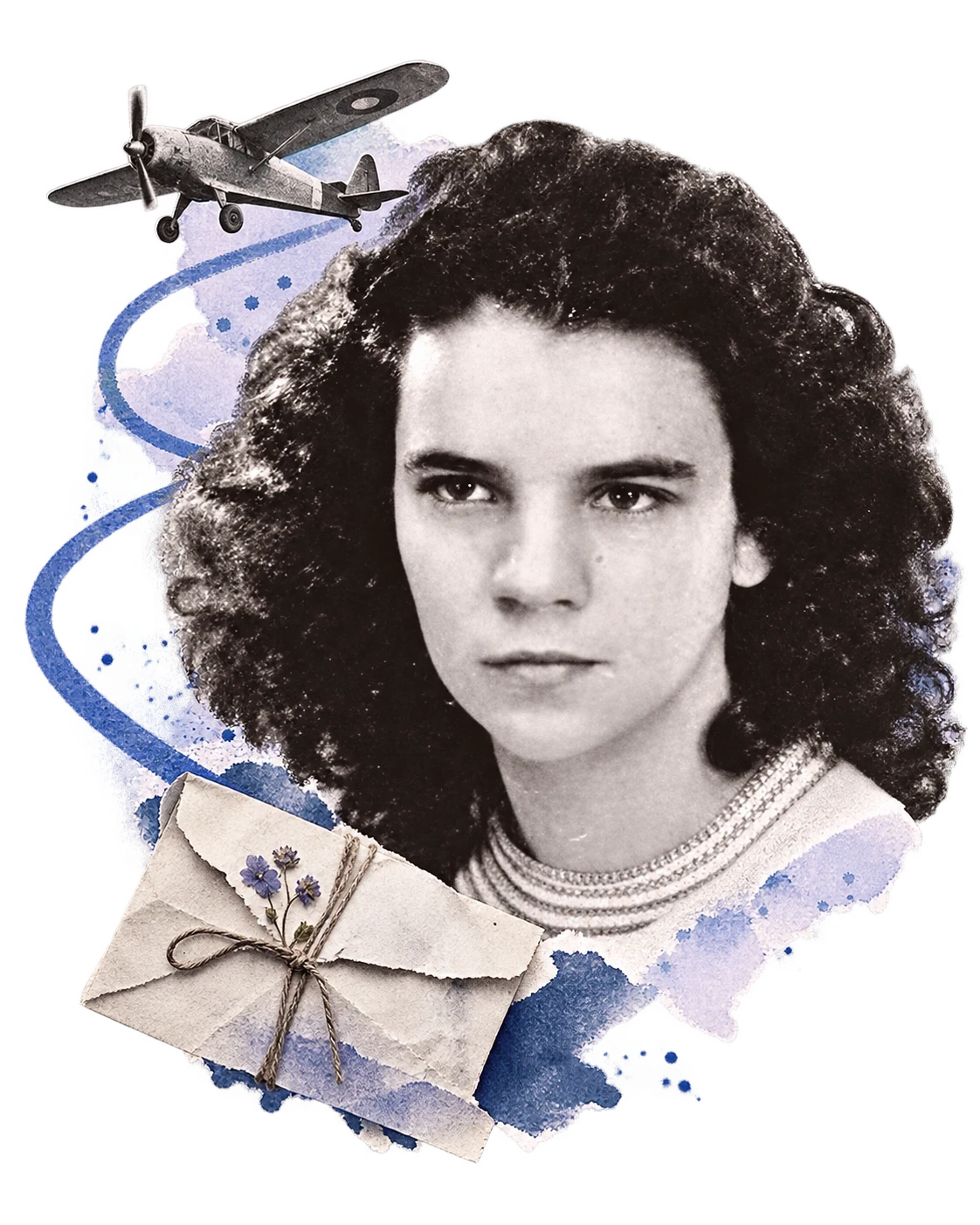
Shortly before his death, Rafi Reiss managed to smuggle out of detention the letter he had written to his wife: "I was profoundly distressed to learn that I would be there when the last few hundred of our people were exterminated. I had already been forced to watch the best fall around me. It is an enormous stream of people going to their deaths. Tomorrow I will join them, or rather: we will join them. For Haviva from Ma'anit in Karkur is walking this path with me... I object to their making a national hero of me... There was no heroism in it at all... Do not weep for me, for I followed my path with my eyes open. I am sure of myself and do not regret a single step I took."
On November 20, 1944, 320 Jews were taken out of the prison, among them Rafi Reiss and Haviva Reik. They were put into military trucks and driven to a nearby village called Kremnička. Women, men, and 58 children and infants were lined up at the edge of a pit and shot in the back of the head. A memorial now stands over the killing pit, bearing three large crosses. Later, the menorah symbol and the Hebrew word "Remember" were inscribed beneath the crosses.
After completing a long series of training courses, it was clear that Haviva Reik was destined to parachute into Europe during World War II. Her friends tried to dissuade her, telling her, "This is a suicide mission." Haviva looked at them and said, "We must parachute into Europe as a mother rushes into a burning house to save her children."
Yitzhak Sadeh recalled that one day, as they walked together through the streets of Tel Aviv, Haviva said: "I am not used to speaking, but this I want to say before I leave: I am sure I will reach my destination. I am sure I will do whatever is asked of me, and I am sure I will return." But she did not return.
Her Youth in Slovakia
Haviva was born in 1914 as Marta Reikova in the Austro-Hungarian Empire, in what is now Slovakia. Her father was Hungarian and her mother was Austrian. Haviva was fluent in German, Hungarian, Slovak, and Czech, and knew a little Russian. Before immigrating to the Land of Israel, she also studied Hebrew and English. Before arriving in Slovakia, the family lived in Budapest. Her father had a small factory, but it went bankrupt, and the family fell into abject poverty and moved to a remote Slovak village. After World War I, their circumstances worsened, and her older brother and sister, aged 9 and 12, went to work in the fields to help support the family. When the Germans advanced toward the village where the Reik family lived, they packed their meager belongings and moved to another small village, where the children attended a Christian school. At the end of the war, the family moved to a village called Radvaň, near the city of Banská Bystrica in central Slovakia. There Haviva attended the Jewish school, where she was first exposed to Jewish culture and religion and first heard Hebrew.
She joined the Hashomer Hatzair movement in Banská Bystrica and adopted the Hebrew name "Haviva," which suited her so well. She was captivated by the Zionist ideal, the kibbutz, and gender equality, and became a central figure in the movement. She organized Hebrew classes, conferences, and lectures, and was also active in establishing additional Hashomer Hatzair branches in the area.
At the end of 1935, Haviva met Aharon Martinovitch through the movement. He was a year younger than she was. They fell in love after their very first meeting and married three years later.
In September 1938, the Munich Agreement was signed, allowing Hitler to annex large parts of Czechoslovakia. In November 1938, Slovakia was forced to cede its southern territories to Hungary, which had supported Hitler from the very beginning. The enraged Slovaks issued an order expelling anyone who had come to the country from Hungary, including Haviva's family. The Slovaks drove the Jews to the Hungarian border, but the Hungarians refused to let them in, leaving thousands of Jews stranded at the border crossing in the harsh European winter. Members of youth movements quickly flocked to the area, set up tents, provided stoves, and did what they could for the deportees, while also sending news of their situation to the Land of Israel. Haviva returned to Banská Bystrica and went straight to the Interior Ministry with a letter of recommendation she had obtained for her family. The interior minister was away on Christmas vacation, but Haviva found out where he was staying, went to see him, and obtained his approval for her family to remain in Slovakia until they emigrated to Palestine.
Immigration to the Land of Israel gained momentum, and many of Haviva's friends began preparing to make aliyah. In September 1939, after Haviva urged him to do so, Aharon arrived at Kibbutz Ma'anit, and she followed him. The months they had spent apart made her realize that she was not in love with him, and the relationship was destined to fade. Aharon, a devout communist, regarded the Soviet Union as worthy of admiration, which led the couple into bitter arguments. In the summer of 1940, Haviva and several other women were sent to work in the vineyards of Zikhron Ya'akov. There she met Zvi Arison, the son of the vineyard owner (Zvi was the uncle of Ted Arison, Shari Arison's father). The Arison family was already wealthy, with extensive property and shipping businesses around the world. Haviva's personality captured Zvi's heart. They fell in love, and Zvi asked her to marry him, but she made it unequivocally clear that she would not leave the kibbutz, while he would not leave his home and businesses, so they had no future together. When she returned to the kibbutz, she told Aharon what had happened. The two ended their relationship, and Haviva moved into the single women's barracks. On her own initiative, she continued corresponding with Zvi, and their connection lasted for several more years.
On the Way to the Palmach
As the German army advanced toward Egypt, people in the Land of Israel feared that the German army would reach them as well. One proposed solution was the Haganah's plan to establish a special force of male and female fighters called Plugot Mahatz (Palmach). In May 1942, 350 men and women from various kibbutzim enlisted in the Palmach. Haviva, who had previously attended one of the lectures by Yitzhak Sadeh, the Palmach commander, volunteered too. Upon enlisting, she was sent to Kibbutz Yagur for training in explosives, radio communications, hand-to-hand combat, weapons handling, physical fitness, field orientation, map reading, and more. Haviva said that the grueling training nearly killed them. They worked in agriculture for half the day, followed by eight hours of training. In the Palmach, Haviva had an affair with Yitzhak Bergstein (Bergel), who was a squad commander.
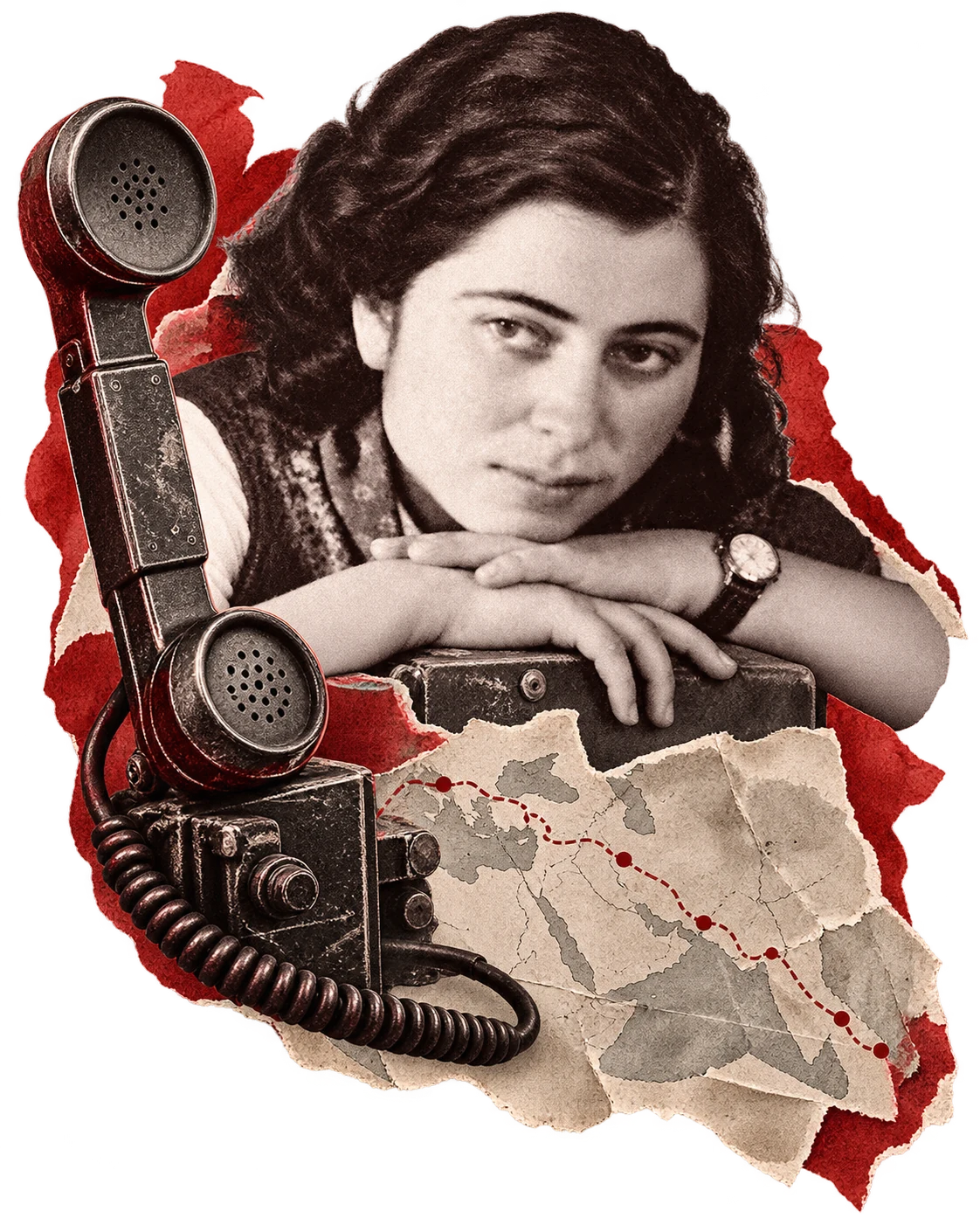
Over time, reports began to arrive of the horrors taking place in Europe and of the Nazis' efforts to exterminate the Jews. Once the Germans no longer posed a threat to the people of the Land of Israel, Palmach members were trained to bring immigrants to the country. Because Haviva knew the language and the area, and also knew some of the Jews there, she was asked whether she would be willing to parachute into Slovakia and help the Jews. After she agreed, she was sent to the "emissaries'" course at Kibbutz Hazorea. The Balkan section had 25 men and 3 women. The course ended in March 1944, and its participants were sent home. Two weeks later, Haviva was called for an interview with the British. The British officer explained her mission: to locate and bring back British airmen who had parachuted into enemy territory or escaped captivity, and to rescue Jews. In April 1944, Haviva began parachute training. That same month, two Slovak Jews escaped from Auschwitz and told of the atrocities taking place there. Their story caused a sensation across Europe and in the Jewish community in Palestine. At the end of April, Haviva was sent to a radio operators' course in Egypt. She wrote: "Before me stretches a city lit up in all kinds of colors. Cars drive back and forth... During the first few weeks, when everything was new and I had not yet discovered all the interesting things, I still found it somewhat entertaining here. But now I'm beginning to tire of it. I don't regret it; I'm glad I had the chance to get to know this new environment. I saw a great deal and learned a great deal, things I would never have had the chance to experience otherwise. But everything has its limits; perhaps even this overly comfortable life has become distasteful to me [or I have grown tired of it, Y.M.]... I long for a quieter life now, a family life, and to be a mother." In Cairo, where she celebrated her 30th birthday, she learned how to become a good spy, how to blend in among people, and how to evade surveillance.
Operation Amsterdam
In the summer of 1944, an uprising broke out in Slovakia against government forces collaborating with the Nazis. The rebels' headquarters were in Banská Bystrica, the very area where Haviva Reik had grown up, but it could only be reached by parachute or by air. In August 1944, news arrived that Zvi Ben-Yaakov and Haviva were to parachute into Slovakia in an operation called "Operation Amsterdam." They were flown to Bari, Italy, where they were to undergo several more training courses before setting out. But at the end of that month, the Germans invaded Slovakia to crush the uprising and take control of the city. Fighting broke out in the planned drop zone, and the mission was postponed again and again. Finally, it was decided that the mission was too dangerous for Haviva, and that only the three men who were with her in Italy - Rafi Reiss, Zvi Ben-Yaakov, and Chaim Hermesh - would take part. Haviva was urgently summoned to headquarters, where she was told that a large American aircraft, a B-17 known as the "Flying Fortress," was about to leave for Slovakia and that she would board it. And so, on the morning of September 17, 1944, she landed in Slovakia, but there was no sign of the parachutists who were supposed to meet her.
Upon landing in Slovakia, Haviva set about establishing an organization to care for the many Jewish refugees gathered in the enclave. They were all moved to tears by the fact that emissaries had come from the Land of Israel to help the local community. It filled them with renewed hope. Haviva divided her time between meetings at British headquarters, trying to locate Allied airmen, and meetings with leaders of the Jewish community. After spending nine days trying to find their way, the other parachutists reached the British headquarters in Banská Bystrica and were amazed to discover that Haviva had galvanized the entire Jewish community in just a few days. The four continued their efforts to locate airmen and find housing for the Jews. On October 7, 1944, the four, together with James Holt Green and his men from the OSS (later the CIA), managed to evacuate about 30 aircrew members who had been downed in the area from Slovakia. Twenty-eight of them were British and American pilots and navigators.
The emissaries needed new transmitters after losing theirs during the parachute drop. In early 1944, the parachutist Abba Berdichev landed in Yugoslavia, bringing the new transmitters. Also landing with him were Yona Rosen of Kibbutz Ma'agan, Reuven Dafni of Kibbutz Ein Gev, and Hannah Szenes of Kibbutz Sdot Yam.
The emissaries prepared for the day the Germans would reach Banská Bystrica. On October 18, German Stuka aircraft bombed Banská Bystrica in preparation for capturing the enclave, and the uprising was nearing its end. The emissaries now focused on trying to save the Jews of the surrounding area. The parachutists chose about 30 people to go with them into the mountains as a Jewish fighting unit, including women and men who had not been trained for this. After a short briefing, the group set out north toward what are now the Tatra Mountains. With great difficulty, they reached the mountain village of Bukovec and were supposed to climb higher from there and find shelter in the frozen forests. But the road was muddy, their packs were heavy, and not everyone was as physically fit as the young Palmach members and partisans.
In the early hours of October 30, the camp began to stir beneath a thick fog that covered the entire area. As the guards changed shifts and went down to wash their faces in a nearby stream and fetch water for coffee, gunshots began to pierce the air. Under cover of the fog, the Germans approached the camp and began shooting at every figure they saw. After the Germans left, the survivors returned. Once they had buried their dead and tended to the wounded, each went their own way. Chaim Hermesh and Potzo Goldstein managed to join a unit of Soviet partisans and fought alongside them until the end of the war. The other emissaries also made their way through the forests, hoping to find Soviet or Slovak partisans.
One day, they heard people speaking Russian, but it turned out to be a Ukrainian unit under the command of the Nazi SS, led by Andrey Vlasov. It was too late to retreat. The group was disarmed and taken prisoner. At first, there was fear that the entire group would be executed, but when it emerged that three of them were British soldiers, the force commander received orders over the radio to bring them in for questioning. When they arrived at Gestapo headquarters in Brezno, the three were interrogated and transferred to the prison in Banská Bystrica. On November 20, 1944, 320 Jews were taken out of the prison, among them Rafi Reiss and Haviva Reik. They were put into military trucks and driven to a nearby village called Kremnička. They were lined up at the edge of a pit and shot in the back of the head.
Burial and Commemoration
In April 1945, the Red Army liberated Slovakia. Some two hundred enormous mass graves were found in the country. Kremnička was the largest and became a national symbol.
After the war, the bodies of Haviva Reik and Rafi Reiss were identified and reburied at the British cemetery in Prague. In 1952, their remains were brought to Israel and buried on Mount Herzl.
After Haviva's death, Kibbutz Ma'anit received a letter signed by King George VI of England: "The Queen and I express to you our sincere sympathy in your deep sorrow. We pray that the Empire's gratitude for the sacrifice of lives in its service may bring you some measure of comfort." In reports summarizing the work of the Israeli emissaries, the British wrote that they had proved themselves beyond all expectations. During their brief stay, the parachutists managed to evacuate about 60 soldiers from Slovakia, most of them British and American pilots and navigators whom the air forces urgently needed. Of Slovakia's 135,000 Jews, 25,000 were saved by hiding in the mountains, joining the partisans, or being liberated from concentration and extermination camps.
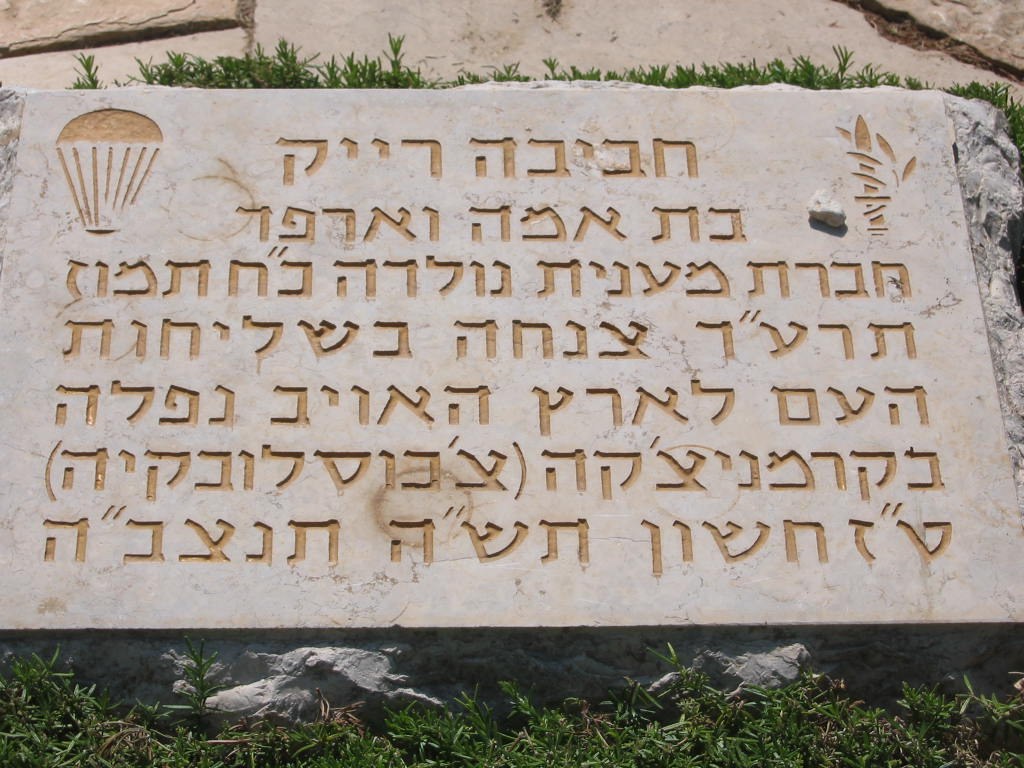
Streets in many communities across Israel are named after Haviva. Kibbutz Lahavot Haviva, established in 1949, was also named in her honor, as was the Givat Haviva institute.
Before leaving for Europe, Haviva Reik told Yitzhak Sadeh: "When I return, I will remember that I am a woman. Is a person made for fighting? Was woman made to wage battles? I will return to my kibbutz, I will have a family, I will have children." She told her close friends that there was a good chance she would not return. At the kibbutz, she left detailed instructions about what to do with the compensation money she had received from the British army in case she did not come back.
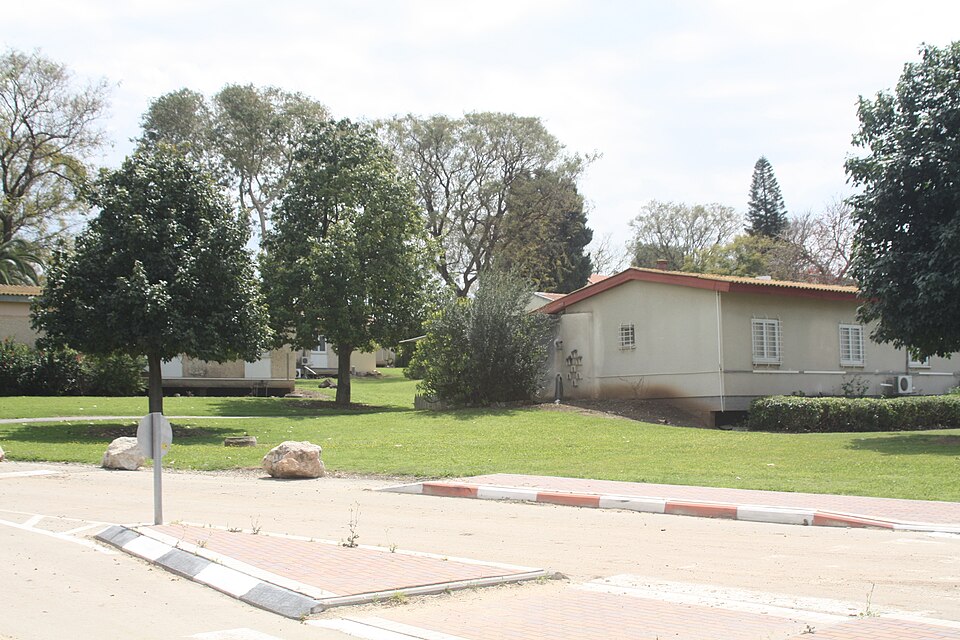
She did not have the chance to leave a family behind, but she did leave a legacy.
In 2004, Tehila and Ze'ev Ofer's book Haviva, telling the story of the brave fighter, was published.
תגובות
עדיין אין תגובות.