
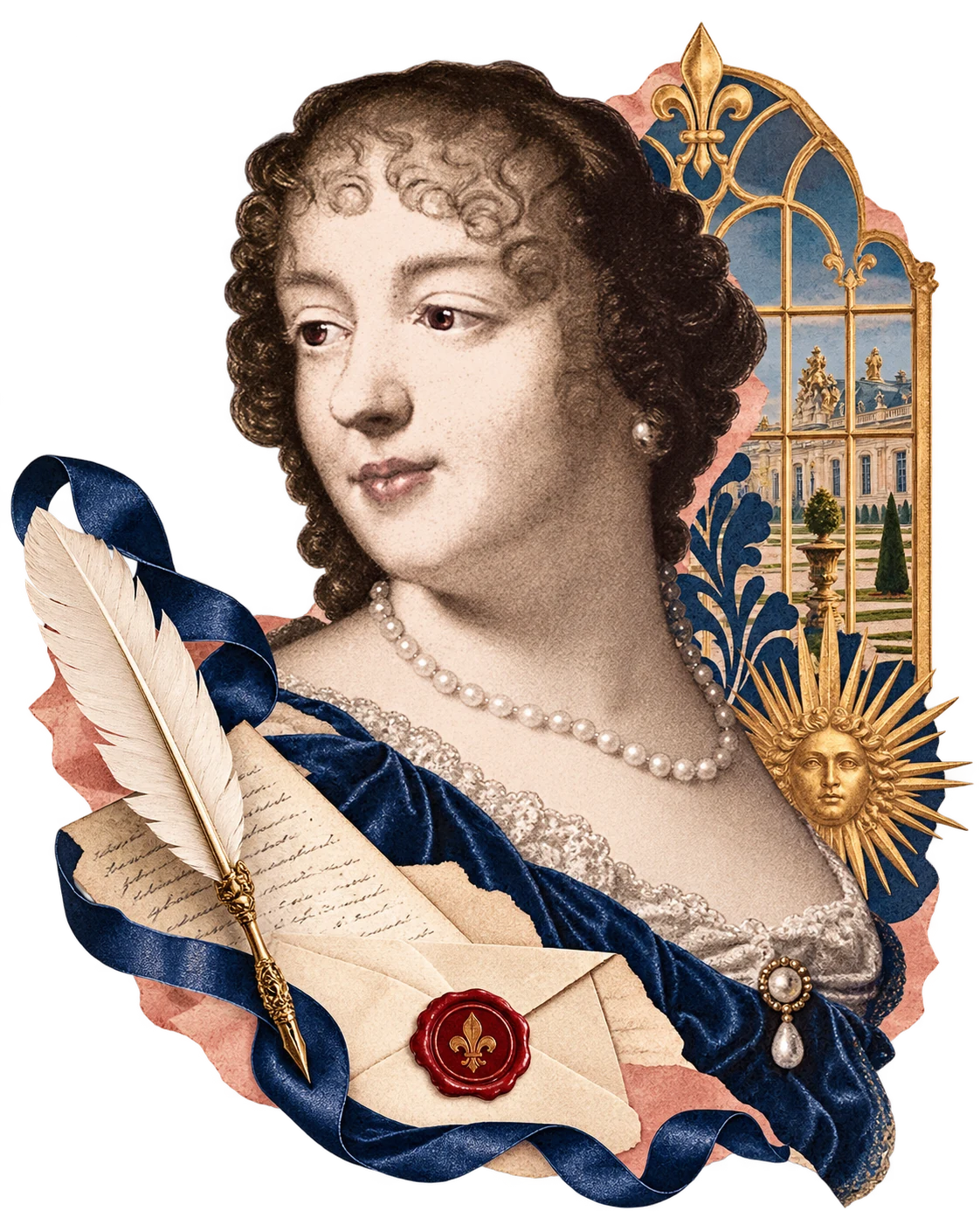
In the 17th century, she wrote about the court of King Louis XIV and the lives of French high society. In effect, she was a one-woman newspaper.
The Letters of Madame de Sévigné
She was an interesting woman, full of joie de vivre, ironic and sarcastic, with a great love for her daughter. She was much loved by society because she was not a gossip. At night, she poured out everything she had absorbed during the day in long letters to her daughter. Over the course of her life, she wrote some 15,000 letters, crafted with great literary skill and providing a reliable account of the era of Louis XIV.
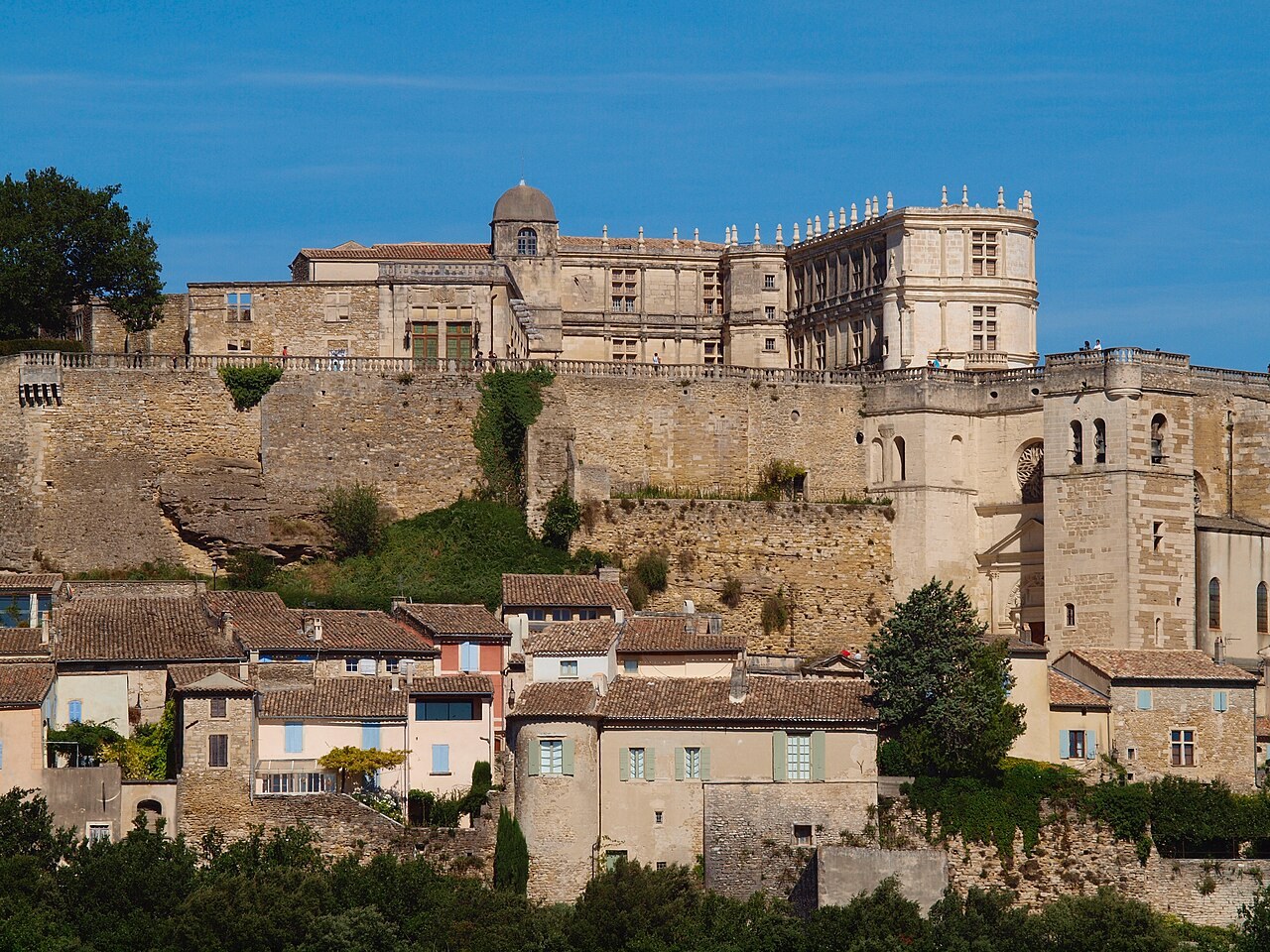
Louis XIV was born in 1638 (he died in 1715). He was crowned King of France at the age of 5 and reigned for 72 years (longer than Queen Victoria, who reigned for 63 years, and even longer than Ramesses II, who reigned for 66 years). He was the most powerful and renowned of Europe's kings at the time. He built the enormous and magnificent Palace of Versailles, and during his reign French culture flourished, with figures such as Molière and La Fontaine. Louis XIV's words, "I am the state" (L'État c'est moi), and his rule, characterized by tyranny and intolerance, led to popular anger that gave rise to the French Revolution. The king had sixteen children with his mistresses, abstained from drinking water, and took only 5 baths in his lifetime.
One of Madame de Sévigné's letters gave us an account of one of the wars Louis XIV waged in order to impose French hegemony on Europe. Her son served on the front against Germany, and she had many friends of high rank in the French army, so the report came directly from the battlefield. This is what she wrote:
"I am writing to you, dear Count, to report the most terrible loss France has suffered. It is the death of Monsieur de Turenne (the commander-in-chief of France). He was riding on a small hill with eight or ten other men when someone fired a cannon from a distance without aiming, and a shell struck him and cut him in half. Imagine the army's cries and tears. At that very moment, the courier set out, and within an hour the king received a letter about Monsieur de Turenne and news of his death. The new commander is Monsieur de Lorges. He took command after his uncle's death. He struck the enemy."
The Affair of the Poisons at the King's Court
Madame de Sévigné also wrote about social events: Marie Madeleine d'Aubray, the Marquise de Brinvilliers, was dissatisfied with her husband's sexual performance. Her married life deteriorated, and the marquise took many lovers, the last of whom was the cavalry officer Godin de Sainte-Croix. With his help, she tried to poison her father and brother in order to inherit their estate. She also tried to poison her husband, so her lover, the officer Sainte-Croix, would remove the poisoned dishes, since he had no interest at all in marrying the marquise after her husband's death...
When Godin de Sainte-Croix died in 1672, he left behind a pile of incriminating letters, and a wide-ranging investigation into the poisonings began. As the investigation progressed, more and more women from high society were arrested, and the investigation began to implicate the highest levels of Louis XIV's court. The investigation reached its peak in 1681, when testimony emerged that the royal mistress, the Marquise de Montespan (the second-to-last one), had mixed aphrodisiacs into the king's food and poisoned his young mistress, the Duchess de Fontanges. During the years of the investigation, 367 suspects were arrested, and 36 of them were executed on charges of poisoning and witchcraft. This is how the Marquise de Sévigné describes one of the cases she witnessed:
"My dear daughter, I shall tell you about Madame Voisin. Yesterday she was burned. She had known what awaited her since Monday. That evening she said to her guards, 'What, shall we not have a feast at midnight?' And indeed, she feasted at midnight with the guards, drank a great deal of wine, and sang some twenty drinking songs. On Tuesday she endured all kinds of torture at the hands of the court. That evening she feasted again, though her body was as if broken. Once more she began behaving like a wanton and caused a scandal. They told her she would do better to think of God and sing prayers instead of songs. She did sing the prayers, but in a ridiculous manner; she ate and fell asleep. On Wednesday, another interrogation, more wanton behavior, more singing. On Thursday, that is, yesterday, she did not want to confess to the priest. They served her only chicken broth, and she was very angry, saying she would not have the strength to speak with the authorities. At five o'clock they bound her with ropes. She appeared in a cart, dressed all in white, with a torch in her hand. That is the clothing worn by those who are burned. Her face looked very red. She pushed away the confessor and the cross quite violently and refused to get out of the cart. They pulled her out by force, seated her on the pyre, bound in iron chains, and covered her with straw. She cursed repeatedly and pushed the straw off herself five or six times, until the fire grew stronger and she could no longer be seen. Her ashes are floating in the air at this very moment. My son told the judge it was terrible to burn a human being over a small fire, and the judge replied to him, 'Oh, sir, there are allowances made for the weakness of the female sex.' 'So what, sir, do you strangle them?' 'No, but logs are thrown onto their heads. The executioner's assistants tear off their heads with iron pincers.' You see, my daughter, it is not as terrible as people think. What do you think of this matter? I am grinding my teeth."
Madame de Sévigné's writings were published in 1726, thirty years after her death, and they constitute a treasure of French classical literature.
Today, France's largest chocolate factory is named after her, and her writings are studied in French secondary schools.



תגובות
עדיין אין תגובות.