
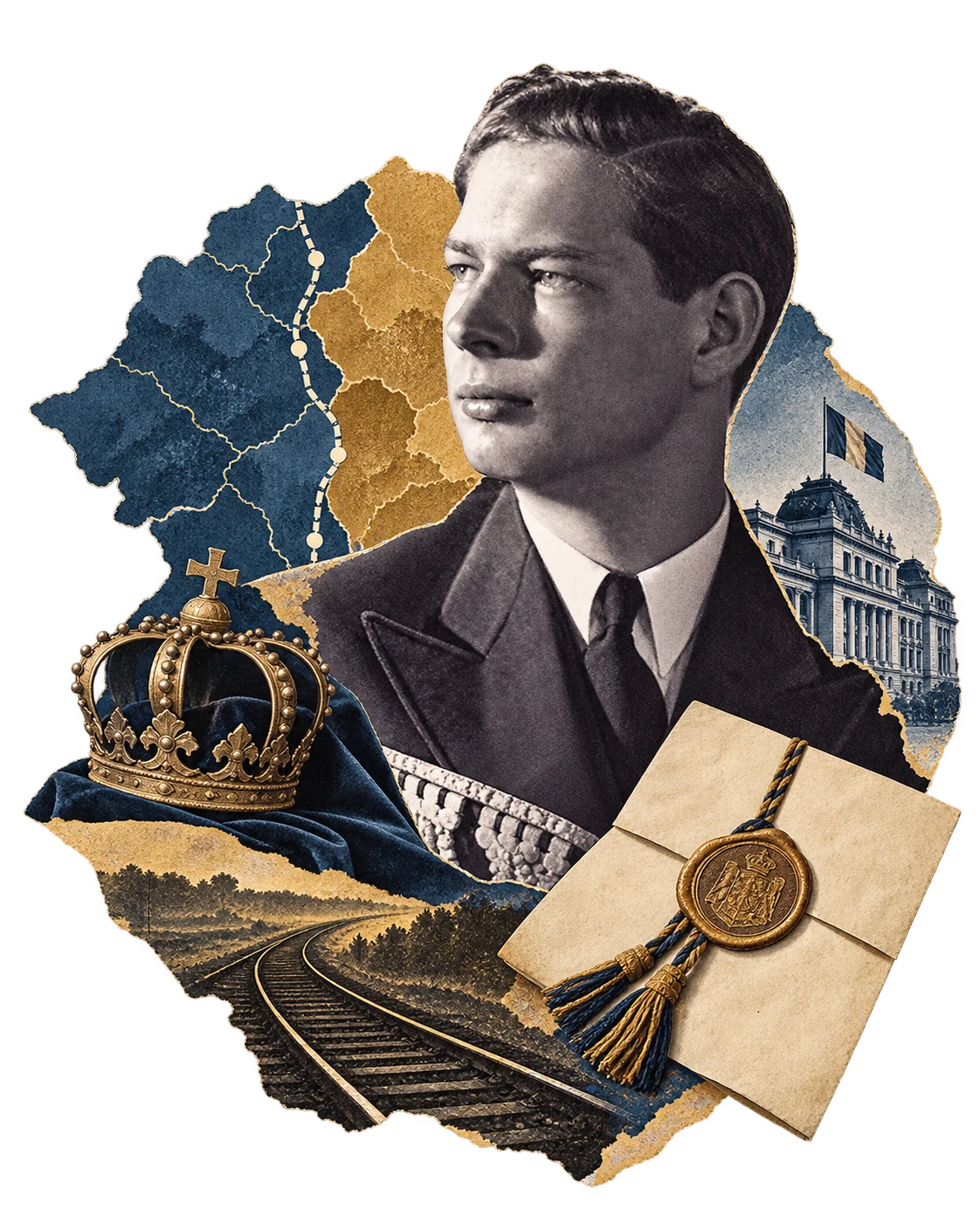
The boy who dared...
Two weeks ago, I wrote here about the love story of Carol II, King of Romania, and Magda (Elena) Lupescu. This is what Queen Marie, Carol II's mother, wrote about her son: "Carol is a great sinner, there is no doubt about that, but say what you will - he is a man." This was after a series of women with whom he fell in love. Among the women with whom Carol II shared his life was Princess Helen. Mihai, the son of Carol and Helen, was Queen Victoria's great-great-grandson and Elizabeth II's third cousin.
This time, we will tell a thrilling chapter from Mihai's life, from a dark period when the world sank into cruelty and most leaders proved cowardly. Only a few dared to risk their country and their lives and stand firm against the Germans.
Romania on the Brink of Collapse
In August 1939, shortly before the outbreak of World War II, the 'Molotov-Ribbentrop Pact' was signed by German Foreign Minister Joachim von Ribbentrop and Soviet Foreign Minister Vyacheslav Molotov. It was a non-aggression pact between the USSR and Germany, and its secret protocol provided for the division of Poland between the two countries.
1940 was a dark year for Romania. In July 1940, the Red Army occupied Bessarabia, which had been part of Romania and became a new Soviet Socialist Republic called Moldova, while another part was annexed to Ukraine. A month later, in August 1940, Germany and Italy forced Romania to hand over Northern Transylvania to Hungary, and a week later Southern Dobruja was handed over to Bulgaria. That year, Romania lost 40% of its territory and 50% of its population without a fight. King Carol detested fighting, and the consequences soon followed: his standing in the eyes of the people declined.
In September of that year, the Legionary Movement, known as the 'Iron Guard' and led by Horia Sima (the movement had assassinated Romanian Prime Minister Armand Călinescu the year before), joined forces with General Ion Antonescu, a far-right figure. Together they formed the National Legionary State government, headed by the 58-year-old Antonescu, who was known as 'the Red Dog' (his face turned red when he was angry). King Carol II was forced to abdicate in favor of his 19-year-old son, Mihai I. Carol II and his mistress, Magda Lupescu, were exiled from their country. In that same dark year, 1940, the Iron Guard imposed a regime of terror and fear on its opponents. Its members murdered Jews and some government ministers. Their ties with Nazi Germany grew much closer. On January 14, 1941, Antonescu met with Hitler and gave him an ultimatum: 'Either me or the Iron Guard.' The Romanian army was important to Hitler, who needed it to attack the Russians, so he chose Antonescu.
Shortly after Antonescu returned from his visit to Hitler, members of the Iron Guard revolted and took control of Bucharest for two days. Between January 21 and 23, 1941, 123 Jews were murdered and Romanian soldiers were burned in the street. The revolt failed. Their leader, Horia Sima, fled to Germany. Thousands of Iron Guard fascists were thrown into Romanian prisons.
The Romanian army fought alongside the German army until Stalingrad. It was the Romanian Third Army that fought alongside the Nazi army, and on November 19, 1942, it surrendered to Soviet military commander Nikolai Vatutin. This set in motion the chain of events that led to the Germans' defeat at Stalingrad. After this defeat, Mihai realized that Germany was heading for defeat.
Even while the Battle of Stalingrad was raging, Mihai began speaking about peace, angering the German ambassador to Romania, Manfred von Killinger, and Ion Antonescu: 'What is this boy talking about? What does he know?'
Mihai drew courage and inspiration from his mother, Queen Helen. She knew Germany was doomed and encouraged him to join the Allies. In 1943, the leaders of the historic parties (those that had existed before Antonescu) met: the Liberals, the Peasants, and the Social Democrats. They sent an emissary to the British Army headquarters in Egypt. The young king knew about this initiative and supported it. It was an unmistakable conspiracy against the regime in Berlin, and an enormous risk.
Toward the Coup in Romania
With his small country facing the might of Germany, Mihai began working to liberate his homeland.
Romania's ambassador in Washington, Silviu Brucan (who would later take part in the revolt against Ceausescu), witnessed the events and wrote: 'From the autumn of 1943, the German army was halted in its attempt to conquer the Soviet Union. The communists in Romania decided to keep combat units in place, which they called the "Patriotic Guard."'
The Communist Party in Romania had no Romanians in it, but consisted mainly of Ukrainians, Hungarians, and Jews, whom the king saw as a way to establish contact with Stalin.
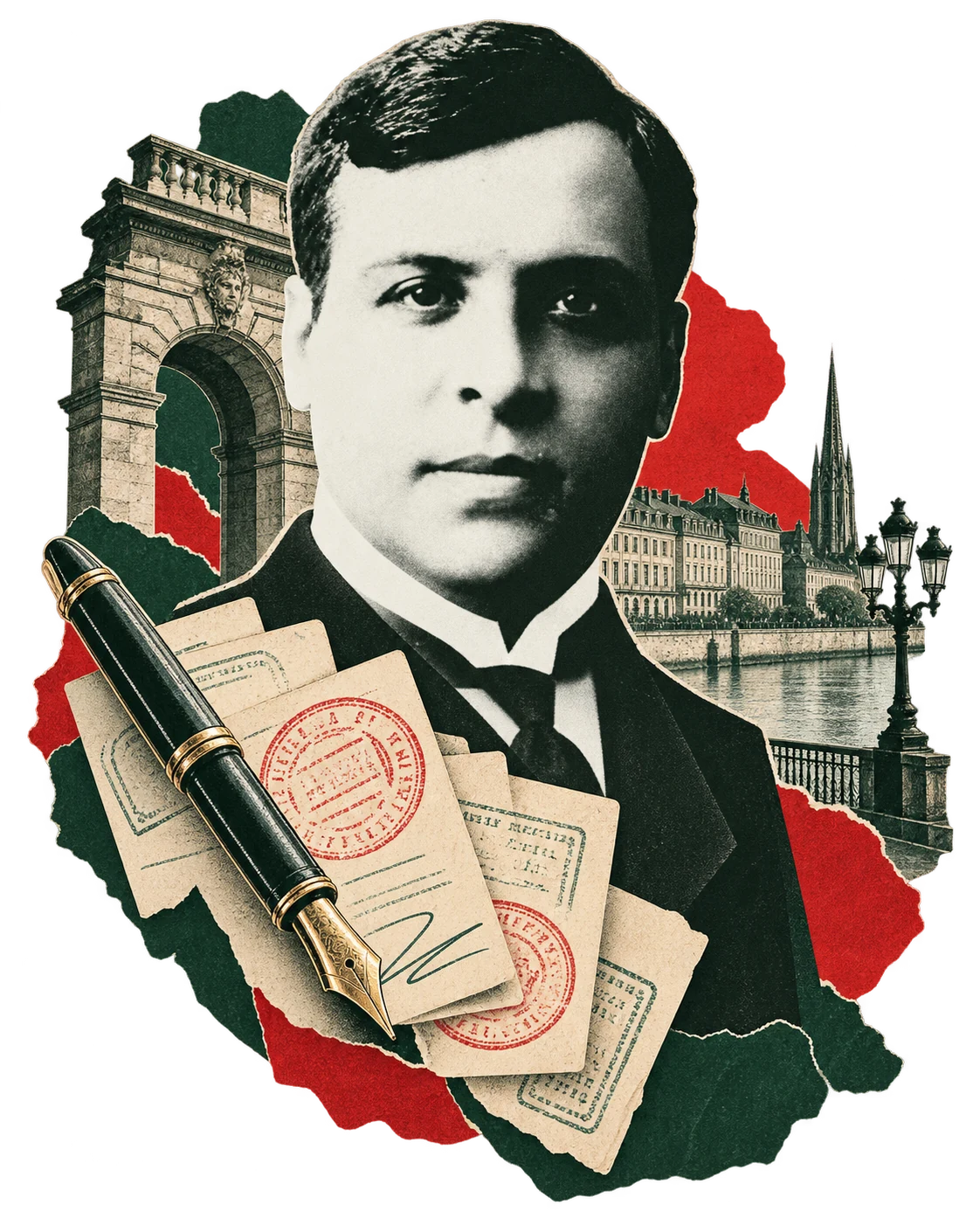
The opposition parties decided to form a national bloc. Lucrețiu Pătrășcanu was a communist leader who knew of the king's intentions. Pătrășcanu, an intellectual, lawyer, and historian, was a charming and impressive man. These qualities allowed him to move about the palace and bring King Mihai together with the leaders of the other parties. The king and his advisers met with them on the night of June 13-14, 1944, and together devised a plan considered dangerous and impossible to carry out. On August 22, 1944, Mihai met again with Lucrețiu Pătrășcanu and six other advisers, and together they decided to put the plan into action the following day. Lucrețiu Pătrășcanu wrote: 'My problem was getting into the palace without the Royal Guard, the Romanian secret police, and the Gestapo noticing me...' On August 23, 1944, the king summoned Ion Antonescu to the palace. Unhappy about the king's invitation, Antonescu arrived in an armored car, accompanied by a car full of armed guards. As far as he was concerned, 'this boy' was wasting his precious time. Antonescu was led into the Yellow Salon, the office of the head of the military cabinet and the foreign minister, where he met the king. The king invited him to sit down and said that he had been informed the Russians had broken through the Romanian front: 'I would like to know what measures you intend to take in response to the Soviet success?' Marshal Antonescu admitted that the Russians had indeed advanced, but assured the king that they would be stopped within a few days. The king stood his ground: 'The situation is extremely critical. I think you must ask for an armistice.' Suddenly, Antonescu lived up to his nickname, 'the Red Dog.' His face flushed with rage, and he said, 'I will demand an armistice when I think the time is right, and that is not now.' The king replied, 'I think it will be too late if you don't demand one now. There is no point in putting it off again and again.' Antonescu struggled to contain himself and said that he needed certain guarantees, and that if he did not receive them, 'I will continue fighting alongside the German army, as I promised Hitler.' The king told him, 'Mr. Marshal, I cannot accept your solution. You must ask for an armistice now.' Then Antonescu exploded and shouted, 'I don't need anyone to teach me what to do.' This was the moment the king had been waiting for: 'If you refuse, I will ask you to resign.' 'I will not resign!' Antonescu shouted. 'You don't seriously think I would hand the country over to the rule of a child,' he hurled at the king. The king pretended to be so offended that he had to drink some water. He left and returned to the Yellow Salon, where he said to the marshal, who was seething with rage: 'I regret that you refuse to do what I am asking you to do.' Antonescu replied, 'I will not change my plan. I will continue the war.' The king said, 'In that case, Marshal Antonescu, I must take into account the will of my people and the will of the democratic political parties. I ask you to sign an armistice today, and if you refuse, I will ask you to resign immediately.' Antonescu trembled with rage and said, 'I don't take orders from anyone. I am the one who gives the orders.'
The Coup in the Royal Palace
And that was exactly what the king wanted to hear. He immediately informed Antonescu that he was dismissed. At that moment, a lieutenant colonel, a sergeant, and several other soldiers entered the room. They pushed Antonescu into an armored room, built like a bank vault and concealed in the king's bedroom. The sergeant turned the handle and the numbered dials, sealing the room shut.
All this time, British bombers were bombing Bucharest but took care not to bomb the palace, since the king was a descendant of Queen Victoria. Throughout this time, the German ambassador, Manfred von Killinger, tried to get in touch with Antonescu. When he failed, he demanded to see the king immediately, at 7:00 p.m. Lucrețiu Pătrășcanu wrote: 'He arrived at the palace with his driver, Ella Petersen, who was his secretary and mistress. The ambassador announced that the Führer was worried about the fate of his personal friend Marshal Antonescu and wanted to know immediately where he was.'
One of the king's advisers informed the ambassador that there was a new government and a new prime minister. Killinger was surprised and asked why he had not been told, and what the new government intended to do. The king replied curtly, 'Probably sign an armistice with Russia.'
Killinger exploded. He began shouting that this was treason without equal. 'You are playing a very dangerous game. Within a few days we will crush you completely.' One of the king's advisers told the ambassador, 'You are accredited to King Mihai, not to Marshal Antonescu.' 'I do not recognize your new government!' shouted the ambassador, Hitler's envoy in Bucharest. 'Your personal opinions carry no weight, Mr. Ambassador,' said another of the king's advisers. Then King Mihai decided to end the visit and told von Killinger: 'As a member of the House of Hohenzollern, I regret what has happened, but I ask the German Reich government to withdraw its forces from Romania without delay, without violence, and in an orderly manner.' At that time, no one in Europe spoke to any Nazi ambassador like that.
The ambassador and his mistress returned to the embassy and saw that it was surrounded by Romanian soldiers. They could enter but not leave, and Killinger ordered the German army to attack the city. He telephoned the German air force, which began bombing the capital, so that on that same day both the British and the Germans bombed Bucharest.
Killinger and his lover got drunk and then killed themselves. They understood that they would not be able to face Hitler and explain how a coup had been carried out under their noses without their knowledge.
תגובות
עדיין אין תגובות.