
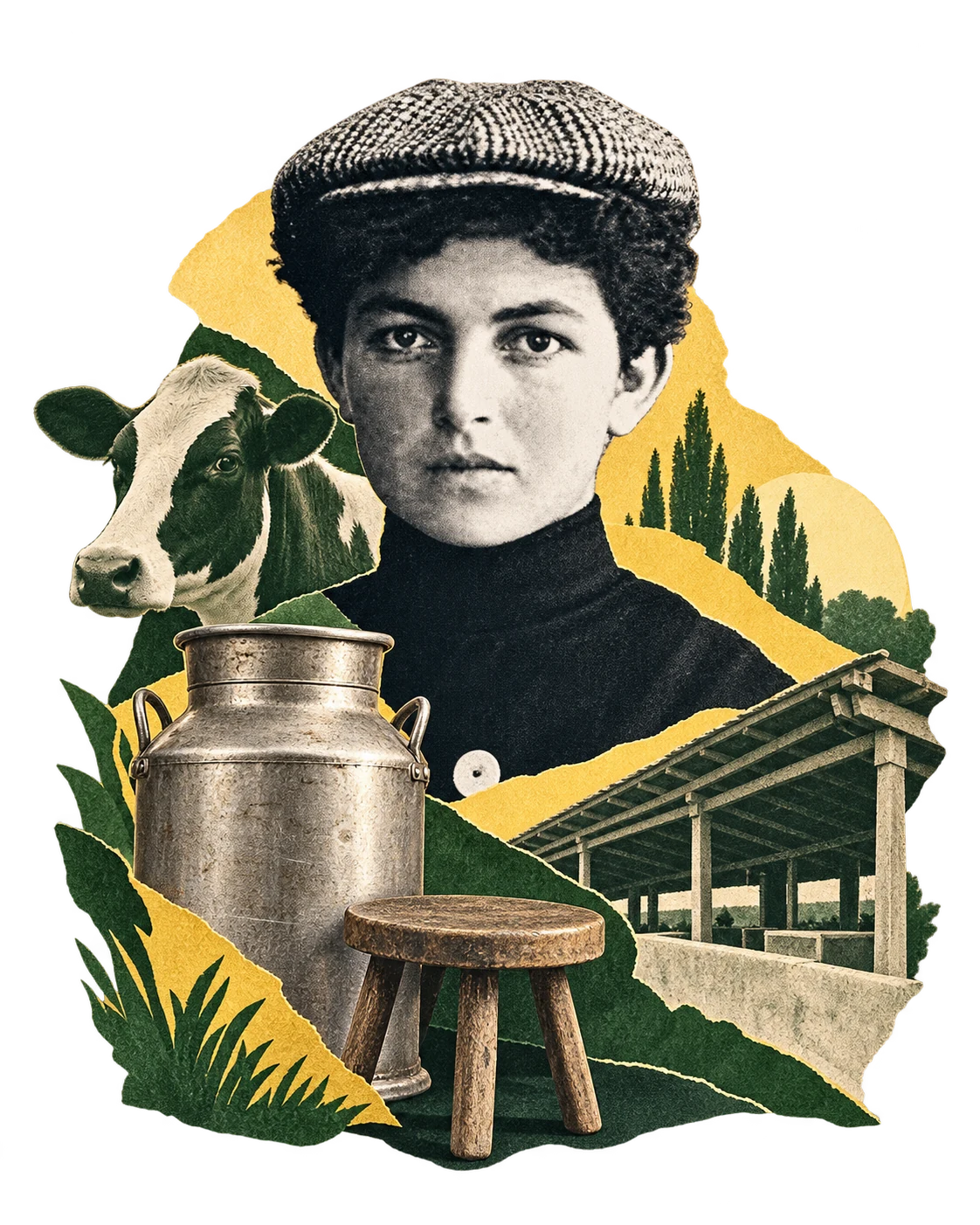
The first woman dairy farmer in the kibbutz movement, the first woman to marry in Degania, and the first to give birth there. She managed the group's dairy operation, exercised complete authority over it, and insisted on employing women only.
The Beginnings of Degania Alef
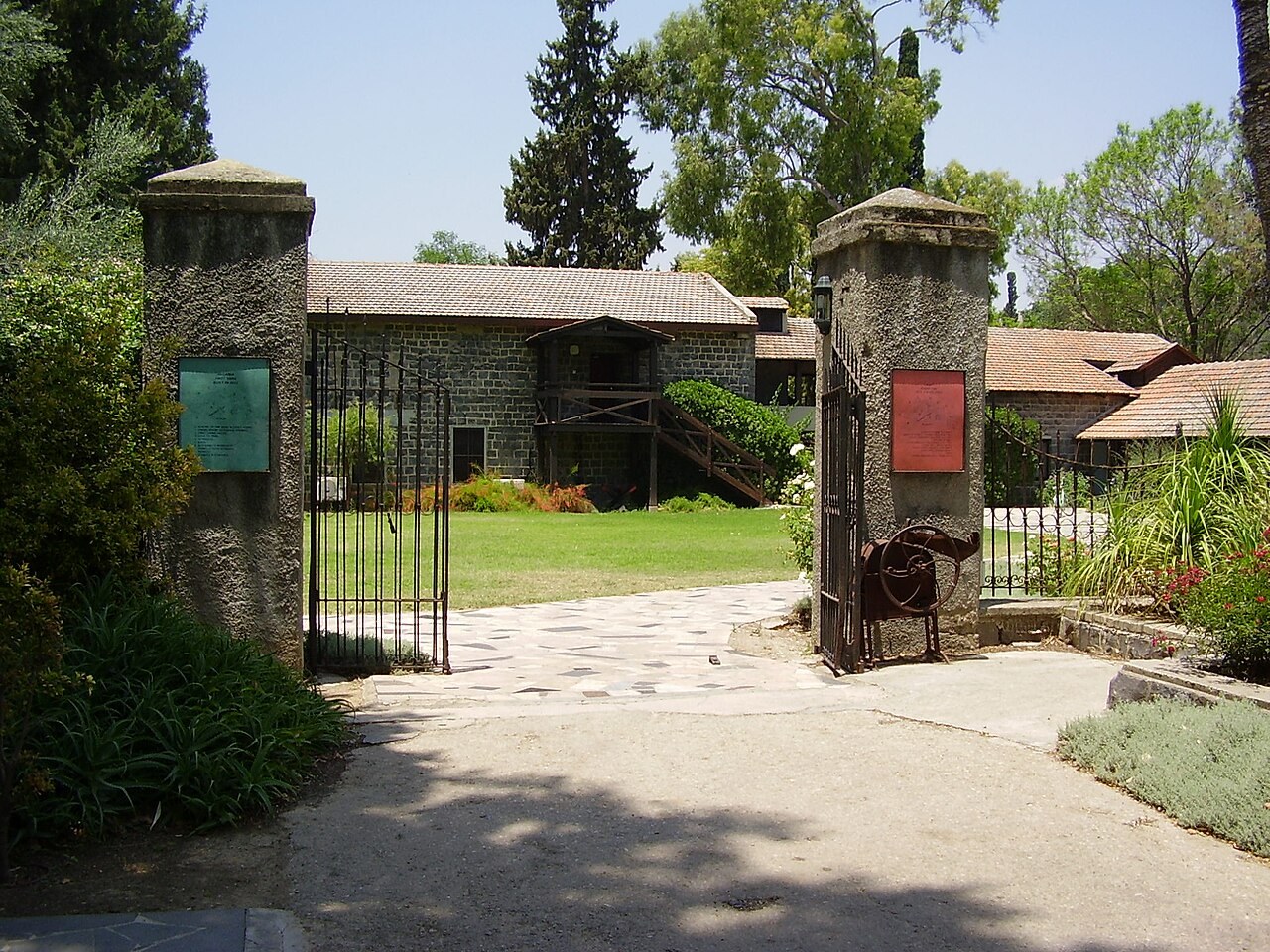
Miriam belonged to the first group to settle the land of Umm Juni. The group believed that only working the land could free the Jew in exile from the Diaspora, connect him to the land, and create a new person, healthy in body and spirit. The group believed in equality between people and in work, mutual responsibility, and creating a broad, supportive family. This was the group that founded Degania Aleph in 1910 - the mother of the kibbutzim and collective settlements.
Miriam Baratz was one of two women in the "Hadera Commune," the founding nucleus of the Degania group. The group consisted of two women and ten men. Although the group advocated equality between the sexes, there was a wide gap between principle and practice, and Miriam refused to accept that gap. For her, being a woman and a future mother was not a limitation but an additional challenge to overcome. And Miriam knew how to overcome obstacles.
From Ukraine to the Land of Israel
Miriam was born in 1889 in Ukraine to Devorah and Yehuda Yosef Ostrovsky. She had three brothers and two sisters. Her mother died when she was two years old. From an early age, Miriam was raised on Zionist ideals and became familiar with biblical stories and stories about the Land of Israel. So it did not seem strange to her when her eldest brother decided, at the age of 17, to immigrate to the Land of Israel, and her two other brothers followed him: "When I was only 12, hearing my brother talk about the Land of Israel instilled in me a certain feeling for the land, and my thoughts were focused on it." In 1906, before she had turned 17, Miriam immigrated to the Land of Israel.
After arriving in the country, she joined her grandfather and father, who had come before her. Her father bought a large tract of farmland where Kfar Saba would later be established, and, to her dismay, Miriam was sent to work in the kitchen of the restaurant her grandfather had opened. Miriam tried her luck in the settlement of Petah Tikva, but she was turned away there too because she was a woman. But Miriam was not the sort of young woman to give up on her dream. She joined the farmer Yaakov Karol, who hired her to work in the cuttings nursery, and it seemed that her dream of working in agriculture in the Land of Israel was coming true. But since it was a part-time job, she continued looking for work. In Petah Tikva she met members of the Hadera Commune, who were then working in the settlement's citrus groves, and asked to join them and work in the fields when they reached the Kinneret. But they offered her kitchen work, which she refused. When her friend Sarah Malchin, who ran the household at the Kinneret courtyard, fell ill, Miriam joined the commune at Kinneret and took over her work. She also worked on the farm and in the fields. She began work at three in the morning and finished in the evening. When Sarah Malchin returned to work, Miriam left with several of her friends to establish the settlement of Mitzpeh, and about two months later moved to Hadera. She began working in agriculture, and after proving to everyone that she was efficient and as capable as the men, her wages were brought up to theirs.
When Miriam contracted malaria, she was sent to Zikhron Yaakov for treatment, where she met Yosef Baratz, a stonecutter from Atlit who was also receiving treatment. The two fell in love and became engaged. The commune moved from the Kinneret courtyard to Umm Juni. Miriam's father, who had by then returned to Ukraine, feared for her life and asked her to come visit him. When she arrived, her father took her passport, preventing her from returning to the country. But the determined Miriam escaped to the parents of Yosef Baratz, who lived in her father's town. There she met a pioneer whose passport listed his 12-year-old daughter. Miriam pretended to be his daughter and returned to her beloved in Umm Juni.
The Struggle for Equality
Miriam also fought for the principle of equality in everyday life. As she put it: "The principle of work and partnership in public life... was a struggle that demanded sacrifices from women, a struggle against friends who had walked the path with us from the very beginning, but opposed women's work in agriculture and were sometimes ashamed... to voice their opposition aloud; even when they did, they stammered a little... We would achieve nothing through words. We had to prove it through our everyday actions... We had no other way to wage our struggle..." In her view, the struggle ended in victory: "...I am sure we emerged victorious from that struggle. We proved to ourselves that we were capable of working, and we proved it to the entire community."
Miriam was not a woman of words, but a woman of action. She chose to work in the cowshed: "I felt close to every single cow; every cow that became pregnant... every calf that was born was a great experience for me... The difficult pangs of creation had meaning; the struggle over every little and great thing was worthwhile, and all of it bound us more and more closely to the dairy... It seems to me that what I am describing is what our young people now call 'Zionism.' This Zionism gave our lives substance."
When Miriam began working in the cowshed, the country was taking its first steps in raising dairy cows. The "herd" she was given in 1910 consisted of just one cow. At the time, they learned how to milk from the Germans (the Templers). At first, only two members of the group learned the art of milking, and they refused to let Miriam milk because they feared the unruly Arab cow would kill her. Miriam learned to milk from Zakia (زكية), the wife of Abu-Rahim, the village's elderly sheikh in Umm Juni. She later recalled: "I didn't argue much. I thought up all kinds of tricks to achieve what I wanted. That very evening I made the acquaintance of the sheikh's wife, Zakia... I confided my wish to her, and she, an Arab woman, understood me and taught me to milk. We agreed that at three in the morning I would knock on the wall... and she would come teach me to milk. But for the cow to give me her milk, I had to wear an Arab dress and a headscarf and hum an Arab tune to her. That was how she gave me her milk." It was a sisterhood that crossed national boundaries. The next day, when Tanhum, the dairy manager, arrived, the milk was already ready on the stove, and everyone knew Miriam had been behind it. From that moment on, Miriam took charge of the cowshed.
The Cowshed and the Family
In 1912, Miriam Ostrovsky and Yosef Baratz married. It was the group's first wedding. That same year, the commune moved into permanent homes in Degania. The herd had already grown to 32 cows, and the cowshed supplied enough milk each day for half to be used by the members and the other half to be made into butter and cheese. The following year, their son Gideon was born, the Baratzes' firstborn. Gideon was the first child born in Degania, and the group considered him everyone's child. During a discussion, they proposed naming him Adam, as the first child born in the group. In the end, they decided to call him Adam Gideon.
In 1914, an epidemic of rinderpest broke out in the country, and the herd was wiped out. Miriam took the loss personally and decided to study the treatment of cattle diseases with Yitzhak Volcani (after whom the Volcani Institute is named) at Ben Shemen. By then, Miriam was already a mother of two: two-year-old Gideon and two-month-old Devorah. She arrived at Ben Shemen with the children and studied for nine months. When she milked at night, the children were left alone in their room: "The people of Ben Shemen found it strange, especially the women. They looked at me disapprovingly... I knew that back home, too, they disapproved of what I was doing; I was sharply criticized (they were worried about the children)."
When she finished her studies at the Ben Shemen farm, Miriam returned to the group with ten cows and calves and began rebuilding the dairy operation. The cowshed became the farm's main branch, and the members began pressing Miriam to take on more women workers: "The dairy is the farm's principal branch... it is the most valuable branch, and it needs to bring in more for us... Miriam is already on the way to acquiring complete knowledge... so she should continue," argued member Yitzhak Ben-Yaakov at a group meeting.
During the years 1925-1923, Degania's cowshed had 55 head of cattle, and Miriam went to the Netherlands for further training, leaving her five children with her husband Yosef. Before she left, one of the group members asked her: "How dare you leave five young children and go away? I told him, first, I want to learn the profession so I can raise a good herd of cattle in Degania; and second, why don't you ask Yosef Baratz, who has been a public activist for seven or eight years... how he can leave his children and go away?" (Yosef was one of the founders of the Association for the Soldier and a member of the First Knesset.) In 1936, Miriam went to the United States to train at large cattle farms and specialize in the study of foot-and-mouth disease. By then, at the age of 44, she was already a mother of seven. The following year, the dairy operation under her management won the award for "the highest butterfat yield in a herd of cows in the Land of Israel."
Along with her great strength and determination, Miriam was a beautiful woman. While her husband Yosef was away on a fundraising mission for the Association for the Soldier, a pioneer who misread her behavior tried to put his hand on her. He received a resounding slap. The slap was so forceful that it left her handprint on his face for a long time, and no hair grew there. The incident became part of the group's lore, and people said that wherever she landed a slap, hair never grew again.
Miriam made the cowshed a female stronghold, with responsibility for it resting solely with the women members of the farm. At the time, milking was done by hand, demanded great effort, and each cow had its regular milker. The women under her management had a strong sense of pride in their unit. The milkers were considered an elite unit in Miriam's reconnaissance patrol. Among them were Nehama Weiner, Aliza Nol, and Rivka Liss, the best workers in the cowshed. A distinctive way of life developed there: "More than once, we accompanied the milking with quiet, romantic singing... It seemed that our whole lives were woven together in the cowshed. What didn't we talk about while milking?... Sorrow and joy... everything. The joy of work was ours." The cowshed became the women's passion, and Miriam selected its workers with great care, as if choosing fighters for reconnaissance units.
Miriam's milkers wore a kind of uniform that identified them outside the cowshed and beyond Degania. The uniform consisted of "Nehama pants" - knee-length trousers gathered with elastic at the bottom, named after Nehama Weiner.
Four of Miriam's children also worked in the cowshed, and she held them to higher standards than the others. Her son-in-law Eliezer Gal, who married her daughter Michal, arrived as a hired dairy worker and had to pass her tests. She did not trust him right away, but in 1956, after 44 years managing the dairy operation, she stepped down and handed it over to him.
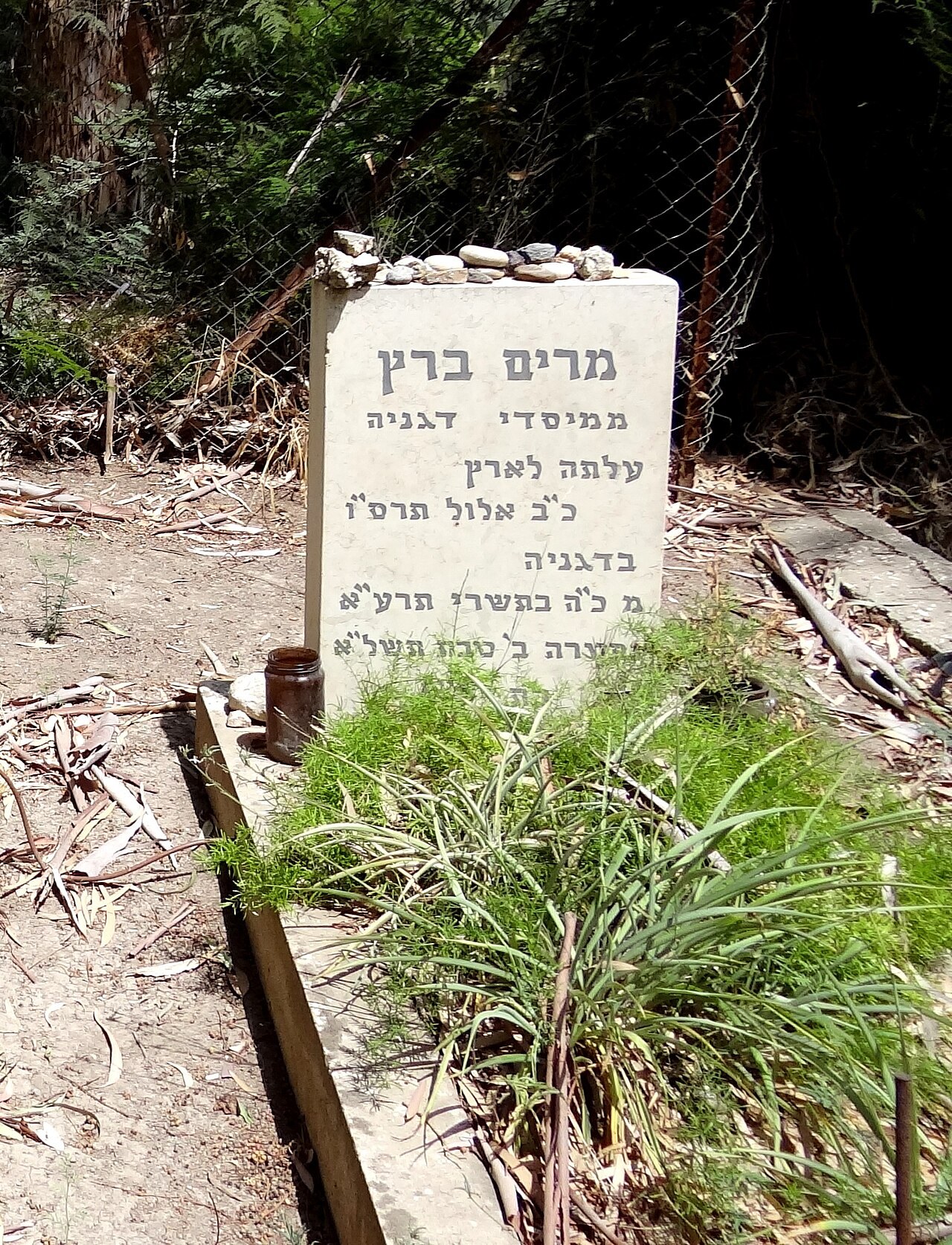
Yosef Baratz died in 1968 at the age of 78 after a prolonged illness. Two years after her husband's death, Miriam returned from work in the kitchen, lay down to rest, and did not get up again. She died at the age of 81.
Baratz left behind a large family: seven children - Gideon, Dvorka, Amos, Yuya, Bia, Michal, and Eli - and their families, grandchildren, and great-grandchildren.
תגובות
עדיין אין תגובות.