
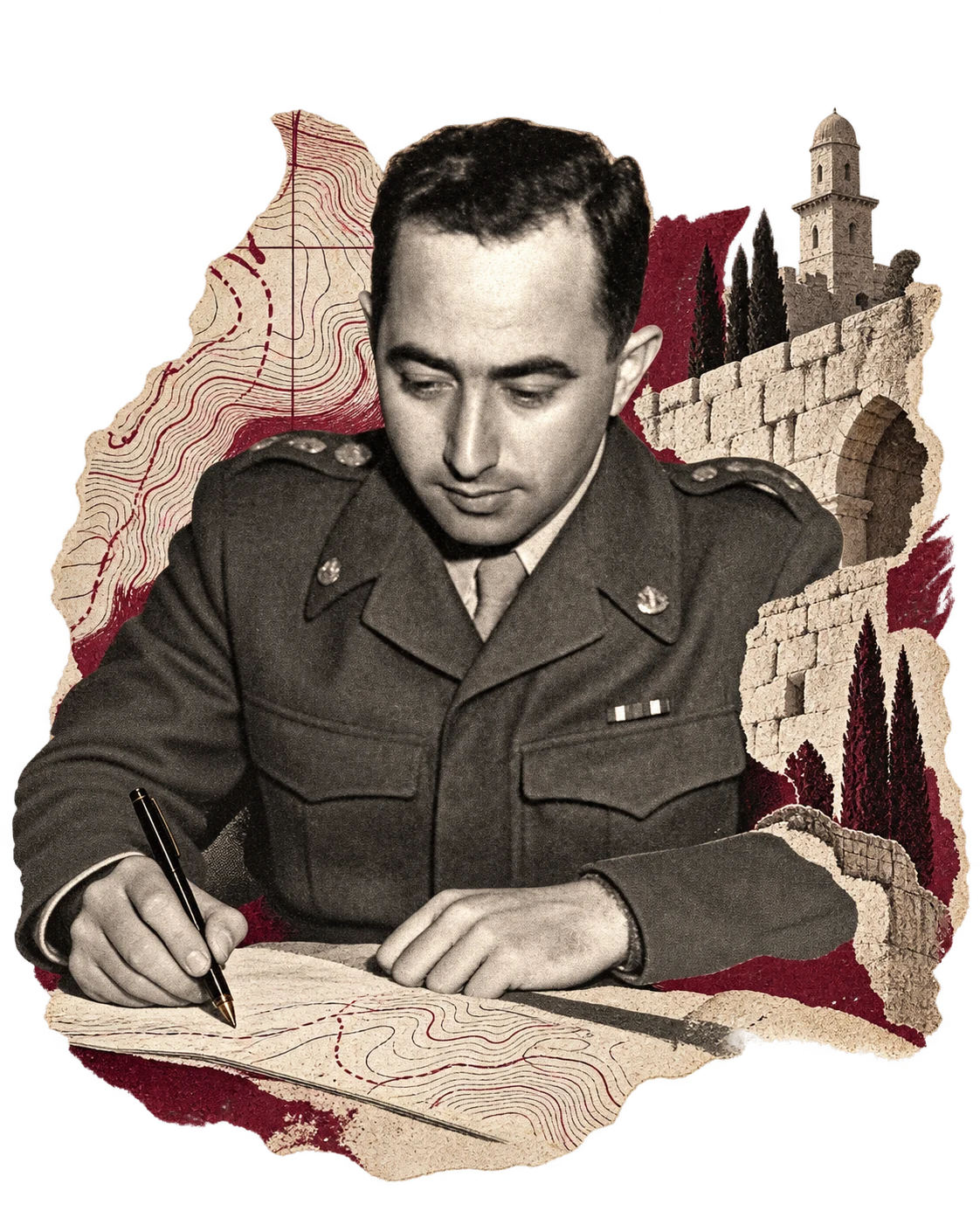
The youngest chief of staff. Born into a pioneering family that settled in the hills, he witnessed the murder of his family. His resilience, wisdom, composure, and fate led him to become a fighter and chief of staff, and even to help establish a unit that dealt with rioters.
The youngest chief of staff. Born into a pioneering family that settled in the hills, he witnessed the murder of his family. His resilience, wisdom, composure, and fate led him to become a fighter and chief of staff, and even to help establish a unit that dealt with rioters.
A Pioneering Family in the Colonies
Aryeh Leib Maklef was born in 1876 on the Russian-Polish border. In 1891, he immigrated to the Land of Israel with his parents and siblings, who were members of the Lovers of Zion movement. The son of a religious family, he studied at a traditional Jewish school from an early age, but also received a general education in history, mathematics, and nature, which greatly fascinated him. He loved animals and plants, and preferred them to the traditional school or classroom. So, at 18, he began studying agriculture on his brothers' farms in the colony of Malabes (later Petah Tikva). Maklef had a green thumb. He specialized in agricultural equipment and tools, and in cultivating and acclimatizing different varieties of fruit trees suited to the Israeli climate.
In 1896, he married Batya Tzamarinsky, daughter of Rabbi Yechiel Tzamarinsky, one of the founders of the Jerusalem neighborhood of Mahane Yehuda. Batya was born in Jerusalem and was a year younger than Aryeh. At 11, she was already volunteering as a nurse, providing medical assistance through the Society for Overnight Care, founded by her father along with other community activists from the Beit Yaakov neighborhood, for sick residents of neighborhoods far from the medical services in the Old City.
That same year, the colony of Metula was established, and the couple were able to acquire a plot there. They lived in Metula for five years, and their two eldest children were born there: Avraham Moshe (Lish) and Barak.
Life in the colony was hard, and relations with the neighboring tenant farmers, Druze, and Bedouin were tense. One night, while Aryeh and a friend were guarding the colony's houses, their Arab neighbors attacked them. Aryeh kept his composure, fought off the attackers, and even managed to kill one of them. Fearing blood revenge, Aryeh and Batya had no choice but to leave the colony.
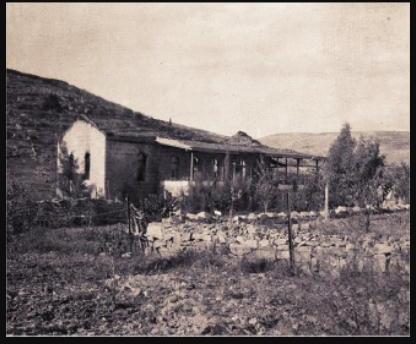
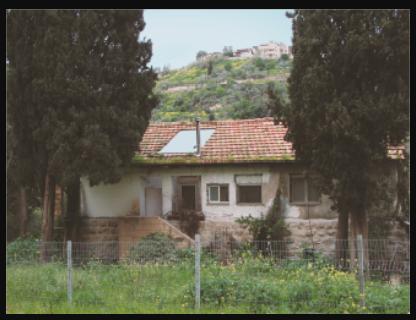
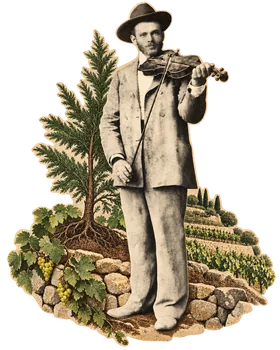
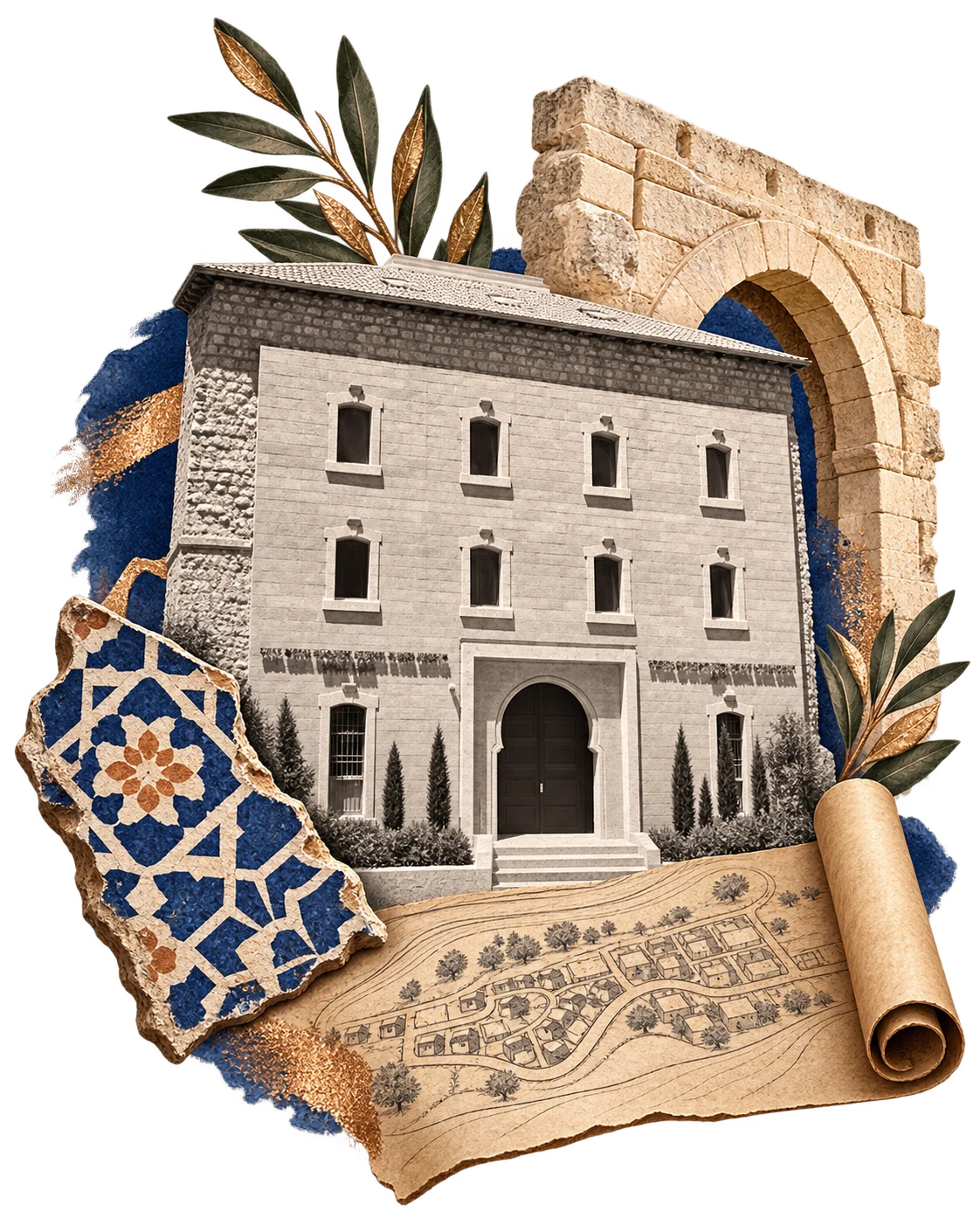
In 1901, the family left Metula and returned to Petah Tikva, where Aryeh's older brother Moshe lived. That same year, another brother, Mordechai, immigrated to the Land of Israel and also settled in Petah Tikva. The following year, Aryeh and Batya moved to the colony of Motza, on the outskirts of Jerusalem, where Batya's father had planted a vineyard. For a long time, the family lived in a tin shack next to the vineyard. Aryeh tended the vineyard and added new branches to what became a model mixed farm. Batya put her experience to use, helping the sick in the small colony as well as Arab patients. The Maklefs did not finish building their stone house until 1904. It still stands today.
Aryeh was a graduate of the German Templers' teachers' seminary in Jerusalem, and was renowned as an expert in orchards and agricultural machinery. Baron Rothschild's officials consulted him about soil types and crops. Later, he was invited by officials of the Jewish National Fund to assess the Hula Valley lands for agricultural use before they purchased them.
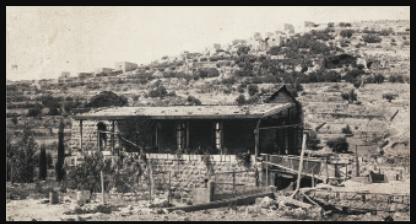
The Maklef home became the social and cultural center of Motza. It had a large library, with books in Hebrew, English, and German, as well as religious texts and books on Torah and Judaism. The family loved both classical and popular music, and owned a gramophone and a record collection. They enjoyed good relations with both their Jewish neighbors, including the Broza and Cohen families, and the Arabs of nearby Kolonia.
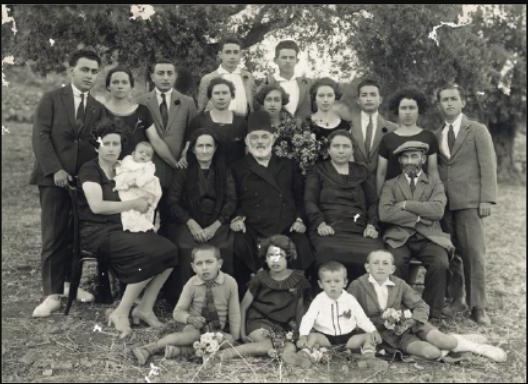
Six more children were born to the Maklefs in Motza. They had five sons: Lish, Barak, Moshe, Chaim, and Mordechai, and three daughters: Mina, Rivka, and Hannah. Their parents raised them in the pioneering spirit and taught them to love the land, never sparing them hard work. The children helped with the farm, tending the orchards and herding sheep and cattle. The family made a living by selling its produce and by turning their home into a boarding house during the summer months for vacationers from Tel Aviv and Jaffa. Following an economic crisis that hit the country in the mid-1920s, the family decided that their son Barak would go to Australia and help support them with the money he earned there. Their eldest son, Lish, moved to Jerusalem and started a family.
The Maklef and Cohen families had a regular custom: every Saturday night, they would meet, alternating between the two homes.
They met for Melaveh Malkah, a gathering held after the Sabbath. At one of these gatherings, love blossomed between David, the Cohens' son, and one of the Maklef daughters. He learned of this love only sixty years later, after that bitter day.
Economic hardship and internal political rivalries among the Arab population were among the factors that led to the 1929 riots. The spark that ignited the unrest was at the Western Wall, which is why the events are known in Arabic as the "Buraq Revolution" (a name for the Western Wall).
On Yom Kippur, September 23, 1928, the Western Wall plaza was full of worshippers, and a partition was erected between men and women. This partition violated the Ottoman status quo. The Mufti Haj Amin al-Husseini, then the leader of the Arabs, saw it as an attempt to take control of the Temple Mount and began inciting the Arabs. A drawing was circulated among the crowds depicting the Dome of the Rock mosque with the Zionist flag flying above it. On Tisha B'Av, several members of Betar came to the Western Wall with an Israeli flag and cried, "The Wall is ours, down with the government!" In response, the Arabs held a demonstration, tensions flared, and the unrest escalated into riots.
On August 23, 1929, bloody riots began in Jerusalem and Hebron. When the riots started, the mukhtar of the village of Kolonia came to the home of Aryeh and Batya. Batya had cared for the village's sick, and he swore on the Quran that they were safe and nothing would happen to them. In the afternoon, the unrest began to spread to the Motza area. Aryeh Leib Maklef's son used his influence as a senior postal official with the British authorities to secure an armored vehicle to help Motza. It patrolled the area, but disappeared the following morning. Shortly after it left, rioters from Kolonia began throwing stones at cars traveling on the road to Jerusalem, then started down the slope toward the Maklef family home.
The Massacre at Motza and the Way Forward
Eighteen-year-old Chaim Maklef saw the crowd approaching their home and ran across the road to the Steinberg family, who lived there, to call for help, carrying his father's rusty rifle. When he returned home, he discovered that his parents, Aryeh and Batya, his two sisters, Mina and Rivka, his brother Moshe, and two guests staying at their home had all been murdered in cold blood, and their bodies brutally desecrated. Chaim aimed his rifle at the rioters and managed to kill one with a shot. When he tried to fire again, the rifle would not work, so he used it as a club and began beating the rioters, who stabbed him.
Chaim called to his surviving siblings, Hannah and Mordechai, to jump from the second-floor window to him. The three of them then ran to the stable and rode a mare toward the Broza family's home. When they arrived, it became clear that knives were still lodged in Chaim's hand and thigh. After the children escaped, the rioters set the farm and house on fire.
Chaim was the only member of the family who had actually witnessed the brutal murder of his loved ones, a trauma that stayed with him for the rest of his life. His two older brothers, Lish and Barak, were not there. At his trial, Chaim had to relive the murder, while the Mandate court accused him of killing an Arab.
After the pogrom in Motza ended and the rioters returned to Kolonia, their grandfather, Yechiel Tzamarinsky, devoted himself to helping the surviving orphans rebuild their lives. Mordechai Maklef and his sister Hannah were sent to Jerusalem, to the home of their eldest brother Lish, who in effect became the head of the family. Together with his wife Mina, he worked to help the family recover. They housed the three survivors of the massacre in their home in the Makor Baruch neighborhood, along with their brother Barak, who hurried back from Australia. Together with their young sons, Paltiel and Arik, they formed a close-knit family.
Mordechai Maklef lived at his brother's home in Jerusalem for four years. After he finished his studies at the Tachkemoni school, his grandfather, Yechiel Tzamarinsky, decided to enroll him at the Reali School in Haifa. In the summer of 1922, Mordechai Maklef and his sister Hannah moved into a one-room apartment together in Hadar HaCarmel, supporting themselves with cleaning jobs, all under the close supervision of the school's principal, Dr. Arthur Biram.
His grandfather sent Chaim to recover at the home of relatives in Petah Tikva. There he met Hasia Mostovoy, a recent immigrant from Russia, and a year later they married and moved to Pardes Hanna. When their son reached the age of bar mitzvah and was due to be called to the Torah at the synagogue, it emerged that Chaim, after the horrors he had experienced, had sworn to turn away from religion and vowed never to enter a synagogue again. Only after the rabbi annulled his vow did the family hear the chilling story for the first time. Chaim and Hasia raised a respected family, most of whom remained in Pardes Hanna. Hasia, of blessed memory, died on the eve of Yom Kippur, October 10, 1997. Chaim died in 1979.
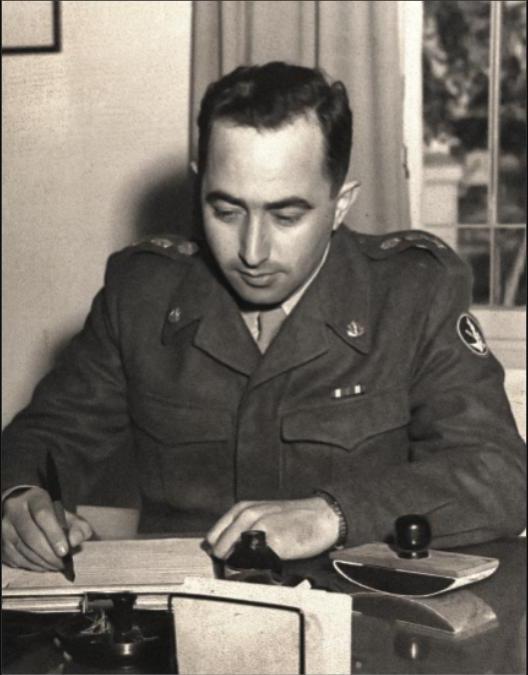
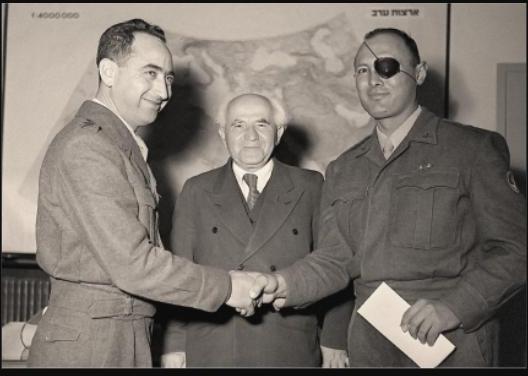
Twenty-three years after the riots, on December 7, 1952, Mordechai Maklef, who had been nine when his parents and three of his siblings were brutally murdered by Arab rioters, became the IDF's third chief of staff. At 32, he also became the youngest chief of staff in the history of the State of Israel.
At his own request, Lieutenant General Mordechai Maklef served as chief of staff for only one year, but left his mark during that time. Under his command and at his direction, a young major named Ariel Sharon established the celebrated 101 Commando Unit, which operated in 1953 until it was merged with the Paratroopers Brigade. Maklef redefined the infantry's doctrine of warfare and laid the foundations for the Command and Staff College.
Lieutenant General Mordechai Maklef died of a heart attack in 1978. He was only 58.
תגובות
עדיין אין תגובות.