
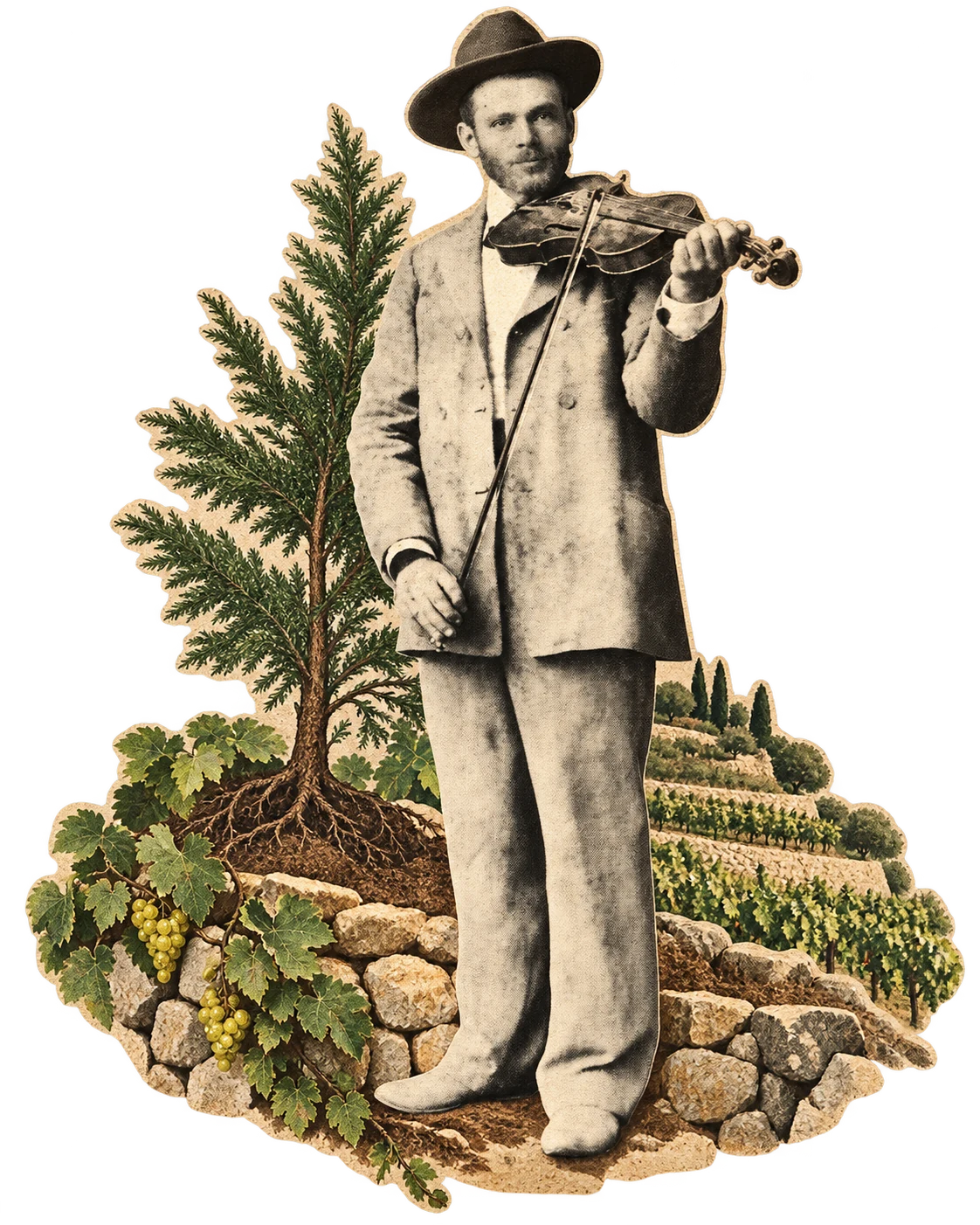
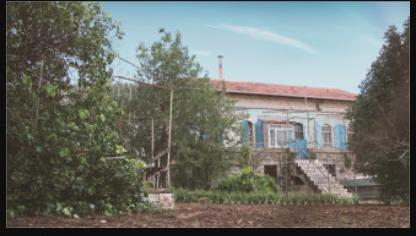
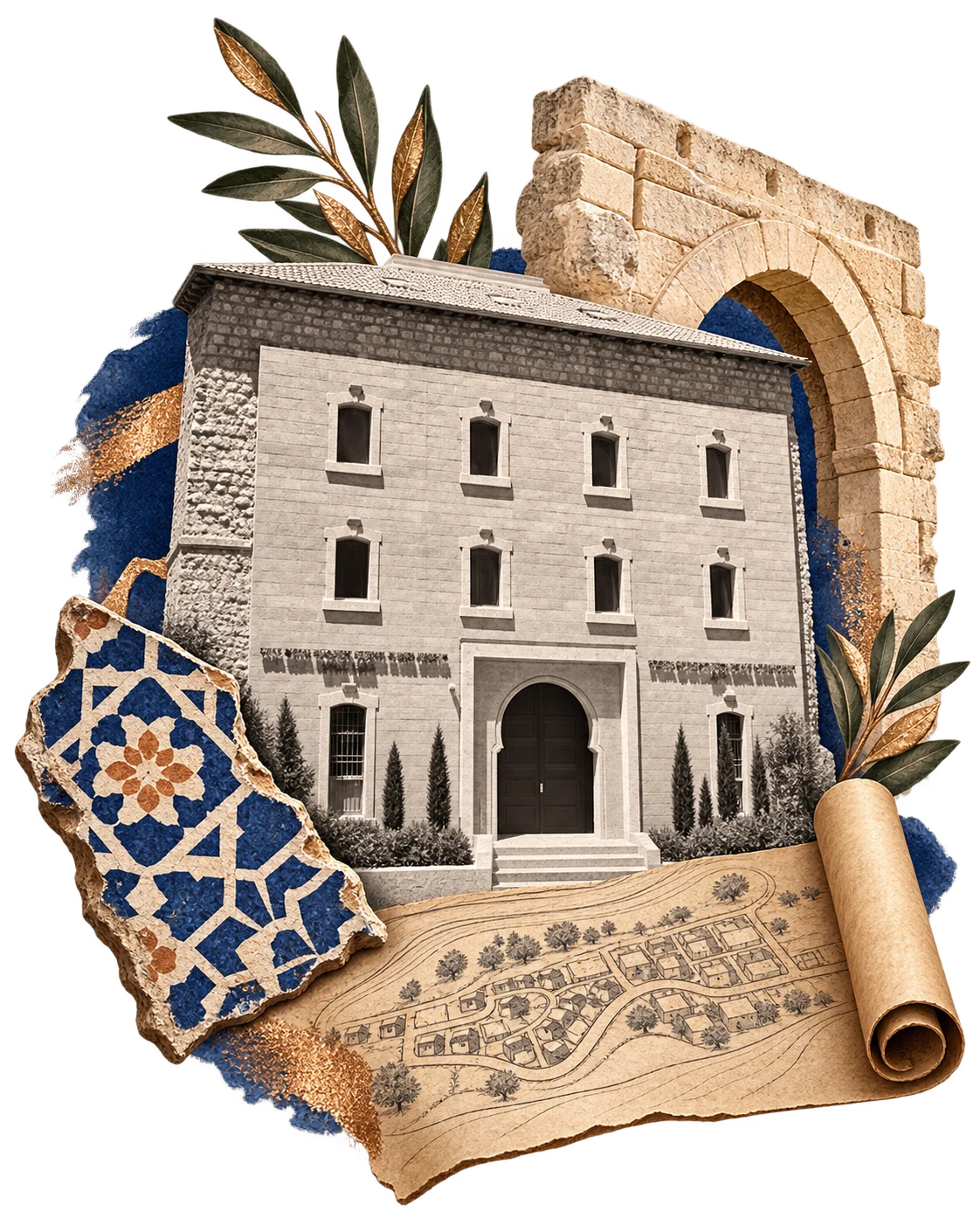
He was one of Motsa's earliest settlers, an exemplary farmer and a symbol of uncompromising quality. He helped establish the first canning factory in the country, and all the leading figures of the Yishuv and the Zionist movement, as well as distinguished non-Jewish visitors, stopped to visit and stay at the Broza home on their way to Jerusalem, singing his praises. It was on his land that Herzl planted the famous cedar that gave Arza its name (the Broza home in Motsa).
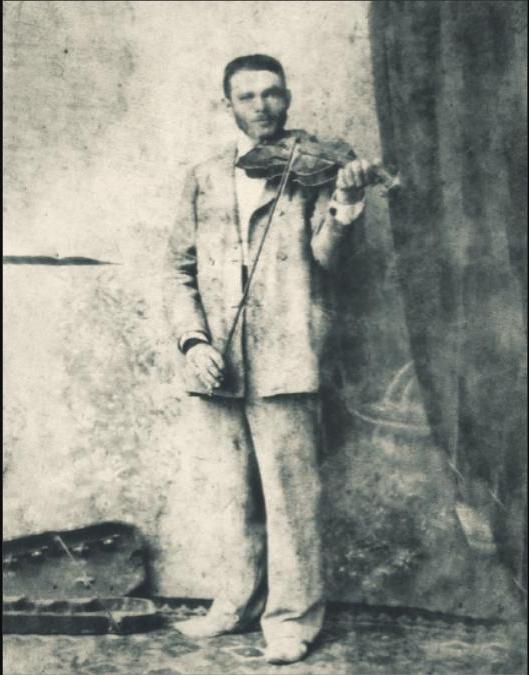
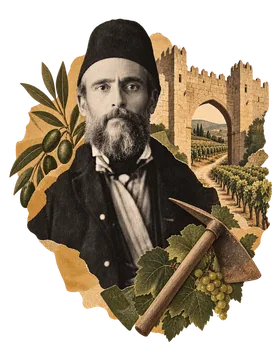
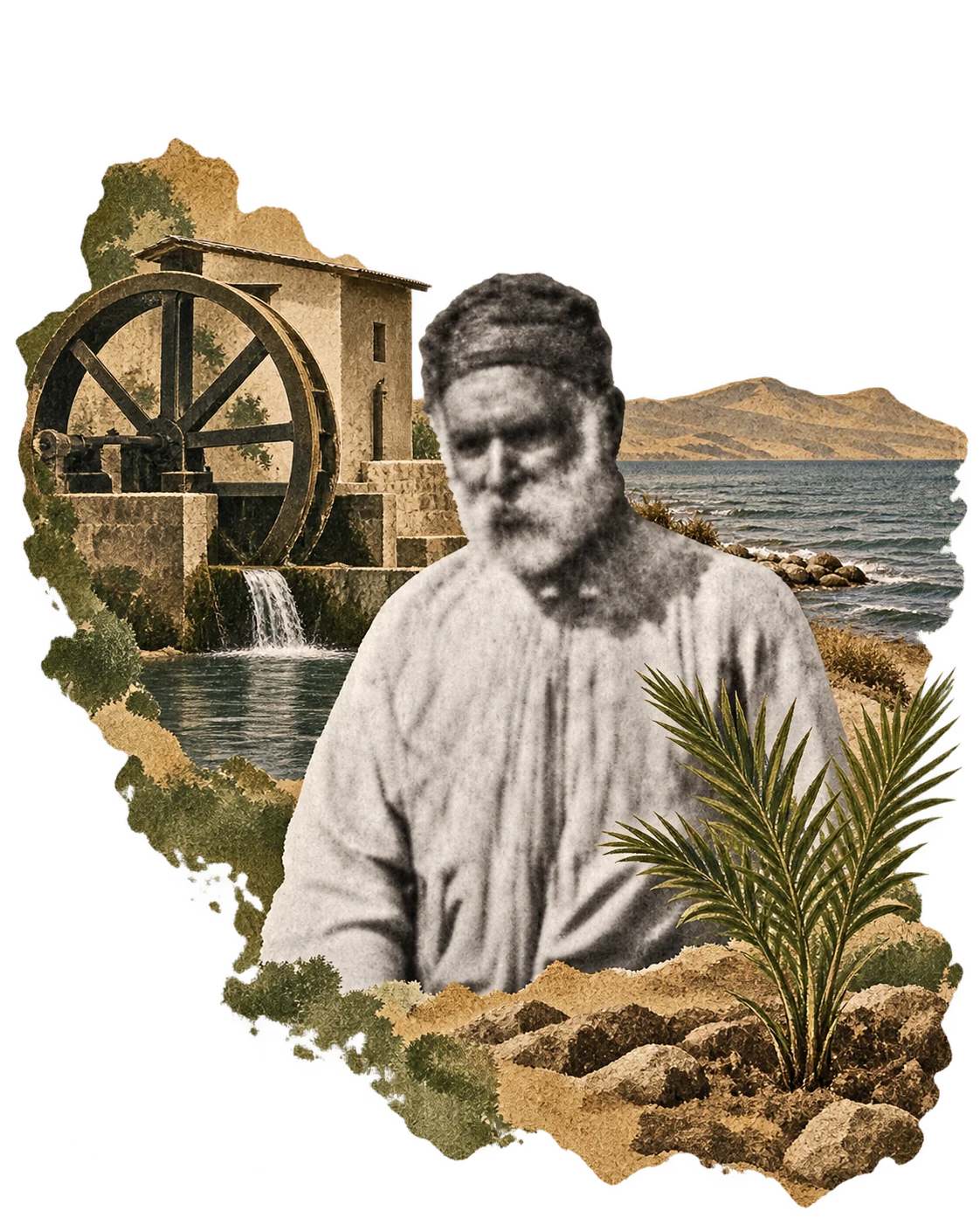
Shmuel Broza was born in Russia in 1869. He received a religious Jewish education and studied in a heder. Agriculture was discussed only in connection with the commandments related to working the land, such as leaving gleanings, forgotten sheaves and the corners of fields for the poor. His future was assured - a comfortable home and a livelihood. But for Shmuel, agriculture was the real thing - something that dirtied your hands, yet yielded produce and was bound up with the Land of Israel. Shmuel was determined to fulfill himself by pursuing his dream and giving up the comfortable future that awaited him. So, in 1891, at the age of 22, he immigrated to the Land of Israel with a handful of Jews who would later be known as the members of the First Aliyah. After arriving, Broza worked as a farm laborer in the settlements of Petah Tikva, Rehovot and Rishon LeZion. There he learned the farming trade, digging pits, weeding, manuring, picking and harvesting. He also put to use what he had learned from his father while working in the Litwinsky brothers' lumberyard. Wherever he went, Shmuel stood out for how quickly he adapted, his dedication to his work and his great energy.
On one of his trips to Jerusalem, he stopped in the village of Colonia, near Motsa, and took a liking to the place. Even then, he decided he would return and build his home there.
The Road to Motza
The settlement of Motsa was established in 1860 through the unusual pairing of two Jerusalemites - one Ashkenazi and the other Iraqi - who were connected by marriage: Yehoshua Yellin and his father-in-law, Yehezkel Yehuda. The two continued to live in Jerusalem but worked the settlement's farmland. Additional land purchased by Yellin and others was brought together by B'nai B'rith as a tract for settlement. When B'nai B'rith began establishing a settlement on the land at Motsa, near Jerusalem, Shmuel Broza was one of four outstanding laborers chosen to settle there, and was awarded a plot of 57 dunams.
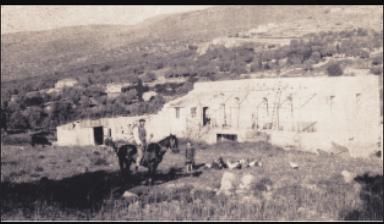
In 1892, about 32 years after the first land was purchased, Shmuel and Maasha Broza moved into the watchtower built by the previous landowners. This was not fertile valley land, but rocky, mountainous terrain. Shmuel Broza rolled up his sleeves and got to work: he cleared the stones from the land and plowed it, grew fruit trees and vegetables, planted a vineyard and built an olive press to produce fine olive oil. He also built a cowshed and a chicken coop in his yard, and the produce from his farm earned a good reputation in Jerusalem. His was a model farm, and many visitors came to see it.
Seven years later, Broza began building the stone house, "the house." His grandson, Professor Meir Broza, recounts: "The house was magnificent by any era's standards. Its foundation was hewn into the rock and contained a winery and a cistern. The mezzanine housed a fruit-canning operation and storage space. Above it was the spacious living floor, and above that, an attic. At the front, a wide flight of stairs led to a balcony that ran the entire length of the house. Altogether, the house had 15 rooms."
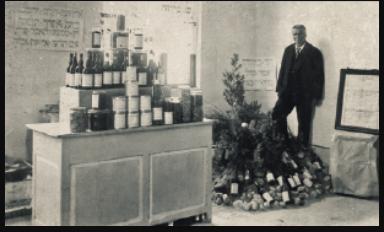
Broza later established the first canning factory in the country. He set aside a room in his home for the factory and employed several workers. His canned goods, like his fresh fruit, were famous throughout the country. "His apricot and grape preserves were especially well known," his grandson recalls. He used only glass jars because he wanted buyers to be able to see what was inside. When the founders of Assis decided to set up a canning factory, they came to consult Shmuel.
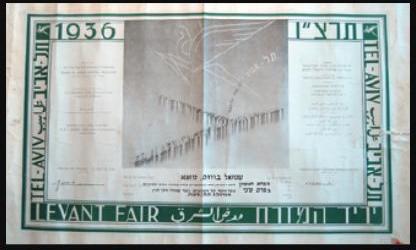
Shmuel Broza's fruit and vegetables won awards at many exhibitions in Israel and abroad, and were famous throughout the Yishuv. To this day, a Greek olive variety that Broza improved bears his name.
Broza was enterprising and far-sighted in real estate as well. He bought a great deal of land around Motsa and in Pardes Hanna, and by the standards of the time he was a wealthy man. "And he earned it all with his own ten fingers. If the property had remained intact, our family would be very wealthy today," his grandson says. All the leading figures of the Yishuv and the Zionist movement, as well as distinguished non-Jewish visitors on their way to Jerusalem, came to visit and stay at the Broza home, singing his praises. Among them were Edmond de Rothschild, Chaim Weizmann, David Ben-Gurion, the military governor Sir Ronald Storrs, almost all the high commissioners, Chief Rabbis Isaac Halevi Herzog and Ben-Zion Meir Hai Uziel, and others. Some of the visitors also planted trees on Broza's land.
One of the most famous people to plant a tree there was Herzl. In 1898, Herzl visited the Land of Israel and stopped at Broza's home on his way to Jerusalem. Broza was deeply moved by his distinguished guest. He accompanied Herzl to the top of the hill, where the Zionist leader planted a cedar - which was actually a cypress. (Today, the Arza convalescent home stands where the tree once grew.)
The 1929 Riots and the Destruction
The tree's fate was bound up with the house's, and both were connected to the 1929 riots and the Great Arab Revolt. The spark that ignited the 1929 riots was at the Western Wall, which is why in Arabic those events are called the "Buraq Revolution" (Buraq being the name used for the Western Wall). On Yom Kippur, September 23, 1928, the Western Wall plaza was full of worshippers, and a partition was set up between the men and women - in violation of the Ottoman status quo. The mufti Hajj Amin al-Husseini, the leader of the Arabs, saw the erection of this partition as an attempt to take control of the Temple Mount. He began inciting the Arabs, and an image was circulated among the crowds showing the Dome of the Rock mosque with the Zionist flag flying above it. On Tisha B'Av, several members of Betar went to the Western Wall with an Israeli flag and shouted, "The Wall is ours, and down with the government." In response, the Arabs held a demonstration, where tempers flared and the riots began.
On August 23, 1929, bloody riots began in Jerusalem and Hebron. As soon as the riots started, the mukhtar of the village of Colonia came to the homes of his neighbors, the Brozas and the Maklefs, and swore on the Quran that nothing would happen to them.
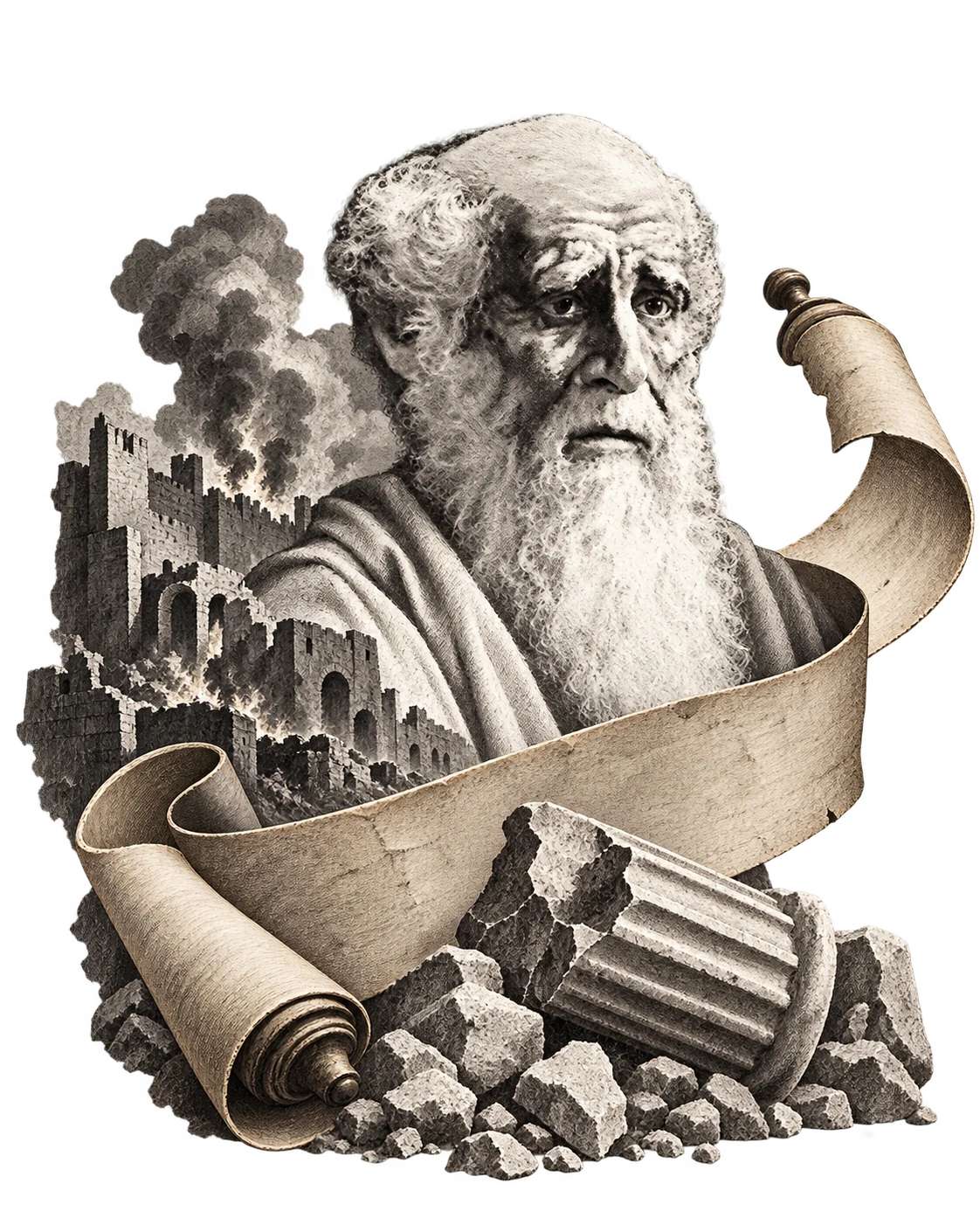
In the afternoon, unrest began to simmer in the area. The son of Aryeh Leib Maklef, a senior postal official, used his influence with the British authorities, and an armored vehicle was sent to help Motsa. It patrolled the area but disappeared the next morning. Soon after it left, rioters from Colonia began throwing stones at cars traveling on the road to Jerusalem, then moved downhill toward the Maklef family's home. They murdered some members of the family and guests who were staying there. From there, the murderers moved on to the Broza home. Shmuel drove them away, then fled to Jerusalem with the other residents. The rioters returned to the settlement and set fire to the Broza home and the tree Herzl had planted. Broza was devastated when his letters from Herzl, which he had hidden in one of the walls, were burned. He mourned the destruction of the "Herzl Cedar" for many days.
After the 1929 riots subsided, Shmuel Broza returned to Motsa and restored the home where he lived with his wife, Maasha, and their seven children. During the Great Arab Revolt in 1936, the Broza home was burned a second time. Broza returned once more and rebuilt the house and farm, but this time without enthusiasm. Something in him had been broken. Two of his sons, Yefia and Matityahu, stayed in their father's home with their families and continued working the farm.
In 1944, Shmuel Broza died of a serious illness. A year later, his son Yefia died of the same illness, and eventually the farm fell into decline until it was sold in the early 1960s to an ultra-Orthodox Jew from the United States.
תגובות
עדיין אין תגובות.