
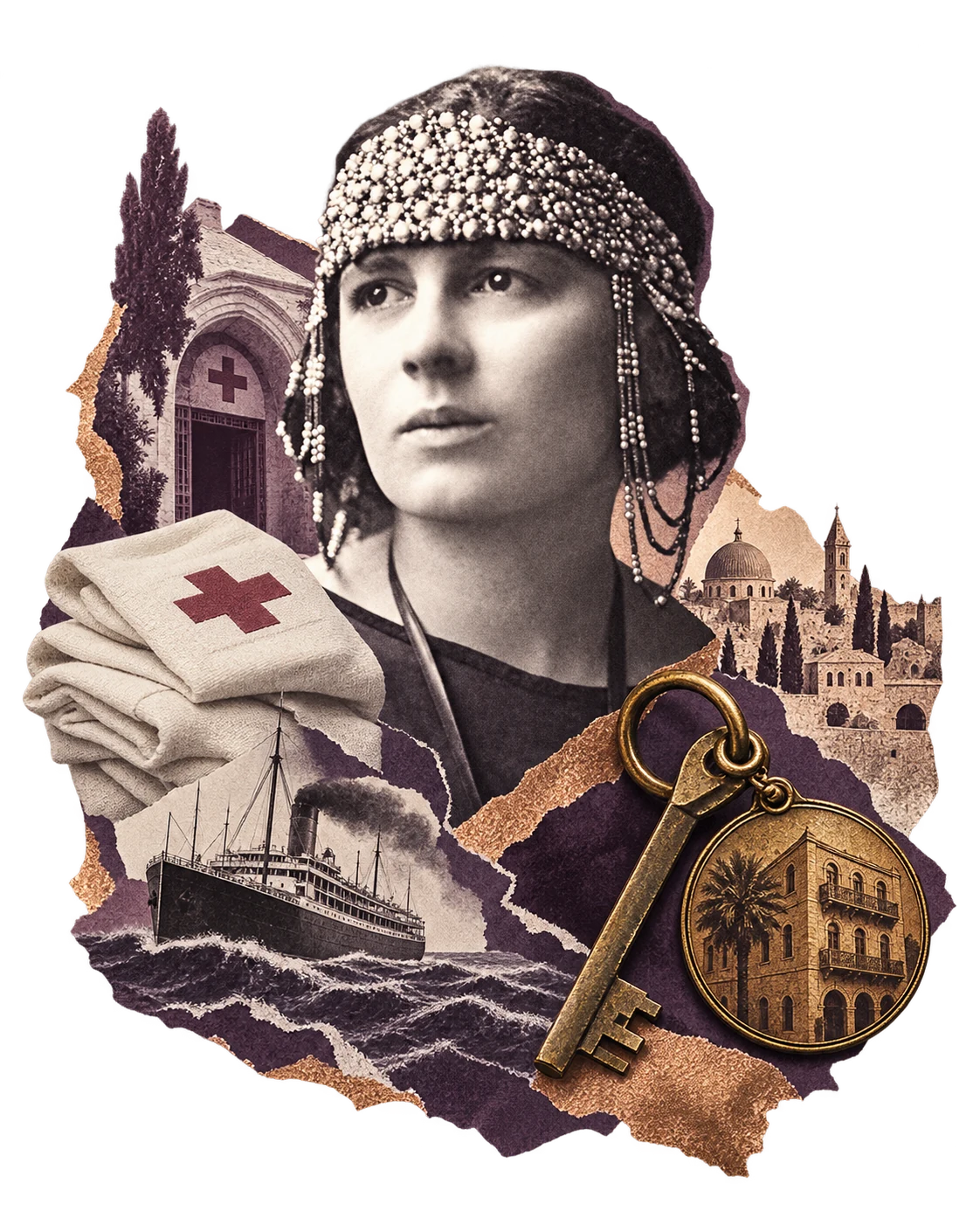
She was called the Dutch Joan of Arc. A free-spirited young woman, she joined the rebel forces in Herzegovina, established a network of hospitals in Paris, and founded the Geula Hotel in Jerusalem after hearing voices in her head.
Youth, Inheritance and First Love
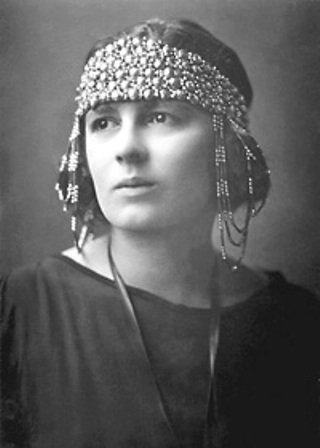
Hendrik, the dissolute Dutch king, fathered several children by other women but acknowledged only his son Merkus. Princess Jeanne Merkus, a descendant of Merkus, was the youngest of the eight children of Pieter, the Dutch governor of the islands of Java (now part of Indonesia). When Jeanne was five, her father died, and the family returned to the Netherlands. Not long afterward, her mother died, and Jeanne spent her adolescent years and received her education in the home of a stern clergyman, who instilled in her the belief that the Messiah would soon come. At the age of 23, Jeanne Merkus inherited a considerable fortune, which enabled her to buy an estate.
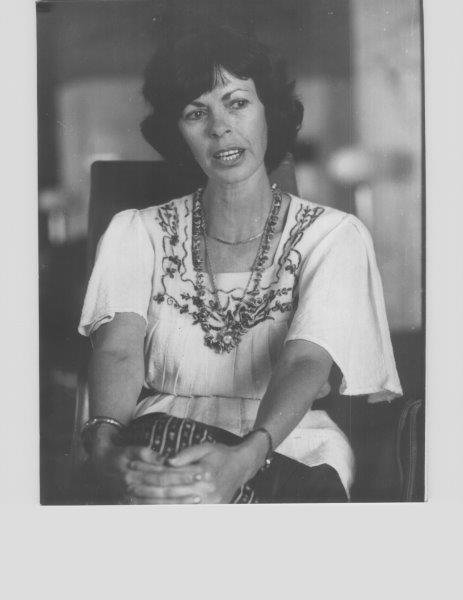
Hadassah Mor was born in Jerusalem in 1931 to a family originally from Tiberias. Like Jeanne, Hadassah was orphaned at a young age. She studied to become a teacher and, seeing her profession as a calling, went north to serve as a teacher in the army. "I suppose there are still people who thank me to this day because, thanks to me, they didn't remain illiterate," she says. "I saw it as a national mission." After her service in the north, she moved to Tzrifin, where she met the great love of her life, Dov Yermiya, who commanded the base. Yermiya was married and had two daughters, and was 16 years older than Hadassah. Unable to resist her charms, he divorced his wife, left his family, and married her. His friends, among them Yitzhak Rabin, Haim Laskov, Rehavam Ze'evi, Israel Bar, and Moshe Dayan, Dov's friend since youth, became her friends too, and they were also captivated by her.
Jeanne Merkus's first love was the famous musician and writer Catherine van Rees, with whom she lived for five years on the estate she had bought with her inheritance. They enjoyed a rich social life and took pride in themselves and their love. Jeanne was willing to satisfy Catherine's sexual desires, although she herself did not seek bodily pleasures. In 1869, after parting from Catherine, Jeanne moved to Paris to study at the renowned Sorbonne University. She proved an outstanding student and mastered seven languages. When she realized that the city was full of poor people who could not afford medical care, she established a network of hospitals that still exists today.
During the three years Hadassah and Dov lived in Jaffa, Moshe Dayan courted her gently. Hadassah, married to Dayan's friend, made it clear that she could offer him only friendship. While Dayan was chief of staff, Hadassah and her husband moved to Jerusalem. She recalls: "I was a teacher then, working the second shift, and Dayan would come to see me in the mornings after visiting archaeological excavations that had been discovered nearby. We would talk and laugh, and as we drank coffee I would tell him about the troubles weighing on me. When we moved to Jerusalem, to the Allenby Camp for career soldiers, and I began studying special education at the Hebrew University, Dayan suddenly moved there too, into the same building, on the same floor, after taking off his chief-of-staff uniform. He had come to study Oriental studies at the university as well. The geographic proximity, just two balconies apart, created even greater tension between us. My husband was stationed at a distant camp and came home only on weekends. Dayan's advances became more intense. On the one hand, they were pleasant and flattering, but they also made me anxious, as I felt trapped and that he wouldn't leave me alone until he got me..." She adds: "A man like Dayan would not give up in the face of a woman's refusal to surrender to him." Dayan had a clear goal: to win Hadassah's heart. "The give-and-take that exists in everyone was, in Dayan's case, heavily skewed toward taking," Hadassah adds. "Betrayal? Adultery? These concepts didn't appear in his vocabulary at all. He had his own standards."
The Voice in the Vatican and the Mission in Jerusalem
In 1871, Jeanne Merkus visited the Vatican, where she heard a voice calling to her: "Jeanne, my daughter, please build my house for me in Jerusalem." Jeanne was terrified by the voices. She knew the story of Joan of Arc, who had heard voices some 400 years before her, and that of the Frenchwoman Bernadette, to whom Mary, the mother of Jesus, had appeared some 20 years earlier in Lourdes, France. Jeanne knew exactly what she had to do.
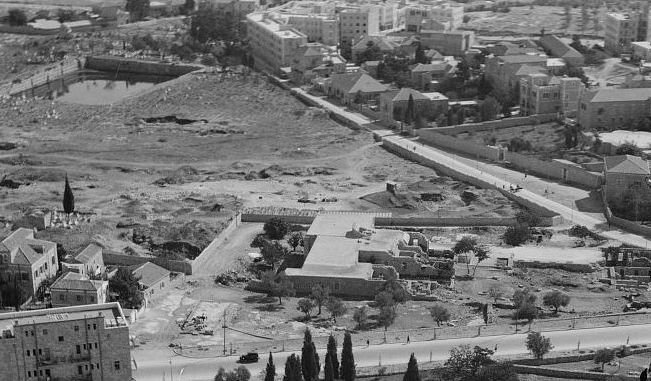
This is how the historical novel about Jeanne Merkus begins: "The steamer on which the Dutchwoman Jeanne Merkus was sailing from the Egyptian port of Alexandria to the Holy Land in 1873 began to sputter and pitch on the waves, as if gripped by alarm at the obstacles awaiting its passengers at the port of Jaffa, their destination at the end of a long and arduous voyage." From Jaffa, Jeanne walked to Jerusalem, where, inspired by a verse from the Book of Revelation [chapter 7]: "And I heard the number of those who were sealed: a hundred and forty-four thousand, sealed from every tribe of Israel," she decided to build a magnificent house to shelter the 144,000 redeemed souls. The house came to be known as the "House of the 144,000" and the "Hotel of Redemption," and she herself planned to call the building "Peace." She hired the French architect Capitaine Guimault, who had built the Carmelite monastery on the Mount of Olives, and construction began in Jerusalem near the corner of Agron and King George streets. During the construction, Jeanne came to see the corruption and cruelty of the Turkish rulers and, like others, learned to hate them. Four years after arriving in the country, Jeanne began receiving letters from her university friends, telling her about the uprising in Herzegovina, in which the rural Christian population rebelled against the Muslim Ottoman authorities. Jeanne bought weapons for the rebels with her own money and decided to join them. Perhaps she thought that overthrowing the Turks in Herzegovina would bring down the entire empire, and that the Land of Israel, too, would be freed from Turkish rule. When she arrived in Dubrovnik, Jeanne joined the fighting forces. She became known as an exceptional horsewoman, a familiar figure, and an ally of the Herzegovinian leader Mico Ljubibratić. Turkish soldiers who saw her riding fearlessly across the battlefield nicknamed her "the Red Demon," while in Belgrade she was called "our Joan, not of Orléans." During the war, a romance developed between her and Ljubibratić. The narrator writes of their love: "A man and a woman can share an intense and pleasurable love that involves no physical contact, just as a couple can have passionate, tempestuous sex without the slightest involvement of loving feelings."
"Nevertheless, I resisted the pull and did not yield to his advances," Hadassah says of Moshe Dayan. "That period actually suited me. Nothing had happened between us yet. I felt free. Strong. Independent. That was how things remained until one day my husband decided to leave the army and suggested that we move to a kibbutz in the north. I strongly opposed the idea, especially since I was in the middle of my studies. When he left home and went to live on the kibbutz, I felt abandoned by my husband, and the separation plunged me into a severe emotional crisis. Then I accepted the support of my charming neighbor, which I so badly needed. I told Moshe about my troubles, and he comforted and encouraged me and invited me to come and relax at his apartment. That was when I yielded to his advances. In fact, our affair began when I was already separated from my husband. My relationship with Dayan continued for another five years, by which time I was divorced and Dayan was minister of agriculture." She also says: "I had an apartment in the city center, and he would come straight from cabinet meetings or slip away from his ministerial duties to relax, and every meeting with him was an experience." Hadassah sums up that period by saying: "It's truly unbelievable. To this day, I have to pinch myself to be convinced that I had an exciting intimate relationship with this man. I can only thank fate for bringing me together with this charming and wonderful man."
Jeanne's End and the Building
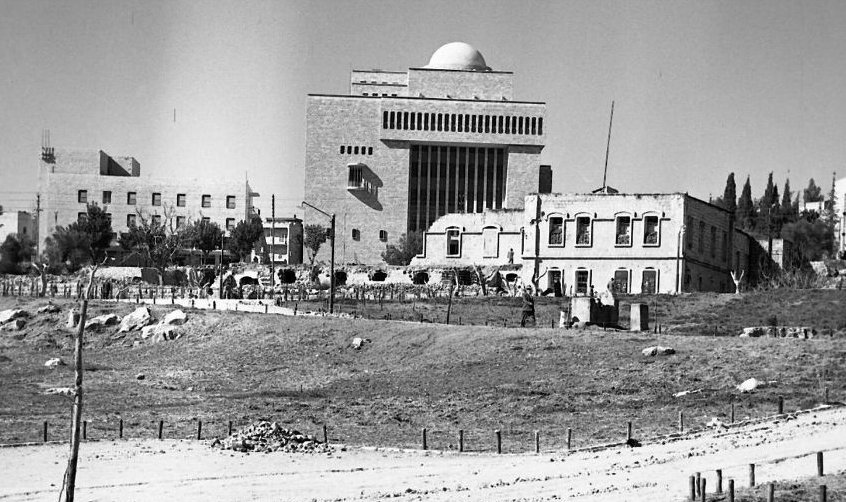
Exhausted by the war, Jeanne Merkus returned to Jerusalem and stayed at the American-Swedish Colony. Jeanne wanted to resume the construction that had been halted. The Khayat brothers, who had supplied the building materials and were close to the district governor based in Damascus, sued her, but she claimed she had paid the full amount. The district governor accepted their claim, and she was ordered to pay, but refused. She spent the rest of her life in extreme poverty on the French Riviera. Her family was ashamed of her and refused to support her. In her final years she developed dementia and died in the Deaconess Hospital in Utrecht. The princess's enchanting story has been told by several gifted writers. The first was the Dutchman Hank Peder, who wrote Eternal Ideal. Bertha Spafford also described her in her book Our Jerusalem. But the writer who turned the princess's story into a gripping suspense novel, and describes Jeanne's fate in these words - "The total faith that surrounded her on every side, faith in human beings, in God, and in His Messiah, exacted a heavy price from Jenny. A person with not a trace of malice, not even a little schadenfreude, who scorned the material wealth with which she herself had been so generously blessed, was ultimately doomed to misery" - is Hadassah Mor, in her seventh book, Jenny Merkus's Day of Judgment.
The large and impressive one-and-a-half-story building Jeanne Merkus built in anticipation of the Messiah's arrival became a ruin over the years and stood for ninety years, until Mayor Teddy Kollek ordered its demolition in 1970. The Leonardo Plaza Hotel now stands on its site.
Hadassah Mor and Dov Yermiya divorced in 1958. Hadassah Mor's relationship with Moshe Dayan continued on and off until the early 1960s and ended during Moshe Dayan's tenure as minister of agriculture.


תגובות
עדיין אין תגובות.