

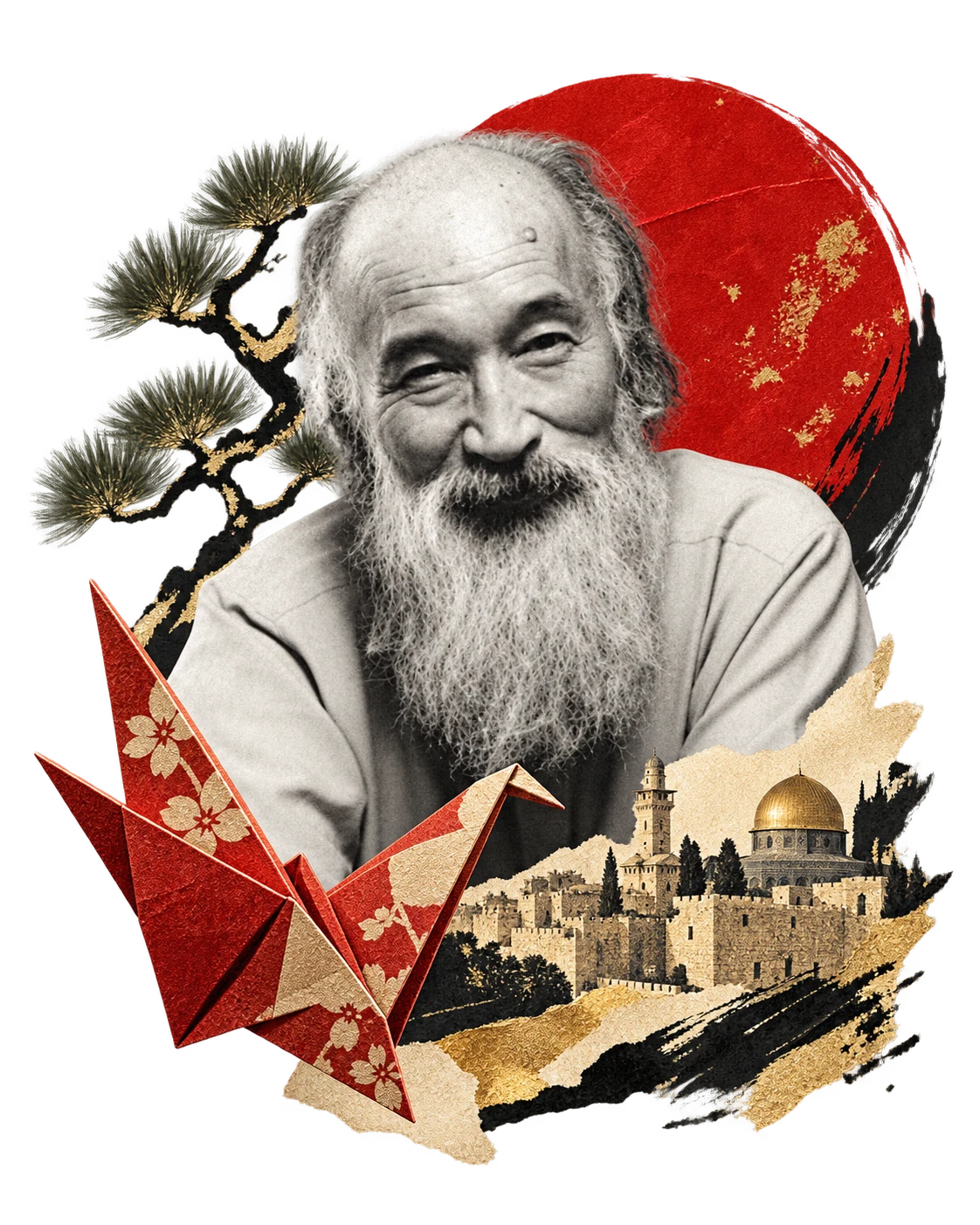
He was the community's poet. His songs crossed centuries, thousands of kilometers, and entire generations to reach us today. He wrote in three languages, and his songs became part of the Israeli soundtrack.
His Childhood and Wanderings in Yemen
Rabbi Shalom Shabazi was born in 1619 in the village of Najd al-Walid, near Taiz, the capital of southern Yemen. His father, Rabbi Yosef ben Abigad ben Halfon, was a Torah scholar and poet, and a member of the Mashta family, known at the time for the Torah scholars and poets it produced. Naturally, Shabazi grew up surrounded by culture, poetry, and Torah. At the time, Yemen was ruled by the Turks (during the Ottoman period), and the local governor was close to them. To improve his standing in their eyes, he issued decrees against the Jews: convert to Islam or die. He then began persecuting them. When Shabazi was one year old, the leaders of the community, including his father, were imprisoned for refusing to convert. After a year of forced labor, the prisoners were ransomed, but were forced to leave the settlement.
Without his father, the family's breadwinner, the family sank into poverty, and young Shabazi found himself wandering the roads and begging for alms. He would write "If the doors of the generous are locked" about those days when he knocked on the doors of the charitable, and even then found comfort in the belief that "the gates of heaven are not locked." Many nights he lay down with an empty stomach: "I slept hungry, and awoke to this song." He also wrote of his wanderings: "For dogs surrounded me, gathering from every side; wild beasts and lions with wolves, my heart and soul were alarmed." Rabbi Shalom Shabazi, poor in material things but rich in culture, came of age and found solace in poetry and the study of Torah. After the death of the holy Ari of Safed in 1572, his work, The Kabbalah of the Ari, spread throughout the Jewish world. This Kabbalah teaches that the world is full of sparks that must be gathered, and that "the vessels must be repaired." It reached Yemen too, and Shabazi was captivated by it. He began studying Kabbalah and the esoteric teachings. From his father and other family members, he learned Mishnah, Talmud, Aggadah, Midrash, and philosophy. He also studied secular subjects and astronomy, which were then at the pinnacle of human knowledge. He was fluent in Hebrew, Arabic, and Aramaic, and well versed in Arabic literature and the Quran.
At the age of 15, he was orphaned by his father's death, and the burden of providing for himself and his entire family fell on his shoulders. To earn a living, he wove prayer shawls and wrote songs for weddings, circumcisions, and funerals. His poetry was written in Hebrew, Arabic, Aramaic, and in combinations of these languages. He wrote 850 poems. The best known, "If the Doors Are Locked," has one stanza in Hebrew and one in Arabic.
During his travels, Shabazi reached the city of Sana'a and went to study with its sages. These were wonderful days for him, and in his poems he wrote of them with longing and praise. From Sana'a he moved to the nearby city of Shabaz, where he received the nickname "al-Shabazi." As he put it: "I am the youngest of the authors, Shalem, son of Rabbi Yosef Yisrael, known by my family name as one of the Mashta family, and by the name of my city, al-Shabazi." Among the Jews of southern Yemen, Shabazi was known as "Abba Shulem"; among the Jews of central and northern Yemen, he was known as "Mori Salem."
His Books and His Knowledge of Kabbalah
He turned the vast knowledge he had acquired on his own and through correspondence with the sages of Sana'a into several works: Hemdat Yamim, a brief commentary on the haftarot, which he interpreted through the plain meaning, allusion, exposition, and esoteric meaning - known collectively as PaRDeS; and Kitab al-Raml (raml means sand), a book of divination using thrown grains of sand. It seemed that Shabazi would be involved in divination, so he thought it worthwhile to explain himself in advance. This is what he wrote in the book's introduction: "Know that this 'Book of Sand' is of great benefit, and that much of the effort I have devoted to it serves a great purpose... One should not rely on miracles and put oneself in danger, for miracles rarely happen except to those who walk in innocence... The Arab sages boast over us in the art of sand, which contains wondrous wisdom for the discerning."
As Shabazi hints in the introduction, he had to write this book in response to a Muslim named Ibn Alwan, who had dazzled some Jews with his wonders, predictions of the future, and healing of the sick. The book did indeed have its intended effect and served as a counterforce to Ibn Alwan. Shabazi also wrote Kitab al-Zij, on astrology, and Beit Tefillah, a commentary on the prayers.
Shabazi's tremendous success among Yemen's Jews made him a legendary figure. Even during his lifetime, miraculous qualities were attributed to him. It is said that every Friday evening, the miracle of "the leap of the way" would occur, allowing him to spend the Sabbath in Jerusalem one week, Safed another, Tiberias another, and Hebron another, before returning home by the same means on Saturday night.
Another legend concerns the deaths of his granddaughter and his son. The story goes that his daughter Miriam had a daughter named Shimea (in some accounts, Shimea is named as his daughter). She was beautiful, and the district governor desired her and asked to marry her. Shabazi and his daughter tried to oppose the match, but the governor insisted. They say that Shimea dressed up for her wedding to the governor, and Shabazi accompanied her with dancing, as well as dirge-like songs, to the entrance of the governor's house. There, before she entered, he used his hidden powers and caused her death. As horrifying as this is, it clearly defines the line that must not be crossed: assimilation. This is a matter for which one must fulfill the commandment to "be killed rather than transgress." Another story tells of Shimon, Shabazi's arrogant son. One day, the men gathered at Shabazi's home for a tahzina, and Shimon was offended that he had not been given the respect he thought he deserved. To make his standing clear to everyone, he used the "Explicit Name" and turned all the celebrants' hookah hoses into snakes. Shabazi was so angry with him for using the Explicit Name needlessly that he sentenced him to death, and Shimon died. These legends elevated Shabazi's image as a holy man, utterly devoted to Torah and Jewish law. These were difficult times for the Jews, who searched for any straw to cling to, and saw every celestial phenomenon as a sign of the Messiah's coming. Then, in 1666, news arrived of Sabbatai Zevi, who had traveled from Turkey to Egypt and the Land of Israel. Shabazi was certain that this was the Messiah for whom they had longed. Yemen's Jewish leadership was divided between opponents and supporters of Sabbatai Zevi. Some of his supporters urged the faithful to sell their homes and prepare for the long journey to the Land of Israel, where they would have the merit of meeting the people's Messiah. Shabazi wrote about Sabbatai Zevi in his poem "In a Night's Dream I Girded Myself," urging his friends and members of his community to prepare for redemption: "Sabbatai Zevi has returned, and your kingdom has prospered over me... Songs from the edge of the earth we have heard, Zevi, righteous in the east and the west." Of Nathan of Gaza, Sabbatai Zevi's assistant, he wrote: "My beloved, cherished Nathan / seek me, the lowly one / and upon my home and threshold / lay your hand on the obstacle."
Sabbatai Zevi was imprisoned by the Ottomans in 1666 and given the choice of converting to Islam or dying. To Shabazi's astonishment, Sabbatai Zevi and some of his followers chose to convert. After this revelation, Shabazi asked God's forgiveness, but he still remained certain that the Messiah would come: "The day of redemption is concealed, and its end will not be revealed; fortunate is the one who believes and waits." The Jews' actions and their desire to leave Yemen and immigrate to the Land of Israel had a negative effect on relations between Jews and Muslims. The crisis culminated in the exile to Mawza. A year after the Sabbatai Zevi affair, the Muslims began treating the Jews harshly, and Shabazi's poems are an important historical record of this. One such poem is "In 5427 They Decreed Against the Crowns," which he wrote about the "decree against the crowns" imposed by Imam al-Mutawakkil Isma'il in 1667. The decrees stripped Jews of civil rights, including the right to adorn their heads with a turban, a symbol of respected social standing.
The Mawza Exile and the Legacy
Later, Imam al-Mahdi bin Hassan al-Qasim, in whose honor Shabazi wrote two poems of praise, decided in 1679 to eliminate the Jewish presence in Yemen. The imam gave the Jews the choice of converting to Islam or being expelled from the country. Yemen's Jews chose exile. They were expelled from all their settlements throughout Yemen to the town of Mawza, in southern Yemen, a barren, salty region.
It was a journey on foot through the desert that lasted about 10 days. Many died along the way, and there are heartbreaking accounts of this exile: "The villages are deserted, hunger afflicts all, the doors of the generous are locked, and robbery and plunder abound. People eat the field's greens and the carcasses of animals. The air of your land is stifling, thirst brings death, and the water in the wells is the color of murky blood. Who will kiss me while I am exiled and wandering, groaning in Yemen and sobbing? Who will kiss me while I am despised? Who will kiss me while I stand between a soothsayer and an enemy in the valley of sorrow, attached in sin to deceitful masters?"
Estimates suggest that about two-thirds of the Jews died during the exile. Of the roughly 10,000 people from Sana'a who left for exile in Mawza, only about 1,000 survived. After a year in exile, the Jews were allowed to return as a result of various pressures, but not to their homes, which had already been taken by Muslims. The poems about the exile to Mawza are Rabbi Shalom Shabazi's last poems, and the year of his death is inferred from them. His tomb in Taiz was a pilgrimage site, but since 1962 Muslims have prevented access to it.
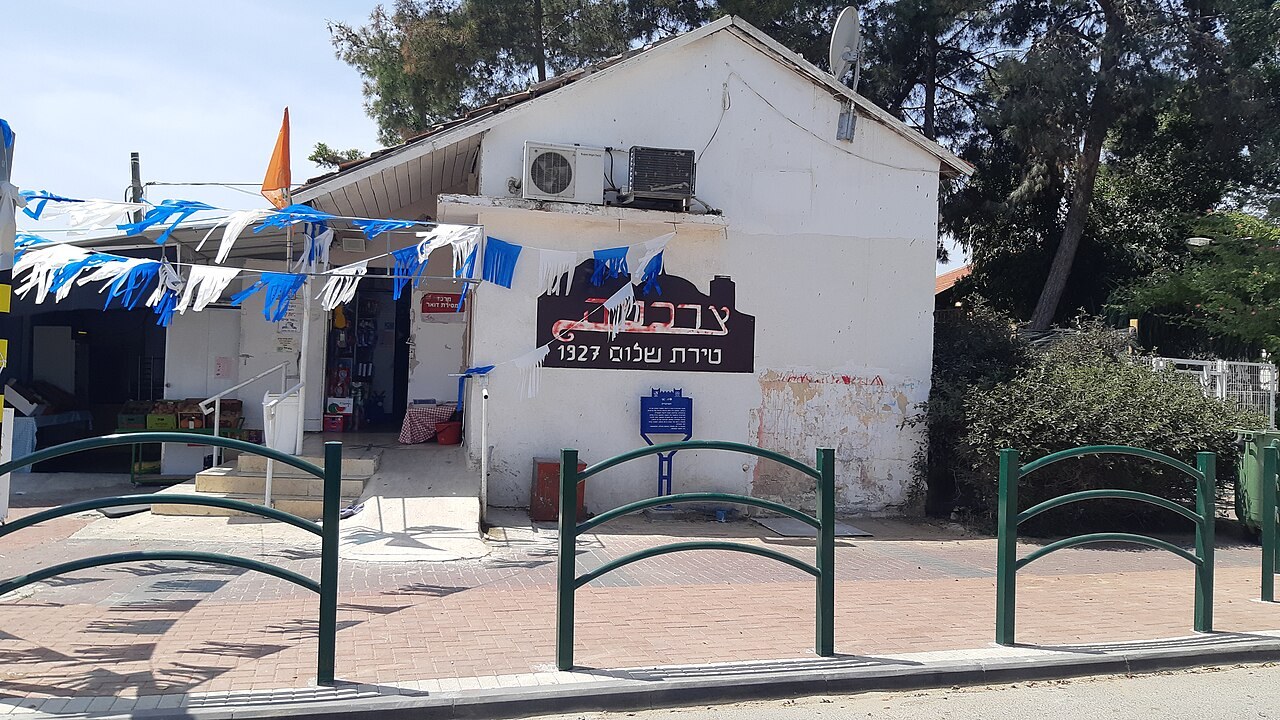
Shabazi's songs were beloved among Yemen's Jews in his own time, and to this day they are identified with the community's voice. The songs were copied into thousands of handwritten diwans. Forty-five of his 850 poems were set to music and became hits known to broad audiences in Israel. The best known are "If the Doors Are Locked," "Ahavat Hadassah," "Ayyelet Chen," and "Sar HaMemuneh." Rabbi Shalom Shabazi's songs and piyyutim crossed the barriers of time and place. Streets in many Israeli cities were named after him, as were the "Shabazi neighborhood" in Tel Aviv and the moshav of Tirat Shalom. In his poems, Shabazi described the biblical Land of Israel, not the land to which they would eventually immigrate. Yemen's Jews prepared themselves for that land. When they came to Israel, they expected to find priests, prophets, and altars... But when they stepped off the plane and kissed the earth, they encountered nonreligious Jews, dressed immodestly, bareheaded and clean-shaven, without sidelocks...
תגובות
עדיין אין תגובות.