
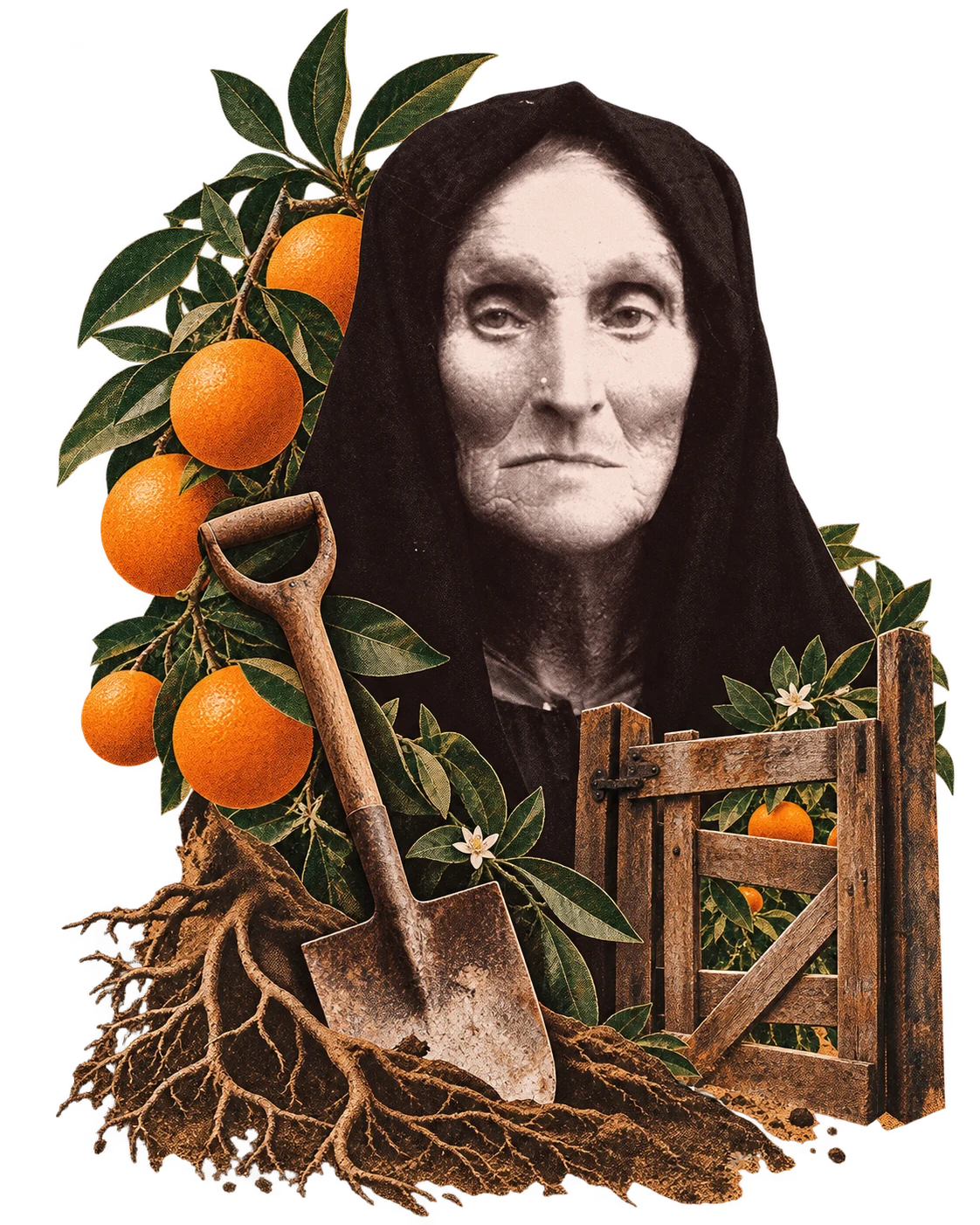
She was one of the toughest and bravest women. A true pioneer, she earned the title "Mother of Citrus Growing."
The Felman Family in Sumail
The group that arrived from Poland in the winter of 1884 to settle in Sumail, a poor and wretched village south of the Yarkon, attracted considerable attention. It was the ultra-Orthodox Felman family: Rabbi Dov David Halevi Felman, his mother Rivka and the children from his first marriage; his wife, Sarah Ita, their children together; and Rabbi Meir Rosenblum, who taught the boys.
Three years earlier, a society for settling in the Land of Israel had been founded in Poland. After corresponding with Yehiel Michel Pines about settlement in the Land, Dov decided to come and look for a property where he could live and work. At first he toured the country with Rabbi Rubin, then traveled alone between the colonies. After seeing their difficult circumstances and struggle to survive, Rabbi Felman decided to settle in an existing community, even if it was an Arab village. After many visits, he bought 40 dunams of land, an old Arab house, and several animals from Muhammad Dajabra (Abu Jabra), the sheikh of the village of Sumail. The village's name reflected the nature of the soil - Sumail means dry land. The village was home to fellahin who had come from Egypt, the Sarafi and Dajabra clans, and a small number of Bedouins from Sinai. It was small, with about 25 houses and 100 residents, far from the wretched city of Jaffa, enclosed within its walls. After obtaining Ottoman citizenship so that the property could be registered in his name, Rabbi Felman began plowing and sowing the land. His neighbors respected him greatly, and when he traveled to Poland to organize the rest of the family and bring them to the Land, he entrusted the farm to an Arab neighbor, who was to keep working it until his return.
Rabbi Dov David Felman
Rabbi Dov David Halevi Felman was born in 1842 in Mezeritch, Poland, into a prosperous family with distinguished lineage tracing back to the Maggid of Mezeritch. The family made its living exporting bristles for the brush-making industry. He grew up in a religious home and received a Torah education. As an adult, he was chosen to lead the community and earned a reputation among the authorities and the Jewish community as an honest and respected man. At the age of 28, he married his second wife, Sarah Ita, who was then 14. She cared for his two orphaned children, Aharon and Yaakov, as if they were her own.
After arriving in the Land, Dov David Felman turned from merchant and Torah scholar into a farmer. Together with his two older sons, Aharon and Yaakov, he began planting an orchard and expanding his home. He collected milk and vegetables and rode to Jaffa to sell the produce, while also making sure to pray every day and study Torah and Gemara. His home was open to Jewish visitors, and he told them about the wonders of the Land. He did the same in letters to friends abroad: "To my friend, the esteemed and generous Rabbi, our teacher and master, may the Lord's will be done, Rabbi Yudel, may his light shine, Rinevin, greetings! First, I have come to let you know that we are all, thank God, in good health... Believe me, my friend, I still have no livelihood from the orchard; only, thank God, I have milk from three animals, chickens, and vegetables from the garden, so my expenses, thank God, are small... And when I go to Jaffa or return from Jaffa, I sing along the way, for the Almighty has granted me the privilege of walking on the holy soil, and I praise the Lord with every verse that comes to my lips, with great joy. May He grant me another rabbi and good friend with whom I can study Torah for its own sake." Rabbi Dov David Felman's dream was to establish a Jewish settlement there, but he did not live to realize his vision. While working in the orchard without a head covering, he suffered sunstroke and was rushed to a doctor in Jaffa, who mistakenly thought he had malaria and gave him medication that hastened his death. At the age of 27, Sarah Ita was left alone to care for six orphans.
She traveled to Jerusalem to visit the Rabbi of Brisk and ask his advice about whether she should now leave the Land. He replied: "I have never advised any Jew to leave the Land of Israel. But you, a widowed woman with six orphans, abandoned and alone in an empty wilderness, far from a Jewish settlement - I advise you to leave the Land and return to the Diaspora." In a letter to one of the rabbis, who had permitted her to leave the Land because of the hardships she was likely to face, she wrote: "My husband's inheritance and the work he and I struggled over are dear to me. He saw this corner as the place where he would live out his life. I will not leave here. I would give my life for this land, for which he sacrificed himself."
Sarah Ita and the Orchard
Together with her older sons, Sarah Ita continued to run the farm and the orchard, which she named "David's Garden" after her late husband. A few weeks after Rabbi Dov David's death, their youngest daughter, Elke, died before her second birthday. Several years later, Haya, their second daughter, also died.
When she ran into financial difficulties, Sarah Ita ordered the sale of all the property still owned by the family in Poland and invested the money in the orchard. When that money, too, ran out, she turned to Shmuel Hirsch, director of the Mikveh Israel agricultural school and an associate of Baron Rothschild. Hirsch recommended that the Baron lend her 300 francs, to be repaid over ten years. After five difficult years, they gathered their first harvest, and several years later the orchard started producing excellent fruit that could be sold at a good price.
The orchard became famous for its yield and was featured in Havatzelet, the most widely circulated newspaper of its time: "Meanwhile, the orchard grew, and the orchard owner's children grew up and helped her work it. It expanded and improved from year to year, both in the number of orange trees and in their quality, and had already begun to bear fruit for its owner. Now this industrious woman is enjoying the fruits of her labor. One of her sons married and lives in Jerusalem. Her two younger sons also married and live together with their wives and their sister on the produce of their garden, which brings them a certain income each year. With its many trees and fine fruit, it can compete with the finest and most select gardens in the Jaffa area, and a very promising future lies ahead for this garden, as it grows and develops and the price of its fruit rises from year to year... Could this industrious woman not also serve as an example to many of our fellow farmers, through her diligence, courage, and great patience?"
The rabbi who supported her staying in the Land was Rabbi Aryeh Leib Frumkin, one of the founders of Petah Tikva. When settlement in the colony resumed in 1883, Rabbi Frumkin bought from her the rootstocks that formed the basis of the orchard in Petah Tikva. He also took her son Nachman with him to teach him Torah and, in turn, learn the secrets of orchard growing from him.
Her Arab neighbors greatly admired Sarah Ita's courage, perseverance, and wisdom, and called her "Sit Sarah" (Madam Sarah). Sheikh Abu Jabra announced that anyone who harmed her would be harming him. Indeed, when her animals were stolen, the sheikh's men caught the thieves and returned her animals. One day, an Arab boy drowned in a pool in the orchard, later known as Gan Hadassah. Some of the Arabs claimed that Sarah Ita had drowned him and ran toward the orchard carrying axes. The boy's mother stood in front of them, shielding Sarah Ita with her body, and cried out: "Sit Sarah loved my son as if he were one of her own children. Woe to anyone who so much as harms a hair on her head."
As the British army advanced through Sinai, the Turks feared that the Jews would betray them and help the British. At Passover in 1917, the Turks expelled all the Jewish residents of Jaffa and the surrounding area. Sarah Ita Felman entrusted her property to Sheikh Abu Jabra and moved with her family to Tiberias. After the war, the family returned and ran the orchard with hired laborers, expanding their business into other branches as well.
Sarah Ita Felman was the only person to repay the loan she had taken from Baron de Rothschild. In 1899, during the Baron's third visit to the Land, Sarah Ita wanted to give him a letter of thanks and went with her son to Petah Tikva. The Baron thought she was asking for money and responded angrily: "Why are you handing me letters asking for help? I have decided to stop giving financial support." The Baron was astonished when her son Aharon told him that the letter was one of thanks. "Are there still people in the Land of Israel who are grateful to me for my work among them?" he exclaimed, then said to his wife, "Listen, Adelaide. There are still people here who admire my work. They thank me and repay the loan they received from me."
That same year, the Ahva neighborhood was established near Neve Tzedek. Founded by ultra-Orthodox Jews in a Jewish area, the neighborhood appealed to Haim, Sarah Ita's son. He joined the venture and built a home there (at 25 Ahva Street, on the corner of 6 Bostanai Street). Sarah Ita saw that the neighborhood's residents were good people, and after she had finished repaying the debt to the Baron, she joined the neighborhood's first residents. Every morning, she rode her donkey to the orchard and continued working there.
The Children Carry On
She passed on her pioneering zeal and pursuit of excellence to her children, too. Aharon married Rivka, daughter of Rabbi Avraham of Klev, one of the founders of Jerusalem's Beit Yaakov neighborhood. With the dowry, he bought a plot of land in Petah Tikva and settled there with his wife. He became known as a citrus expert and in 1891 published his first book in Hebrew, on how to plant an orchard, entitled "A Spring of Gardens: The Laws of Planting Gardens and Orchards in the Land of Israel." Haim married Haya Feiga, daughter of Hirsch Leib Lederberg, a Jewish merchant from Russia who immigrated to the Land and opened Jerusalem's first modern shop for glassware, porcelain, and stationery. Haya and Haim's business ventures were successful, but the couple preferred to return to the village of Sumail and help Sarah Ita in the orchard. They later helped found the Tahkemoni school in the Ahva neighborhood. Haim and his brother Nachman opened a Jaffa agency for the Rishon LeZion Winery and exported wine abroad. Their shop in Jaffa served as an information center for immigrants arriving in the Land and looking for places to settle. Nachman married Michal, daughter of Rabbi Yehoshua Shlank of Jerusalem, and continued developing the citrus-growing industry alongside other pioneers. Nachman was one of the founders of Ahuzat Bayit, from which the city of Tel Aviv grew, and a founder of the Beit VaGan neighborhood south of Jaffa (Bat Yam). The grandchildren inherited the same zeal and were also active in developing the Land, for example by founding Givat Elisheva and establishing the Reali School in Haifa.
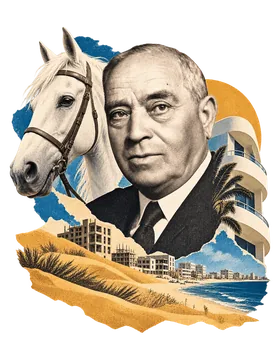
Tel Aviv grew rapidly, and in 1934 demand for building plots increased. Sarah Ita's children and grandchildren decided to sell the land on which the orchard stood to contractors. The orchard was very large, stretching from the Ibn Gabirol-Arlozorov intersection to Shlomo HaMelech Street and from there to Rabin Square and City Hall. After the sale, they held a great celebration to mark the orchard's 50th anniversary. Members of the city council attended, led by Meir Dizengoff, who bestowed on Sarah Ita Felman the title "Pioneer of Hebrew Citrus Growing."
It is worth noting that Rabbi Yehuda Halevi Marguza preceded Sarah Ita: in 1851, he planted the first Jewish orchard in the Land of Israel. Twelve years later, the second Jewish orchardist, Aharon Moyal, arrived and bought an orchard in 1863. However, neither Rabbi Yehuda Halevi Marguza nor Aharon Moyal deserves the title "first Jewish orchardist," since neither ever worked the orchard themselves; they only invested in it.
After the event, Sarah Ita returned to her home on Ahva Street. Parting from the orchard, which had been her life's work, was difficult. She shut herself away at home and did not leave for six months, until her death at the age of 80. Sarah Ita was buried in the family plot in the cemetery on Trumpeldor Street.
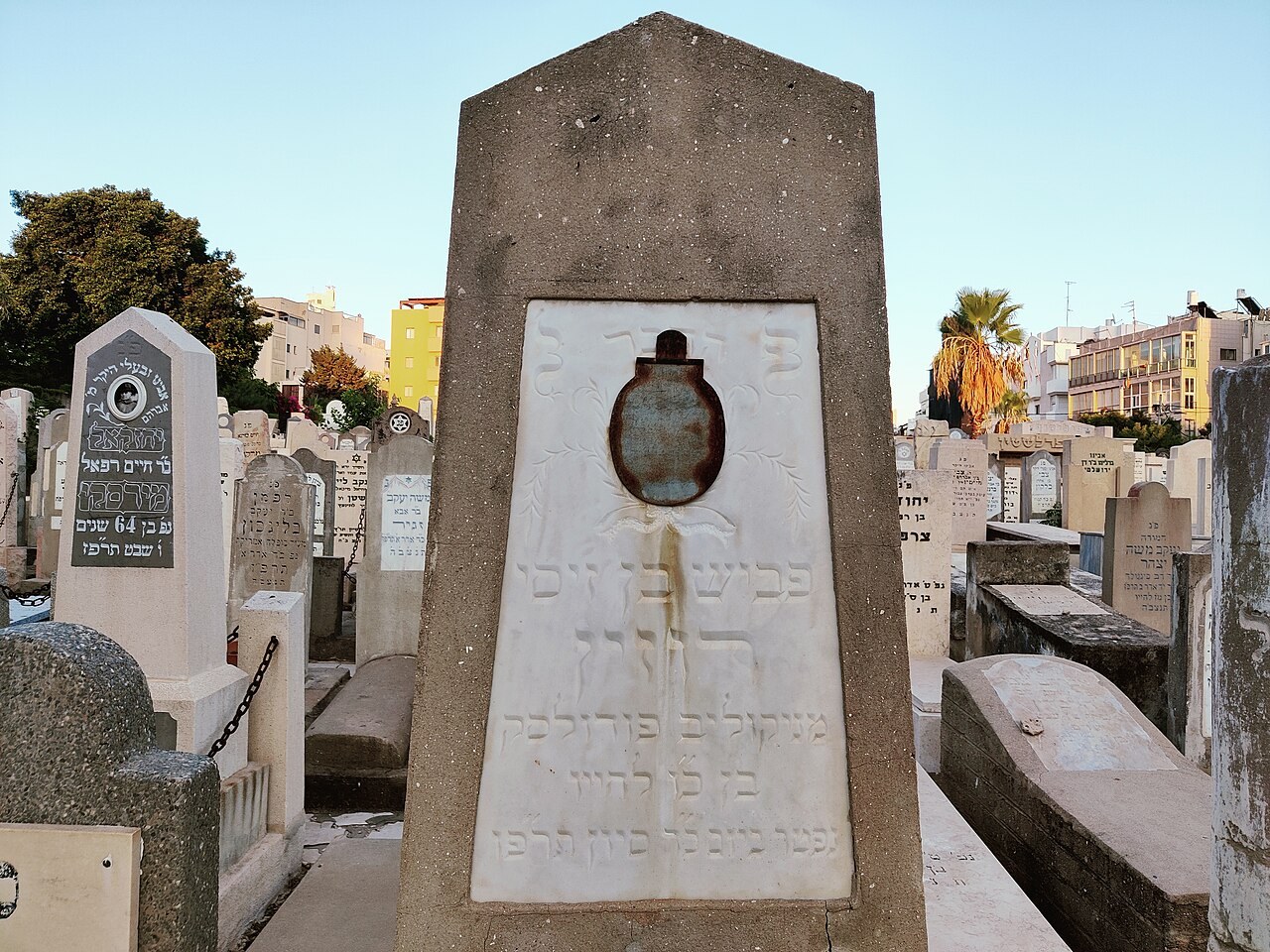
Two streets in Israel commemorate Sarah Ita Felman's work: "HaPardes Street," a small street near Tel Aviv City Hall, and "Pioneer of Citrus Growing Street" in Petah Tikva. But there is no street named after her or her husband, Dov David. When the State of Israel was established, the Arab residents of the village of Sumail fled to Jaffa and abandoned it. An upscale Jewish neighborhood was built in its place.
תגובות
עדיין אין תגובות.