

Make no mistake: Tu B'Av is not based on a love story. Barbaric acts, brutal wars, torture, and murder are the foundations of the idea of a holiday of love.
The Levite and His Concubine
Our story appears in the Book of Judges and begins with the words: “In those days, when there was no king in Israel, there was a Levite man living in the remote hills of Ephraim, and he took a concubine from Bethlehem in Judah” (Judges 19:1).
We do not know the names of the man or the concubine, but according to the story, the concubine was unhappy with her master and fled back to her father's house in Bethlehem. The Levite took his young servant and rode to her father's house “to speak tenderly to her” and bring her back. As he approached the house, her father came out happily, understanding that his daughter was still important to her husband. The Levite spoke to the concubine for three days, until she agreed to his request to return with him. They stayed at her father's house for two more days, and on the sixth day they set out for their home in the hills of Ephraim.
By the time they passed through the Jebusite city, it was already getting dark. Fearing that something might happen to them, or, as the text puts it, “We will not turn aside into a foreign city, which is not of the children of Israel,” they preferred to keep going until they reached the city of Gibeah, in the territory of the tribe of Benjamin, north of Jerusalem. (The city also appears in the Bible under the names “Gibeah of Benjamin,” “Gibeah of Saul,” “Gibeah of God,” “Geba,” and “Geba of Benjamin.”)
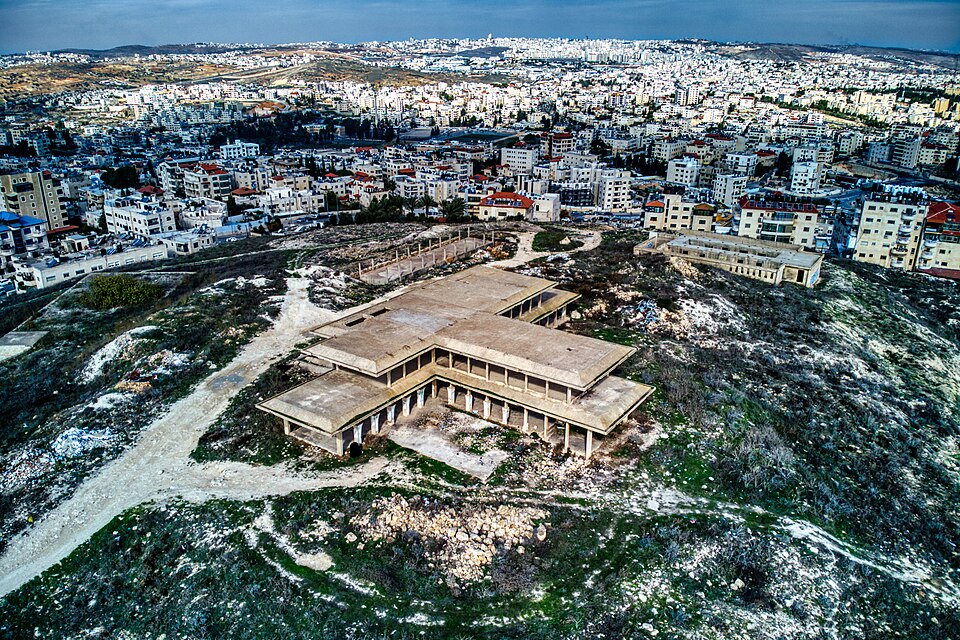
They expected the townspeople to put them up for the night, but “no one took them into his house to spend the night.” The only person who welcomed them into his home was an old man, also from the hills of Ephraim, who lived in Gibeah among the tribe of Benjamin. He gave them food and water to wash with, fed their donkeys, and provided them with a bed.
Here begins a chain of horrifying events: “the men of the city, worthless men,” as they are described, came to the old man's house and demanded that he bring his guests out so they could abuse them. The old host, fearing for his guests, offered them a substitute - his virgin daughter and the concubine - and pleaded, “No, my brothers, do not do this evil.” But the townsmen refused his offer. When the Levite realized he was putting his host in danger, he brought his concubine out to the men of the city and went back to bed. “They knew her, and abused her all night until the morning, and they let her go.” The concubine was brutally raped but survived. When she returned to the old host's house, she found the door locked. When her master, the Levite, woke up, he opened the door and saw her body lying at the entrance. He cut it into “twelve pieces” and sent them to all the tribes of Israel so they would know of the abomination committed by the tribe of Benjamin.
The War of the Benjaminites
Those pieces of the concubine's body did indeed horrify the tribes. “Everyone who saw it said, ‘Nothing like this has ever happened or been seen, from the day the children of Israel came up out of the land of Egypt to this day.’” Thus “four hundred thousand men on foot” from all over the country, armed with swords, gathered at Mizpah, a town near Gibeah. Their fury was immense, and the warriors swore that any family that did not send fighters would be put to death, and that they would not give their daughters in marriage to the men of Benjamin.
The warriors of the tribes faced just 22,000 men of Benjamin, but they were excellent marksmen: “Seven hundred chosen men, left-handed; every one could sling a stone at a hair and not miss.”
Despite the Israelites' numerical superiority, they lost the first two battles and only defeated the Benjaminites in the third. The consequences of the war were disastrous for Benjamin. Most of their towns were burned, and only 600 men remained from the entire tribe of Benjamin... Everyone else was killed in battle, including women and children.
When tempers cooled and the dust of battle settled, the Israelites understood the scale of the disaster: their war against the tribe of Benjamin had nearly wiped it out. They took responsibility for the consequences and tried to make things right. Since they had sworn not to give their daughters to the men of Benjamin, they found another solution to the tribe's “reproduction problem.” They asked, “Who is there who did not come up to the assembly from all the tribes of Israel?” In other words, who had not joined the war against the tribe of Benjamin, as they had demanded, swearing that they would kill anyone who did not take part in the fighting? They discovered that the people of Jabesh-gilead had not joined the battle. (Jabesh-gilead was a city east of the Jordan, in the territory of what is now the Kingdom of Jordan.) They immediately sent eighteen thousand warriors, who slaughtered the people of Jabesh-gilead, including women and babies. “Every woman who had known the bed of a man” was also put to death, and only the city's virgins were spared: “four hundred young women who had never known a man.” They brought them to Shiloh. Four hundred men of Benjamin took the 400 women of Jabesh-gilead as wives, but 200 men remained “available for a romantic connection.”
Tu B'Av and the Vineyards
“Behold, there is a feast of the Lord at Shiloh from year to year.” In those days, it was customary to celebrate in the vineyards at Shiloh. We do not know what kind of feast it was, or, more importantly, when it took place. But since it was a feast celebrated in a vineyard, which was an expensive enterprise in those days (see Jacob's “blessing of the vine” to his son), it is reasonable to assume it was a grape harvest festival, held in the month of Av.
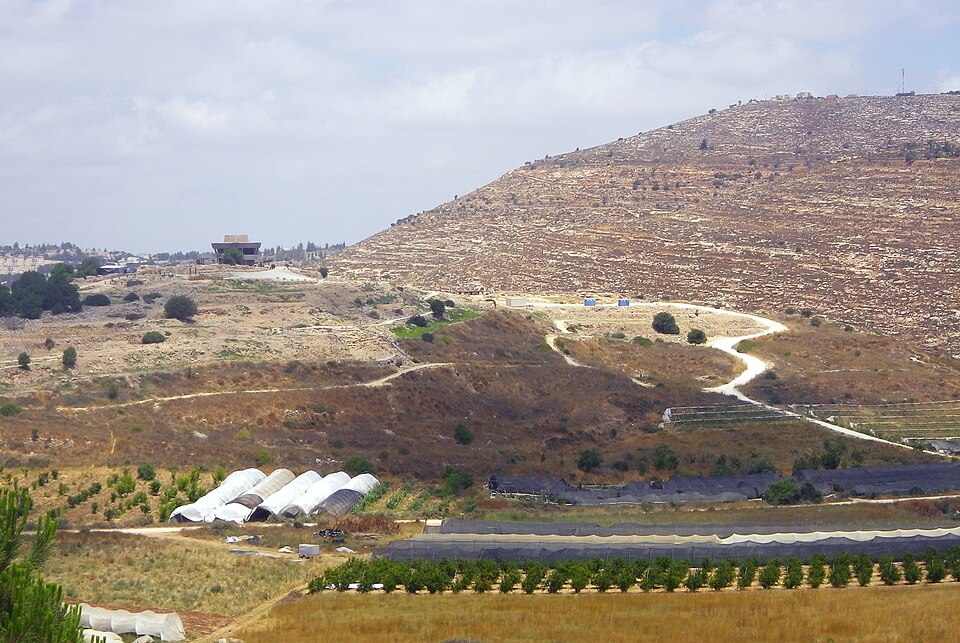
Later traditions associated several events with this date, elevating the holiday to a status equal to that of Yom Kippur. “Rabbi Shimon ben Gamliel said: There were no happier days for Israel than the fifteenth of Av and Yom Kippur, when the daughters of Jerusalem would go out in borrowed white garments, so as not to shame anyone who had none... And the daughters of Jerusalem would go out and dance in the vineyards. And what would they say? ‘Young man, lift up your eyes and see what you choose for yourself! Do not set your eyes on beauty; set your eyes on family. Charm is deceitful and beauty is vain, but a woman who fears the Lord is to be praised!’” (Ta'anit 26b).
Several events and miracles were attributed to this date. The first was the date on which the decree of death was lifted from the people who had come out of Egypt and did not want to enter the land after hearing the spies' report. The second event associated with the date concerns one of the most fascinating stories in the Bible: the “story of the daughters of Zelophehad,” which deals with inheritance law. To ensure that the daughters' inheritance of land would not pass into the hands of other tribes, it was agreed that they would marry only men from their own tribe. After the entry into the land and its division among the tribes, this rule was annulled on the fifteenth of Av.
The date of Tu B'Av is also bolstered by the story of the “Concubine at Gibeah,” and by other events that finally cemented the date's renown: one was the “Day of Breaking the Sickle,” when people stopped cutting trees and bringing the “wood offering” to the Temple; the other was the day the dead of Betar were brought to burial.
It is worth noting here that among other peoples, the grape harvest festival was accompanied by heavy drinking, which led to sexual debauchery. This is probably why people tend to regard it as a holiday of love.
And now, back to our story. The Bible says that on this date, the daughters of Benjamin should be told to hide in the vineyards: “Watch, and behold, if the daughters of Shiloh come out to dance in the dances, then come out of the vineyards and each of you seize a wife for himself from the daughters of Shiloh.” In other words, when you see the girls dancing in the vineyards, each man may seize a girl to be his wife.
That is how the Israelites “solved” the tribe's “reproduction problem” without breaking their oath: none of them gave his daughter to the men of Benjamin, and they also killed those who had not joined the battle.
“In those days there was no king in Israel; everyone did what was right in his own eyes.”
On second thought, despite everything, my beloved, I'll bring you flowers this year on Tu B'Av.

תגובות
עדיין אין תגובות.