
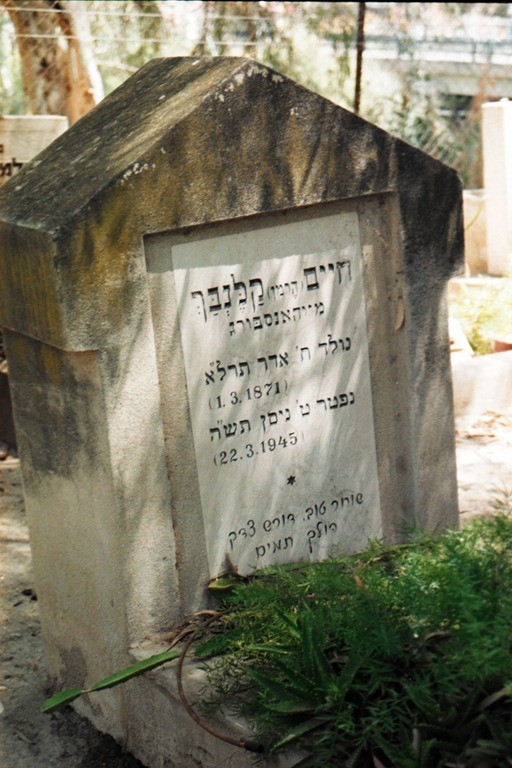
Just a few steps from A.D. Gordon's grave in Degania stands a modest headstone, behind which lies one of the most astonishing stories. Engraved on the stone are the words: "A seeker of good, a champion of justice, one who walks in innocence" - words that sum up a man whose friendship with Gandhi, India's leader, was a bond of body and soul.
Dr. Haim Herman Kallenbach
First Meeting in Johannesburg
They first met in Johannesburg in 1903. On one side stood Mohandas Karamchand Gandhi, and on the other, Dr. Herman Kallenbach, a successful architect, a flamboyant bachelor, and a member of the upper class. Gandhi wrote in his diary about their first encounter: "We met by chance. When I got to know him, I was astonished by his extravagance and his love of luxury, but even at our first meeting he began asking profound questions about religion... Our acquaintance soon developed into a very close friendship, to the point that we thought alike, and he became convinced that he should make the same changes in his life that I had made in mine."
The depth of the bond between the two is revealed in intimate letters Gandhi wrote to Kallenbach five years later, in which he confessed: "You have completely taken possession of my body. It is an intense slavery." Gandhi, who had chosen to leave his wife Kasturba (whom he married when he was 13 and she was 14), gave Kallenbach the secret nickname "the Lower House" and called himself "the Upper House." The two pledged each other "more and more love... such as the world has never seen," and Gandhi's influence was so great that "he made the 'Lower House' promise that he would no longer look at women with desire." These startling details were revealed in Joseph Lelyveld's book, "Great Soul" (the meaning of the title "Mahatma"). Lelyveld, a former editor of The New York Times and Pulitzer Prize winner, sketched a biography that goes beyond the familiar narrative.
Beyond the personal and moving dimension, scholars widely agree that Herman Kallenbach was the person closest to Gandhi and the most influential in shaping his character. In fact, the seeds of Gandhi's philosophy of "satyagraha" (nonviolent resistance) and the moral methods he later employed in India were sown and took root during his time in South Africa, alongside Kallenbach.
Their relationship did not end in Africa. The "second round" of their relationship took place in 1937 and 1939, when Kallenbach went on a fateful mission to Gandhi in India as part of the Zionist effort. This work made Kallenbach a unique living bridge - the person who connected the Jewish world with the Indian national movement more than anyone else. Gandhi, with all his complexities and values, cannot be understood without understanding his deep and inseparable bond with Herman Kallenbach.
Kallenbach and the Theosophical Circle
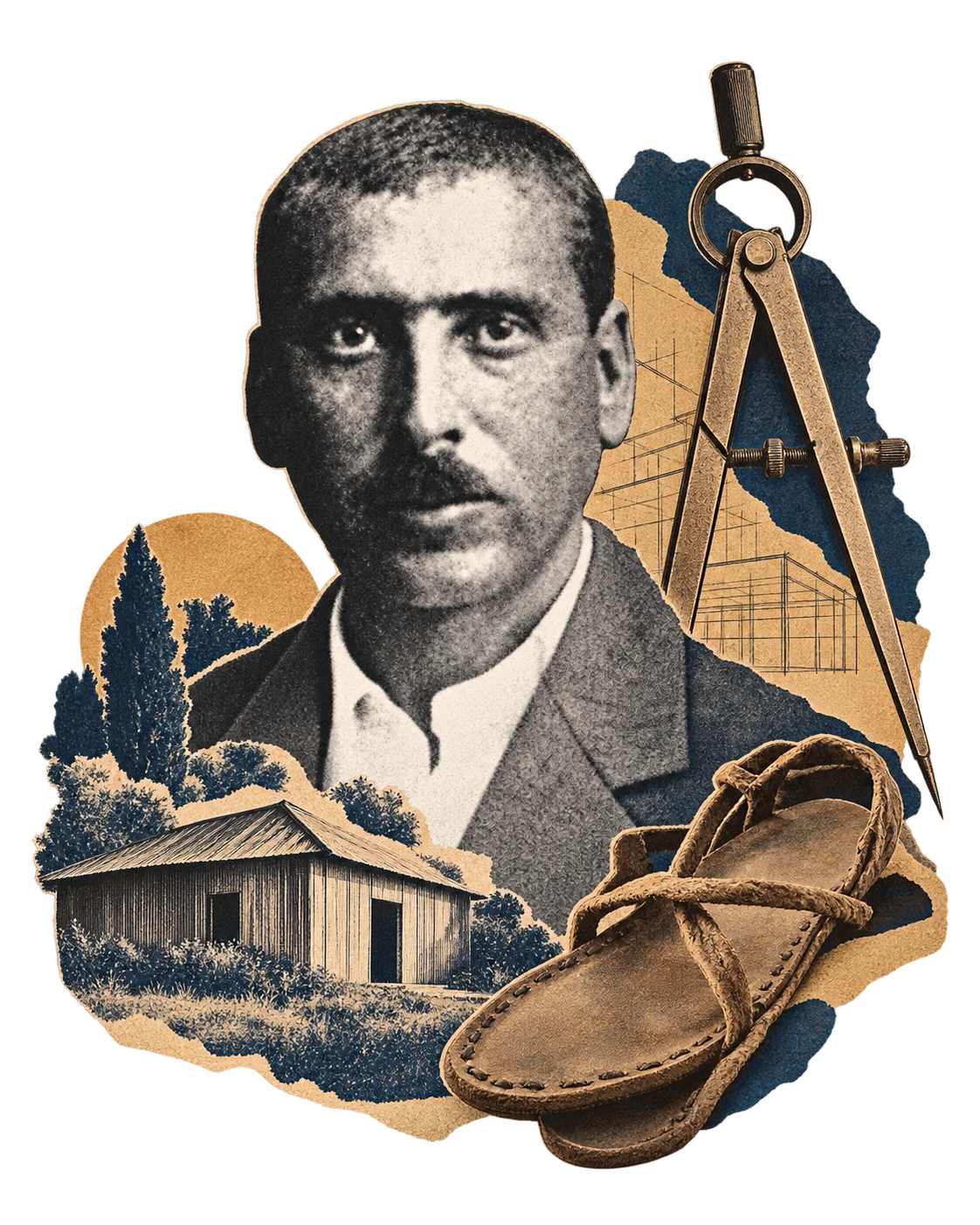
Herman Kallenbach's roots lie in the wanderings of the Jewish people. His family, fleeing antisemitism and oppression in tsarist Russia, emigrated from Lithuania to the German lands in search of security. Herman was born in 1871 in the village of Žemaičių Naumiestis in East Prussia, into a family of merchants seeking to assimilate into their surroundings. They changed their name from the Eastern European-sounding "Klemanovich" to the more German-sounding "Kallenbach." While his family ran a sawmill in a small village on the riverbank, Herman and his brothers were sent to the big cities to pursue higher education. Zionist ties to the Land of Israel were already alive in the family: his brother, Joseph Klemanovich, was the father-in-law of Michael Halperin, one of the key figures in the founding of the settlements of Yesud Hama'ala, Hadera, and Ness Ziona. After completing a doctorate in architecture and serving briefly in the army, Kallenbach decided in 1896 to emigrate to South Africa, following his uncles. There, his talent as an architect quickly made him a successful professional and a very wealthy man. The fateful connection began around a table in a vegetarian restaurant, where the successful architect and Mahatma Gandhi first met. On the face of it, it was hard to imagine two more different people.
The two came from completely opposite worlds, making their connection all the more fascinating. Kallenbach embodied Western hedonism: a tall, robust white man, a wealthy architect with "golden hands" and expensive tastes. He was a flamboyant, pleasure-loving bachelor, an avid fan of sports and theater and a lover of good food, a man who lived to satisfy his personal desires and spent a fortune doing so. Gandhi, by contrast, was a very different figure: an Asian lawyer given to extreme asceticism and strict frugality. He was deeply religious and moral, and although he had a family, he had already resolved to embrace complete sexual abstinence. While Kallenbach reveled in the luxuries of this world, Gandhi was immersed in an unceasing search for truth and devoted all his efforts to social reform, driven by a profound sense of public mission.
The deep bond between Mahatma Gandhi and Herman Kallenbach did not arise in a vacuum. It grew out of shared spiritual ground: the Theosophical Society. Founded in New York in 1875 by Helena Blavatsky, the society sought to unravel the mysteries of the universe and find the common source of all religions. The society's emblem, combining the Star of David, a cross, and other religious symbols, reflected precisely this idea: unity in diversity.
In 1899, Louis Ritch, Gandhi's Jewish friend, founded the society's South African branch (the "Johannesburg Lodge"). For the local Jewish community, the society offered something extraordinary in those days: complete equality. Its promise to accept others without distinction of religion, race, or sex appealed to a group of Jewish intellectuals seeking meaning beyond organized religion. Among the group's members were Henry Polak, Louis Ritch, Gabriel, and, of course, Kallenbach.
South Africa as a Spiritual Laboratory
For the Jewish members of the group, Gandhi was not merely a political leader, but a figure who embodied in his life the same Theosophical values of justice and equality. Their enthusiasm for his uncompromising path created a unique alliance: a group of ideologically committed Jews who helped lay the foundations for Gandhi's early struggles in South Africa, out of a deep belief in universal human brotherhood. Mohandas Karamchand Gandhi became known as one of the most influential leaders of the 20th century, chiefly for his quiet yet powerful resistance to the British Empire. At the heart of his teachings was satyagraha ("holding fast to truth"), a political philosophy that closely combined the Indian principle of ahimsa, which reveres the lives of all creatures and advocates absolute nonviolence. Gandhi's revolution did not take root in the busy streets of Delhi, but far away. After studying law in London, the young Gandhi returned to India and found that the local legal world offered him little opportunity. With no real alternative, he accepted an offer to work for an Indian businessman in South Africa, a decision that changed the course of history. The 20 years Gandhi spent in South Africa were the laboratory in which his worldview was refined. There, facing a community of about 100,000 Indians who lived as laborers without rights under oppressive colonial rule, Gandhi began using his extensive knowledge of British law to defend them. What began as technical legal representation soon became organized, nonviolent civil disobedience against discrimination and evil. Gandhi's intellectual mosaic was formed not only from Hindu sources, but also from surprising Western influences. During his studies in London, he encountered the writings of Leo Tolstoy, who advocated radical pacifism inspired by the teachings of Jesus and the principle of "turning the other cheek." Gandhi warmly embraced these ideas and incorporated them into the famous struggles he later led. The ideas were refined on a farm near Johannesburg, where he tried to put them into practice and formulate their principles. Herman Kallenbach paid for the land, the farm's construction, and the first year's living expenses. The farm was called "Tolstoy Farm." In essence, it resembled "Kinneret Farm" or "Upper Bitanya," a farm where people tried to realize the ideal of a simple, egalitarian life in the spirit of Tolstoy. In this home, Kallenbach and Gandhi formulated three principles: all work confers equal dignity on the person who does it; the good of the individual is identical to the good of the community; a life of labor is a worthy life.
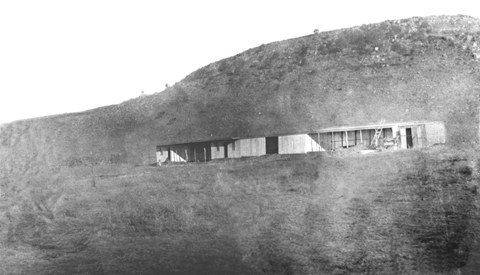
It was on this farm that Gandhi developed the doctrine of satyagraha (in Sanskrit, "the force of truth" or "holding fast to the truth"), based on the principle and practice of nonviolent resistance. Gandhi later applied this doctrine in his struggle for India's independence.
On July 4, 1910, Mahatma Gandhi, his two sons, and Herman Kallenbach set out on a journey that changed their lives. They moved to "Tolstoy Farm," a commune named after the Russian writer they revered, and turned it into a setting for a radical social and spiritual experiment. The years they spent there remained in their memories as a high point of spiritual energy and pure faith. The farm was founded on absolute equality. The ideal was clear: to live like poor peasants, without machines and without employing outside workers. Everything was done by their own hands, from farming and recycling to sewing identical work clothes. The kitchen was entirely vegetarian, and the Muslim and Christian residents willingly adopted the diet as part of their communal life. Kallenbach, Gandhi's right-hand man, did more than manage the farm: he went to a monastery to learn the art of making sandals and taught Gandhi the craft. Gandhi was so proud of this that, when he left South Africa, he gave a pair of sandals he had made himself to his bitter political opponent, General Smuts. One of the farm's high points was the alternative school Gandhi established. There he conducted daring educational experiments he never dared to repeat. At the end of exhausting workdays, Gandhi and Kallenbach would sit down to teach the children, with Gandhi sometimes collapsing from exhaustion and falling asleep in the middle of a lesson. For him, this was not merely teaching, but "a thoughtful religious experiment."
Life on the farm was tested every day against the principle of ahimsa (nonviolence). This led to heated discussions over whether it was permissible to kill the venomous snakes that roamed the farm (the answer was no). Gandhi and Kallenbach also upheld complete sexual abstinence (brahmacharya) and expected it of everyone. But reality brought difficult crises. When Gandhi's son Manilal had an affair with a married woman, Gandhi took the blame upon himself, fasted for a week, and made a public confession. Gandhi introduced communal bathing for boys and girls to encourage purity and innocence. When he learned that an incident of a sexual nature had occurred between the boys and girls, he trembled with shock. In an extraordinary response, he persuaded the girls to shave their heads as a "protective sign" that would purify their souls and the eyes of the sinners.
Time spent at Tolstoy Farm did not end with physical labor. As the sun set over South Africa, Gandhi, Kallenbach, and the residents would have profound conversations about God, simplicity, and meaning. As Gandhi later summed it up: "His attempt to find the religious root in each of our actions." The farm was not merely a place to live; it was an attempt to live a spiritual life amid the grind of daily life.
Parting and Reunion
In 1913, Tolstoy Farm began to empty out. While Gandhi was preparing to return to India, Kallenbach seriously considered immigrating to the Land of Israel as a pioneer. But fate had other plans: the Indian struggle in South Africa flared up again, and Kallenbach, as was his way, abandoned his personal plans to stand by his friend. The two were arrested, imprisoned, and released only after international protests. Upon their release, Kallenbach decided to leave everything behind - his fortune, his possessions, and his familiar world - and join Gandhi in India. The three of them (together with Kasturba, Gandhi's wife) sailed to England on their way to their final destination, but then World War I broke out and changed everything. Kallenbach, who held German citizenship, was immediately classified as an "enemy national" and arrested by the British. For three years he languished in detention, while Gandhi kept in touch with him through a regular weekly letter. When he was finally released in a prisoner exchange, Kallenbach was a broken man. He disappeared, wandered the world with nothing, and eventually returned to Germany and from there to South Africa, with great difficulty.
When Gandhi heard that his dear friend was alive and had returned to South Africa, he wrote to him excitedly: "For me, this is a resurrection. If I could, I would run to embrace you." But despite the warm words, distance and time took their toll. The connection dwindled to a letter or two a year, and it seemed that their best years were behind them.
The turning point came in 1936. Moshe Sharett (later Israel's prime minister) recognized Kallenbach's unique potential and asked him to secure Gandhi's support for Zionism. The mission seemed almost impossible: Indian politics at the time depended on unity with the Muslims, who supported the Arabs of the Land of Israel. Kallenbach, who had become an ardent Zionist in the wake of the rise of Nazism, took on the task. He traveled through the Land of Israel, toured kibbutzim, and recalled sadly how much they resembled Tolstoy Farm, then continued on to India. At four in the morning, Kallenbach entered Gandhi's room and found him deep in prayer, silent as a statue. When the Indian leader opened his eyes, he went over to Kallenbach, embraced him, and said: "How many years has it been? Your hair has turned white." In an instant, 23 years of separation melted away.
Kallenbach stayed by Gandhi's side and tried to persuade him to recognize the Jews' right to the Land of Israel. He also tried, unsuccessfully, to persuade Gandhi to depart from the path of "ahimsa" (nonviolence) in order to fight Nazism and its race laws. Despite their renewed closeness, Gandhi remained firm in his position and did not issue an official statement in support of the Zionist movement.
Kallenbach's final journey exacted a heavy personal toll. He contracted malaria during his visit to India and died in South Africa in 1945. Faithful to his Zionist vision and the communal values he had absorbed at Tolstoy Farm, Kallenbach was laid to rest in the cemetery of the "mother of the kvutzot," Degania Alef. Pictured: Gandhi, Herman Kallenbach, and Sonia Schlesin (Gandhi's secretary), Johannesburg, 1913.
Those who wish to learn more about this fascinating subject are encouraged to read Shimon Lev's book "Nehirin lanu shvilin de-Hodu."
תגובות
עדיין אין תגובות.