
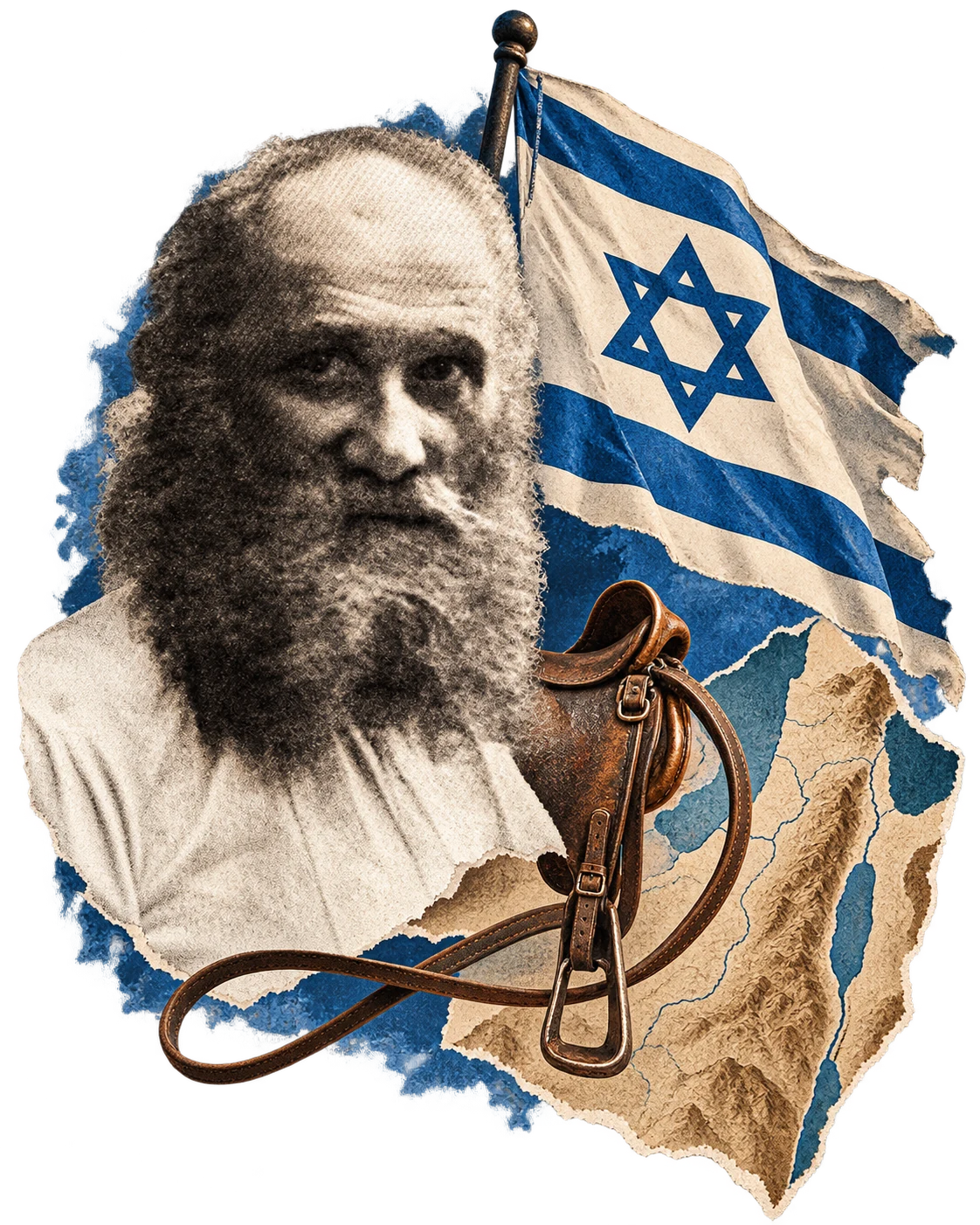
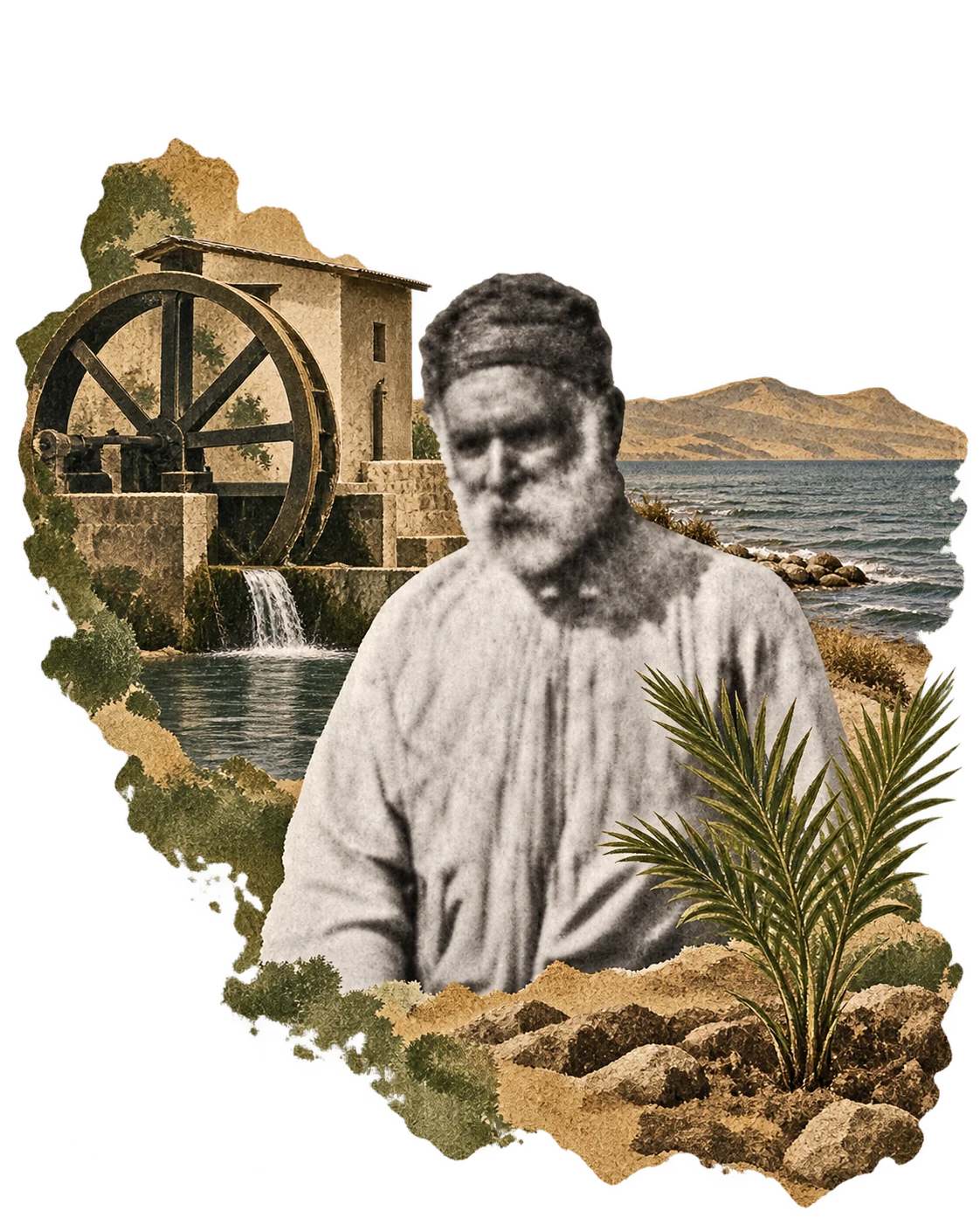
He was one of the founders of Ness Ziona, tried to establish a Jewish military force, and was the first to raise the Israeli flag.
He was one of the founders of Ness Ziona, tried to establish a Jewish military force, and was the first to raise the Israeli flag.
His Childhood in Vilna
Michael Halpern was born in 1860 in the city of Vilna, Lithuania, known for its large concentration of Jewish intellectuals. He grew up in a very wealthy home, preached equality, and tried to lead a revolution in which Torah scholars would become fighters.
His mother, Frida Meirovna, was the daughter of the biblical commentator Rabbi Meir Leibush Weiser (Malbim), considered one of the most important rabbis of his time. His father, Rabbi Elijah Harif Halpern, possessed a family tree tracing his lineage back to King David. His father died before Michael turned 14 and left him a large fortune. His mother moved to Smolensk, which lay outside the Pale of Settlement in Russia, and married a wealthy Jew there named Zelikin.
In Vilna, Michael studied at a yeshiva, but religious studies did not appeal to him. When the family moved to Smolensk, he attended the Russian state gymnasium, where he became involved with a Russian revolutionary movement called Narodnaya Volya, which, among other things, was responsible for the assassination of Tsar Alexander II in 1881. In the wake of the tsar's assassination, pogroms broke out against defenseless Jews. Jews were robbed, raped, and killed, with no ability to resist. Throughout this time, not only did the authorities fail to stop the rioters, but in many cases they did not intervene at all.
Michael found his calling in this movement: turning weak Jews into a fighting force. He traveled from town to town, speaking passionately and fervently, trying to persuade young people to organize into an armed militia that could defend itself. Community leaders feared a violent backlash from the authorities and turned their backs on him. Michael tried to cry out that the time had come for a "revolt of the Maccabees and Bar Kokhba," not just prayers and supplications, but his voice was barely heard.
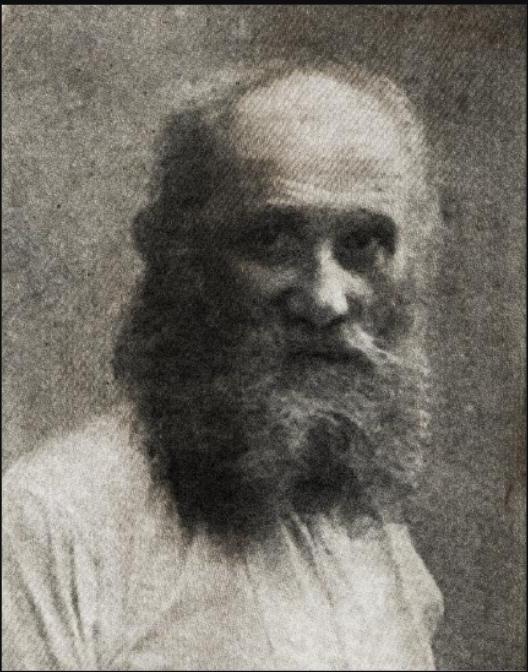
Ness Ziona and the Struggle for Defense
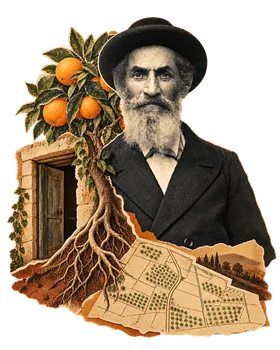
Michael arrived in the Land of Israel in 1885 and used money from his father's inheritance to help purchase the lands of Yesud HaMa'ala and Ness Ziona from the Ottomans. He tried in vain to recruit groups of young Jews in the country to establish a Jewish defense organization called "Mahane Yehuda." He did, however, establish a workers' association and managed to fall out with Baron Rothschild.
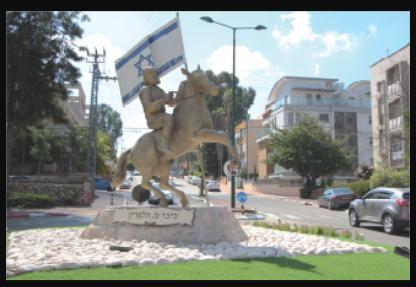
In 1890, Michael Halpern bought 170 dunams of land from Reuven Lehrer in Ness Ziona, with the aim of establishing the country's first "colony of day laborers" there and building his home and a center for his work in the spirit of his socialist principles. In 1891, the colony celebrated the laying of the cornerstone for the Halpern home and the workers' colony. Amid all the excitement and enthusiasm, Michael Halpern burst into the center of the celebration, leaped over the bonfire on his horse, drew his sword, struck his right hand, and swore: "If I forget you, Jerusalem, let my right hand forget." As blood streamed from him and the crowd cheered, he raised a white flag with two blue stripes running along it, a blue Star of David in its center, and the words "Ness Ziona" embroidered in gold letters on the blue stripe. For the first time after two thousand years of exile, a Hebrew flag was raised to the cheers of the crowd: "Long live the Hebrew flag!" Some claim that this flag was adopted as the flag of the State of Israel.
In 1903, following the Kishinev pogrom and the many pogroms against Jews in Eastern Europe, Halpern traveled through southwestern Russia, urging young Jews to immigrate to the Land of Israel and establish self-defense organizations. Halpern's principles laid the groundwork for the founding of the Bar-Giora and Hashomer organizations several years later. Alexander Zaid, one of the founders of Hashomer, would later say that he had dreamed of a Hebrew fighting force back in the Diaspora because "Michael Halpern lit this dream in my soul. In the Land of Israel, he was the only one who understood me. The others - both in the Diaspora and here - mocked me and called me a deluded dreamer."
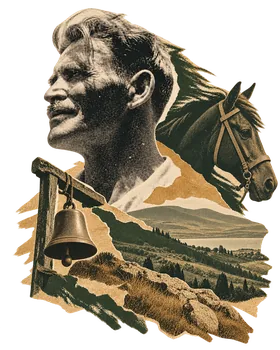
Halpern and several other young men took a long journey through Jerusalem and Transjordan to get to know the country. Like many of his generation, Halpern was impressed by the Bedouin tribes he encountered there. Shortly after arriving in the country, he formed a close friendship with one of the most important Bedouin sheikhs of Transjordan, who gave him a noble colt as a token of friendship. According to the story, at their first chance meeting at the inn at Sha'ar HaGai (in Arabic: Bab al-Wad), on the road to Jerusalem, Halpern told him: "Where the sons of free Arabia now gallop on their noble horses, our forefathers once galloped. And who knows whether the sheikh himself is not descended from one of the twelve tribes of Israel, many of whose people remained here even after we were exiled from our land."
Avraham Krinitzi related that during a trip to Jerusalem, they also considered whether they might find Bedouin women to marry and start families with, in order to have children in keeping with the idea of the "new Jew." In the end, however, they abandoned the plan for lack of money. The idea was to bring together a Jewish mind with Bedouin courage and strength.
In 1911, a circus came to Jaffa whose main attraction was a cage containing a lion. The circus manager challenged the audience, asking who among them was willing to enter the cage with the lion. According to the story, the Arab audience burst out laughing when Michael Halpern stepped forward. Halpern entered the cage, looked the lion in the eye, and began singing "Di Shvue," the anthem of the Poalei Zion workers' movement. The song would prove to foreshadow what was to come. The event inspired the title of Yehoash Biber's book about Michael Halpern: "The Hero from the Lions' Cage."
Halpern had excellent relations with the Ottomans. As early as 1905, he had joined forces with the leaders of the Young Turks, and after the revolution in Turkey in 1908, they awarded him an honorary rank.
Halpern traveled to Ethiopia to promote the idea of reviving a Hebrew state in the ancestral homeland among Beta Israel, and to recruit them to serve in a Jewish liberation army for the Land of Israel. Some time later, he was arrested by the Abyssinian militia, accused of espionage, and deported from Ethiopia only after the British delegation in Addis Ababa intervened.
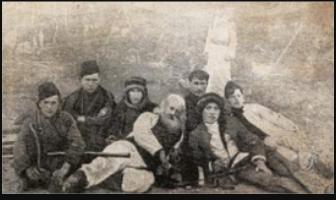
Hardship, NILI and the End
When World War I broke out in the summer of 1914, postal disruptions and bank closures brought an end to the allowance he had received from the guardians his mother had appointed to manage what remained of his inheritance. In addition, after the Bolshevik Communists came to power in November 1917, his considerable property in Russia was confiscated. During the last five years of his life, Halpern was left with almost no means of support, and guard work became his main source of income. While working as a guard at the Herzliya Gymnasium in Tel Aviv, he was shot in the chest and seriously wounded, but recovered and returned to his post.
Halpern stood by members of the NILI underground during its exposure in Tishrei 5677 (September 1917), in opposition to the position of most of the Jewish community at the time. He gave Yosef Lishansky shelter in his shack when Lishansky fled to Metula to escape the Turkish secret police and members of Hashomer, who were pursuing him and had even tried to assassinate him.
Toward the end of 1919, during the Tel Hai events, Halpern arrived in the Upper Galilee. He died in the hospital in Safed from jaundice and malaria, which he had suffered from for many years. While he was being treated in the hospital, his condition worsened further after the nurse caring for him became confused and gave him the wrong medicine. Even so, he insisted that the hospital director not fire her because of it.
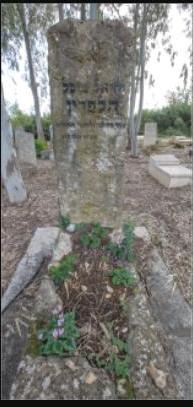
He was buried in the eucalyptus grove named for Borochov in the colony of Mahanaim. In 1920, during the period of calamities preceding the fall of Tel Hai and Kfar Giladi, Mahanaim was abandoned by its residents. The wooden marker placed on Halpern's grave was removed to prevent rioters from desecrating the grave. Only in 1941 did members of the Labor Archive of the General Federation of Labor erect a gravestone over his grave, after collecting testimony from longtime residents about the grave's location.
After her father's death, Michael Halpern's daughter, Shulamit (Mitta), emigrated to France, where she married a French Catholic. Their son, René (Léon) Avar, became a film actor and screenwriter. He wrote the screenplay for the film "A Taxi to Tobruk." René was Michael Halpern's only grandson to live to an old age.
His son Aryeh Halpern resembled his father Michael: he was a revolutionary in spirit and an outstanding athlete. He was interested in sports, debates about the problems of the world, and delicate handicrafts. Aryeh Halpern was killed while serving in the Turkish army on the hills of Gaza overlooking what is now Kibbutz Be'eri. The location of Aryeh Halpern's grave is unknown, and in fact very little is known about his death. The press wrote: "Halpern's son had to fall at his post. Could you imagine Halpern's son being any different? Halpern's son fell in the field, in the trench, because he was as loyal as his father."
Michael's second son, Jeremiah, was a member of the Haganah and Betar, and one of the founders of Hebrew seafaring. Jerusalem's Rav HaHovel Street is named after him.
תגובות
עדיין אין תגובות.