
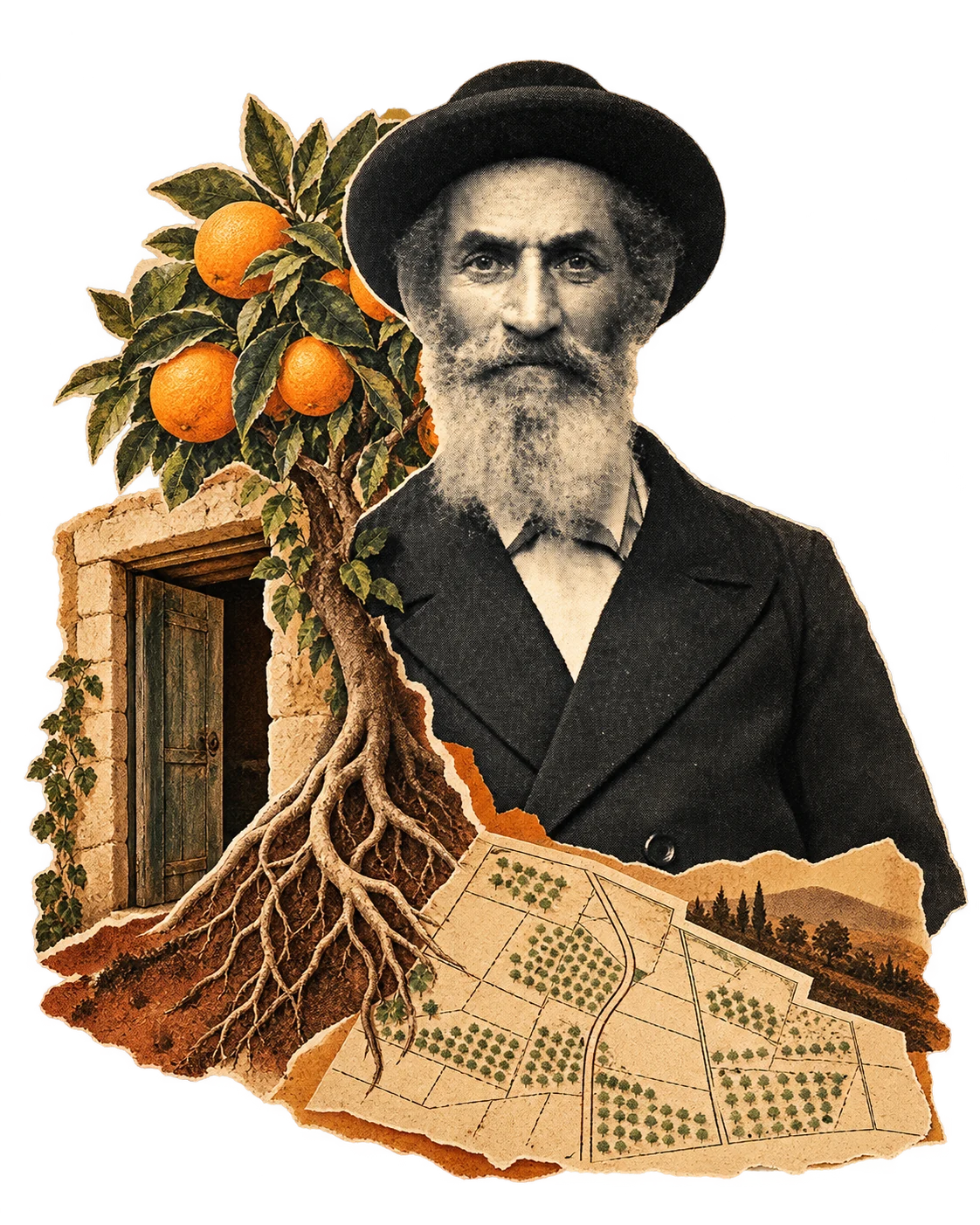
The man who founded a city.
The Man Who Founded a City
The man who founded a city.
During the First Aliyah, there were also individuals and families who settled alongside existing communities and in remote places. Among them were the Lerer family and its head, Reuven, who established an estate that would eventually become a city.
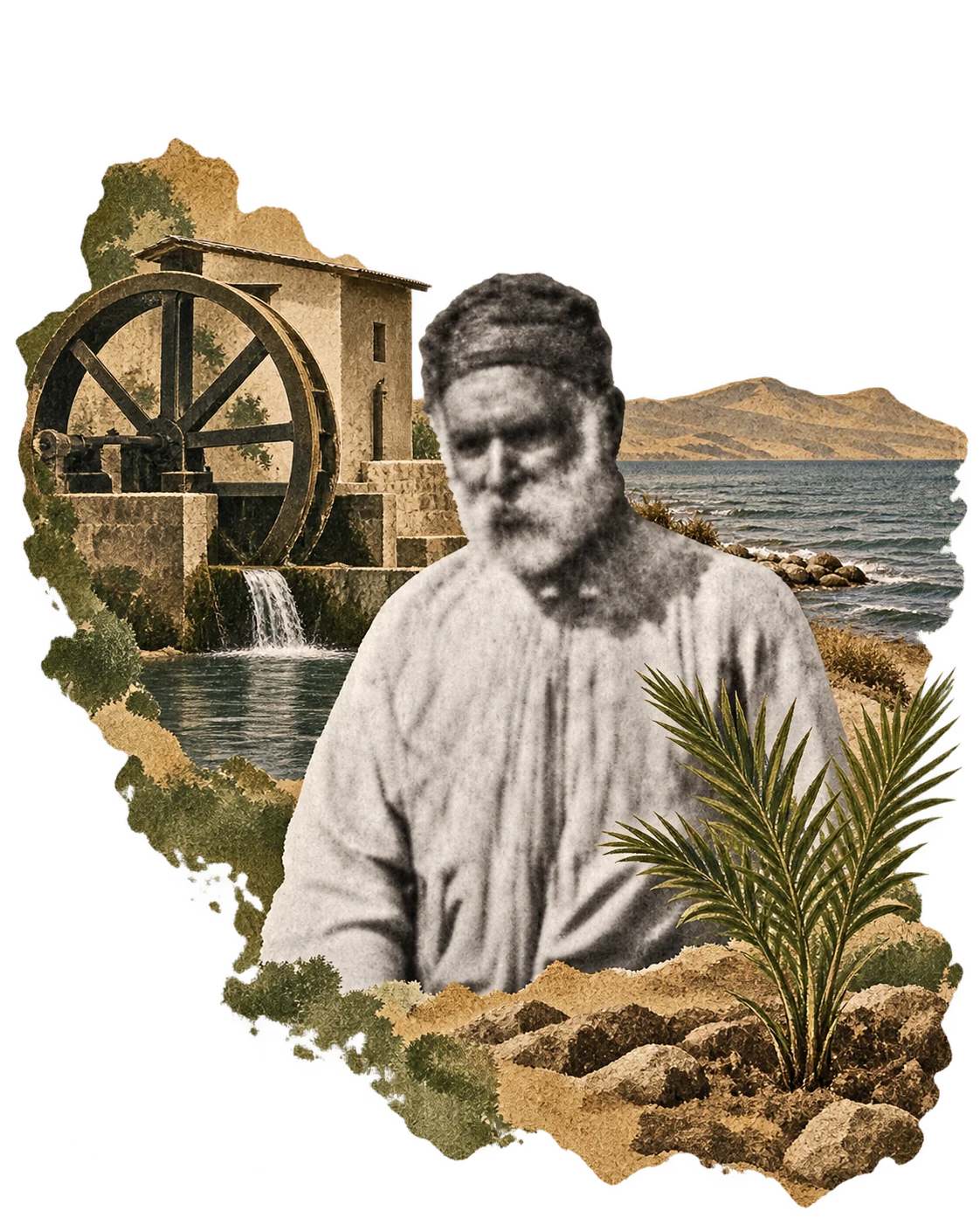
Reuven Lerer (Pachornik) was born in 1832 to a Hasidic Jewish family from Galicia. When he was a child, and the lives of Jews were in danger, his parents sent him to live with a German family named Lerer to ensure his safety. In gratitude, he adopted their name.
Lerer was extremely hardworking, and within a short time he had acquired a large estate in Odessa and was managing it successfully. He became a wealthy landowner in tsarist Russia: a Hasidic Jew with a beard and sidelocks, a Chabad supporter and a supporter of Hovevei Zion.
Reuven's Estate in Wadi Hanin
By the time he met Gustav Reisler, Lerer was married to Feiga (Rebecca) and had children. Reisler was a German who had settled in the Holy Land, in a malaria-ridden, swampy area called Wadi Hanin (Valley of Roses), but had failed in his efforts to profit from his estate. He wanted to get rid of the failing property, so he traveled to Odessa, where he met Reuven Lerer. Reisler told him about the estate, which was "near Jerusalem," and Lerer was enthusiastic. He later described their meeting: "Suddenly I felt as though an invisible hand were holding my head and taking me to the land of my dreams, to Jerusalem. I had no doubt what I had to do." Right then and there, he signed an exchange agreement: his fine, large estate in Russia in return for the small, failing estate in Wadi Hanin. It later turned out to be near Gedera and Rehovot, not Jerusalem.
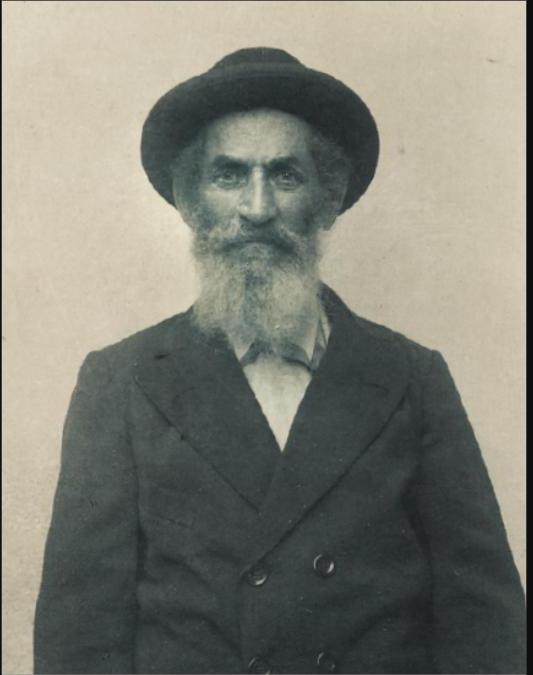
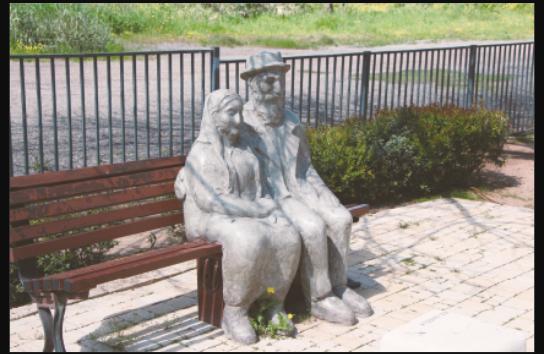
Lerer's wife, Feiga, was busy caring for her lonely father and refused to move to the Land of Israel. So Lerer came with his son Moshe and found a neglected estate, where the only resident was Reisler's Sudanese servant.
Reuven's dream still burned within him, and, like Don Quixote, he clung to it and resolved to turn the miserable estate into a flourishing one. In 1882, Reuven, his son Moshe, and the Sudanese servant renovated the house. Reuven then returned to Russia to bring his wife, Feiga. She still refused to leave her father and feared putting the babies at risk. Reuven took her to Rabbi Shlomo Zalman Schneersohn and asked which of the two commandments was more important: honoring one's father or settling the Land of Israel. The rabbi ruled that both commandments were equally important, but gave them his blessing for the journey. Reuven bought tools, seeds, livestock, and everything else the estate needed, and the whole party traveled back to Wadi Hanin to begin work. Unfortunately, Lerer soon lost all his money and had to borrow funds from Baron Rothschild.
For four years, the Lerer family lived alone, isolated on their estate and surrounded by Arab communities, without a doctor, supplies, or help. They were cut off in winter and suffered from malaria. Even so, they continued renovating and planted a new citrus grove. In this way, Reuven Lerer became the first Jewish citrus grower in the Judean colonies.
In the early years of their settlement, the Lerer family hosted the Blandesfeld family in their home. The Blandesfelds were German Templers from Bethlehem who practiced migratory beekeeping. Seeing how poor the Lerers were, the Templers offered to teach them the craft. Reuven and his son Moshe learned to keep bees in modern wooden hives designed for a nomadic style of beekeeping. The hives could be dismantled and easily transported from place to place on pack animals, so they could be brought near the flowers that were in season and best suited to honey production. For the first time, Jews took up beekeeping.
From the Estate to the Colony
The Boxer family joined the Lerers: Reuven's sister Sarah and her husband, Aharon Boxer. Reuven gave them a house to live in. The Lerer family was religious, and Reuven wanted to establish a cheder for his children and pray with a minyan. In direct defiance of Ottoman law and at considerable risk, he posted a public notice at the port of Jaffa inviting Jews to buy plots of land in Reuven's Estate at a lower price than elsewhere. One by one, the members of the "first minyan" gathered between 1887 and 1891: Golda Miloslavsky, Shlomo Yaffe, Avraham Yalovsky, Aharon Eisenberg, Yosef Feldman, Zvi Hochberg, Shmuel Hochberg, Shlomo Pachornik, and Michael Halpern. At first they lived on Reuven's estate, in the cellar and in a stable converted into living quarters. A tourist who visited in 1889 described the estate this way: "Wadi Hanin... the colony there is small... its farmers number only eleven."
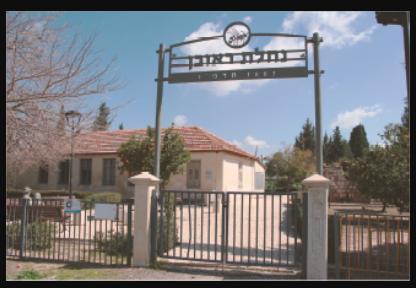
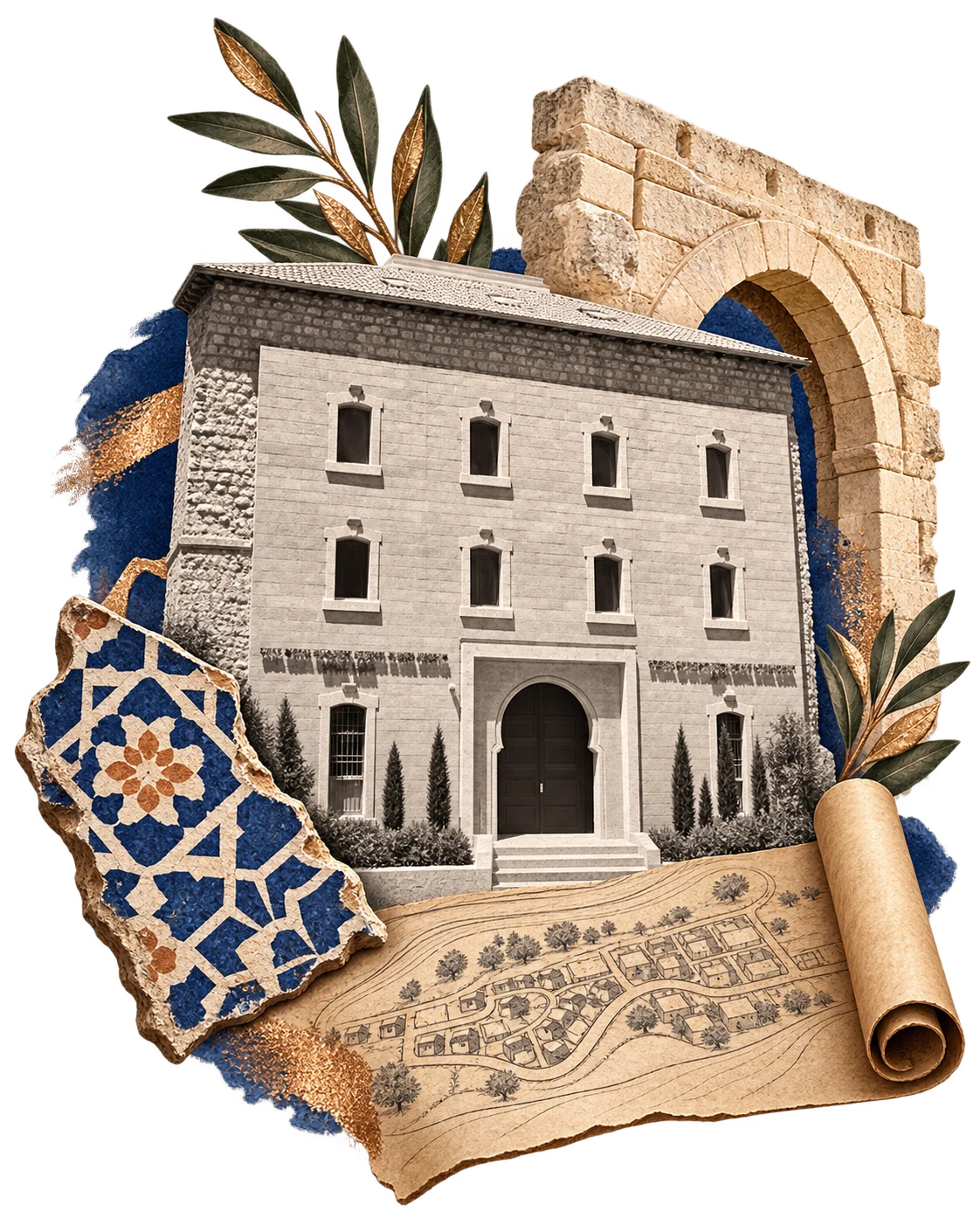
In 1890, the Eisenberg and Hochberg families decided to leave Lerer's estate and build the "Common House" on the road leading to nearby Nabi Rubin. The building was a stone house with four rooms, one of which was set aside for public use: it served as a synagogue, school, and home for the colony committee. In the courtyard stood an ancient mulberry tree, beneath which the colonists gathered.
The "Common House" became a meeting place for the leaders of the Jewish community in those years, and they called it "Free Switzerland." Because of the freedom and private initiative that shaped life there, people aspiring to realize the dream of independent, self-reliant settlement came to the house. They discussed important plans and settlement initiatives there, and it soon became the unofficial center of the Jewish community in the Land of Israel.
Yehoshua Barzilai, an activist in Hovevei Zion who was sent to the Land of Israel in the 1880s, wrote in the newspaper HaShiloah: "I found no other place as spiritually pure as Wadi Hanin... In those days, nights were filled with gatherings and 'meetings,' where we stayed awake all night... Many important ideas that later took shape were the result of these gatherings."
The founding of Rehovot and Yehoshua Hankin's purchase of land in Hadera were decided upon at the "Common House." The fund called Kerem Hisachon (Savings Vineyard) was also established there. Aharon Eisenberg argued that a people could build its homeland only through saving, and advocated saving by buying land in the present so that it could serve as security and support in old age. He bought 300 dunams from Reuven Lerer on credit. It was also there that the "Wadi Hanin autonomy" was established, lasting about ten years. This autonomy meant administrative independence from Turkish rule. Accordingly, they drew up the "Book of Testimony and Property" to record assets, replacing the government land registry offices.
In 1890, Michael Halpern bought 170 dunams of Reuven Lerer's land with the aim of establishing the country's first "settlement of day laborers," where he would build his home and a center for activities inspired by his socialist principles. It was a home and center known as the "House of the Hovevei Zion Proletariat," which included a "disabled veterans' wing" to rehabilitate injured fighters from the Camp of Judah that he had recruited. The camp had cavalry units to defend settlement in the historic homeland of the Jewish people. All this took place under a hostile Turkish regime that persecuted the new settlement in the country.
The central purpose of establishing the "workers' colony" was set out in its bylaws: "If a worker becomes unable to work as a hired laborer to support himself because of poor health or old age, he will join the workers' colony, receive a small house and a plot of vineyard there, and work to support himself until his dying day." This was, in effect, an original idea for a pension system.
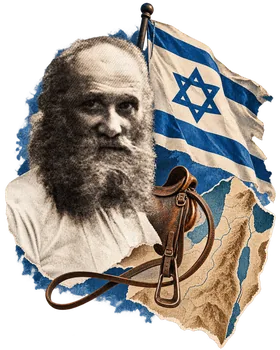
On the 21st of Tevet, 5651 (1891), the residents celebrated the "triple celebration": the dedication of the "Common House," the circumcision of Ben Carmi, Aharon Eisenberg's firstborn son, and the laying of the foundation stone for Halpern's house and the "workers' colony." Amid the excitement and enthusiasm, Michael Halpern rode into the center of the celebration like a gallant knight, leaped over the bonfire with his horse, drew his sword, struck his right hand, and swore: "If I forget you, Jerusalem, may my right hand forget its skill." As blood streamed from him and the crowd cheered, he raised a white flag with two blue stripes and a blue Star of David in the center. The words "Nes Ziona" were embroidered in gold letters on the blue stripe. For the first time in two thousand years of exile, a Hebrew flag was raised to the crowd's cheers: "Long live the Hebrew flag!"
The flag was later adopted by the Zionist Congress, which convened in Basel in 1897, as the national flag of the Zionist Organization and the Jewish community in the Land of Israel. It was later adopted as the national flag of the State of Israel. The words "Nes Ziona" fell away from the flag and became the name of the colony where it had been raised. The name comes from Jeremiah 4:6: "Raise a banner toward Zion! Take refuge, do not delay!"
The Birth of Ness Ziona
In 1902-1903, the leaders of the "Association of Agricultural Workers in the Land of Israel" bought 840 dunams. Some of the land was purchased by workers from Wadi Hanin who decided to establish the "Tel Aviv Association." The association adopted the principle of cooperation and aimed to build the houses on the street together, base the cultivation of their plots on mutual assistance, and grow tobacco collectively. In effect, this was the first organization in the country founded on the principles of the moshav.
The purchase of the land on Tel Aviv Street and Love Hill connected the two colonies, Wadi Hanin in the south and Nes Ziona in the north, which united under the name Nes Ziona. The workers, who had become farmers, built their homes on Tel Aviv Street, and in 1907 they built the colony's first public building. Thus Nes Ziona was founded. What began as a group of pioneers who endured every hardship together, led by one stubborn man who set the entire group in motion, became a city over the years.
תגובות
עדיין אין תגובות.