
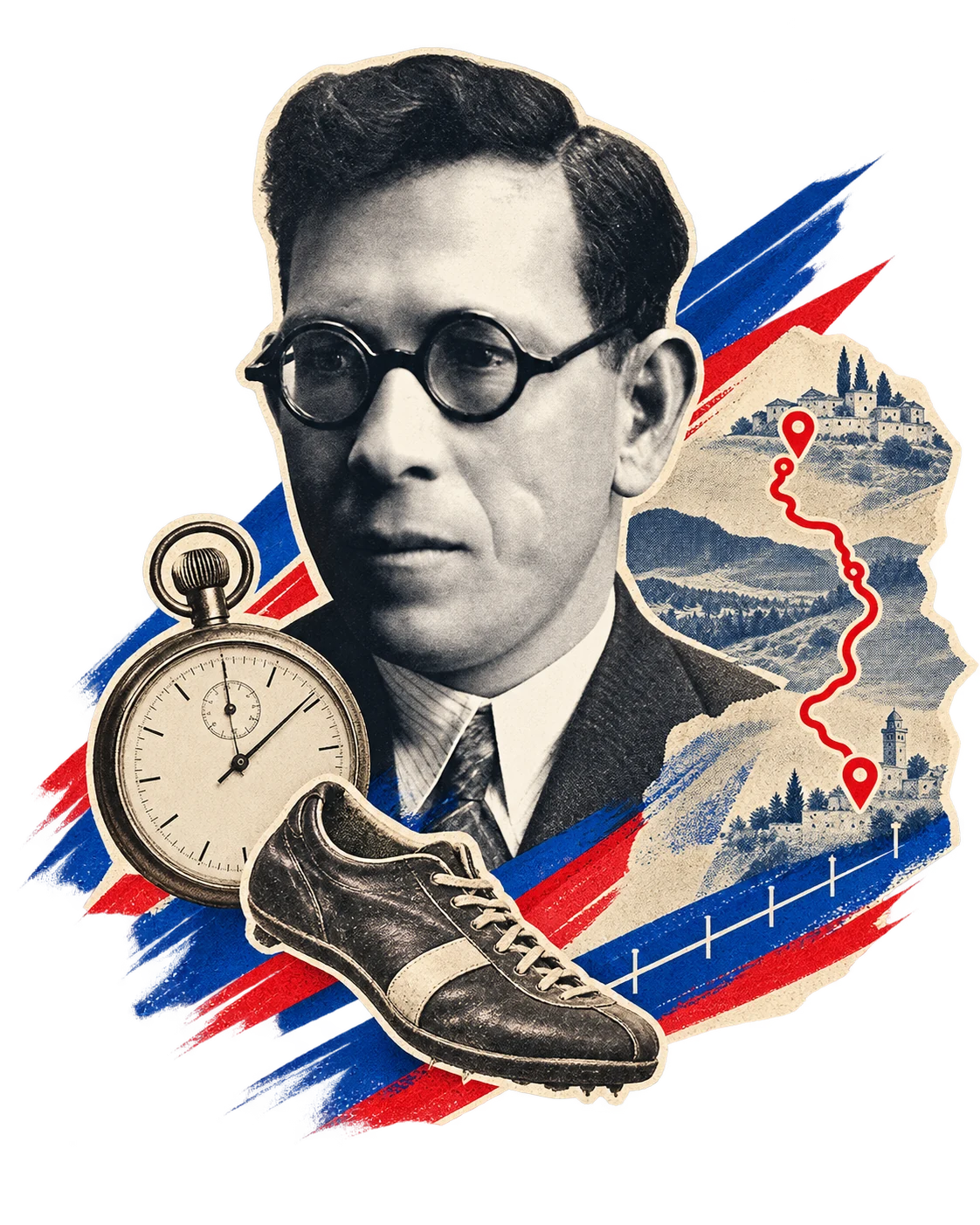
Many years before Pheidippides ran from the city of Marathon to Athens, a run that gave the modern marathon its name, a similar run over the same distance took place right here in the Land of Israel. Who was the runner, in which battle did he run, and where was he headed... This is the story of...
Basel and the Dream of Jewish Athletes
The warm August nights of 1898 at the Basel Casino were lively and exciting, but not because of the slot machines. On those nights, the Second Zionist Congress was held at the casino. The congress was presided over by Benjamin Theodor Ze'ev Herzl, and other leaders, including Menachem Ussishkin, Max Nordau, Nachman Syrkin, and Yehiel Tschlenow, also spoke. Chaim Weizmann attended this congress as well.
Statements such as "Nothing of this kind has happened in the whole world for two thousand years," and that the Jews' situation "has not improved anywhere. In some places, it has even worsened," filled the room, voiced by various speakers. At this congress, it was mentioned for the first time that there was an Arab population in the Land of Israel, and it was made clear that "there is no doubt that we will succeed in living with them in peace."
Max Nordau's speech was not only about Jewish settlement in the Diaspora and the fate of Jews around the world; for the first time, it also addressed the athletic side of the Jewish people. This is what he said: "The history of our people tells us that in former times there existed a strong, muscular Jewry... But this is not true! Others have weakened our bodies, and with great success. They turned the medieval ghetto Jewry into a poor and wretched people, frail and helpless... In the narrow streets of the ghetto, we forgot to stretch our limbs and straighten our backs... Now the burden has been lifted. Our will is free. No one will prevent us from improving our physical health. We will renew our youth in old age: we will develop broad chests, strong limbs, a courageous gaze - we will become men of valor... What we lack is muscle, and we can develop it with the help of physical exercise... We must restore our health not only in body, but in spirit as well... The more success Jews achieve in sport, the stronger their self-confidence will grow... Long live sport! May Jewish sports associations flourish and thrive!"
When Yosef Yekutieli turned 13, he found himself reading a booklet about the fifth Olympic Games, held in Stockholm in 1912. A number of Jewish athletes took part in those Games, representing their countries and even winning medals. The Portuguese athlete Francisco Lázaro died during the marathon, and Yekutieli thought of Pheidippides, known as the first marathon runner, who died in 490 BCE after running 42.2 kilometers from Marathon to Athens to announce the Greeks' victory over the Persians. Even then, Yosef thought it would be right to hold competitions for Jewish athletes from around the world.
A Zionist Home and Aliyah
Yosef Yekutieli was born in 1897, about a year before the Second Zionist Congress, in what is now Belarus. His parents, Baruch and Miriam, were Zionists. Yosef recorded the story of his life in his book From Exile to Redemption: "Father was 'traditional,' but not a fanatical Jew. He saw religion as the source of Zionism. Everything he did as a religious man was Zionism. Every Shabbat, he would bring someone home from the synagogue as a guest for the Sabbath. On Shabbat afternoons, we would all sit together, Father, Mother, and the three sons, listen to Father speak about the Land of Israel, and sing songs of Zion in Hebrew ('Oy, How I Am Veiled,' 'By the Wayside,' 'There, Among the Cedars,' and others). That is how we were raised from childhood in a Hebrew and national spirit. Our mother, Yonah Miriam, wholeheartedly helped Father with his Zionist work. She ran the library, cataloged the Hebrew and Russian books, ordered newspapers, and exchanged books for readers."
At the age of 12, Yosef immigrated to the Land of Israel: "It was decided that the first to travel to the Land of Israel would be Mother, my brother Haviv, and I. We would set out in Sivan 5669, and Father, our brother Israel, and Grandfather Eliezer Yehuda would arrive in the Land of Israel a year later. I had my own concerns about the journey, too. At the beginning of that year (1909), I turned 12, and it was decided, on Grandfather's advice, to bring forward the date of my bar mitzvah so that the whole family could share in the celebration. One Shabbat, Grandfather took me to the Hasidic study hall, where I was honored with an aliyah to the Torah."
Even as a child, Yosef knew the story of the Battle of Ebenezer between the Israelites and the Philistines, which took place in the middle of the 11th century BCE, about 600 years before the Battle of Marathon. The battle was fought in the area of today's Rosh HaAyin, in one of the most important strategic locations in the Land of Israel at the time, between the sources of the Yarkon River and the foothills of the Samarian mountains, where the ancient Via Maris passed. Today, Ebenezer is identified as being adjacent to Rosh HaAyin's northern border.
At that time, the Land of Israel was a passageway between Egypt in the south and Mesopotamia in the north. The Via Maris passed through the narrow gap between the Yarkon sources and the mountain. This passage was of great strategic importance, since whoever controlled the area could close it off. This posed an obstacle to anyone seeking to travel from south to north: the Samarian mountains east of Aphek impeded movement, while the fiercely flowing Yarkon, from its sources at what is now Aphek Park to the sea, was a natural barrier that could not be crossed. Aphek Pass, today known as Kesem Interchange, is an interchange where two major traffic routes meet: Highway 6, running north-south, and Highway 5, running west-east.
Chapter 4 of the First Book of Samuel begins: "And the word of Samuel came to all Israel. Israel went out to meet the Philistines in battle, and they encamped beside Ebenezer, while the Philistines encamped at Aphek." At that time Samuel was the leader, and Eli was the high priest at the Tabernacle in Shiloh. Samuel gathered the tribes to fight at Ebenezer, and the distance between the camps was several hundred meters, about the width of Aphek Pass.
Yosef Yekutieli developed his love of physical education in the Land of Israel: "Our school was in Neve Shalom, on the seashore. During breaks, we would swim in the sea, and sometimes some of the teachers joined us. Our teacher of Talmud was the writer Alexander Ziskind Rabinovitz. He was a good swimmer and sometimes went swimming with us during a shortened Talmud lesson. Then he would tell us, 'You swim better in the Mediterranean than in the Sea of Talmud.' And indeed, we enjoyed swimming in the sea much more than Talmudic debates."
From Physical Education to the Turkish Army
When World War I broke out, Yosef enlisted in the Turkish army and was sent to Mujahideen headquarters: "A few days after reporting to Mujahideen headquarters, I was summoned to the mutasarrif of Nablus." Yosef was appointed a physical education teacher at Nablus's largest school: "When Omar Effendi arrived, the mutasarrif introduced me to him, and once we were seated before him, he read aloud the order he had received from the commander of the 8th Brigade: 'By order of Ahmed Jemal Pasha, Minister of the Navy and commander-in-chief of the 4th Army, the bearer of this letter is to be appointed a physical education teacher at one of the Muslim public schools in Nablus.' The mutasarrif then asked the director of education to say which school he proposed appointing me to. The director of education named five schools, and among them suggested that I work at Al-Khan School, because it was the largest in the city, with seven classes and about 250 students."
After they had made their preparations, the battle began, and the Israelite army suffered a crushing defeat, losing 4,000 fighters, as it is written: "...The battle raged, and Israel was defeated before the Philistines; they struck down about four thousand men in the field..."
The elders of Israel decided to bring God into this important battle and brought the Ark of the Covenant from the Tabernacle at Shiloh. They knew that the Ark's presence would inspire the Israelite fighters and strike fear into the Philistines. Eli the priest, who was 98 years old, sent his corrupt sons Hophni and Phinehas with the Ark: "...When the Ark of the Covenant of the Lord came into the camp, all Israel raised a great shout, and the earth resounded."
When World War I ended, Yosef returned to his dream of founding a Jewish Olympics. In 1929, he gave a speech at the Maccabi World Congress, held in Czechoslovakia. As a result, his proposal to hold the first Maccabiah in the Land of Israel in 1932, marking the 1,800th anniversary of the Bar Kokhba revolt, was accepted. Yosef Yekutieli said in his speech: "Alongside the athletic test will come the national test. The hundreds and thousands of young Hebrews who come to the Land of Israel to take part in the 'Maccabi Games' will breathe the air of their beloved homeland, hear living, joyful Hebrew, and return to their homes full of courage and energy to continue their people's work in the Diaspora until the time comes for them to immigrate to the Land. And at this gathering, we will attend not only to 'physicality'; 'spirituality' must also have an important place. The 'Maccabi Games' should include competitions in the arts and literature, and exhibitions should be organized in every branch of the Jewish people's creative work. All these will add glory and value to our gathering." Yosef Yekutieli conceived the idea of the Maccabiah and brought it to life.
As expected, the Philistines understood that their fate was sealed: they would be taken captive and made slaves. Their leader addressed them, saying: "Be strong, and be men, O Philistines, lest you become slaves to the Hebrews, as they have been to you. Be men, and fight!" Indeed, the fear of becoming slaves filled them with resolve, and the very next day they went out to battle: "And the Philistines fought, and Israel was defeated, and every man fled to his tent. The slaughter was very great; thirty thousand Israelite foot soldiers fell. The Ark of God was captured, and Eli's two sons, Hophni and Phinehas, died." A runner from the tribe of Benjamin brought the news to the people of Shiloh: "A man of Benjamin ran from the battle line and came to Shiloh that same day, with his clothes torn and dirt on his head." When Eli heard that the Israelites had been defeated, his sons had died, and the Ark had been taken, he fell, broke his neck, and died. The Midrash tells us that the Benjaminite mentioned in the Scriptures was Saul, who would become the first king.
The Maccabiah and the Benjamin Marathon
Yosef Yekutieli initiated the construction of the Maccabiah Stadium near the mouth of the Yarkon River, and at the opening ceremony of the first Maccabiah, the mayor at the time, Meir Dizengoff, gave a speech. At the third Maccabiah in 1950, the Maccabiah flag was raised. It was donated by Yehudit and Yosef Yekutieli in memory of their son Amnon, a squad leader in the Palmach who fell in the War of Independence near Nabi Yusha fortress in 1948.
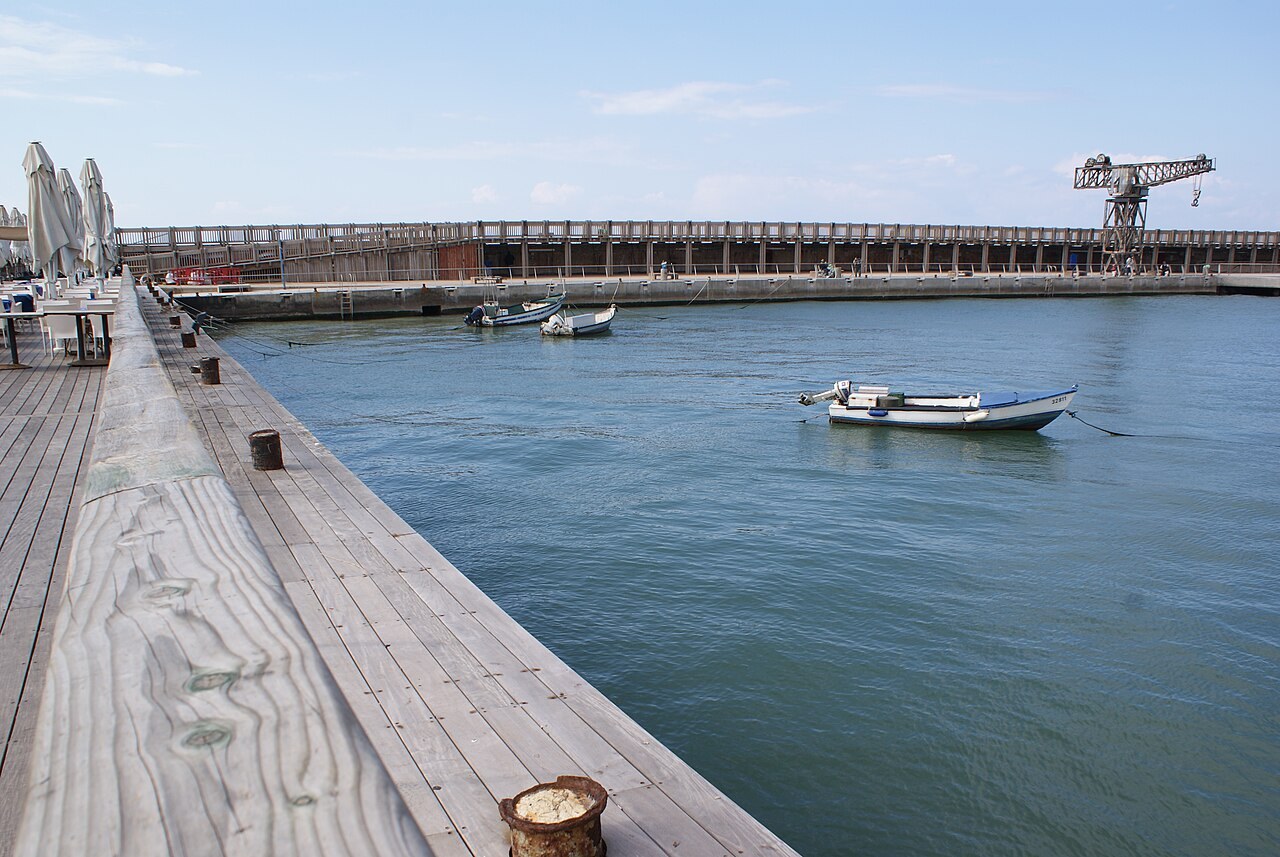
At the beginning of 1968, after the Six-Day War, Yosef Yekutieli measured the route taken by the Benjaminite and discovered that it was 42.2 kilometers long. Six hundred years before Pheidippides's famous marathon, the Benjaminite (identified in the Midrash as King Saul) ran exactly the same distance, but instead of announcing a victory, he announced a defeat. In April 1968, Yosef Yekutieli and Yitzhak Baraz initiated a marathon along this route, which came to be known as the Benjaminite's Race. At first, few runners took part, and at its peak it had only 14 runners. In 2015, 43 years after it was discontinued, the race was revived and is now known as the Biblical Marathon.
Yosef Yekutieli married Yehudit, daughter of the late Akiva Aryeh Weiss, the original founder of Ahuzat Bayit. She was his companion and the head gymnast of the Maccabi Tel Aviv association.
Yosef and Yehudit had four sons and two daughters. Their son Gideon Yekutieli was a professor of physics and one of Israel's first nuclear physicists.
Yosef Yekutieli died in September 1982. In 2008, a street in Tel Aviv near the site of the first Maccabiah Stadium was named in his honor. A road in the town of Maccabim was also named after him, and the archive at Kfar Maccabiah bears his name.
תגובות
עדיין אין תגובות.