
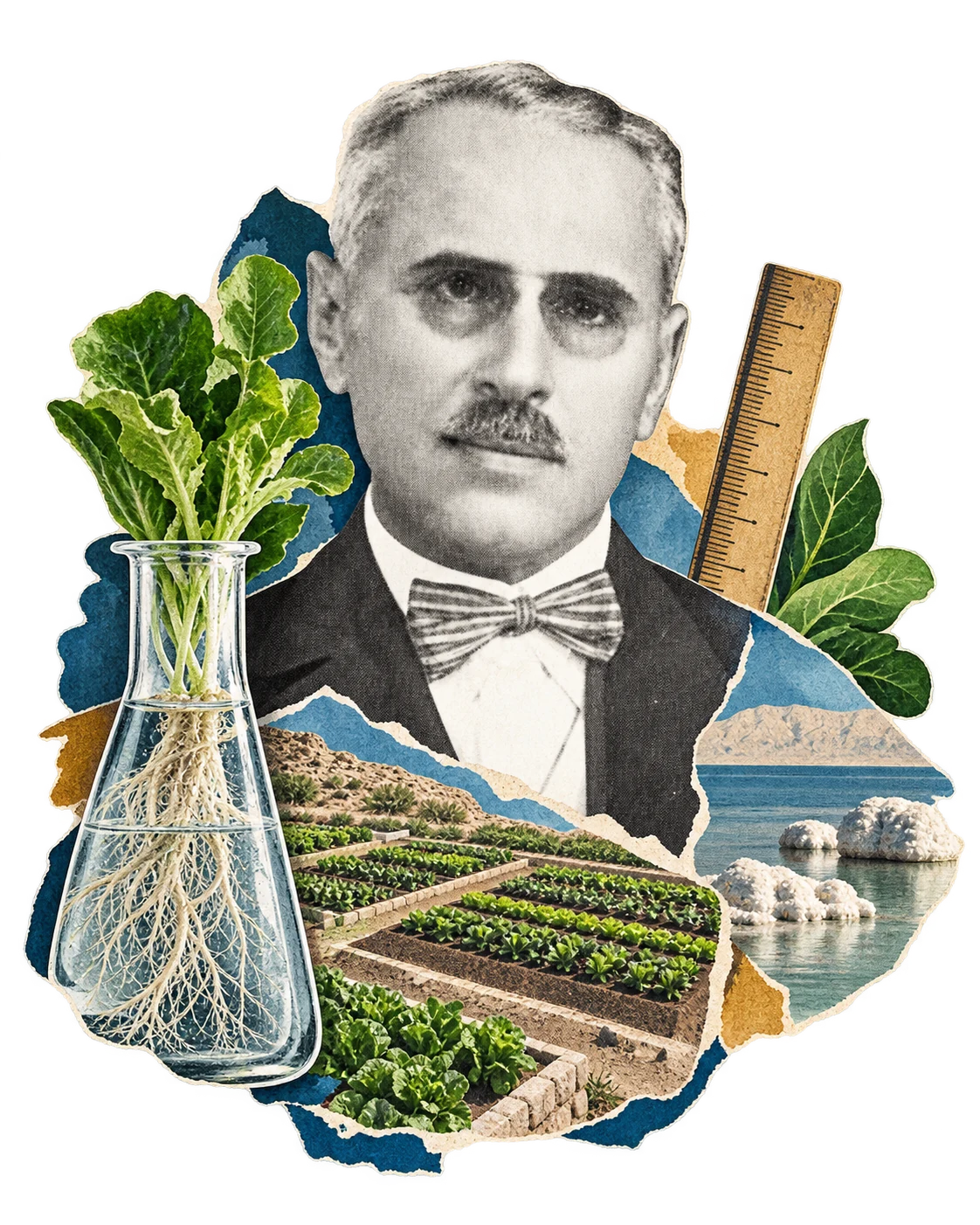
The story of the entrepreneurial gene, born among rocky outcrops, told through the life of the philosopher who proved that a national vision is built on science, precision, and working the land.
Zelig Eugen Soskin
The deep roots of the “Start-up Nation,” which thinks outside the box and turns every problem and obstacle into an exciting challenge that can and must be solved, can be traced back to the entry of the Israelite tribes into the land, around 1150-1250 BCE. At that time, the entity “Israel” is mentioned in the land of Canaan on the famous victory stele of Pharaoh Merneptah, son of the great pharaoh Ramesses II (around 1208 BCE). Our forefathers arrived in the land and settled in the Hebron Hills and the Samarian highlands, largely because powerful, fortified peoples already occupied the fertile, accessible valleys. There, on the mountain slopes, they came face to face with seemingly impossible conditions: rocky, rugged terrain, little land suitable for cultivation, and a severe shortage of water. It was precisely there, out of hardship and necessity, that their first initiative was born.
In that ancient period, water management in the Land of Israel underwent an unparalleled technological and engineering leap. Rapid population growth and the need to hold on to the mountainous and desert terrain demanded highly sophisticated solutions for storing, conveying, and managing water. This existential problem, transformed into a creative challenge, gave rise to a range of groundbreaking solutions, including plastered cisterns, enormous reservoirs, terraced irrigation channels, filtration systems, and strict water-allocation laws. Israeli high tech, in fact, was born entirely in the furrows of agriculture.
The Vision of Modern Agriculture
The next great leap took place only in modern times, when the Jewish people returned to their land and sought to rebuild their national home. Once again, the pioneers faced almost the same ancient problems: difficult soil, treacherous swamps, water shortages, and a challenging climate. And once again, the settlers knew they would need original, innovative solutions. One of the leaders of this agricultural revolution was the agronomist Dr. Zelig Eugen Soskin, an ardent Zionist, a visionary and a man of action, and someone who unquestionably deserves to be considered one of the early and influential pioneers of modern agricultural thinking in the Land of Israel.
Soskin was not someone who came merely to deliver fiery speeches about love of the land and the importance of settlement. He brought solid scientific knowledge, a systematic method, and a deep understanding that the success of the Jewish settlement enterprise in the land depended entirely on turning the national vision into an efficient, profitable, and sustainable agricultural economy. His vision was simple to state, but utterly revolutionary at the time: instead of relying on vast tracts of land and large-scale farming that required endless resources, small, intensive, diversified farms should be established, combining a dairy, a poultry yard, and vegetable crops, and making the fullest and most precise use of every plot of land.
Today, such a model may sound self-evident, almost technical, but in those days it was revolutionary thinking that challenged convention. Soskin was not talking simply about an ideology of working the land for its own sake. He spoke of productivity, maximum efficiency, and creating a sound agricultural economic model capable of sustaining an entire community over time. While others saw agricultural work chiefly as an educational tool for turning the Jew of the Diaspora into a “new man” and a manual laborer, Soskin approached the matter pragmatically and clear-eyed. He saw agriculture as a reliable source of income, a foundation for a dignified livelihood, and a first-rate tool for settlement that would bring masses of Jews to the land, enable them to establish themselves there securely, and build a strong, independent, and prosperous state together.
Be'er Tuvia and the Auxiliary Farms
Soskin took his first practical steps in the land at the colony of Be'er Tuvia. The complex task assigned to him was managing the colony's work. He worked tirelessly to instruct the settlers, improve cultivation methods, and introduce new field crops and orchard varieties. Before Soskin's arrival, Be'er Tuvia had suffered a series of painful and bitter failures. In its first incarnation, it operated as a Baron Rothschild colony and was known as Kastina (1888-1890), after the Arab village whose lands the Baron's administration had purchased. At that time, a group of immigrants from Bessarabia settled on the land, but because of serious disputes with the administrative apparatus, most of the families left and dispersed. Only five families and a number of unmarried laborers remained. The Baron's administration had designated the place for traditional field crops, but the settlers were unfamiliar with field farming and the methods required by the Middle Eastern climate. In addition, the local wells yielded very little water, insufficient to irrigate the fields and adequate only for basic drinking needs. When friction and security problems with the Arab neighbors were added to these difficulties, the colony was completely abandoned in 1890.
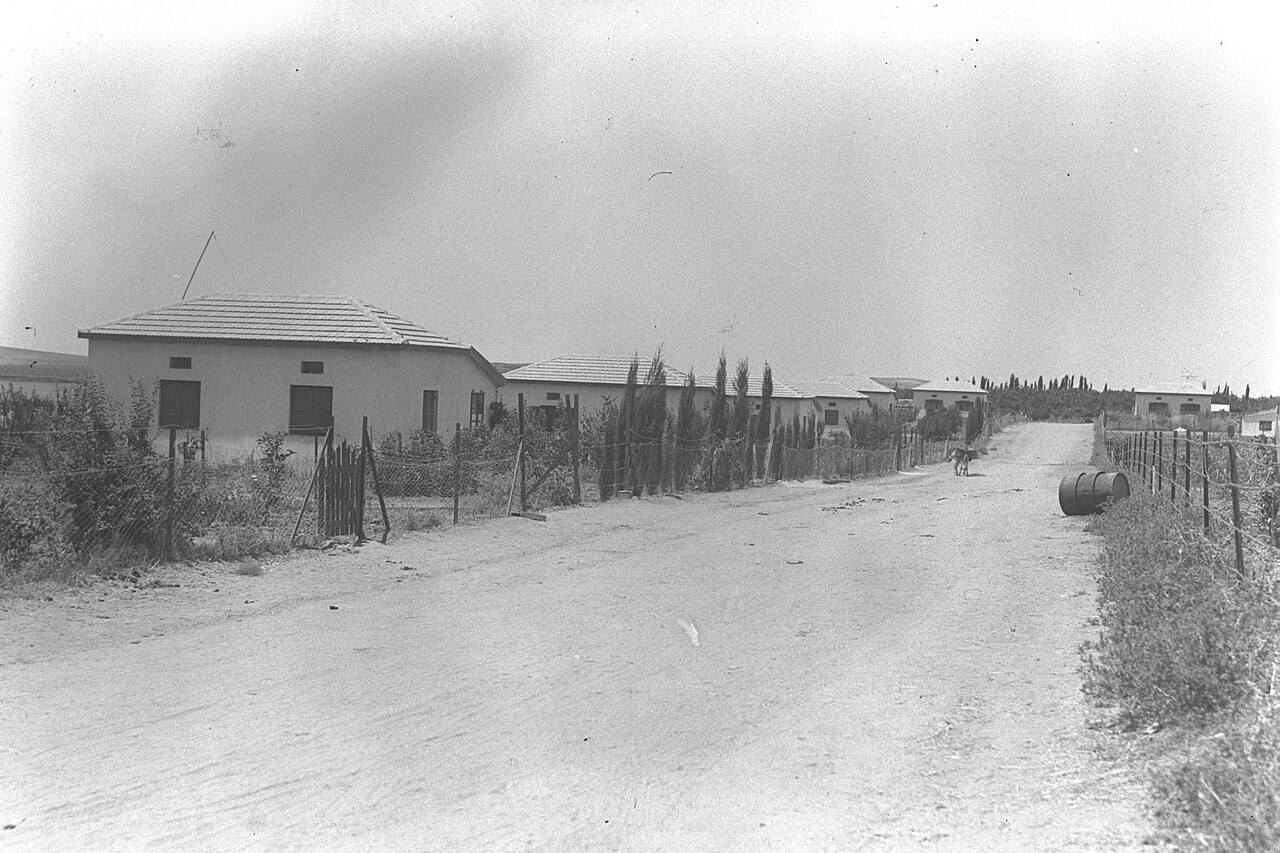
Settlement there was renewed at the initiative of the Hovevei Zion movement, and in 1896 the executive committee, known as the Odessa Committee, purchased the land from the Baron with the aim of establishing a model colony. About 20 families of experienced laborers from the older Judean colonies were brought there, large families with many hardworking, devoted members. But despite their experience, farming once again relied mainly on wheat and barley fields, and the results were partial and disappointing.
Then Dr. Soskin arrived with what he proposed as a saving idea: the “auxiliary farms” model. Under his guidance, the farmers developed abundant vegetable gardens in their courtyards for household consumption, built special dovecotes to supply fresh meat, and kept a small number of poultry and livestock. The idea proved an overwhelming success that transformed the situation. By the end of 1898, the people of Be'er Tuvia had established themselves as a stable, self-sufficient working community, no longer dependent on the Baron's administrative apparatus.
From the Hadera Project to the Research Institutions
In 1898, Dr. Soskin left Be'er Tuvia to manage the bold engineering and agronomic project to drain the Hadera swamps by planting extensive eucalyptus forests. At the same time, he led the complex land-preparation work for planting the famous orchard at Gan Shmuel. One fascinating detail is worth noting: the degree Soskin earned in Germany in 1894, at the University of Rostock, was not in agricultural science at all, but a doctorate in philosophy. A man whose name would be remembered nationally as that of a brilliant practical agronomist, a man of land and water, began his career in theoretical thought.
Even before immigrating to the land, while still in Berlin, Soskin was an active member of the “Russian-Jewish Scientific Society,” a group of brilliant young Jewish students from Eastern Europe who gathered to discuss scientific innovations, philosophy, and the future of the Jewish people. Among the society's young members was an energetic student named Chaim Weizmann, who would become the first president of the State of Israel fifty years later. Thus, the network of scientific and leadership connections that would accompany Soskin throughout his long career began to take shape before he had even set foot in the land.
In the autumn of 1898, during the historic and widely acclaimed visit to the Land of Israel by the visionary of the state, Benjamin Ze'ev Herzl, Soskin was chosen as one of the key professional experts accompanying Herzl and his entourage on their travels throughout the land. Soskin laid out for Herzl the range of scientific possibilities for developing modern, advanced agriculture, especially in areas that until then had been considered entirely arid and desolate. The formative meeting between the great visionary and the practical scientist greatly strengthened Herzl's vision and proved to him that the abstract idea of a “Jewish state” could be translated into realistic, practical work plans based on verified statistical, soil, and agronomic data.
Two years after that historic meeting, Soskin joined two prominent and influential figures: the renowned agronomist and botanist Aaron Aaronsohn and the talented engineer Yosef Treidel. Together, the three founded the “Agro-Technical Office” in Zikhron Ya'akov, the first private commercial-scientific venture in the history of the Land of Israel. It provided comprehensive agricultural consulting, professional soil surveys, geodetic measurements, hydrological planning, and precise mapping for new settlements and private investors. The office initiated the import of advanced mechanical agricultural equipment from Europe and the United States, including modern water pumps, deep plows, and sophisticated mechanical reapers.
Soskin and Aaronsohn recognized the enormous economic potential of the olive industry and proposed that the Jewish National Fund establish a dedicated fund to plant extensive olive groves (“Herzl Forest” at Ben Shemen and Hulda). Their brilliant economic forecast was that olive trees would generate a steady income to fund the establishment and maintenance of higher education and research institutions in the Land of Israel.
That same year, the renowned botanist Professor Otto Warburg visited the Land of Israel. Soskin, who had known Warburg since their student days in Berlin, introduced him to the young Aaron Aaronsohn. This meeting became a dramatic turning point in research and science in the Land of Israel. Warburg was deeply impressed by Aaronsohn's exceptional abilities, became his academic and international patron, and later helped him publish his sensational discovery of “the mother of wheat” (wild wheat) and raise funds to establish the famous agricultural experiment station at Atlit.
In early 1903, as part of the official diplomatic contacts between Herzl and British government leaders, Herzl sent a multidisciplinary scientific expedition to examine the El Arish region and northern Sinai, with the aim of assessing the area for autonomous Jewish settlement under the protection of the British Crown. Soskin joined the important expedition as a senior agronomist and soil researcher. In the field, he carefully analyzed the composition of the sand, the groundwater level, and the engineering possibilities for channeling water from the Nile for irrigation. In the comprehensive scientific report he wrote, he convincingly demonstrated that an engineering project to divert Nile water, combined with intensive farming methods, could settle a large, densely populated, productive community in the area, one that could thrive and enjoy a dignified livelihood.
In the years 1912-1904, the “Committee for the Exploration of the Land of Israel” served as the central research and scientific arm of the entire Zionist movement. Warburg and Soskin established and edited a prestigious scientific journal under its auspices, providing an international forum for in-depth academic discussion of the geography, botany, meteorology, and economy of the Land of Israel as it was being renewed. Soskin tirelessly advocated establishing a broad network of agricultural experiment stations to test modern scientific cultivation methods before precious public funds were spent. This uncompromising demand led the Jewish National Fund to purchase land at Atlit, where Aaron Aaronsohn established the first experiment station in the entire Middle East in 1910. The fruitful collaboration between Soskin, Warburg, and Aaronsohn laid the practical foundations for the distinguished network of research institutions later established in the country, foremost among them the Volcani Institute and the Faculty of Agriculture in Rehovot.
The Small-Farms Doctrine
At the end of World War I, Dr. Soskin was appointed director of the Settlement and Planning Department at the Jewish National Fund's central office. This senior appointment enabled him to systematically and thoroughly examine successful agricultural settlement models throughout Western and Southern Europe, with the aim of developing a comprehensive program to restore, develop, and greatly expand the settlement enterprise in the Land of Israel in anticipation of the opening of its gates under British Mandate rule.
During his study tours in Spain, Soskin visited the agricultural colony of Monte Algaida, in Andalusia, where he witnessed a true agricultural marvel. Especially barren, poor sandy soils had been transformed, through precise division into tiny farms, intensive fertilization, and a continuous irrigation regime, into one of the most fertile, prosperous, and profitable areas in all of Europe, supplying early-season vegetables and fine fruit to the major markets. Soskin saw this model as the perfect and ultimate answer to conditions in the Land of Israel.
The small-farm doctrine Soskin developed rested on four solid pillars:
The first pillar - a dramatic reduction in the size of each holding: instead of the traditional field-farming model, which allotted about 100 dunams to each family, Soskin determined that an optimal family holding should cover just 5 to 10 dunams. This revolutionary reduction was intended to enable high settlement density, dramatically lower the cost of heavy infrastructure such as roads, water pipes, electricity networks, and security, and avoid the need to purchase vast, expensive, unattainable tracts of land.
The second pillar - basing the farm on intensive artificial irrigation (100% irrigated cultivation) and scientific fertilization: Soskin rejected any passive reliance on rain-fed crops (dry farming), which depend on the heavens, and called for complete networks of pipes and pressurized irrigation, alongside the judicious use of advanced chemical fertilizers, to produce three or four full, profitable growing cycles in a single year.
The third pillar - a precise, diversified farm structure: every farm unit was planned down to the last detail. About 400 square meters were allocated to intensive vegetable crops, about 70 square meters to a courtyard and ornamental trees; the plan also included dense orchards of dwarf fruit trees (citrus, bananas, and grapevines) and a modern poultry yard with dozens of laying hens. Soskin calculated precisely that such a farm required only about 340 hours of work a year, less than one hour of work a day for the settler! This remarkable figure enabled settlers to combine productive agricultural work with professions, commerce, small-scale industry, or a range of outside jobs.
The fourth pillar - a perfect combination of private autonomy and cooperative organization: Soskin rejected the absolute collectivism of the kibbutz and supported private farms that encouraged individual initiative, diligence, and direct profit for the farm owner. At the same time, he considered close cooperative organization for purchasing supplies (seeds, animal feed, and agricultural equipment) and the centralized, organized marketing of produce essential to the success of small farms in the face of market forces and competition.
The great historic opportunity to put the small-farm plan into practice came in 1934, following the Nazis' rise to power in Germany and the beginning of the Fifth Aliyah. This massive wave of immigration brought tens of thousands of Jews from Central Europe: members of the middle class, academics, doctors, lawyers, intellectuals, and experienced merchants. They brought their own capital and wanted to establish private farms in the Land of Israel, but found no place for themselves in the kibbutzim's collective settlements or in the Labor movement's party-affiliated moshavim.
Soskin joined forces with the engineer and entrepreneur Yosef Levi, the agronomist Heinrich Cohen, and the engineer Shimon Reich. Together they founded the company “Nahariya Small Farms Ltd.,” a private commercial enterprise whose goal was to purchase land, divide it into small farms, install advanced water and construction infrastructure, and market the farms directly to immigrants with their own capital, without relying on the budgets of the national Zionist institutions.
At the beginning of 1934, the company purchased a large tract of 2,400 dunams from the Tueni family, a well-known Christian aristocratic family from Beirut. The land lay north of Acre, along the Ga'aton River. Dr. Shifrin, then the Haifa municipal engineer, proposed naming the new settlement Nahariya, after the river that runs through it. The land was divided into hundreds of small farms of 5 to 9 dunams, precisely according to the detailed engineering and agricultural plan Soskin had drawn up. In June 1935, the industrialist Philip Liberman from Poland purchased the southern block (450 dunams) and established the magnificent Ein Sara estate, named for his late wife, thereby strengthening the settlement and security network of the entire area.
Soskin's brilliant spatial and social model proved an impressive and inspiring success. A splendid Hebrew settlement was established in the Western Galilee, comfortably absorbing hundreds of immigrant families, courageously holding out under a severe siege, and growing and prospering on the basis of private capital, without burdensome budget deficits or dependence on the national institutions' generosity.
Hydroponics and Official Recognition
In the late 1930s, when most of his contemporaries had already withdrawn from public and scientific activity, Dr. Soskin turned, out of intellectual curiosity, to the study of a revolutionary field that was just beginning to emerge around the world: growing plants in a soilless medium (hydroponics). For Soskin, hydroponics was the natural, inevitable, and ultimate development of the small-farm doctrine. If the Monte Algaida model showed that 5 dunams could suffice instead of 100, hydroponics made it possible to free agriculture completely from dependence on soil quality and fertility, and to produce large quantities of high-quality food on tiny plots, on city rooftops, in rocky areas unsuitable for cultivation, and even in the heart of the arid desert.
In the years 1940-1939, Soskin established two pioneering hydroponics experiment stations in the Land of Israel, one in the colony of Nahariya and the other on the shores of the Dead Sea, near the well-known works of the Palestine Potash Company. The pioneering station at the Dead Sea was the first in the world to demonstrate that excellent-quality fresh vegetables could be produced even in an area with entirely saline soil and extremely hot, searing conditions, using pools supplied with water and monitored scientifically.
In the 1950s, Soskin continued vigorously promoting hydroponics research in the country. His groundbreaking studies provided the direct basis for the development of hydroponic agriculture at Kibbutz Hafetz Haim, where growing crops in water and soilless media served as a brilliant, groundbreaking halachic solution for observing the sabbatical year in modern commercial agriculture. This extensive activity later led to the establishment of the Israeli Hydroponics Association in 1957.
In 1958, during the celebrations marking the tenth anniversary of the State of Israel, Dr. Zelig Soskin received the highest possible national recognition for his life's work when he was awarded the Israel Prize in the natural sciences (agricultural sciences). The moving citation by the prize committee noted his pioneering contribution, spanning more than sixty years, to the study of soil and water, the laying of the foundations for modern settlement in the Land of Israel, and the leadership of the international hydroponics revolution.
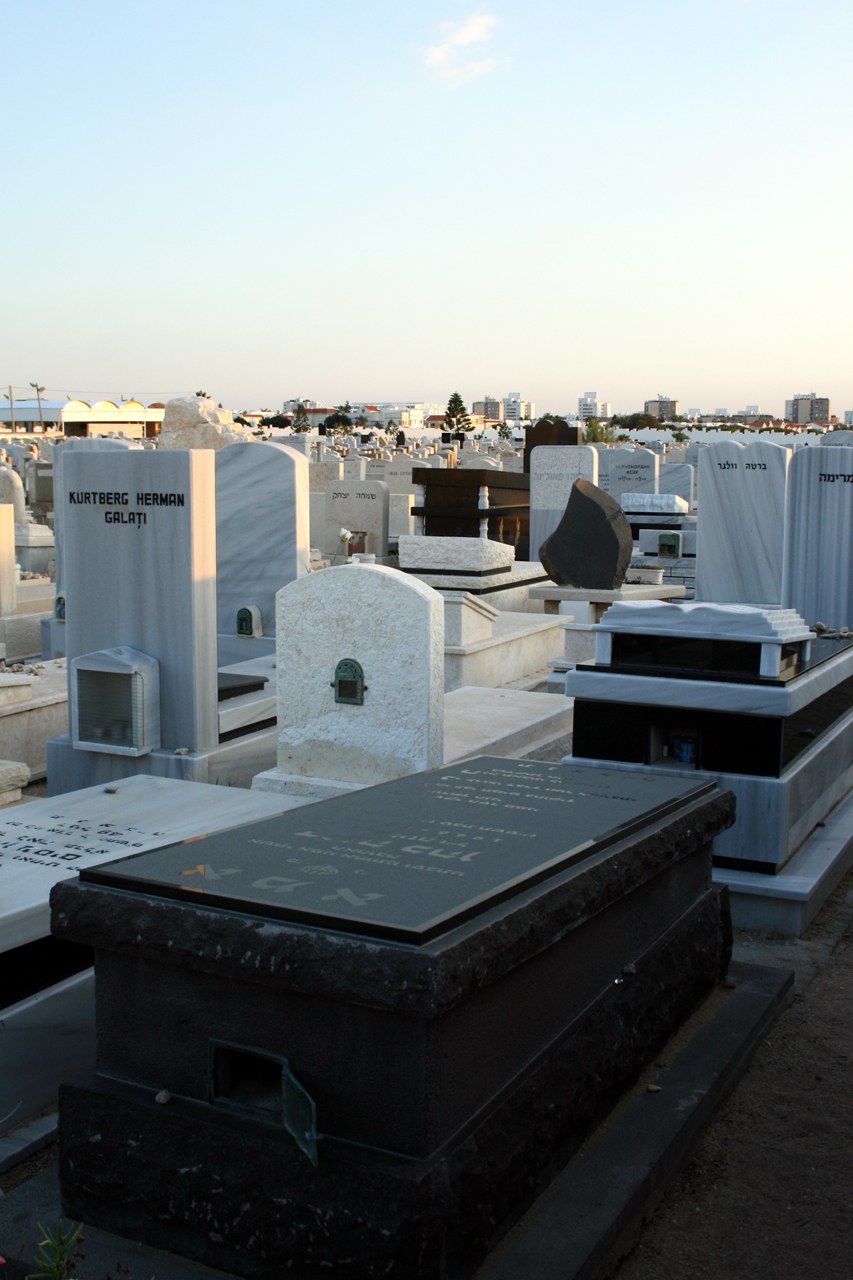
Dr. Zelig Soskin died on February 26, 1959, at Hadassah Hospital in Tel Aviv, aged 85, and was buried in the cemetery of the colony of Nahariya, the place where he had watched his great vision become a living, breathing, thriving reality. The Nahariya Municipality commemorated his memory and legacy by naming a main street in the town after him.
תגובות
עדיין אין תגובות.