
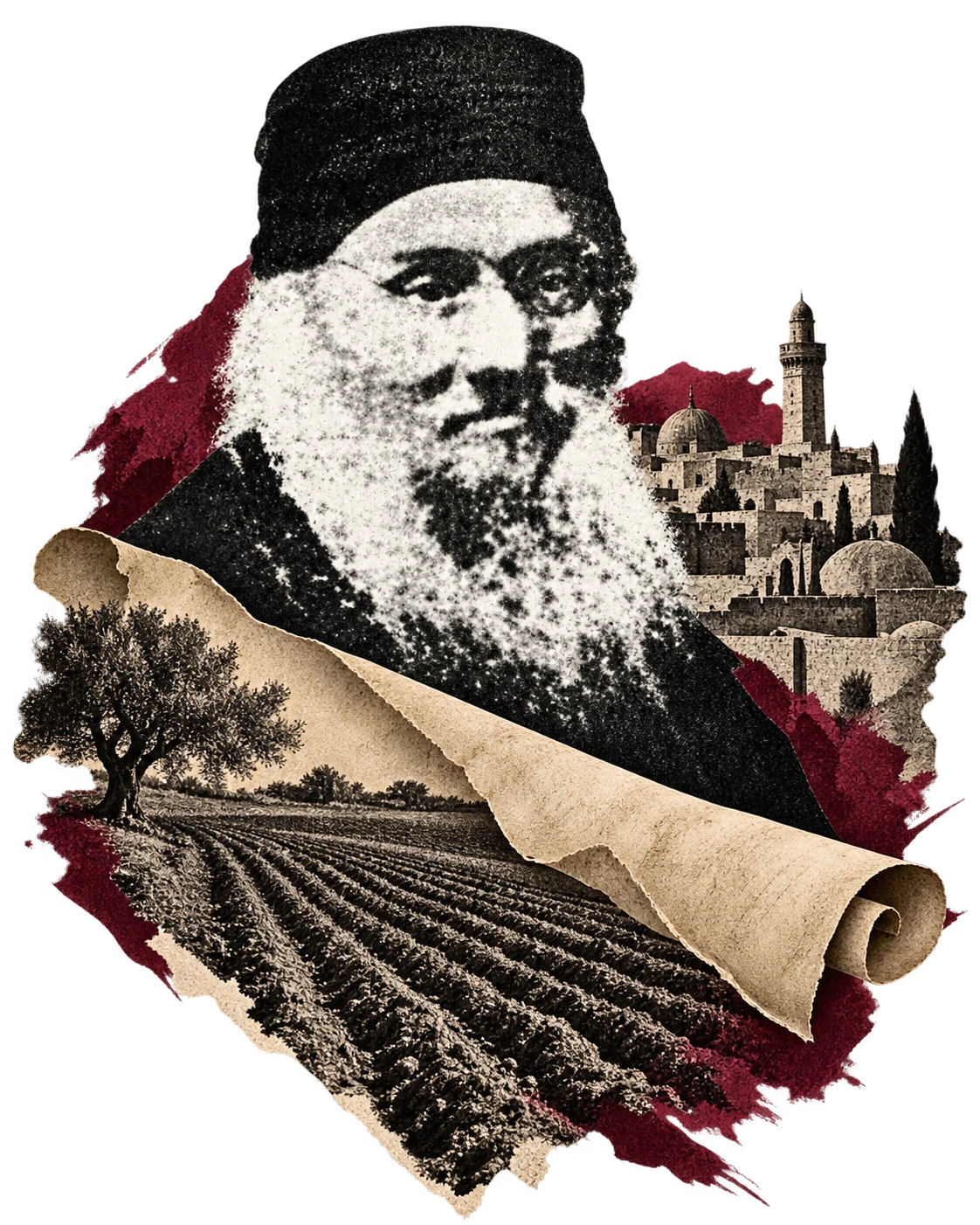
To anyone observing religious society in the Land of Israel, it is perfectly clear that it is not a single, unified whole whose members share the same beliefs and way of life just because they belong to one religion... Some are Zionists and some are anti-Zionists... Among them was one rabbi who lived in both worlds.
His Early Life and World of Ideas
Rabbi Akiva Yosef Schlesinger was born in 1837 in Pressburg, Hungary (today Bratislava, the capital of Slovakia). His father, Rabbi Yechiel, came from a distinguished family of rabbis and Torah scholars. He headed the yeshiva of the Machzikei HaDat society and earned his living by leasing land for farming - this is how Akiva Yosef became acquainted with agricultural work. As a young man, Akiva Yosef studied religious texts at home and secular subjects at a state school, as required by law. At 16, he joined the yeshiva of the Ketav Sofer, a student of the Chatam Sofer.
Before describing Schlesinger's teachings, we must consider the fundamental difference between the extreme Haredi streams and Religious Zionism. The essential difference lies in their understanding of the coming of redemption, which is the most important matter for all observant Jews. The extreme Haredi streams follow the interpretation of Rabbi Yose bar Rabbi Hanina, who advocates a passive approach and argues that the Land must not be conquered, that a ruler already in control of the Land of Israel must not be deposed, and that God has already made the nations of the world swear not to enslave the Jewish people. In other words, redemption will come in its own time, and must not be hastened.
By contrast, Religious Zionism advocates an active approach, entirely opposed to that of the Haredi streams. It argues that redemption depends on our actions and conduct, and will therefore come only if we conquer the Land of Israel and settle it.
From a young age, Akiva Yosef Schlesinger stood out as a great Torah scholar and a charismatic preacher who drew large crowds eager to hear words of wisdom. By 19, he had been ordained as a rabbi and received the title "Our Teacher" from his mentor, a rare distinction for someone so young. Around that time, offers of marriage accompanied by financial security began pouring in for the young prodigy. Yet he chose to marry Leiba, daughter of Rabbi Hillel Lichtenstein, then the rabbi of Siks in Hungary, and was supported by his father-in-law for about ten years. Rabbi Hillel Lichtenstein was known as one of the leading zealots among Hungary's rabbis, who fought against every innovation. Akiva Yosef Schlesinger and his father-in-law became full partners both in the campaign of excommunication they declared against Reform and in their efforts to unite the communities devoted to the Torah in its purity in their homeland, as well as in the son-in-law's initiatives to settle the Land. In time, their bond grew closer when Rabbi Hillel Lichtenstein, widowed after Leiba's mother died, married Rabbi Akiva Yosef Schlesinger's sister.
From Separatism to Settling the Land
The son-in-law and his father-in-law joined forces with Rabbi Chaim Sofer and launched an extensive campaign against every manifestation of modernization, whether the adoption of foreign languages or changes in dress. In 1863, Akiva Yosef Schlesinger published his best-known book, Lev Ha-Ivri (an acronym of Akiva Yosef ben Rabbi Yechiel, which was essentially his name), in which he urged complete separation from the outside world. He called on Jews not to change their names, spoken language, or clothing, just as the people of Israel had not changed these in Egypt and were redeemed as a result. He wrote: "Beware of changing your name... Do not do as people do, when someone named Aharon calls himself Adolf. Take care not to change the language, for our Jewish language has the status of the Holy Tongue... And wearing non-Jewish clothing, God forbid, is forbidden by Scripture..."
The book Lev Ha-Ivri became very popular throughout Europe and even made its way into Russia, where its distribution was forbidden by censorship laws. It persuaded yeshiva students, including some who would later become leaders of the Torah world, to abandon their plans to transfer to university. Lev Ha-Ivri apparently helped unite Hungary's Orthodox forces, and a year later, seventy leading Orthodox rabbis gathered in the city of Milowitz and issued a rabbinical ruling against the changes proposed by the Reform movement. In 1870, Akiva Yosef, a father of five with a prestigious position as a rabbinical judge in the city of Kolomyia, decided to resign and immigrate to the Land of Israel, after having had a dream. The rabbis of the region begged him not to go and even offered him a rabbinical post, but he replied: "I have already made terms with another bride - the Land of Israel, whom I cannot disgrace."
Akiva Yosef arrived in Jerusalem, where he rented an apartment near the Temple Mount, in the Mughrabi Quarter area (today's Western Wall Plaza), and established his study hall there. He thought that here in the Land of Israel, where there was no requirement to attend state schools, he would be able to keep their harmful influence at bay.
When various attempts began to establish modern schools in Jerusalem, influenced by the European Enlightenment, he was alarmed and became one of the leading opponents. He even published a book about it, titled Kol Nehi MiTzion.
In 1873, he published his most revolutionary book, Hevra Ma'aleh (Restorers of the Crown to Its Former Glory). Eight years before the First Aliyah and 23 years before Herzl's The Jewish State appeared, the zealous Hungarian Rabbi Akiva Yosef Schlesinger proposed establishing a Hebrew association whose central aims would include redeeming the Land. He established Kollel Ha-Ivrim (the Hebrew Kollel). At the time, a kollel was an association for Jews from a particular region, such as Poland, Hungary, or Romania, in which married scholars studied. Akiva Yosef Schlesinger introduced quite a few innovations to Kollel Ha-Ivrim: he opened it to every Jew loyal to the Torah, whatever their background - Sephardi or Ashkenazi - as well as to Jews who had returned to religious observance. He organized the kollel in a hierarchy based on the twelve tribes, divided into commanders of thousands, hundreds, fifties, and tens. He proposed that officeholders be elected democratically. He proposed full transparency in the kollel's leadership, which would report all its financial activities to its members. Most importantly, he also insisted on teaching trades.
As early as the first part of his book Lev Ha-Ivri, he warned that a father who did not teach his son a trade caused "many failings in the service of God." The trade he recommended was agriculture, in the Land of Israel.
More than thirty years before the founding of the Bar-Giora and Hashomer guard organizations, Akiva Yosef Schlesinger proposed that the protection of Jewish settlements be carried out through a reserve service, with the guards rotating at regular intervals. The infantry would be called "Guardians of God," while soldiers riding horses would be called "Warriors of God."
After touring the Land of Israel, he identified a place near Motza where he could establish a settlement. But his opponents, including the Hungarian Neturei Karta, threatened him, and he abandoned the idea. Ironically, in the future, some of Schlesinger's descendants would be among those who signed Neturei Karta proclamations at the very beginning of the establishment of the State of Israel.
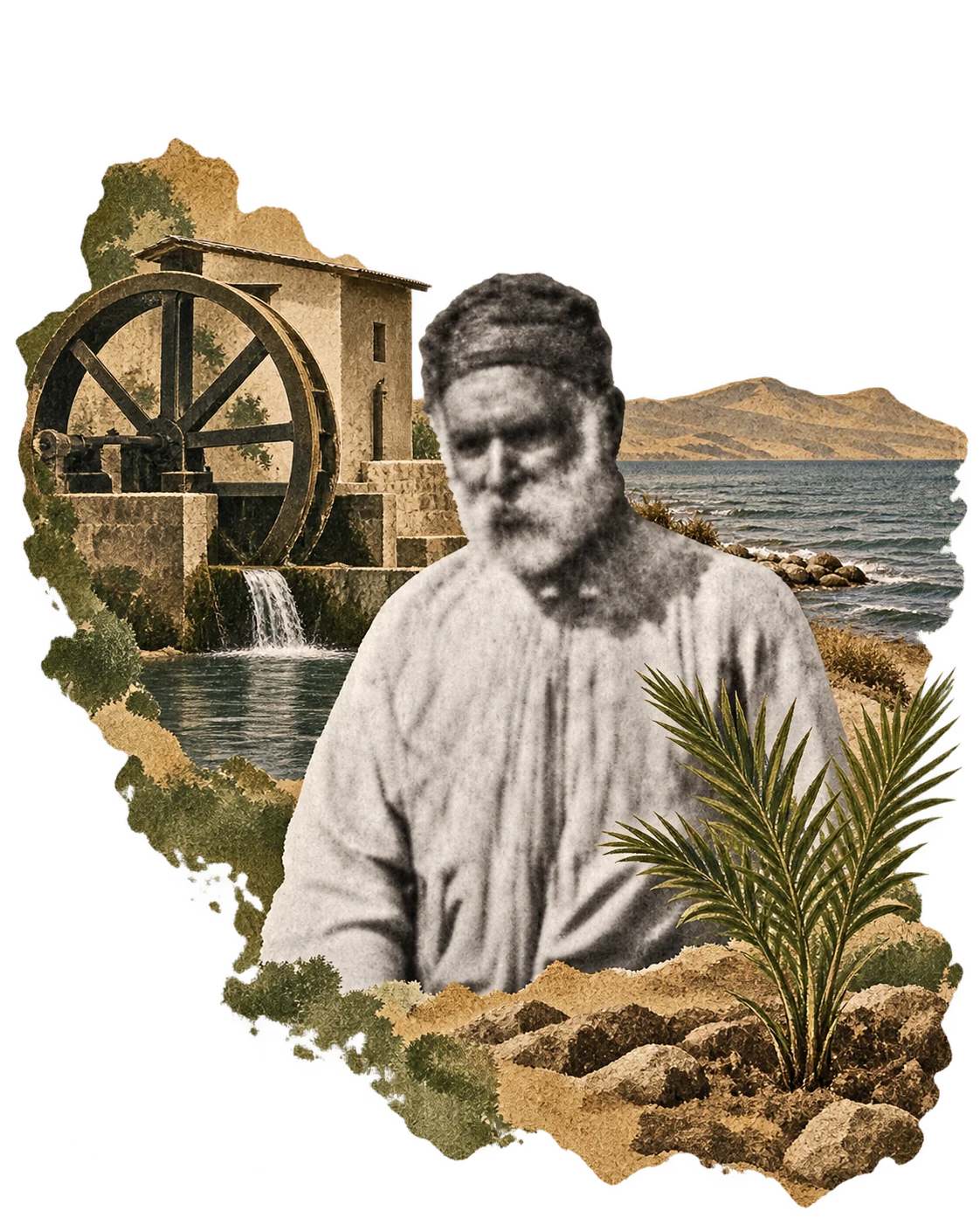
Akiva Yosef succeeded in enlisting Moses Montefiore and Baron Shimon Wolf Rothschild, father-in-law of Baron Edmond de Rothschild, in support of his dream. He tried and failed to buy land near Hebron. He was a partner in the founding of Petah Tikva. The founders approached him and asked him to join them, and he set regulations for them concerning education, modesty, Shabbat, and other religious matters. He also bought a ten percent share of the Petah Tikva estate in the name of his father-in-law, Hillel, and moved onto the land himself. Akiva Yosef describes how, at noon on Friday, the members went to immerse themselves in the Yarkon in honor of Shabbat. One can imagine how moved he was when, for the first time, he brought terumot and tithes to Jerusalem. He sent ten camels laden with offerings and tithes for the priests, Levites, and poor, who received their tithes in Mea Shearim. The settlement was guarded by the settlers, one of whom was Akiva Yosef Schlesinger.
Death and Commemoration
"The grandfather of Zionism and the grandfather of Neturei Karta" is how the historian and second Minister of Education, Ben-Zion Dinur, described him. It is the most apt title for this complex rabbi. Rabbi Schlesinger died in Jerusalem on Shabbat, April 29, 1922, and was buried at a large funeral after Shabbat ended. Before his death, he instructed that he be buried in the ancient cemetery on Mount Zion, but this was not possible, and he was buried on the Mount of Olives. Like Moses, he did not live to see Zionism turn a vision into a state.
His grandson, Rabbi Nahum Weispish, settled in the moshava of Meir Shfeya and was a well-known farmer. He was murdered during the 1936 riots while on his way to the village of Fureidis.
After Schlesinger's death, the newspaper Haaretz reported that he had met Herzl when Herzl visited Jerusalem. It is clear that the anti-Zionist Haredi public denied this. Ironically, Herzl and Schlesinger were related. His brother-in-law, Avraham Abba Herzl, was married to Rachel Schlesinger, Akiva Yosef Schlesinger's sister. Avraham Abba Herzl and Theodor Herzl were fourth and fifth generation descendants of a shared grandfather.
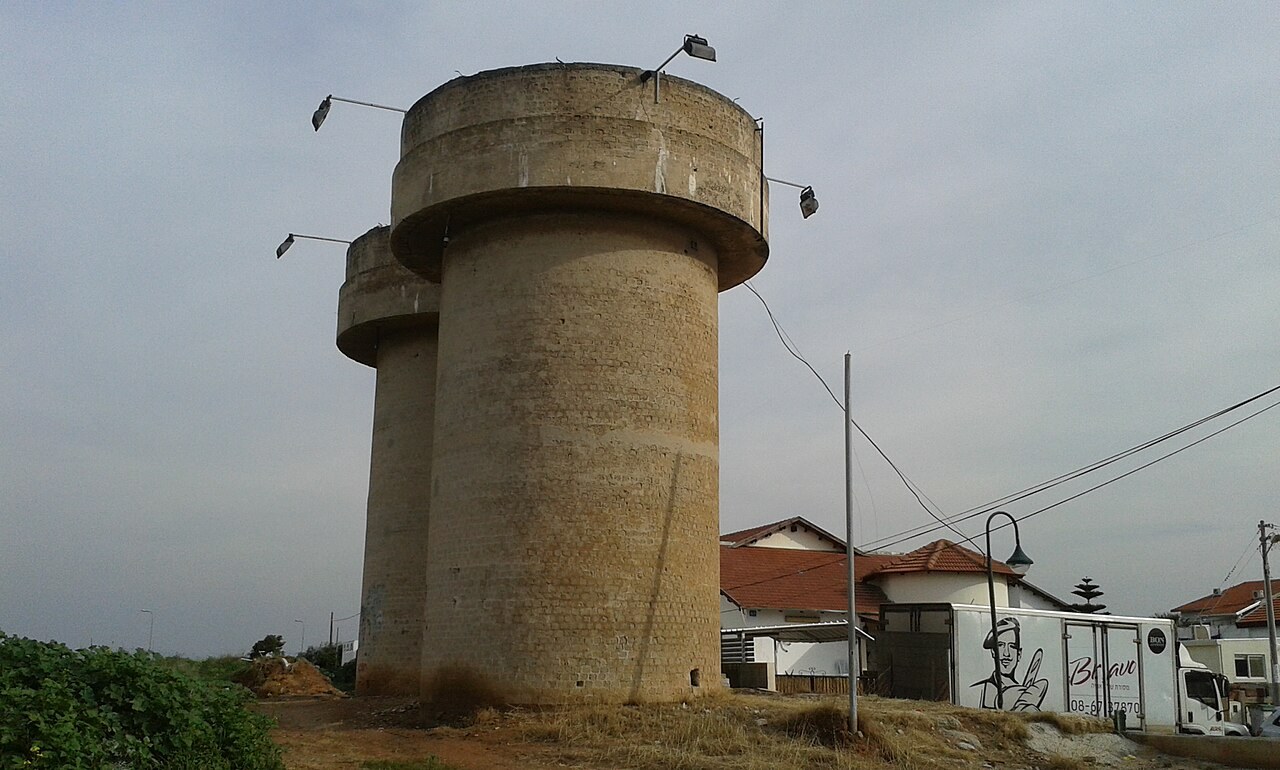
Shmuel Yosef Agnon mentions him and the troubles he went through in his book Only Yesterday. Bnei Ayish, near Gedera, is named after him, its name incorporating his initials. Lev Ha-Ivri Street in Jerusalem's Talbiya neighborhood is named after his book.
תגובות
עדיין אין תגובות.