
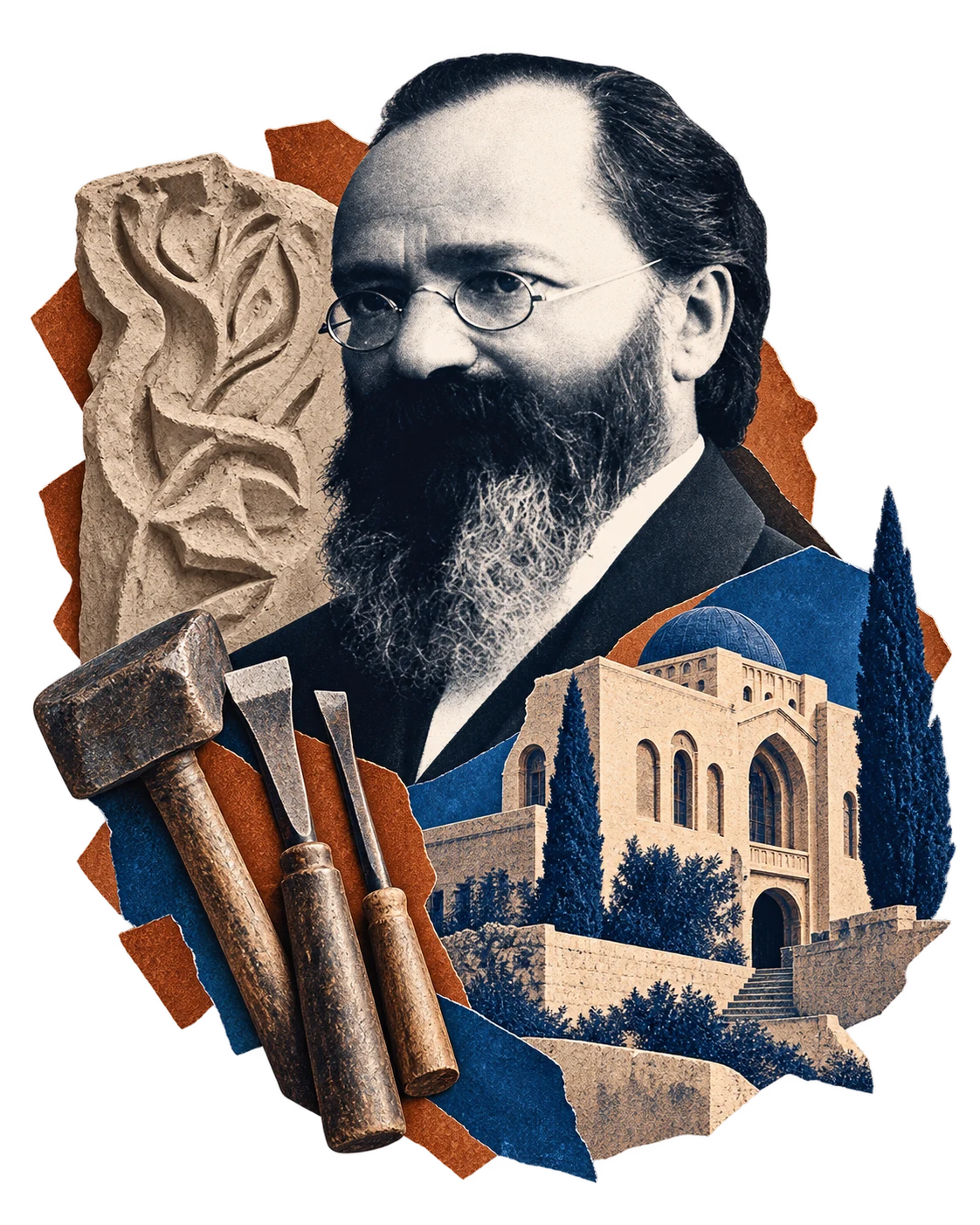
It was a typical Viennese winter in 1903. In the Austrian capital, two bearded visionaries met. One dreamed of a Jewish state, and the other of a modern temple where sacrifices would not be offered, but works of art would be collected. The first visionary was Herzl, and the second was...
The Vision of a Rebuilt Jerusalem
Boris Schatz was a man of visions and dreams. In 1918, he wrote his book "Jerusalem Rebuilt," in which he described what Jerusalem would look like some 100 years later. In the book, he sets off on a journey with his teacher Bezalel ben Uri, an Israelite artist who lived about 3,000 years before the book was written. Bezalel is mentioned in the Bible as the man who made the furnishings for the Tent of Meeting, and in Boris Schatz's eyes he was a model Hebrew artist.
Schatz describes the beginning of the journey from the roof of the "Bezalel" school, which he would later establish: "It happened on Friday afternoon. Work had already stopped at Bezalel, the courtyard had been watered in honor of the Sabbath, no one was there, everything was closed, and silence had fallen. The unusual quiet at Bezalel, usually filled with cheering, made me feel sad. I climbed to the roof... In a lovely garden beside an airfield, I stood with my teacher. We got into an airplane and sat together in it. In hardly a moment, we had climbed high and were gliding through the clear, fresh air beneath the blue sky. Below us lay an extraordinarily beautiful city, spread across hills and valleys, with tall towers, domes, bright flat roofs, gardens, pools, and bridges arched over the valleys. 'What is this?' I asked my teacher. 'Jerusalem, Jerusalem Rebuilt.'"
"'Jerusalem Rebuilt!' I cried in wonder. 'Let us go down; I want to feast my eyes, gladden my heart, run through its markets, wander its streets. Let me see everything. How was it built? What have they done there? How do people live there? Is Bezalel well? Is it still alive?' 'Wait! Don't be in such a hurry,' my teacher replied with a kind smile. 'You are an artist, after all, and you know that first you must observe the great lines, the whole, and then each part on its own. Only then will we understand the whole properly. So this is what we shall do: I will show you Jerusalem's face, the heart of the land, from above and from the outside. You will also see the face of the Land of Israel, and then I will bring you down to earth. Down there we will neither fly nor ride. We will walk through Jerusalem, lengthwise and crosswise. Every place your foot treads is holy. Do you see?' He pointed to a cluster of buildings at the city's center. 'That is the Temple...'"
Boris Schatz was born in Lithuania in 1866 to an ultra-Orthodox family. At the heder, he studied religious subjects and Hebrew, but art was forbidden: "You shall not make for yourself a graven image or any likeness." Despite the prohibition, Boris had a fertile imagination, and he invented a sophisticated noisemaker that made him known as a talented artist. Later, he discovered modern Hebrew literature and tried his hand at writing poetry. At 19, after completing his studies at the yeshiva in Vilna, he abandoned Talmud study and began studying at an art school. Around that time, he became acquainted with the Hovevei Zion movement and was captivated by the idea of a new Jew in the Land of Israel, earning his living through agricultural labor.
The contemporary Israeli society Boris Schatz imagined in his book "Jerusalem Rebuilt" combines technology with the spirit of the Bible and the East, and Israel is a center of science and, above all, creativity. The center of the creative industries was the "Bezalel" school, founded by Bezalel, where art was made for export to Jews in the Diaspora.
In Boris Schatz's vision, as described in "Jerusalem Rebuilt," some 10 million Jews lived in the land. There were no wars anywhere in the world, and peace prevailed between Jews and Arabs who had converted to Judaism of their own free will. Society was egalitarian, and all property was temporary: when a person died, their property reverted to the state. The land was publicly owned and leased for a jubilee period only, after which it returned to the people.
First Steps in Art
Boris Schatz never forgot the year 1887. That year, Mark Antokolsky, one of the sculptors he most admired, came from Paris to Vilna. Boris showed him his work and asked to study with him. Antokolsky was deeply impressed by Boris's work and tried to get him into the academy in St. Petersburg, but the attempt failed. Two years later, Boris moved to Warsaw and taught drawing. There he encountered French art, which was lighter than Russian art, and decided to complete his studies in Paris. He lived in the City of Light for about six years, during which he also witnessed the Dreyfus trial. To earn a living, he took temporary jobs, including work as a boxer.
In his vision, which he described in his book, he saw the city's residents eating together in communal dining halls called "Abraham's Tamarisk." Artists and intellectuals governed the state, and the president was a scholar and philosopher. Instead of a parliament, there were rabbis who were members of the Sanhedrin. The workday began with prayer; the Temple still stood, and people made pilgrimages to it. No sacrifices were offered in the Temple; it served as a museum: "There the spirit of the Lord shall dwell, which God has given us." The state was secular. Religious reforms allowed people to eat meat and milk together and even to smoke healthy cigarettes on the Sabbath, and people wore white robes like those worn by the Arabs.
In 1889, Boris Schatz married Zhenya, who was also an artist, and they had a daughter. "Now my sun had risen, my soul was alive. My heart was full. I breathed in the warm, enchanting air that surrounded me with deep thirst. I awoke in an atmosphere of love; I worked, studied, and created." He wrote this when his daughter Angelica was born. But the idyll did not last. Zhenya fell in love with Boris Schatz's young student, and the couple divorced: "Bad fortune drove us apart while you were still a little girl. With sorrow, I decided to tear you from my heart and begin living anew."
After immigrating to the Land of Israel, Boris started a new family. In 1911, he married Dr. Olga Pevzner, and they had a daughter, Zahara, and a son, Bezalel, both of whom became important artists. Over the years, Angelica kept in touch with her father through letters. In 1948, she immigrated to the Land of Israel and became a painter.
In 1918, Boris Schatz addressed the subject of sex. In his "Garden of Love," people could give free rein to their sexual desires without interference, anonymously and without commitment. The garden would be located in Transjordan, where people could "calm their blood and their nerves." To make clear that nothing improper took place in the garden, the entrance bore the words "To the pure, all things are pure." As if anticipating the problems of our century, Boris Schatz noted that visitors should undergo medical examinations before entering the garden. Schatz also added that the pleasure should stop when it caused sorrow, and wrote, "Do not enter through a closed door." In 1895, Prince Ferdinand of Bulgaria invited him to serve as court sculptor and establish an art academy. These were the golden years of his artistic career.
Fulfilling the Bezalel Dream
The Kishinev pogroms of 1903 shook Boris Schatz, and Menachem Ussishkin's call for young Jews to volunteer for agricultural work in the Land of Israel led him to decide to immigrate. That year, he met Herzl and described their meeting this way: "...And when I felt ready and prepared to dedicate myself to the cause, I went to Dr. Herzl to tell him my dream. For an hour I presented my ideas to him. He wanted to know everything in detail. In his dreaming eyes, I saw the delicate Hebrew soul. When I had finished speaking, I waited with a pounding heart: what would he say? 'Good, we shall do it,' he said softly, but with resolve, and asked, 'What will you call your school?' 'Bezalel,' I answered." After meeting Herzl, Boris Schatz sailed to America to organize an exhibition in St. Louis. In 1904, while he was there, he received the sad news that his friend Herzl had died. He approached Otto Warburg, president of the Zionist Organization's Palestine Committee, and Dr. Franz Oppenheimer, asking them to take on the task of advancing the realization of the "Bezalel" idea. In 1905, the three of them founded the "Bezalel Society" in Berlin and raised funds together to establish the "Bezalel" school.
In Boris Schatz's vision, there were no private collections. Art belonged to the public, and artists did not earn their living by selling their art; instead, they received a salary from the state. The artists lived in a neighborhood set aside for them called "Neve Sha'anan," because "the artist, as a man of the spirit, must sit in tranquility, far removed from the world of action, apart from worldly concerns. He needs a special air to breathe; he must live together with his fellow artists." This way of life stood in stark contrast to that of the other residents, who lived in the villages surrounding the city and kept the commandment of pilgrimage every day. They came to work in "Jerusalem Rebuilt" each morning and returned to their families in the village every evening.
Boris tried several times to establish artists' colonies in Jericho and Jerusalem, and established one in Ben Shemen with Yemenite workers. Life in the colony was very short-lived.
At the beginning of 1906, Boris arrived in Jerusalem with some of his students, and two months later, amid tremendous excitement, he opened the doors of the "Bezalel" school of arts in a rented building at 7 Adler Alley in Jerusalem. At the time, he was staying with another visionary, Eliezer Ben-Yehuda, who was working to realize his dream of reviving the Hebrew language. The two dreamers became close friends, and it was clear that classes would be taught in Hebrew. Hemda, Eliezer Ben-Yehuda's wife, was the academy's secretary, enabling Bezalel to play a part in reviving the Hebrew language.
In Jerusalem, together with Rachel Yanait Ben-Zvi, he organized a cell of the Poale Zion party, bringing together stonemasons and printing workers, and gathered artists, craftspeople, workers, and intellectuals around him in the "New Jerusalem" commune.
Boris saw the academy as more than an art school. He wrote: "I came here, to the Land of Israel, to help my people leave the Diaspora; I wanted to liberate my fellow Jews through art... I aspired to teach them to be independent citizens, working for their people and their country... I wanted to gather the sparks of Jewish art in the Diaspora and bring them together in one place, so they could serve as guides in our work and as a source of pride..."
After the academy moved into its first permanent building at 12 Shmuel Hanagid Street, Boris Schatz began establishing a museum, bringing together a diverse collection of Jewish art and anthropology, archaeological finds, a zoological collection, a botanical collection, and a collection of minerals from the Land of Israel.
The End of the Road and the Legacy
When World War I broke out, Bezalel closed, and the Ottomans exiled Boris to Damascus and then to Safed, where he wrote his book "Jerusalem Rebuilt." In addition to painting, engraving, sculpture, and jewelry-making, Boris also worked in theater, and one of his dreams was to establish the "Bezalel Theater." Schatz also took an interest in music and was a member of the "Kinor Zion" society, whose purpose was to spread Jewish music.
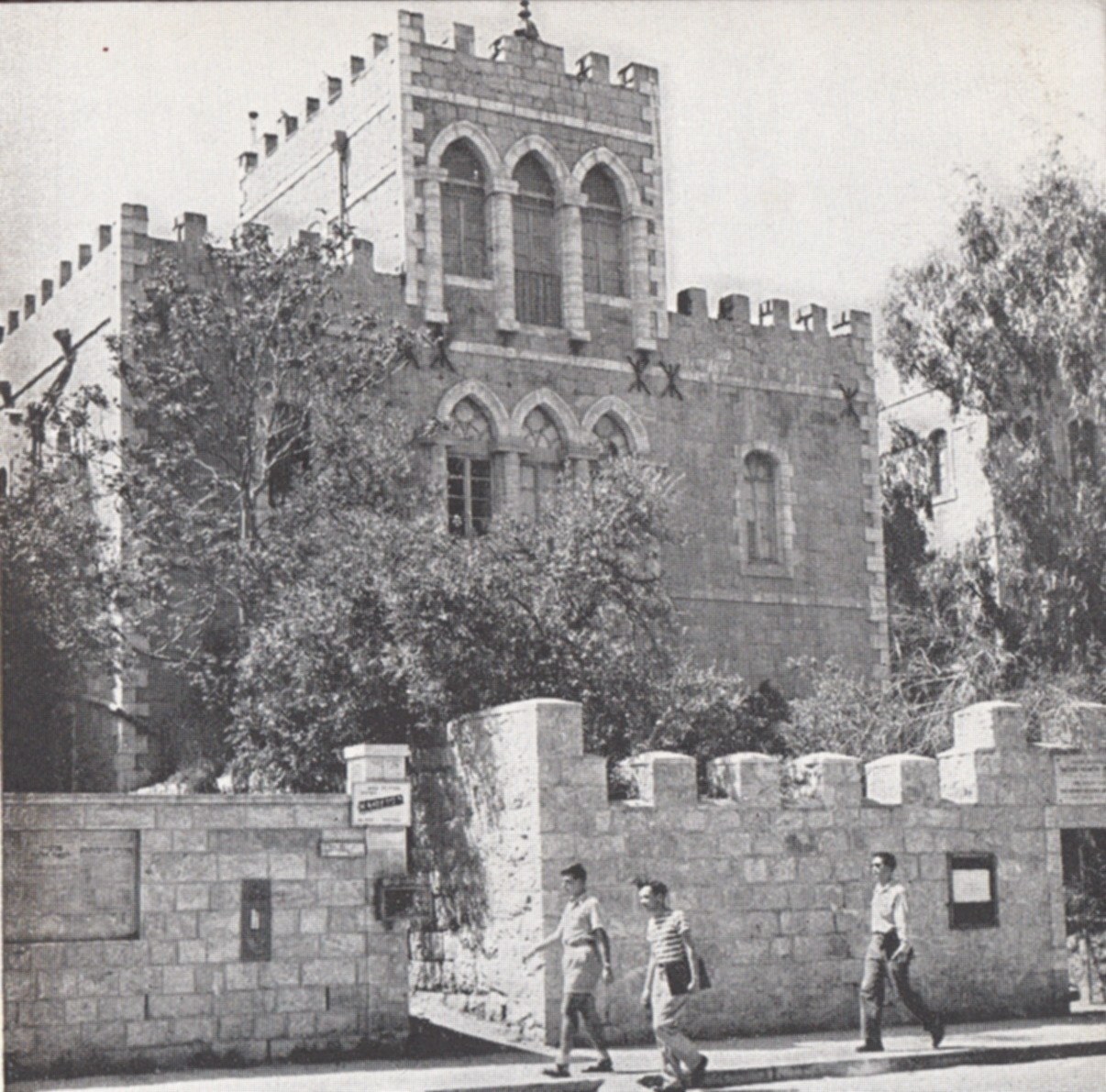
In 1929, the school closed for a second time because of financial difficulties, and Boris traveled to America to raise funds.
In March 1932, Boris Schatz died in Denver, Colorado, at the age of 66. His body was brought to the Land of Israel, and he was buried on the Mount of Olives in Jerusalem. In 1935, about three years after Schatz's death, the new school opened.
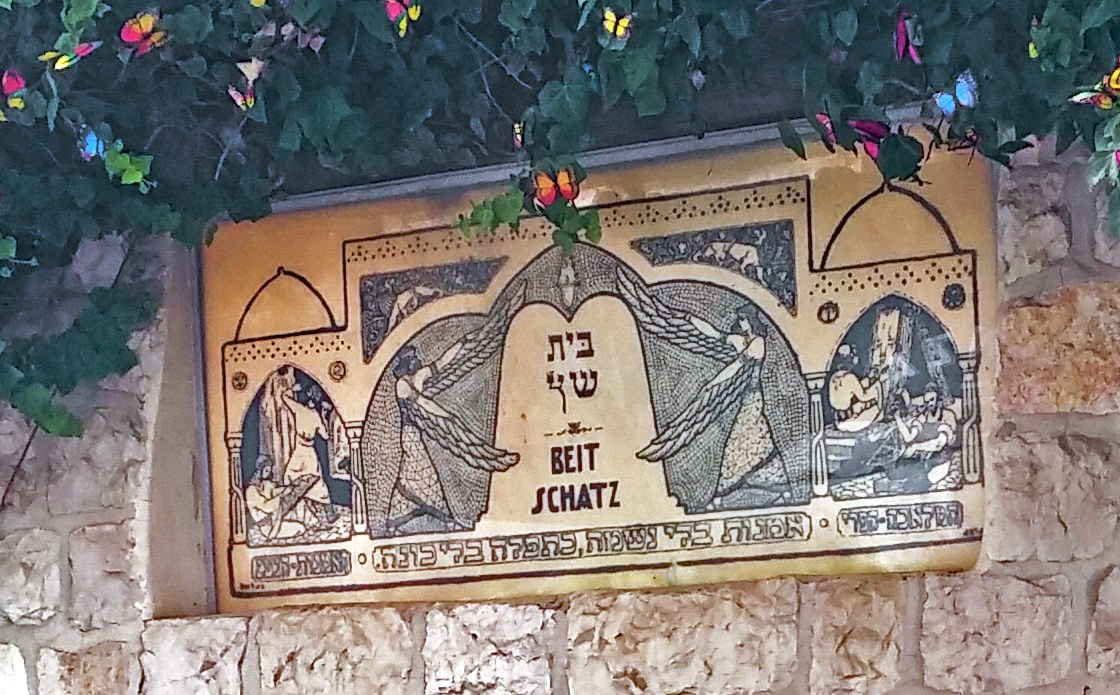
The story of Bezalel is told through various buildings and works in Jerusalem and Tel Aviv. As mentioned, Bezalel's first home was at 7 Adler Alley in Jerusalem. Its first permanent building was at 12 Shmuel Hanagid Street, and the house where Boris Schatz lived was at 3 Bezalel Street.
Ceramic works made at Bezalel, recognizable by the school's distinctive style and combining biblical stories, Hebrew lettering, and an Oriental flavor, can be seen on the entrance doors of Bikur Holim Hospital in Jerusalem (74 HaNevi'im Street) and at Lederberg House in Tel Aviv (29 Rothschild Boulevard, on the corner of 116 Allenby Street).
תגובות
עדיין אין תגובות.