
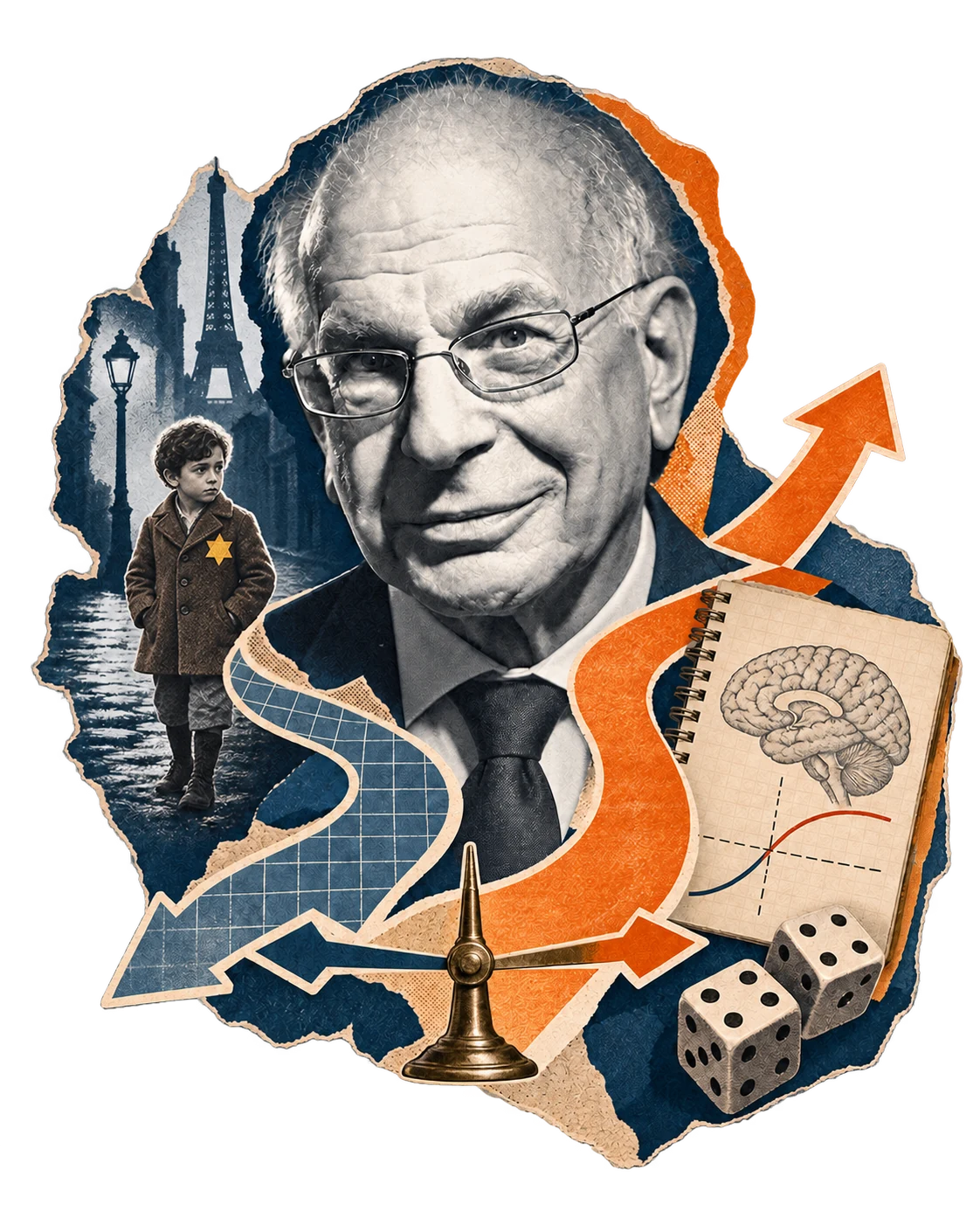
A Jerusalem boy who grew up in occupied Paris, survived the Holocaust, won the Nobel Prize, changed how we understand decisions, and ended his life in a way that posed one final, thought-provoking puzzle
Daniel Kahneman
The Rational Man and Prospect Theory
For many years, economists developed entire theories based on a single powerful and influential assumption: the economic man is a rational being. He weighs, calculates, compares, chooses, and ultimately makes the decision that will bring him the greatest benefit. Within this way of thinking, utility theory took shape, with one of its central pillars being the work of John von Neumann and Oskar Morgenstern. In 1944, the two published their foundational book, Theory of Games and Economic Behavior, in which they presented a theory of decision-making under risk and uncertainty. According to their theory, a rational person makes decisions in an effort to maximize expected utility. In other words, even when the future is uncertain and risks exist, people can weigh probabilities, assess possible outcomes, and choose the course that best serves their preferences. Moreover, those preferences can supposedly be represented by a numerical mathematical function, making it possible to predict economic and strategic behavior with relative accuracy.
Then, in 1979, a true earthquake began to shake the field of economics. The theory that had held sway for some thirty-five years was challenged by prospect theory, developed by two Israeli psychologists, Daniel Kahneman and Amos Tversky. Kahneman would later receive the Nobel Prize in Economics for this work. Kahneman and Tversky were not content to ask how people should behave according to an ideal rational model. Instead, they asked a much simpler, sharper, and more unsettling question: How do people actually behave?
Through a series of fascinating experiments, they showed that people do not calculate utility coldly and precisely, do not weigh risks in a balanced way, and do not respond to gains and losses in the same manner. They also argued that human psychology prevents people from being rational in the way utility theory requires. From these observations, they formulated three central principles that fundamentally changed the way we understand human decisions.
Reference Point
Reference point
People do not think in terms of absolute wealth, as utility theory assumed, but in terms of change, gain, or loss relative to a particular starting point. In other words, what determines how we feel is not only what we actually have, but what we expected to have, what we thought we deserved, and the point of comparison from which we started.
A simple example illustrates this well: if you discover that you have 10,000 shekels in your account, your emotional reaction depends entirely on your reference point. If you thought you had only 5,000 shekels there, you will feel happy because you have experienced a gain. But if you were certain you had 20,000 shekels, you will feel deeply disappointed because you have experienced a loss, even though the final amount is exactly the same. The same reality, the same number, the same bank balance, but a completely different human feeling.
Loss Aversion
Loss aversion
This is perhaps Kahneman and Tversky's most famous discovery: the pain caused by a loss is roughly twice as great as the joy brought by an equivalent gain. Psychologically, losing 100 shekels hurts much more than finding 100 shekels pleases us. A loss stings, troubles us, and stays in our minds. A gain, by contrast, makes us happy, but often fades more quickly.
This aversion to loss leads to a clear asymmetry in how people respond to risk. In the domain of gains, people tend to become risk-averse. They would rather receive 500 shekels for certain than have a 50% chance of winning 1,000 shekels, even if the expected value is mathematically similar. Certainty reassures them, while the possibility of losing the potential gain seems too painful.
The Value Function
The value function
Kahneman and Tversky drew a function shaped like the letter S to describe the human relationship to value. In the domain of gains, the function is concave, meaning that the mental gain from each additional shekel diminishes. The first shekel is more exciting than the next, and the increase in the feeling of value gradually weakens as the gain grows.
By contrast, in the domain of losses, the function is convex and much steeper. The slope of pain is sharper, faster, and deeper. A small loss can hurt a great deal, and the shift into a feeling of loss is more intense than the shift into a feeling of gain. They showed that gains and losses are not merely asymmetrical, but that the human mind itself is built to assign them entirely different emotional weights.
They also discovered that people tend to overestimate low probabilities, which helps explain, for example, why people buy lottery tickets even though the chance of winning is almost zero. At the same time, people tend to underestimate high probabilities. In other words, even when something is almost certain, we find it difficult to treat it as such, and sometimes give disproportionate weight to precisely the rare and dramatic possibility.
Prospect theory showed that our decisions are driven not only by cold calculations of utility, but also by deep, inherent, and recurring psychological biases. In doing so, it effectively founded the field of behavioral economics, which examines people as they really are, not as classical models hoped they would be.
While John von Neumann, a Hungarian-born American Jew, and Oskar Morgenstern came from the exact sciences, mathematics and economics, Daniel Kahneman and Amos Tversky came from an entirely different world: psychology. This difference was fundamental. They did not look at people as equations, but as living beings who think, feel, fear, hope, regret, make mistakes, and learn.
The shift from the assumption of a rational person to a model that recognizes the inherent limitations of the human information-processing system is not merely an academic achievement. It is a conceptual revolution that affects every aspect of our lives, from law and medicine to public policy and risk management. And it affects each of us almost every day. This is no abstract exercise for the halls of academia. It is practical, real, and deeply human.
Childhood in Occupied Paris
Daniel Kahneman was a seven-year-old boy in Paris when the Germans invaded. Jews were required to wear a yellow star and were forbidden to walk in the street after six in the evening. One day, while playing at the home of a Christian friend, Kahneman realized that he had missed the curfew. He nervously turned his brown sweater inside out, put it on with the inside facing out, and hurried home. He would always remember how his heart pounded during that short walk.
"On the empty street, I suddenly saw a German soldier approaching. He was wearing the black uniform I had been told to fear above all others. I quickened my pace, but he beckoned me to come over. I was terrified that he might notice the yellow star inside my sweater." The soldier lifted him into his arms and hugged him. "He spoke to me with great emotion, in German. When he put me down, he opened his wallet, showed me a picture of a boy, and gave me money. I walked home more certain than ever that what my mother had told me all those years was true: human beings are endlessly complex and interesting."
Daniel Kahneman's family, of Lithuanian Jewish origin, lived in Paris. His father, Ephraim, worked as a senior chemist at L'Oréal, and the family led a stable, secure life. But in 1940, when Paris fell to the Nazis, everything changed in an instant. The familiar order collapsed, and life became a prolonged journey of fear, hiding, and survival.
His father was arrested and taken to the Drancy camp on one of the first transports, the transit station from which many Jews were sent to their deaths. After six weeks, he was released thanks to the intervention of his manager at L'Oréal, who wielded influence in the Vichy regime. This release saved his life, but did not restore the family's lost sense of security.
The war years passed with the family constantly on the run. They wandered and hid in southern France and in rural areas, sometimes in harsh and impoverished conditions, even living in places such as a chicken coop. As a boy, Kahneman lived with the constant feeling of being hunted, and described himself as being pursued "like a rabbit." The experience stayed with him into adulthood. It made him a "chronic worrier," but also gave him a deep and painful understanding of the fragility of social order and the surprising complexity of human nature.
Perhaps it was there, in a world where adults concealed their fears, kept secrets, changed identities, and had to make fateful decisions under constant threat, that his desire to decipher people's inner worlds took root. The desire to understand the contradictions, fears, small gestures, and puzzles that make up the human mind may have been born that very day, on that empty street in occupied Paris.
Kahneman was born in 1934 in Tel Aviv, while his mother was visiting her family in the Land of Israel. His parents, both born in Lithuania, had emigrated to France in the early 1920s, where they built their lives until the war upended everything. In 1944, before the war had ended, his father died of an illness. After the war, in 1946, the family immigrated to the Land of Israel. Kahneman was then a young teenager, an eighth-grade student arriving in a new country after a childhood marked by fear, loss, and displacement.
Studies and the Partnership with Tversky
In the Land of Israel, a new chapter in his life began. Kahneman studied at the Hebrew University of Jerusalem, focusing on psychology alongside a secondary specialization in mathematics. He later said that he was only average at mathematics, but loved psychology very much. He explained that his attraction to the field had begun in childhood, out of a deep interest in people and what they said about one another. Kahneman said he turned to psychology because he was interested in gossip. "I grew up in a world made up mostly of people and words, and most of the words were about people. Nature was barely present."
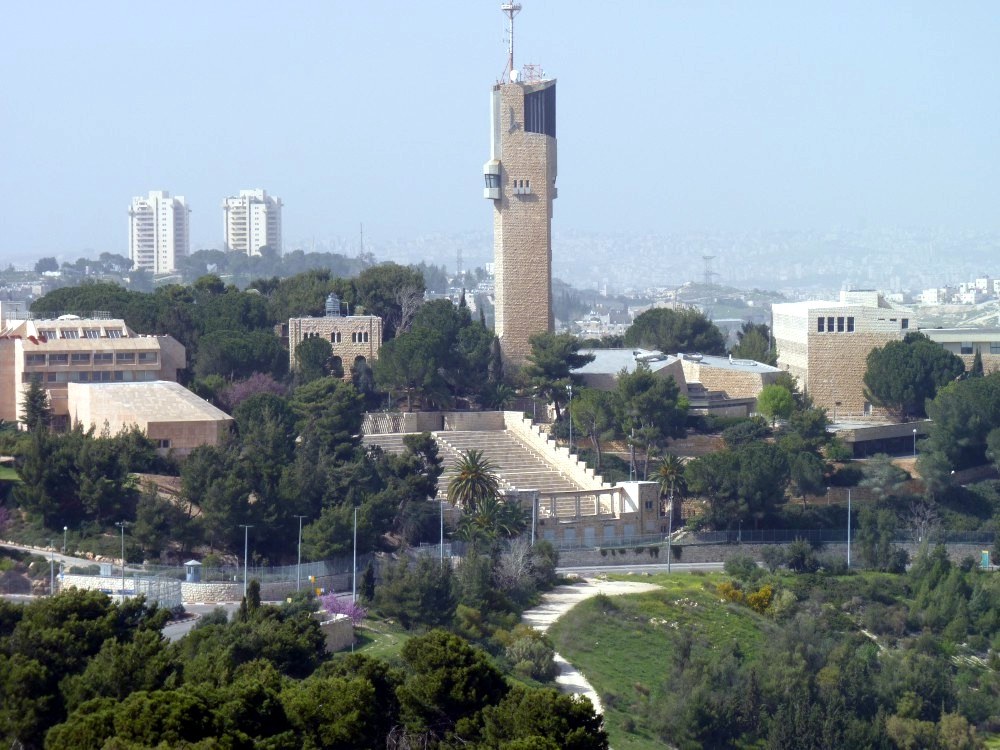
After completing his psychology studies at the Hebrew University, Kahneman joined the Israel Defense Forces and served as a psychologist. It was there, in a young military organization that had to make quick decisions about people, that he began applying his knowledge in a way that would shape his entire scientific career. At the time, selection for combat roles in the IDF was based mainly on interviewers' general, intuitive impressions. It was a method that seemed natural and convincing, but in practice proved to have very little predictive value. Kahneman, who was only 21, developed a new selection system based on a structured questionnaire and the systematic rating of defined personality traits. Rather than relying on a general gut feeling, he compelled interviewers to separate facts from personal impressions.
The result was impressive. When interviewers were required to focus on specific information, measure particular traits, and limit the influence of immediate intuitions, the quality of their predictions improved considerably. It was there that one of Kahneman's central insights began to take shape, an insight that would stay with him throughout his life: the human brain, brilliant as it may be, sometimes needs an external structure to protect it from its own biases.
After leaving the IDF, Kahneman went to the United States, where he completed a PhD at the University of California, Berkeley. He later returned to Israel, teaching and conducting research at the Hebrew University of Jerusalem. There, the meeting took place that would change not only his life, but also the face of psychology, economics, and decision theory.
The most significant chapter of Kahneman's career began in 1969, when he met Amos Tversky at the Hebrew University. The two seemed almost like opposites. Kahneman was skeptical and introverted, a sensitive man inclined to doubt even his own ideas. Tversky, by contrast, was a self-assured, sharp, charismatic sabra with a brilliant logical mind. It was precisely this difference between them that created an extraordinary partnership, rare in its intensity.
For more than a decade, they functioned like a single mind in two bodies. They spent thousands of hours together in closed rooms, talking, arguing, laughing, and endlessly refining their wording. They wrote every word of their papers together, examined every idea from every angle, and developed a new language for understanding how people judge, make mistakes, assess risks, and make decisions under conditions of uncertainty. They were not merely colleagues. They were a rare intellectual pair. For more than a decade, they worked together with extraordinary intensity, thought together, laughed together, finished each other's sentences, and sometimes even tossed a coin to decide whose name would appear first on a joint paper. Kahneman described it simply and movingly: "We came to know each other almost as well as we knew ourselves." Out of this friendship came a revolution. Kahneman and Tversky showed that people do not make decisions rationally, as classical economics assumed. They exposed biases, mental shortcuts, failures of intuition, and loss aversion, thereby laying the foundations of behavioral economics.
In 1974, their collaboration produced the landmark paper "Judgment under Uncertainty: Heuristics and Biases," which changed the way researchers think about thinking. Kahneman and Tversky showed that people are not rational decision-makers, as classical economic models had assumed, but beings who use mental shortcuts that are sometimes useful, yet also prone to systematic biases.
Their theory helped answer both everyday and profound questions: Why do we find it difficult to save for retirement? Why are we more upset by losses than we are happy about gains? Why are most of us poor investors in the stock market? And why do even very intelligent people sometimes make very bad decisions?
By the late 1970s, the two men's personal and professional lives had begun to drift apart. Kahneman divorced his first wife, Ira, and in 1978 married the psychologist Anne Treisman. He moved to Canada, and later to the United States. Tversky also left Israel and took a prestigious position at Stanford. Their collaboration continued, but no longer with the same intensity. The distance, their new lives, and the individual recognition each received created growing tension between them.
In 1996, Tversky died of cancer, aged just 59. Six years later, in 2002, Kahneman received the Nobel Prize in Economics for their joint work. Tversky could not receive the prize because the Nobel is not awarded posthumously. Kahneman was careful to emphasize that the prize belonged to them both: "We were a team," he said, and he noted that the work for which he was honored had emerged during their period of intense collaboration.
Happiness and the Final Years
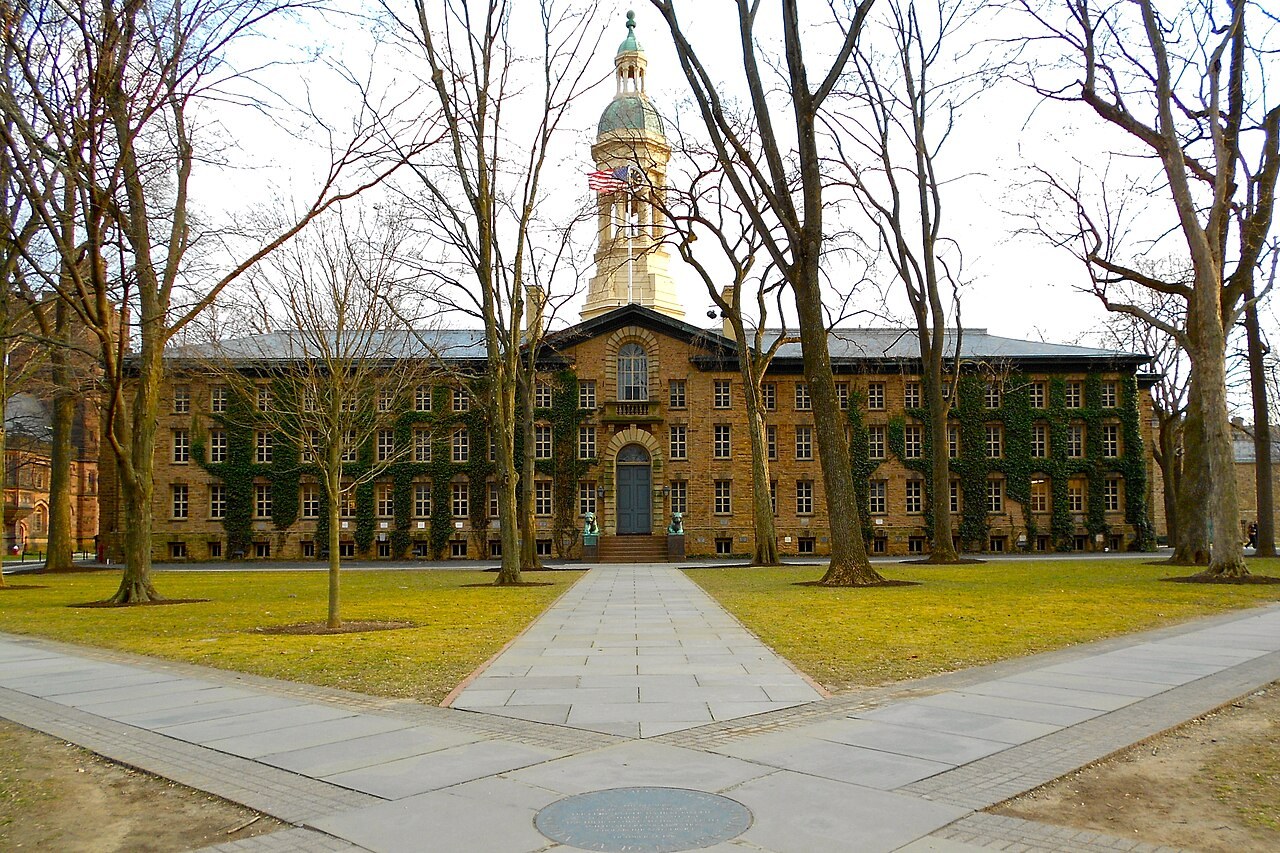
Kahneman not only studied economic subjects, but also one of the questions that preoccupy us: happiness. In 2006, together with colleagues at Princeton University, he published a study that tried to answer the question: Can money buy happiness? Their answer was no. According to the study, an increase in income has only a short-term effect on people's level of life satisfaction. They found that in countries where per capita income rises suddenly, residents' satisfaction does not increase by the same amount. They argued that the richer people are, the more likely they are to experience negative emotions.
In an interview with Money magazine at the end of 2007, Kahneman said, "Economists argue that people are rational by nature, that they use all the information available to them to make decisions, and that those decisions are consistent over time. Psychologists, on the other hand, argue that this is not a realistic assumption. Economists think about what people should do. Psychologists examine what people actually do."
After his second wife died in 2018, a surprising and moving personal chapter began in Kahneman's life. In his final years, he lived in New York with Barbara Tversky, Amos's widow. The two people who had been so close intellectually had grown apart, been separated by death, and in the end remained connected through the person closest to Tversky.
The end of Kahneman's life was unusual, deliberate, and thought-provoking. He chose to end his life by medically assisted suicide in Switzerland, in March 2024, when he was 90. Before his death, he sent his friends a farewell message, writing that he was on his way to Switzerland, where his life would end. Days earlier, he had been in Paris with Barbara Tversky. He met his family, visited museums, went to ballet performances, and laughed and cried with those close to him.
And so the life story of a man who studied how we think, remember, and choose came to a close. Kahneman taught us that memory does not preserve life as it was, but turns it into a story. Perhaps his own life, too, with his great partnership with Tversky, the rift, the loss, the late-in-life love, and the deliberate choice at the end, is the story of a man who tried until his final moment to understand human nature, and himself as well.
תגובות
עדיין אין תגובות.