
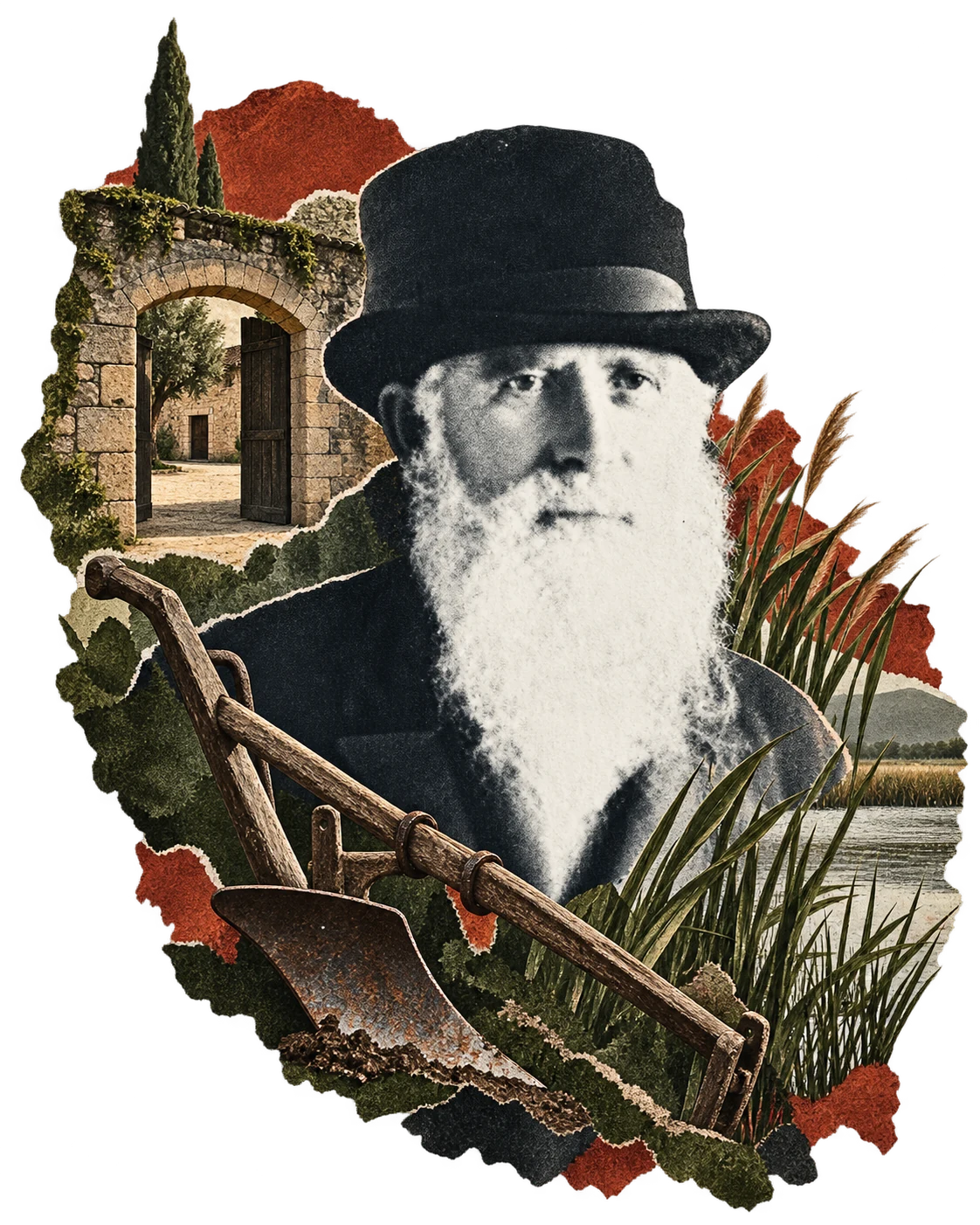
Modern settlement in the Galilee began with members of the Old Yishuv, residents of Safed, who established the first small settlements on Mount Meron. The settlement of 'Jermak' (the Arabic name for Mount Meron) was founded by Israel Bak and his son Nisan Bak in 1834, but was abandoned after just a few years. Settlement gained real momentum with the First and Second Aliyot. Jewish immigrants from Europe then arrived in the Galilee. They founded the colonies of Rosh Pina, Yesod HaMa'ala, Metula, Ilaniya, Kfar Tavor, Yavne'el, Beit Gan, and others. Unfortunately, the ravages of nature and economic hardships caused nearly all of them to fail.
Yoav Dubrovin Immigrates to the Land
It was Haim Kalvarisky-Margalit, a JCA official, who at the beginning of the 20th century believed that improving the poor farming standards of most Jewish farmers required bringing over from Russia several converts who were considered experienced farmers. Their extensive experience, qualities, and achievements aroused envy. They were content with little, worked diligently, and did not complain. Over the years, the settlers’ envy of the converts faded. The farmers of the Galilee learned the secrets of working the land, and the converts’ children became frequent visitors to the settlers’ homes, and even married their daughters.
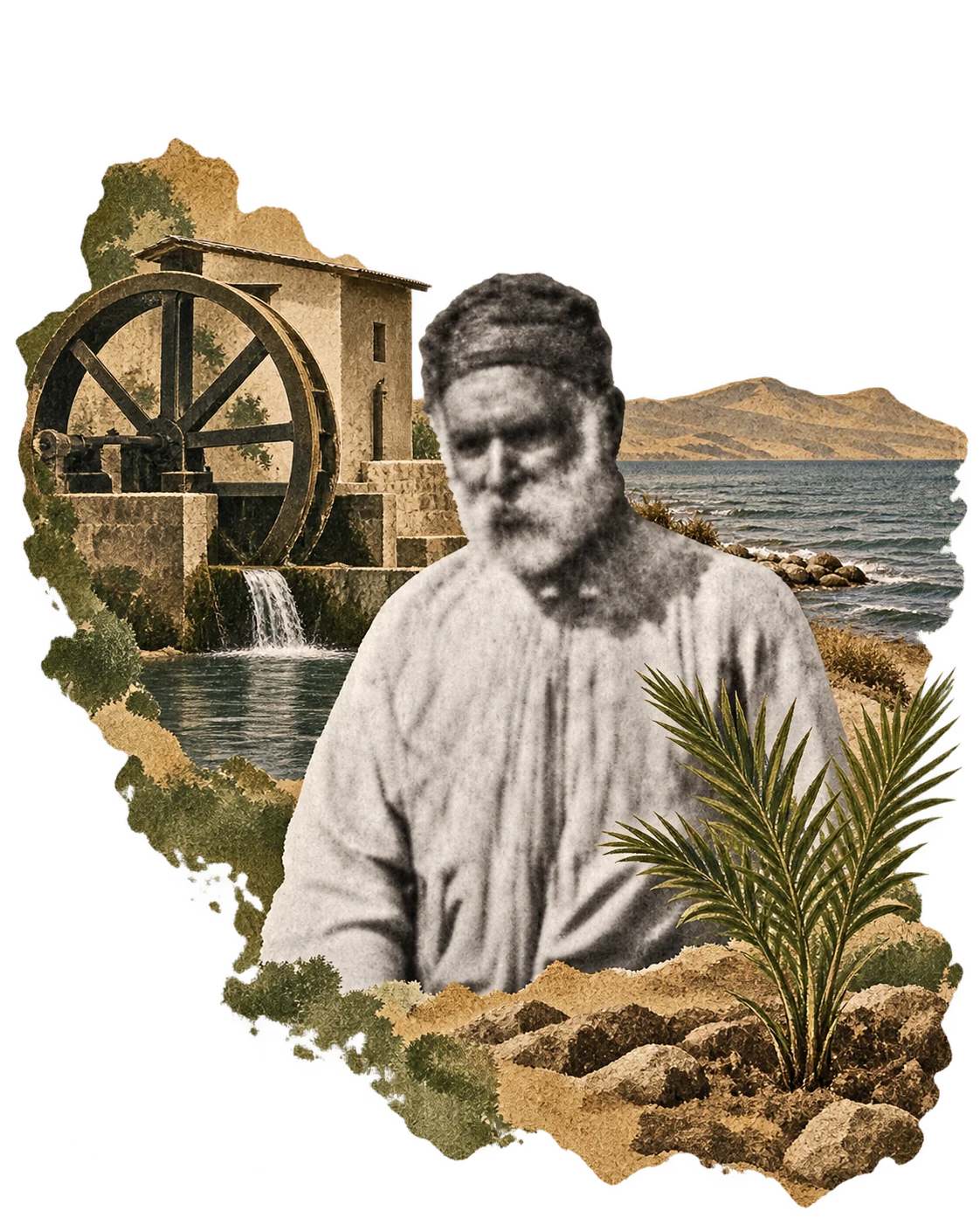
The best-known of the converts was Yoav Dubrovin.
Yoav Dubrovin came to the Land of Israel in 1903, at the age of 72. Kalvarisky offered him a 650-dunam parcel of land in Yesod HaMa'ala free of charge. The proud Yoav replied: "The farmers in Russia used to say: If a farmer receives land without paying for it, a windstorm will come and take it away without compensation."
At the beginning of the 20th century, Meir Dizengoff and Dr. Hillel Yaffe traveled to the city of Kovno to encourage immigration. They invited the town's Jews to gatherings where they tried to inspire them to immigrate to the Land of Israel. The two used various appeals to encourage immigration: from the Promised Land and the land of our forefathers, to self-governing communal life and the observance of commandments that apply only in the Land of Israel. Dr. Yaffe said that every day a bearded man would arrive, mingle with the Jewish crowd, and ask about Jerusalem, Mount Carmel, and the Sea of Galilee. He was curious about the country's climate, its people, their way of life, and farming. He told the two emissaries that he was a Christian from a Sabbath-observant family of Subbotniks who believed in the Bible, and that his family owned estates and homesteads in Astrakhan, on the banks of the Volga. That man was Yoav Dubrovin.
A friendship developed between Dubrovin and Dr. Yaffe, and two and a half years later, Dubrovin and his family converted to Judaism in accordance with Jewish law. He and his family returned to Astrakhan, and when they decided to immigrate to the Land of Israel and become farmers there, they sold their estate for a large sum of money. They brought plows, carts, sowing and harvesting tools, threshing tools, saddles, and a churn for separating milk. On their way to the Land of Israel, they passed through Odessa and brought a Torah scroll, which is still kept in the synagogue in Yesod HaMa'ala.
The Estate Near Yesod HaMa'ala
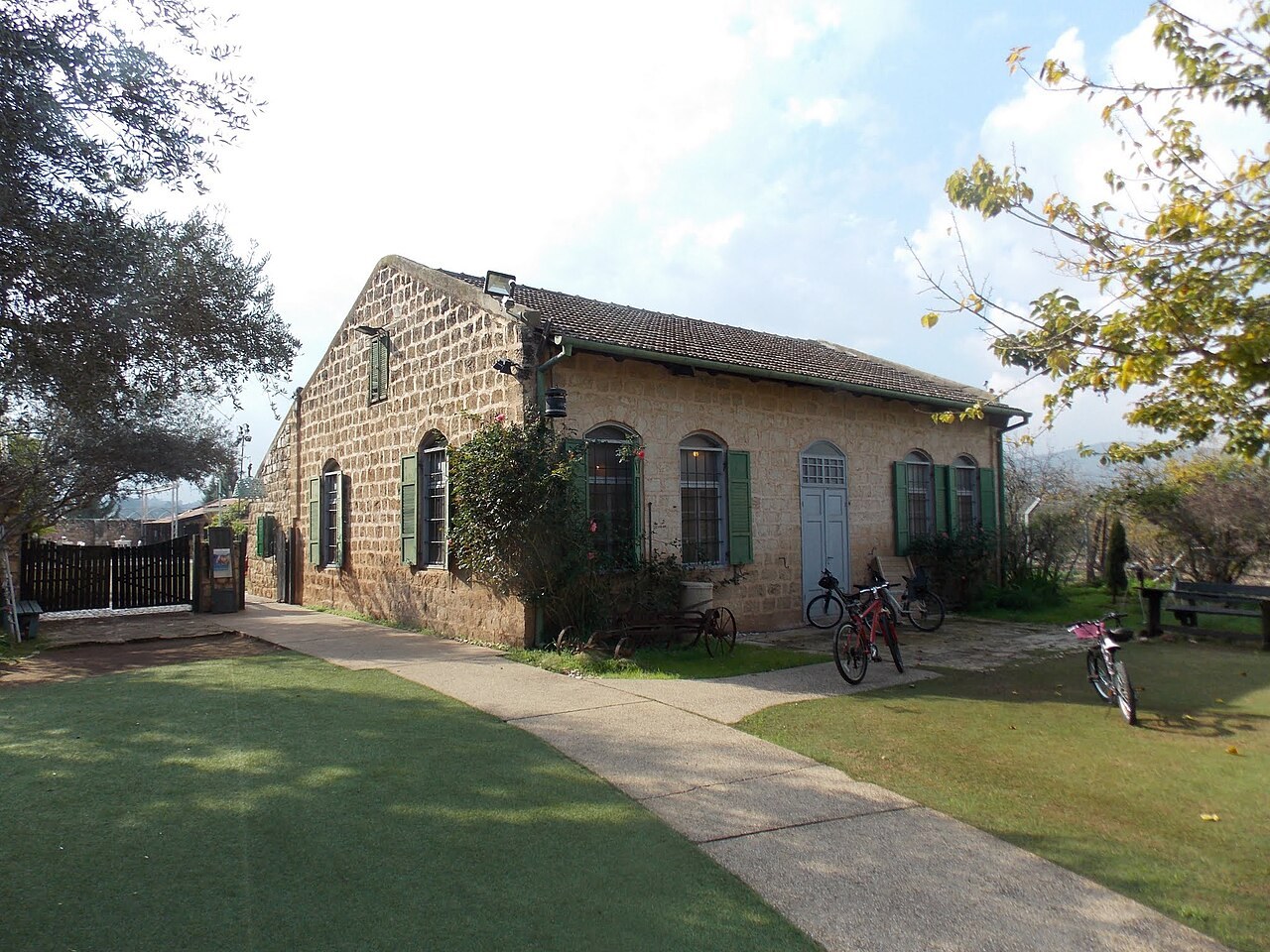
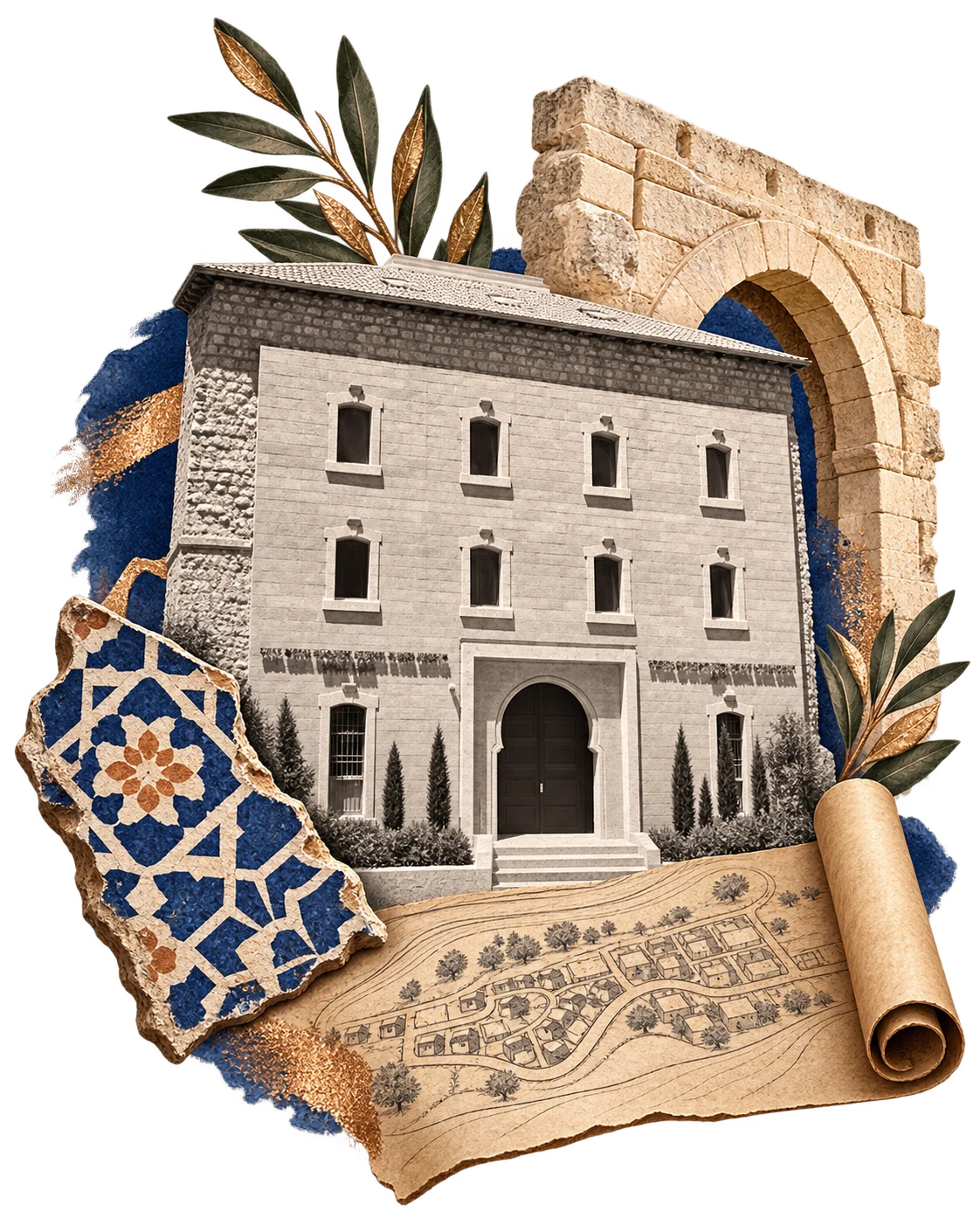
Yoav Dubrovin bought the land next to Yesod HaMa'ala with his own money and built an estate with a spacious square courtyard, surrounded by a wall, with all its entrances opening onto the courtyard, making it difficult to break in, loot, or attack. The estate still stands outside the colony. The family repaired and deepened an existing water well until they reached abundant groundwater.
The Dubrovin family raised oxen, cows, horses, and poultry on their estate, while a huge flock of geese grazed in the nearby Hula swamp. In a short time, they developed a well-organized farm. With the agricultural equipment they had brought and their knowledge of crop rotation, they produced large harvests. But Yoav Dubrovin was not satisfied with that. He returned to Russia, and when he came back, he brought tools that further helped improve the estate's agricultural productivity.
Every morning, he went out to work in the fields with his four sons. His sons were strapping young men, strong, tall, and exceptionally hard-working. Yoav would stop as he walked through the cornfields, spread his arms, and thank the Lord for granting him and his family the privilege of being Jewish farmers in this blessed land.
In 1922, an agricultural exhibition was held in the colony of Rosh Pina. The exhibition included a contest to determine 'Who is the farmer in the Galilee with the heaviest ox?' A large scale (kaban) was set up, and 26 contestants came.
Dubrovin was number 14 on the list. When his ox stepped onto the scale, the springs broke and the scale fell apart, and Dubrovin received a medal for raising the heaviest ox in the Galilee. The Dubrovin family was admired and envied. Their name began to spread in the area, and they welcomed important guests and curious farmers who wanted to be like them.
Malaria and Loss in the Family
The Dubrovin estate stood near a swamp, and fever struck the Dubrovins mercilessly. The first member of the Dubrovin family to fall victim was their son Yaakov, who was 25 and left behind a pregnant wife and a daughter. Yoav Dubrovin and his sons did not despair and continued working their land, but malaria would not let up and also attacked their son Avraham. He left behind a wife and a child. To those who came to comfort him, Yoav Dubrovin said: "Do not weep for the dead. We must not question God's ways, and as for possessions, you know, my sons, that I did not come to the Land of Israel to acquire wealth. Even hard times do not last forever, and throughout all the times we have endured and all the calamities, I have never heard you speak of leaving the country. That is a good sign, my sons, a sign that you are faithful to me..."
That Sabbath, Yoav came to a decision: he had to save his two grandchildren who were with him at the estate. He decided to leave the estate house, leave his eldest son Yitzhak to run the farm, get away from the swamp, the Anopheles mosquitoes, and malaria, and move to the neighboring colony of Rosh Pina. There he raised chickens and geese, goats, a flock of sheep, and three cows. Behind the house, he cleared a plot of stones and grew vegetables.
But fate tormented this family. Their son Ephraim, who was plowing the olive grove with an ox, was bitten by a fly, and Yoav, now 95, buried his youngest son as well. Ephraim had left Esther behind, pregnant. Sadly, three months later, Esther went down to the spring to water the sheep, went into labor, and died. Yoav and his wife Rachel cared for the two grandchildren. Five years later, Rachel died, and Yoav, now a hundred years old, continued living in the Galilee, devotedly caring for his two grandchildren. Yoav Dubrovin died at the age of 104.
At the beginning of 1967, Yitzhak Dubrovin was the eldest son left to maintain the estate. Yitzhak was already a very old man, clinging tooth and nail to the Galilean estate. Nahman Shai, a writer for the newspaper BaMachaneh Nahal, visited him at the time and described it this way: "Dubrovin Estate, 1967-1966 - who really cares? Certainly not Yitzhak. 'What year is it today? Do I know?' In his room-kitchen lies a newspaper from January 1964. Apart from the food, it's the newest thing there. The cuckoo clock on the wall was no doubt smashed sometime in the early 1940s, and beside it proudly hangs a certificate stating that the Dubrovin family received an honorable mention at the agricultural exhibition held in 1927, under the auspices of His Excellency the High Commissioner, Lord Plumer. 'That's ours,' he grins... He loves nothing more than hopping off his mare to visit the kindergarten, which stands right beside the dirt road leading to his home, to play with the adorable little ones. They, it must be said, are lavish with their affection for 'Uncle,' or rather 'Grandpa,' Yitzhak... Five hundred meters of mud separate Dubrovin's home from the colony, but every step along those 500 meters takes you back to the beginnings of Yesod HaMa'ala. This house should have been made into a museum..."
Yitzhak Dubrovin stayed on to care for the farm in Yesod HaMa'ala. Despite his advanced age, he would walk upright through the fields of his father's estate, and he told his friends firmly: "My Yesodka is not to be abandoned." At the age of 92, Yitzhak grew frail, and in 1968 he was moved to a nursing home in Gedera, but not before he donated the land and estate house to the State of Israel.
The estate was renovated and turned into a museum and archive telling the heroic story of the Dubrovin family and the story of the colony of Yesod HaMa'ala.
תגובות
עדיין אין תגובות.