
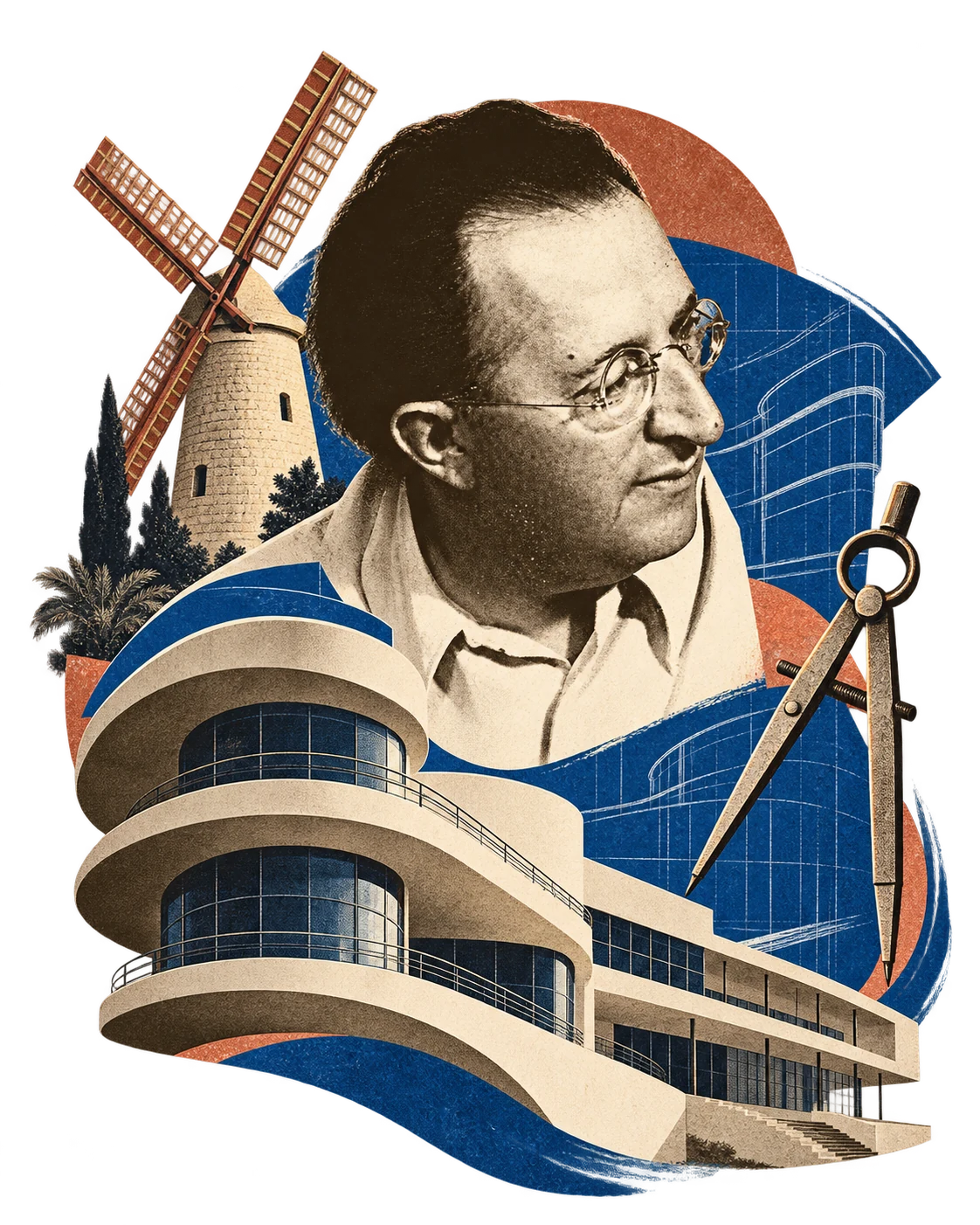
A gifted man who owned Europe's largest architectural practice, lived in a windmill, built 'the palace,' and left his mark on the Israeli landscape.
The Visit to Rehovot and Weizmann's House
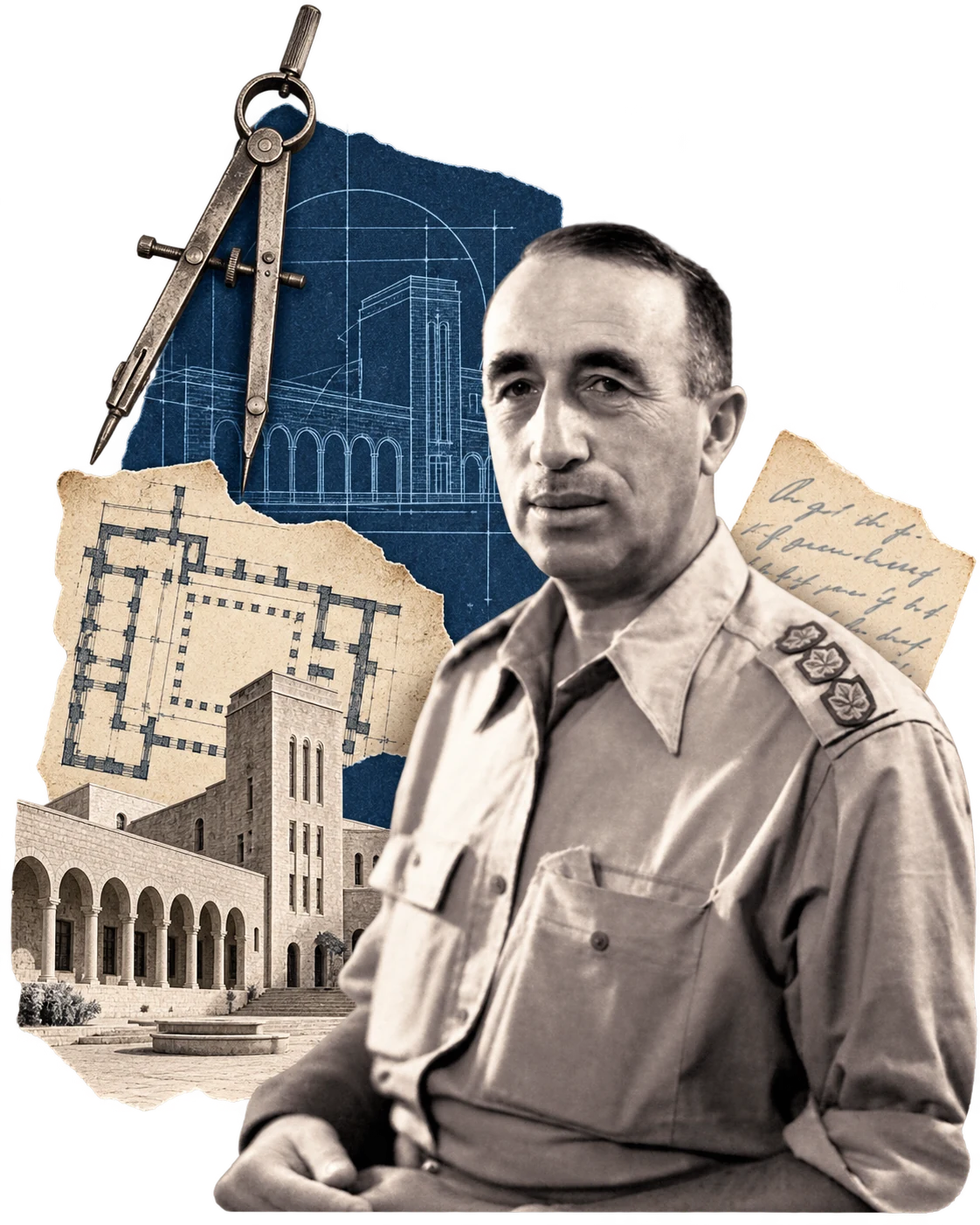
The two elegant men standing on the bare hill near Rehovot in the autumn of 1934 attracted considerable attention in the country. Both were known around the world. One, Dr. Chaim Weizmann, was a pioneering chemist who had grown wealthy from patents registered in his name. He devoted his time, talent, and connections to the Jewish people, and would later become the first president of the State of Israel. The other, Erich Mendelsohn, had fled Germany not long before, where he had owned the largest architectural practice in Europe. In Rehovot, Mendelsohn and Weizmann reviewed the plans for the doctor's future home, a house nicknamed 'the palace' that made it onto a global list of 'iconic homes.' Prominent figures from around the world were guests at 'the palace,' and the Weizmanns were buried in its garden. Erich Mendelsohn described the house this way: "An oriental building, but only to the extent that a person of European culture could live in it." On the visit to the barren hill, his wife, Louise Mendelsohn, wrote: "The news that Erich Mendelsohn was in Jerusalem and had been appointed architect for the Weizmann house spread like wildfire. His client from Germany, Salman Schocken, had come to live in Jerusalem and had plans to build a house and library for his valuable collection of Kabbalistic works, as well as other rare books and engravings. Hadassah was considering building a new hospital... Erich was besieged by visitors who came to discuss building plans with him."
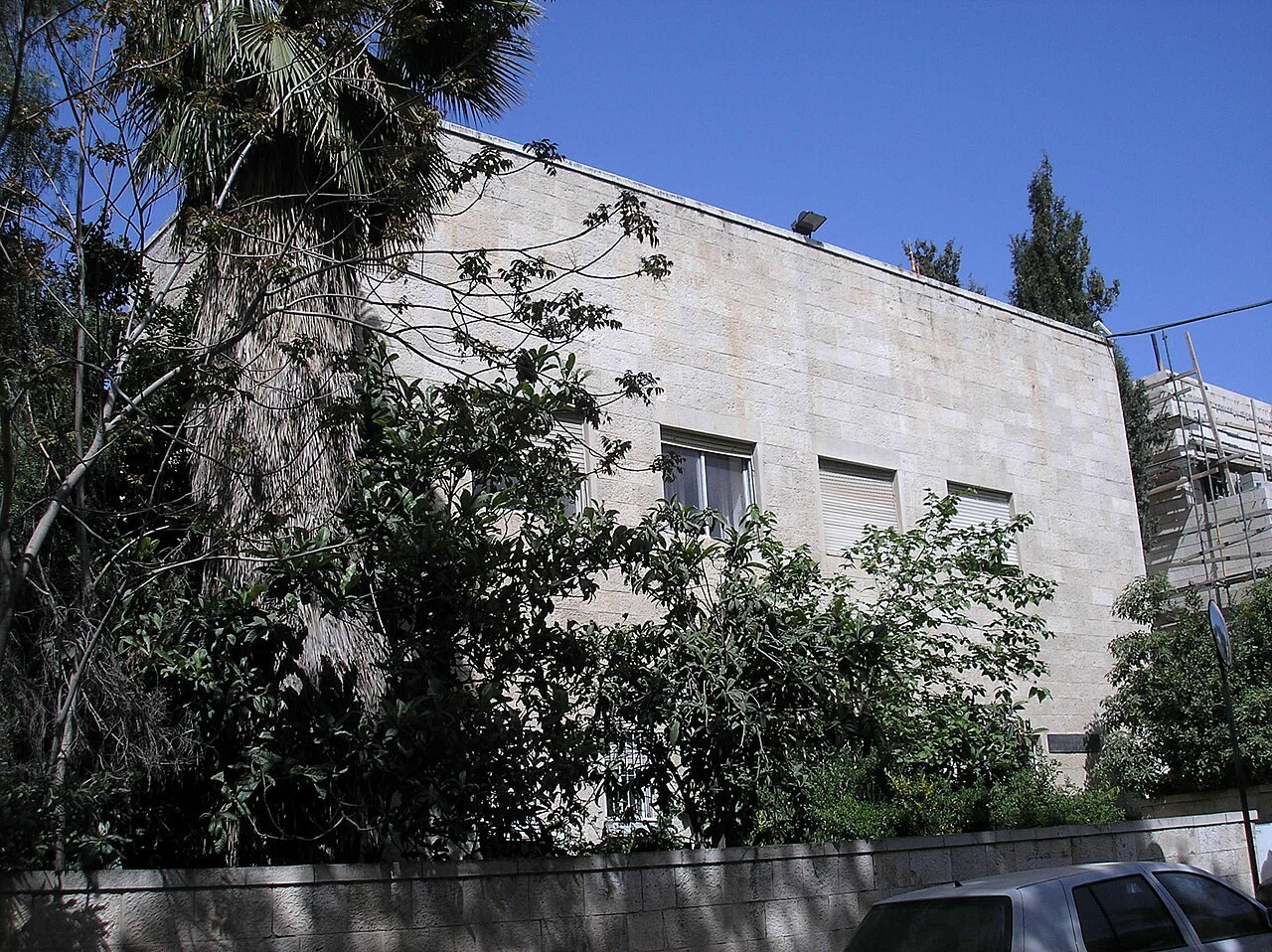
In the country, Mendelsohn stayed at the King David Hotel in Jerusalem, with his room overlooking the Old City walls. Potential clients began streaming into his room until he had to move to a temporary office in Jerusalem and postpone his return to England by several weeks. The following year, Mendelsohn rented the windmill on Ramban Street in the Rehavia neighborhood and opened his office there, alongside his London office. In the years that followed, he divided his time between London and Israel, and in 1939 the Mendelsohns moved into the mill, where they lived for two years.
Fame in Europe and Exclusion
Mendelsohn had a talent for anticipating how the buildings he designed would fit into their surroundings, and was even able to see the future. Just weeks after Hitler's rise to power, while many were saying, "It won't happen..." and at the peak of his career, he left. He left behind several buildings he had designed in Germany, among them the Einstein Tower in Potsdam and the Schocken department store chain in Stuttgart, Nuremberg, and Chemnitz. He also designed private homes, such as the Sternfeld Villa in Berlin, large schools, and many other buildings, including a silk trading house in Gleiwitz, the power station in Wüstegiersdorf, and his own home in Berlin. He also designed several buildings in Britain: the Universum, which was the most modern cinema in the world, and the De La Warr Pavilion in southern England. To this day, some of his works are destinations for architects from around the world.
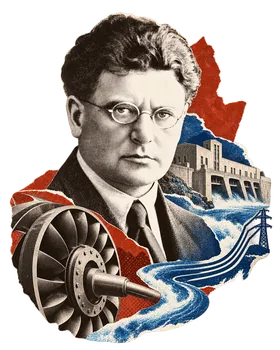
Erich Mendelsohn's name was known around the world. He was invited to lecture throughout Europe. In 1923, he came to Israel after accepting an invitation from Pinhas Rutenberg, who built the Naharayim power station. The landscape, the people of the Yishuv, and especially the Arab villages made a deep impression on him. He was a romantic Jew who identified with artists and aspired to make the world a better place. In his architectural style, he sought reconciliation between opposing forces.
Mendelsohn was always looking for ways to build his designs faster, more efficiently, and at lower cost, which his clients appreciated. For example, the Schocken department store in Stuttgart was built in nine months, and the one in Nuremberg in ten months. He built the Universum cinema in central Berlin in a year. Even today, it is hard to imagine constructing large, complex buildings in so little time. Almost all the buildings Mendelsohn built in Germany were for Jewish businesspeople.
Despite his success and fame, Mendelsohn was not accepted into the circle of European modernist architects, a source of great frustration to him. He did not know whether this was due to antisemitism, his age, or perhaps the fact that his clients were wealthy people and commercial entrepreneurs, while the modernist architects' discussions rarely went beyond affordable housing for the working class. In 1927, a German building exhibition was held in Stuttgart, and Mendelsohn was not invited to participate in its most important project, the Weissenhof Estate, which brought together sixteen European architects, including leading figures Ludwig Mies van der Rohe, Le Corbusier, Walter Gropius, and others. In 1928, the architect Sigfried Giedion wrote Space, Time and Architecture, a book considered the bible of modern architecture. Giedion did not mention Mendelsohn at all until later editions.
East and West in Design
During his visit with Weizmann, Mendelsohn discovered that architectural elements from his works, the Sternfeld Villa and the Stuttgart department store, had been incorporated into the young city of Tel Aviv and the new residential areas of Jerusalem and Haifa. He did not see this as a compliment, but as a major missed opportunity for his ideas. What suited Germany did not suit Israel. He saw it as a bitter mistake and, more than that, as a disregard for Jewish roots. In his view, the sources for establishing a national home were not to be found in Europe's ghettos, but in the Eastern world, a world in which people loved the land. He had learned from this world and combined it with his European education. In this way, he created a synthesis between East and West, as he wrote: "At this historic moment, the Jewish people have the opportunity to return to their ancient homeland and to build a bridge in the heart of the world, uniting East and West. For this destiny to become reality, Western knowledge and Eastern purity must find common ground, which for now remains unknown... Palestine represents the union of modern civilization and the most ancient culture."
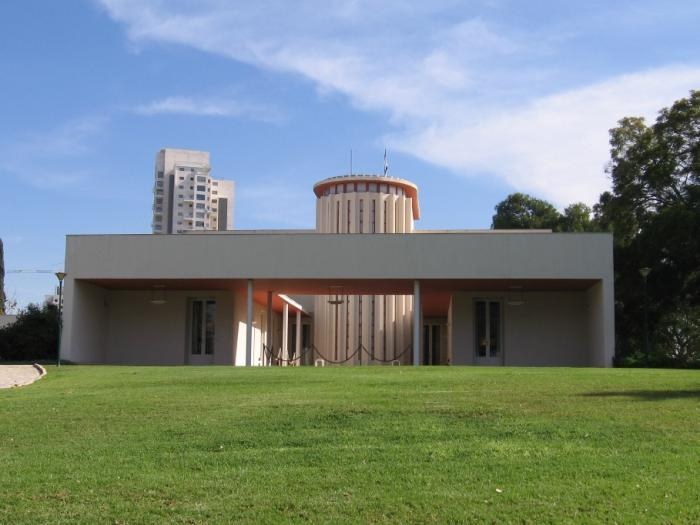
According to Erich Mendelsohn's philosophy, a house had to be in dialogue with its surroundings, which is exactly why he went up with Weizmann to that hill near Rehovot. Chaim Weizmann's home, nicknamed 'the palace,' was built in 1936 and covered an area of 796 square meters. When Weizmann was elected president, the house became the president's official residence. In 1966, after Vera Weizmann's death, it became a museum and opened to the public. In one of his letters, Weizmann wrote: "I am very disappointed with Mendelsohn for wasting a year. He is a brilliant architect but a difficult man." Mendelsohn wrote of the house: "It is thoroughly contemporary... and yet it has the qualities of a dwelling in a subtropical climate. In my opinion, this is the kind of house that will come to prevail in the East after two thousand years, just as it was customary when Judea was a Roman province."
Mendelsohn's modernist, unornamented style was not always well received by his clients. While designing the Hadassah Hospital on Mount Scopus, he was asked by the organization's president at the time, Rose Jacobs, to incorporate 'oriental' elements into the design. In response, Mendelsohn placed three flat domes above the entrance gate to the complex. Whenever asked about them, he mockingly called them "Jacobs's breasts." When the building was complete, he said: "No one could be disappointed if they approached it in light of the stern simplicity and quiet serenity of the great spiritual works of this part of the world - the Bible, the New Testament, and the Koran."
During this period, Mendelsohn was working on many projects. In Tel Aviv, he designed Max Fine College's first building, erected in 1931 on the border between the oil compound and the Railway neighborhood, also known as the Coachmen's neighborhood. "I love the Land of Israel and call myself its true child," he wrote to his friend Kurt Blumenfeld in 1933, before he had even come to the country. "All my work, and especially the unrealistic outbursts in my sketches and ideas, drew their strength from the biblical simplicity that fulfills itself and embraces the whole world at once. I know that the inimitable quality of my first buildings draws on Jewish sources. In my early youth I was aware of this, and this focused awareness led me to see the need for Zionism. For me, Zionism became the only way to find myself and to be creative in the fullest sense of the word."
From Childhood in Germany to the Einstein Tower
Erich Mendelsohn was born in March 1887 in Allenstein, Germany (now in Poland), to a Jewish family. His mother was a milliner, and his father owned a shop. At first, under pressure from his father, he studied economics and law at the University of Munich, since his father claimed that architecture "is not a profession for Jews." But the young Mendelsohn, consumed by obsessive visions of forms and buildings, insisted on pursuing his dream. After two years studying law, he began studying architecture at the university in Berlin. After graduating in 1912, he began working as an independent architect in Munich.
In 1915, Mendelsohn married Louise Maas, who was then twenty. He had fallen in love with her when she was sixteen, and wrote her 1,200 letters before his death. Louise wrote in her memoirs: "Architects think they leave something eternal behind. Their buildings are made of stone and steel, but they too crumble and disappear... The mark Erich left is his futuristic sketches and his letters to me." Louise was a beautiful cellist from a wealthy, high-society family of Jewish tea merchants, a sought-after and well-known socialite, and eight years younger than Erich. Their only daughter, Esther, was born in 1919. Louise devoted her life to her husband, and in their letters they discussed his work and the upheavals in the world they experienced together. During World War I, Mendelsohn enlisted in the German army and served as an ambulance driver on the Russian front. The war left him with a psychological scar, and he vowed never to be involved in wars again: "Millions rush to war, which will ultimately devour them."
Through his wife, Louise, he met the cellist Herbert Freundlich and his brother, Erwin Finlay Freundlich, deputy director of the Kaiser Wilhelm Institute in Berlin. It should be noted that the institute was involved in Nazi scientific research. Despite this, Erwin approached Mendelsohn, a Jew. Erwin asked him to build an observatory to prove the theory of relativity developed by the Jewish physicist Albert Einstein. The tower was built between 1920 and 1921 and began operating in 1924. After construction was complete, Mendelsohn took Albert Einstein on a tour of the building, and Einstein pronounced it 'organic.' Mendelsohn himself was more expansive, saying that he had designed the building under an inexplicable impulse, and that the tower had emerged from "the mystery surrounding Einstein's universe." Albert Einstein's Nobel Prize greatly enhanced the young architect's reputation. The building survived the Allied air raids because its unusual shape caused the blast waves from nearby bombs to pass around it without damaging it.
In 1921, Erich Mendelsohn lost one of his eyes due to an illness. Around this time, Salman Schocken met the young architect. Schocken was deeply impressed by Mendelsohn's sketchbook, particularly his simple, clean, functional style and daring plans, and hired him to design the flagship stores of the Schocken chain in Nuremberg, Stuttgart, and Chemnitz.
Following the success of the Einstein Tower, built in 1925, work began pouring into Mendelsohn's office, and he threw himself into it. Louise took the opportunity to go on vacation in the town of Engadin in the Swiss Alps: "At an altitude of 2,000 meters, above man and time, just me and my cello and a feeling of freedom." She stayed there for several weeks and began an affair with the German-Jewish playwright and revolutionary Ernst Toller: "I was lost in a fateful bond between us." When the vacation ended, so did the affair. In 1929, while living in London, she learned that Toller had hanged himself at the hotel where he was staying in New York. "I could not share my grief with anyone," she wrote. The affair caused a major rift in her relationship with her husband, but Erich decided to make a fresh start with her and build her dream home in the bourgeois suburb of Rupenhorn, on the shore of Lake Stößensee in Berlin. He designed the building, the furniture and tableware, her evening gowns, and even an entire jewelry set. "Erich had to have complete control," Louise wrote. On the other side of the lake lived an amateur violinist named Albert Einstein, who would occasionally come by boat to play music with her. The house was enormous, covering about 4,000 square meters, beautiful, perfectly proportioned, and equipped with the most advanced technology of the time. The new house became a gathering place for all their friends, among them Salman Schocken, Dr. Chaim Weizmann, and the journalist Kurt Yehuda Blumenfeld. Old photographs show them all sitting on the terrace overlooking the lake, happily smoking while Louise played the cello for them. The family lived in their dream home for just three years. In March 1933, on Mendelsohn's birthday and shortly after Hitler came to power, they left Berlin and began their travels around the world. Louise felt no sorrow at leaving the house and later wrote: "A new era begins, without the burden of any possessions." The house was confiscated, along with everything in it, but it still stands today, impressive and awe-inspiring. A commemorative plaque in Erich Mendelsohn's memory, placed by the City of Berlin, is now affixed to the house.
Projects in the Land and the Move to America
Salman Schocken immigrated to the Land of Israel in early 1934 and invited Mendelsohn to design Villa Schocken, his private home, and the library building that would house his private collections, in the Rehavia neighborhood. Mendelsohn chose to build the villa at the highest point of the lot, facing the Jerusalem hills. At the time, the house was considered the most luxurious and modern of its kind. It had one of the first air-conditioning systems in Israel, intended to protect the valuable books in the famous library housed there. The Schocken family lived in the house for a short time, after which it served as the residence of British army officers. A year after Villa Schocken was completed, Mendelsohn submitted a building plan for the hospital on Mount Scopus. The hospital was completed in 1938, while Mendelsohn was already busy with plans for the Anglo-Palestine Bank building, established at the initiative of the British authorities, which he had begun designing in 1937. When the bank opened, Jerusalem residents were astonished by the city's first 'skyscraper,' which rose seven stories and stood alongside the Generali Building and the Central Post Office on Jaffa Road. At the building's inauguration, the newspaper Davar reported that the Jerusalem journalists invited to the opening "enjoyed the spaciousness, comfort, and good taste visible in every corner."
In light of his achievements in the country, Erich Mendelsohn felt he deserved to design the Hebrew University and was certainly worthy of heading the Mandate's Department of Public Works (DPW). He aspired to leave his mark on the landscape of our country, but his wish was not granted, and he had to watch as construction in the country went from bad to worse: "I fear that the distinctive lines of the country's landscape are being changed and distorted by buildings without any sense of scale or understanding. I feel like Jeremiah, wounded in my soul."
In 1942, when the threat of a German invasion of Israel also hung over the country, fortifications began to be built on Mount Carmel, and the terrifying memories of World War I came back to him. Erich Mendelsohn decided to leave the country and emigrated to the United States. He taught architecture at the University of California, Berkeley and even helped the U.S. Army build a model of a German village for use in practicing the bombing of Berlin. In 1945, he opened an architectural practice in San Francisco and continued designing buildings, mainly synagogues for the Jewish community.
Erich Mendelsohn died on September 15, 1953, at the age of 66, and was buried in San Francisco.
תגובות
עדיין אין תגובות.