
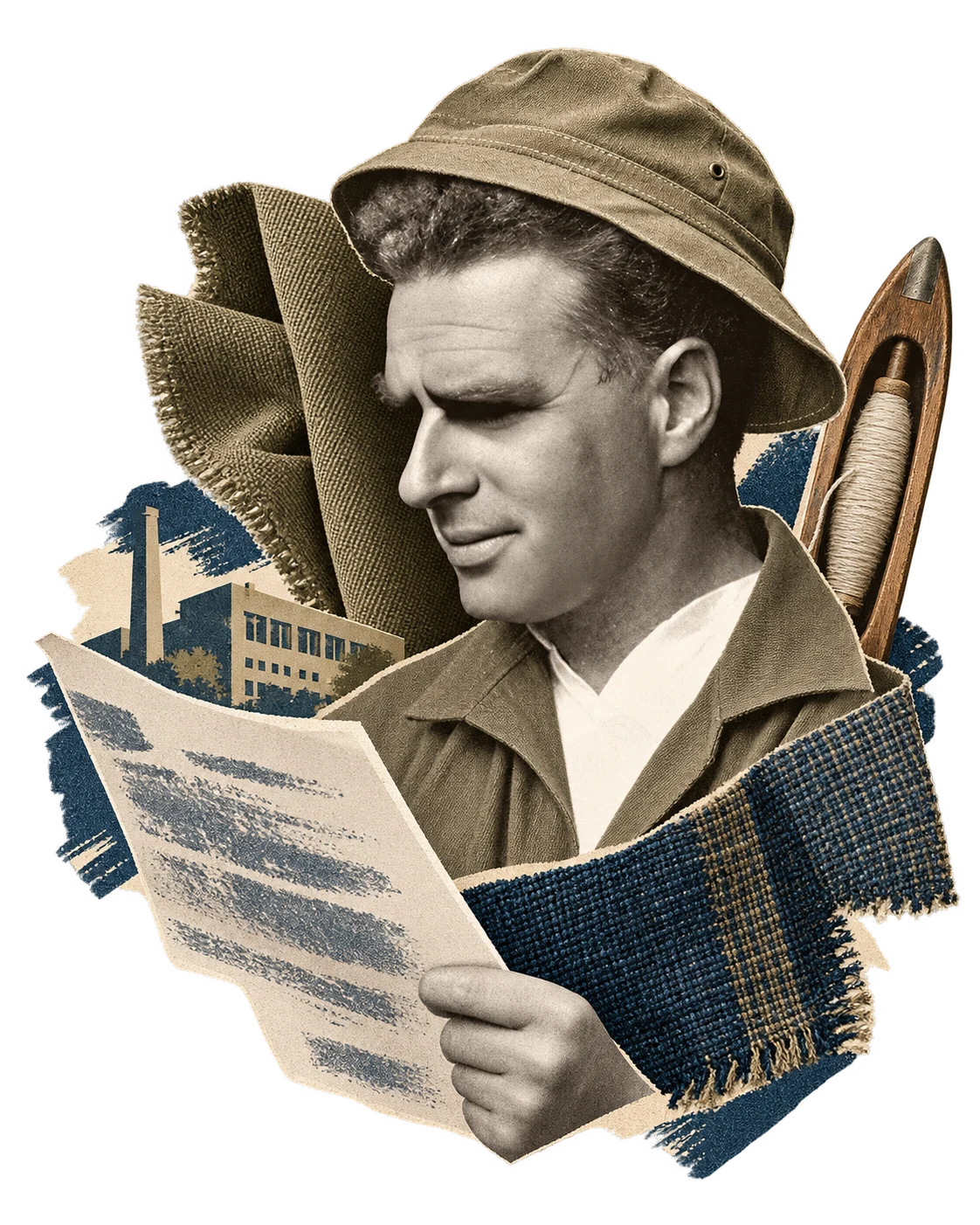
The man who dressed the nation - he dictated the fashion of the Land of Israel, the clear choice of the pioneer generation: a design of simplicity and modesty, and one hat that became a symbol of the Israeli Sabra.
Ata's Khaki
It made no difference whether it was a boy or a girl; both wore the same khaki pants. The girls threaded elastic through their short khaki pants, while the boys' pockets peeked out from below. Youth movements, army recruits, and even kibbutz members all wore uniforms made by the most famous textile factory of the time, Ata. The factory made the tembel hat, a symbol of the Sabra; khaki clothing stood for simplicity and modesty, and fit well with the ethos of the worker and farmer who helped settle the land.
Until Ata was established, most of the textile industry consisted of small workshops in the central region. The industry benefited from state protection. High taxes were imposed on imports because the country's leaders saw this industry as an important source of livelihoods for the many immigrants expected to arrive, as well as for discharged soldiers. When Erich Muller arrived in the country and founded Ata, the plan was already for a very large factory that would meet international standards, produce on a large scale, and employ many workers. Ata left its mark on an entire generation in the country.
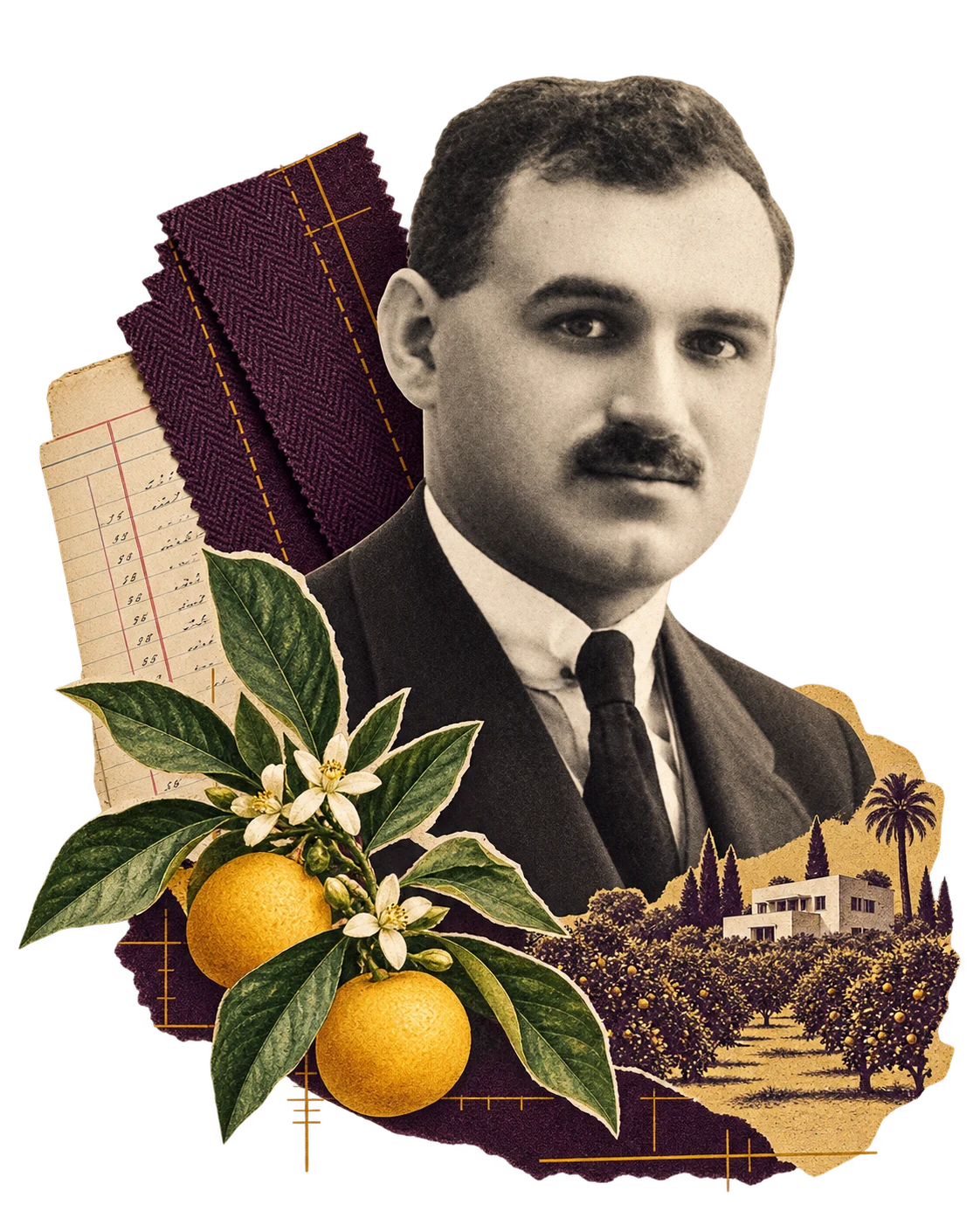
Erich Muller was born in 1895 in Ostrava, a coal-mining city in Moravia, then part of the Austro-Hungarian Empire and now a city in the Czech Republic. His uncle Hugo owned several textile factories. "Our family was completely assimilated, and there was no trace of Jewish holidays. We celebrated Christmas like all the neighbors. The fir tree, with all the presents for the whole family, stood in the living room" - this is how Muller described his family. The family moved to Vienna, where Erich was accepted to a gymnasium. He was a poor student but an excellent athlete, and spent most of his time hiking in nature and mountain climbing. "At the end of my studies," he recalled, "I went to the recruiting office. I was found fit for service, and when they asked where I wanted to serve, I said I wanted to serve in an alpine unit as far from Vienna as possible." Returning from one of his hikes, he recounted: "We heard someone calling to us. When he caught up with us, he excitedly told us that a telegram had just arrived saying that Franz Ferdinand, heir to the throne, and his wife had been murdered in Sarajevo. No one could imagine what the consequences of that fateful shot would be."
That was the shot that led to the outbreak of World War I in 1914. Erich was wounded in one of the battles and taken prisoner by the Russians. One day, 30 new prisoners arrived at the camp, and it was his job to receive them. "I introduced myself and told the newcomers everything they needed to know. In one of the rooms I met a young man with a black beard who introduced himself: 'Cadet Hans Cohen.' When I asked if he was Jewish, he said yes, and I happily replied, 'Thank God, now I won't be alone anymore'... Hans Cohen was no ordinary Jew. He was a passionate Zionist with a deeply rooted Jewish identity... widely and profoundly educated. Every day, when we met for our daily walk in the courtyard, I would ask him questions about the Land of Israel, Jewish history, Herzl, the last Zionist Congress, and more, and he answered every one of them." Erich summed up Hans Cohen and his role in his life this way: "Hans Cohen was a walking encyclopedia and a genius at learning and explaining. Everything I know is based on what I learned from him."
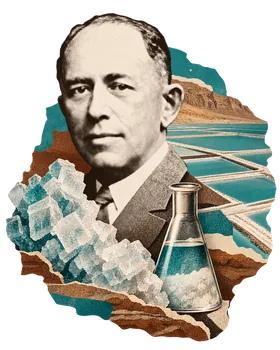
At the end of the war, Erich encountered a pioneer of industry in the Land of Israel: "Hans Cohen worked as an editor at the official Czech newspaper in German, Homeland, and made contacts with the local Zionist movement. That's how I met Moshe Novomeysky, a mining engineer who saved many Jewish prisoners of war and, after immigrating to the country, founded the Dead Sea Works." After this meeting, he resolved to immigrate to the country and establish a textile factory.
Textile Studies and the Road to the Land
His training in the industry began in 1920 at the factory owned by his uncle Hugo and his partner Fritz Weiskopf (the grandfather of journalist Gadi Sukenik), as he wrote: "My training was to learn how to operate, adjust, and maintain all the machines at the various stages of cotton spinning. I was fortunate that the factory had a group of highly skilled tradesmen who had grown up with the industry from its beginnings."
In 1923 he visited the country for the first time. Hugo invited Erich and his new bride, Helen, to join him on a trip to the Land of Israel. They met agricultural pioneers from Degania and Beit Alfa, as well as pioneers in industry, some of them in textiles. A year after the trip, the Mullers' first child, Jonathan, was born. On his next visit, in 1929, Erich came alone to investigate in depth the conditions for realizing his dream. Erich met with bankers and engineers, and spent some of his time on a trip with distinguished friends: "In Jerusalem I heard that Attorney Schwartz (the father of Ruth Dayan and Rauma Weizmann), who loved traveling around the country, was organizing a trip to the Judean Hills. The participants were Leo and Lola Herman, Gershom Scholem, Elsa Ussishkin, the architect Kornberg, and others."
By 1934, Erich Muller had visited Israel seven times, getting to know the region. His uncle Hugo accompanied him on some of these trips. "They say that when Hugo returned from the train station in Vienna after saying goodbye to Erich, he told his friends, 'I have just attended the most expensive funeral you can imagine,'" recalled the wife of Jonathan, Erich and Helen's son. "They asked him what had happened, and he replied, 'That madman Erich is going to Israel to build a textile factory.'"
At the beginning of 1934, Erich and Hugo arrived to look for a site for the factory. They considered several locations. One was south of Haifa, but it was unsuitable because the water was salty. They turned down an offer from Kibbutz HaHoresh, which had tried to entice them to build the factory there, because they felt that setting up a factory with "a partner who doesn't have a penny and doesn't understand anything about industry in general, and textiles in particular" was a risky move. In the end, they chose Kfar Ata (today Kiryat Ata) and bought 100 dunams there for the factory.
While the factory was being planned, Erich returned to Czechoslovakia and recruited twenty young people from Zionist youth movements. They had technical skills and worked for a year at the family factory in Czechoslovakia. These young people formed the core of the factory's foremen. They were all single, but were asked to marry so as not to waste the immigration certificates for couples that the British had issued them to immigrate to Palestine.
The factory's structure was built by the Czech company Skoda, and on the long-awaited day the machines began to operate. At first, they produced only yarn, and one of the most exciting days was when the first thread was made: "I kept one spool from the first batch to come off the ring spinning machine, and it is here, together with the first spool from Muller Textiles and from Hula. I sent a small quantity of samples to Vienna, and Mr. Aryeh Shenkar, owner of Lodzia, received the first crate. Now that the factory had begun production, it was time to take care of our living conditions too, so we decided to build several apartments for the senior staff." A road was paved to the site, a water well was dug, and houses were built. The Muller family and the workers' families moved to live near the factory. Helen bought a washing machine, and each family was assigned a laundry day once every two weeks.
A Factory with a Heart for Its Workers
Although Erich Muller was born into a prosperous family of industrialists, at heart he was a socialist who cared about his workers. He teamed up with Abba Hushi (then secretary of the Haifa Workers' Council), who helped provide him with workers. "My dream of becoming a member of the Histadrut too never came true, because Abba Hushi refused to accept me," Erich recalled.
Every morning, Erich Muller stood at the factory gates, greeting the workers with a smile and a good morning. The workers, who enjoyed high wages, loved him and saw him as a caring father, and managers and workers received similar pay. A cooperative store was set up at the factory, selling products to workers at reduced prices, and a daycare center was established for mothers' benefit - the atmosphere was like that of a family. Distinctive workers' housing was built, including the buildings in the Courtyard and the Hana Houses. Other workers' housing was built and sold at especially reduced prices: Givat Ata A, followed by Ata B and Ata C. Ata was the first factory to give its workers a bonus, thereby sharing its profits with them.
By 1936, the factory employed 115 workers, including people from nearby communities such as Mishmar Hayam, Kfar Masaryk, Ein Hamifratz, and Nahariya. The early years were difficult and unprofitable. During those years, antisemitism in Europe began to gather force, and Erich's father, his uncle Hugo, Hugo's son Hans, and Fritz Weiskopf decided to immigrate to the country and were also employed at the factory. In 1937, Hans, Erich Muller's cousin, joined the factory's management.
Prosperity came to the factory with the outbreak of World War II, when the British army was looking for a local supplier of uniforms. Army representatives visited the factory and even sent samples of khaki clothing to England for approval. The British were impressed by the quality of the fabric, which reminded them of English fabric, and the first orders began to arrive. The factory expanded, fundraising was successful, and additional machines were ordered. In 1949, 1,128 workers were employed at the factory.
The factory was a popular attraction for visitors, who were proud of it, and quite a few celebrities were honored guests there: "At that time we were visited by the writer S.Y. Agnon. After we toured the factory and he was very impressed by the production processes, I invited him for a cup of tea at our home. On the way, he asked an embarrassing question: why was the village's name spelled עטה and the factory's spelled אתא in Hebrew? I had to admit that my Hebrew was lacking... Agnon replied, 'Never mind, pour me a glass of cognac and let me think for a bit.' A few minutes later he stood up and said, 'I've got it: Arigei Totzeret Artzeinu ('Fabrics Made in Our Land')' - and that is how the Hebrew acronym Ata came about." Mr. Abramov, who helped purchase the land and was then in telegraphic contact with the Mullers abroad, offered another explanation. In his view, the name ATA, written in Latin letters, was convenient to use.
Retirement, Memories and Legacy
Toward the end of the war, relations between Erich Muller and his cousin Hans deteriorated: "That summer, the friendship and love between me and my double cousin Hans began. (Our fathers were brothers and our mothers were sisters)... After his father Hugo died in 1945, his attitude toward me became hostile, and in the end we parted ways in 1948."
He formed his next partnerships with his son Jonathan and various investors, among them the company Mullerdi, which was in an American partnership. When he retired from the factory, he also left Kfar Ata and moved to Nahariya. His son Jonathan, who became his business partner, married Rachel and was commander of the Negev Squadron.
At the age of 90, Erich Muller began writing down the story of his life under the title The Fabric of My Life. The diary ended with words from his son Jonathan: "This isn't the end of the story, but when I saw how hard writing was for Dad, I persuaded him to stop and let me continue in due course." Erich Muller died in 1995 at the age of 100.
תגובות
עדיין אין תגובות.