
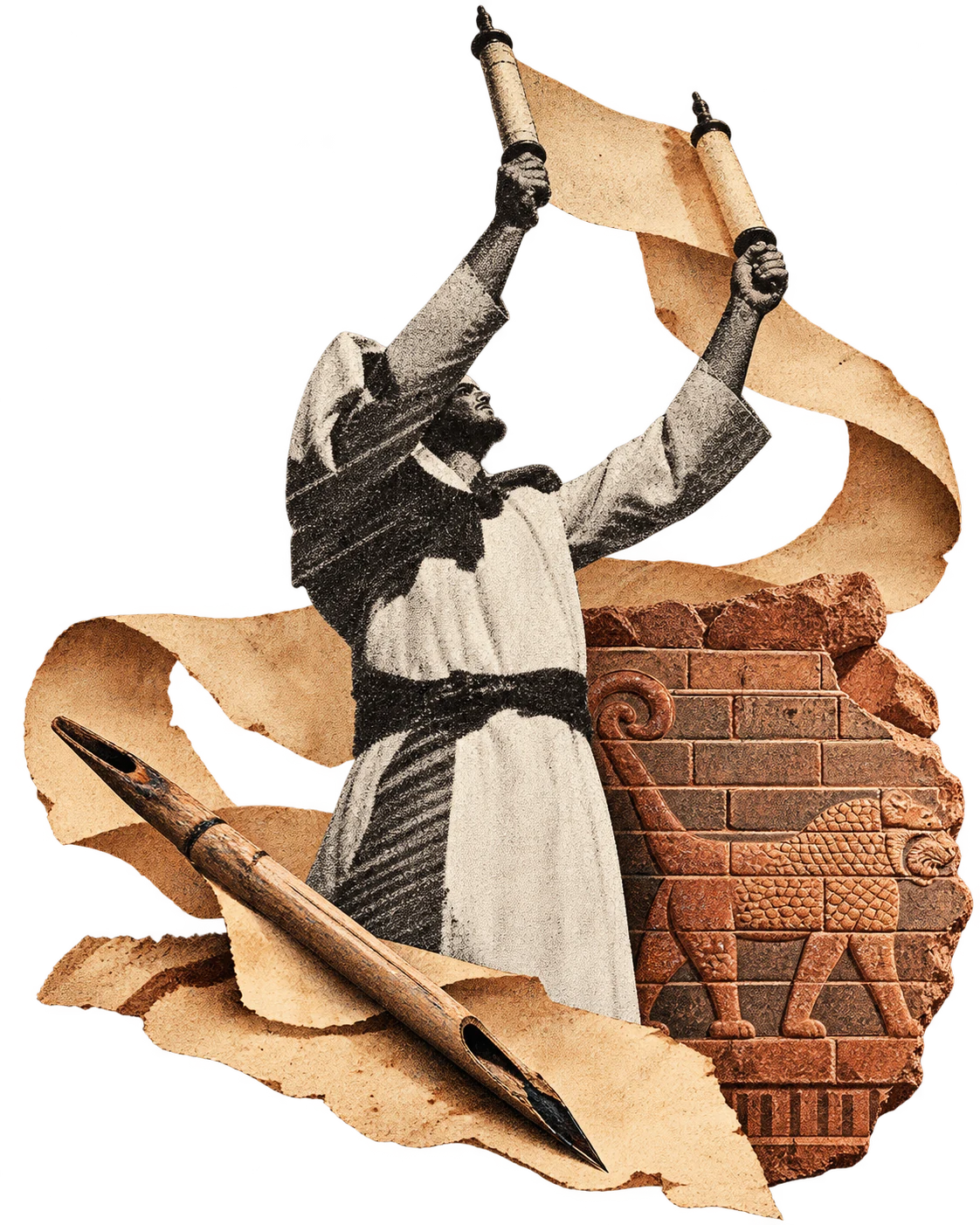
It can sometimes seem as though the reality we know has always been the same. Intermarriage, the Hebrew script, and Torah reading are just a few things that once looked very different. One person changed the situation and brought us what we know today.
Ezra the Scribe A convenient place to begin our story is the ninth century BCE, when the Kingdom of Israel split in two: the Kingdom of Israel in the north, with its capital in Samaria, and the Kingdom of Judah in the south, with its capital in Jerusalem. These tiny kingdoms lay on the boundary between two mighty empires, Assyria and Egypt. Both coveted control of the trade route that passed near these kingdoms, and the Land of Israel became a focal point of conflict between the empires. In 725 BCE, Hoshea, king of Israel, who had until then been under Assyrian protection, decided to stop paying them taxes and join the Egyptian side. This decision prompted a forceful Assyrian response. They conquered Samaria and exiled some 27,000 Jews from the Land of Israel, including members of the wealthiest and most educated families among the people. The poor and rural classes, who worked the land, remained in the country. These exiles assimilated and disappeared, though from time to time people emerge claiming to be the remnants of the Ten Tribes.
The Babylonian Exile and the Return to Zion
About a hundred years later, the Assyrian Empire crumbled, and the Babylonian Empire rose in its place, making the southern Kingdom of Judah its vassal. This time it was Jehoiakim, king of Judah, who tried to rebel against the occupation, and in response some 10,000 Jews were exiled to Babylon. In 588 BCE, another revolt broke out in Judah, and this time the Babylonian response was brutal. Jerusalem was destroyed, the Temple was plundered, and about a thousand Jewish leaders and members of the nobility were exiled to Babylon. In time, this would be called the destruction of the First Temple and the Babylonian exile. New residents from across the empire were brought to the land, where they settled and adopted Judaism, its language, and its script. According to their belief, they are descendants of the Israelites who were never exiled. They are not Jews, since they are not from the tribe of Judah but from the Israelites of the northern kingdom. They are, in fact, keepers of the original Torah and the customs of the people - hence their name, Samaritans. There is one undisputed fact: the Samaritans continued to write and speak Biblical Hebrew even after the destruction of the First and Second Temples.
The Jews exiled from Judah went to Babylon as a community and were given the freedom to maintain their customs and traditions. Instead of Hebrew, they spoke and wrote Aramaic, which was then the region's spoken language.
The next dramatic historical turning point came in 538 BCE. After 70 years of exile, Cyrus issued a royal decree allowing the Jews to return to the Land of Israel. The news reached the second and third generations of exiles. In theory, they should already have assimilated into the Babylonian population and completely forgotten the kingdom their ancestors had left behind, but their longing for Jerusalem still lived in their hearts. Some 42,000 people returned to the land, most of them poor. The affluent remained in Babylon, close to their sources of income, but equipped those returning with money and valuable goods. The return lasted about 110 years and took place in several waves. It is known as the Return to Zion.
The journey to Jerusalem took several months and was fraught with hardship. The returnees walked more than 1,000 kilometers, but when they reached Jerusalem, they found a ruined city surrounded by hostile peoples, with breached walls and a destroyed Temple.
Ezra the Scribe in Jerusalem
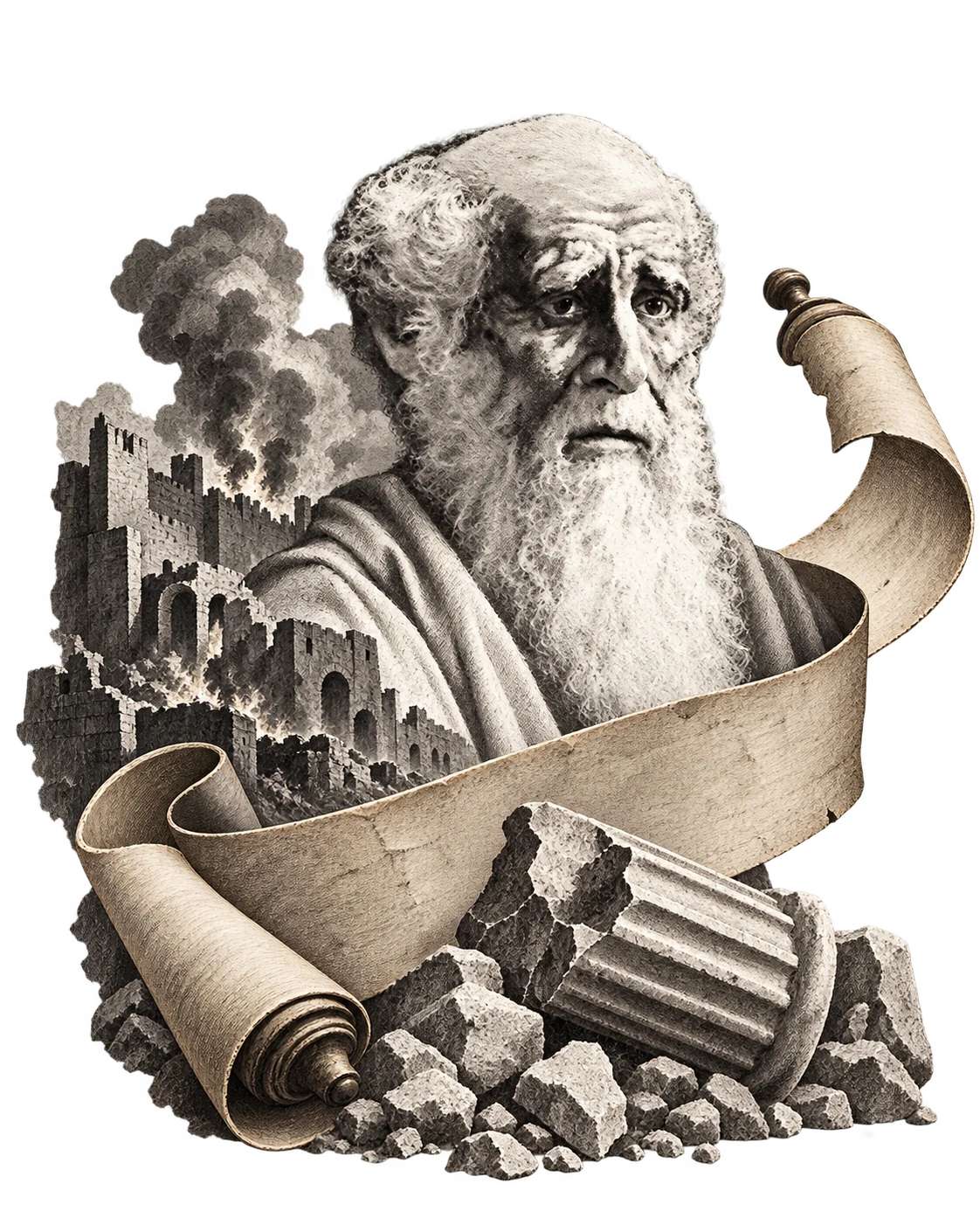
About 70 years after the Return to Zion and Cyrus's declaration, a third wave of returnees arrived in the land, comprising about 1,800 families and led by the spiritual leader Ezra the Scribe. Ezra the Scribe arrived in the land in 457 BCE, appointed by Artaxerxes, king of Persia. Ezra came from a distinguished priestly family whose members served in the Temple and offered sacrifices. The priests were the only ones who read the Torah to the people, and an entire industry of donations developed around this practice, providing them with a very comfortable living. The priests also enjoyed a respected status in exile. Ezra was the son of the priest Seraiah, who was descended from Zadok and was killed by Nebuchadnezzar during the destruction of the First Temple.
Ezra earned the title "the Scribe" as the designation of a high-ranking position in the kingdom, while it also reflected his mastery of the Torah. Ezra received an official appointment from Artaxerxes, king of Persia, to lead the returnees to Jerusalem. He was also given money to restore the Temple, along with a regular budget for its upkeep. Ezra was appointed supreme judge and had the authority to appoint judges and magistrates, as well as impose fines, prison sentences, and even death sentences. His appointment was religious, not political. At the same time, the return of the exiles to their homeland served as a reminder from Artaxerxes to all the peoples across the empire of what might become of them if they rebelled.
Ezra arrived in Jerusalem from an insular Jewish community in the empire, and intermarriage troubled him. For the local people, it was a natural part of life, since intermarriage had always existed, as it says in the Book of Judges: "The Israelites lived among the Canaanites, Hittites, Amorites, Perizzites, Hivites, and Jebusites. They took their daughters as wives and gave their own daughters to their sons." Samson, too, married a Philistine woman. Some marriages were intended to forge political alliances, as was customary among the nobility. For example, King David married Maacah, daughter of Talmai, king of Geshur. Of King Solomon it is written: "King Solomon loved many foreign women, including Pharaoh's daughter, Moabite, Ammonite, Edomite, Sidonian, and Hittite women." Of King Ahab it is written: "He took Jezebel, daughter of Ethbaal, king of the Sidonians, as his wife." In Ezra the Scribe's time, even some of the priests married foreign women.
To shock the people and draw their attention, Ezra put on sackcloth and covered himself with ashes, as was customary for mourning at the time. He demanded that the priests and the people send away their foreign wives and their children. Not everyone agreed with this harsh decree. The prophet Malachi opposed the demand to expel them and reminded them: "Did not the one do so, though he had a remnant of spirit? And what does the one seek? Godly offspring. So guard yourselves in your spirit, and do not betray the wife of your youth" (Malachi 2:15). It is worth remembering that in those days the concept of conversion to Judaism did not exist. The practice of converting a non-Jewish woman took shape many years after Ezra's time. Later, the issue of intermarriage also troubled the leaders of Zionism. The marriages of Max Nordau and Saul Tchernichovsky to non-Jewish women were a problem for some of them, and in 2014, when Saul Tchernichovsky's portrait appeared on the 50-shekel banknote, some objected because he had married a Christian woman. It is likely that, in the end, the foreign women and their children were not sent away, but it can be said that since then, the phenomenon of assimilation has diminished significantly.
After addressing intermarriage, Ezra the Scribe turned to the question of the power of the priesthood, an issue whose consequences are still evident today. Although he himself came from a priestly family, upon arriving in Jerusalem he recognized that the priests' power had created a vast class divide between them and the poor majority, a power that supposedly stemmed from their role as intermediaries between the people and their God. Ezra built a large platform and read the Torah to the people from it. He instituted Torah readings on Mondays and Thursdays and established the traditional cantillation melodies, which remain familiar today. In this way, the people gained free access to the Torah without needing the priests as intermediaries. Ultimately, this brought the people closer to their book and strengthened their Jewish identity. A similar phenomenon occurred 2,000 years later, when Martin Luther wrested religious authority from the priests and founded the Protestant movement.
Nehemiah and the Building of the Wall
Thirteen years after Ezra the Scribe's arrival, Nehemiah came to the land. He had been an official in the Persian Empire, and decided to come after a delegation from the Returnees to Zion told him of Jerusalem's desperate condition, the ruined Temple, and the breached walls. Nehemiah decided to return to the land and help his people. He received the king's blessing and was appointed governor of Judah. Nehemiah was accompanied by military and political power, as befitted a governor. He was precisely what Ezra had lacked: a skilled politician and administrator who knew how to deliver results quickly. On arriving, he spent three nights surveying the ruined wall and developed a plan to restore it. He divided the wall into sections, and each family was assigned the section closest to it. The peoples living in the area understood that rebuilding the wall would strengthen the Jews and give them control over who entered and left. They decided to sabotage the construction and damaged it.
Nehemiah called on the builders to finish quickly and defend the section for which they were responsible, as described: "Those who built the wall and those who carried the loads did the work with one hand and held a weapon in the other" (Nehemiah 4:11). They built the wall with one hand and held weapons in the other. Forty-one teams took part in the construction, which was completed in just 52 days. The wall's construction encouraged the returnees and gave them a sense of security that they could build up the land and defend themselves. In other words, the Jewish people could rise again.
More than 2,500 years later, a section of wall was found in excavations in the City of David. It had clearly been built in haste by unskilled builders. Some researchers, including Dr. Eilat Mazar, identified it as part of the wall built in the time of Ezra and Nehemiah. To narrow the social divide, Nehemiah demanded that the wealthy cancel the farmers' debts, free the slaves, and return the workers to the fields. At the same time, however, he insisted that the gifts to the priests and Levites continue as before.
As the wall was built, they also began restoring the First Temple, which had been destroyed. Some of the people who had remained in the land and had not gone into exile asked to take part in the construction, especially the Samaritans, who considered themselves the remnant of the Israelites. Ezra refused their request and even made clear that they did not belong to the "holy seed." The Samaritans were hurt and decided to separate themselves and adhere to their own worship and traditions. They built a temple of their own on Mount Gerizim, identical to the one in Jerusalem, where they worshipped the God of Israel as they understood him. A temple from this period has been uncovered on Mount Gerizim, along with thousands of animal bones of species that the Torah permits for sacrifice. The Samaritans preserve the original Hebrew language and script, while today we write Hebrew in Assyrian characters brought with Ezra and Nehemiah.
Traces of Ezra and Nehemiah
There are no external sources confirming the story of Ezra and Nehemiah. Archaeologists can easily point to several sites in the land from the period in question, such as the site at Ramat Rachel, which some claim was Nehemiah's residence. But among all the finds, one very small discovery is particularly interesting: it indicates that someone who worked and lived there came from the Persian Empire, something like a "stamp in a passport." The find is so tiny that we need a microscope to see it: pollen.
Pollen provides us with a great deal of information about the flower from which it came. Pollen from flowers that came from Persia during the period in question was found in the plaster of one of the pools at Ramat Rachel. There could be no better evidence of a Jewish worker who crossed those same 1,000 kilometers, carrying the pollen on his clothes all the way to Jerusalem.
The high point of Ezra's life came two days after the festival of Sukkot, when all the people gathered for a ceremony to make a covenant with God, signed by Nehemiah and 84 heads of the great families. By signing the covenant, they undertook to establish a society based on the "holy seed" and to live according to the Torah's commandments and laws. This moment brought together Ezra's aims: on the one hand, the separatism of the "holy seed"; on the other, opening Torah reading to every Jew, without granting the priests exclusive control.
According to the historian Josephus, Ezra died at an advanced age and "was buried with great honor in Jerusalem," but according to popular traditions, he was buried in Iraq.
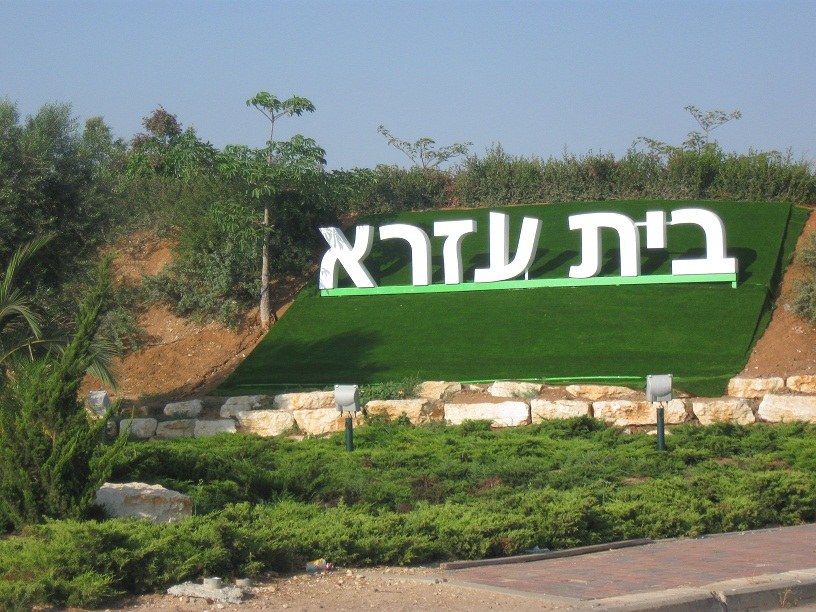
About 2,000 years later, in April 1950, the ruler of Iraq allowed Jews to return to the land in an operation nicknamed "Operation Ezra and Nehemiah." Some of these immigrants established the moshav of Beit Ezra near Ashdod. The religious youth movement Ezra was also founded in Ezra the Scribe's name.
תגובות
עדיין אין תגובות.