
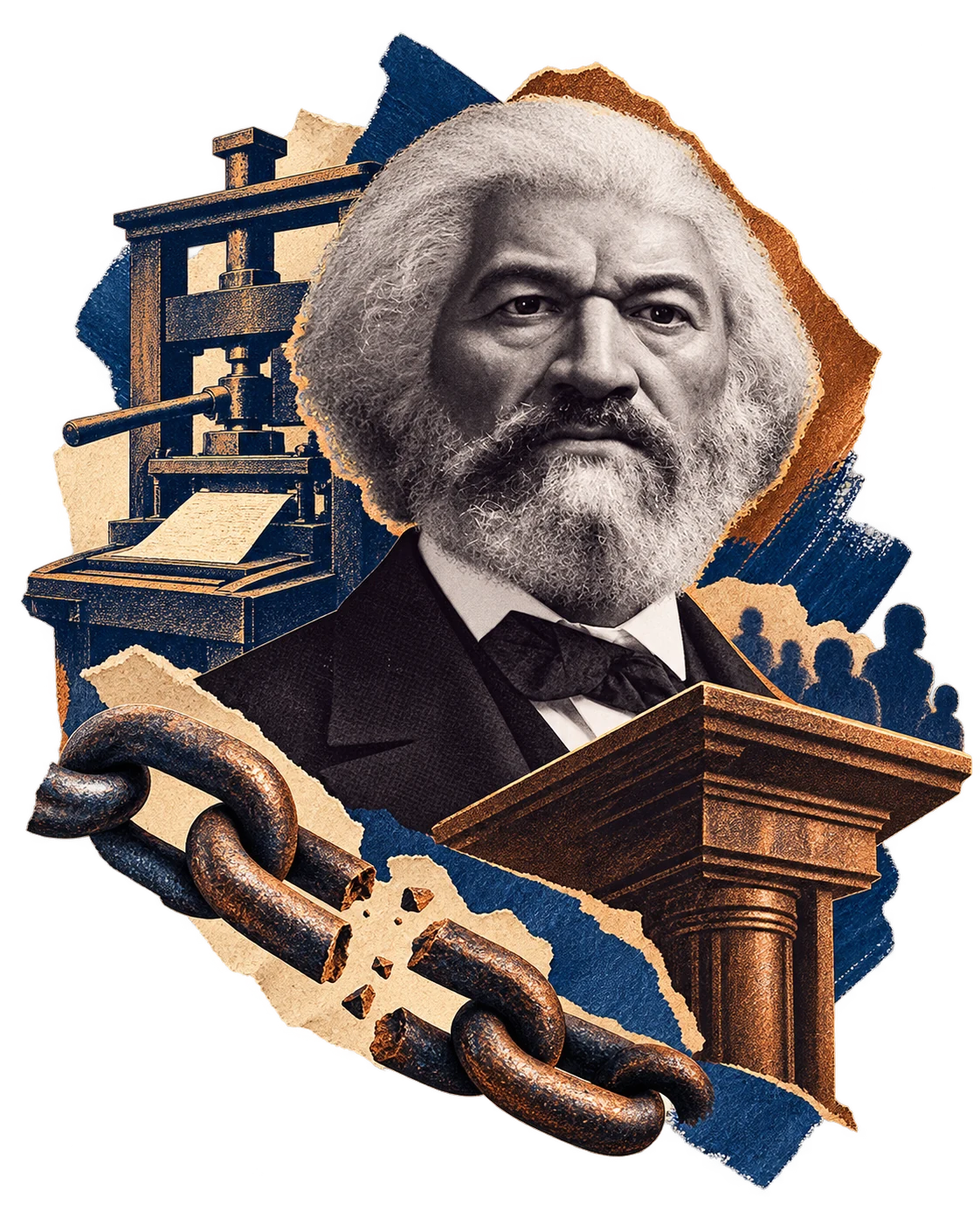
Frederick's story is so painful and astonishing that a single post does it a disservice. I hope this post will inspire you to read his book and learn about his life in depth.
Born into Slavery in Maryland
Frederick was born during the era of slavery in the United States. A slave was seen as just another beast of burden (only a little more expensive) and treated accordingly. Slaves could be rented out or sold, and a stubborn slave could be broken in. Just as people did with livestock, they watched over them to ensure they survived and made sure they bred to increase the herd. One method plantation owners used to increase the number of slaves was to rape enslaved women. And yes, strange as it may sound, the slaveholders’ own children were born enslaved. That is how Frederick was born. Since the exact date of a calf's birth was not really considered important, the precise date of Frederick's birth is unknown; it is thought that he was born in February 1818 in Talbot County, Maryland, to Harriet Bailey, an enslaved woman who had been raped by her master, Captain Aaron Anthony.
He recounted his life story in his book, "An American Slave," published in Hebrew 161 years after it first appeared. This is how he writes about his birth: "This is how a man becomes a beast!"
"I was born in Tuckahoe, near Hillsborough, about twelve miles from Easton, in Talbot County, Maryland. I do not know precisely how old I am, for I have never seen any authentic record containing it. By far the larger part of the slaves know as little of their ages as horses know of theirs... My mother's name was Harriet Bailey. She was the daughter of Isaac and Betsey Bailey, both colored, and quite dark... It was whispered that my master was my father; but I do not know whether it was true, for I was given no information on the subject. My mother and I were separated when I was an infant, before I knew her as my mother. In this part of Maryland it is a common practice to separate children from their mothers at a very early age. Often, before a child has reached its twelfth month, its mother is hired out to work on a farm some considerable distance away, and the child is placed in the care of an old woman, too old for field labor... We exchanged few words, and soon death took away even that little, as well as her suffering and her pain. She died when I was about seven years old,..."
This is how he writes about his father-master:
...A revolting fact, established and regulated by slaveholders through legislation, was that the status of a slave woman's children was determined by their mother's status. This arrangement was obviously designed to gratify the slaveholders' own desires, and to make the satisfaction of their shameful appetites both pleasurable and profitable. For in many cases this cunning arrangement allows the slaveholder to have a double relationship with his slaves, as master and father.
I know of such cases. It should be noted that these slaves suffer more in their lives and face greater difficulties than other slaves. First, they are a continual affront to their mistress. She will always tend to find fault with them, ... and will be satisfied with them only when she sees them groaning under the whip, especially if she suspects that her husband feels greater affection for his mulatto children than for his black slaves. The master is often forced to sell such slaves out of regard for his white wife's feelings. And although it may seem cruel for a man to sell his own children to traders in human flesh, it is often done out of compassion. For if he did not, he would have to not only whip them himself, but also stand by and watch his white son tie up his brother, only a little darker than he is, and lash his bare back with a blood-soaked whip. And if he uttered a single word of displeasure, he would be accused of paternal favoritism, which would only worsen his own condition and that of the slave he had wished to protect and defend.
"I had two masters. The first master's name was Anthony. I do not remember his first name. He was generally called "Captain Anthony," a title he probably earned after sailing a ship on Chesapeake Bay. He was not considered a wealthy slaveholder. He had two or three farms and about thirty slaves under the authority of an overseer. The overseer's name was Plummer, and he was a wretched drunkard, foul-mouthed and given to cursing, a kind of cruel monster. He was always armed with a cudgel and a cowhide whip. I know that he cut and slashed women's heads so horribly that even the master himself would be furious at his cruelty and threaten to whip him if he did not control himself. The master was not a particularly compassionate slaveholder, and only the overseer's most excessive cruelty would affect him. In fact, he was a cruel man, hardened by many years as a slaveholder. Sometimes he seemed to take the greatest pleasure in whipping slaves with his own hands.
Reading, Education and the First Rebellion
When he was nine, Douglass was sent to serve relatives of his master in the city of Baltimore. This was the first major turning point in his life, because it was there that he learned to read. There, too, he was first exposed to affection and warmth from a white person. There, for the first time, he came to understand that human beings were equal, and there he resolved to free himself from slavery.
At the age of 14, he was sent to a small farm managed by Edward Covey. Covey was known throughout the area as an expert at "breaking in" slaves, thanks to his cruel methods. After six months of abuse at Covey's hands, Douglass struck back at his master. Following a two-hour struggle in which Covey was badly injured, Covey realized it was better not to whip Douglass. More importantly, Douglass understood that oppression could be fought. This victory rekindled his hope for freedom. In his writings, Douglass says that the fight freed him from his status as a slave, not physically but mentally.
At the age of 20, in 1838, Douglass escaped to New York. Despite being free in the big city, he was still in danger of being kidnapped and returned to his master. In New York, he married and escaped under an assumed identity to New Bedford, Massachusetts, where he could work in the trade he had learned in Baltimore: shipbuilding. In New Bedford, Douglass changed his name, this time to the name by which he is known, Frederick Douglass, and for the first time in his life, he earned a decent living from his own labor.
Becoming a Leader of the Struggle
On August 11, 1841, a gathering of Black and white people opposed to slavery was held in Nantucket, an island off the coast of Massachusetts. One of the attendees, William Coffin, a well-known antislavery activist, asked Douglass to say a few words at the gathering. Douglass's speech astonished and moved his listeners, and overnight he became a leading voice in the fight against slavery. John Collins, a Massachusetts representative in the Anti-Slavery Society, asked Douglass to go on a speaking tour and tell his life story. Most of the people who came to these meetings did so out of curiosity, to see a "freak show," and the meeting chair often reassured the audience before Douglass spoke, saying, "It could speak." The audience was in for a surprise: instead of the ignorant, inarticulate freed slave they expected to see, they encountered an intelligent man whose captivating stories were told in eloquent, rich language.
As the speaking tour continued, a problem arose. The rich language Douglass used made his listeners suspect him of fraud. To refute the claims that he was an impostor, Douglass decided to write his autobiography. In 1845, his book Narrative of the Life of Frederick Douglass, An American Slave was published (in Hebrew translation, "Frederick Douglass, An American Slave: The Story of His Life").
This was the first book written by a slave without being edited or rewritten by others. Douglass's book, along with "Uncle Tom's Cabin," became one of the most influential works of literature that helped drive the movement to abolish slavery in the mid-nineteenth century in the United States.
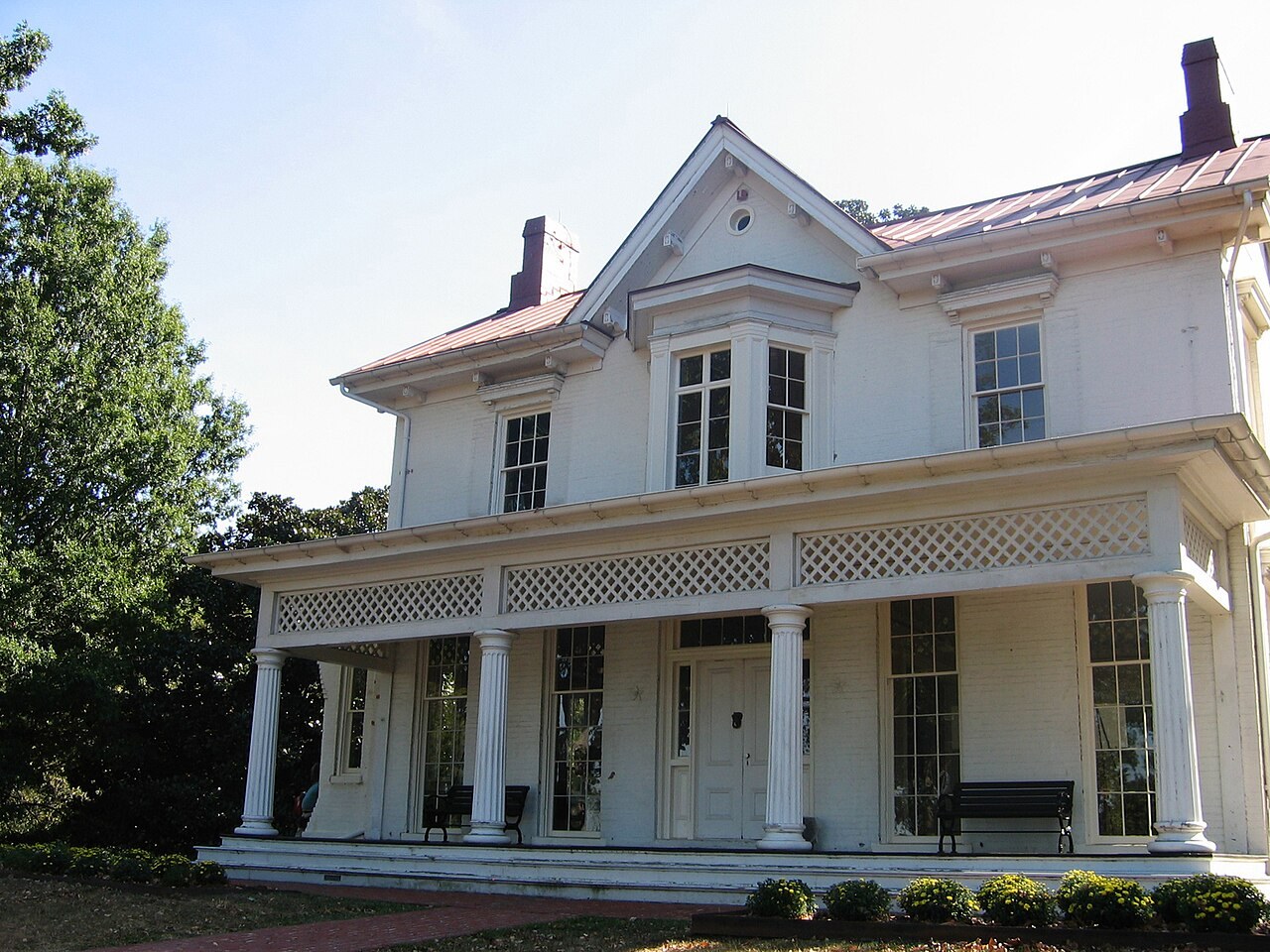
The book immediately became a bestseller. During this period, it was published in nine English editions and translated into both French and Dutch. It became widely popular in the North, and the European editions also sold well. The critical response was enthusiastic as well. On May 30, 1845, The Liberator published a review of the book, as it appeared in the Lynn Pioneer: The picture of slavery presented in it [the book] is too terrible to look upon, but is only a dim picture of what millions experience vividly in their lives. There is no doubt that it has been drawn in modest, refined colors, free of ostentation and exaggeration. It is a moving account, filled with fiery expression, yet still simple and restrained. Its voice is the voice of truth... It contains passages of which any writer might be proud, and the book as a whole, as a work of art, could enhance even the reputations of John Bunyan and Daniel Defoe.
But Douglass's fame as a writer exposed him to the danger of being enslaved again and threatened his freedom. Federal laws gave Thomas Auld (his last master) the right to track him down in Massachusetts and capture his "property".
In 1845, Douglass decided to sail to England, where he would be free from the threat of slave hunters. For about two years, Douglass traveled throughout the British Isles as a lecturer, seeking support for the antislavery movement. Douglass was warmly received in Britain, but in the fall of 1846 he realized that he had to act in America and was ready to return home. The fear of being captured in the United States continued to trouble him, but the problem was resolved when two English friends, Ellen and Anna Richardson of Newcastle, raised $710.96 to buy his freedom. On December 5, 1846, Hugh Auld (to whom Thomas Auld had transferred his claim to Douglass) signed a document declaring that the 28-year-old Douglass was a free man.
תגובות
עדיין אין תגובות.