
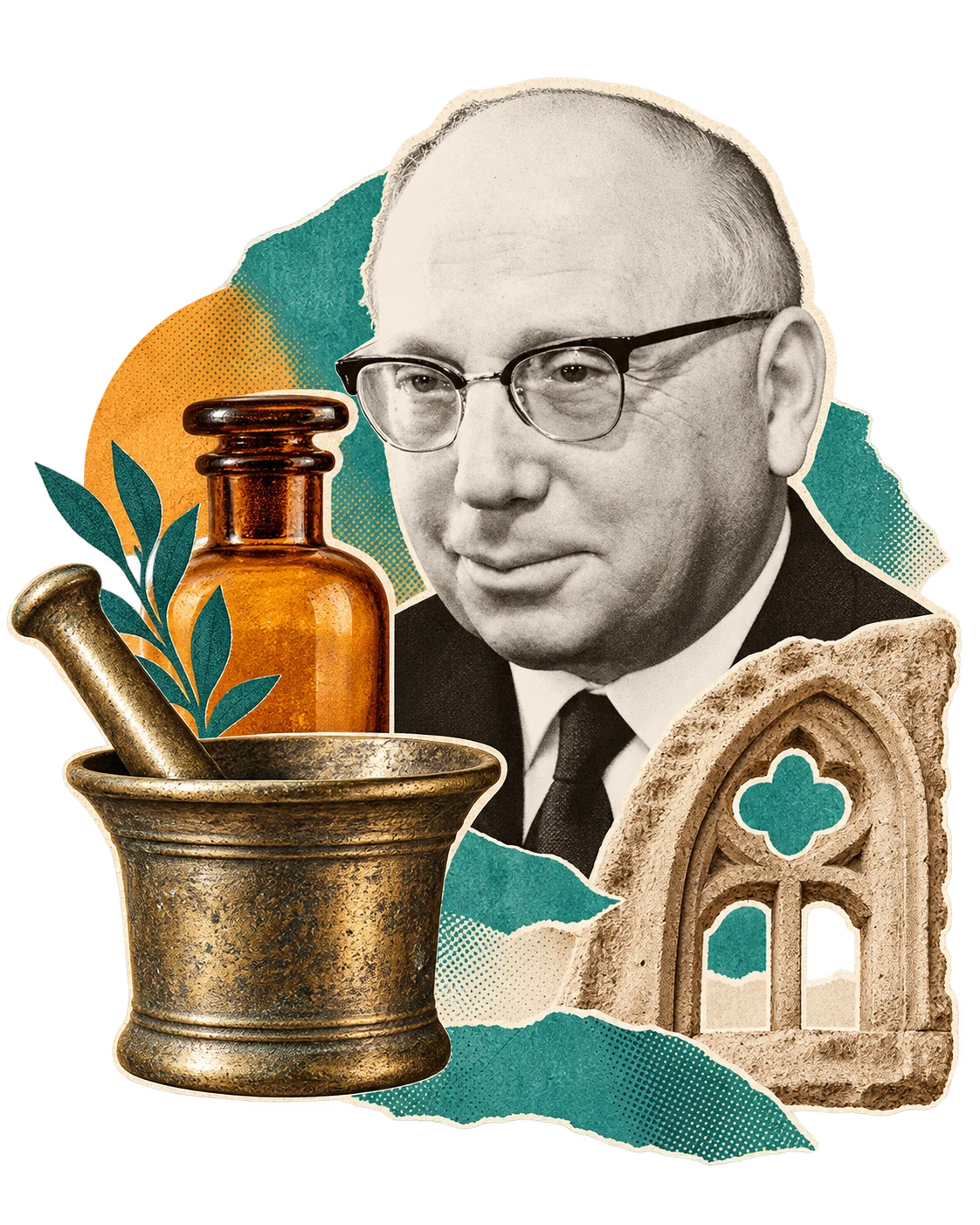
He founded the pharmaceutical giant Teva, developed Optalgin, Polyandrin, and a long list of other medicines that save lives and improve their quality.
The Vision of Medicines in the Land of Israel
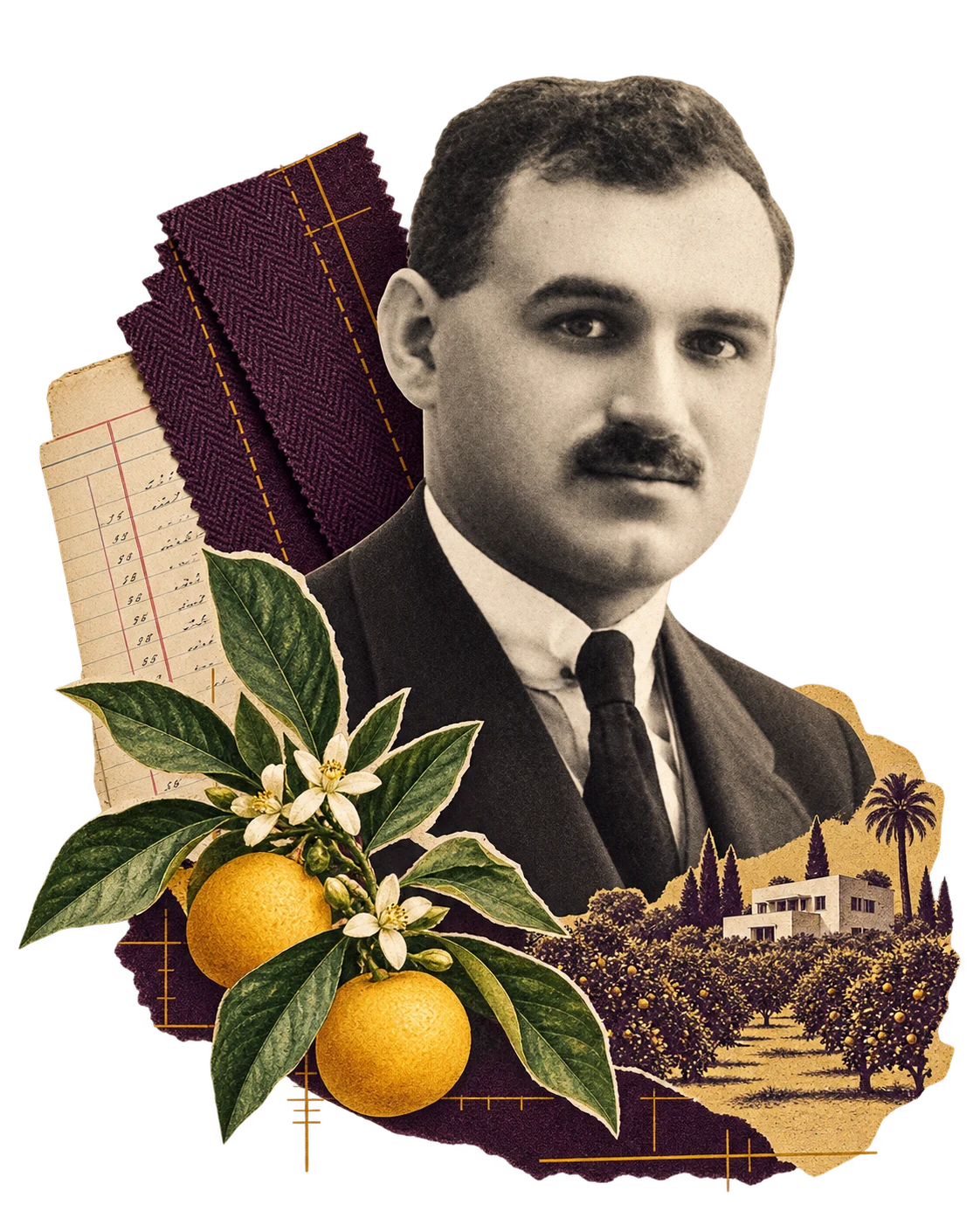
Gunter Friedlaender was not the spontaneous type. He was always methodical and knew in advance what he wanted to achieve. He studied pharmacy in Germany and Switzerland, and at the age of 21, while still a student, he defined his future with precision: "One day, when I immigrate to Palestine (the Land of Israel), I will establish a pharmaceutical industry there that will produce medicinal preparations from natural substances and plants that grow in Palestine, the Land of Israel." Friedlaender and his cousin, Dr. Kurt Grunwald, who was then studying economics, decided that the company would be called Teva. They received encouragement from Dr. Chaim Weizmann, who met with them in 1925 and urged them to prepare themselves to establish the factory. A year earlier, student Gunter Friedlaender had begun collecting information on the subject. He contacted pharmacists, botanists, and scientists in the country, asking about the kinds of plants that grew there and whether medicines could be made from them. Among others, he approached the Agricultural Experimental Research Station in Tel Aviv. This was their reply: "We cannot focus on growing medicinal plants at our experimental station, since we are occupied with research into urgent agricultural problems and must follow a set timetable. We also lack the financial resources needed to grow medicinal plants, and you are no doubt aware that our budget is very tight. We can conduct small-scale experiments with plants such as coriander, field coriander... and we recommend that you contact our institute's director, Professor Otto Warburg in Berlin, regarding these plants. He intends to come to the country in the near future. If you wish to initiate something in this area, the best way is to do so through Professor Warburg. But if this subject is very close to your heart and you consider it important to conduct experiments in this field here in the country, we would be happy to carry them out if you cover the associated expenses." And so, over the following years, Gunter Friedlaender began corresponding with Professor Otto Warburg (after whom the community of Sde Warburg is named), with the aim of establishing a serious university research institute and a school of pharmacy in Palestine/Eretz Israel.
Gunter Friedlaender was born in Germany on April 8, 1902. When he was 10, his family moved to another city with a small Jewish community. He joined the Jewish youth movement Blau-Weiss (Blue-White), where he was exposed to the Zionist idea, and the desire to immigrate to the Land of Israel began to take root in him.
Aliyah and the Founding of the Factory
After completing his studies in 1930, Gunter Friedlaender began managing his aunt Elsa Kober's pharmacy and laboratory. Kober was a widow of the First World War and a bereaved mother whose only son had died. In 1931, Gunter Friedlaender married Charlotte, and they had two children. In May 1933, when the Nazis came to power, Gunter realized that the future held danger for the Jews. That same year, he came to the country for the first time to find a site for his factory. He visited Afula and Haifa, but ultimately decided to establish the factory in Jerusalem.
He immigrated to the country in April 1934, and a month later his aunt and business partner, Elsa Kober, followed him. Recruiting workers for the factory was a challenging task, since at that time there were no qualified pharmacists with diplomas to be found in the country. This led him to establish a training system for pharmacists.
With great excitement, and an investment of about 5,000 pounds sterling, on May 1, 1935, Labor Day, Dr. Gunter Friedlaender and his aunt Elsa Kober inaugurated a factory in Jerusalem's Beit VeGan neighborhood. It was registered under the name "Teva Pharmaceutical and Chemical Industry Company for the Middle East Ltd., Jerusalem (Palestine)," with the motto, "We aspire to help human nature by means of what we seek to extract from nature." They raised the remaining money through loans, and when that ran out, they brought in the banker Dr. Alfred Feuchtwanger as a partner in Teva in exchange for 33%.
The Breakthrough with Dead Sea Products
Dr. Gunter Friedlaender combined the remarkable qualities of a gifted researcher and a shrewd businessman, a combination that brought him the success he had hoped for in a short time. Although he could already have begun producing medicines and medicinal preparations from various plants, since he had all the essential information, he preferred to start with a substance found only in the Dead Sea, which gave him a tremendous advantage in Israel and around the world. This substance was unique to the Dead Sea and is mentioned in the Bible. The Romans gave the Dead Sea the name Lacus Asphaltites (the Asphalt Lake), after the lumps of asphalt that floated in it. Josephus wrote of these lumps: "It is also fitting to speak of the nature of the Dead Sea... In many places it casts up black lumps of salt, which float on the water and resemble headless oxen in appearance and size... This bitumen is good for filling the seams of ships and also promotes the healing of the body, and for this reason it is mixed into many medicines." (The Jewish War, IV, 8, 4). Gunter used this substance to make Bitupal, a medicine for treating skin diseases, as he wrote: "After three years of work, especially that of A. Markowitz, we succeeded in producing, by various methods, several preparations from the clay floating on the Dead Sea. Among them, I will mention only the tar preparation Bitupal, whose clinical use has already proved successful. It contains organically bound sulfur, which has great medicinal value, and does not irritate the skin." The name Bitupal was formed by combining the words bitumen and Palestinum, and the product was used mainly to treat psoriasis. It was in high demand and sold both in the local market and in the American market. Nature, which provided the source for the medicine, was also what brought its production to an end. Starting in 1980, salt deposited on the seabed blocked the fissures, preventing the asphalt from emerging from the bottom of the sea.
The next product Dr. Friedlaender was proud of was the Oleander line of preparations. The box of Polyandrin bore the words "Palestinian Origin 100%". These preparations, intended to treat heart failure, were made from oleander, a plant known to be poisonous. Later, he made Gingisan from Israeli chamomile, a preparation for treating inflammation and irritation of the gums. Dr. Gunter Friedlaender gave the first medicines their names. The famous Optalgin was born from combining the word "optimum" with "algin," a pain-relieving substance.
In 1951, the experienced banker Alfred Feuchtwanger brought Teva onto the Tel Aviv Stock Exchange, and its shares began trading publicly. Three years later, in 1954, the Teva factory received the Outstanding Exporter award. The factory's emblem, a combination of the Hebrew letter tet and the English letter T, was designed by Dr. Gunter Friedlaender and his first wife, Charlotte.
Plant-based products were marketed in the country by Teva, supplied to armies stationed in the region, and exported to Turkey, Egypt, Sudan, Lebanon, and Iran. By 1968, more than 250 medicinal preparations were being marketed around the world. Dr. Friedlaender believed in the factory's success and said: "A pharmaceutical factory is a sure thing, because a Jewish mother will always buy medicine for her children."
Family, Struggle and Retirement
In 1945, he divorced Charlotte and married Johanna (Henzi) Singer, née Cohen, who had a son from her first marriage. They had one daughter, Naomi (Dr. Naomi Ashchar, who wrote her father's life story in the book Dad Teva). Johanna had been Joachim von Ribbentrop's secretary when he was still running a liquor and champagne business. Ribbentrop later joined Hitler's service, was appointed foreign minister of the Nazi regime, and was one of the initiators of the Ribbentrop-Molotov Pact between Germany and Russia.
As a result of a family dispute, Elsa Kober, Gunter's aunt, who held one-third of the company's shares, sold her shares to the Industrial Development Bank. This left the founders and professionals owning one-third of the company's shares, while the remaining shares were held by bankers who had no emotional ties to the factory and were looking for an opportunity to sell them at a profit. It was only a matter of time before Dr. Gunter Friedlaender lost control of his life's work.
Immigrants from Germany were pioneers of the pharmaceutical industry in the country and led it for a long time. In addition to Teva, about 12 other factories were established, such as the Ara factory, founded in Jerusalem's Beit VeGan neighborhood by Dr. Werner Niel, who was born in Germany.
In 1901, Chaim Salomon, the son of Joel Moshe Salomon, the subject of "The Ballad of Joel Moshe Salomon", and his brother-in-law Gottl Levin established a drugstore in Jerusalem, and later opened additional branches in Jaffa and Haifa. Each time, they brought in another family member, until they joined forces in a company that sold medicines and was called S.L.A. (short for Salomon, Levin, and Elstein). In 1933, the British authorities banned the import of medicines from Germany, which until then had been S.L.A.'s largest supplier of medicines. In response to the ban, the partners decided to establish a factory and manufacture the medicines themselves. In 1935, when Teva was established in Jerusalem by Dr. Gunter Friedlaender, the Assia pharmaceutical factory was established in Petah Tikva by Nachman Salomon and Yitzhak Levin.
Even before Teva and Assia were established, Dr. Moshe Grotto, an immigrant from Czechoslovakia, founded the Tzori pharmaceutical factory on HaGra Street in Tel Aviv. It was the first pharmaceutical factory in Israel, and Chaim Nachman Bialik gave it its name.
In 1951, a romance blossomed between Dalia, the granddaughter of Chaim Salomon and a member of the Scouts movement's pioneering group at Kibbutz Tel Katzir, and Eli Hurvitz, the kibbutz secretary. The two married, and Eli Hurvitz began working at the factory as a laboratory test-tube cleaner. In time, Hurvitz was appointed CEO of Assia, and under his management, Assia and Tzori merged in 1964. Four years later, in a tender, Hurvitz purchased Teva's shares from the Industrial Development Bank and merged all the companies into one under the name Teva Pharmaceutical Industries, better known as Teva. Under his management, Teva became one of the world's largest companies in its field, in part because of its acquisition and merger strategies.
Dr. Gunter Friedlaender and his friend Dr. Reuven Hecht (founder of Haifa Silos) also entered the tender together, but they lost because Eli Hurvitz offered a higher price. Dr. Friedlaender's Zionist dream was shattered, and he suffered a stroke that left him paralyzed on his entire left side. In late 1968, Dr. Friedlaender sold his shares and retired. Seven years later, after years of pain and unhappiness, he died and was buried in Jerusalem at the age of 73. In September 2016, a square in Jerusalem's Beit VeGan neighborhood was named after him.

תגובות
עדיין אין תגובות.