
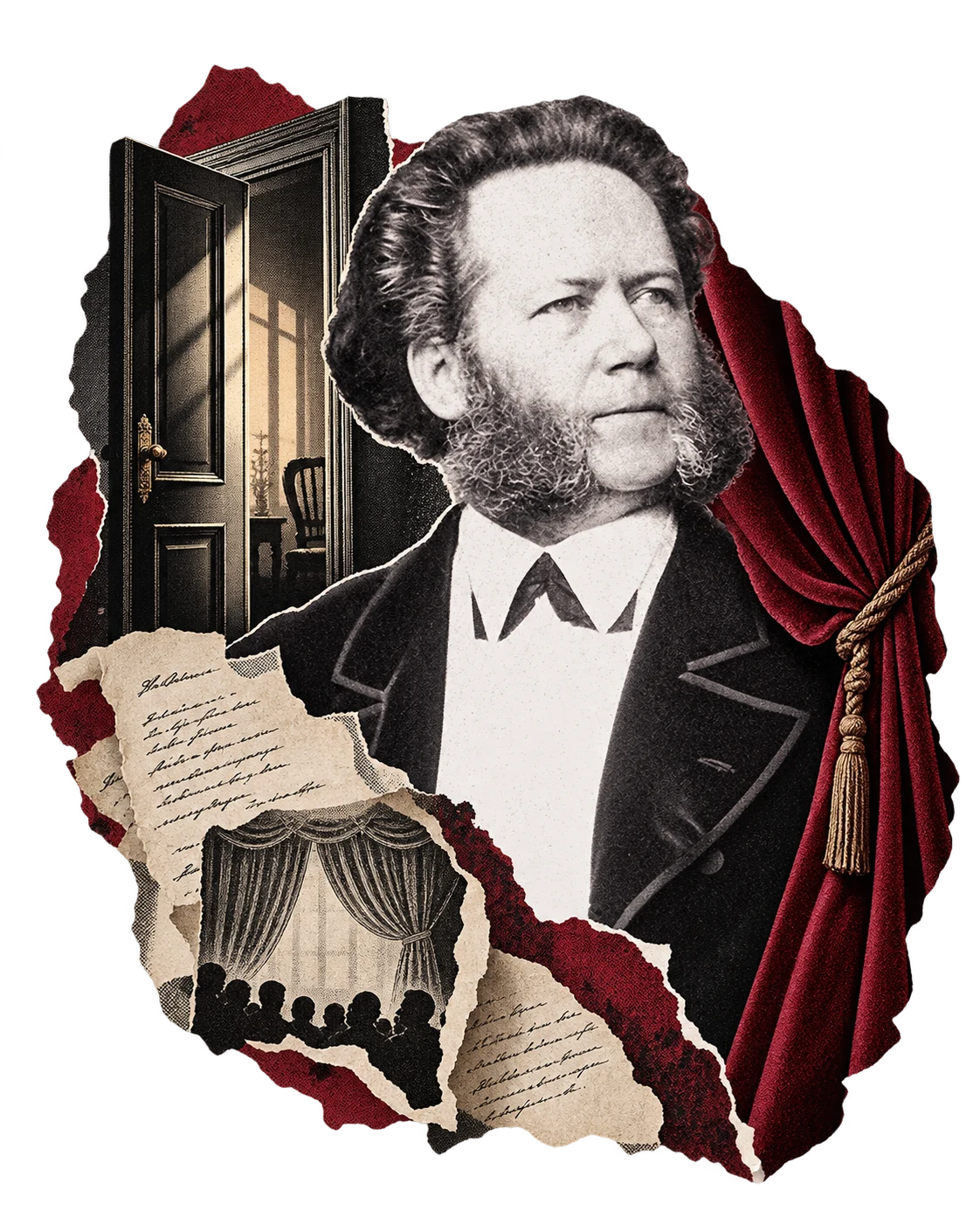
The father of modern drama
The Father of the Realism Movement
For many years, humanity believed that man was the crown of creation. It was Charles Darwin who, in 1859, published his book "On the Origin of Species" and made clear that we are, in fact, just another animal. This publication shocked some creative minds and forced them to change their way of thinking - a way of thinking that sought in man all that was noble and good, and endowed him with superpowers that would point to our uniqueness. Playwrights began to abandon plays about superheroes and various romantic tales, and started writing about the ugly things in life. This was the birth of the "Realist movement," which sought the truth it defined as 'knowledge acquired through the senses' - that is, not beliefs in supernatural powers that cannot be perceived by any of the senses... The father of the Realist movement was Henrik Johan Ibsen, a good friend of Edvard Grieg (whom I wrote about here).
He is considered one of the most important playwrights of the modern era and the father of modern drama. Early in his career as a playwright, he wrote romantic plays based on Norwegian folktales. In the 1870s, Ibsen adopted the realist approach and turned to writing "gut-punch plays." Ibsen was the second son of a successful merchant. He was born in 1828 in Skien, southwest of Oslo. "Between the church and the pillory, beside it were the prison and the madhouse" - this was the landscape of Ibsen's childhood, a landscape without gardens. This setting probably influenced his unromantic outlook and deeply realistic perspective. Ibsen describes the noise of the sawmills as an immense din, like hundreds of women weeping and wailing.
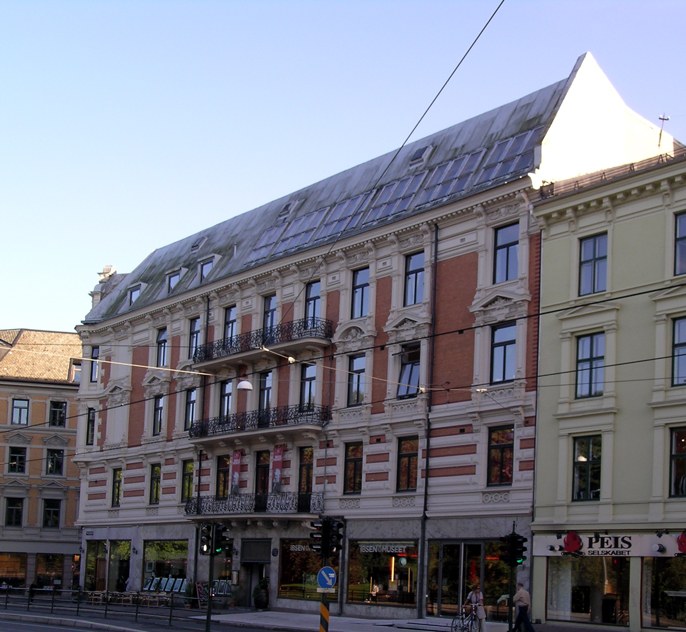
He was 10 when his father went bankrupt and the family moved to another town. The world of theater was where he escaped, and there, in a puppet theater, he wrote plays and found refuge from depression and the pressures of everyday life. When he turned 15, he left home and began studying pharmacy. Leaving a poor home in a dark neighborhood was an immense relief to him. Twenty years later, he would leave Norway with the same sense of relief, and when he returned, nearing the age of 70, he would write: "Up there, by the fjords, is the land where I was born, but where will I find my homeland?"
The young Ibsen grew up and had an affair with one of the maids in the house where he lived, who was 10 years older than he was. She gave birth to his son when he was just 18. This was the dark secret of his life. For 14 years he provided for the boy and kept the affair hidden. The strain Ibsen lived under was unbearable.
The year 1850 was no better for him. At 22, he was a student at the university in Christiania (today's Oslo), where he studied mathematics and Greek. He failed his exams and earned a living through journalism. That same year, Ibsen managed to persuade a theater to stage one of his plays, called "The Burial Mound," which was a crushing failure. Earlier, he had published a play about the ancient history of Rome, which interested no one.
A few actors at the theater saw beyond the failure. They recognized the rough diamond, the young Ibsen's directness, and in 1851, when he was 23, they arranged for the newly built theater in Bergen to hire him as a stage director. He helped write plays and directed 145 productions. Ibsen did not achieve success, but his name was beginning to make itself known. He described that period this way: "I was like a woman who has to have an abortion every single day." In 1857, Ibsen arrived in Oslo, where his financial situation was poor. In 1859, he married Suzannah, and that same year his only legitimate son, Sigurd Ibsen, was born (he later became a writer, lawyer, and statesman, and served as prime minister of Norway from 1903-1905).
The Italian Exile and the Great Plays
At the age of 26, failure and despair drove him to leave Norway, and he chose romantic Italy as his refuge. That same year, Bismarck, the chancellor of Prussia, decided to launch the Second Schleswig War against Denmark. In that war, parts of Denmark were conquered and seized. Sweden and Norway stood by and let this horror unfold. Ibsen, who supported the unity of the Scandinavian peoples, felt that by standing aside he was complicit in the crime. Shame and remorse inspired him to write two deeply vengeful plays against tyranny.
The first play, written in 1865, was "Brand." It portrays a hero who scorns ordinary people who dare not take risks. Brand is a Protestant priest who takes on all the weak and cowardly, defying the audience, the authorities, and everyone else. Brand was Ibsen's own voice. Ibsen wrote of Brand: "I am at my best. This work was written by an angry young man, drunk with hatred for the brutality of the strong toward the weak." The play caused a scandal. It was innovative, defiant, and delivered a hard blow straight to the gut. It brought him the recognition he had sought, as well as financial success, and he became a celebrity... The second play was prophetic, foretelling his own future. It is the most famous play by a Norwegian writer, "Peer Gynt," which Ibsen wrote in 1867. It is the story of Peer Gynt, a 20-year-old with great ambition (like Ibsen). Peer Gynt leaves Norway (again, like Ibsen) and sets off on a grand tour of the world: in Morocco, in Egypt, where he trades in Indian idols, and trades with China. Back home, little Solveig is waiting for him (perhaps she is the maid who bore his illegitimate child). At the end of all his adventures, Peer Gynt returns home, to Solveig, and tells her, "This is where I belong." The play is a protest against the desire for self-gratification (the play was translated into Hebrew by Leah Goldberg, and there is also a song by Chava Alberstein about Solveig that most of you know). In Rome, Ibsen met the Norwegian Edvard Grieg. He was enchanted by Grieg's music. They spoke in their own language and understood one another's gloom, and together they began working on the music for Peer Gynt (the music that wakes me every morning...) In 1869, Ibsen once again took aim at politicians. He wrote the play "The League of Youth." The play's hero is a lawyer named Stensgaard, who plans to found a new, radical party called the "League of Youth." He faces an influential old right-winger. Stensgaard wins the election and then begins to act dishonestly, both personally and politically. After the election, he announces that he wants to form a coalition with his rival, and even intends to marry a conservative widow. He is expected to enter parliament, on condition that the principles of the "League of Youth" change. In this play, Ibsen takes the political world to task for changing its principles in order to cling to power...
Success gives Ibsen confidence, and he embarks on a series of social dramas, which are essentially the tools with which he fires at the Norwegian establishment and the pillars of society. These plays contain everything: the hypocrisy of a well-fed social class that surrounds itself with alienation and humiliates day laborers, women, and children. On the one hand, everyone talks about the purity of social life, while on the other, everyone keeps a tight grip on their wallets. The heart is on the left, and the wallet in the pocket is on the right - that was the motto Ibsen attacked. In 1879, Ibsen wrote "A Doll's House." It is one of his most famous plays. In it, Ibsen addresses selfishness and male chauvinism, a subject no one had dared to speak about. In the play, the heroine Nora leaves her home and children in order to gain her freedom. It is, in effect, an invitation to the women of London to rebel. This is how the term "Ibsenism" was born, referring to a progressive feminist approach that fights social hypocrisy. The excitement surrounding "A Doll's House" turned into anger and hatred.
In 1881, the play "Ghosts" was published - a shocking, daring play that ran counter to the morality of the time. It tells of a Norwegian officer who contracted syphilis, and his wife, Mrs. Alving, realizes that marrying him was a mistake. Their only son, Oswald, inherited the disease from his father and is also dying. Oswald wants to make love to his half-sister, and his mother allows it; afterward, she helps him commit suicide. At the time, Norway had two important institutions: the navy and the army. In the play, Ibsen attacked both, and they attacked and criticized him in return.
The anger stirred in him a desire to answer his attackers, and a year after "Ghosts," in 1882, he wrote "An Enemy of the People." The enemy of the people is Dr. Thomas Stockmann, a respected physician who hears that the mayor wants to turn the town into a resort. The doctor discovers that the mineral waters the town plans to bring in for their healing properties contain a highly toxic and harmful substance. The town's leading citizens, who have invested in hotels, oppose his revealing the truth. Stockmann is faithful to the truth, just like Ibsen, exposes his friends’ shameful conduct, and quickly discovers that he has become the enemy of the people. In the end, he declares that the enemy of freedom and truth is the liberal majority, saying: "Know this, you, the majority: you are the greatest danger." The strong person is the one who stands alone, just like Ibsen himself.
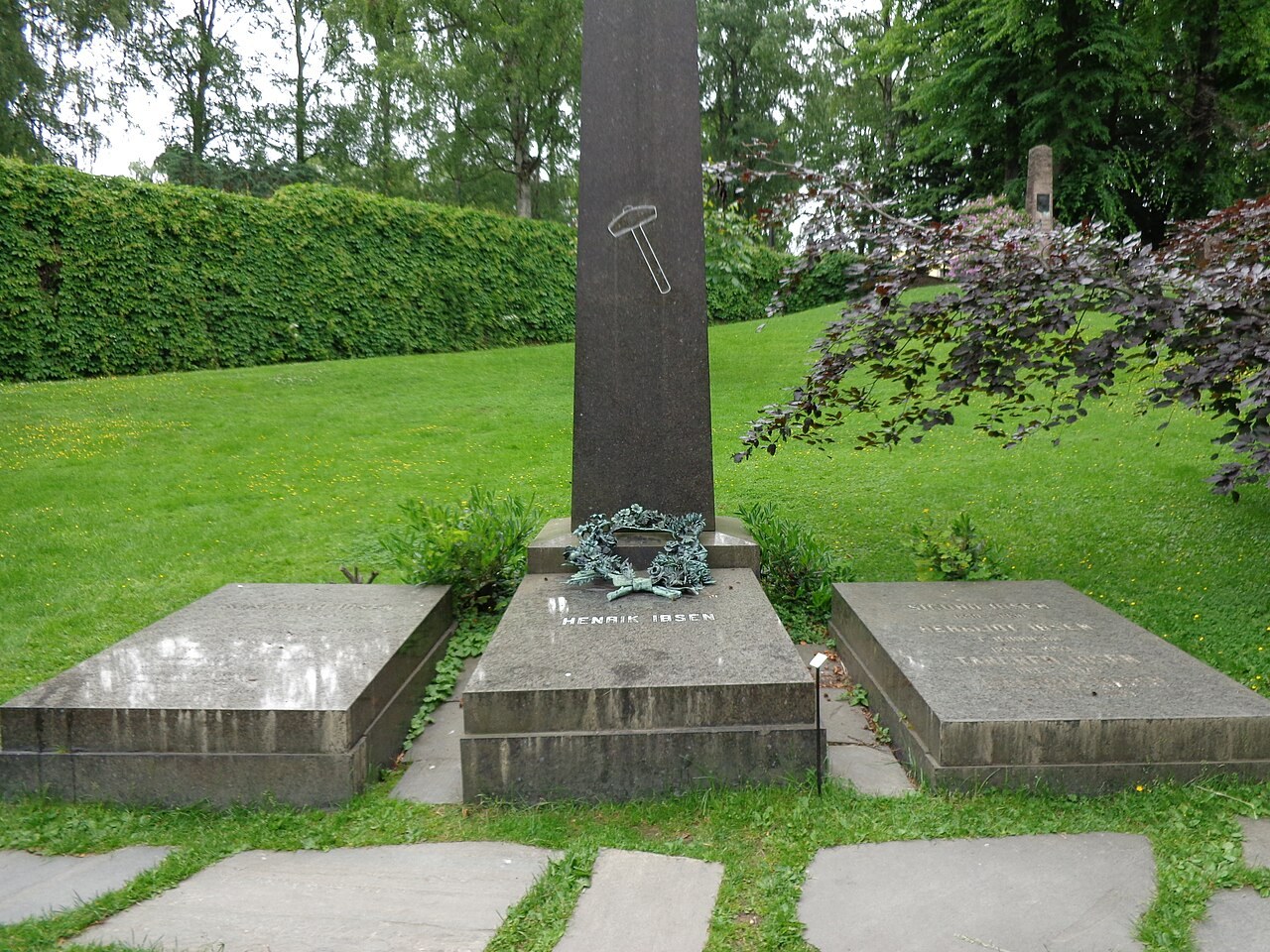
In 1891, the famous playwright decided it was time to return to Norway. At 63, like Peer Gynt, who set out as a young man and returned an old man, he was welcomed home by Norway with love. His plays were considered influential in the changes taking place in Norwegian society as it moved from the Victorian era to modernism. Ibsen died in Oslo in 1906. Immediately after Ibsen's death, independent Norway came into being and could say, "We have an important writer and musician" (Grieg).



תגובות
עדיין אין תגובות.