
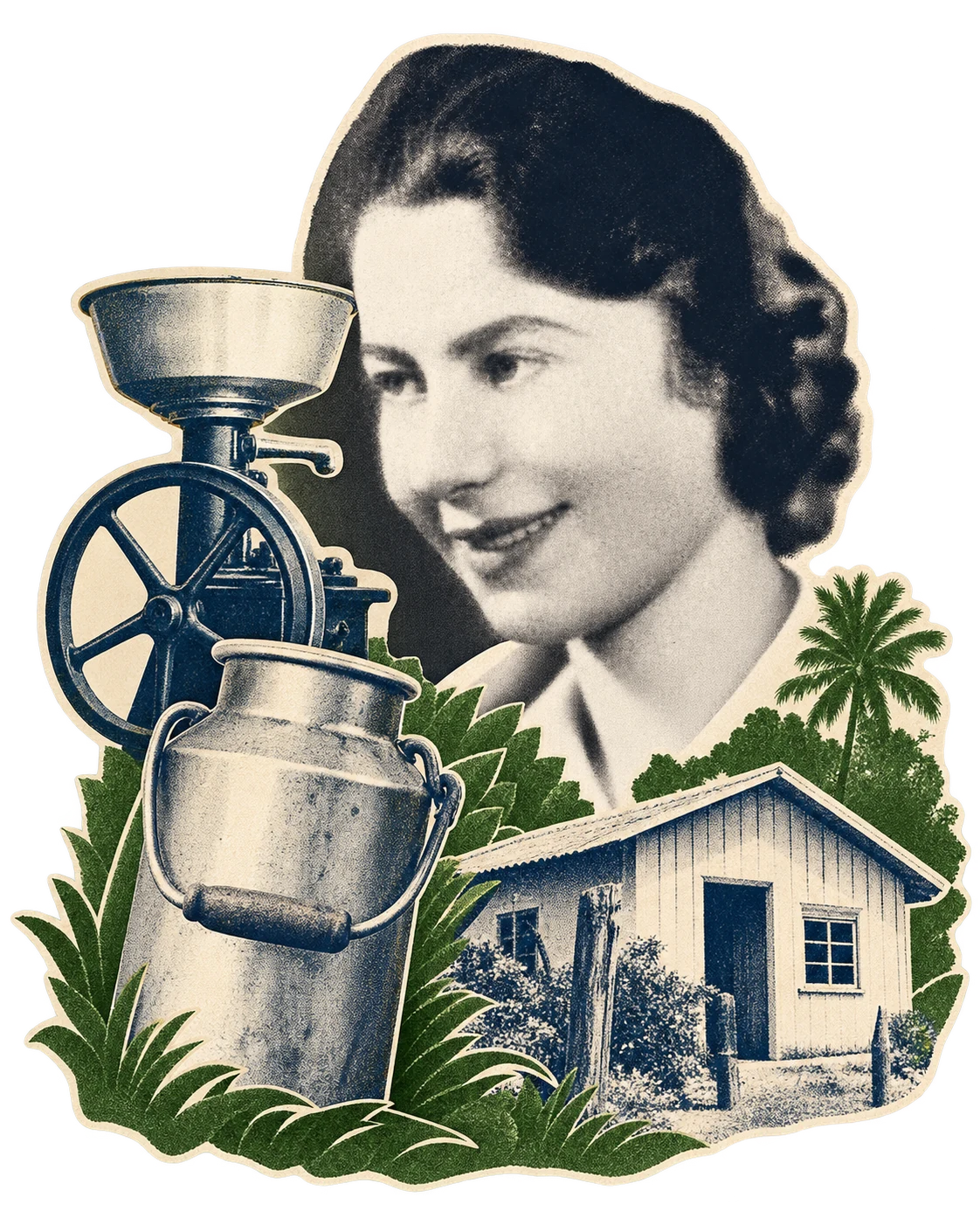
A couple of immigrants who worked together, dreamed together, and built one of the country's largest food companies - a company that nurtured a generation of talented executives.
The Roots of the Strauss Family
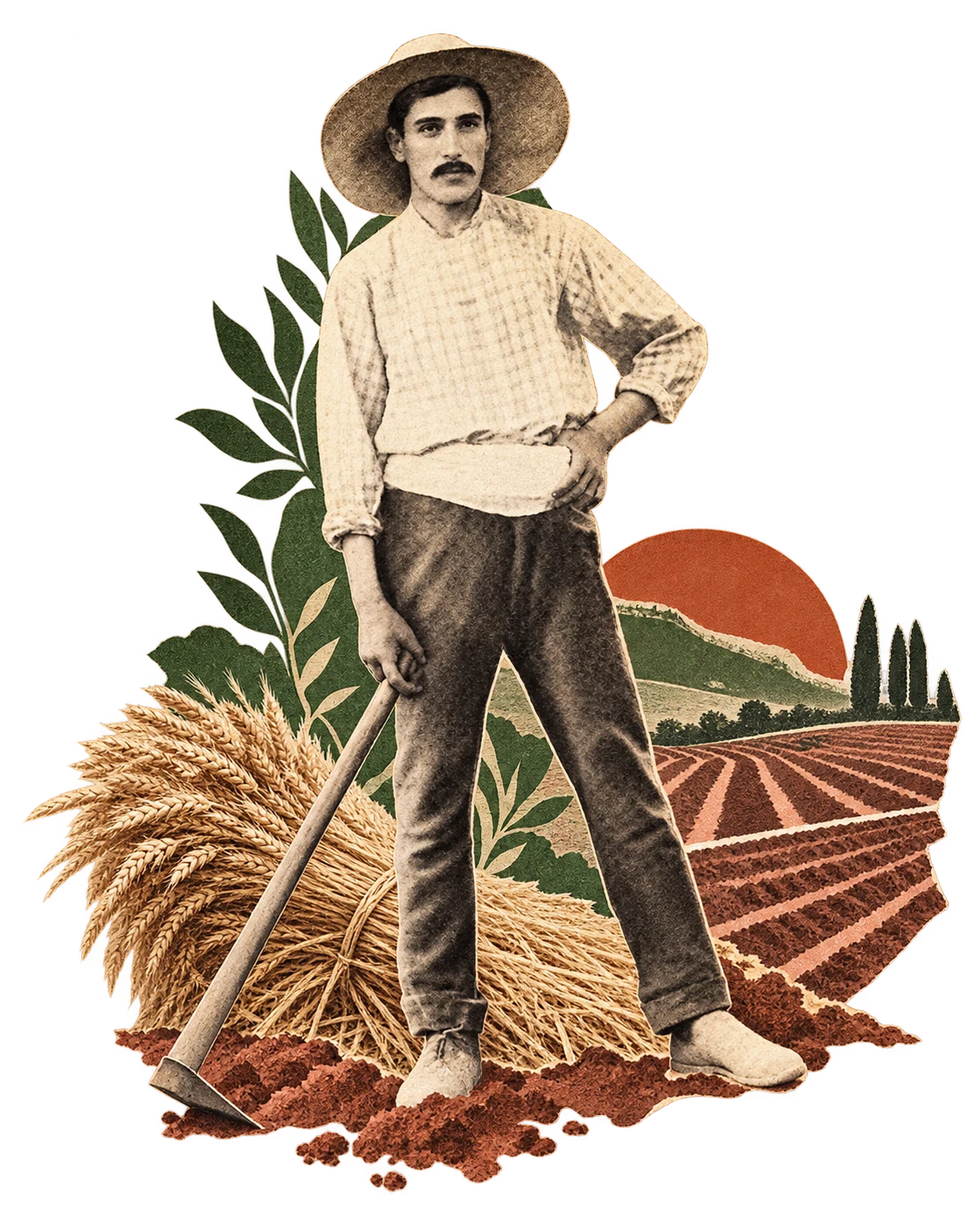
Looking at the Strauss empire today, it's hard to imagine that it all began with a couple of Yekkes, one baby, and a cow.
Richard Strauss was born in 1909 in the German city of Ulm, to a prosperous family of industrialists who owned metalworks. He was the eldest child of Martha and Julius, pillars of the Jewish community. When he grew up, he went to study at the University of Frankfurt and later at the University of Berlin, where he earned a doctorate in economics and law. After graduating, he joined the family's metalworks and learned how a large mechanized factory operated, how materials were scheduled, how inventory was managed, how products were marketed, and how to study competitors - skills that would serve him in the years to come. Hilda was five years younger than he was. Her parents, Bertha and Fritz Bach, owned a successful textile business, and she studied at the Berlin School of Commerce. Richard and Hilda shared both their knowledge and experience in setting up and running a factory, and their knowledge of commerce. Richard and Hilda married when Richard was 24, and spent their honeymoon in Mallorca, Spain.
From Nazi Germany to the Land
In 1933, Adolf Hitler was sworn in as chancellor, and by March of that year Germany's first concentration camp, Dachau, had been established. On April 1, a boycott of Jewish-owned businesses was declared, during which members of the SA prevented people from shopping at Jewish stores. That same month, the numerus clausus law was also passed, limiting the proportion of Jewish students at institutions of higher education. Later, Jews were dismissed from the civil service, and the Nazi government began enacting a series of anti-Jewish laws. Some members of the Strauss family understood what was coming, and Richard's younger brother Rudi immigrated to Palestine as part of the Zionist youth movement.
In 1936, Hilda gave birth to their first child, Peter (Michael). She heard a speech by Goebbels, the Nazi propaganda minister, and, as she recounted years later, immediately understood that "something bad was going to happen." "Mom waited until I could walk, and then decided to immigrate," Michael said. "How did my mother, who left Germany because she understood what was going to happen, write in her diary here? 'We arrived in a land that is ours.'"
They weren't the only ones. Other Jews began immigrating to Palestine in what would later be called the Fifth Aliyah. From 1932 to 1939, about 280,000 Jews arrived in Palestine from Europe and Asia, more than 20% of them from Germany. Most of the immigrants were middle class. Although they had been professionals in Germany, some were settled in the suburbs and encouraged to take up farming. This is how Kiryat Bialik and Ramot Hashavim were founded. In Nahariya, the agronomist Eugen Soskin proposed establishing mixed farms with chicken coops, dairy barns, fruit trees, and vegetable gardens, and the Yekkes who arrived in Nahariya used their knowledge to run the farms.
The Zoglovek family was one such family. Reinhold Abraham Zoglovek and his wife Irmgard arrived in Nahariya from Germany in February 1937, intending to settle there. They planned to bring their family business, a kosher meat-processing and sausage-making factory, to Palestine as well. Later, the machines, mixers, and meat grinder arrived. By the end of that year, the kosher sausage factory "Kabilitzky and Zoglovek" had already been inaugurated, and the rest is history. But not all the immigrants succeeded in building businesses as successful as Zoglovek. Ernst Mendel, who had been a cattle dealer in Germany, wanted to turn his chicken coop into a dairy barn, but he did not make it in Palestine, and in 1956 he emigrated with his family to Argentina.
The Cowshed in Nahariya and the Dairy
The Strauss family knew how to draw on their experience and recognize business opportunities. When Hilda and Richard arrived in Palestine, they joined Rudi, Richard's brother, who was then living in Be'er Tuvia. When Rudi joined the Jewish Brigade, Richard took responsibility for the cowshed, and after a while he "fell in love" with the cows. "There was a cowshed there, and they learned how to milk cows. I had to clean the cow dung in the cowshed, back in Be'er Tuvia," Michael recalled.
Three years later, Hilda and Richard moved to the agricultural settlement of Nahariya, which in those days was a "nature reserve" for immigrants from Germany. The couple settled in an old shack between the sea and the main road. They grew vegetables, planted fruit trees, and kept one cow in the meadow, which supplied them with milk. It was clear that Richard Strauss would not be satisfied with that. From the very beginning, he made it clear that he intended to build a large dairy barn on his land. The entrepreneur Soskin strongly opposed this, arguing that a dairy barn would harm the character of the settlement - but Richard did not give up. This was the first of many battles the Strauss family would face. Hilda later said that Nahariya's residents were used to drinking imported canned milk, while fresh milk was given "only to babies and cats." Despite all the opposition, Richard built the dairy barn in the backyard. Every morning, he milked his cows and loaded the milk cans onto his bicycle. He went from house to house, offering the residents fresh milk. At first, because the Yekke residents were not used to drinking fresh milk, Richard sadly had to pour away whole cans of it.
Michael described those days: "In Nahariya, too, I was wherever there was mud and dirt. At the age of seven, I delivered milk to homes and boarding houses on a donkey cart. There was competition with a dairy bigger than my parents' dairy, and there were arguments. My father wasn't one of the most aggressive people in the world - that's why his son came along later. And he had a mental block in the Israeli reality here. He got up every morning at five and did whatever he could to compete."
One day, Hilda told a family friend about the milk going to waste. He suggested she make cheese from the surplus milk and even gave her a recipe. That was how Hilda began making cheese in her small kitchen, and even came up with new recipes.
A year after they arrived in Nahariya, an agricultural exhibition was held in the settlement, and they decided to take part. The High Commissioner honored the opening with his presence, and at the end of the exhibition, during a festive ceremony, the first prize was awarded to the Strauss family for its dairy products.
1938 was the year that set the family on its path and led it toward what would become a giant food company. Hilda picked strawberries from her garden and poured sweet whipped cream over them. She set out chairs on the veranda and began selling the dessert. Word of the strawberry treat spread throughout the north, and the Strauss family's veranda became a central meeting place for residents and British soldiers, who savored a delicacy they had known back in Europe.
A year later, the family decided to focus solely on the dairy, since it was impossible to maintain hygiene in the dairy with a barn right next door. They bought milk from other dairy farmers and focused on producing and marketing milk and dairy products.
In February 1940, Hilda gave birth to Raya. "We lived together in one room until she got married. One day, when she was a baby, there was a terrible heat wave. Of course, there were no air conditioners back then, just rags in the room, and I heard her coughing strangely. I called my parents, and by the time they came she was completely blue, suffocating in the heat. They brought Dr. Einstein, the owner of a nearby grocery store. Everyone was a doctor back then. He said to put the baby in the sink with ice cubes right away. That's how she was saved. She owes me..." Michael recalled years later, "even though sometimes she would tell on me when we were little."
By the 1940s, the home kitchen had become too small, and production moved to Ein Sara. But since pigs were raised there, Strauss products could not be certified kosher, so the factory returned to the yard of the family home. A cheese-making expert from Czechoslovakia joined the team, along with two women from Nahalal who assisted him. By the end of the 1940s, the cheeses were being sold throughout the country, and a branch had even opened in Haifa. The handmade cheeses were high quality and began to earn a reputation. The butter was sold in parchment-paper packaging, and the processed cheese came in aluminum packaging. The packages bore labels with the name Strauss and a drawing of an ostrich (the meaning of the name Strauss). After the rabbinate informed the family that an ostrich was not a kosher animal, the logo was changed to the Nahariya water tower.
In 1945, the Strauss dairy took part in a fair held in Tel Aviv. Hilda went to the fair to collect payment for the cheeses sold there and met a debtor who was unable to pay. She noticed that he had an old ice cream machine, and on the spur of the moment offered to accept the machine in payment of the debt. She then went to Old Jaffa, rented a pickup truck, and transported the machine to Nahariya. She sold the ice cream she made to the legendary Penguin restaurant in Nahariya, owned by the Oppenheimer family. Hilda also sold some of the ice cream to cafes such as Ginati and Fivelman. The restaurant closed in 2022 to make way for a large construction project.
Michael, the son of Hilda and Richard, was raised with a commitment to excellence and a strong work ethic. He knew what direction to take the company and was devoted to the family brand. He never forgot the insult he and his father endured when they met with Nahum Verlinsky, Tnuva's CEO from 1937-1970. When they asked to buy milk, Verlinsky told them that "all rivers flow to the sea and all milk flows to Tnuva," and that he would be better off getting out of the business. Richard replied, "Gold crumbs fall from every golden wagon, and that's enough for us." This insult was one of the things that drove Strauss to prove that they would not settle for "gold crumbs falling from the wagon."
Breaking into the National Market
August 28, 1958, is considered a turning point. "Shufersal opened its first branch on Ben Yehuda Street in Tel Aviv, and, unlike other grocery store owners, it wasn't afraid of Tnuva and put Strauss dairy products on its shelves," Michael said. The company needed no more than a small opening to break through. Strauss expanded alongside Shufersal with every new branch, growing from a small company in the Western Galilee into a nationwide business. The competition between Strauss and Tnuva, which lasted many years, forced the small Strauss company to become more creative and efficient, until it became a large corporation itself. The dairy giant Tnuva was then a cooperative representing the country's farmers. It used its power to threaten shop owners, telling them that if they bought Strauss products, it would stop supplying them.
"It was hard for Yekkes to manage in Hebrew in the past, especially with the government," Michael said of Strauss's early struggles. "My parents' position with government officials was almost impossible compared with Tnuva's. Not knowing the language made things difficult for my father, and he had to hire a fixer to handle regulatory matters, from getting a license to import raw materials from abroad to obtaining sugar and milk quotas during the austerity period." The banks were not eager to help either. "We went to a meeting with the management of Bank Leumi to ask for a loan of 20,000 liras," he said. "The bank's senior executives sat with us and told my mother that, unfortunately, they couldn't give us the loan because our business wasn't in good enough shape, so they were willing to give us only 5,000 liras." In the end, the dairy received a loan only thanks to Pinhas Sapir, who was then the Minister of Industry and recognized the company's potential.
In 1969, Strauss signed a comprehensive cooperation agreement with the French food corporation Danone and began marketing the international company's products in Israel. During the 1970s and 1980s, the years of the Arab boycott, Danone left its partnership with Strauss, but resumed cooperation after the Arab League lifted the boycott in the 1990s.
The Next Generation of Strauss
In 1975, Richard Strauss died, and management passed to his son Michael, who began acquiring other companies. Strauss bought Vitman ice cream, then its biggest competitor. In 1991, Strauss entered the salads business by acquiring the company Mi U'Mi. Shortly afterward, it signed a cooperation agreement with international company Unilever to produce ice cream; two decades later, Unilever acquired control of Strauss's ice cream operations. In 1997, Strauss acquired the Yotvata dairy and the Max Brenner cafe chain. Michael also led the yogurt revolution that changed local tastes. Michael had a knack for identifying talented executives who initially worked for him and later ran giant companies in Israel, among them Amikam Cohen (Partner), Erez Vigodman (Makhteshim Agan Industries), David Avner (Partner), and Hertzel Ozer (HOT Group).
In 2001, the management baton passed to Ofra Strauss, Michael's daughter. Michael described the generational handover: "When Ofra was 14 and rode with me in a delivery truck in Safed, after I unloaded 40-30 crates of labneh and leben (cultured milk) in jars, she said, 'He stole four crates from you.' I said, 'Don't worry, he always steals, and I always add it to his bill.' Then I realized she was paying attention. That she cared. That she was very ambitious. Not all my children had those qualities. They are talented in other ways. When Ofra trained in swimming, after two years she was Israel's runner-up. Irit had a better natural talent for swimming, but not everyone can swim more than 10 km every day. I kept an eye on Ofra all the time. I had a very great responsibility in deciding to hand the role to her. It wasn't an easy decision." Unlike what happened in other families, the handover of management in the Strauss family was carried out in an orderly way: "I chose to transfer the company's presidency to someone I knew would know how to do it, someone with the right qualities and experience. She started small, with no leniency from me, and gained experience at another company (Estée Lauder)," Michael said.
Ofra continued her father's acquisition drive, buying the Yad Mordechai apiary, the fresh vegetable company A.N.P., and Tami 4, and expanding the company's activities into new areas. In 1997, Strauss acquired Elite.
Today, Strauss is Israel's largest food company. "Industry used to rank much higher among the country's priorities, alongside agriculture. The government's priorities are very different today," Michael said, adding: "High tech is thriving, and Israel's great success is in research and development. Traditional industry, as I know it, has a future if it can adapt to developments and move forward with the world. If it doesn't stay vigilant, it will disappear, as it has in the past - only today it will happen faster."
Michael did not just focus on growing the family business he had inherited; he also felt a responsibility to contribute his talents: "I've been promoting this in Acre for 15 years now, at least two days a week. I do everything I can to prove that people can live together. They asked me to be a kind of mentor to the municipality, and I fell in love with it. I saw that I could contribute. I work hand in hand with the mayor. We brought the city from a deficit to a balanced budget, brought in 30 factories, cut unemployment in half, improved education, and 80% of the children here study music. There are parks; there's a reason to live in this city. Apartment values have risen, too. We stopped people from moving away, and I think we've even brought some people back who had left. It's become worthwhile for them to live here. And today, the Arabs of Acre are connected with the Jews and don't let anyone undermine their relations. When demonstrators come to the city from the villages and try to stir up resentment, the residents of Acre distance themselves from them."
Years after stepping away from day-to-day management, he criticized the government's actions in the areas of food and agriculture with regret: "For several years now, I've felt there has been a terrible campaign against agriculture and industry. They're being attacked. Anyone with a slingshot takes a shot at them. 90% of industrialists deserve a medal for holding on despite the conditions here. It's sad to see so many of us leaving because they're fed up with the daily battle against the government, with the attacks by some media outlets that publish unverified things. Look at the Swiss. They support agriculture because they believe that 50% of the food should be produced at home - in case of war. The Swiss! Not Israel. Here, they charge 18% VAT, there's the rabbinate (with its kosher requirements), working on Saturdays is prohibited, and the market is limited in size. I don't want to compare, but I'm not willing to be hit with stones all day, all the time," he said in an interview with journalist Diana Bahur-Nir.
The Yekkes of Nahariya looked on with scorn as their major competitor, Tnuva, was sold to the Chinese company Bright Food. They had started with a small dairy that had struggled for years to survive against the powerful kibbutz corporation, and were proud to say: "Over the years, we've had offers to be bought by Chinese, Japanese, and Europeans. But in our Ten Commandments, we're an Israeli company, and money was the thing that worried us least. We're proud to be an Israeli company; first and foremost, we're industrialists, and first and foremost, we're a family. We're not interested in selling. They say everything has a price? We're a different kind of company."
Michael Strauss died in October 2020 at the age of 86.
תגובות
עדיין אין תגובות.