
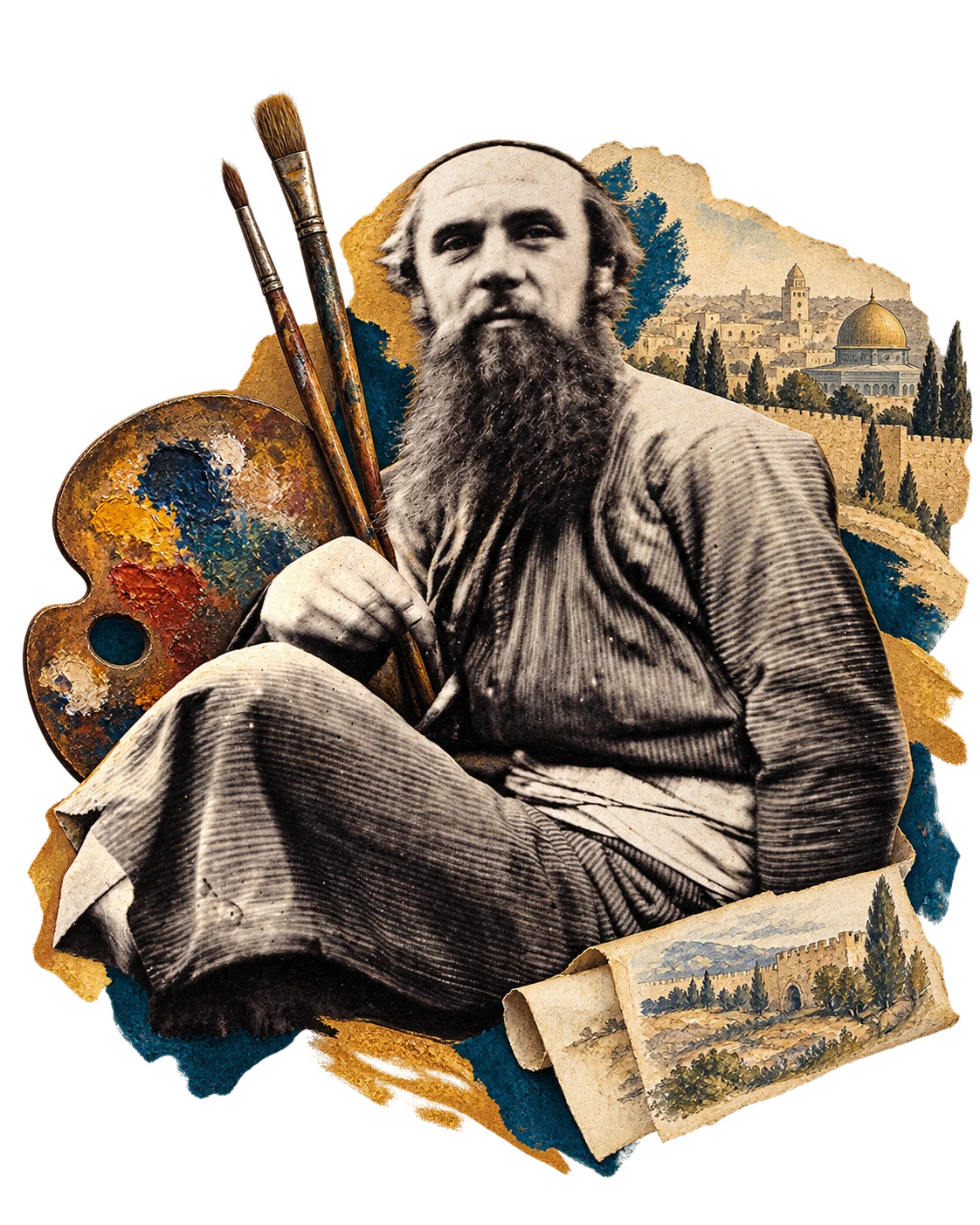
One was a thinker and the other a famous painter. Two good friends who loved the Land of Israel, its landscapes and its people, and spent an important part of their lives there.
Christian Zionism in the Land of Israel
In the mid-19th century, the Land of Israel was a remote, desolate province of the Ottoman Empire. Jewish refugees began arriving in the region as immigrants, but they were not the only ones. Christians from around the world, mainly Protestants, arrived on the shores of Jaffa. Some were messianic, some eccentric, and most were idealists unfamiliar with the conditions of the land, but all came to prepare for the coming of the Messiah. Among those who arrived were a thinker and a painter who became close friends there. Each, in his own way, contributed to advancing the Zionist idea and the return of the Jews to the Land of Israel.
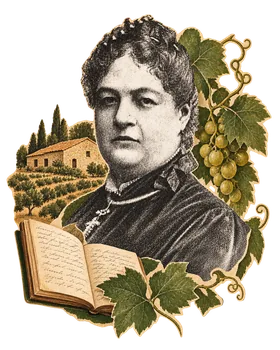
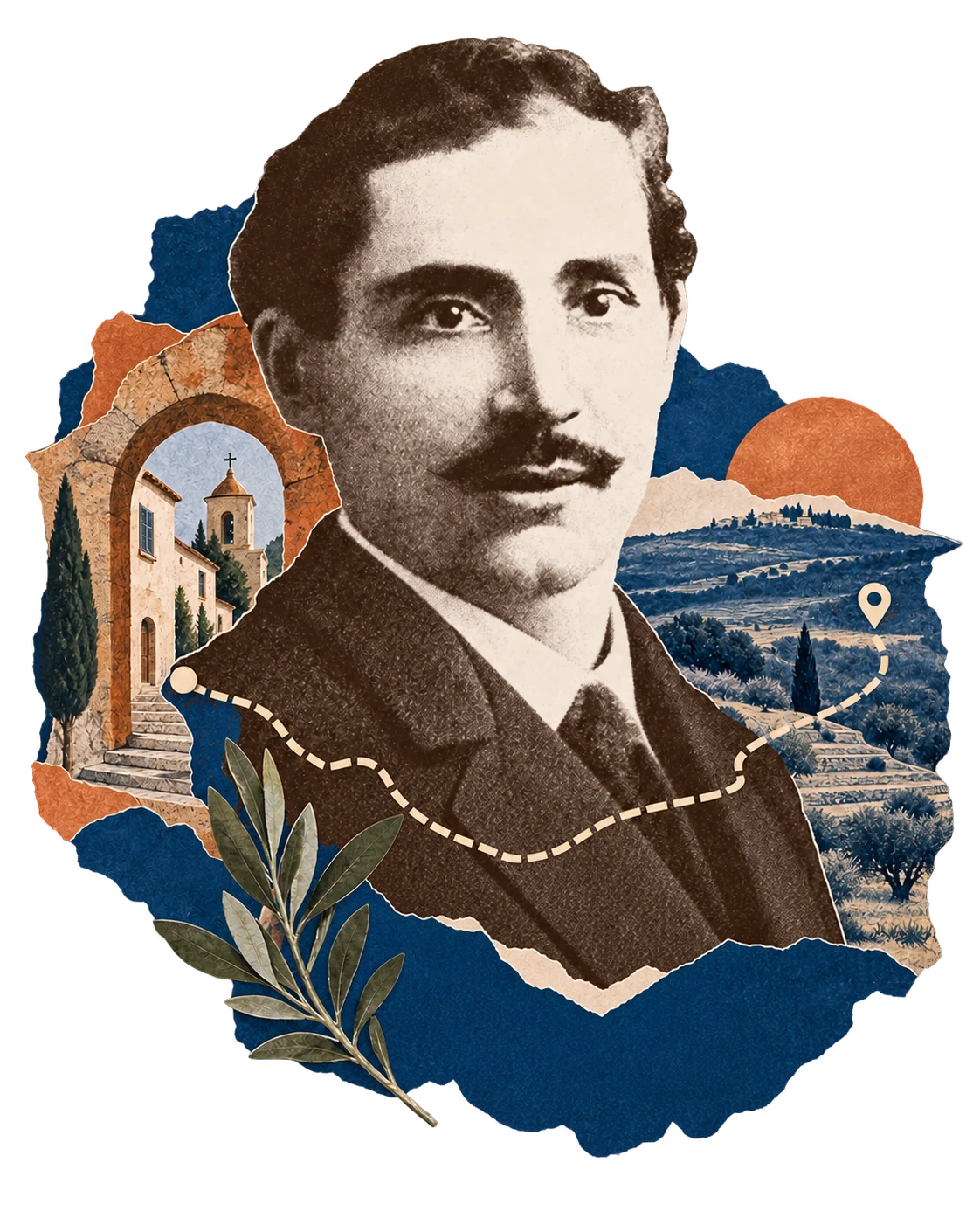
Henry Wentworth Monk was born in 1827 on the banks of the Ottawa River, the fifth child in a Christian immigrant family that had come to Canada. He grew up on a farm in Ontario, raised in the religious traditions of his Protestant father and Catholic mother. When he was seven, his parents realized that his strength lay in his mind, not his arm. In their wisdom, they decided to forgo his help on the farm and sent him to study at a prestigious boarding school in London, one of those austere and devout institutions. After eight years, Henry returned to the farm, and at 19 he was sent to a seminary for priests. He left because it offered no answers to the difficult questions that troubled him. He returned to his parents' home and, alongside his work on the farm, immersed himself in messianic literature and continued searching for answers. The book by Clorinda Minor, who lived in the Land of Israel and promoted a messianic vision of the Jews gathering in the land of their ancestors, influenced him. Monk was horrified by the idea that a world war was about to break out while the world remained indifferent. At 25, he realized that he was the man destined to bring about world peace, and that the first step was for the Jews to gather again in the land of their ancestors and restore their independence there. (Monk was not the first to put forward this idea. He was preceded by Protestant Christian Zionists in Britain and North America, such as the British Earl of Shaftesbury, the seventh earl, who had already advocated in 1839 for the Jews to return "to God's favor and to their land." Under his influence, Britain opened a consulate in Jerusalem to help advance Jewish interests.)
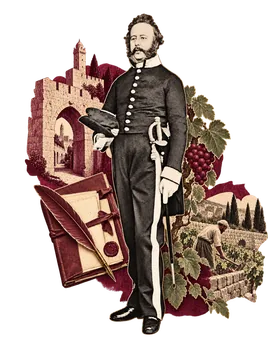
In the winter of 1853, Monk boarded a ship bound for the Land of Israel, and arrived in Jerusalem a year later with nothing. There he established a connection with the British consul, James Finn, and shortly afterward moved to Artas to work on the farm of the converted Jew John Meshullam, contributing the agricultural experience he had gained on his parents' farm. All this time, Monk tried to interpret the Book of Revelation in the New Testament. He believed that the prophecies meant the Jews' return to the Land of Israel and the establishment in Jerusalem of a home for a world parliament, where representatives of the nations would sit and administer a political and legal system to resolve conflicts and bring about peace. (One might say that he effectively foresaw Zionism and the establishment of the United Nations.) Toward the end of 1854, he met the painter Holman Hunt in the Land of Israel, and the two became close. They had long conversations in Artas, delighted in discovering interpretations of the Bible, and were moved to find the places mentioned in the New Testament.
Holman Hunt and the Pre-Raphaelites
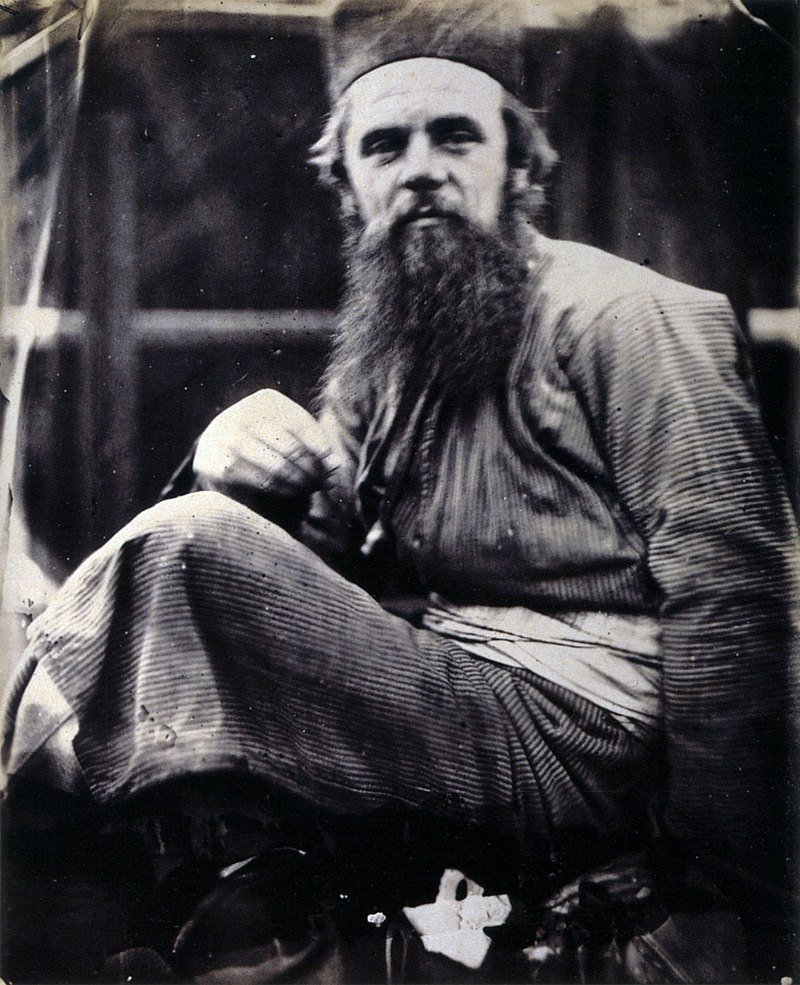
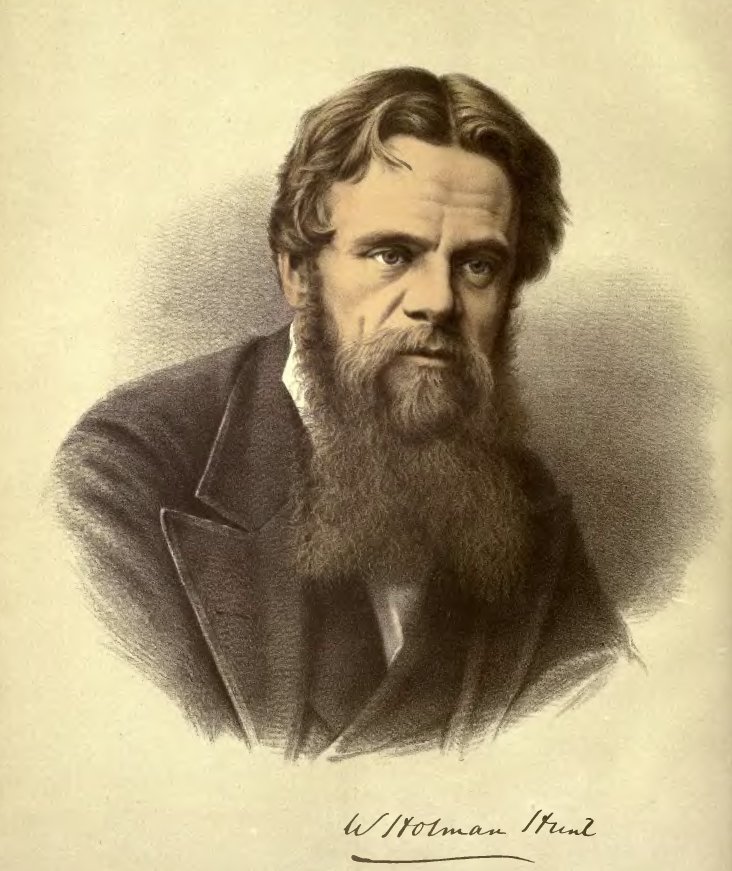
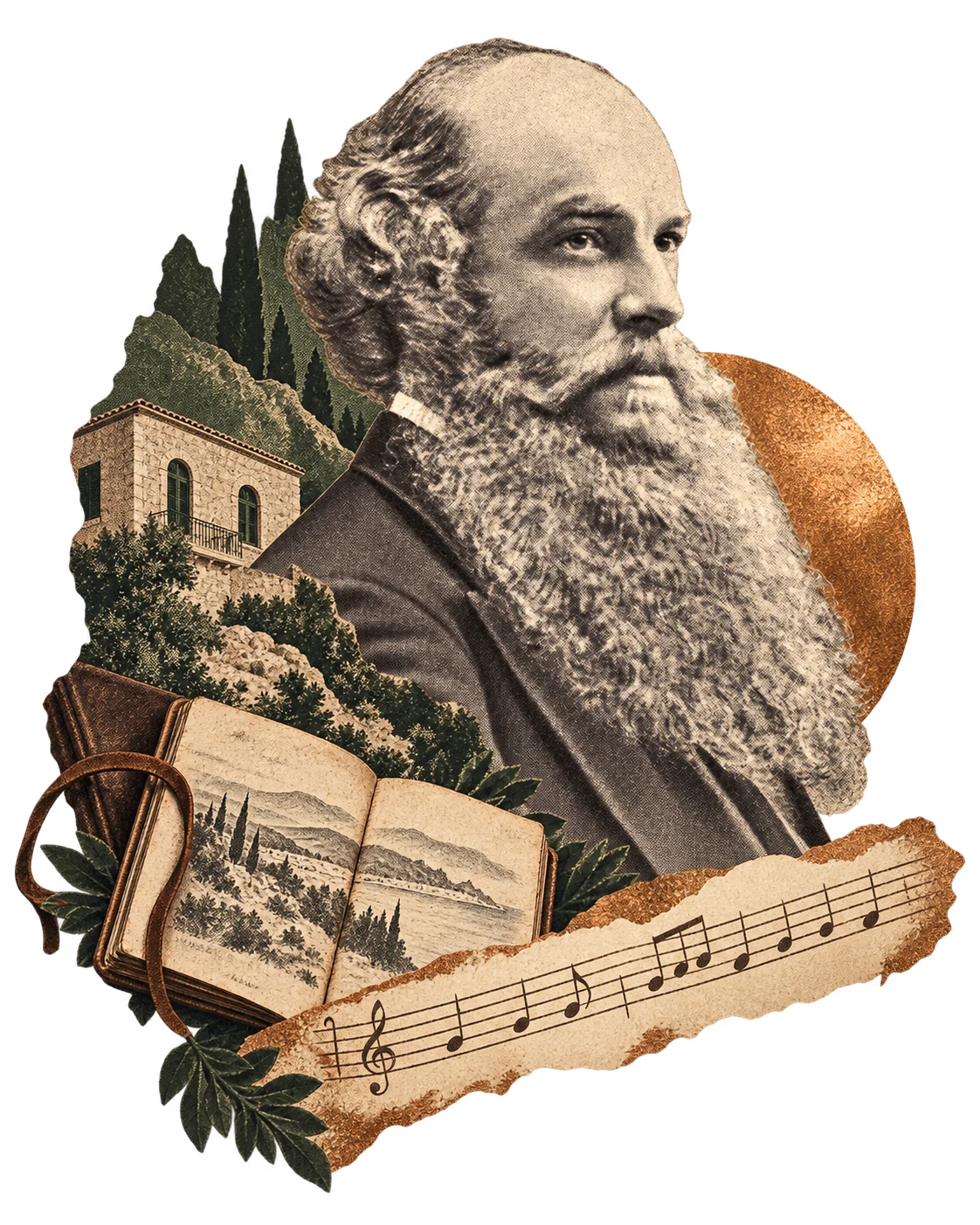
Unlike Henry Wentworth Monk, who was born on a farm, William Holman Hunt was born in London in 1827. He was the son of a warehouse manager, and his talent for painting was evident from an early age. At 17, he was accepted to study at the Royal Academy of Arts in England, and a year later he was already exhibiting his paintings in Manchester. Despite his success, Holman did not connect with the Academy's teaching style, and at 21 he founded the Pre-Raphaelite Brotherhood with other painters. 'Pre-Raphaelite' means 'before Raphael.' The period referred to came 400 years before Holman's time. It was the era of Raphael and the Renaissance, when painters worked for patrons who influenced their work and paid for it. But before Raphael, painting was natural and true, and that was the tradition Hunt aspired to return to. The Pre-Raphaelite painters created works connected to historical events and scenes from works such as those of Shakespeare, with an emphasis on social messages. Holman Hunt's paintings enjoyed tremendous success and brought him financial comfort, but he was searching for more... for more stories with power and moral depth. In the course of this search, he arrived in the Land of Israel in 1854. Hunt understood that, to paint the great stories of the New Testament and the Bible, he had to go to the places where these events had taken place, so he traveled to Jerusalem. He believed that the place and the Jewish community in which Jesus had grown up would be reflected in his paintings, and that they would serve as a kind of sermon on modest living and deep faith. Life in the land and his friendship with Henry Wentworth Monk showed the country in an entirely different light and turned Holman Hunt into an ardent Zionist. Like Monk, he supported the Jews' return to the Land of Israel and the establishment of a Jewish state there.
Holman Hunt described his friend Monk this way: "Among the residents was a man named Henry Wentworth Monk, whom the churchmen in Jerusalem regarded as a chatterbox lacking religious reverence. His aims were nothing less than the fulfillment of the Hebrew prophets' prophecies in their aspiration to establish a kingdom of peace on earth. He had come from Canada to learn firsthand the character of the Promised Land. His knowledge of, and passion for, the history and vast body of progressive thought contained in the Bible made him utterly fascinating to me. Drawing on his study of the past, he devised a plan for the days to come to end war among the peoples of the world who worship the God of Abraham [...] Monk took every possible measure to publish and spread his ideas among popes, czars, emperors, kings, presidents of republics, ministers, church leaders, writers - local and foreign - and newspaper editors. It was natural that he was considered mad, but this was entirely to his satisfaction, since it brought wide publicity to the problem he had warned about."
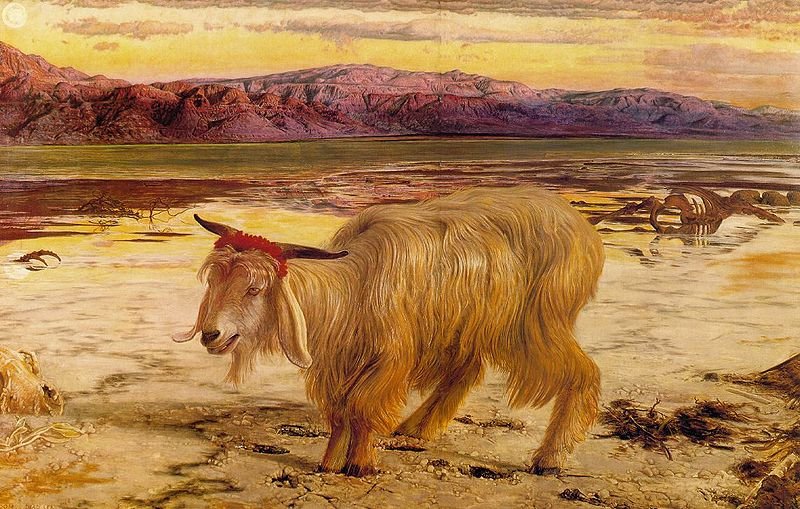
The aspiration to create an authentic painting that conveys the spirit of its subject can be seen in several of Hunt's works. The first painting he planned was 'Jesus Disputing with the Doctors in the Temple,' for which he sought out Jewish boys. For the painting 'The Finding of the Saviour in the Temple,' he used portraits of Jews in Jerusalem. His most famous painting, the one that brought him the greatest renown and is associated with him as the Mona Lisa is associated with Leonardo da Vinci, is 'The Scapegoat.'
To create the painting, Hunt took a goat with him into the Judean Desert, intending to give it a lifeless appearance. As the scene required, he 'dried it out' in the sun and only then began to paint it. The goat could not endure the ordeal and died. He tried with two more goats, who also perished in the intense heat, and only the fourth goat managed to survive the sun and return to Jerusalem alive. The painting was deeply disturbing and oppressive - a portrait of a goat in desperate distress, with no hope of recovery, its hooves planted in the soil of a world of everlasting disgrace. He began the famous painting after conducting in-depth research into the commandment of 'sending the scapegoat to Azazel' on Yom Kippur in the time of the Temple. Influenced by his close friend Henry Wentworth Monk, Hunt saw the scapegoat tradition as a prophetic sign of the coming of the Christian Messiah, who had offered himself as a sacrifice and thereby atoned in his own body for the sins of all humanity. The goat in the painting is at Azazel, a place believed to be Sodom, on the shore of the Dead Sea, facing the mountains of Moab. Hunt described the place as "a dreadful, beautiful wilderness." In the Dead Sea he found "a terrible symbol of sin," believing, as many of his contemporaries did, that biblical Sodom had stood precisely there. Hunt went there on Yom Kippur to capture the light at 'Azazel,' at the exact time when the goat was sent there.
Monk and Hunt Continue Their Path
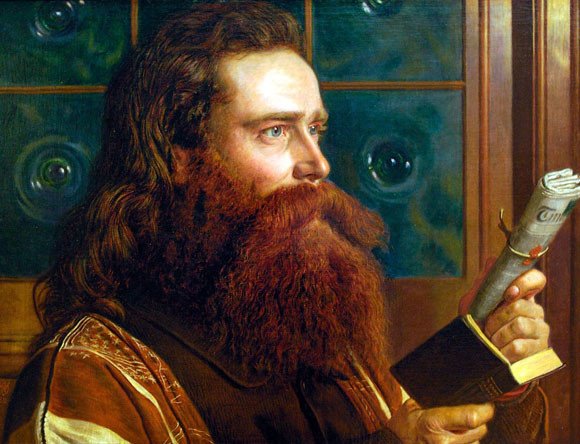
In 1857, Henry Wentworth Monk went to London to oversee the publication of his book 'A Commentary on the Book of Revelation.' His friend Hunt, by then a famous painter, helped him distribute the book and painted Monk's portrait as a prophet. In one hand he holds the New Testament, open to the Book of Revelation, and in the other a copy of that day's Times - a symbol that the events foretold in the Scriptures were unfolding in his own time. Publishing the portrait rallied public opinion in support of distributing Monk's book.
Monk also tried to spread his ideas in the United States and even met with President Lincoln. In 1863, he visited Jerusalem once more, but could find no peace and sailed back to Boston. The ship was wrecked off the coast of America, and Monk was the sole survivor. He swam toward shore, but as he neared it, his head struck a rock. With the last of his strength, he dragged himself onto the rocky, wooded shore, where a pack of wild dogs attacked him. He managed to escape them and climbed a tree, but a local farmer shot him, thinking he was a bear. When the farmer realized his mistake, he cared for Monk devotedly until he recovered.
After Henry Wentworth Monk recovered from being shot, he begged the Jews to establish an elected body that would choose its own leader, because he was certain they needed someone to lead them out of exile and bring them to Zion. Monk urged them to choose a worthy person from among the Christians, someone who had for "forty years" been calling on the Jewish people to "wake up and rise" - evidently meaning himself. Henry Wentworth Monk died in August 1896, and in August 1897, exactly a year after his death, the First Zionist Congress convened.
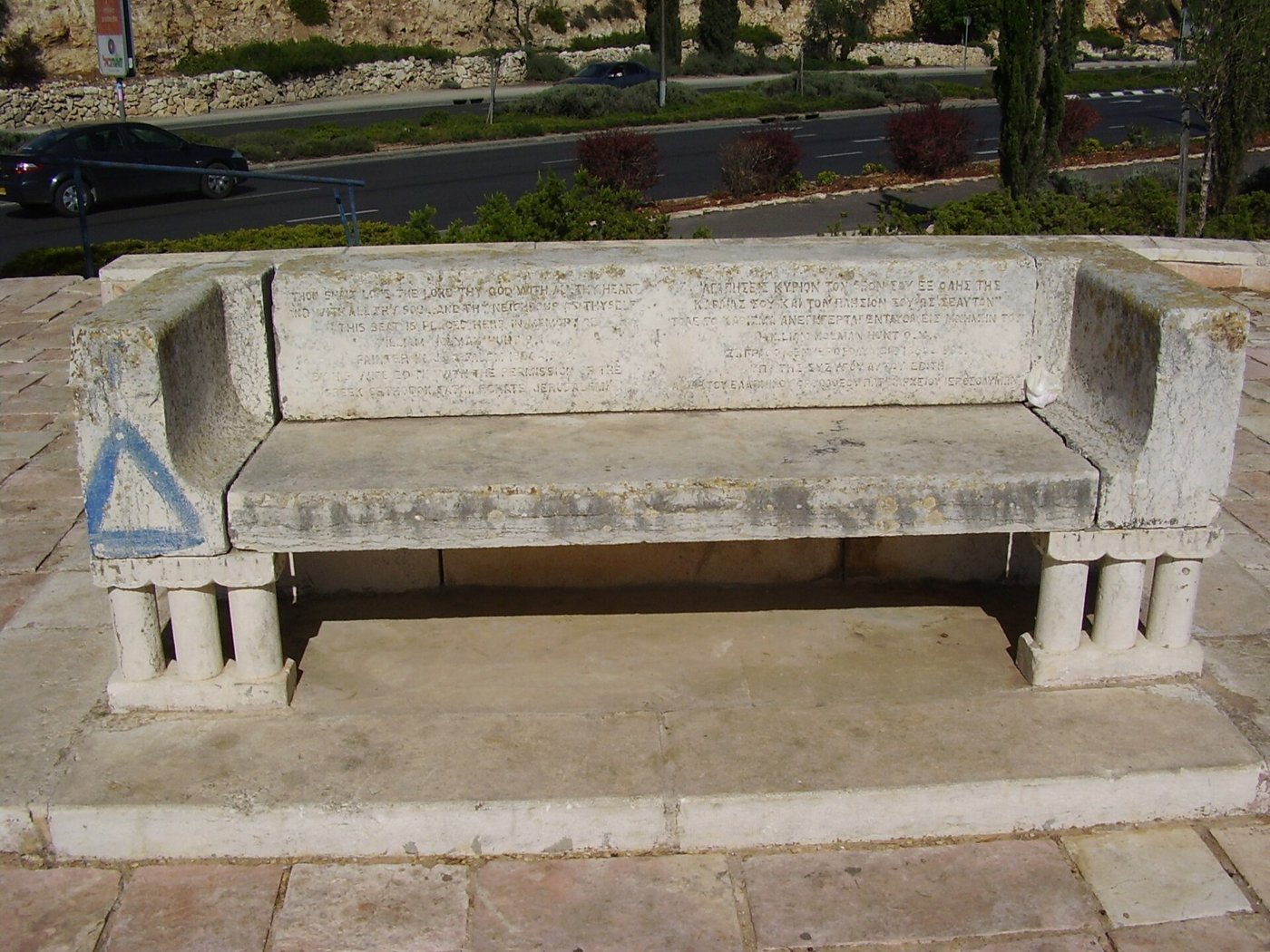
When he returned to England in 1856, Holman Hunt exhibited works that established a new style of religious painting, both realistic and symbolic. He returned to the Land of Israel several times, and in 1876 built his home at 64 HaNevi'im Street in Jerusalem. Its ground floor served as the family residence and its upper floor as a studio. Toward the end of his life, he supported the Zionist idea and Theodor Herzl as part of his religious faith. Hunt died in London in 1910 and was buried in St Paul's Cathedral. William Holman Hunt used to sit and paint on a hill near Mar Elias Monastery. After his death, his wife Edith erected a stone bench that still stands today, facing the monastery and offering a view of the city.
תגובות
עדיין אין תגובות.