
An extensive family dynasty that combined business and settlement and left its mark on Tel Aviv, Ga'ash, Jaffa, Tel Hashomer, and even the village of Jayyous in Samaria.
From Odessa to Jaffa
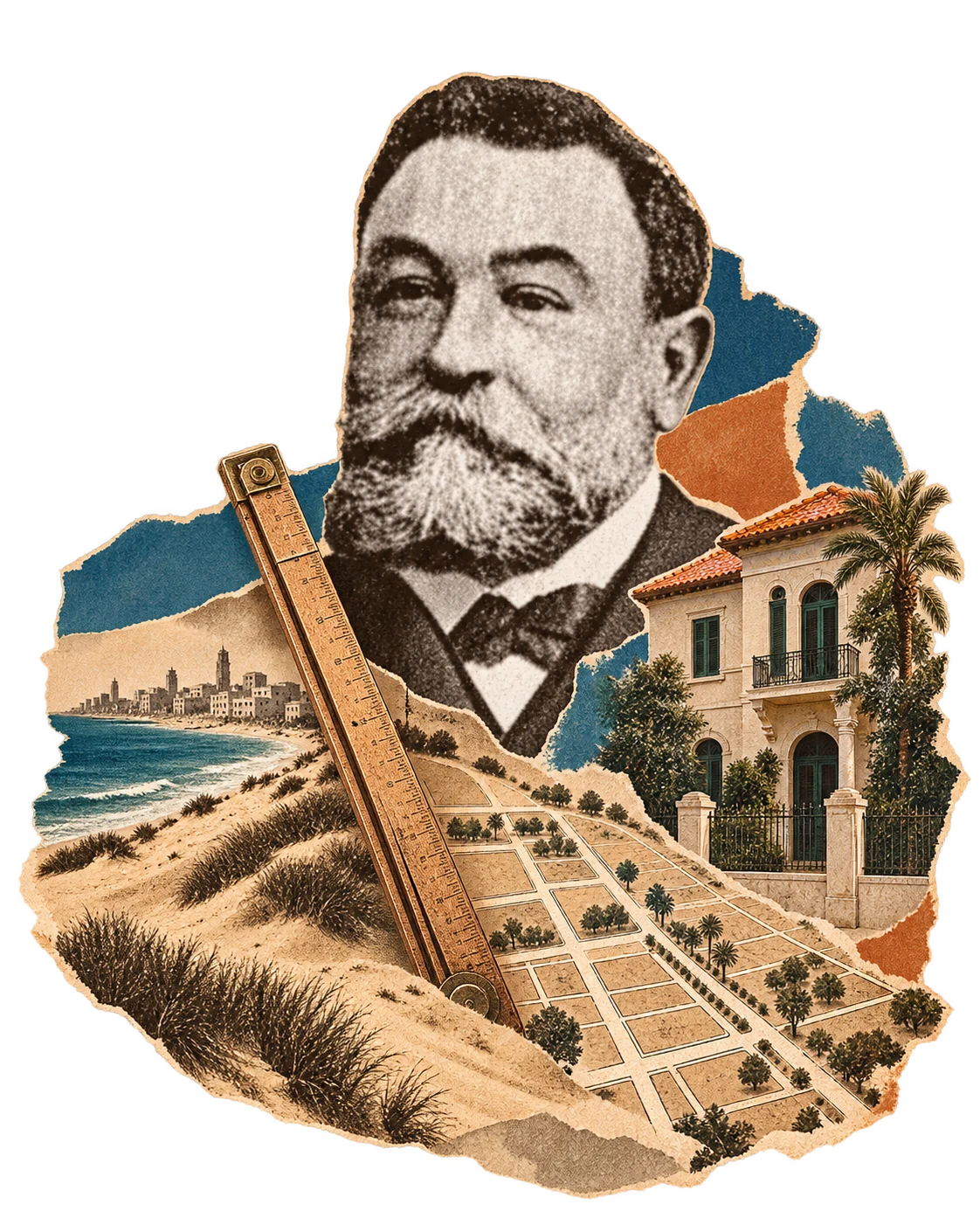
In 1909, just days after the holiday of Shavuot, Reuven Segal, one of the young founders of Tel Aviv, laid the cornerstone of his home at 25 Yehuda Halevi Street (today the Discount Bank Tower). Segal was the first to venture out into the dunes and begin building the first house in the first Hebrew city. He was a member of the Freemasons, to which many leaders belonged, including presidents George Washington and Benjamin Franklin, 14 signatories to the U.S. Constitution, Winston Churchill, and even Ze'ev Jabotinsky. The order also included quite a few well-known figures in their fields, such as Voltaire, Goethe, Newton, Mozart, Haydn, and Houdini. Segal joined the order three months before the cornerstone-laying ceremony, at the Barkai Lodge of the Freemasons, founded in Jaffa in 1906 and operating out of the home of Jacob Elhanan Litvinsky, also one of the founders of the Ahuzat Bayit neighborhood and its oldest member. When Litvinsky and his family moved to Ahuzat Bayit, the lodge operated from his new home at 22 Ahad Ha'am Street. The house was among the neighborhood's earliest homes, and the largest, most spacious, and most elegant of them. It is one of the few that still stands, and has even undergone extensive renovation.
Jacob Elhanan was born in 1852 in the coastal city of Odessa, Ukraine (then part of the Tsarist Empire). He grew up in a well-off Jewish home that enabled him to study both secular subjects and religious texts. From a young age, Jacob was drawn to the Zionist idea and was among the first in his city to join the Hovevei Zion movement. As a young man, he trained in commerce and married his first wife, who gave birth to his eldest daughter, Bella. In 1880, after becoming a widower, Jacob Elhanan wound up his businesses in Odessa and immigrated to the Land of Israel at the age of 28, in what would later be called the First Aliyah. He settled in Jaffa and married Sarah Bila (Belinda) Finkelstein, daughter of Aryeh Leib Finkelstein, chairman of the Jewish community in Bordeaux. She was then 18, and they had three sons.
One of his first business ventures in the country was setting up a flour mill in Gaza, which mainly ground up his money and savings. After this venture failed, Jacob Elhanan returned to Jaffa and established a soap factory there. In 1886, he joined the second group to organize the founding of the settlement of Rishon LeZion and was among its first 13 settlers. He dreamed of becoming a farmer and bought 40 dunams in the settlement. When the settlement ran into difficulties, Baron Rothschild took it under his wing and sent Mr. Osovitzky, an official of his, to manage it. Relations between Osovitzky and the farmers were strained. Shortly after Jacob Elhanan arrived in Rishon LeZion, the decision was made to build a winery in the settlement. He realized that farming was not for him, especially not amid his dismal relationship with the Baron's arrogant official. He returned to Jaffa and joined the timber business of the Bilu immigrant Yaakov Herzenstein. It was Jaffa's first Jewish timber business; until then, the timber trade had been in Arab hands and that of the German Breisch, from the German Colony. The Jewish population in the country was growing, and with it the demand for wood. Once Jacob Elhanan felt he had mastered the trade, he parted ways with Herzenstein and opened his own timber business, which became the largest of its kind in Jaffa. As the business prospered, he established a wooden barrel factory to meet the growing demand from the wineries of Rishon LeZion and Zikhron Ya'akov.
Jacob Elhanan was the wealthiest and oldest of the 66 founders of Tel Aviv. His connections with the Turkish authorities often helped him, and through those connections he even obtained a building permit for Dr. Musinzon to build the Herzliya Hebrew Gymnasium. Jacob Elhanan was also among the founders of Tel Aviv's Great Synagogue.
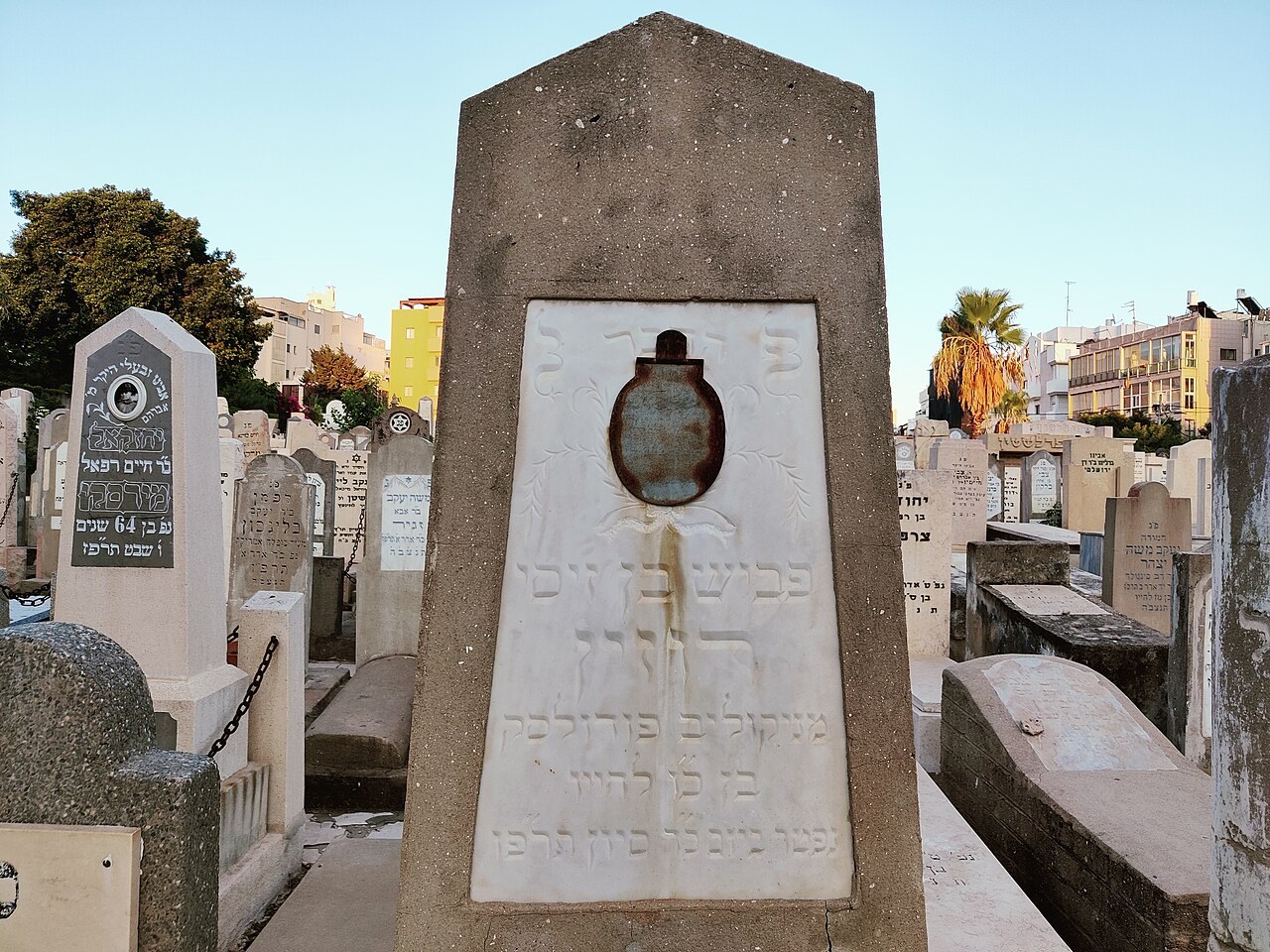
In 1916, at the height of World War I, Jacob Elhanan Litvinsky died and was buried in Trumpeldor Cemetery. His vast inheritance passed to his three sons: Morris, the eldest; Emil; and Raymond, the youngest.
The Brothers in Egypt and in the Land
When World War I broke out, the Ottoman authorities suspected subjects with Russian citizenship of collaborating with the enemy. In the winter of 1914, Djemal Pasha, the Ottoman authorities' supreme military commander on the Palestine and Syria front, issued an order deporting Russian subjects to Egypt. Some of the subjects decided to leave for Egypt, including the Litvinsky brothers. When they arrived in Cairo, they joined Baron Felix de Menasce, who opened the door to the world of commerce for them. "The story of the family's prosperity began during World War I, when my father (Morris) and Emil fled the Turks for Egypt. Raymond stayed in Tel Aviv with their mother. They started doing business in Egypt, two young men, refugees. Their first contract with the British Army was to supply onions. Later, my father became the local agent for Shell, later Paz, in the region and in the country. With the money they made, they bought land from the Arabs. The agency belonged to my father, but his relationship with his brothers wasn't 'yours and mine' but 'ours.' He brought Emil in, and they brought in Raymond, who never worked much." This is what Judge Haim Litvinsky, Morris's son, recalled.
In Cairo, Morris met Rebecca Karman and married her. They had two sons, Haim and Abraham, and a daughter, Jacqueline, who died at the age of six. Rebecca, their mother, died in 1945. That same year, Morris married his second wife, Ella, daughter of Moshe Levontin. When brothers Morris and Emil returned to the country, they lived in the house at 22 Ahad Ha'am Street and became general agents for the Shell oil company. Morris worked as chief accountant at the Anglo-Palestine Bank in Jaffa (today Bank Leumi Le-Israel). Later, he was among the founders of the Kupat Am Bank and served as the first chairman of its board. In 1930, Morris was appointed honorary consul of Estonia, so the Estonian flag flew over the house on Ahad Ha'am Street. Raymond, the youngest brother, moved to Paris.
Emil specialized in land acquisition. Together with Morris, he bought 1,700 dunams of land from the village of Saqiya (today Or Yehuda), east of Jaffa. Emil and Morris planned to build a garden city there, to be named after their father and called Tel Litvinsky. They brought in the architect Richard Kauffmann, who had already designed several garden suburbs in Jerusalem (Bayit VeGan, Talpiot, Beit Hakerem, Rehavia, and others). Kauffmann submitted several plans to the brothers for sunlit homes suited to the country's climate. Some buyers were given permission to build the houses themselves. The city's land was divided into 2,000 plots, some intended for restaurants, guesthouses, hotels, and small farms. During the garden city's first four years, 24 houses were built and bought by immigrants from Germany. Roads, sidewalks, trees, and gardens were laid out in the neighborhood, and a school for children with educational difficulties and Holocaust survivors was also opened there. The Litvinsky family also provided municipal services, including supplying water from the orchard to clean sidewalks, delivering mail, and collecting garbage. In addition, the family ran a separate bus route between the junction of Yehuda Halevi and Allenby Streets in central Tel Aviv and the garden city complex. Route 70 began operating in 1934 and ran until 1974. It was a Volvo bus brought especially from Sweden, and its first driver was Rozinov, nicknamed 'Konya,' a Jew who had immigrated from Estonia, the country the Litvinsky brothers represented in the Land of Israel. At the time, it was the only privately owned Jewish bus route in the country.
When World War II broke out, the British requisitioned 1,200 dunams from the brothers and established a military camp there bearing the same name. A hospital allocated to the Americans was built nearby. In 1940, during the Italian army's bombing raids, Morris's family left their home in Tel Aviv and moved to Tel Litvinsky. Later, on Ben-Gurion's advice, Tel Litvinsky and the hospital became Tel Hashomer, named after the Hashomer organization. Thus the dream of a garden city came to an end. Haim, Morris's son, who was a judge and lawyer, tried to fight to restore the place's former name, but without success. All that remained of the dream was a small sign on a small street where the first houses had been built: 'Litvinsky Brothers Street, founders and pioneers of Tel Litvinsky, Tel Hashomer.'
The brothers also had 60 dunams expropriated for the construction of the Culture Hall and Habima Theatre. A similar area was expropriated in Haifa, where the Ramat Hadar neighborhood now stands, as well as land near the railway station in Jerusalem and in one of Petah Tikva's neighborhoods. The brothers also owned about 1,800 dunams in the village of Jayyous in Samaria, east of Qalqilya. Orchards were planted on 300 of those dunams. The family also owned 60 dunams north of the Shapack neighborhood, where the Litvinsky Orchard was planted.
Tel Litvinsky and the Castle
Alongside the Tel Litvinsky project, the brothers launched another project, the only remnant of which today is 'The Castle.' On the western side of the Coastal Road, near Kibbutz Ga'ash, a solitary three-story building stands amid the fields. It came to be known as 'The Castle' and was later used as an events venue under that name.
The story of The Castle begins in 1928, when the brothers bought about 600 dunams of land from the Arab village of Ibleqiya in the Sharon (between Ga'ash and Shefayim). The plan was to plant orchards there and build summer homes for buyers of houses in Tel Litvinsky and for well-to-do Jews from the United States and Germany. The Litvinsky brothers began developing the land with workers from the surrounding Arab communities, immediately provoking members of the Herzliya Workers' Council, who insisted that the work be done by Jewish labor. In the end, the brothers agreed to employ Jewish workers, who made up 10 percent of the workforce. While preparing the land for an orchard, in 1930 they began building 'The Castle,' intended as their summer home.
The Castle, surrounded by vast lawns, a landscaped garden, and flowers, could be reached by car via Ra'anana and Herzliya, with the final stretch of the journey made by carriage. It served as a show home for the 'Build Your Own Home' plan, an upscale neighborhood of vacation homes by the sea. In brochures distributed in Yiddish and sent to Jews in America and Germany, they invited them to build a home in a rural setting north of Herzliya: 'Just four hours from Tel Aviv...'
Life in the Castle and the End
The Castle stood alone amid the orchards, so it was designed as a three-story fortress. The ground floor contained the dining room, kitchen, and bathrooms; the second floor had the living quarters; and the rooftop housed a lookout and guard post. Two additional rooms were built beside the Castle. Two wells were dug in one of them, powered by diesel engines that supplied electricity and running water; the other served as living quarters for workers. A spacious terrace spanned the roofs of the two rooms. About 200 meters east of the house, the orchard's packing house was built (today an abandoned building that was used by Tzomet Sfarim). In 1935, when members of Kibbutz Shefayim left the hill in Herzliya and settled on the land, the orchard was a thriving business employing about 200 workers. Raymond, the youngest brother, lived in the Castle and led a life of debauchery there, befitting a wealthy young bachelor. Stories and gossip about the 'wild things' that took place in the Castle sprang up around the house.
When the Arab Revolt broke out in 1936, Raymond abandoned the Castle and moved to France. In the 1940s, an inheritance dispute began between the brothers. Raymond, the carefree bachelor who enjoyed an easy life in France, benefited from the family fortune the brothers had amassed, and a dispute arose over his rights to the family property. Their mother was angry with Raymond and cut him out of the inheritance of the lands registered in her name. The feud between the brothers grieved her, and in 1946 she left the country and lived alone in Geneva. In 1951, Morris, the eldest, died in Paris and was buried there. Emil followed in his father's footsteps, founding the Freemasons' lodge in Jaffa and serving as its first president. He married Margalit (née Applebaum, from a family of Zikhron Ya'akov founders), and they had one son, Ariel. Emil died in 1963 and was buried in the Kiryat Shaul cemetery. In 1940, Raymond sued for his property; the case continued until his death in 1956. Raymond died childless. When his will was opened, it became clear that he had left most of his money to the Hebrew University of Jerusalem, distributed about one million French francs among various people in France, and left one Palestine pound to each member of his family: his mother, his brother Emil, and the sons of his brother Morris.
After Morris's death, his sons inherited the house on Ahad Ha'am Street. A few years later, Haim sold his share to his brother Abraham Roger. Abraham Roger died in 1974 and left half the house to the Tel Aviv Municipality and the other half to the Society for the Prevention of Cruelty to Animals. In 1969, The Castle in Ga'ash and its surrounding land were sold to the Alkanian family, a wealthy Zionist family from Iran. But after the family patriarch was executed in Iran, the property was sold to Kibbutz Ga'ash.
תגובות
עדיין אין תגובות.