
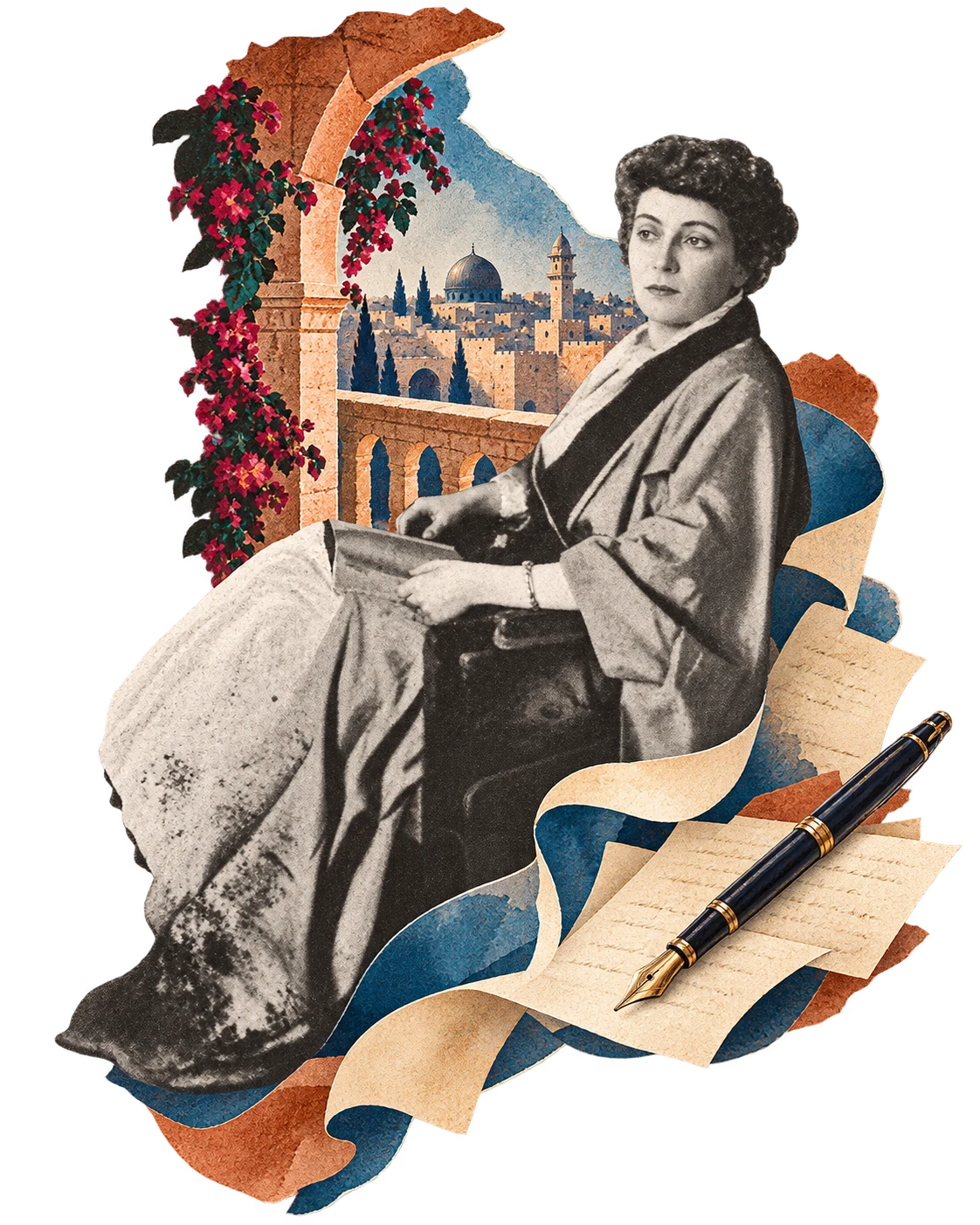
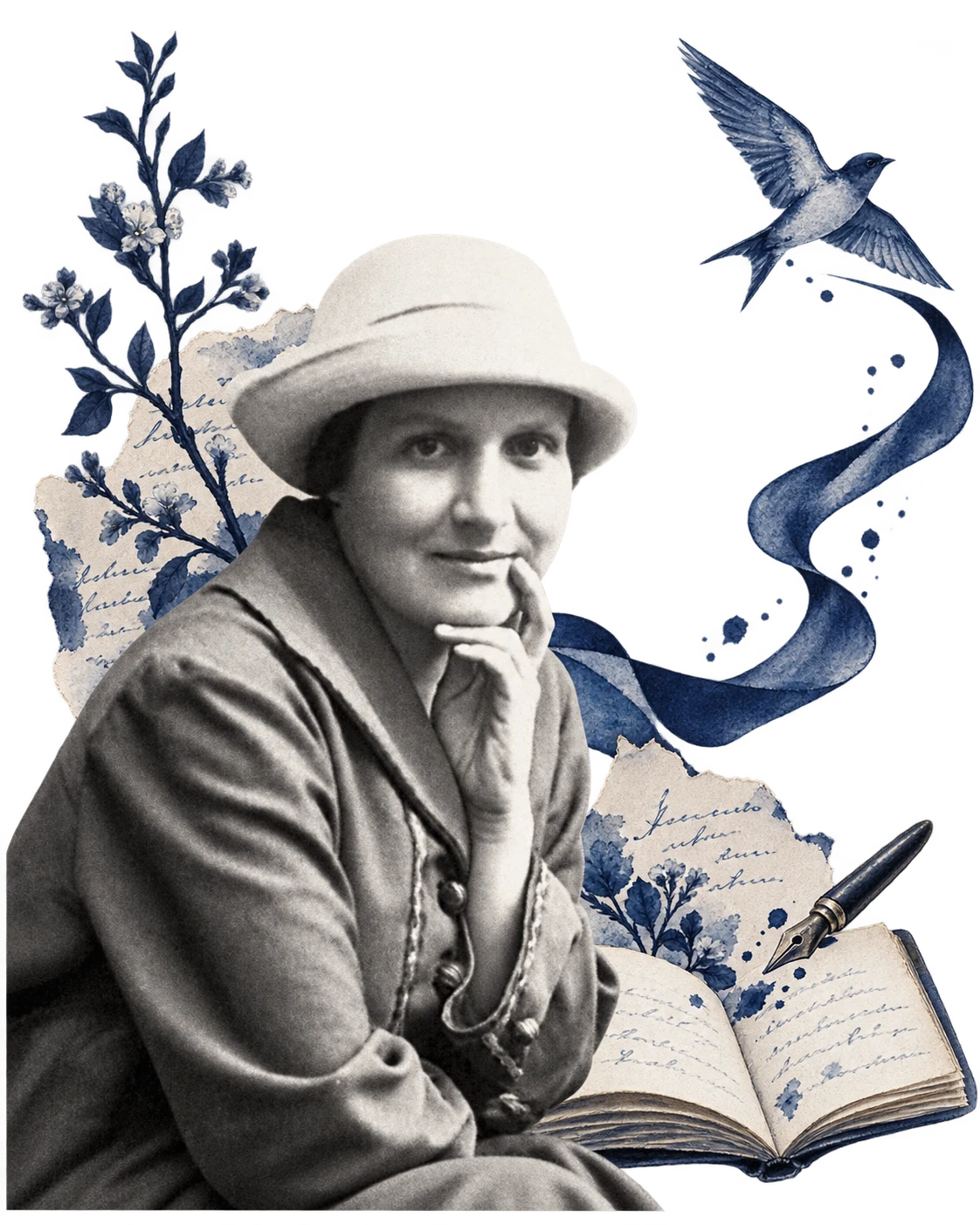
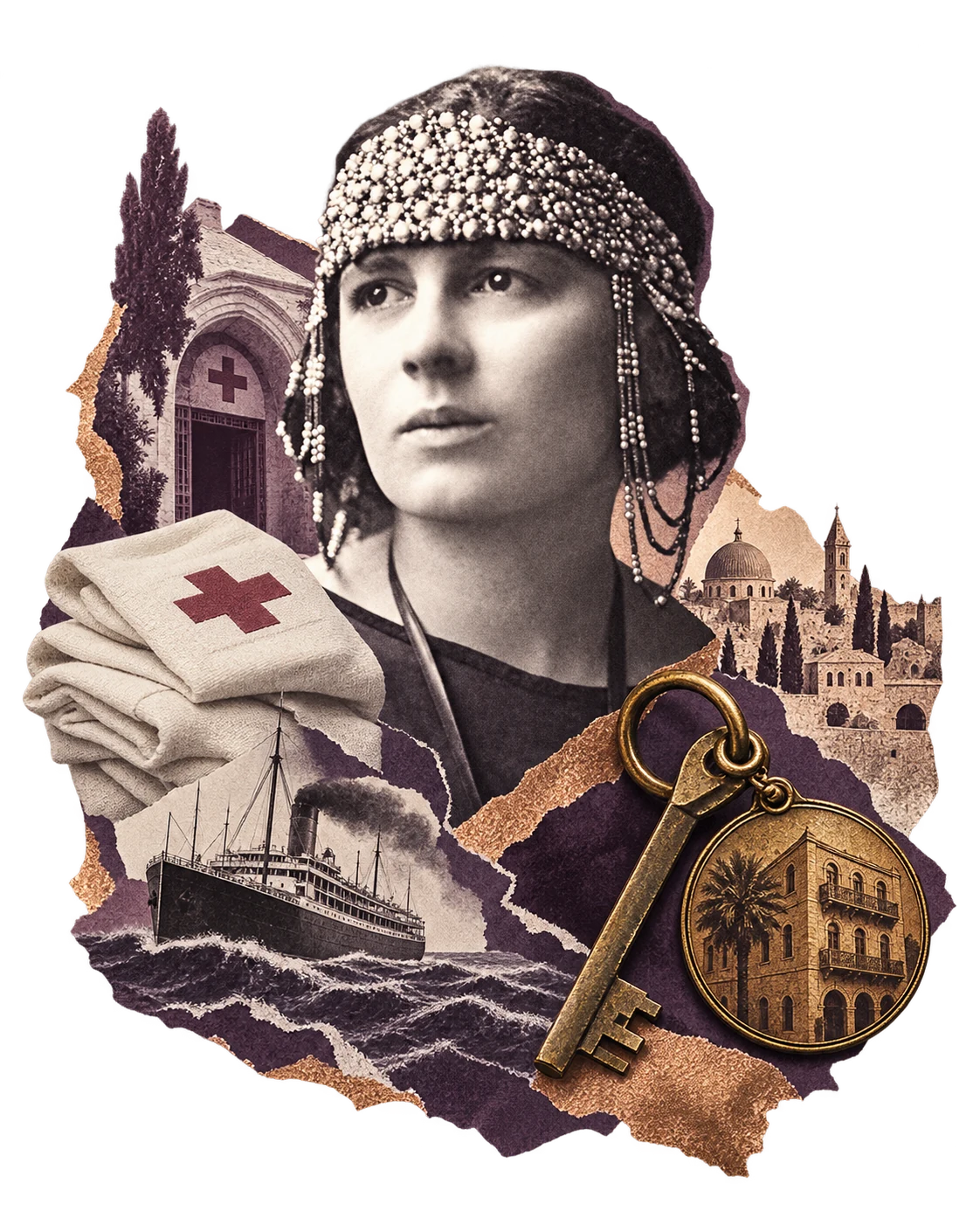
The "Enchantress of the East" was one of her nicknames. A popular French writer, she was known by the pen name Miriam Harry. She brought the scents of the exotic East to Central Europe and introduced Europeans to Jerusalem as it was in those days.
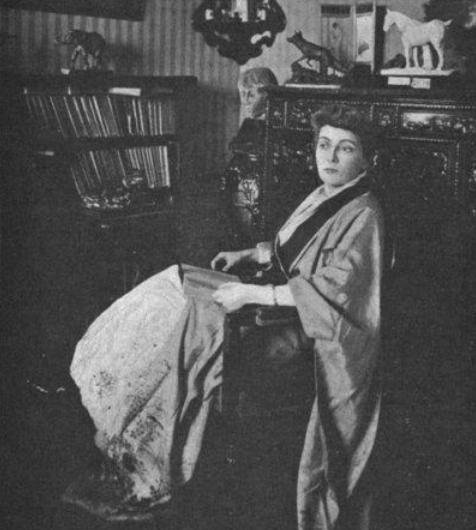
The Shapira Family in Jerusalem
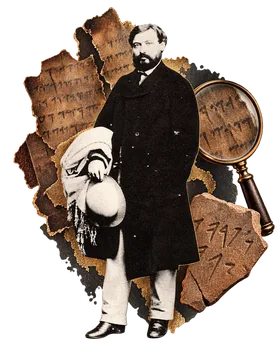
Miriam Harry was born Maria Rosetta Shapira in February 1869 in Jerusalem, where she was educated until the age of 14. Jerusalem in those days was a stern city, confined within walls and inhabited by religious zealots. Maria's father, Moses Wilhelm Shapira, was a Jew from Kyiv who arrived in Jerusalem in 1856, when he was 26. Moses converted and married Sister Rosetta, a German Protestant who had cared for him when he was ill at the hospital run by the Kaiserswerth deaconesses in Jerusalem. Moses Wilhelm Shapira established a business dealing in antiquities he found or acquired. He knew how to bring life to pottery and parchment. With their strange letters, he "sold" a story from the distant past, and when demand grew, he began to "produce" antiquities, among them the "Moabite pottery." Although some of them were exposed as forgeries, he earned his reputation as a fraud when he tried to sell the "oldest Hebrew manuscript" - leather strips bearing part of the Book of Deuteronomy. He was supposed to receive an enormous sum from the British Museum for the strips, but when a French scholar exposed the leather sheets as one great forgery, the deal was canceled and Shapira lost his fortune. He left Jerusalem and wandered from country to country. Shapira took his own life in a shabby hotel in Rotterdam. His story can be read in Shulamit Lapid's book, Like a Broken Pot.
The book The Little Jerusalemite, in which Maria Rosetta Shapira describes her own life under the name "Zionah," opens as follows: "Zionah was born in an old Arab house on Mount Zion. The room was vaulted like a church cave, and light entered through a broken window high in the thick wall, as in a prison. Beneath the bed curtains lay her mother, awaiting her arrival. The walls of the house, as thick as the walls of a fortress... With her fingers she counted the dead, and in her mind divided them according to their religion. It was easy to tell them apart: the Muslims, by their repeated prayers and the silence of their steps... the Greeks, by their nasal hymns and the clouds of incense that suddenly filled the room... the Jews, by their disorderly haste."
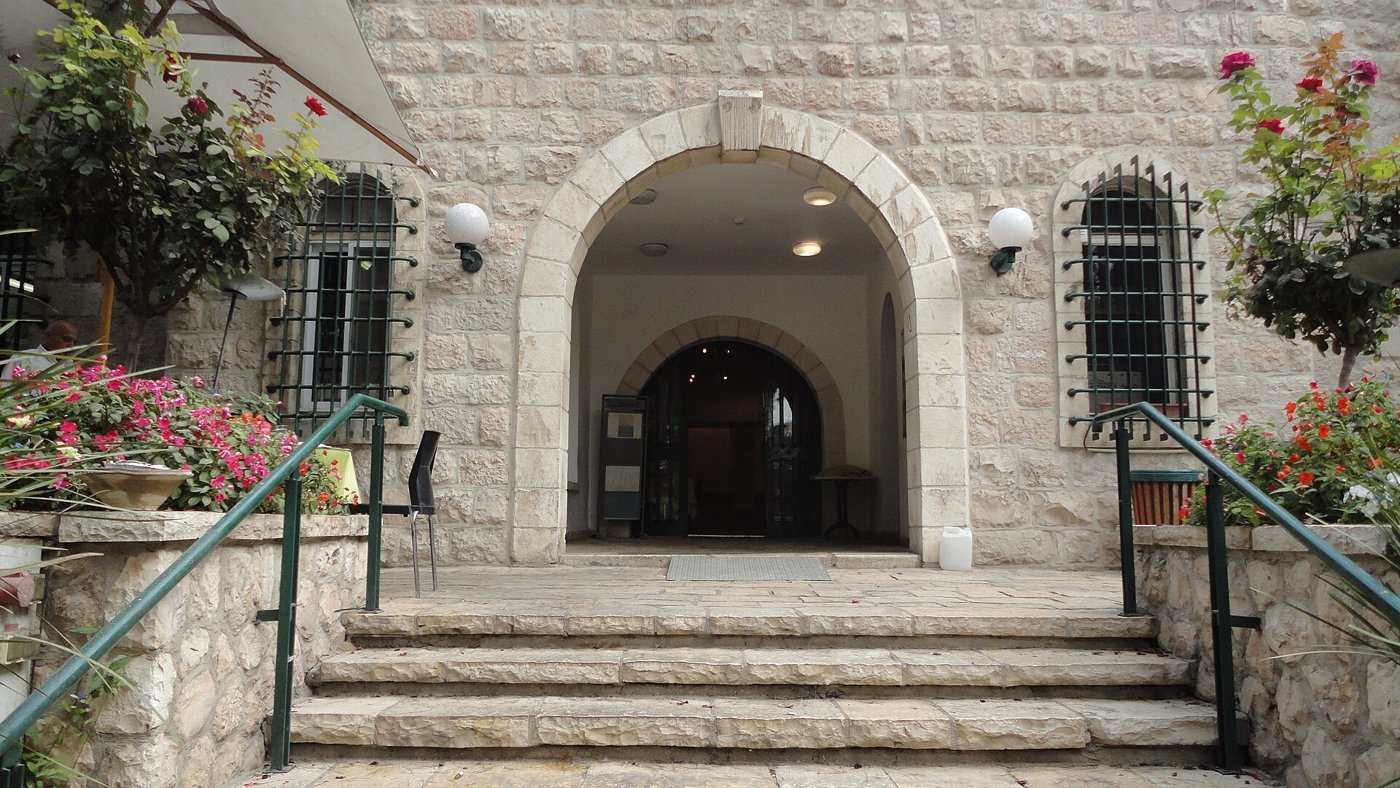
In those days Jerusalem saw many pilgrims, and power lay in the hands of the churches. The first consulate to open in the city was the British consulate, and the British brought to the country the first Protestant church, whose aim was to convert the Jews. The Jews lived in poverty, and the churches, with their doctors and hospitals, tempted them to convert. The community leaders were aware of the problem and preached against it in public. The city's Jewish community was made up of Sephardim who had arrived after the exile from Spain, later joined by Ashkenazim who lived on funds from the halukkah, sent from abroad.
Maria Rosetta Shapira belonged to the Protestant community, a small group that was unpopular with Catholics and hated by Jews. Like her father, Maria was intelligent, perceptive, and gifted at description. She spoke German, English, and Hebrew, and learned Arabic "from the servants and the people."
Through Maria Rosetta Shapira's loves, we encounter the different figures who inhabited the city at that time.
Zionah's first love (Zionah was Maria Rosetta Shapira) came when she was seven: Omar ibn Dib, the Bedouin "sitting on a cushioned horse, a man dressed in a black coat, radiating beauty, pride, and honor." Zionah felt that all the grandeur of the desert had entered the courtyard with him: "In his strong, brown hand he held a great sword in a silver scabbard, set with precious stones."
From the Loss of Her Father to Paris
This happy childhood was cut short when her father, whom she loved and worshipped, took his own life. With him disappeared material comfort, wisdom, stories, and his love for her, for they had both looked at their surroundings as outsiders. His death caused Maria Rosetta Shapira to suffer a mental breakdown. Poor and filled with shame, Maria Rosetta Shapira, her mother, and her sister left the city and began moving around Europe. First they went to Germany, Maria's mother's homeland. Maria was accepted into a teacher-training school, but the studies did not appeal to her, and she began to take an interest in writing down her memories of the city and her beloveds.
Her second beloved was little David, pale and small, the tailor's son, who lived in one of the buildings near Hezekiah's Pool, which in those days was still full of water. As children, David and Maria Rosetta Shapira played together, and their hearts became bound by love. When she returned home from a holiday, Zionah hurried to the pool and saw little David on the other side. "He stood watch, paler and thinner than usual, as though he had been waiting three moons for her to come. But when he saw her, he began to tremble. She waved her handkerchief at him, boiling with impatience and excitement: Come! Hurry, come! You only have to climb down the ladder and come over here!" Little David hurried down the ladder from the balcony and rushed toward her. The bottom of the pool was firm around the edges, but as David moved toward its center, his thin legs sank into the green, treacherous mud. Zionah cried out and called for help. Her father and his assistants rushed to the spot, tied a rope, and threw it toward the unfortunate boy. Shivering with cold and unconscious, he was pulled from the mud and rushed to the hospital. At the end of three days, with Maria Rosetta Shapira at his bedside, "little David went out like a torch" and died.
At the end of her third year, Maria qualified as an elementary-school teacher. She passed her examinations successfully and found work teaching German at the Shepherd School in Paris.
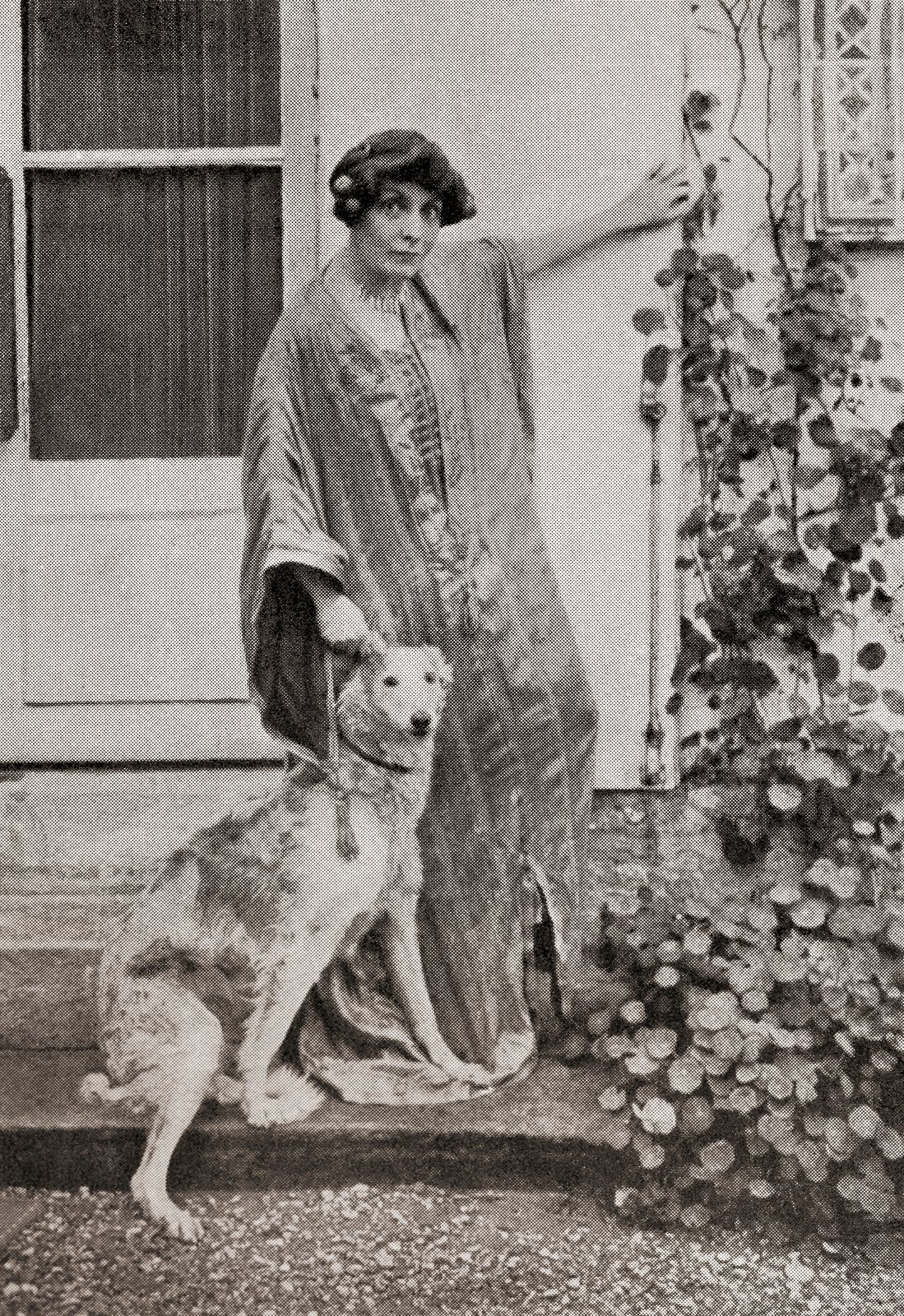
Maria Rosetta Shapira arrived in Paris in 1888, at the age of 18. French was a foreign language to her, but the city's beauty, atmosphere, people, and above all its spirit of freedom, so unlike that of her childhood city, captivated her. In the mornings she taught German and also worked as secretary to Dr. Masoch, after whom masochism is named; at night she studied French. At that time she caught the writing bug, and in this way mastered the language that had initially been foreign to her. She became a writer, and among her friends were the writers Catulle Mendès and Jules Lemaître, who helped her get started.
Her next love in Jerusalem was the handsome Freddie Moore, son of the English consul. Together they had daring adventures on the mysterious rooftops of the Old City's houses and in its dark alleyways. Their relationship was soured by an incident in which Freddie fled for his life, abandoning Maria Rosetta Shapira to real danger. A crowd of "Mecca pilgrims" who had gathered in the city before setting out on their pilgrimage had nearly carried out a massacre of Jerusalem's non-Muslim residents. In her book The Little Jerusalemite, Maria describes the terror of the pogroms, the city's cruelty, and the wars between religions.
Maria Rosetta Shapira's first works were published in 1898 in a women's rights newspaper. Twice a month she published a story or an essay, and readers eagerly awaited her work. The stories were set amid the landscapes of Judea and Transjordan, and depicted Bedouin life, passions, revenge, and fierce love - everything unfamiliar to the French, exotic and exciting.
At the end of each year she collected all her articles and bound them into a book, Bedouin Ways, then moved on to writing complete stories. By 1914 she had written eight novels. The book that brought her fame was The Conquest of Jerusalem, the first book she wrote, in 1904, which she dedicated to her father. Maria Rosetta Shapira won the prestigious Prix Femina for The Conquest of Jerusalem, and that same year she married the painter Léon Pourtau.
In 1914 she published her book The Little Jerusalemite, which is essentially the story of her life. In it she describes her 14 years in the country. Zionah also features in other novels: Zionah Among the Barbarians, Zionah in Berlin, and Zionah in Paris.
From the Mission to Hovevei Zion
Zionah's most passionate love was Casimir Krakovitch, a Russian Jewish refugee from the 1882 pogroms (the "Storms in the South"), who became a Christian missionary. This love brings to light the missionary activities of the Anglican mission, the "Society for the Relief of Jewish Refugees," which operated successfully in Jerusalem and throughout the Land of Israel.
This is how she writes: "Wrapped in his white cloak, he preached before the congregation in the synagogue. He, who was still a Jew, told them of the terrors, persecutions, and hardships he had endured. And when the listeners' hearts softened and tears streamed from their eyes, he declared with sacred fervor that from that day on he was dedicating his life to this Messiah in whose name his persecutors professed to act. In an instant, a terrible uproar erupted. They fell upon him, spat in his face, cursed him: Gentile, traitor, blasphemer, you deserve to die... How noble his bearing was beside that of the other Jews, she thought... He is a king's son."
In 1920 Maria Rosetta Shapira came to the country for a visit, and in 1922 she returned. This visit left a tremendous impression on her. She was enchanted by the city of Tel Aviv and the Zionist enterprise, and the following year her book The Lovers of Zion was published. Maria Rosetta Shapira had never been a Zionist and had even been wary of Zionism. In the book's introduction she wrote: "From Dan to Beersheba I saw the work brigades paving the roads that lead to Zion. I saw a new Jewish nation making the 'everlasting mountains' green and preparing the 'wide lands of God.' I heard young joy singing 'new songs' in the language of King David, awaiting the redemption of Israel. I understood that Zionism is poetry. I loved it. I believed in it." This is one of the most beautiful books written by a non-Jewish woman about our revival.
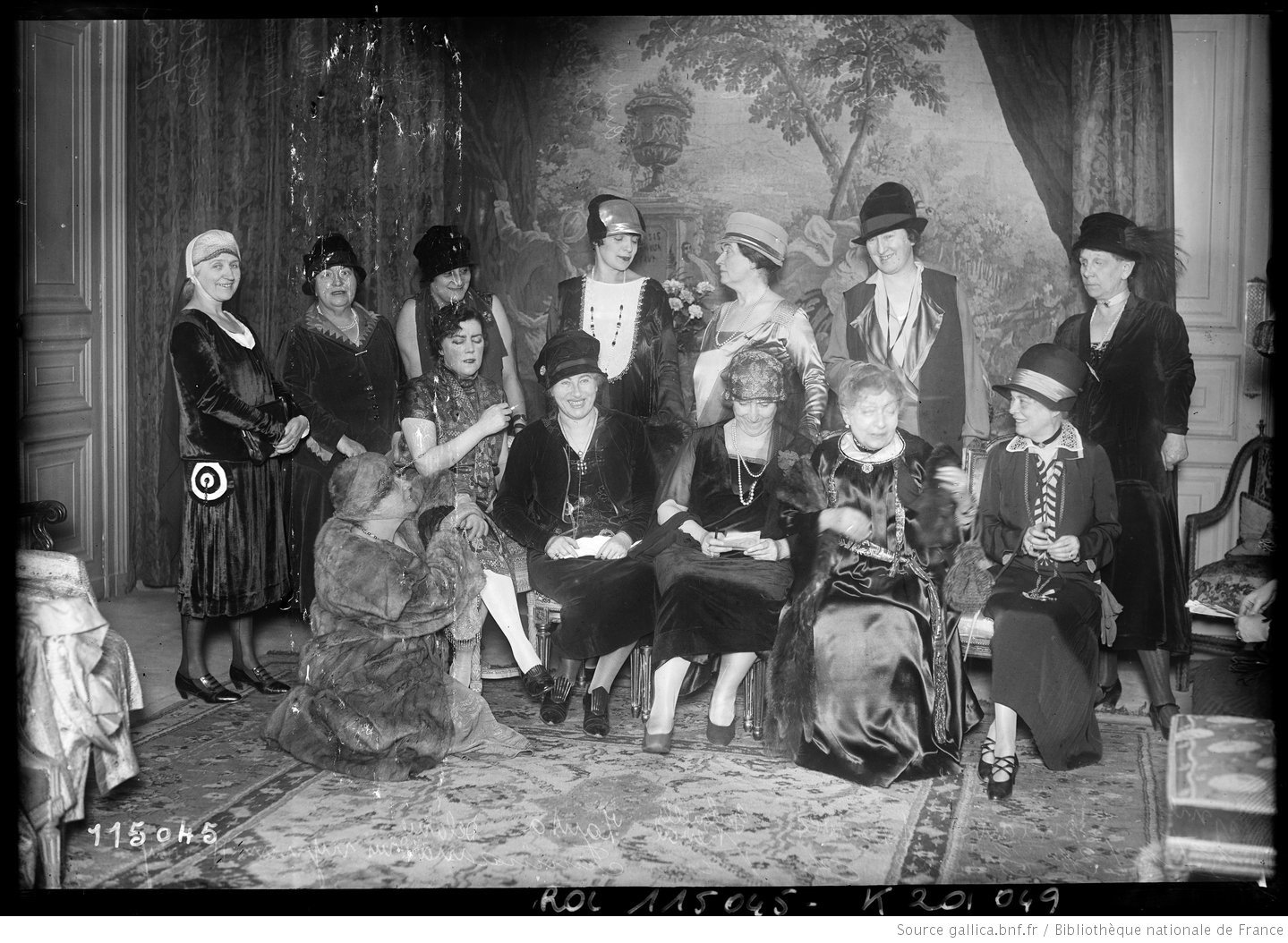
In 1934 Maria Rosetta Shapira became a knight of the French Legion of Honor. She continued to live in Paris during World War II, after proving that she was not Jewish. Some of her books were censored by the French authorities, but she continued to write and publish. Maria Rosetta Shapira died in Paris at the age of 89. She had no children of her own, apart from an adopted son.
The book The Little Jerusalemite was translated from French into Hebrew by Dr. Jacob Luncz, who published it under the name Jacob Assia. Jacob Luncz was the eldest son of Abraham Moses Luncz, one of the first and leading scholars of the Land of Israel, a writer, publisher, journalist, and geographer of the Land of Israel.
תגובות
עדיין אין תגובות.