
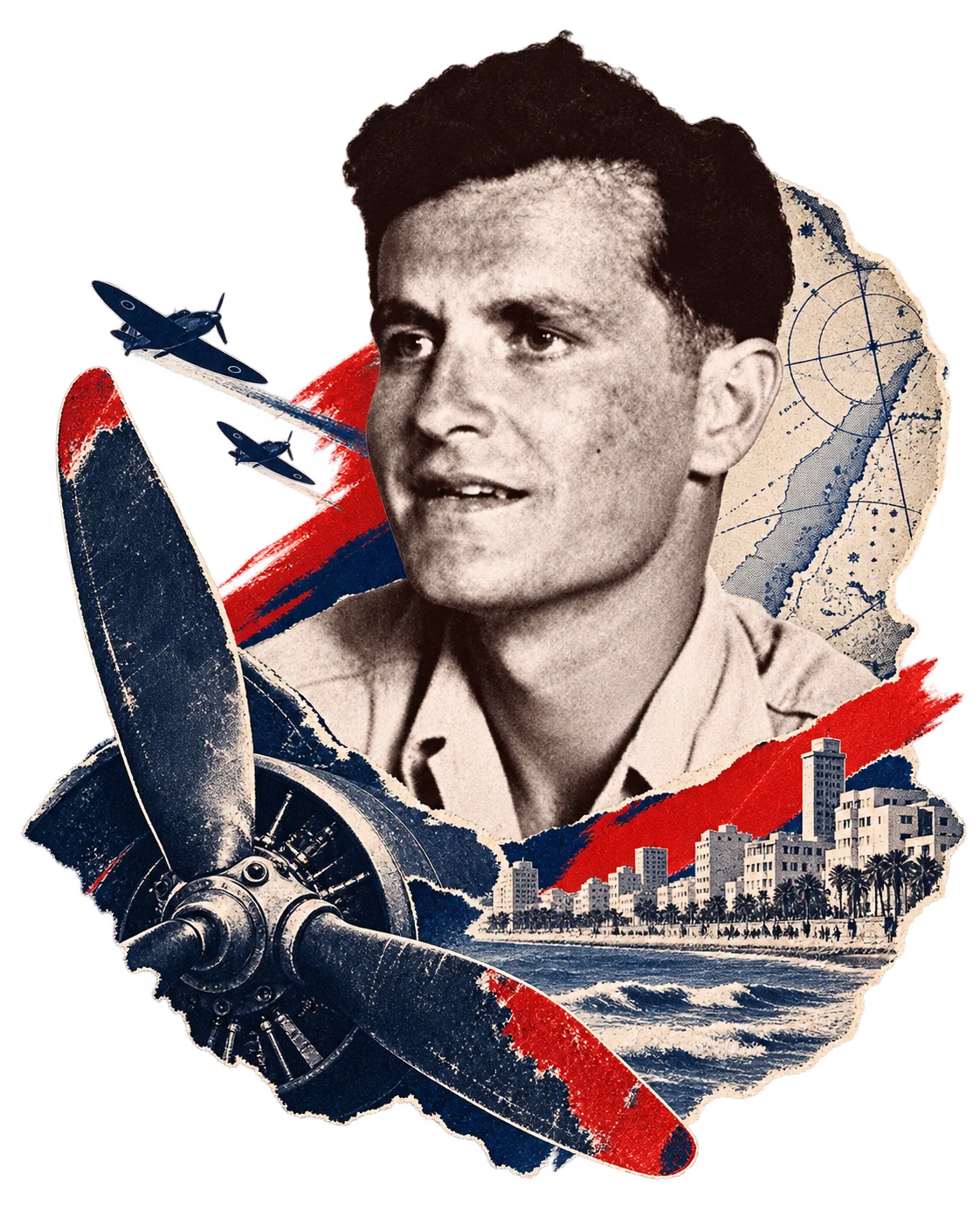
He was a pilot in the British Royal Air Force and, together with the future president of Israel, took part in one of the fateful flights.
From Settlement to Flight School
Modi Alon was born in Safed in 1921. His mother, Naomi, was a pharmacist, and his father, Yaakov, was a well-known educator who was then teaching in Yesod HaMa'ala and writing numerous articles on education, which he signed with the pen name Y. Ushpiz. Naomi and Yaakov immigrated to the Land of Israel in 1904 with members of the Second Aliyah. They first settled in Safed, then the family moved to Sejera (Ilania), and from there to Rehovot and Tel Aviv, where Yaakov took a position at the Geula-Balfour school. Modi was a clever, quiet boy, but he had the qualities of a leader. During the 1936 riots, 15-year-old Modi served as a courier between the positions along the Jaffa border, carrying messages between them. Years later, his commander in the Haganah recalled how much the boy had impressed him: "I never spoke to him as I would to a boy, but as I would to an adult, as if he were an officer. He understood every instruction in its true spirit, never twisted what was written, and worked tirelessly, literally to the point of exhaustion, like a servant in a holy cause."
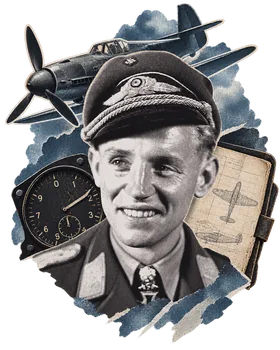
The Messerschmitt 109 was the most feared aircraft of World War II, and in skilled hands it wreaked havoc on enemy planes. Eric Hartmann (the "ace of aces") shot down 352 Allied aircraft using this plane. In 1927, Professor Willy Messerschmitt began developing a sports aircraft. He focused on three features that he knew would make his plane unbeatable: light weight, a sturdy structure, and a powerful engine. Indeed, his aircraft won every competition and broke many records. These achievements led the Nazi regime to commission Willy Messerschmitt in 1935 to develop a fighter for the German Air Force (the Luftwaffe). Messerschmitt developed the 109, which remained the Nazis' main fighter throughout the war. The Germans produced about 35,000 109s, making it the most-produced military aircraft in history.
In high school, Modi studied in the agricultural program, where his circle of friends took shape. Together, they dreamed of establishing a settlement after graduation. After completing his matriculation exams with highest honors, he joined his friends, who were in agricultural training at Degania. At the end of the training year, he joined the Shimron group, which founded Hanita. At the time, Modi thought he would live there for the rest of his life.
News of what was happening in Europe during World War II began reaching the country, and Modi, despite his young age, decided to volunteer for the army. He reported to the recruiting officer at Sarafand Camp (now Tzrifin) and asked to enlist in the air force. The chances of a Jewish boy being accepted into the British Royal Air Force, even as ground crew, were practically nil, but Modi made an enormous impression and was accepted. In November 1940, Modi left Hanita, enlisted in the British Army, and was sent to serve as a wireless operator in Ismailia. At the end of his first year of service, his commander recommended him for pilot training.
Modi began pilot training in Rhodesia in August 1943, and wrote: "I signed up as a fighter pilot and will have to wait months until this course is over. The failure rate in the exams here is enormous, but I have every confidence that I won't be one of them." Modi passed the theoretical exams and moved on to the practical stage: "I've started learning to fly for real. It's wonderful! All that time waiting in Egypt was worth it for this hour of my life." In Rhodesia, he proudly said he was an Israeli and described the country's landscapes and life there. At the end of 1944, when he completed pilot training with the rank of sergeant and received his wings in the British Royal Air Force (R.A.F.), he was already dreaming of fulfilling his purpose and fighting the Nazis. "Hooray, a pair of wings is already pinned to my chest... How I looked forward to this day while sitting in my office in Ismailia. I hope my true ambition will still come to pass: to take revenge on the Nazis. It has pained me deeply that until now I have done nothing more worthwhile than sending wireless telegrams from Ismailia," he wrote. Modi Alon was not sent to the front against the Germans. Instead, he was assigned to new fighter aircraft in Cairo.
Toward a Hebrew Air Force
Naturally, the newly established Jewish state had no desire to equip itself with a Nazi plane. In a twist of fate, one of the Messerschmitt models became the air force's first fighter and even earned the title "the fighter of the War of Independence." When the state was established, the leaders of the Jewish community looked to the future with concern: the British were about to leave, and the emerging state had no fighter aircraft at all. In August 1947, Aharon Remez (later the second commander of the Israeli Air Force) and Israel Galili, head of the Haganah's National Command, were asked to prepare a plan for establishing a Hebrew air force. The plan included purchasing fighter aircraft, and the list featured American or British planes. But the Americans imposed an arms embargo on Israel, and the British refused the request. At the time, Czechoslovakia had a stock of aircraft fuselages and was glad to sell the planes, encouraged by the Soviet Union under Stalin, who wanted to help establish the State of Israel.
At the end of the course, Modi was given leave and returned to Israel, to Kibbutz Hanita. During his leave, at one of his get-togethers with friends, he met Mina. She recalled: "I was dating Ben-Ami Prater, who was also from Kibbutz Hanita. Modi, his close friend, came to pick me up in Haifa on his motorcycle. He made a great impression on me. A handsome man. Bright eyes, tall. I knew he was a pilot, and that, of course, gave him an aura of prestige... He drove me to the kibbutz and didn't say a word on the way. When we arrived, he went over to his many friends, and I went to Ben-Ami's room. In the evening we met again. The kibbutz members had a campfire, and we saw each other there. We talked a lot... Only later, when I got to know him, did I realize that such a 'talkative' conversation was not at all typical of him."
In May 1945, Modi was transferred from Cairo to the Italian border, where he flew the Mustang. He wrote in his diary: "It has been a long time since an hour of flying gave me such pleasure... the speed, the ease of control, the comfort. It also has a much greater range and an enormous fuel capacity... and everything else." At the end of August, he returned to Israel once more, this time as a British pilot in a Mustang squadron based at Ramat David.
His time in Israel put him in a difficult position, torn between loyalty to the British Army and loyalty to his homeland. The British sensed this and sent him straight back to Cairo. Modi was clear about where his loyalty lay, and he left the British Army. At the end of January 1946, he returned to Israel as a civilian, and at the end of that year began studying architecture at the Technion in Haifa.
On November 29, 1947, the United Nations voted to establish two states in the Land of Israel - a Jewish state and an Arab state. Tensions in the country rose, and it was only a matter of time before conflict broke out. At the time, a single squadron operated in the country under the cover of the "Palestine Flying Club." It had a few light aircraft and amateur pilots who had logged only about 150 hours of flying time. The squadron snapped Modi up, and under his leadership its members managed to carry out simple missions, delivering mail and transporting the wounded. Modi wrote to his beloved Mina: "Tel Aviv, 13.2.48. I'm writing only a few lines because there's not a moment to spare. I'll be busy on Saturday night too, but I'm very happy with this work. Just imagine, beyond the flying itself, there's also the great satisfaction of knowing that the work we're doing is so useful..."
In May 1948, Modi Alon, Ezer Weizman (later president of Israel and commander of the Air Force), and other pilots were sent to Czechoslovakia to train on Messerschmitts. At the time, Tel Aviv was being bombed from the air, and the group decided to leave Czechoslovakia and return to Israel. Parts for the Czech aircraft were packed into the plane they flew back in. Years later, Weizman said: "We were supposed to stay there, in Czechoslovakia, for at least a month... When we went to our hosts and told them we were going back to Israel, they looked at us as if we were crazy. Each of us had logged fewer than ten hours on the new planes that were supposed to serve us in the war, and already we were declaring that we were going back..."
Modi told his friend Ezer Weizman that he had decided to marry his beloved, Mina: "Modi suddenly decided to get married. I remember the day he told me. We were riding together on his motorcycle along Hayarkon Street in Tel Aviv. Modi was driving, and I was riding behind him. Suddenly he turned his head toward me and said, 'I'm getting married,' just like that, 'I'm getting married.' I looked at him as if he were half mad - getting married? Who was thinking about that then..."
Squadron 101 and the Battles
In the winter of 1948, a wedding ceremony was held in the colony of Kinneret, at Mina's parents' home. A few months later, Mina told Modi she was pregnant. About a month after that, on May 29, he was appointed the first commander of Squadron 101, the "Red Squadron," the Air Force's first fighter squadron. That same day, Modi was sent to stop the Egyptian column advancing north toward Tel Aviv, after Yad Mordechai had fallen. Four Messerschmitts, assembled and made ready to fly the day before, took off for the mission. Modi Alon, Ezer Weizman, Lou Lenart, and Eddie Cohen took part in the attack on the Egyptian convoy. The last two were Mahal volunteers from abroad. This was the first operational attack by the fighter aircraft of the young air force. The four planes bombed the Egyptian convoy and stopped it at the bridge crossing the Lachish Stream, which came to be known as Ad Halom Bridge. Eddie Cohen's plane crashed during the mission...
The aircraft purchased was the Messerschmitt Avia S-199. Since the efficient, lightweight Daimler-Benz engines were unavailable, the squadron's aircraft were fitted with heavy Junkers engines, turning an excellent aircraft into a poor one. Its reduced rate of climb, cruising altitude, and speed forced the pilots to remain extremely alert throughout every flight. (When the squadron was based in Herzliya, landing accidents were so common that the Yemenite farmers working the fields near the runway fell into a sort of routine. Whenever an Avia flipped over on landing, they would come and right it with bamboo poles, which they usually used to support heavily laden banana trees.)
At 7:00 p.m. on June 3, 1948, two Egyptian Dakota aircraft from the Royal 8th Reconnaissance Squadron appeared in the skies over Tel Aviv, on their way to bomb Sde Dov. That day, Modi Alon was patrolling the skies in his Messerschmitt. When he spotted the bombers, escorted by two fighter planes, he turned his aircraft toward the sea and dived at the bombers with the sun behind him. One plane was hit over Jaffa and went down near Nabi Rubin; some of its crew were taken prisoner. Modi continued and locked onto the second aircraft. He hit it over Ness Ziona, and it crashed near Rehovot. Ezer Weizman wrote of the event: "It was a holiday for the residents of Tel Aviv, truly a holiday! Like spectators at an air show, crowds watched the little plane swoop down on the two bombers, settle onto their tails, and unleash all the fury of the bombed Jewish people upon them." When Modi returned to the hotel, his room was flooded with bouquets of flowers, boxes of chocolates, bottles of whiskey, and champagne, all gifts from the citizens of Tel Aviv to the anonymous pilot "who dealt the Egyptians such a blow." Modi Alon even earned the nickname "Israel's ace pilot."
On October 16, the eve of Yom Kippur, Ezer Weizman and Modi Alon set out to attack the Egyptian column retreating from Ashdod. Mina, Modi's wife, was waiting at the squadron office for a ride to her parents' home in Kinneret, and Modi was supposed to join her later. On their way back from the mission, Modi was given another task: to check out a suspicious aircraft seen over the sea. He checked and reported, "Everything's all right." As he prepared to land, the landing gear refused to come down. Modi tried to rock the plane and release it, but the aircraft began losing altitude rapidly, crashed at the end of the runway, and burst into flames. He was 27 when he died.
The Messerschmitt Avia S-199 was indeed the Air Force's first aircraft, and was therefore given a place of honor in the Air Force museum. But it was so poor that half of the 23 aircraft delivered to the Air Force were destroyed in accidents. The plane simply killed its pilots.
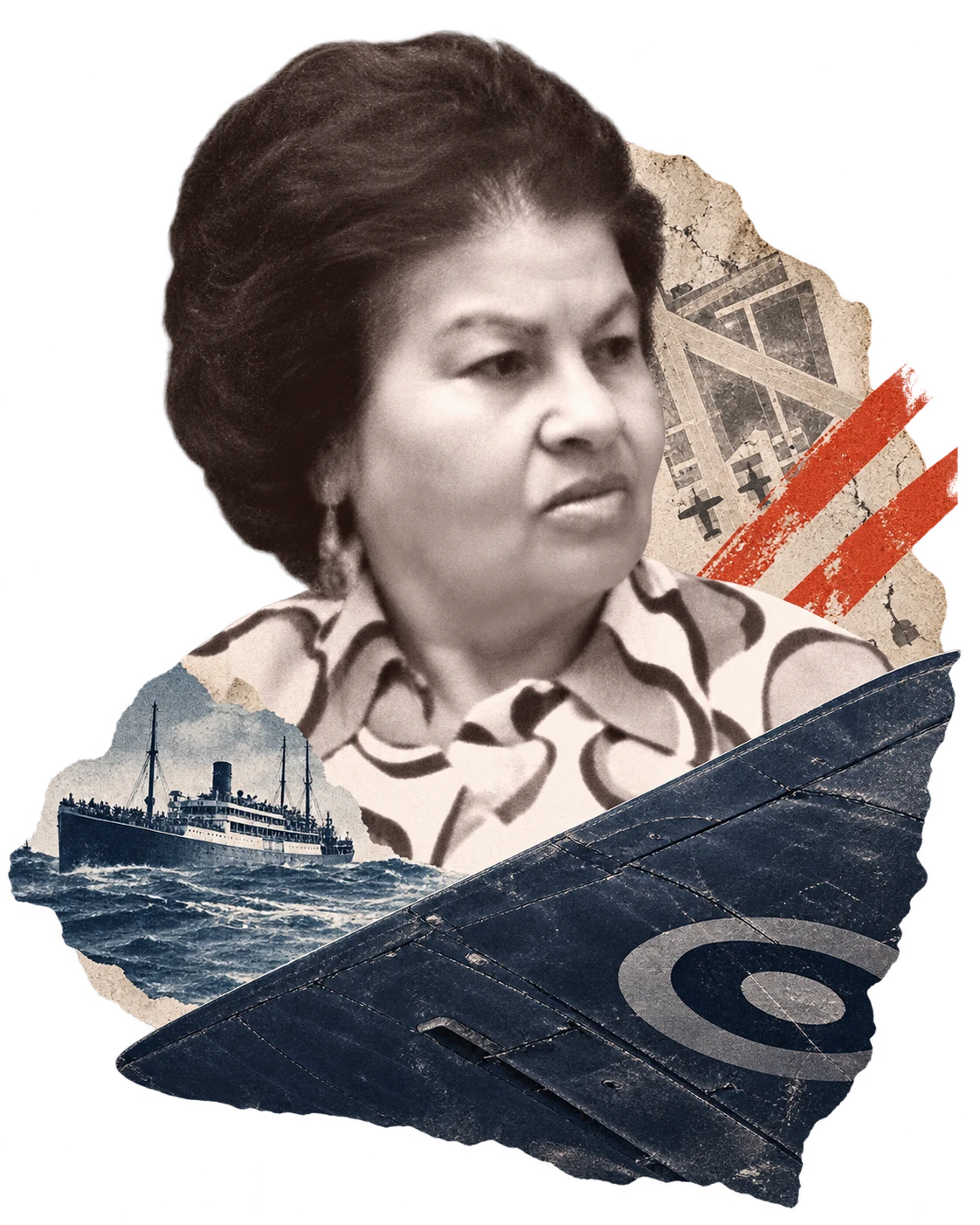
Mina Alon witnessed the accident. She did not know who had been hit, Ezer or Modi... "I didn't know Mina was pregnant," Ezer Weizman recalled. "When I went into the office, Mina, composed and restrained, came over and told me she was four months pregnant. I understood that she knew what had happened to Modi." A few months after that day, Michal, the daughter of Mina and Modi, was born.
Yaakov Klivansky, Modi Alon's father, wrote a book in his memory, A Man of Wings in Israel, but died before it was published.
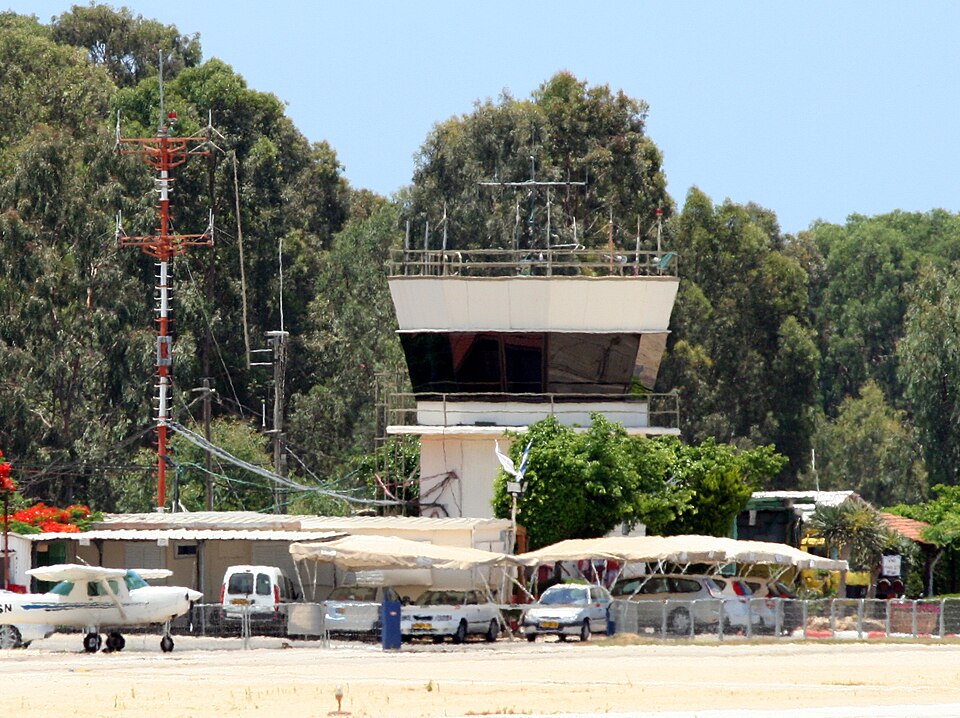
In February 2019, it was decided to name Herzliya Airport after the late Modi Alon.
תגובות
עדיין אין תגובות.