
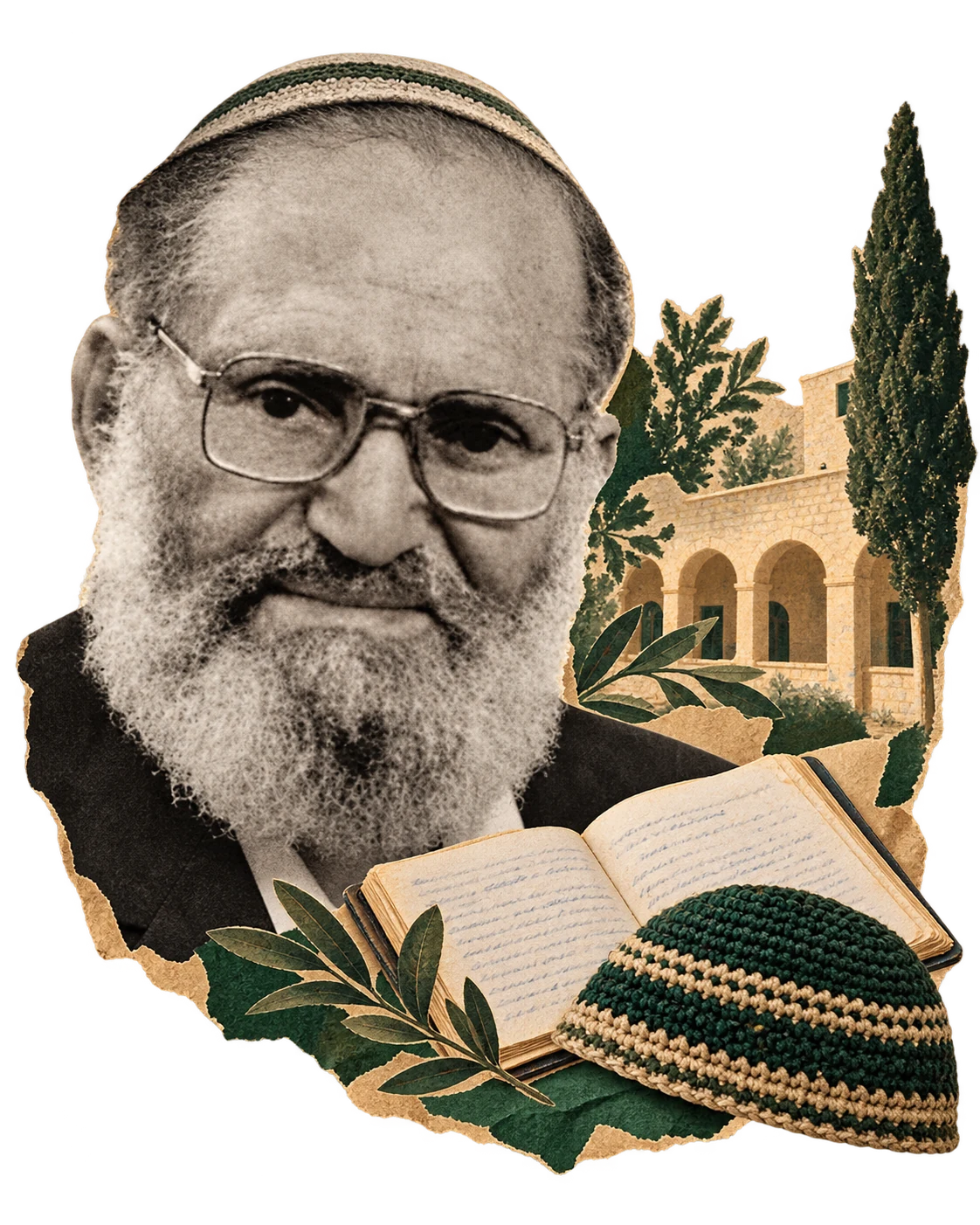
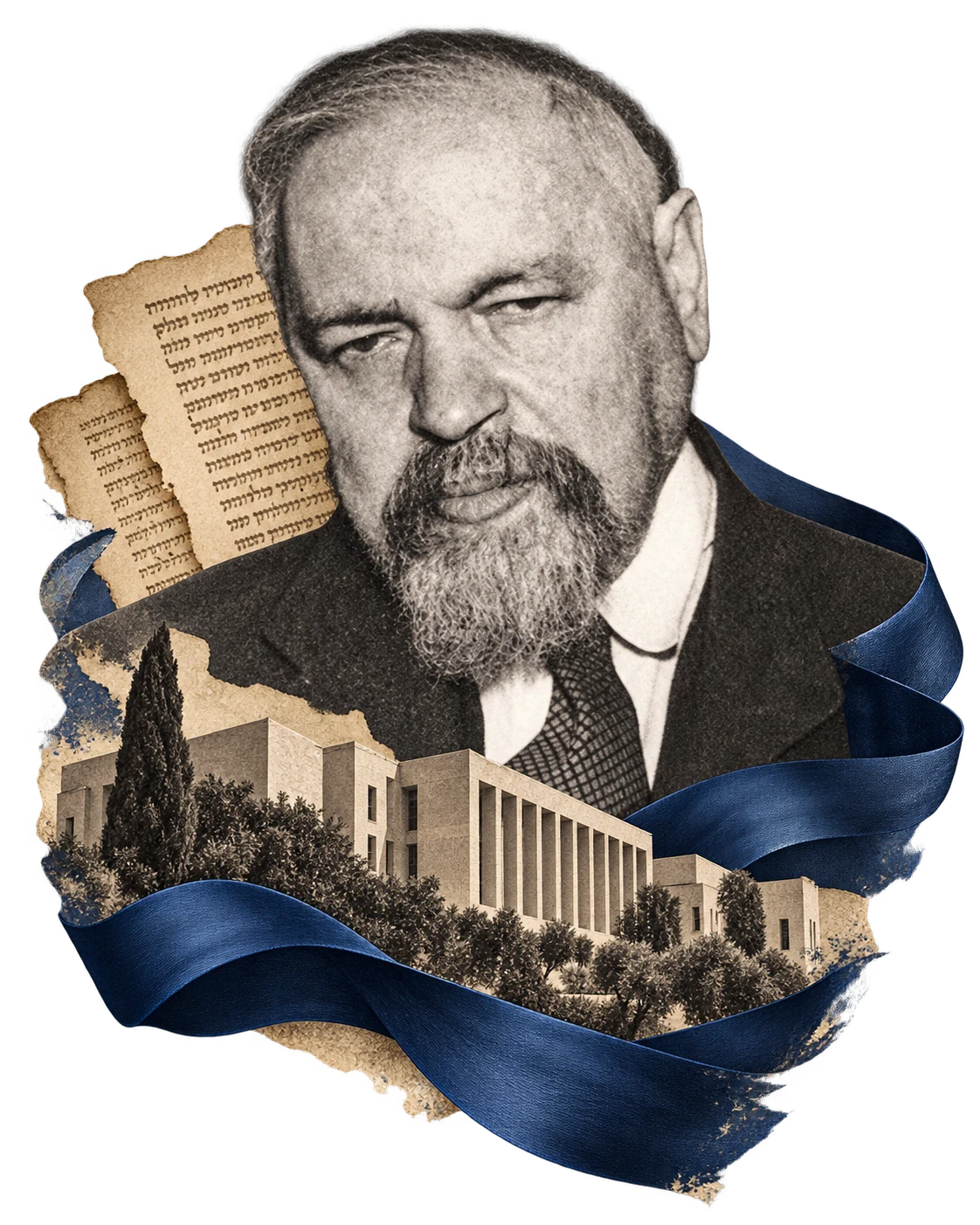
The "father of the knitted-kippah generation." A central and leading figure in the religious revolution of our time.
The Maccabi Scandal
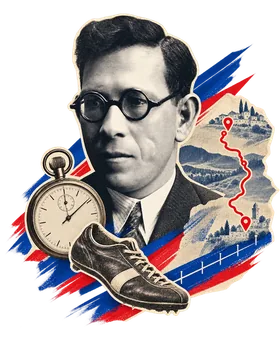
In 1926, a football match was held in Jerusalem featuring the Maccabi-Hashmonai team, then one of the strongest teams. Since it was Shabbat, religious young people tried to disrupt the match. According to Yosef Yekutieli, initiator of the Maccabiah and the Benjamin Marathon, Rabbi Abraham Isaac Kook (the Ra'ayah) "admitted that this was a mistake and explained it as religious zeal and the ignorance of the masses. He was not inclined to scandals and opposed disturbances; everything had to be done with moderation and gentleness."
In an attempt to reach a compromise, a meeting was held between the rabbi and the match organizers after the game. Suggestions were made to offer tickets to Jews and to ban smoking on Shabbat throughout the stadium grounds. The Ra'ayah began: "Sport is a sacred thing. The Maccabi movement is one of the most important foundations of our revival movement. Sport involves great refinement and nobility of spirit." He added: "But, on the other hand, we must not desecrate Shabbat. Our aspiration should be to engage in physical development on all weekdays, but not on Shabbat. Shabbat was given over to spiritual matters alone." This demonstration would later become known as the "Maccabees scandal." Rabbi Moshe Zvi Mankin, a student of the Ra'ayah, was inspired by the young people, who had no teacher and knew no fear, as they fought for the sanctity of Shabbat. At that very moment, he decided to take them under his wing and become their leader and guide in life.
From a Clandestine Childhood to Aliyah
Rabbi Moshe Zvi Neriah was born in 1913 as Moshe Zvi Mankin in Lodz, Poland, to Rabbi Pethachia and his wife, Rebbetzin Rachel. Since Stalin had banned the study of Torah, Rabbi Neriah understood from a young age that such study involved danger. He therefore studied secretly with his father and did not speak about it with his friends. At the age of 13, his father secretly brought him tefillin, and he went to study at a yeshiva in Minsk, where studies were also conducted underground. By the age of 15, Moshe Zvi was already delivering sermons in the synagogue and serving as prayer leader before the ark on the High Holy Days.
In 1925, Moshe Zvi wrote to his uncle Abraham: "My dear Uncle Abraham, who lives there in the Land of Israel, the Holy Land. You know how hard life is in Russia. The Communist regime does not allow us to live a normal Jewish life. We hide in order to pray and observe the commandments. I am going to Moscow to try to get permission to leave Russia. May I merit making aliyah to the Land of Israel, and with God's help, may we meet there."
Rabbi Abraham Isaac Kook helped Moshe Zvi obtain permission to immigrate to the Land of Israel, and in July 1930, at the age of 17, Moshe Zvi Mankin sailed from Odessa to Jaffa. As soon as he stepped off the ship, he was able to see the first Hebrew city taking shape. He came across a newspaper written in everyday Hebrew and understood that he could enter a synagogue and pray without fear. Here he could study openly, demonstrate his abilities, and, above all, join Rabbi Kook. On Saturday night, he traveled to Jerusalem and began studying at Rabbi Kook's Mercaz HaRav Yeshiva. He went to live with Rabbi Zvi Yehuda, Rabbi Kook's son, and after completing his studies and examinations, received rabbinic ordination from Rabbi Charlap, a student of Rabbi Kook.
He wrote: "In the Land of Israel, at the rabbi's yeshiva, I learned to place public, national Judaism at the center of my life. I learned that everyone is obligated to think about the people of Israel, care for the people of Israel, and see themselves as responsible for the people of Israel." The "Maccabees scandal" inspired him to join the Bnei Akiva youth movement, and his connection with the movement lasted until his final day. He wrote the movement's anthem, coordinated its branches, and made sure to maintain direct contact with its young members. At a counselors' seminar in 1939, when he realized that his young people, as he called Bnei Akiva's members, had no educational institution grounded in the movement's values, the idea of establishing the Bnei Akiva Yeshiva came to him. A year later, he founded the first yeshiva in Kfar Haroeh. Only 13 students enrolled in its first class, but over time the yeshiva grew and became the mother institution of the yeshivas in which the visions of Rabbi Neriah and his teacher, Rabbi Kook, were realized. Today, Bnei Akiva yeshivas can be found throughout the country.
These yeshivas were the first to combine agricultural work with religious studies. Over time, with the encouragement of Rabbi Abraham Zuckerman, Rabbi Neriah's partner in the work, secular subjects were also added to the curriculum. Rabbi Neriah objected to this move, saying, "Hair will grow on the palm of my hand before secular subjects are taught in the yeshiva," but in the end he relented. Girls' ulpanot were established alongside the yeshivas. Most Bnei Akiva yeshivas were secondary-school yeshivas and ulpanot, but there were also vocational schools and hesder yeshivas. Later, he established the Bnei Akiva Yeshiva Center, an institution that brought together his life's work and which he directed.
The rabbi married Rachel, née Gittelson, who had immigrated to the Land of Israel at the age of 14 and also dedicated her life to education. She established a network of schools for children from disadvantaged communities and worked in immigrant absorption, discreet charity, lecturing, and writing books about the sanctity of home, family, and marriage. She was also a member of the leadership of the Emunah movement and founded the Council for Jewish Family Culture. She received the title "Distinguished Figure of Religious Education" and the President's Volunteer Award. The Neriah couple built their home in Kfar Haroeh, and they had eight children.
Bnei Akiva and the Educational Enterprise
Rabbi Neriah's aspiration was "to raise a native-born Israeli without thorns." He encouraged his students to take part in defending the country and to serve with distinction in the IDF. He saw the State of Israel as "the beginning of the flowering of our redemption." He visited his students during their military service and strengthened their faith. He was among those who drafted the special prayer for Independence Day, and after the Six-Day War he supported the idea of the Greater Land of Israel and the Gush Emunim movement. Rabbi Neriah was one of the founders of the Kotel Yeshiva and helped renew Jewish settlement in the Jewish Quarter and revive Jerusalem Day. He edited the movement's journal, Zera'im, and wrote poems about Jerusalem and the 7th Brigade, which he accompanied. He published his articles and lectures under the pen name Neriah, inspired by the verse "The lamp of the Lord is the soul of man" [Proverbs 20:27]. Later, he officially Hebraized his name from Mankin to Neriah.
In 1969, he was elected to the Seventh Knesset, but soon realized that "a rabbi and a member of Knesset cannot go together. Members of Knesset sometimes have to make compromises, but rabbis must not compromise," and preferred the yeshiva bench to the Knesset seat. In the state's thirtieth year, he received the Israel Prize. The prize committee explained its choice as follows: "Rabbi Neriah's contribution to society lies in finding bridges for dialogue between those who observe the commandments and those who observe them only in part or not at all. He contributed to this by exploring issues related to the relations between these two groups."
Rabbi Neriah's last words perhaps expressed more than anything else his great love for the Land of Israel and its holiness: "I'm cold! Warm me with words of Torah! Hold fast to the Land of Israel and its holiness. Let me say goodbye to the Land of Israel and part from it with love, joy, and a willing heart. I seek holiness. I seek the Holy of Holies. Give me the holiness of the Land of Israel, give me the holiness of love of Israel, give me a sense of the holiness of the Land of Israel. Give me a sense of the holiness of the people of Israel!" Then he called out several times in a loud voice: "Hear, O Israel: the Lord God, the Lord is one," and concluded with the words, "May we all be sanctified." Rabbi Neriah died at the end of 1995 and was buried in the cemetery in Kfar Haroeh.
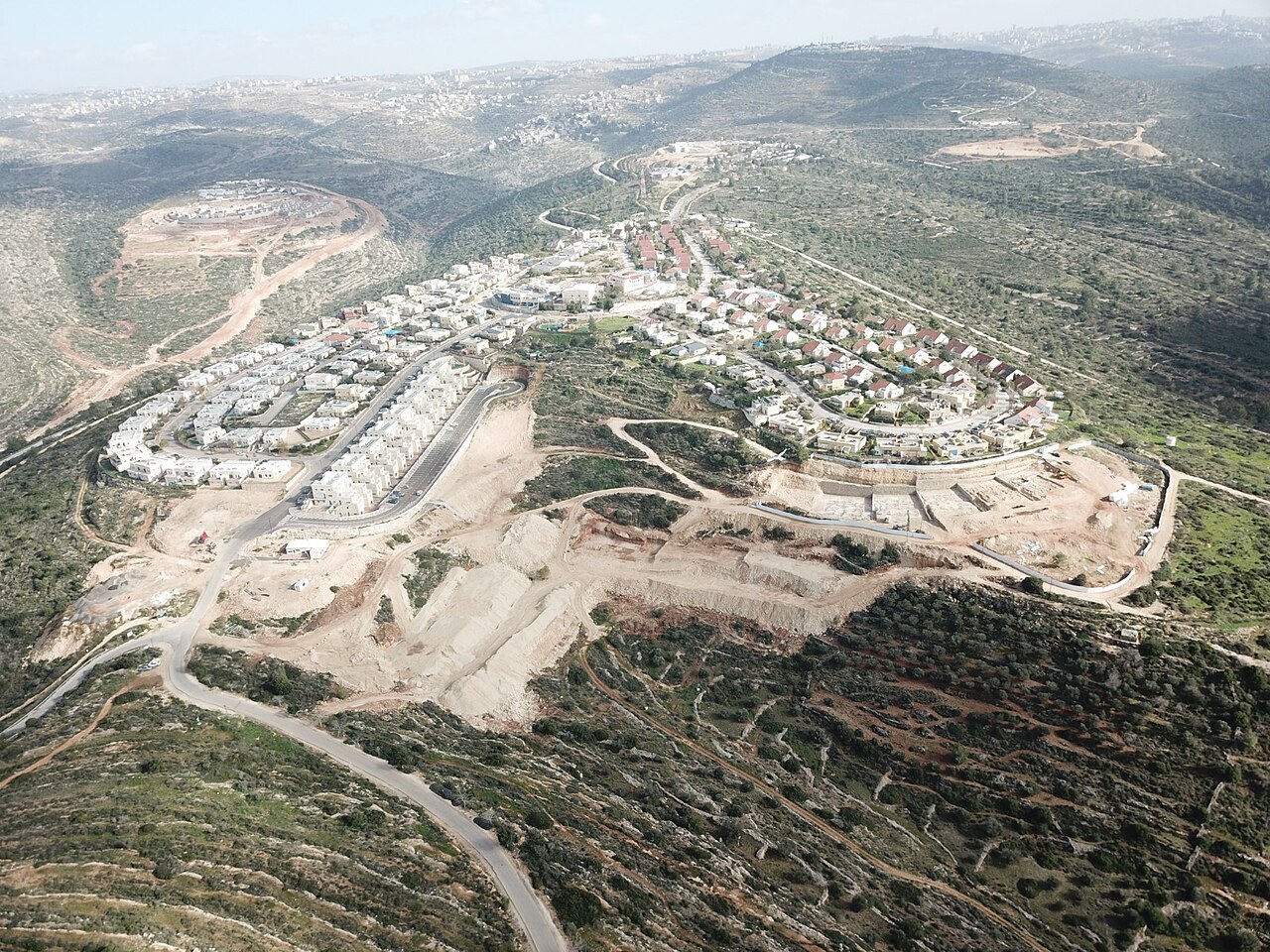
The community of Neriah was named after the rabbi, as were streets in various cities, yeshivas, ulpanot, schools, and synagogues.
תגובות
עדיין אין תגובות.