
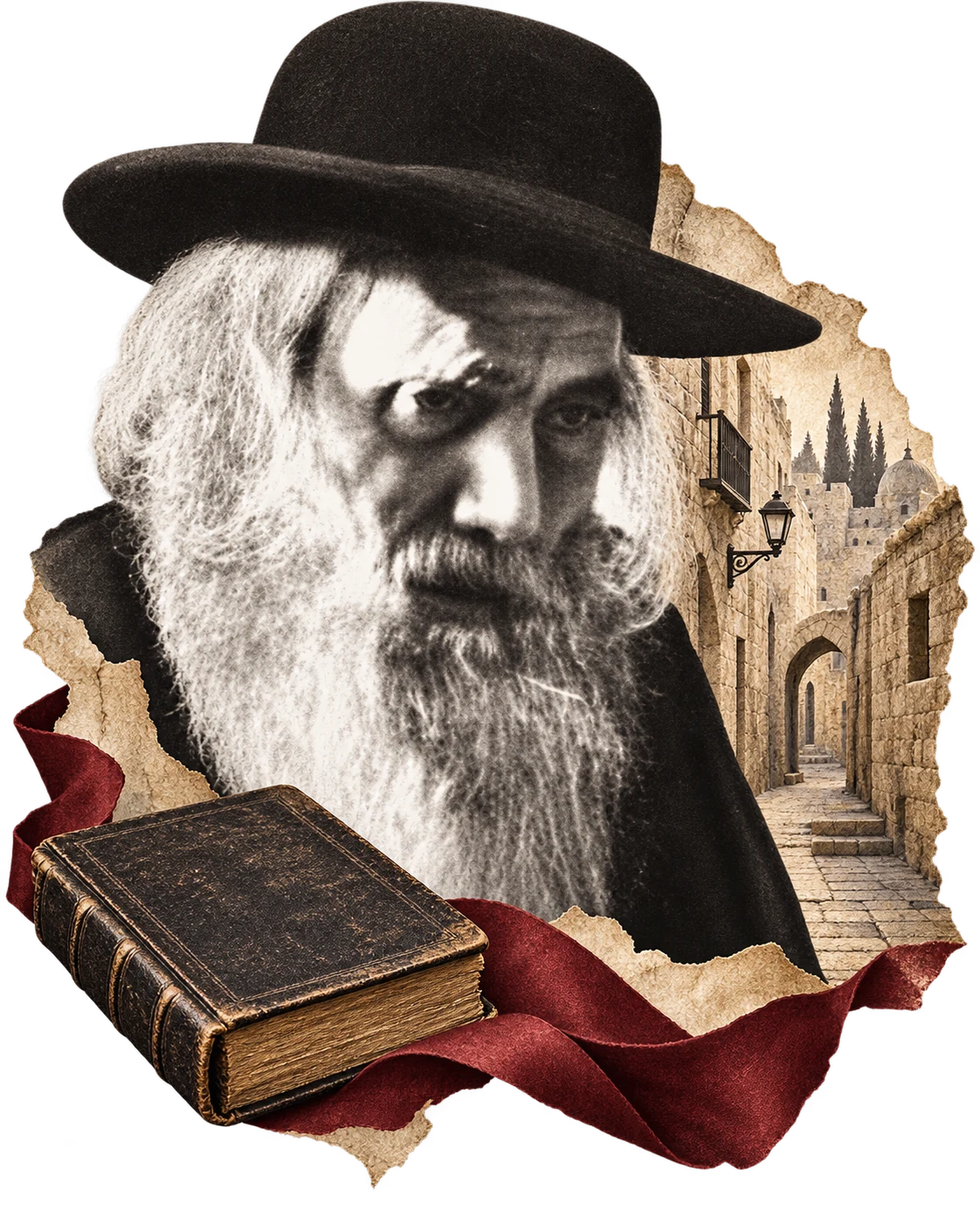
The ideology of the ultra-Orthodox community, its attitude toward Zionism, and the figures who influenced it can be explored through the life of Rabbi Chaim Sonnenfeld.
The de Haan Murder and Its Historical Background
On June 30, 1924, the afternoon prayer service ended at the synagogue in Jerusalem's Shaarei Tzedek Hospital complex. As the worshippers slowly dispersed to their homes, three shots rang out. Dr. Yaakov Yisrael de Haan collapsed and died on the spot. His assassination surprised no one. The list of suspects and those who had ordered the killing was long, and included Abraham Tehomi, a member of the Haganah and the Irgun, and Rachel Yanait Ben-Zvi (later the wife of President Yitzhak Ben-Zvi). The assassin was never caught, but the chief suspicion fell on "the Enterprise" - an underground cell headed by Eliyahu Ben-Horin, who recruited Abraham Tehomi. De Haan was Rabbi Yosef Sonnenfeld's political arm.
It was Napoleon who, in 1791, first granted Jews equal rights (emancipation) with the rest of a country's citizens. Among other things, this equality was reflected in the right to live in major cities, which had until then been closed to Jews; the adoption of local languages (instead of Yiddish and Ladino); the opening to Jews of prestigious professions such as medicine, law, and journalism; the abolition of the Jewish community's legal autonomy; and the addition of general education, including mathematics, literature, and history, alongside religious education.
Some saw the new rights as a danger to Judaism. The most famous among them was the Chatam Sofer (Chasam Sofer). His full name was Rabbi Moshe Sofer Schreiber; he took the name from his ancestors' profession as scribes of sacred texts (writers of Torah scrolls, tefillin, and mezuzot). Chatam is an acronym for Chiddushei Torat Moshe - the books written on the basis of his interpretations. The Chatam Sofer was born in Frankfurt in 1762 and was already well versed in Torah from a young age. He also studied history, mathematics, and astronomy, and as an adult became a well-known and respected rabbi. He earned a reputation as a great scholar and was widely admired in Central Europe, with many turning to him with questions of Jewish law. He was considered the last halakhic authority whose rulings could be relied upon, and his students, who followed in his footsteps, established yeshivas throughout Hungary.
The Chatam Sofer said: "The trouble is quite the opposite: the government grants Israel freedom, elevates them and draws them close, and this is a far greater trouble than the first. For, to our great misfortune, Israel's whole aim then is to draw close to the ministers of the kingdom, to follow their customs, and to abandon Torah and commandments of their own free will. This is called subjugation, not slavery." The Chatam Sofer coined the slogan "What is new is forbidden by the Torah" and worked to prevent the opening of Jewish schools where secular subjects were taught. Some of his students established the Kollel of Hungarian Jews in Jerusalem. Some were among the founders of Petah Tikva, and a few were also opponents of Zionism. The best known among them was Rabbi Avraham Shag-Zwebner, who immigrated to the Land of Israel in 1873 with his student Rabbi Yosef Chaim Sonnenfeld.
Leading the Edah HaHaredit in Jerusalem
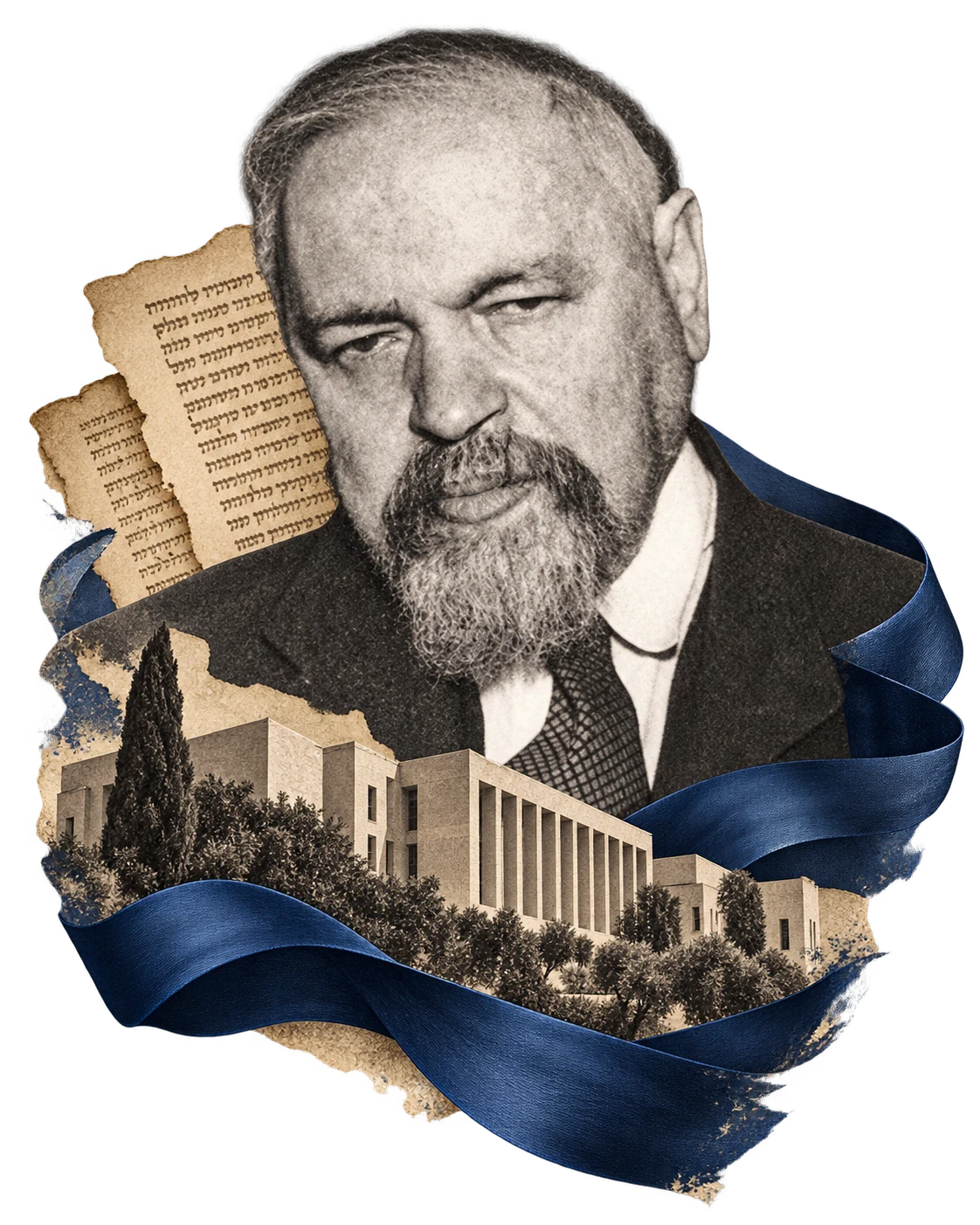
Rabbi Yosef Chaim Sonnenfeld was born in Hungary in 1848. At the age of 25, he immigrated to the Land of Israel with his teacher and settled in the Old City. Together with Rabbi Diskin, who was also an extreme zealot, he founded the Batei Ungarin neighborhood and the "Court of Law of the God-fearing," and brought together the Warsaw and Hungarian kollels. In 1913, Rabbi Chaim Sonnenfeld and Rabbi Kook set out on a tour of the settlements and farms established in the Land of Israel, hoping to persuade the settlers to observe the commandments. The tour would later become known as the "Tour of the Settlements." The two visited Hadera, Zikhron Ya'akov, Bat Shlomo, Shfeya, Atlit, the Aharonson farm, Haifa, the cooperative at Merhavia, the Merhavia settlement, Kfar Tavor, and the Sejera farm. At that time, tensions began to grow between the Old Yishuv and the New Yishuv, and later between the ultra-Orthodox and the Zionists. The leaders of the struggle against new ideas were members of the Hungarian Kollel. They opposed every attempt to establish educational institutions where secular subjects would be taught, and strictly maintained their customs, language, and dress.
With the British conquest of the Land of Israel in 1917 and the Balfour Declaration, which stated that "His Majesty's Government views with favor the establishment in Palestine of a national home for the Jewish people, and will use its best endeavors to facilitate the achievement of this object," it was clear that the British would need to establish new Jewish-administered institutions that would lay the foundations for the institutions of a future state. Among these was the initiative to establish the Chief Rabbinate, which until then had been under British control. A special committee chose two chief rabbis: one Ashkenazi - Rabbi Abraham Isaac HaCohen Kook (HaRa'ah) - and the other Sephardi - Rabbi Yaakov Meir. Yosef Chaim Sonnenfeld opposed the authority of the Chief Rabbinate, saying: "We see in this an immense danger and, God forbid, the destruction of our holy Torah. Anyone who takes part in this election will be willfully transgressing the laws and statutes of our holy Torah." Although Yosef Chaim Sonnenfeld did not recognize Rabbi Kook's position and continued to call him the rabbi of Tel Aviv-Jaffa, they nevertheless held each other in high regard. Rabbi Sonnenfeld would often say, "Rabbi Kook is a truly righteous man, but our paths are different," and even called him a "righteous man, the foundation of the world." The ultra-Orthodox under his leadership submitted a petition to the High Commissioner, Herbert Samuel: "We, the undersigned Ashkenazim, respectfully inform Your Excellency's government that we have no connection whatsoever with either the City Committee for the Jews of Jerusalem or the National Council. We did not take part in their election, and protested against them at the time of the election. We do not recognize their authority over us, and we strongly protest their right to impose taxes on us and interfere in the affairs of our community..." These ultra-Orthodox Jews demanded to be an independent community, with all that this entailed.
Yosef Chaim Sonnenfeld became the leader of the ultra-Orthodox community and held the title of "Rabbi and Head of the Rabbinical Court" (Av Beit Din) for all Ashkenazi congregations, as a counterweight to the Rabbinate and the Knesset Yisrael communities. As president of the Ashkenazi Chevra Kadisha, he established regulations governing burials and customs, took part in the mitzvah of accompanying the dead and their burial, took care not to remain outside the walls of the Old City for more than 30 days, and did not sit for extended periods anywhere outside his room in Batei Machseh, whose windows faced the Temple Mount.
Dr. Yaakov Yisrael de Haan managed all the political maneuvering on behalf of Rabbi Yosef Chaim Sonnenfeld. De Haan was a fascinating figure: a lawyer, poet, and scholar who underwent several transformations, the last of which was his association with the ultra-Orthodox extremists. He worked to thwart Zionist development, and to that end met with King Abdullah of Jordan and senior British officials. The Zionist community saw his activities as a real threat to the establishment of the state, and he was murdered by representatives of the Zionist movement. It was, in effect, the first political assassination in the Land of Israel. De Haan became a martyr of the ultra-Orthodox community.
His Final Years and Legacy
During the period of British rule, Rabbi Yosef Chaim Sonnenfeld served as the rabbi of Jerusalem. One day, the British High Commissioner came to visit him. When he arrived outside the rabbi's home, he got out of his car and looked for a fine house, as befitted a respected Jewish leader. Instead, he found the rabbi in a humble apartment at the bottom of a flight of stairs.
After they shook hands, the High Commissioner asked Rabbi Sonnenfeld: "Is this really the rabbi's home?! Below ground?! How can that be?! Could they not have found the rabbi a more fitting home, one worthy of his greatness?" The rabbi asked the High Commissioner to come to the only window in the house. When he drew back the curtain, the Western Wall came into view. Then he said to him: "My beloved Father has no home at all... Do you see that wall with the great stones? That was my Father's home. And the great, holy house, where the Divine Presence of the Creator of the World dwelled, was consumed by fire and razed to the ground..." With tears in his eyes, the rabbi continued: "When my Father has barely even a ruin, is it fitting for me to have a beautiful, fine apartment?"
Toward the end of his life, Rabbi Yosef Chaim Sonnenfeld admitted to his interlocutor, Rabbi Moshe Blau, that the ultra-Orthodox leadership had failed to understand the struggle between the innovators and the traditionalists. In his view, the ultra-Orthodox leadership had not appreciated the power of the Hebrew language, or its strength as a weapon in this struggle. As a result, it had not worked to cultivate Hebrew as a means of communication and an instrument that plays a central role in shaping the systems of life and reflecting them. "You know?" he said to the leader of Jerusalem's Agudath Israel, "Perhaps we were wrong not to decide, when we came to the Land of Israel, to make the holy tongue our spoken language. Then we would have been ahead of the secularists and taken from their hands their most powerful weapon."
Rabbi Yosef Chaim Sonnenfeld died in 1932, and thousands of Jews accompanied him on his final journey to his burial place on the Mount of Olives. In his will, the rabbi asked that no grand words of praise or honor be inscribed on his tombstone, but only that he be eulogized and that people say, "What a pity to lose an old Jew from the Land of Israel."
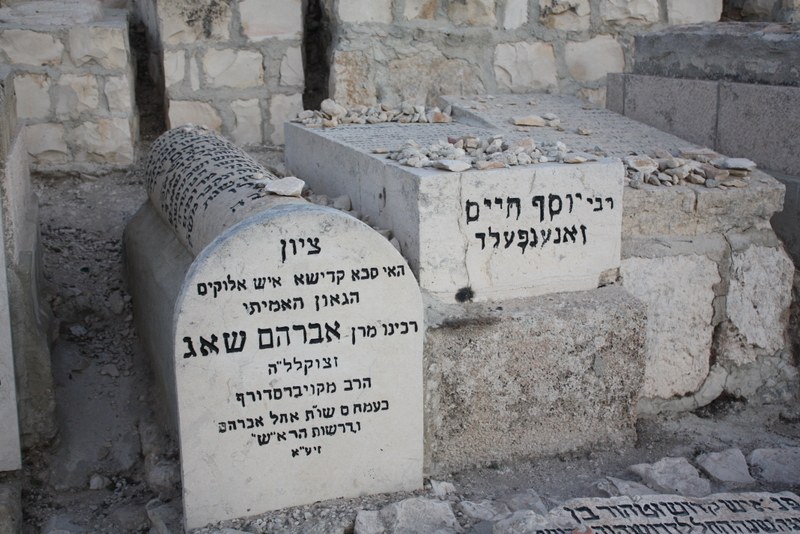
The two brothers who carried on Rabbi Yosef Chaim Sonnenfeld's legacy were well-known ultra-Orthodox leaders in the community: Rabbi Moshe Blau, one of the leaders of Agudath Israel, and Rabbi Amram Blau, one of the leaders of Neturei Karta. After the rabbi's death, his life story was published in Pillar of Light, written by Rabbi Moshe Blau, and in The Man on the Wall, written by his grandson, Rabbi Shlomo Zalman Sonnenfeld.
תגובות
עדיין אין תגובות.