
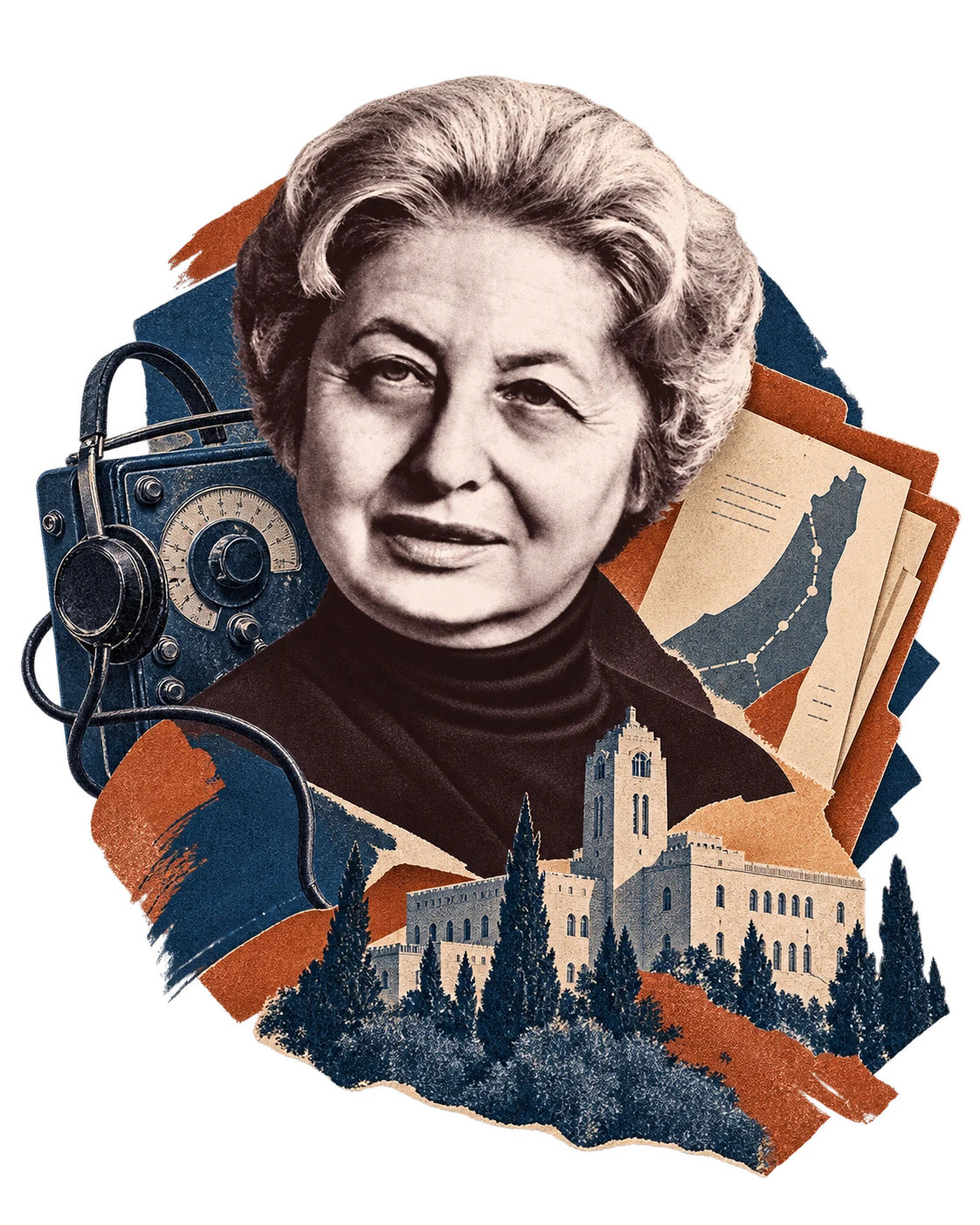
Tamar Eshel's life story could easily have become a thriller, even rivaling spy movies. But that was only a small part of the biography of the woman her opponents called the "Israeli Wonder Woman."
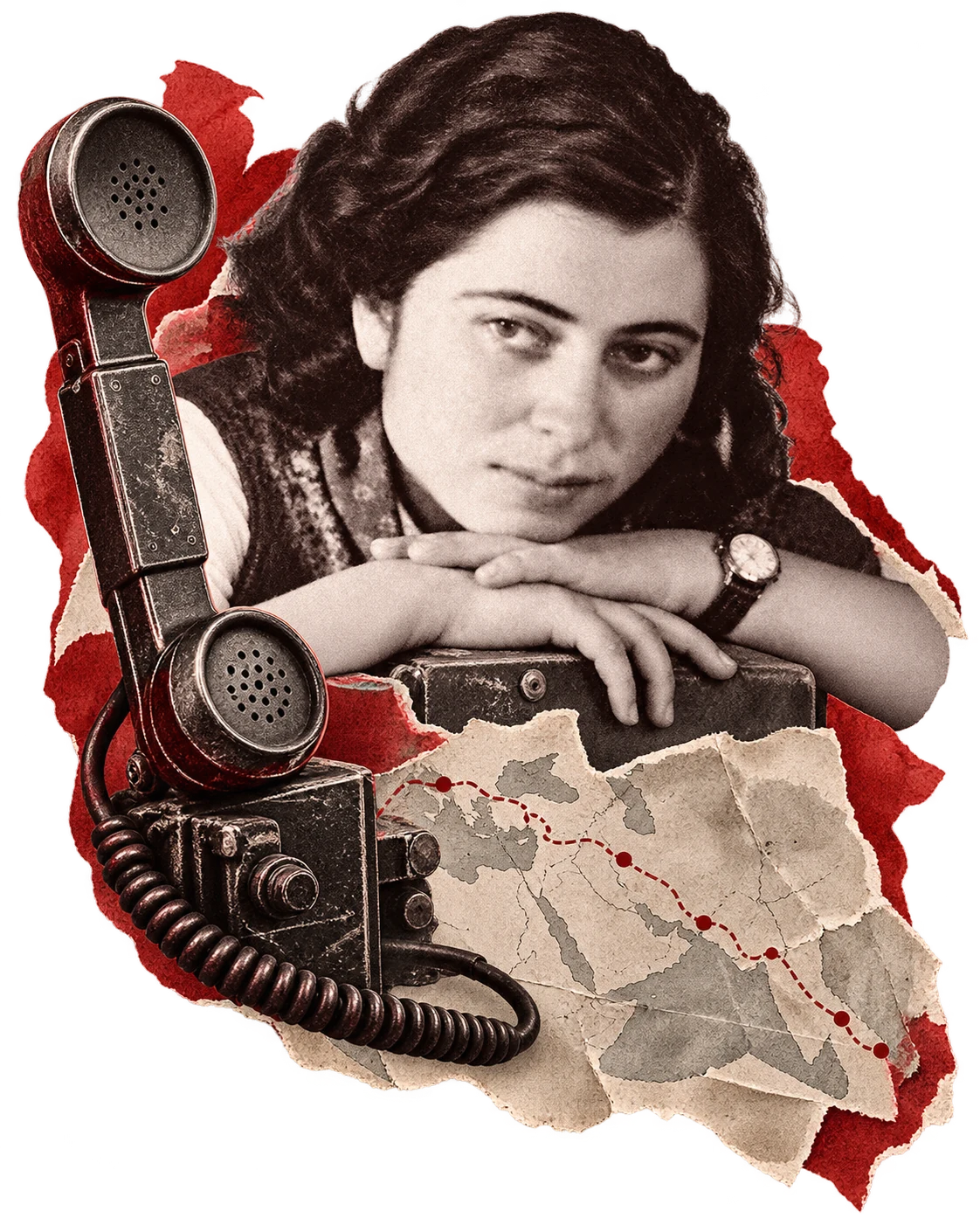
Tamar Eshel.
Family Roots and Heritage
A journey through Tamar Eshel's family history is a journey among the strong women of modern Israel. Her mother, Tzila Feinberg Shoham, was a member of WIZO's executive board and chair of the Association for Women's Status. Tzila was the younger sister of Avshalom Feinberg, founder of the NILI underground, which spied for the British against the Turks who ruled the land. Avshalom was killed on his way to Egypt, and a palm tree grew where he was buried from a date seed he had carried in his pocket. In the Yamit region, the Nahal settlement of Dekla was established in his memory, and after the withdrawal from Sinai, the community of Dekel was established in the Hevel Shalom region. The community of Avshalom was also named after him. Tamar's grandmother's sister was Sonia Belkind, the first gynecologist in the Land of Israel. Another of her grandmother's sisters, Olga Hankin, was the wife of land-purchaser Yehoshua Hankin, and Givat Olga was named after her.
Tamar Eshel's family connections contributed greatly to the development of the state. Her family included city founders, bank directors, founders of underground organizations, and more. All that genetic inheritance came together in Tamar Eshel, and her story alone could fill several volumes on a bookshelf.
Toward the Partition Resolution
On November 29, 1947, the UN voted on Resolution 181, one of the most important milestones on the path to establishing the state, and the resolution passed by a majority. Resolution 181 announced the end of the British Mandate and the establishment of two independent states in the Land of Israel - a Jewish state and an Arab state.
The process began about six months earlier, at the UN General Assembly on May 14, 1947, where it was decided to establish an investigative committee to recommend a future solution to the Palestine question to the UN. The committee, UNSCOP (United Nations Special Committee on Palestine), was made up of eleven representatives of UN member states. The committee held its first meeting in Jerusalem on June 16, 1947, toured the country and Transjordan, held meetings, and took testimony. It completed its work on July 25, 1947, and published its recommendations on August 31, 1947. The committee worked in the YMCA building in Jerusalem, and its members also lived and worked at the Salvia Hotel (today Yad Harav Nissim), Beit Kadima (today 30 Harav Berlin Street), and the Jasmine House Hotel (at 21 Hovevei Zion Street).
The committee's importance was well understood, so it was necessary to influence its decisions. This required close monitoring of its discussions, its members' positions, and their tours of the country. The committee also required extensive and complex intelligence coverage. For the first time, a professional and advanced model was developed for an intelligence operation, including the use of a range of collection sources and the separate assessment of information from the gathering of intelligence. The operation's headquarters directed the collection, deployed a variety of sources, analyzed the material received, and assessed it. Intelligence was sent directly to its users: senior officials in the Jewish Agency's Political Department and the liaison officers to UNSCOP, Aubrey Eban (Abba Eban) and David Horowitz, who assessed the information according to their areas of expertise - Eban on political matters and Horowitz on economic matters.
Among the sources used were wiretaps, informant networks (drivers, chambermaids, and others), personal meetings, surveillance and tours, and even the collection and reconstruction of torn-up draft documents. Members of the committee were assigned people from their countries of origin who spoke their languages. Chaim Herzog, then a lawyer and later president of Israel, agreed to a request from the head of SHAI, David Shaltiel, to serve as the chief coordinator of the intelligence operation, drawing on his experience as a British intelligence officer during World War II. Tamar Eshel, then head of Department M of SHAI in Jerusalem, coordinated and ran a special headquarters in her room in Musia Langodski's apartment, at 22 Histadrut Street in central Jerusalem, near the Eden Hotel. The heads of the collection teams came to the headquarters room regularly, at set times, and passed on the information they had gathered to Tamar, who pieced it together into a complete picture.
Tamar and Chaim Herzog were assisted by a team of experts that included Boris Guriel (head of Department M of SHAI nationwide), Yaakov Avnon, Carmela Rufin-Yadin (secretary of the SHAI branch in Jerusalem), Netanel Lorch, Yitzhak Navon (head of Arab SHAI in Jerusalem), and others. A telephone wiretap system was set up to monitor the committee members at their residence in Beit Kadima. It was decided that the committee chair would be the first wiretap target, and within days the operation expanded. A listening post was set up in Katamon, where a team of English speakers worked around the clock under the direction of Nachman Kretzmer. A microphone system was also installed at the Salvia Hotel. One of the microphones was discovered by a committee secretary, but he assumed the British were responsible. Based on the information received, Dr. Chaim Weizmann planned meetings with committee members and even succeeded in persuading some of them to adopt and support the idea of partition.
"I have to say, I feel a great deal of satisfaction. As I say, I have a kind of stake in the decision. We had a listening center monitoring all their phones. We made use of American students who came to the country after the war, and they helped us. We had networks... We checked: Was Uruguay's representative, Enrique Rodríguez Fabregat, on our side? What were they arguing about? Who were they meeting? What had they said? They would collect the papers... and at night put all the papers together to see what they were writing about. Every morning at eight I would meet with Chaim Herzog, who was the liaison between the Political Department and the UN. He already knew what they were arguing about. And that helped a great deal in our dealings with them."
Between the Underground and London
This was not Tamar's first spying and wiretapping operation. In 1936, when Tamar was 16, Arabs rioted against Jews. "I made grenades and took pistols apart. That's how it was in those days, when manpower was scarce. We were obedient. When they told us to do something, we did it. When some people refused to contribute to the Yishuv's security levy, Kofer HaYishuv, they sent me to mark the refusers' doors with a permanent marker." She also served as a Morse code and flag signaler. She performed that role during the establishment of Kibbutz Ma'ale HaHamisha.
Before World War II, Tamar was in London, the city where she was born. She had returned to fulfill her dream of studying plant entomology, "out of a desire to contribute to agriculture in the country." But when war broke out, Shaul Avigur, one of the Haganah's leaders, approached her and asked her to operate a wireless station in London. In a scene worthy of a thriller, he added that "it's a dangerous job, and if you're arrested, we'll deny any connection to you." The station was the London end of a one-way radio link established between the country (the secret Sarah station at Kibbutz Gevat) and London. It was used to transmit coded messages between the leaders of the Yishuv in the country and the Jewish Agency's Political Department in London. These included secret messages to David Ben-Gurion and Moshe Sharett, who were often in the city. Tamar became a "Gideonite," the term for a female intelligence operative with specialized expertise. She ran the station for about three years, from 1939 until April 1942. For part of that time, it operated during the German Blitz. "My job was to receive broadcasts from the country every evening at eleven, decipher them, and pass the information on the next day to whoever needed it," Tamar said. "I kept doing it during the German bombing blitz on London, which caused devastation and destruction, and I didn't go down to the shelter. If you ask whether I was brave, we didn't know fear in those days." Later, Shulamit Arlozorov, Chaim Arlozorov's daughter, joined her. Under difficult and dangerous conditions, the two received transmissions, deciphered the codes, and passed the material on to its destinations. Later, in 1946, it emerged that the British had been listening to these broadcasts and deciphering the Zionist leadership's telegrams, probably through the British listening post at Tzrifin.
But this job was not enough for Tamar. "Actually, being just a 'Gideonite' didn't satisfy me. As part of the Civil Guard there, which worked against air raids, I volunteered at a factory that made showers and bathtubs and had been converted to produce gunner pods for Spitfire aircraft. I was the only woman working with metal," she said.
From the British Army to the UN
In 1942, Tamar Eshel enlisted in the British Army and was sent to Egypt. On the way, she thought of her uncle Avshalom Feinberg, last seen setting out for Egypt on an intelligence mission from which he never returned. In Egypt, she was recruited to work with Levi Avrahami, the Haganah's emissary in Egypt. During her service in the army, she helped smuggle people into the country, transfer weapons, and establish a wireless communications station. After returning to the country, she took a Gideonim course. Her status as a British soldier, rather than a soldier from the Land of Israel, enabled her to carry out special missions for SHAI, such as delivering material to Ben-Gurion and Sharett during curfews and lockdowns. SHAI commander David Shaltiel's request to transfer her from the Haganah's communications service to Political SHAI was approved, and in 1946-1947 she was responsible for Political SHAI. Tamar Eshel's most notable operation during this period was the surveillance of UNSCOP.
At the age of 27, Tamar served as liaison officer for the Haganah delegation to the United States during the adoption of the partition resolution on November 29, 1947. In 1948, she went to Europe as an emissary for Mossad Le'Aliyah Bet and managed Aliyah D in Marseille. Among other things, this work involved arranging the return to the country of the Exodus refugees using forged documents and papers. After the state was established, she worked to bring Mahal volunteers (volunteers from abroad) to Israel and married Lionel Schwartz, a volunteer from South Africa, with whom she had a daughter. After they divorced, Tamar left the security services.
Tamar Eshel was born in London in the summer of 1920, while her parents were in the city on a mission for the Zionist Executive. Her mother was Tzila Feinberg, sister of Avshalom Feinberg, one of the founders of the NILI underground, and daughter of the Bilu pioneers and founders of Hadera, Israel and Fania (Belkind) Feinberg. Tamar's grandfather, Tzila's father, Ze'ev Shoham (Wolf Finkelstein), was one of the first lawyers in the country and served as director of the Immigration Department of the World Zionist Organization's Executive in London from 1918-1924. Shortly before his term ended, Tamar and her mother Tzila returned to the country, and her father joined them a few months later. They first settled in Tel Aviv and later moved to Haifa. Tamar joined the Haganah at the age of 14. She studied at the Reali School in Haifa and took on public roles: a Scouts leader, a member of the Battalion for the Defense of the Hebrew Language, the Committee for the Defense of Local Produce, and the Students for the Jewish National Fund organization. In eleventh grade, she headed the school's "Supreme Student Committee."
After leaving the security services at the beginning of 1951, she joined the Foreign Ministry. Four years later, she was part of Israel's delegation to the UN, where she focused on human rights work. In 1961, she became chair of the UN Commission on the Status of Women, and in that role she fought to improve women's rights around the world. Only then, she said, did she learn about the hardships faced by women in Israel. "My mother was a very courageous fighter for women's rights, and I never agreed with her. I told her, 'You women have to work in the world alongside men and show your strength.' I wasn't interested in it," she said in a later interview. But while serving at the UN, she changed her mind: "Delegations from different countries came to me to ask for my help in solving problems related to women's status. I was ashamed. I was helping others and knew nothing about what was happening back home. I began to take an interest in my own backyard and was horrified, and then I also began to get involved in the issue," she said. Later, she served seven times on Israel's delegation to the UN General Assembly. "It was grueling work, especially dealing with representatives of Arab countries. I'm the kind of person who, if Israel is attacked, hits back twice as hard and right away," she said.
A year before she was appointed chair of the UN Commission on the Status of Women, she married her second husband, Foreign Ministry employee Aryeh Eshel. He served as Israel's consul in Argentina, consul general in Vienna, ambassador to Uruguay, deputy representative of Israel's delegation to the UN, consul general in New York, and ambassador to Brazil and Canada. Aryeh brought his daughter from his first marriage, who became Tamar's second daughter. Aryeh Eshel died in October 1968, and Tamar returned to the country.
Jerusalem, Na'amat and the Knesset
But a woman like Tamar would not sit idle. At Teddy Kollek's request, she took on several assignments for the city. Each time, she moved from one role to another, including public relations and the preservation of historic sites, of which the city has many. She also chaired the culture committee, oversaw education, and more.
Alongside her work for the city of Jerusalem, Tamar devoted herself to an issue close to her heart: advancing women's status. In 1974, she brought together the three branches of the movement - the Council of Women Workers, the Organization of Working Mothers, and the World Movement - into a single organization: Na'amat, the Movement of Working and Volunteer Women. "Because of my work for women's status, they pressured me to run for the Council of Women Workers," she said. "Beba Idelson, who had headed the organization for more than 40 years, said, 'I want you by my side so I can shape you, and when I feel you're ready, I'll pass you the baton.' 'Beba, you can't shape me,' I replied. 'If you like, you can try me out, and if I'm no good, you can throw me out.'" When she joined the organization, against Idelson's preference, she described the experience: "It wasn't easy to move things there after Beba had run the organization in a 19th-century style. I wanted to make it current and modern, and to speak to young women too, especially since there were hardly any women workers left." She held the position until 1977, when she decided to influence events from a position of greater power - in the Knesset.
When asked where her commitment to working for society came from, she said: "In our family, there was a kind of mania for believing that a person should volunteer and give back... So, at the age of eight, I worked in a flower shop, and everything I earned I put in a Jewish National Fund box. My mother's uncle was Yehoshua Hankin, so we lived and breathed the redemption of land 24 hours a day. When I was young, I refused to eat oranges from our family's orchard because Arab workers worked there. In those days, apples were imported from abroad. When I saw my father about to bite into one, it drove me crazy. 'Dad, you can't eat foreign produce,' I reminded him."
In 1977, she was elected to the Knesset on behalf of the Alignment party and served until the end of 1984, in the ninth and tenth Knessets. In this role, she also chaired the subcommittee on battered women and the committee on energy. She initiated the establishment of a subcommittee to amend the criminal code on rape, and initiated a change in the police's approach to domestic violence. "I fought like a lioness to increase the percentage of women in the Knesset," she said, "but I felt terrible there. Unlike the other women members of Knesset, each of whom had a patron, I didn't want a patron. So they were very wary of me and tripped me up at every opportunity. It's no wonder that most of the praise I received came from the opposition benches and male MKs. Never from women, among whom there was a great deal of jealousy."
Her work in the Knesset highlighted her integrity and the freedom she took, without considering herself bound by party discipline. For example, in 1981 she rebelled and voted with the right in favor of the Golan Law, against party discipline. "The Golan must remain within the borders of the State of Israel," she said, explaining: "In my views, I was and remain a security hawk, opposed by the doves in the party."
After retiring from political life, she continued her volunteer work, serving on the public committee of Hadassah Hospital and the National Council for Ethiopian Jewry, among other organizations. She also founded the Beit Tzipora women's shelter. In her later years, Eshel lived at Nofei Yerushalayim, a retirement home managed by its residents, and was one of its founders. She drove until she was 95, and at 100 she was still sharp and acerbic. When asked, "How long will Bibi last?" she replied: "As long as he remains in Sara’s grip, as he has since the days of the 'hot tape' - she's a little psychopathic - he won't give up power."
On her 101st birthday, Knesset Speaker Mickey Levy and representatives of the Knesset leadership brought Tamar a cake and a special gift: our Wonder Woman in the Knesset. "Your contribution to the country and to the struggle for women's rights in Israel and around the world is priceless," the Knesset speaker said. Tamar, moved, said on the occasion that she had never wanted to be a hero, and added: "It's important to me to tell everyone: Be who you are, not who others want you to be."
In July 2022, on the day she turned 102, Tamar Eshel died.
תגובות
עדיין אין תגובות.