
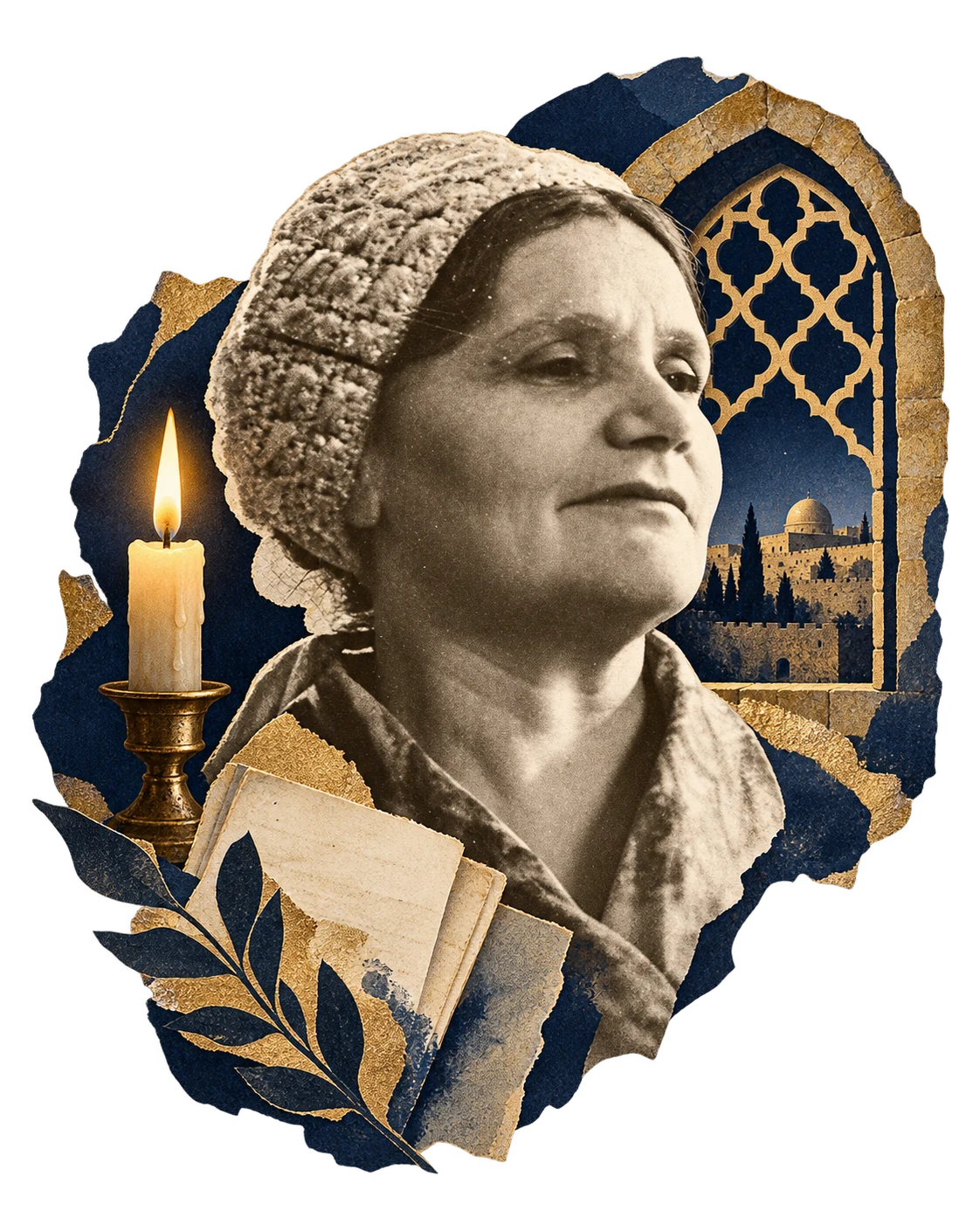
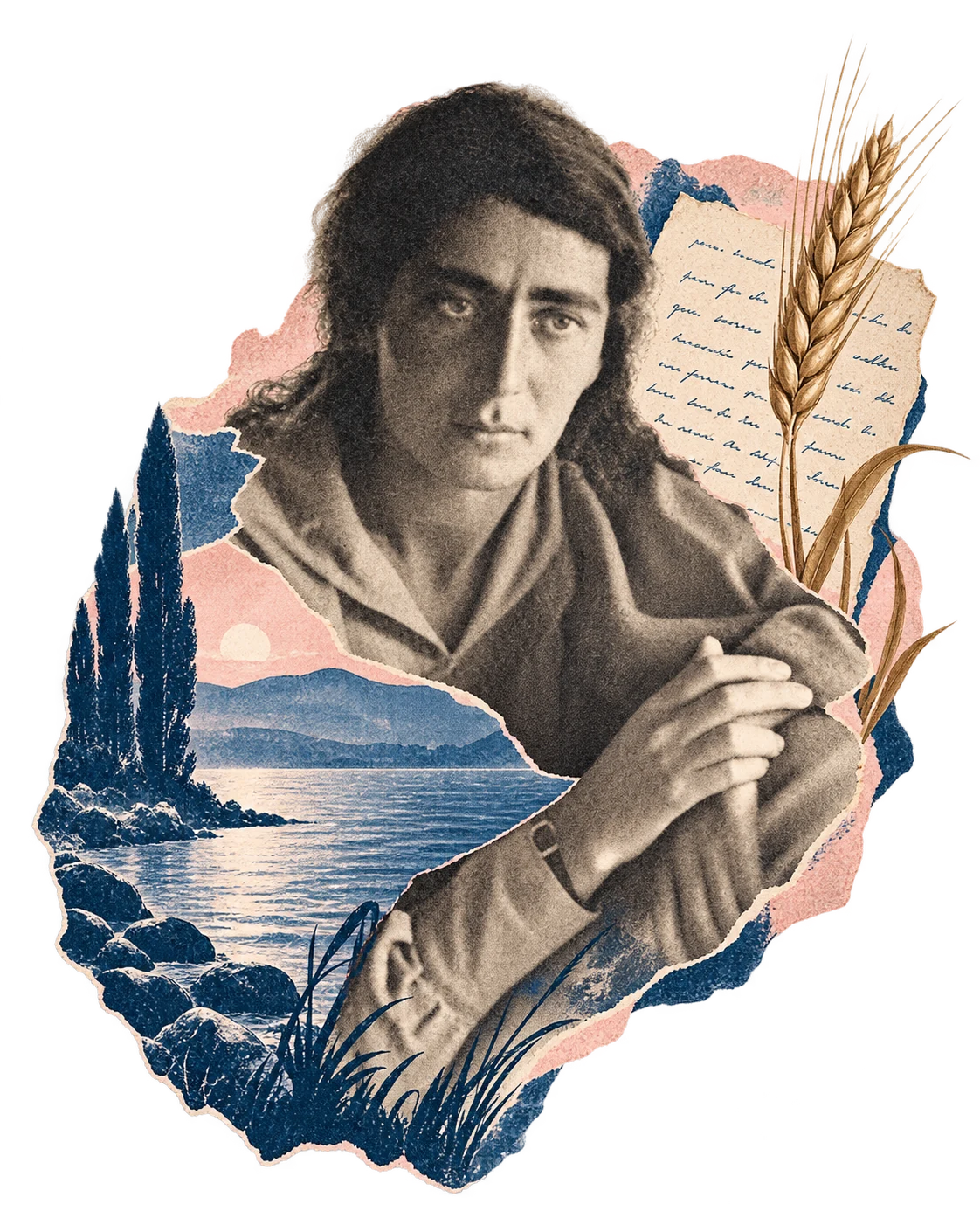
Yona Wallach, Meir Wieseltier, and Haim Be'er were among her many admirers. She was Amos Oz's first love and a cousin of the Lubavitcher Rebbe. Her book of poems is one of the best-selling poetry books, and one of her poems became a symbol of Holocaust Remembrance Day.
Sheina Zelda Schneersohn
Her first collection of poems, 'Leisure,' was published in 1967, after the Six-Day War, and went through 14 editions, with thousands of copies printed (by 2007). Only when she was 53, after 35 years of writing, did the book become a bestseller. Meir Wieseltier wrote that the book was a precious treasure worth hurrying to buy. 'Cinderella appeared from the ultra-Orthodox neighborhoods' was how Haim Be'er described her. Zelda's poems appeared in the literary sections of newspapers in Israel and in many other venues, and she would recite poems from memory to her guests. Her books continued to sell and often sold out in bookstores. The prizes she received for her work gave her official recognition, and some of her poems were set to music by Nurit Hirsh, Shuly Nathan, Hanan Yovel, and others.
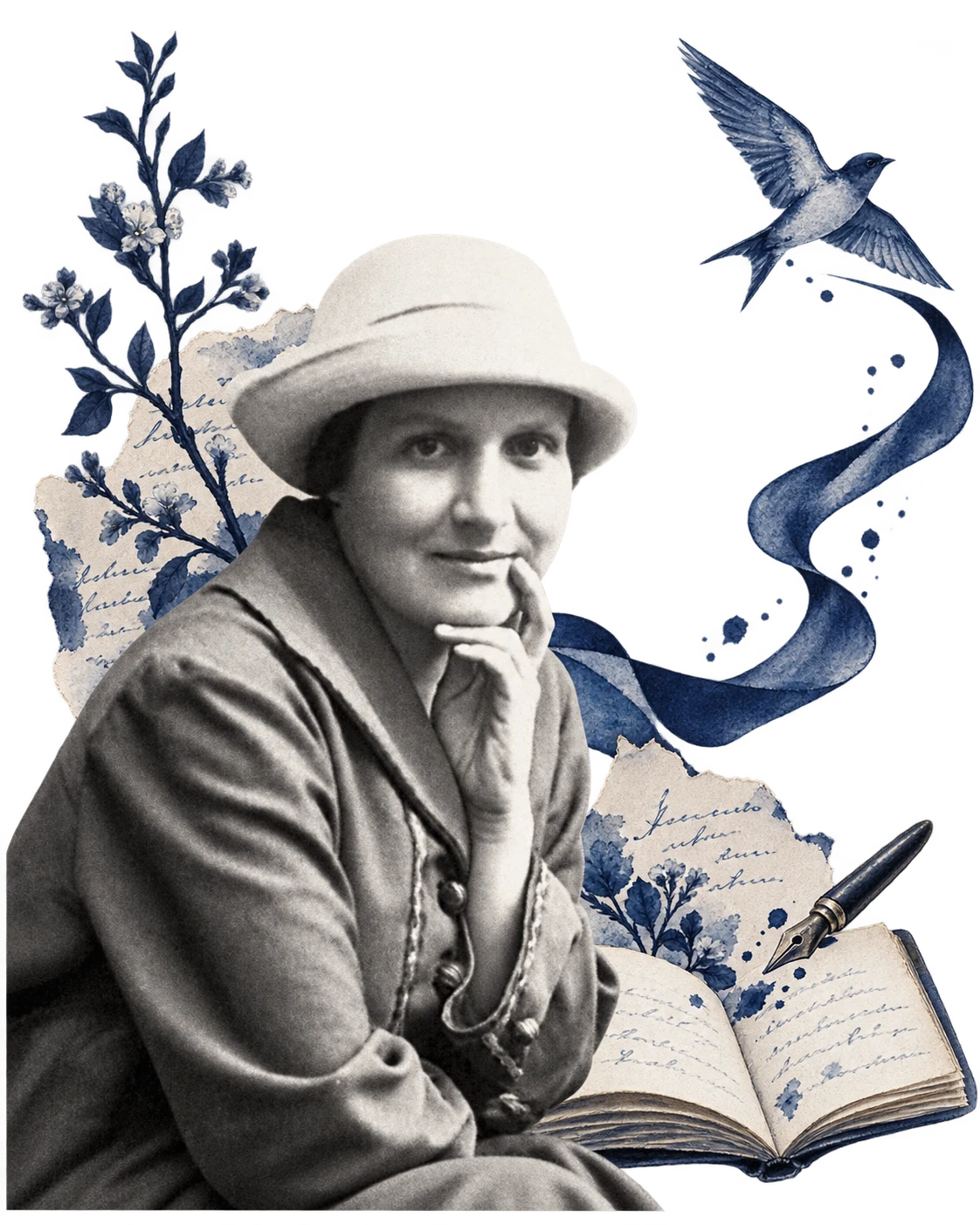
Zelda and Yona Wallach
In 1965, Zelda's beloved mother died. That same year, she also met the poet Yona Wallach, a meeting that changed Zelda's future. The meeting was arranged by Aza Tzvi (daughter of Rafael Tzvi, one of the founders of Habima), a mutual friend. And so, one Friday afternoon, in Zelda's shabby, dim apartment on Zefania Street in Jerusalem, three women gathered around the table. Aza Tzvi would later recall: "Once I brought Yona to see her. We sat at the table and talked. I asked Zelda to recite a poem. She recited 'From My Childhood Poems' and some others. Yona was surprised. Maybe astonished. 'What is this?' she said. 'Why do these things tumble along like this? They should be gathered up and put in a box.' That's what she said, in a box. 'They should be typed up and published as a book!'"
Yona Wallach, 23 years old and 30 years younger than Zelda, took it upon herself to publish Zelda's poems, even before publishing her own.
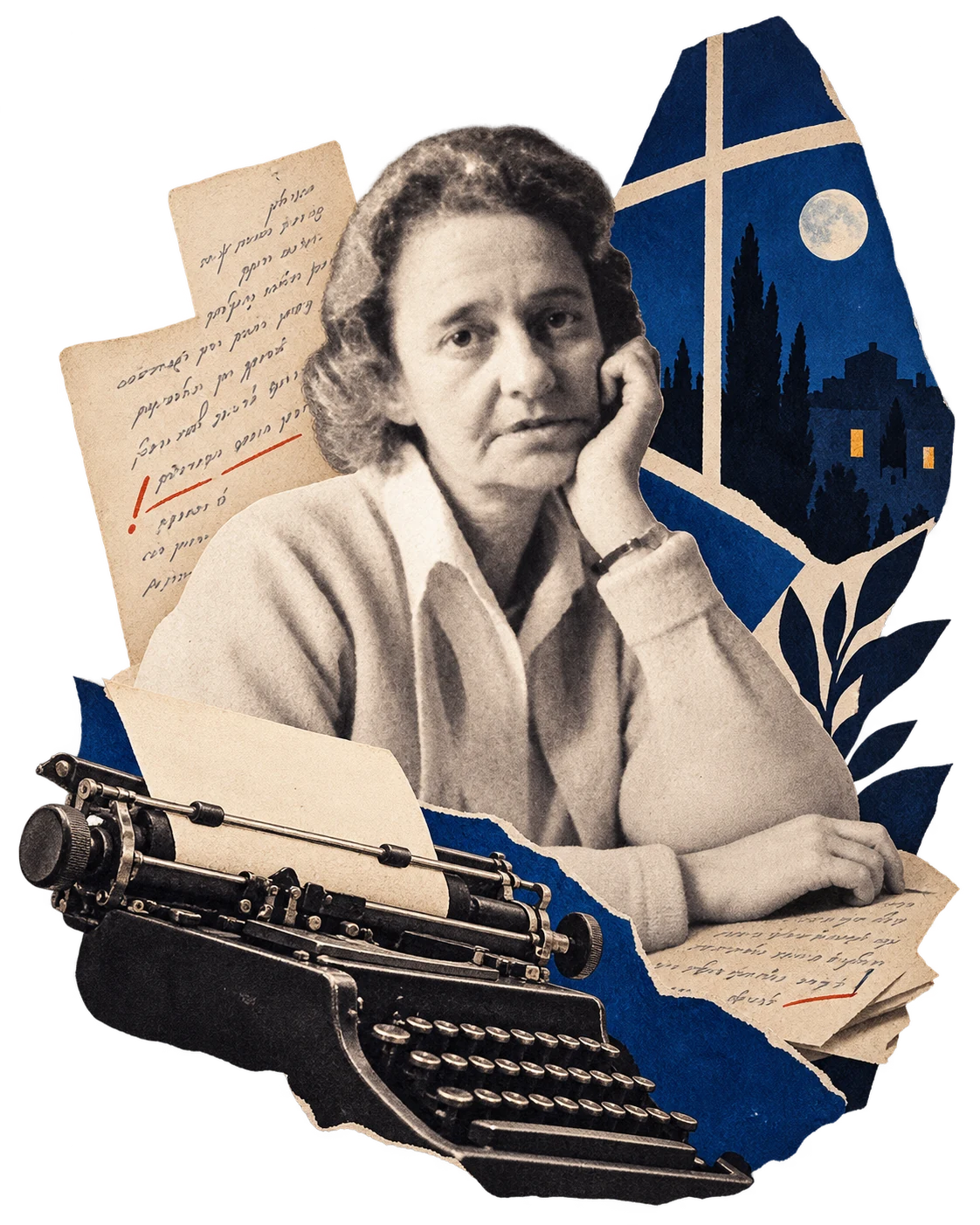
A few days after that meeting, Yona Wallach sent the old typewriter she loved, along with instructions for using it, with the poet Dennis Silk, who was nicknamed 'the porter' of Hebrew poetry. Aza Tzvi gathered all the scraps of paper on which Zelda had written her poems and typed them up.
In Zelda's poems, Wallach heard "the sweet voice of God." When the collection was published, Zelda sent Wallach a copy with the dedication: "To Yona, angel of fire." Wallach replied in a letter: "You create a world, Zelda. That is the final thing a poet can do. And that world makes me better, and the beauty you bring leaves me yearning, filled with wonder and longing, and I remember so keenly that I am Jewish."
This strange friendship between two opposites, the older religious poet and the young anarchist poet, led to several evenings of reading poems together. But over time, Yona Wallach moved further and further away from Zelda's way of thinking and life. In response, Zelda wrote the poem 'Two Elements' [the flame and the cypress...].
The final rupture between the two came in 1982, when Yona wrote the poem 'Tefillin,' which was published in '77 Newspaper' and sparked a great controversy.
Come to me / Don't let me do anything / You do it for me... I will put on tefillin / I will pray... / You put on the tefillin for me, too Wind them around my hands / Play with them on me / Pass them gently over my body Rub them against me well / Tease me everywhere / Overwhelm me with sensations Pass them over my clitoris / Tie my waist with them / So that I can come quickly
Years later, Yaakov Besser, editor of '77 Newspaper,' said that many reactions to the poem had flooded the editorial office, but the only one that saddened him arrived in a plain envelope from Jerusalem. He recognized the rounded, clear handwriting of one of the newspaper's regular contributors. It read: "When I saw Yona's poem, I thought, I wish I were dead; I can no longer hold a newspaper that printed something like this." Zelda never published her poems in that newspaper again. Zelda felt that poets could bring each other's poetry to life or kill it, and Yona had done both.
Two years after their painful separation, both poets battled cancer. Zelda died at the end of April 1984. Yona Wallach lived until September 1985.
Her Childhood in Russia and Aliyah to Jerusalem
Zelda was born Sheina Zelda Schneersohn, an only child, in 1914 in Yekaterinoslav, Russia (now Dnipro, Ukraine). It was a time of revolutions in Russia, and the family moved to Chernihiv in northern Ukraine. She spent her childhood in the home of her grandfather, Rabbi David Zvi Chen (the Radatz), one of the most prominent Chabad rabbis. Later, anti-Jewish pogroms reached there too, and Zelda and her family hid in the foul-smelling basement of the city's hospital. Those scenes would remain etched in her memory, and she would later write about them. Zelda was descended from a family of Chabad Hasidic rebbes and was a cousin of the Lubavitcher Rebbe, with whom she corresponded over the years.
Although she grew up in ultra-Orthodox circles, she loved Russian literature. She attended a Hebrew-language kindergarten and studied Russian at school. At the age of eight, she wrote her first poem, an anthem for a friend in the Hehalutz movement.
In 1925, when she was 11, she immigrated to Palestine with her parents and grandfather. A year later, her grandfather died, and shortly afterward her father died. Since there was no son to recite Kaddish, she was given permission to say it in the synagogue, and for a year she went every morning to recite Kaddish. She was left with her mother in the ultra-Orthodox community. In the collection 'The Unseen Carmel,' she wrote: "My grandfather abandoned us, for his soul longed for his son in the Garden of Eden... And while my mother sat on the mourner's stool, before we had washed the tears from our faces, my father fell ill and did not recover."
After her father's death, she and her mother moved into a room in Jerusalem's ultra-Orthodox Sha'arei Hesed neighborhood. Zelda was educated at the Spitzer girls' school and later at the Mizrahi girls' seminary in the poor Musrara neighborhood. Then, in the 1930s, she showed her poem to the Bible commentator and teacher Feivel Meltzer, who wrote: "If they ask you, Zelda, to write about the price of onions and garlic at the market, you will write poetry about that, too." After graduating from the seminary, she moved with her mother to Tel Aviv, where she began studying painting with Haim Gliksberg. Three years later, when her mother remarried, Zelda decided to return to Jerusalem and study at Bezalel. At that time, she tried to make a living by painting or making lampshades, but without success. She moved to Haifa and worked as a teacher. Before she finished her studies at Bezalel, her mother was widowed again, and the two returned to Jerusalem, to the Kerem Avraham neighborhood.
A Teacher and Writer in Jerusalem
She began working as a teacher at the Moledet HaYeled school and said that "teaching kills the poems in me." One of her students, Amos Klausner, a dreamy, blue-eyed boy whom we know as Amos Oz, wrote about her in his book 'A Tale of Love and Darkness':
"She was my first love: an unmarried woman of about thirty, a teacher - Zelda, Mrs. Schneersohn. I wasn't yet eight, and already she had swept me up entirely and set some inner metronome trembling in me, one that had never moved before and has never stopped since... I remember her eyes, alert and warm, keeping a secret but not happy. Even the most predictable thing became a little unpredictable with her... I loved her and was fascinated by her because there was something foreign and exciting, a little frightening, in almost everything she did and said... Teacher Zelda spoke so quietly that if we wanted to hear her, it wasn't enough for us to be silent; we had to lean forward over our desks... Everything Teacher Zelda said was captivating and a little unexpected. It was as if we were learning a new language from her... She called mockery, any kind of mockery, poison. She called a lie a fall or a break. She called gossip the eyes of the flesh. Pride was called singeing wings, and giving something up, even something tiny, even giving up an eraser or your turn to hand out the drawing paper to the class, was called a spark."
Her Meeting with Haim Mishkovsky
He also wrote: "Once, on a winter's day, she gently remarked to me: If you sometimes stop talking, perhaps things will sometimes be able to speak to you." At 35, two years after the War of Independence, Zelda met the man who would become the love of her life, Haim Mishkovsky, a reserved and noble accountant from a family of Torah scholars and heads of yeshivas. Because of his height, he was nicknamed 'Long Haim.' After their marriage, the newlyweds lived in a modest apartment in the Kerem Avraham neighborhood. Amos Oz wrote about the beginning of their acquaintance: "Sometimes a man would appear in the courtyard. He seemed not young to me, religious-looking, and with his back turned to me he would start talking with Teacher Zelda. Their conversation would go on for an hour, years, or seventy-seven, until I grew tired of waiting. And in Yiddish, so I couldn't understand a word. Two or three times he even managed to draw from her a ringing laugh, a child's laugh such as I had never managed to draw from her, not even in my nighttime dreams..."
At the beginning of their relationship, Zelda described Haim: "There isn't much to add to the description, apart from his appearance - terrifyingly tall, dark, almost gloomy - silent - silent - silent - religious in the literal sense of the word."
She met Haim in 1950 through a match, as was customary in ultra-Orthodox society, and they married that same year. She was 36 and he was 42. He loved reading, the cinema, and swimming, and he even taught her to swim. Every day, he could be seen on his way to the B'nai B'rith library to exchange books for her. He encouraged her to publish her poems, and when she was away, he would proudly show off articles about her and the prizes she had won.
Zelda tried several times to become pregnant but was unable to because of a heart defect: "I was quite seriously ill... a kind of heart attack - and I was still weak... I sit in the courtyard, the birds are chirping, and my red and pink geraniums hint at splendid gardens I have never seen with my own eyes." At one point, she asked to adopt a child who had survived the earthquake in Agadir, Morocco, but Haim did not want to.
Later she wrote about Haim's positive influence on her: "In his company I felt a kind of peace, an inner calm I had never known in the company of another person. It was as if everything that had happened and would happen was exactly what was meant to happen, because everything was lit by the sun. As if there were nothing unnecessary in me or in him. Or in the world." And in her piece 'Two in the World,' she wrote: "Haim is the cave where I hide from lightning and thunder. Haim is the true, ancient, primordial land of Canaan, where Abraham our father arrived after terrible adventures of the spirit and counted the stars."
In 'A Bird Enchanted,' she described the completeness of their life together as a couple, even though they had no children: "The same God created Haim and me, or, more precisely, the same divine idea, the same divine hint. We were banished from the Garden of Eden of the righteous man planted beside streams of water, who yields his fruit in its season and whose leaf does not wither. We were banished from the Garden of Eden of your wife as a fruitful vine, your children as olive shoots. We were banished, and we live on a cloud, and the gate to our home is the rainbow... We both have a vague perception, a kind of dim memory, of the bond between us before we were born. We belong to each other, inseparably."
The poet Yondav Kaplun recalled that in one of her newspaper interviews she was asked what love meant to her: "I remember that she blushed. I was there. It was so personal; nobody had ever asked her. But she answered, bravely. She said, sitting with my husband on the balcony and drinking coffee together in silence. That is love."
In 1962, Haim suffered a heart attack and spent two weeks in Hadassah Hospital. Zelda cared for him throughout. Nine years later, Haim came down with pneumonia and suffered a heart attack. Shortly after Passover, he died at the age of 62.
Widowhood, Poems and Commemoration
After his death, Zelda opened a window onto their life together, writing this in her poem 'When You Were Here':
When you were here / and your warm gaze sheltered me / and our thoughts touched / suddenly / wing to wing. When you were beside me / among the passing things / the walls were old family friends / who told ancient tales in the evening / when we drank tea. Now the walls are no shelter / they have closed in on themselves in silence / and will not notice me falling / now the walls are plaster and mortar an alien foundation / unresponsive matter like death.
In the poem 'Black Rose,' Zelda told of the dreams that came to her and how she longed for him: Did my longing create / the black rose you gave me / in a dream / or did your longing enter, in the form of a flower / from the hidden world / into my dream? And why did I suddenly ask you / for earrings, / something I had never done / when you were in the land of the living.
Zelda and Haim shared 21 years of love and companionship. A year after his death, Zelda's second book, 'The Unseen Carmel,' was published - her first collection of widowhood poems, a new phenomenon in Hebrew literature. Thirteen years later she wrote her final widowhood poems, which were collected in the book 'Set Apart from All Distance,' published in 1984, the year she died.
In 1976, Zelda moved to the Sha'arei Hesed neighborhood in the city. She repeatedly took in young women who were about to be married, inviting each to live in her home. Zelda accompanied the young woman to her wedding, and later became part of her family. She rejoiced with her when her children were born and when they were circumcised. These young women were called 'Zelda's daughters,' and over time they became one large family, with Zelda becoming grandmother to dozens of grandchildren.
'Every Person Has a Name' was the first of her poems to be set to music (by Hanan Yovel) and sung. It was Hava Alberstein who was moved by the poem: "It was after the Yom Kippur War. It was a very difficult time. Confusion. It was as if we had all been orphaned... I wanted to find comfort in her, to find some kind of embrace from her..." the singer recalled. Years later, the poem was adopted as the title of Yad Vashem's commemoration project, 'Every Person Has a Name.'
Every person has a name / given to them by God / and given to them by their father and mother / Every person has a name / given to them by their height and the way they smile / and given to them by / the fabric / Every person has a name / given to them by the mountains / and given to them by their walls / Every person has a name / given to them by the constellations / and given to them by their neighbors.
Zelda knew that her death was near and wrote: "One must begin to part from the splendor of the sky and the colors of the earth, to stand alone before the silence of death, to part from curiosity, to part from words - from all the words I heard and read. And from the waters I saw and did not see. To die without seeing the ocean. To part from the air of night and to part from the air of morning... To part from shame, from fear of death, from guilt, from the curse, from weariness... From love and from hate. From music. And, before the end, to live with the fear of their deaths, and with the certainty of my own death." ('Parting,' from the book 'A Bird Enchanted')
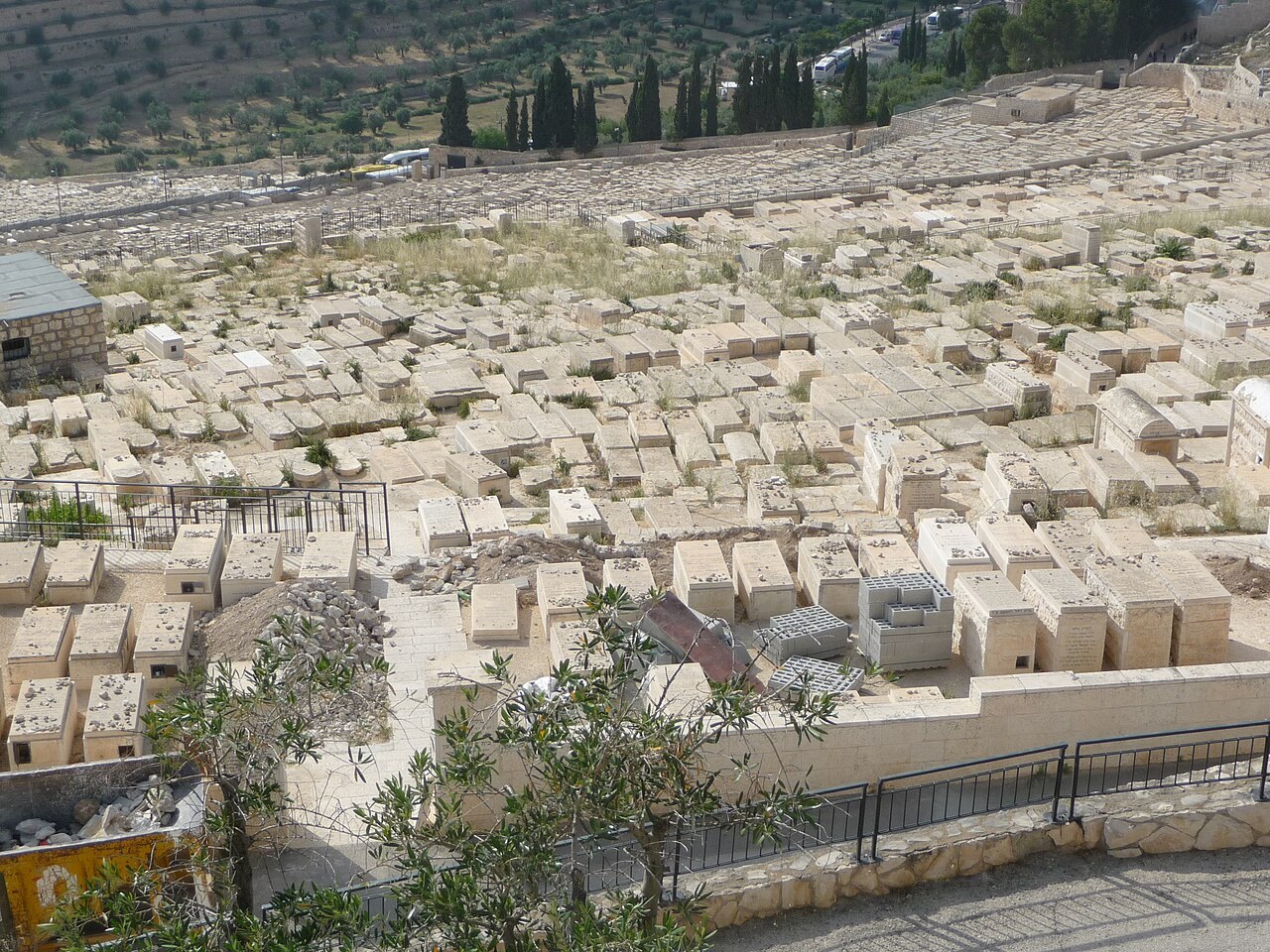
At the end of Holocaust Remembrance Day in 1984, after the names of the victims had been read and the song that had become the day's anthem had been played, Zelda passed away. In death, it was as if she had gathered herself into her most famous poem. After her death, streets were named in her honor in Jerusalem, Petah Tikva, Kfar Saba, Tel Aviv-Yafo, and other cities.

תגובות
עדיין אין תגובות.