
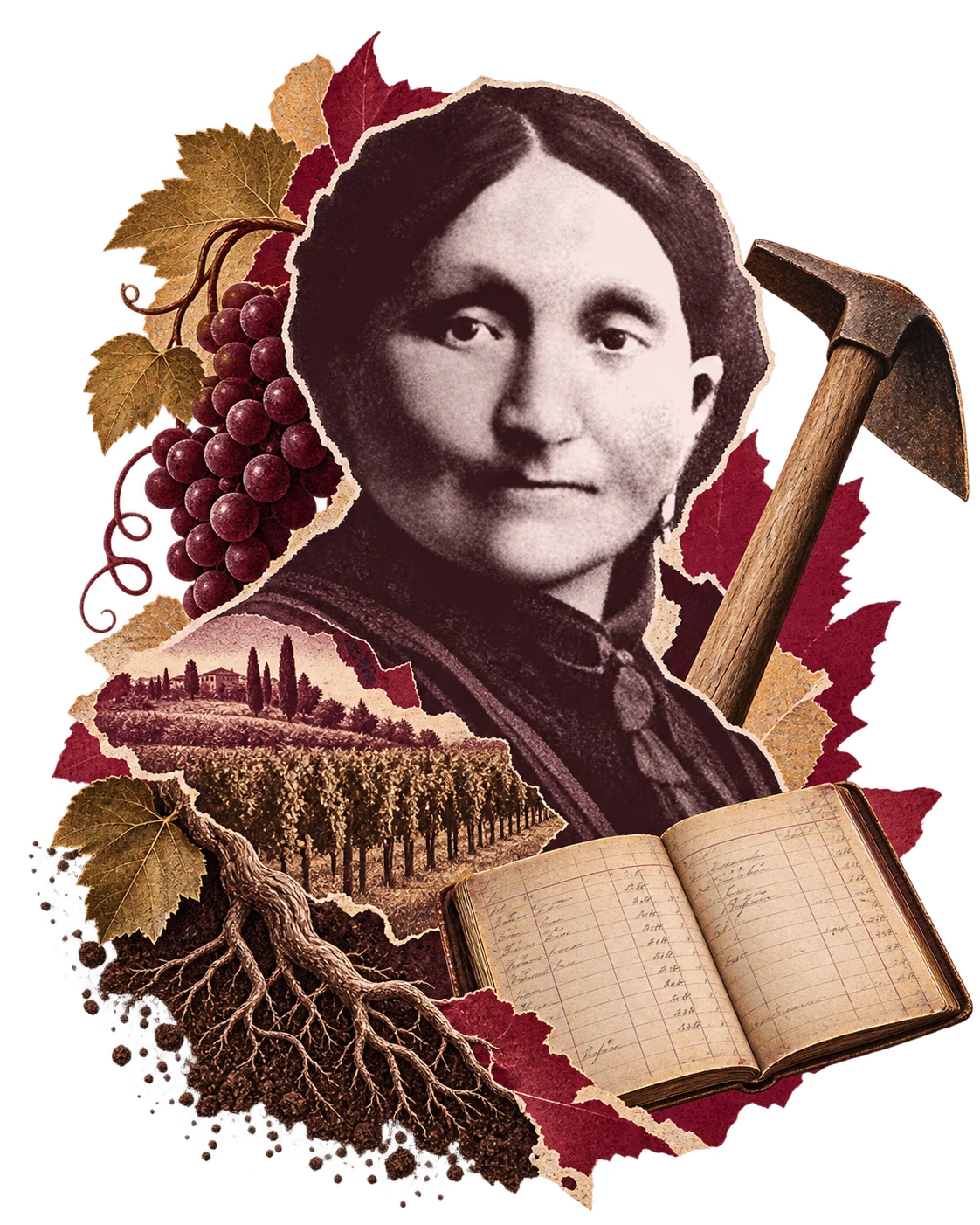
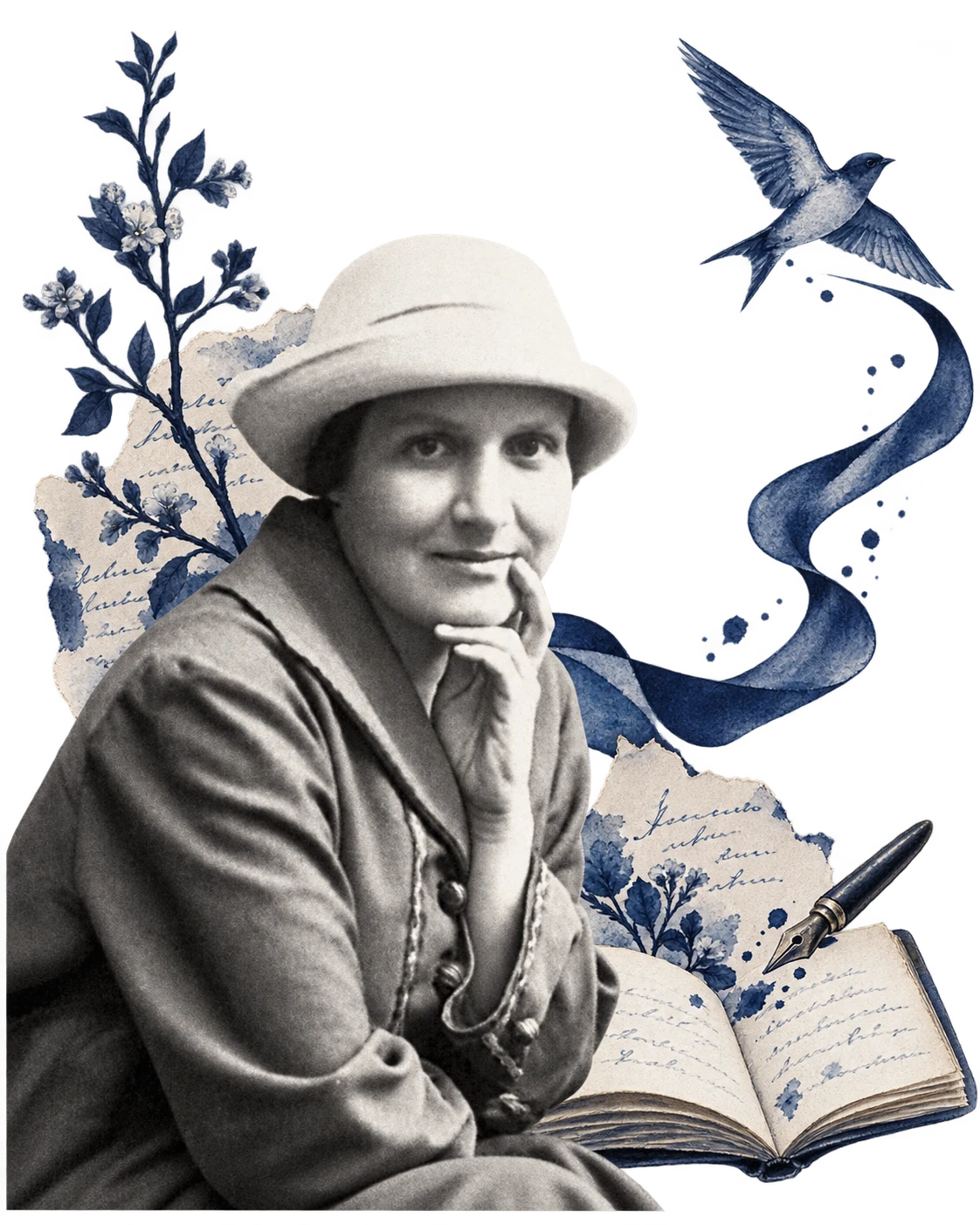
She was a very wealthy woman who made her entire fortune with her own two hands. She named her youngest son Herzl, and at the age of 50, when an opportunity came her way, she left her husband and property behind and immigrated to the Land of Israel. Batya Makov
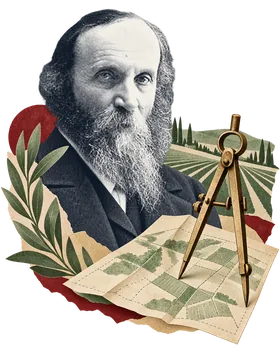
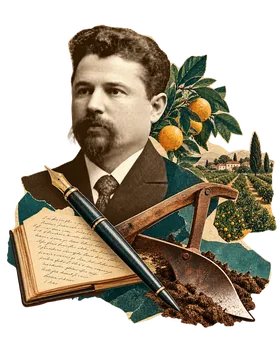
The group was led by two "wolves" - Ze'ev Levin-Epstein and Ze'ev Gluskin. In 1890, the group gathered in Warsaw to discuss establishing a new company devoted to settlement in the Land of Israel. They did not want to become yet another colony dependent on the support of Baron Rothschild. They hated his officials in the country, and they understood that to achieve their goal, they had to make sure they would not need help once they settled on the land. The company was called "Menucha VeNachala" (Rest and Inheritance), after the verse: "For you have not yet come to the rest and to the inheritance which the Lord your God is giving you" [Deuteronomy 12:9]. The company's members were middle-class merchants and businessmen who had met a year earlier in the secret society Bnei Moshe, led by Ahad Ha'am (Asher Zvi Ginsberg).
As businessmen, they approached settlement differently from the usual way. Instead of settling on the land, starting work, and expecting an immediate yield, they decided to plant orchards and settle only once the orchards bore fruit and promised a steady income. The society sent representatives to the country to establish the orchards. One of the founders, Ze'ev Levin-Epstein, was put in charge of the project. The society bought land from Yehoshua Hankin and hired workers. Levin-Epstein was the first to introduce pay based on productivity, and he made sure the workers had housing and medical services. In 1895, the vineyards began producing grapes, and two years later the plots that had been cultivated were distributed among the members and the society was dissolved. Thus the colony of Rehovot got underway...
Batya Makov Joins the Settlement
More than 200 kilometers east of the place where Menucha VeNachala had met, in the city of Brest on the border between Poland and Belarus, people were talking about Batya Makov. She was energetic, determined, focused, and exceptionally courageous. She made a deal with a Russian count and rented an estate from him. In addition to forests and orchards, the estate included a cigarette factory, a leather factory, and a vodka factory. She ran all the businesses herself, with a firm hand, while also managing a household with ten children. In 1890, Batya Makov came to Warsaw on business and heard about Menucha VeNachala's initiative. In less than a day, after getting all the details, she decided to join the land purchase as one of the "individuals" (the name given to settlers who were not part of the Menucha VeNachala company) and to immigrate to the Land of Israel. She returned to her town and told her husband, Avraham. "Have you gone out of your mind?" Avraham asked. Batya replied, "If I had gone out of my mind, I would stay here until the gentiles rob me of my property and take our children as slaves and maidservants." Avraham, who knew his wife well, understood that once she had made up her mind, it would be hard to change it. In desperation, he tried to summon her to a rabbinical court, claiming that she had lost her mind. But the clever Batya went to the rabbi and said: "According to Jewish law, if a woman has lost her mind, her husband is exempt from her without a divorce. So my husband is exempt from me, and I am therefore exempt from him as well."
In 1891, a year after that meeting in Warsaw, 50-year-old Batya took her five youngest children, left the older ones with her husband, and immigrated to the Land of Israel.
Just how unusual Batya Makov's case was is clear from the fact that at the time only four women with families took the initiative and immigrated to the Land of Israel on their own: Rosa Shoshana Jaffe, who settled in Yavne'el, where she established a large household, a cowshed, a stable, field crops, and more; Golda Miloslavsky, who settled in Wadi Hanin (Ness Ziona) and founded a mutual-aid fund in the colony; Sarah Gotte Dinovitz of the colony of Yehud, who took her children with her; and Batya Makov. Rosa, Golda, Sarah, and Batya proved that women's work was no less valuable than men's. Their initiatives to immigrate to the Land of Israel, buy land, and settle there sprang from sincere Zionist motives and a belief in their ability to overcome obstacles.
The House, the Vineyard and Running the Farm
Batya Makov's wisdom, willpower, perseverance, and diligence helped her achieve the goals she had set for herself. First, she oversaw the construction of her house: she hired tradespeople, supervised their work, and moved in before the roof was finished. Once construction was complete, she decorated the walls herself with murals in a style she knew from Poland.
Batya was the first to plant a vineyard. "Batya Makov's Vineyard" became a brand and was considered the best in the colony. As a mother, she built the first oven for baking bread and cholent. Her cholent won many admirers, and whenever an important guest arrived, representatives of the colony would ask her to host the visitor and serve her famous cholent. The same was true of Theodor Herzl, the visionary of the Jewish state: when he arrived in 1898, Batya was the one who hosted him (the recipe is still kept by the women in the family).
Batya Makov's household was considered one of the wealthiest in the colony. During hard times, she knew how to cut expenses and rescue her family from hardship, and at certain times she increased her income by renting out rooms in her home.
Batya took part in elections for the colony committee. Smilansky wrote of her in The Family of the Soil: "Batya's opinion was heard at the assembly, and the members listened closely to her brief remarks, which were expressed with taste and intelligence. She also voted for the colony's first committee members, but she herself was not elected: after all, she was only a woman."
Though she was a businesswoman, Batya was a socialist at heart and suggested to the colony committee that land be distributed to the workers' children. Her proposal was accepted, and a plot that belonged to her was given to a workers' family.
As an independent woman, Batya opposed accepting the Baron's patronage. At the time, an agreement was in place with the winery in Rishon LeZion, which was controlled by the Baron's officials: the winery would take the grapes from the colony of Rehovot, and in return the people of Rehovot undertook to market the wine in Russia. Batya pressed for them not to send their produce to the winery, but to try marketing it independently. During the Baron's visit to the colony of Rehovot, he was impressed by her independence and offered to donate a clinic to her. She thanked him but declined the donation and took it upon herself to establish a clinic.
Batya's great-grandson, Israel Makov, who was CEO of Teva, said of her: "Every family has a hero; we have a heroine... She was probably a very strong, opinionated, and determined woman. We all grew up hearing stories about her. She was a religious woman whose husband was a Torah scholar, while she herself ran businesses... Since he did not agree to immigrate, she left their five older children with him and took the five younger ones with her to the Land of Israel. The youngest, aged six, was my grandfather Herzl. She joined the group that would go on to found Rehovot, bought 240 dunams here, and established a farm. She could never be elected to the settlement committee because she was a woman, but she attended every meeting. From the correspondence, you can see that she was combative, assertive, and a guardian of order and morality."
Dry Vine Shoots and the Incident
Batya's story cannot be brought to a close without telling the story known as "Dry Vine Shoots". Batya's son, Yonatan Makov, married Shoshana, née Kahanov. He came to the colony with his mother and, when he grew up, began working in her vineyards. He opened a shop, the second in the colony, and allowed customers to buy on credit. "Put it on my tab," they would ask, and he kept a ledger of debts. When a debtor died, he did not approach the family to collect the debt. Even so, he was known as a harsh and cruel man, as the following story shows.
Two years after Batya Makov's death, the farmer Yonatan caught three Yemenite women working in his vineyard in the colony of Rehovot as they gathered dry twigs at the end of their workday. They had collected the twigs for fuel and baking, but Makov thought they were stealing from him. With the help of his Arab workers, he caught them, tied them with a rope to a donkey, and dragged them along the colony's main street while his worker whipped them in front of all the residents. Makov claimed this was to make an example of them, so that others would "see and be afraid." The Sha'arayim neighborhood committee appealed to the colony committee, demanding an investigation. Yonatan Makov was tried, found guilty, and fined a paltry sum.
Years later, Dan Almagor, a poet from the colony, wrote his chilling poem "Dry Vine Shoots" about the incident.
"Every Yemenite in the colony of Rehovot Still remembers what the farmer Yonatan did: He caught two women of Yemenite descent Gathering at twilight in the vineyard, Not grapes, only dry vine shoots, Dry vine shoots to fuel their oven. He caught them both, the farmer Yonatan, And whipped the two women again and again, His blows as harsh as dry vine shoots. Then he tied the two women with a thick rope To his donkey, by the tip of its tail, And rode proudly, Riding into the colony, Down the main street, in front of everyone, A farmer on a donkey, his whip raised, And the two women dragged behind, Tied by a rope to the donkey's tail. Two weak women, frightened and ashamed, Who had tried to gather a few dry vine shoots, Tied to a rope, as if being led to the gallows... The women walk, their eyes cast down, But they know the little boy is watching them, And on the main street, there on the broad street, He sees his mother, tied to the tail, He sees his mother, tied by the neck, Dragged, humiliated, along the dusty street. He sees people emerging from their homes, He sees everyone watching in silence, He sees smiles, and hears a shriek: "Mommy, come and see the parade!"
There were several attempts to censor the song. The notable thing is that members of the Yemenite community were involved each time. Dan Almagor originally wrote the poem for a production at Beit Lessin. He recalled: "A few days before the play was due to open, Israel Kesar, who was then chairman of the 'Ealeh Betamar' association, arrived. He looked through the songs, and when he got to this one, he asked me to remove it. I didn't understand why. I told him it was important to publish these things. But he, like all Yemenites, didn't want confrontation or a quarrel and preferred to bury that affair. We took the song out of the play. That was the first censorship of the song."
The second attempt to suppress the song took place on one Independence Day. This time, two lawyers blocked it: one was Yemenite, attorney Ben-Zion Tzanan'i, and the other, who was not Yemenite, was attorney Shuki Forer. In their letter, the two asserted that the incident in Makov's vineyard had never happened. "They tried to claim that I wrote the song as part of a political campaign against Likud. To this day, I don't understand what politics or Likud have to do with it," Dan Almagor said.
Later, Dan Almagor received an award in Rehovot for his contribution to Hebrew song. The person who presented it to him was the mayor, Shuki Forer, the same attorney who had sent the letter opposing "Dry Vine Shoots".
Did the incident really happen? The person who investigated the affair was Yair Madar-Halevi, also a native of the colony and a member of the Yemenite community. He found the women in question and even published their names: Hedaya bat Sa'id Awad', wife of Shalom Harizi; Shama bat Saadia Kafra, wife of Saadia Nadaf; and Shama bat Salem Madmon, widow of Yosef Madhela. Many called Batya Makov "the mother of Rehovot." She established a large extended family in the colony and left behind many descendants. She divided her estate among her children, giving each of them 50 dunams.
Some claim that the family originated in Spain and that the name Makov is an acronym for "Our teacher, holy and blessed." In 1895, five years after Batya had left him, her husband Avraham wrote a letter to his children explaining that he had stayed at home because of his poor health. He died shortly afterward.
Batya Makov lived in Rehovot for 21 years and died in 1911 at the age of 70. A street and a neighborhood in the city of Rehovot are named after her.
תגובות
עדיין אין תגובות.