
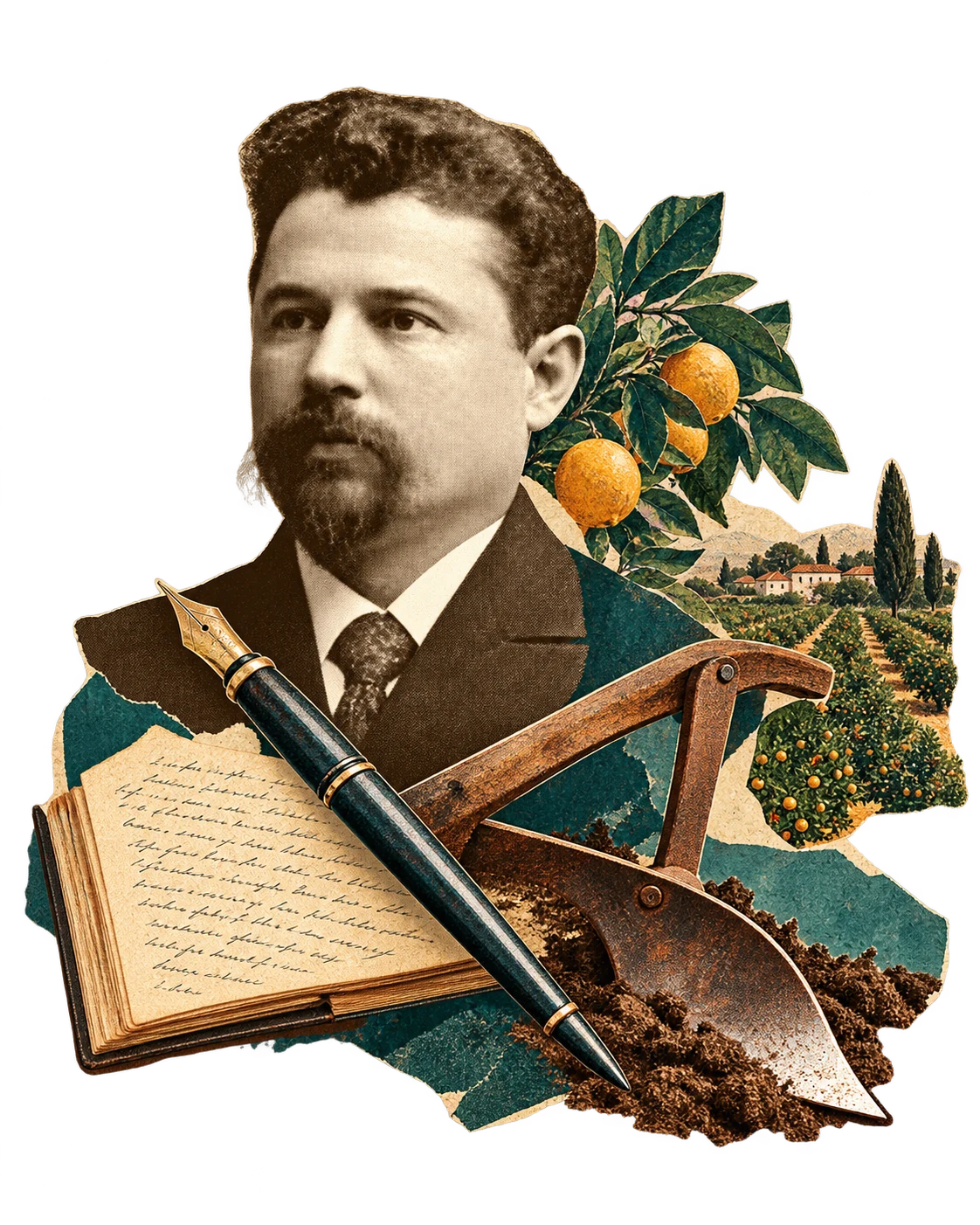
His dream of becoming a farmer in the Land of Israel came true, and he became a farmer. He left us his enchanting books The Family of the Soil and the stories of Khoja Musa, about the pioneers he loved so much. Moshe Smilansky In 1890, a 16-year-old boy stepped off a ship alone in Jaffa. His mother opposed his departure, and his father expressed his concern, but he had grown up in a well-to-do home in the village of Talepino, south of Kyiv in Ukraine (then Russia), close to the nature he loved. He paid no heed to their pleas and immigrated to the land he had dreamed of. He gave up the opportunity to study at the agricultural school Mikveh Israel because its language of instruction was not Hebrew. It was not religious education that brought him to the land, but the private teachers he studied with, who instilled in him a love of the land. Even as a boy, Moshe Smilansky read Hebrew literature avidly. He loved working the land and the pioneering farmers, and dreamed of being like them.
The Start of the Road in the Land
Instead of receiving formal training at an agricultural school, Moshe decided to gain knowledge and experience through the work itself, and took a job as a laborer in the vineyards of Rishon LeZion. In the vivid letters he wrote to his friends, he described what he was doing in the land. Rabbi Yaakov Mazeh, the chief rabbi of Moscow, even predicted that Moshe's future lay in writing. These letters led his family to immigrate to the land. His father bought about a thousand dunams in Hadera, and the family settled on a lonely hill near the khan where the founders had gathered. He described the first day he plowed the land this way: "And the horse strides proudly, and I follow behind it, not without pride... My eyes gaze toward the mountains... and I see on those mountains the tracks of the Hasmoneans, and hear their voices... My spirit soars and my heart celebrates victory."
When fever began to strike the pioneers and cholera spread among those who remained, and after they were denied a building permit, Moshe's father decided to return to his farm in Ukraine, while the others had to return to Rishon LeZion. Moshe lay sick with fever for several months, and in the summer of 1891 his parents demanded that he return to Russia while they were still alive, to join them and his two younger brothers, Ze'ev and David. Despite his illness, Moshe refused, saying firmly, "I will not go, and I will not leave here. I can't." His sister Shifra also stayed in the land, but shortly after marrying Yehiel Trachtenberg, she died young in Rishon LeZion.
In 1892, Moshe Smilansky bought land in the settlement of Rehovot and planted a vineyard, almond trees, and field crops. He also began writing at that time. Nevertheless, a year later, at his parents' insistence, he returned to Russia to report for military service, but came back to Rehovot after just a few weeks. He married Tzila, daughter of Israel Teller, an expert teacher of Hebrew grammar. Tzila died in the spring of 1934, and Moshe married again, to Esther, daughter of Abraham Joshua Dondikov, one of the founders of the Jaffa and Rehovot communities. Around that time, pioneers of the Second Aliyah arrived in Rehovot, among them Noah Naftolsky and his friends, as well as the poet Rachel and her sisters.
Moshe saw the land through the eyes of a man in love. It never seemed ugly, hot, or dirty to him. Even before the poet Rachel, he fell in love with the Sea of Galilee. "I loved it and could not leave it. And when I left it, an emptiness formed in my heart," he wrote. He discovered the Sea of Galilee seven years after immigrating to the land, "and from then on I visited it from time to time: once every two years, once every three years." Like an excited lover, he confessed, "All the days I did not see it, I longed for it deeply. And during the moments when I did see it, I longed for it twice as much."
When Moshe arrived in the land, it was ruled by the Turks, who had no interest in developing it, certainly not by Jews. Moshe's vision for establishing a state had three stages: first, obtaining permission from the Ottoman authorities for extensive settlement; second, purchasing land; and third, after agricultural settlement had been firmly established, developing industrial enterprises in the communities that would be founded. In Moshe's view, industry could be developed only once most of the land of Israel had passed into the ownership of the Jewish National Fund as national land.
The Land of Israel was now under British rule, and Moshe, driven by his purpose, worked to bring his vision to fruition. Yitzhak Rokach, one of the country's leading citrus growers, recounted: "I will tell here of a story I heard about a well that was being drilled in Beersheba at the time, when Smilansky was working to purchase land in the Negev. People came and told Smilansky that, while drilling the well, they had encountered a layer that suggested oil might be present. Smilansky heard this and ordered them to seal the borehole and resume drilling at another spot on the property. The matter came to the attention of High Commissioner Wauchope, who had friendly relations with Moshe Smilansky. He asked him, 'What possessed you to seal a well that suggested oil, when oil is a source of wealth?' Smilansky replied, 'We are not in a hurry to get rich here, but to develop agriculture in a wasteland.'"
Writing and Attitudes Toward Arabs
In 1905, Moshe fell seriously ill and traveled to Switzerland to recover. While there, he received a mandate and took part as a delegate in the Seventh Zionist Congress in Basel, where he wrote the story "Latifa." By chance, he met Dr. Yehezkel Vortsman, an editor of a Yiddish newspaper, who got his permission to publish the story in the paper. Readers took a liking to it, and Hemda Ben-Yehuda, Eliezer Ben-Yehuda's wife, also published it in the newspaper Hashkafah. Moshe Smilansky continued writing stories about Arab life, and when he returned to the land, he published the literary collection HaOmer with S. Ben-Zion and David Yellin, also contributing stories about Arab life. He signed these stories with the pen name Khoja Musa.
Moshe Smilansky took a great interest in the Arabs of the land and dedicated his first book, Sons of Arabia: Sketches and Pictures from the Lives of the Arabs in Palestine, published in 1911, to them. His first story, "Latifa," was not only about Arab life, but also a love story: "Whoever has not seen Latifa's eyes has never seen beautiful eyes." It was his first story about the possibility of love between Jews and Arabs, against the backdrop of the political and cultural tensions between them. Moshe describes love developing between a Jewish farmer and one of his Arab workers, while also touching on cultural differences in attitudes toward women, such as polygamy among Arabs. Latifa, the object of the narrator's love, whom he met while planting his first vineyard, is given by her father, the sheikh, to the young and ugly son of another sheikh. A few years later, the narrator meets Latifa again. She is an old woman who sells poultry and accepts her fate with resignation. Smilansky brings the inevitable clash to the surface: "My father says," she added after a moment, "that he would have given me to you, if you had been a Muslim..." "To me?..." Despite myself, I burst out laughing. Latifa looked at me. Her eyes filled with deep pain. "Latifa," I said, "become a Jew, and I will take you..." "My father would kill us, you and me..."
He was one of the few Zionists who were troubled by not knowing Arabic, which he called "the language of the land." "For thirty years we have not learned the language of the land. In the entire new Jewish community there is not even one 'minyan' that can read and write Arabic. This may seem absurd to a reader abroad, but to our shame, it is a fact. Many of us know how to speak Arabic, but even that knowledge is very superficial. Most of those who speak Arabic are ordinary people. The people of the land are complete strangers to our intelligentsia. That is why even the knowledge of those who 'know' Arabic is very superficial."
His opponents mocked him and composed a song against him: I am Khawaja Musa / a writer and an orchardist / I write poems / and stroll in the garden Hey, all of us together / without cowardice and without fear / haters of the workers / the Black Front Mohammed in the orchard / surely won't do any harm / for every new pioneer / is a Bolshevik
When he resigned as president of the Farmers' Association, he drew closer to Brit Shalom, a union of circles that called for peace with Arab leaders. "Zionism cannot begin in the Land of Israel with collective action, but rather by creating favorable conditions for the actions and lives of individuals; for collective action, we do not yet have the people, the means, or the ability to choose," he wrote and believed. He loved and admired those who took individual action, namely the farmers and pioneers about whom he wrote The Family of the Soil.
Leadership and Public Activity
In 1913, Moshe Smilansky initiated the establishment of the Federation of Settlements, which during the First World War became a central public body through which donations from Jews abroad were received. When the British Mandate began, he saw the British as redeemers. At the age of 44, he volunteered for the Palestine battalion of the Jewish Legion and was one of the leaders of the volunteer committee until he was discharged.
His attitude toward Yemenite Jews was ambivalent. On the one hand, he loved them and cared about their future, but on the other, he saw their traditional, religious, and conservative culture as something that would set back the vision of a society aspiring to be modern. As he put it: "The settlements are becoming increasingly filled with an element of extreme conservatives and those who have fallen behind... All these are regressive forces, and they pose a danger to everything in our community that is new, free, and reformed." Moshe Smilansky admired the Yemenites' knowledge of the holy books and described Brachiyahu in his story "Aharon's Offering": "He goes to work in the orchard with a book and bread in his bag." He noted the changes they underwent after arriving in the land, especially in the community's attitude toward women, whom he admired.
Although he was a farmer of the First Aliyah, he was captivated by the pioneers of the Second Aliyah. When Yosef Bussel, the leader of the Degania group, died, he delivered a heartfelt eulogy: "Over the past eighteen years, their graves have been scattered along every road, behind every fence, on every lofty hill and every high mountain, from Dan to Beersheba."
As the settlements began to develop, Smilansky devoted all his energy to the effort. He raised funds abroad and founded the Anglo-Palestine Planters Company and the Yehuda Land Acquisition Company. He also served as president of the Federation of Hebrew Farmers throughout the country and was editor-in-chief of the daily newspaper Doar Hayom. When the great wave of immigration by German Jews began, he worked to redeem land in the Negev.
When he turned sixty, the Farmers' Association decided to publish his writings in 12 volumes.
Moshe belonged to the Smilansky clan, some of whose members have ink flowing in their veins. The most famous of them was S. Yizhar, a member of the Knesset and author of the books Khirbet Khizeh and Days of Ziklag. Moshe was the brother of the writer and journalist Meir-Siko Smilansky and the psychoanalyst Dr. Anna (Anyuta) Smilansky, and the uncle of the writer and journalist Ze'ev Smilansky, father of the writer S. Yizhar.
When he grew tired, he left his public positions. Asked whether he would return to leadership, he replied: "You'd better let me write stories for the dear children of the land." And that is what he did.
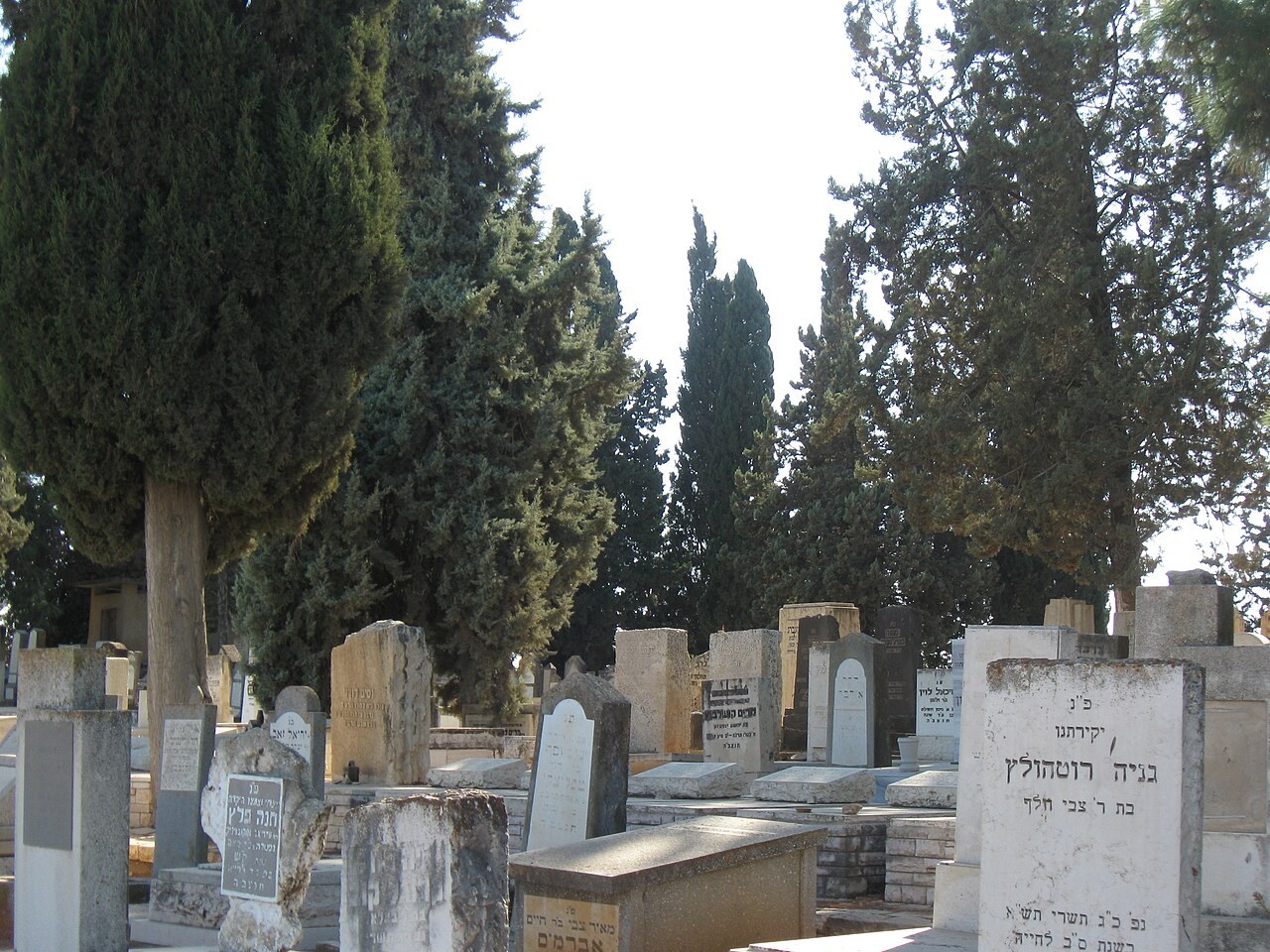
Moshe Smilansky died in Tel Aviv in 1953, aged 79. He was given a state funeral and buried in Rehovot. An elementary school in Rehovot and streets in various cities are named after him, as is the moshav Nir Moshe in the Negev, founded in 1953 by immigrants from Morocco.
תגובות
עדיין אין תגובות.